Get 20% OFF All Premium 3D & STL Models!

In the dynamic world of digital content creation, where realism and performance are paramount, the demand for meticulously crafted 3D models continues to soar. From blockbuster games to stunning architectural visualizations and immersive virtual realities, the foundational element is always a high-quality asset. Few subjects command as much passion and reverence as classic vehicles, and fewer still embody the spirit of American engineering like the Harley Davidson Knucklehead.
The challenge for 3D artists and developers lies in replicating such an iconic machine, not just aesthetically, but with technical precision that allows for seamless integration into diverse pipelines. Capturing the legendary engine, the sweeping lines, and the intricate mechanical details of a vintage masterpiece like the Knucklehead requires a profound understanding of both artistry and technical execution. This isn’t merely about creating a visual representation; it’s about building a digital twin that performs flawlessly across various applications. In this comprehensive guide, we’ll delve into the intricacies of creating and utilizing professional-grade 3D car models and motorcycle assets, highlighting how an exceptional product like the Harley Davidson Knucklehead 3D model from 88cars3d.com stands as a benchmark for quality and versatility in the industry.
The choice of a 3D model file format is often as critical as the model itself, dictating compatibility, ease of use, and suitability for specific applications. Professional pipelines demand flexibility, and understanding the strengths and weaknesses of each format is key to efficient workflow. The Harley Davidson Knucklehead 3D model, for instance, is offered in a comprehensive range of formats, ensuring its utility across virtually any professional project.
The .blend format is native to Blender, a powerful open-source 3D creation suite. When you acquire a .blend file, you’re not just getting the model; you’re often receiving a complete scene, including carefully configured materials, lighting setups, and sometimes even animation rigs. This makes it an incredibly valuable format for artists who primarily work in Blender. It allows for full editability, meaning you can easily modify geometry, adjust textures, change lighting, or integrate the model into existing Blender projects with minimal effort. For the Harley Davidson Knucklehead model, the .blend file provides a ready-to-render scene, saving significant setup time and offering a solid foundation for further creative exploration.
.fbx (Filmbox) is one of the most widely used proprietary file formats for 3D data interchange, owned by Autodesk. It’s renowned for its robust support for mesh geometry, materials, textures, animations, and skeletal data, making it the industry standard for game development. Both Unreal Engine and Unity, the leading real-time 3D development platforms, have excellent .fbx import capabilities. An .fbx file retains critical information necessary for game assets, such as UV maps, material assignments, and even basic lighting data. The .fbx version of the Knucklehead model is engineered to be game-engine ready, ensuring efficient performance and visual fidelity in interactive environments.
The .obj (Wavefront Object) format is a venerable and widely supported open standard for 3D geometry. While it doesn’t typically store advanced scene data like animation or complex material nodes, its strength lies in its universal compatibility. Almost every 3D software application can import and export .obj files, making it an excellent choice for cross-software workflows. It stores vertex positions, UV coordinates, normals, and material group information, often accompanied by an .mtl (material library) file for basic material definitions. When you need a reliable mesh for importing into an unfamiliar program or for a simple model transfer, .obj is often the safest bet, ensuring the Knucklehead model can be accessed by any professional.
.glb (GL Transmission Format Binary) is the binary version of glTF (GL Transmission Format), an API-neutral runtime asset delivery format. Often dubbed the “JPEG of 3D,” glTF and .glb are designed for efficient transmission and loading of 3D scenes and models by engines and applications. They are particularly favored for web-based 3D applications, augmented reality (AR), and virtual reality (VR) experiences due to their compact file size and ability to embed textures and other data directly within a single file. For developers aiming to integrate the Harley Davidson Knucklehead into an immersive AR app or a browser-based configurator, the .glb format offers unparalleled optimization.
The .stl (Stereolithography) format is the de facto standard for 3D printing. Unlike other formats that describe surfaces, .stl represents a 3D model as a collection of unconnected triangular facets, defining only the surface geometry of a solid object. It’s a “dumb” format in that it doesn’t store color, texture, or material properties, but its simplicity makes it ideal for rapid prototyping and additive manufacturing. When the goal is to bring the Knucklehead from the digital realm into physical reality via 3D printing, the .stl file ensures a clean, manifold mesh ready for slicing and printing.
.ply (Polygon File Format), sometimes referred to as the Stanford Triangle Format, is primarily used for storing graphical objects that are collections of polygons. It’s capable of storing a wider range of properties than .obj or .stl, including color, transparency, and even specific data for each vertex or face. While less common for general 3D rendering, .ply is often used in scientific and engineering applications, especially for storing data from 3D scanners, and for computational analysis or CAD environments where precise mesh data is crucial. This format ensures the Knucklehead’s geometry is preserved with utmost precision for technical applications.
The .unreal format represents a pre-configured asset package specifically designed for direct import and use within Unreal Engine. While .fbx is a general interchange format, an .unreal asset often comes with optimized material setups, collision meshes, LODs (Levels of Detail), and sometimes even blueprint configurations tailored for the engine. This significantly streamlines the integration process, reducing the need for manual setup and ensuring the model performs optimally within Unreal’s rendering pipeline. For game developers leveraging the 88cars3d.com library, the .unreal file for the Knucklehead is a massive time-saver, providing an almost plug-and-play experience.
The .max format is the native file format for Autodesk 3ds Max, a leading software for 3D modeling, animation, rendering, and visualization. Similar to .blend, a .max file contains the complete scene, including all geometry, materials, textures, lighting, cameras, and animation data within 3ds Max. It offers full editability and allows users to leverage 3ds Max’s powerful rendering engines like V-Ray or Corona for cinematic quality output. For professionals working in architectural visualization, automotive rendering, or any high-end production requiring intricate animation and photorealistic results, the .max version of the Harley Davidson Knucklehead model provides an unparalleled foundation.
The magic of a truly great 3D model, especially one replicating an iconic piece of machinery like the Harley Davidson Knucklehead, lies in its ability to convincingly bridge the gap between digital and reality. This requires a meticulous approach to every stage of creation, from initial modeling to texturing and material configuration.
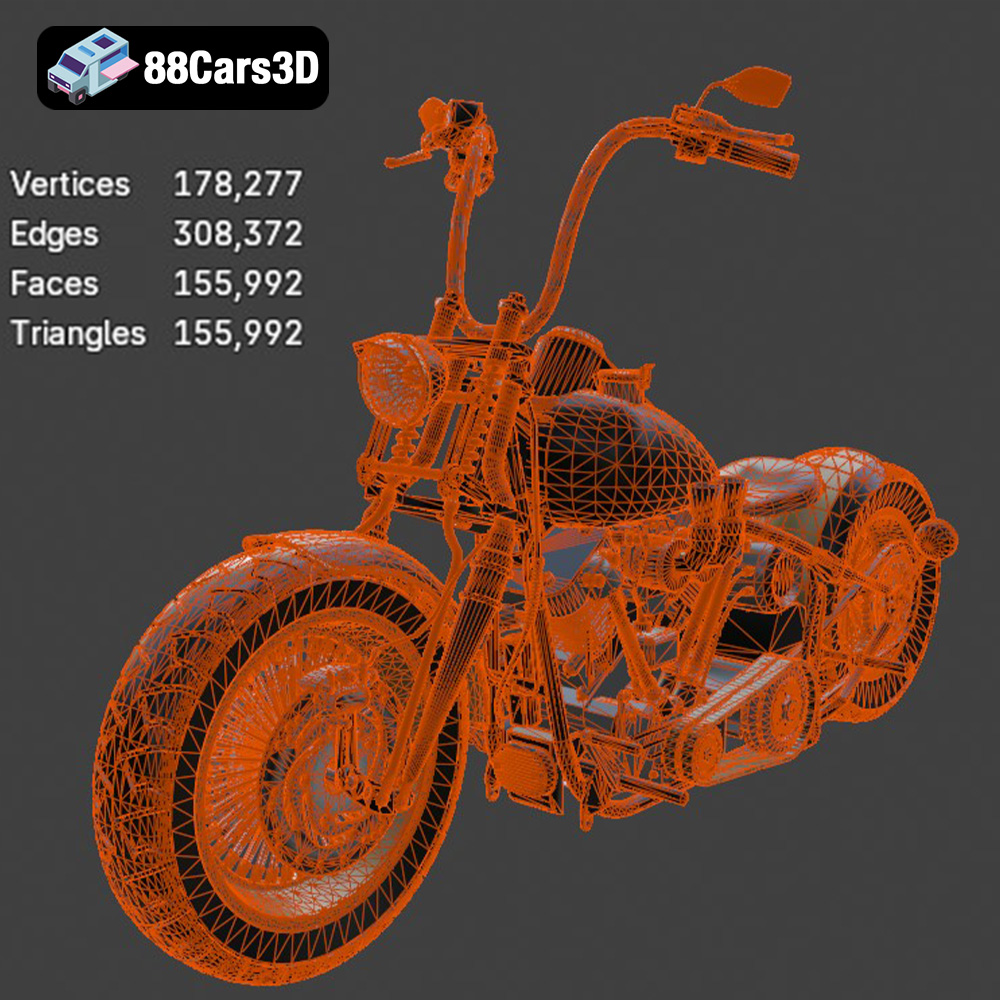
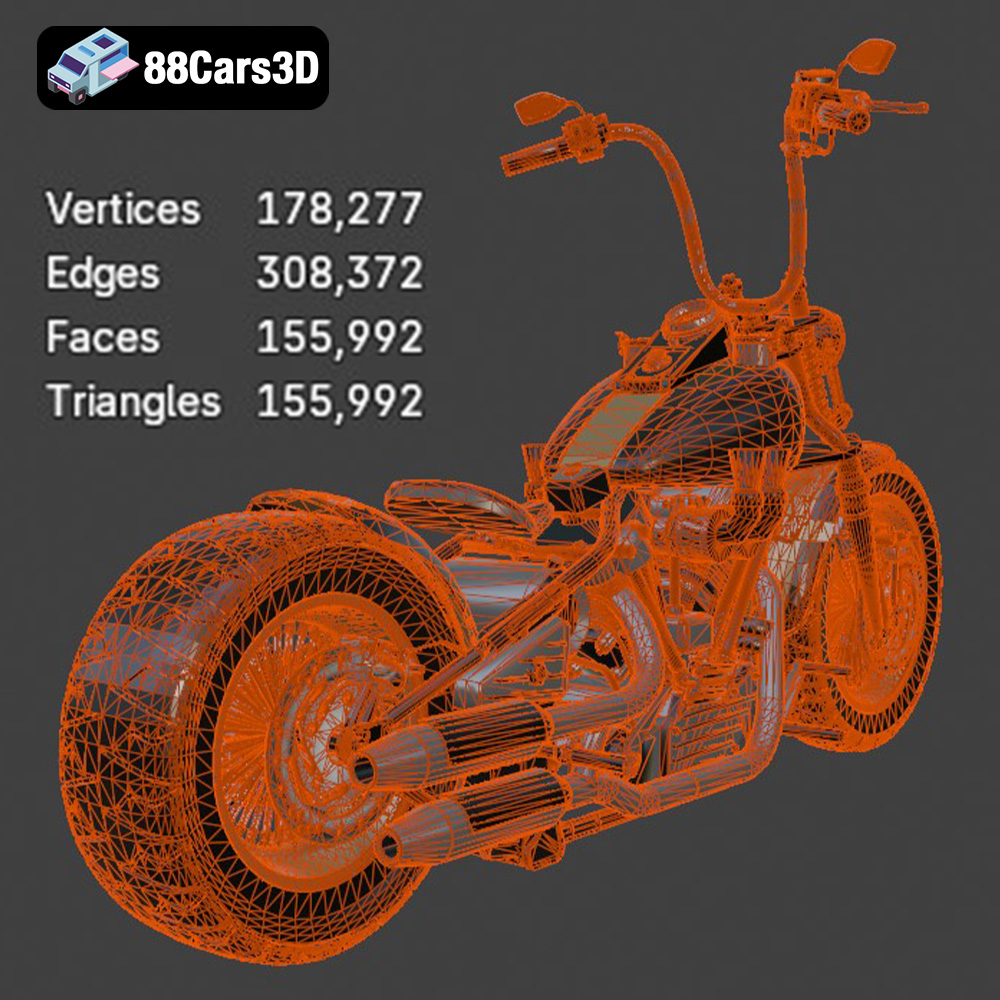
At the core of any high-quality 3D asset is its geometry and topology. For the Knucklehead, this means not just accuracy in shape, but also efficiency in polygon count. A professional-grade model strikes a delicate balance: enough polygons to capture the nuanced curves and mechanical intricacies, but optimized to ensure smooth performance in real-time applications like games or AR/VR. Clean geometry, characterized by quad-based topology and minimal non-manifold edges, is crucial. This allows for clean deformation if the model is animated and ensures stable subdivision if higher detail is required for close-up cinematic renders. The distinct knuckle valve covers, the detailed chassis, and every small bolt on the 88cars3d.com Knucklehead model are testament to this precision engineering.
Beyond the raw polygons, materials and textures are what give a model its believable surface qualities. Physically Based Rendering (PBR) workflows are the industry standard, utilizing maps like Albedo (color), Normal (surface detail), Roughness (micro-surface imperfections), Metallic (reflectivity), and Ambient Occlusion (contact shadows). For a vintage motorcycle, this translates to accurately depicting weathered chrome, aged leather, painted metal with subtle imperfections, and the precise sheen of different alloys. Meticulously configured materials ensure that whether rendered in a ray-tracing engine like V-Ray or in a real-time engine like Unreal, the Knucklehead looks authentic and reacts correctly to light.
UV mapping is the invisible backbone that allows 2D textures to wrap seamlessly around 3D geometry. Proper UV layouts are non-overlapping, efficiently packed, and minimize stretching, enabling artists to paint or apply textures without distortion. For complex models like the Harley Davidson Knucklehead, well-structured UV maps are essential for consistency across all its components – from the fuel tank to the spokes. This ensures that the texture sets provided with the model integrate perfectly, making it easy to swap out or customize materials, enhancing the model’s versatility for any project.
A superior 3D model isn’t just about static beauty; it’s about its ability to be integrated into diverse professional pipelines and brought to life through animation, interaction, and photorealistic rendering. The Harley Davidson Knucklehead 3D model from 88cars3d.com is designed with this versatility in mind, providing assets tailored for specific software and engines.
For artists and studios focused on producing high-resolution, photorealistic imagery or animations, 3ds Max and Blender are industry powerhouses. The provided .max and .blend files for the Knucklehead are not just raw geometry; they often include pre-configured studio lighting, camera setups, and advanced material networks. In 3ds Max, users can leverage renderers like V-Ray or Corona to achieve astonishing levels of realism, showcasing the bike’s chrome reflections, paint imperfections, and detailed mechanics with breathtaking clarity. Blender users benefit from Eevee for real-time visualization or Cycles for path-traced rendering, allowing for detailed turntable animations or dramatic close-ups that emphasize the model’s intricate craftsmanship and iconic design.
Game development, interactive experiences, and real-time simulations rely heavily on optimized assets that balance visual quality with performance. The .fbx and .unreal formats of the Harley Davidson Knucklehead 3D model are specifically tailored for engines like Unreal and Unity. In Unreal Engine, the .unreal file often contains not just the mesh and textures, but also optimized material instances, LODs (Levels of Detail) for performance scaling, and sometimes even basic collision geometry. This means developers can drop the asset directly into their game world, knowing it’s already configured to look great and run efficiently. Similarly, the .fbx file offers robust data transfer for Unity, allowing for quick setup of materials and physics, making the Knucklehead a perfect candidate for racing games, historical simulations, or virtual museums.
Augmented Reality (AR) and Virtual Reality (VR) are pushing the boundaries of immersive experiences, but they demand highly optimized 3D assets due to their performance-intensive nature. The .glb format, included with the Harley Davidson Knucklehead model, is specifically engineered for this. Its compact size and embedded textures make it ideal for quick loading in mobile AR applications or within VR environments, providing a smooth, responsive experience. Imagine showcasing the Knucklehead in a virtual showroom, allowing users to walk around it, inspect its details up close, or even overlay it onto a real-world scene through AR – all made possible by the efficiency of the .glb format and the model’s inherent optimization.
The utility of a high-quality 3D car model, or in this case, a classic motorcycle, extends far beyond simple rendering or game integration. These versatile digital assets serve as fundamental building blocks across a multitude of industries, driving innovation and efficiency.
For game studios, a production-ready 3D motorcycle model like the Harley Davidson Knucklehead is invaluable. It can be the centerpiece of a racing game, a collectible in an open-world environment, or a historical artifact in an educational simulation. The optimized polygon count, clean UV maps, and ready-to-use materials mean less time spent on asset creation and more time on gameplay mechanics and world-building. Furthermore, in simulation, these models can be used for training, vehicle dynamics testing, or even virtual prototyping, offering a safe and cost-effective way to interact with complex machinery.
While often associated with buildings, architectural visualization (Arch-Viz) frequently incorporates vehicles to provide scale, context, and a sense of realism to renders. Placing a beautifully rendered Harley Davidson Knucklehead outside a vintage-inspired garage or a modern loft instantly adds character and lifestyle to a scene. In product design, the model can be used to showcase how new accessories or custom parts would look on the bike, or for marketing materials that require a stunning, interactive representation of the product. The model’s exceptional realism allows for seamless integration into even the most demanding Arch-Viz or product showcase scenes.
The inclusion of an .stl file with the Knucklehead model opens up avenues for physical creation through 3D printing. Designers can print detailed scale models for display, use them for rapid prototyping of custom parts, or even create unique merchandise. The precision of the digital model translates directly to the physical output, allowing enthusiasts to hold a tangible representation of this automotive icon. This capability bridges the gap between the digital and physical, offering a unique blend of visualization and tangible production.
In today’s fast-paced production environments, time is money, and quality is non-negotiable. This is where the true value of acquiring production-ready 3D models from reputable sources like 88cars3d.com becomes evident. The Harley Davidson Knucklehead 3D model exemplifies the benefits of investing in pre-made, professionally crafted assets.
Creating a highly detailed, optimized 3D model from scratch, especially a complex mechanical object like a motorcycle, can take hundreds of hours of a skilled artist’s time. This includes modeling, UV unwrapping, texturing, material setup, and optimization for various platforms. By purchasing a ready-to-use asset, studios and individual artists can bypass this intensive process entirely. The time saved can be redirected towards core project development, iteration, and refinement, leading to faster project completion and more efficient resource allocation. This is particularly crucial for smaller teams or indie developers who might not have the capacity for extensive custom asset creation.
When you acquire a professional-grade asset like the Harley Davidson Knucklehead model from 88cars3d.com, you are guaranteed a certain level of quality and consistency. These models are typically created by experienced artists who adhere to industry best practices in terms of geometry, texturing, and optimization. This means clean topology, accurate PBR materials, well-organized UV maps, and reliable performance across different software and engines. Such consistency is vital for maintaining a high visual standard throughout a project, preventing visual discrepancies that can arise from inconsistent asset quality.
Access to a library of high-quality 3D car models and motorcycle assets empowers creators to tackle more ambitious projects and explore new creative avenues. Instead of being limited by the time and skill required to model every single element, artists can focus on narrative, scene composition, interaction design, and other higher-level creative tasks. Whether it’s populating a sprawling urban environment with realistic vehicles, creating a historical documentary featuring accurate machinery, or building a bespoke virtual experience, readily available production-ready assets significantly expand the scope of what’s creatively possible.
The journey from concept to a compelling digital experience is paved with countless technical and artistic decisions. At its heart lies the quality of the 3D assets that populate these virtual worlds. As we’ve explored, creating and deploying high-fidelity 3D car models and motorcycle assets like the Harley Davidson Knucklehead demands a deep understanding of geometry, materials, optimization, and diverse file formats.
The Harley Davidson Knucklehead 3D model, available at 88cars3d.com, stands as a prime example of a meticulously crafted, professional-grade asset. Its exceptional realism, optimized geometry, and comprehensive suite of file formats – from .blend and .max for cinematic rendering, to .fbx and .unreal for real-time game development, and .glb for cutting-edge AR/VR – ensure its versatility and seamless integration into virtually any professional pipeline. Whether you’re a game developer striving for authentic environments, an architectural visualizer adding narrative depth, or a product designer pushing the boundaries of interactive showcases, this model provides an invaluable foundation.
Investing in production-ready 3D models not only saves precious time and resources but also elevates the overall quality and creative potential of your projects. Explore the possibilities and bring your visions to life with the precision and realism that only top-tier 3D assets can provide, starting with iconic models found at 88cars3d.com.
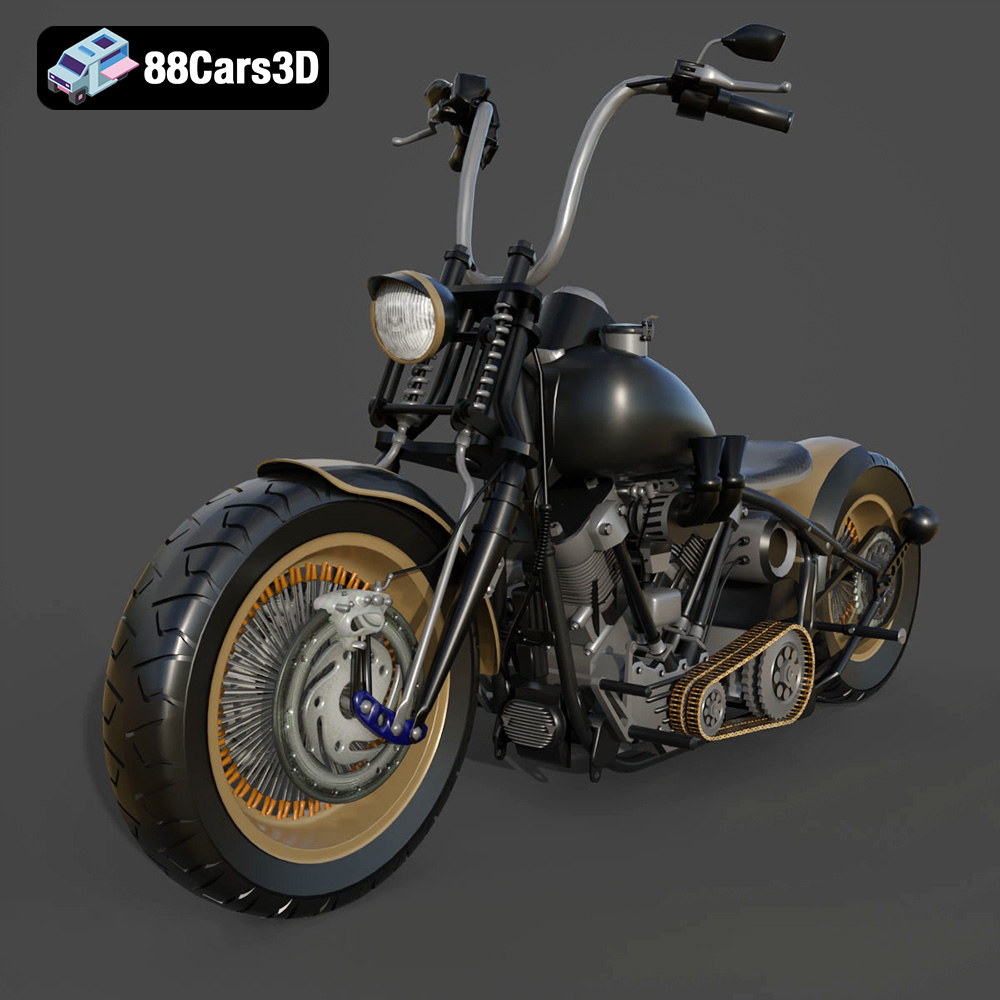
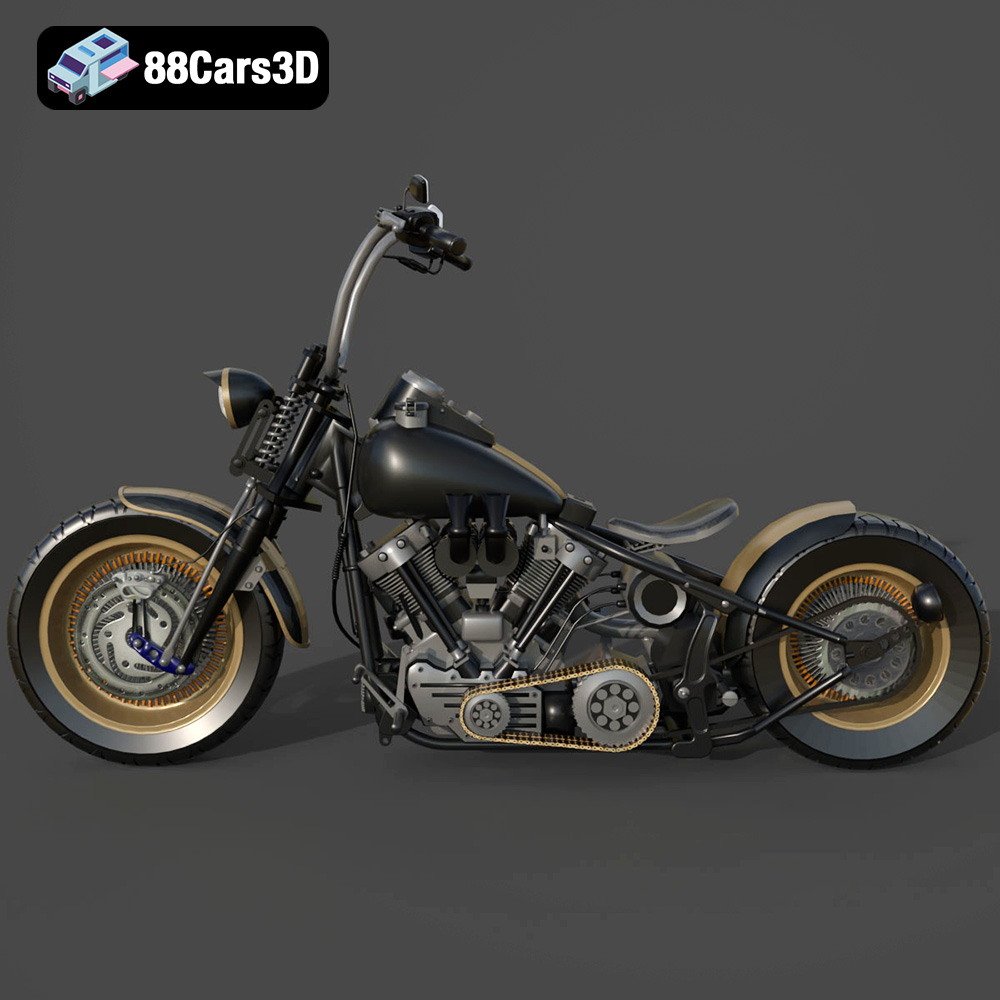
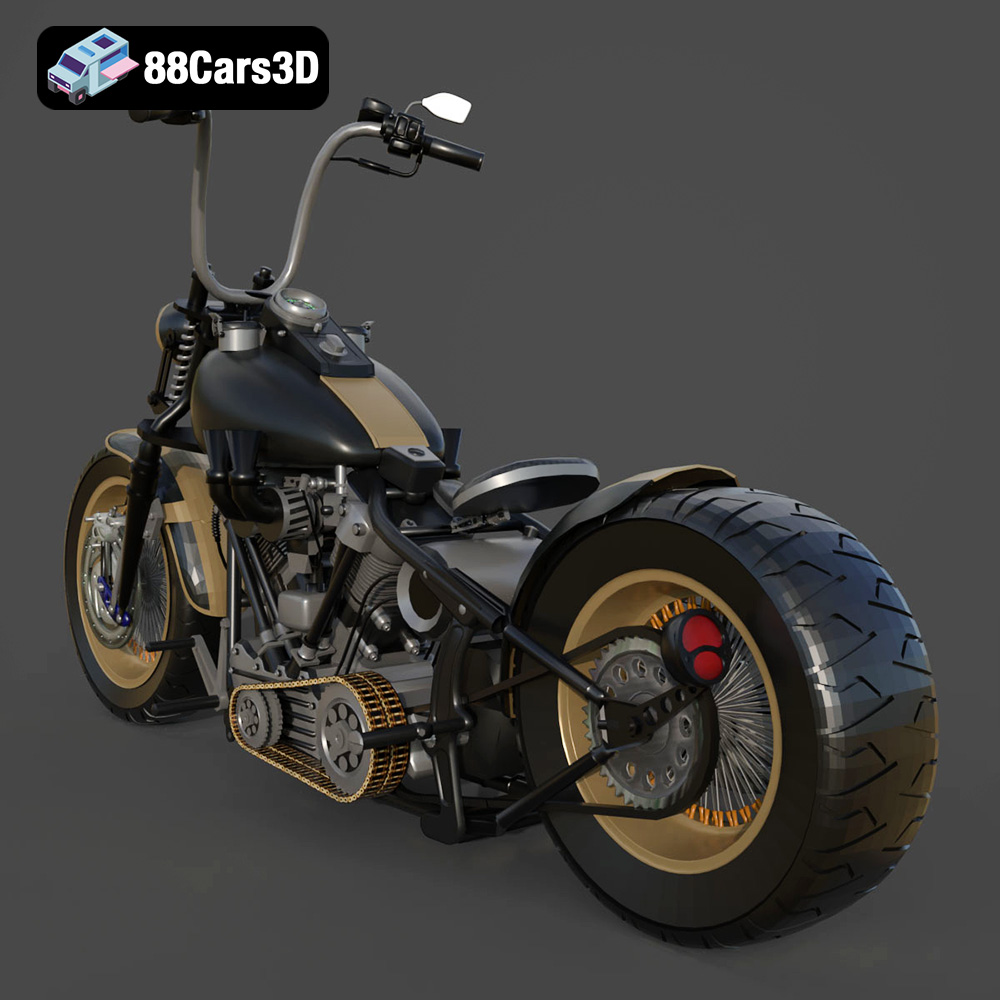
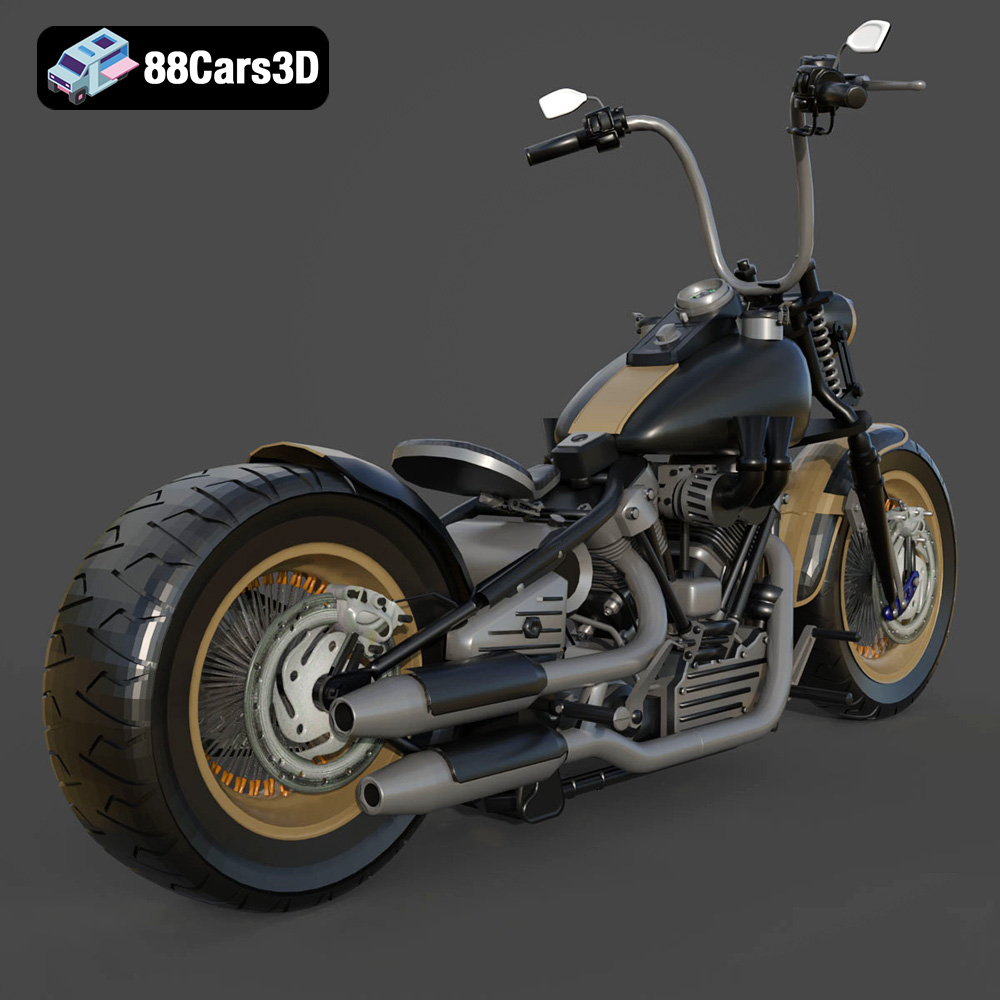
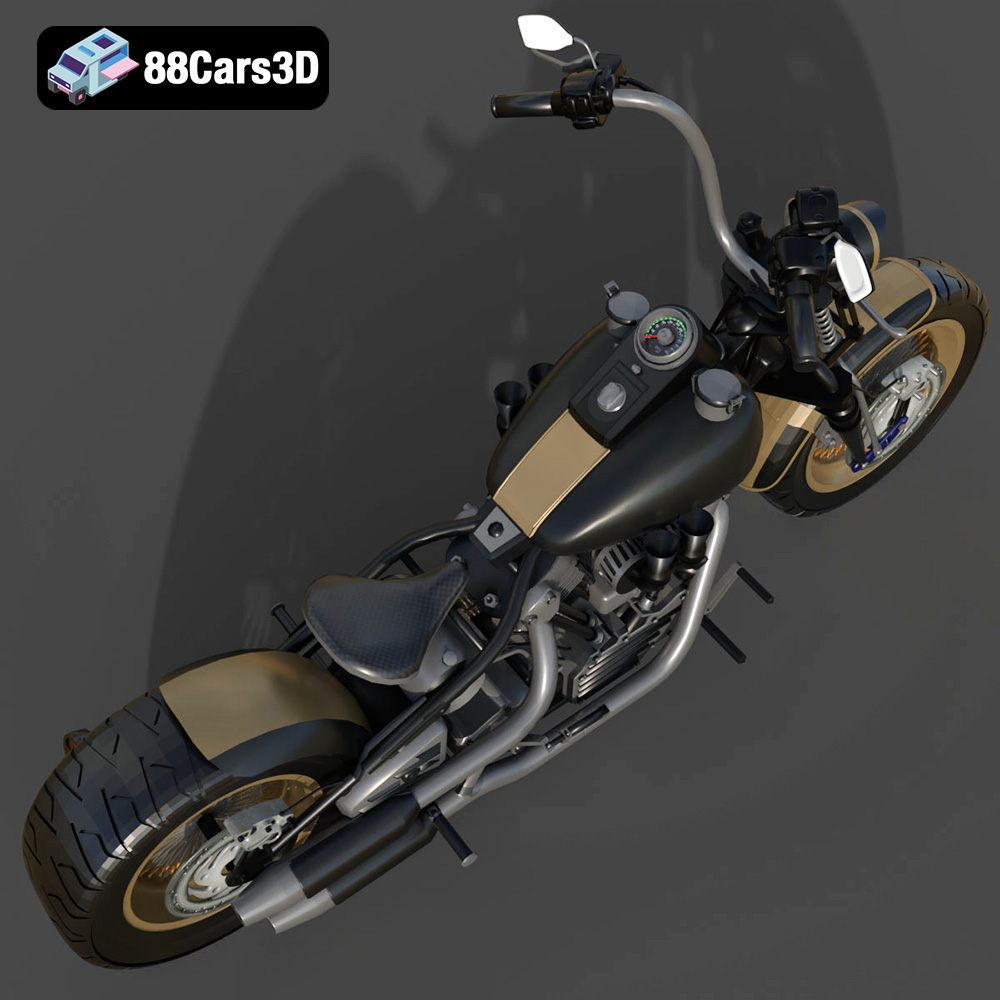
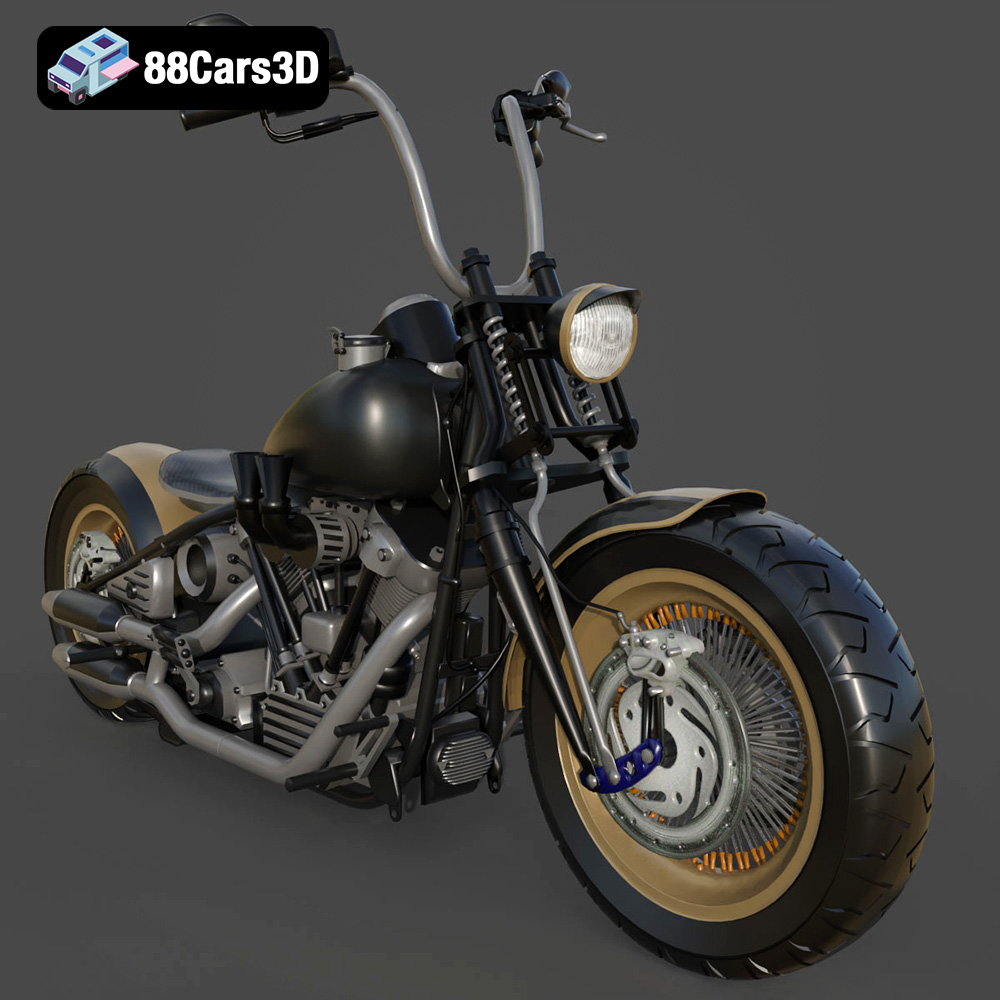
Experience the iconic design of the classic American motorcycle with the Harley Davidson Knucklehead 3D model. Designed for exceptional realism, this asset perfectly replicates the legendary engine, sweeping lines, and mechanical intricacies that make this vintage bike a timeless masterpiece. Built with professional-grade precision, the model features clean geometry, an optimized polygon count, and meticulously configured materials. Every component, from the distinct knuckle valve covers to the detailed chassis and instrumentation, has been crafted to deliver maximum visual fidelity without compromising performance. This versatile 3D model is ideal for a wide range of applications, including AAA game development, cinematic rendering, architectural visualization, and immersive AR/VR experiences. The carefully structured meshes and UV maps ensure seamless integration into any professional production pipeline.
$39.99
.arvr
.blend
.car3dmodel
.classicmotorcycle
.cruiser
.fbx
.gameasset
.glb
.harleydavidson
.knucklehead
.max
.motorcycle
.obj
.ply
.rendering
.simulation
.stl
.unreal