Get 20% OFF All Premium 3D & STL Models!

In the vibrant world of 3D visualization, the demand for truly exceptional assets is constant and ever-growing. Whether you’re an architect visualizing a scene, a game developer crafting an immersive world, or an animator bringing stories to life, the quality of your 3D models forms the bedrock of your project’s success. Automotive and vehicle models, in particular, require an unparalleled level of precision, capturing not just form but also the intricate engineering and aesthetic philosophy of the real-world counterpart.
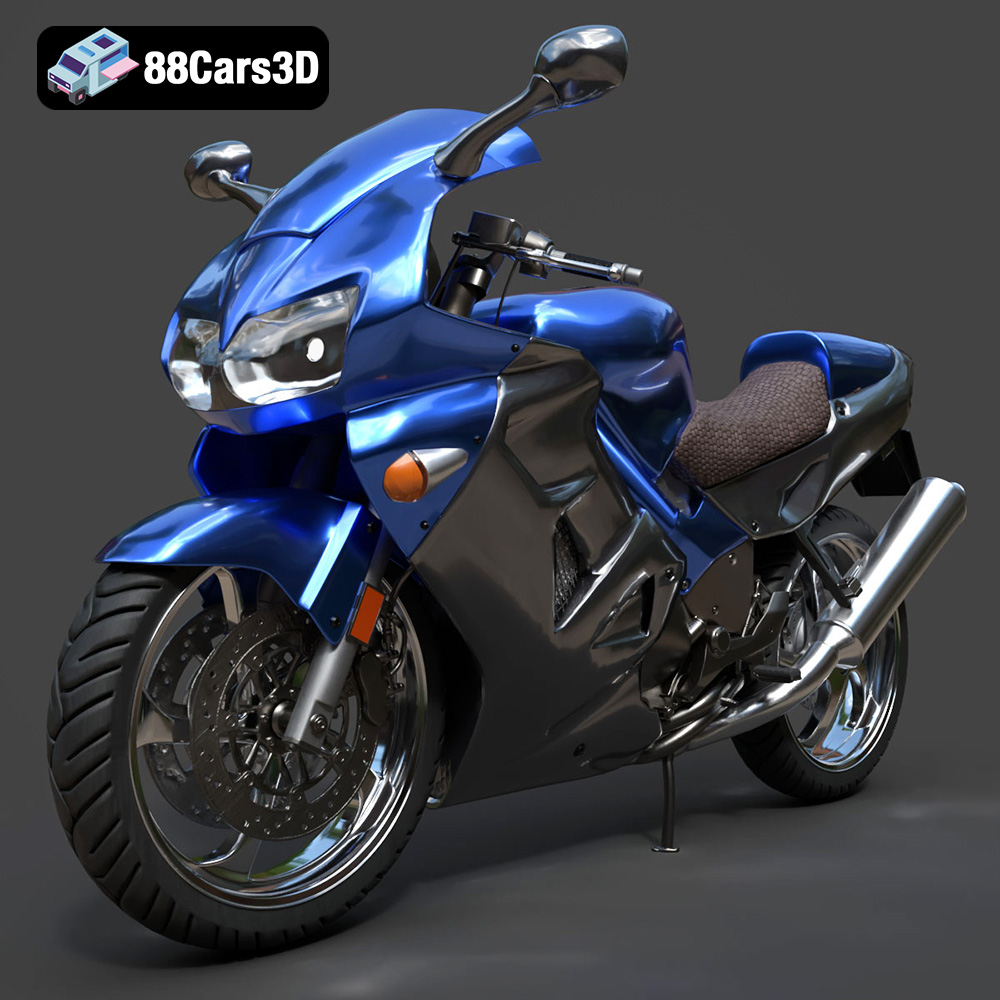
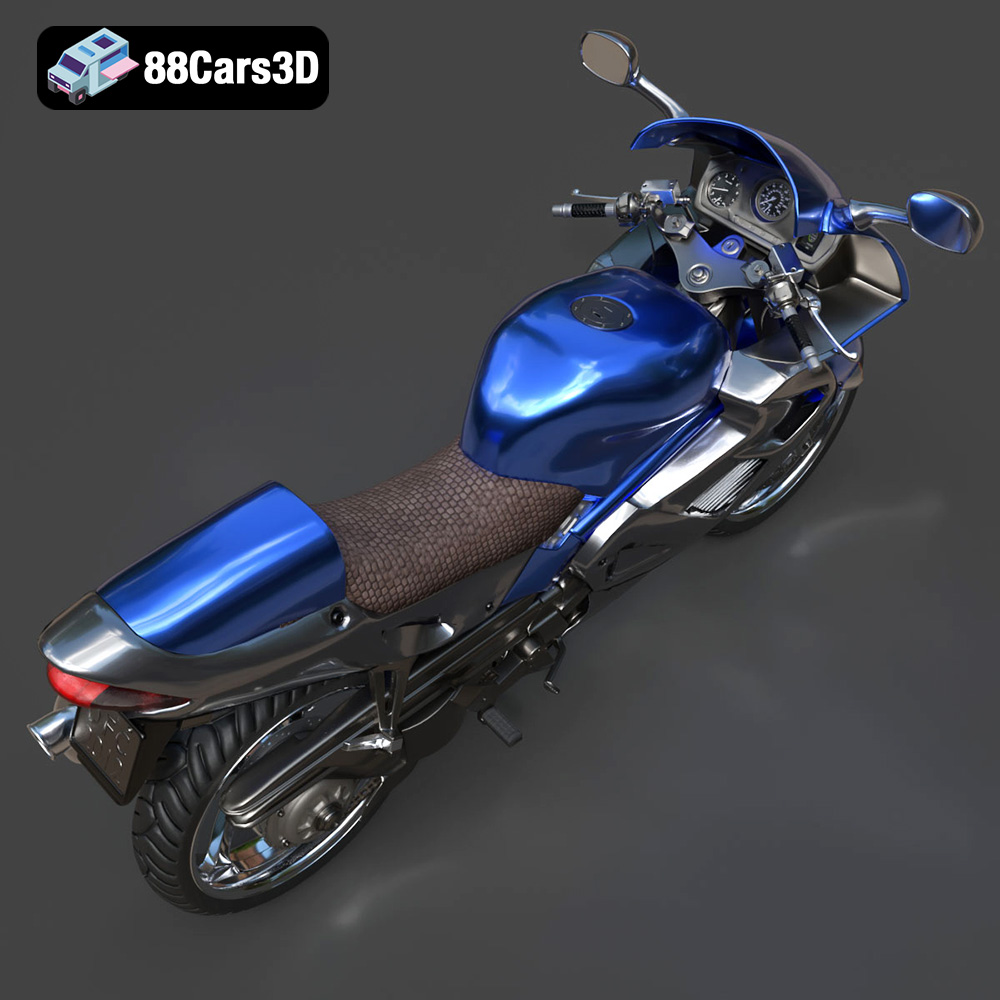
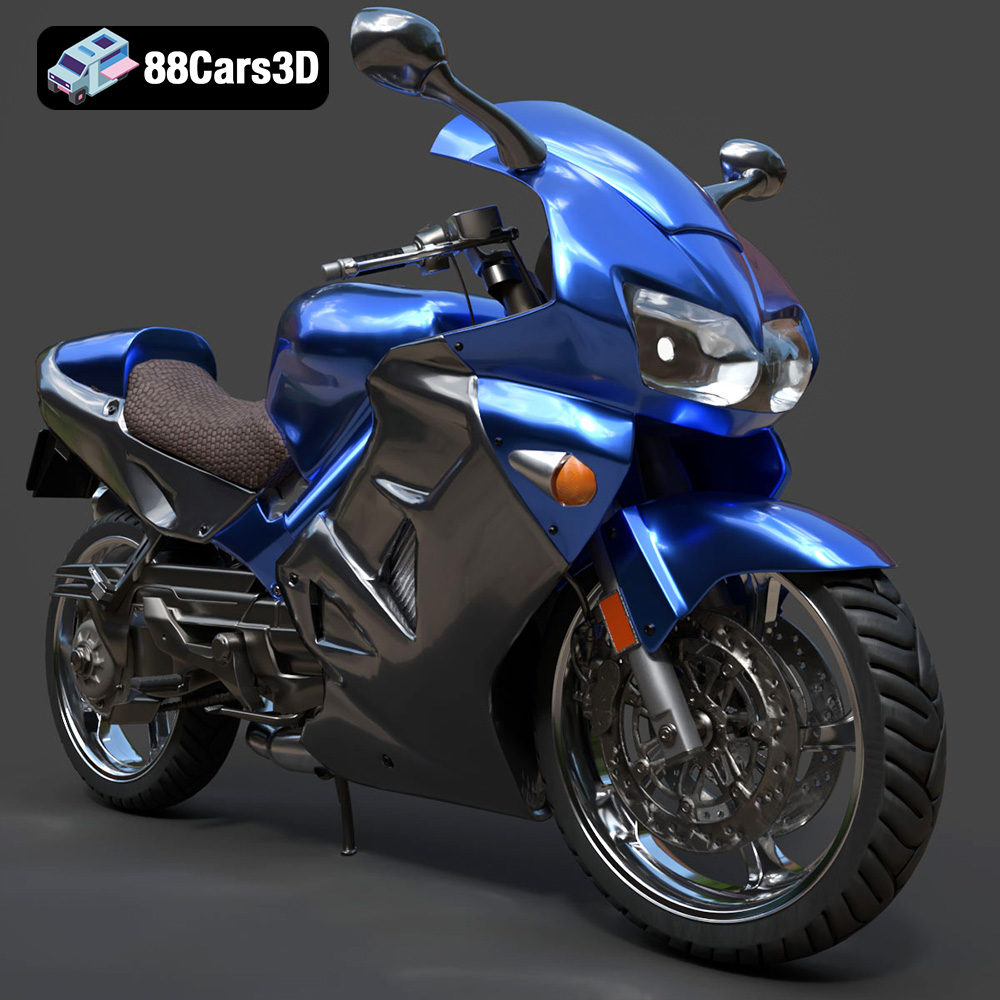
Today, we’re taking a closer look at what makes a premium 3D vehicle asset stand out, exemplified by the meticulous detail found in models like the Honda VFR 801 3D Model. This specific model, available on 88cars3d.com, encapsulates the essence of what professional designers and developers seek: unmatched realism, clean geometry, and versatile file formats ready for any pipeline. From the subtle curves of the fairing to the intricate mechanical components, every aspect is crafted to elevate your visual projects, ensuring accuracy and true-to-life aesthetics.
The choice of file format for a 3D model is far more than a mere technicality; it’s a critical decision that dictates compatibility, workflow efficiency, and ultimately, the success of a project. Different formats are optimized for different stages of the 3D pipeline, from initial modeling and texturing to real-time rendering, interactive experiences, and even physical production. A truly professional 3D asset, such as the Honda VFR 801-002 3D Model, provides a comprehensive suite of formats to cater to virtually any need.
The .blend format is the native file type for Blender, one of the most popular open-source 3D creation suites. When you acquire a .blend file for a model like the Honda VFR 801, you’re not just getting geometry; you’re typically receiving a fully editable Blender scene. This often includes materials, textures, lighting setups, and even camera configurations, exactly as the artist intended. This makes .blend files ideal for users who operate primarily within Blender, offering maximum flexibility for modifications, animations, or integration into existing Blender projects without the need for extensive re-setup. The VFR 801’s .blend file is ready to go, providing a solid starting point for any Blender-centric workflow.
.fbx (Filmbox) is an industry-standard format for exchanging 3D data between various software applications and game engines. It supports not only geometry and materials but also animations, rigs, and camera data, making it incredibly versatile. For real-time applications like game development, an .fbx file of the Honda VFR 801 is invaluable. It ensures that the model, its UVs, and PBR (Physically Based Rendering) materials transfer cleanly into engines like Unreal Engine and Unity. The .unreal format takes this a step further; it signifies an asset that has been specifically configured and optimized for Unreal Engine. This often means pre-set materials, collision meshes, LODs (Levels of Detail), and possibly even Blueprints, saving game developers countless hours of setup time and ensuring optimal performance within the engine environment.
The .obj (Wavefront OBJ) format is perhaps the most universal 3D file format. It’s a simple, text-based format that defines geometry (vertices, faces, normals, UVs) and links to material files. While it doesn’t support advanced features like animation or rigging, its widespread compatibility makes it an essential bridge between almost all 3D software packages. If you need to import the Honda VFR 801 3D Model into an obscure renderer or a proprietary pipeline, .obj is your safest bet. Meanwhile, .max is the native file format for Autodesk 3ds Max, another cornerstone of professional 3D production, especially in architectural visualization, film, and automotive design. A .max file of the VFR 801 provides full editability within 3ds Max, including complex modifiers, scene organization, and advanced rendering setups specific to the software’s powerful rendering capabilities like V-Ray or Corona.
As 3D technology evolves, so do its applications, leading to specialized formats. .glb (GL Transmission Format Binary) is an increasingly popular format, especially for AR (Augmented Reality), VR (Virtual Reality), and web-based 3D viewing. It’s an efficient, self-contained package that embeds textures and animations directly into the file, making it lightweight and fast to load – perfect for interactive web experiences or mobile AR apps featuring the Honda VFR 801. .stl (Stereolithography) is the gold standard for 3D printing. It represents a 3D model as a collection of triangles, defining the surface geometry without color or texture information. For prototyping, scale models, or even custom parts of the Honda VFR, an .stl file is indispensable. Finally, .ply (Polygon File Format) is another precision mesh format often used for storing 3D data from 3D scanners, CAD applications, or for scientific visualization and analysis. It can store a wide range of properties, including color per vertex, normal information, and even material properties, making it useful for detailed inspection or complex data pipelines.
Providing such a comprehensive array of formats for a single asset like the Honda VFR 801 3D Model demonstrates a commitment to user flexibility and professional integration, ensuring it can seamlessly fit into virtually any digital workflow.
Photorealistic rendering is an art form, and high-quality 3D car models or motorcycle models are the canvases upon which these masterpieces are created. The Honda VFR 801 3D Model, with its clean polygon geometry and realistic materials, provides an exceptional starting point for crafting stunning visualizations across various professional software packages.
For many professionals in automotive rendering, 3ds Max remains a cornerstone. Importing the .max file of the Honda VFR 801 into 3ds Max allows for immediate access to its expertly organized scene. The first step towards photorealism involves setting up a plausible environment. This typically means using HDR (High Dynamic Range) image-based lighting for realistic reflections and global illumination, often paired with a physical camera and targeted area lights to highlight specific details like chrome accents or paint reflections. Materials are crucial; the VFR model comes with realistic materials, but fine-tuning them within 3ds Max using rendering engines like V-Ray or Corona allows for precise control over reflectivity, glossiness, and normal mapping. Ensuring the VFR’s paint perfectly catches the light, mimicking real-world automotive finishes, is paramount for high-end results.
Blender users benefit from the included .blend file, which often contains pre-configured materials and lighting. Leveraging Blender’s Cycles or Eevee render engines, artists can further enhance the VFR 801’s visual fidelity. This involves experimenting with studio lighting setups, volumetric effects for atmospheric depth, and intricate node-based material adjustments. For instance, the metallic flake in the paint or the subtle imperfections in the tire rubber can be controlled with procedural textures and careful PBR shader calibration. Focusing on the interaction of light with the VFR’s surfaces, from the clear visor to the engine’s metallic gleam, is key to achieving a compelling render.
Once the raw render of the Honda VFR 801 is generated, the magic of post-production begins. Using software like Adobe Photoshop or Affinity Photo, artists can apply non-destructive adjustments. This includes color grading to set the mood, adding subtle lens flares or depth-of-field effects, and compositing the motorcycle into a realistic background. Small details, like dust on the tires or fingerprints on a polished surface, can elevate a render from good to breathtaking. The clean output from a high-quality model like the Honda VFR 801 makes this stage significantly easier, as there are fewer rendering artifacts to correct, allowing the artist to focus purely on aesthetic enhancements.
The interactive nature of game development places unique demands on 3D assets. Performance, fidelity, and seamless integration are key. The Honda VFR 801 3D Model is specifically designed with game development in mind, offering optimized formats and topology for real-time environments.
For Unreal Engine, the .fbx and dedicated .unreal formats of the VFR 801 are invaluable. Game developers prioritize efficiency, and a well-optimized asset ensures smooth frame rates without sacrificing visual quality. This involves verifying poly count – the VFR model’s clean topology means artists can utilize Unreal’s LOD system effectively, creating lower-detail versions of the model that automatically swap in as the camera moves away. Material instances in Unreal Engine allow for quick color changes or texture swaps for customizable bikes within a game. The pre-configured .unreal asset from 88cars3d.com significantly reduces import and setup time, allowing developers to focus on gameplay rather than asset preparation.
In a dynamic game environment, the Honda VFR 801 needs to interact realistically with its surroundings. This requires accurate collision meshes. A high-quality model will often come with simplified collision geometry, separate from the render mesh, to ensure efficient physics calculations. Developers can then implement vehicle physics systems within Unreal or Unity, defining mass, friction, suspension, and engine characteristics. The VFR 801’s accurate scaling is critical here, ensuring that its physics behavior, from handling to speed, feels authentic within the game world.
Bringing the Honda VFR 801 to life in a game involves rigging and animation. While the base model provides the geometry, a game-ready asset often implies a well-structured hierarchy that facilitates rigging a skeleton for wheels, steering, and suspension. Developers can then use inverse kinematics (IK) systems to simulate realistic suspension compression and steering movements. Dynamic simulations for elements like chains or exhaust heat haze further enhance the immersive experience, all built upon the solid foundation of a meticulously crafted 3D model.
The utility of a versatile 3D asset like the Honda VFR 801 extends far beyond traditional rendering and gaming. Emerging technologies such as Augmented Reality (AR), Virtual Reality (VR), and 3D printing open up new avenues for interaction and physical manifestation.
AR and VR are transforming how we interact with digital content. Imagine placing the Honda VFR 801 directly into your living room via an AR application on your smartphone, or exploring its intricate details in a fully immersive VR showroom. The .glb format is particularly well-suited for these applications due to its optimized size and embedded textures. Developers can use the VFR 801 model to create interactive product configurators, virtual test rides, or educational experiences where users can disassemble and study the motorcycle’s components in a 3D space. The model’s accurate scaling ensures a true-to-life representation, critical for a believable immersive experience.
The inclusion of an .stl file for the Honda VFR 801 3D Model unlocks the potential for physical creation. This format is the standard for 3D printing, allowing hobbyists, designers, or engineers to bring the digital model into the physical world. Whether it’s for creating a scale model for a display, prototyping a custom accessory, or even generating parts for architectural models that include a realistic motorcycle, the .stl file provides the necessary geometry. The model’s clean topology translates into a cleaner print, minimizing errors and ensuring a high-fidelity physical output that truly reflects the digital design. This offers a unique tactile dimension to experiencing a premium 3D asset.
Beyond entertainment, high-fidelity 3D models like the Honda VFR 801 are powerful tools for education and training. Imagine mechanics using a VR simulation to learn about the VFR’s engine layout, or design students studying its ergonomic principles in an interactive 3D environment. These applications require models that are not only visually accurate but also structurally correct, allowing for detailed inspection and interaction. The versatility of the various file formats supports integration into specialized simulation software, making complex subjects more accessible and engaging.
The true mark of a professional 3D asset lies in its underlying technical quality. For the Honda VFR 801 3D Model, this manifests in several critical areas that directly impact performance, flexibility, and the final visual output across all applications.
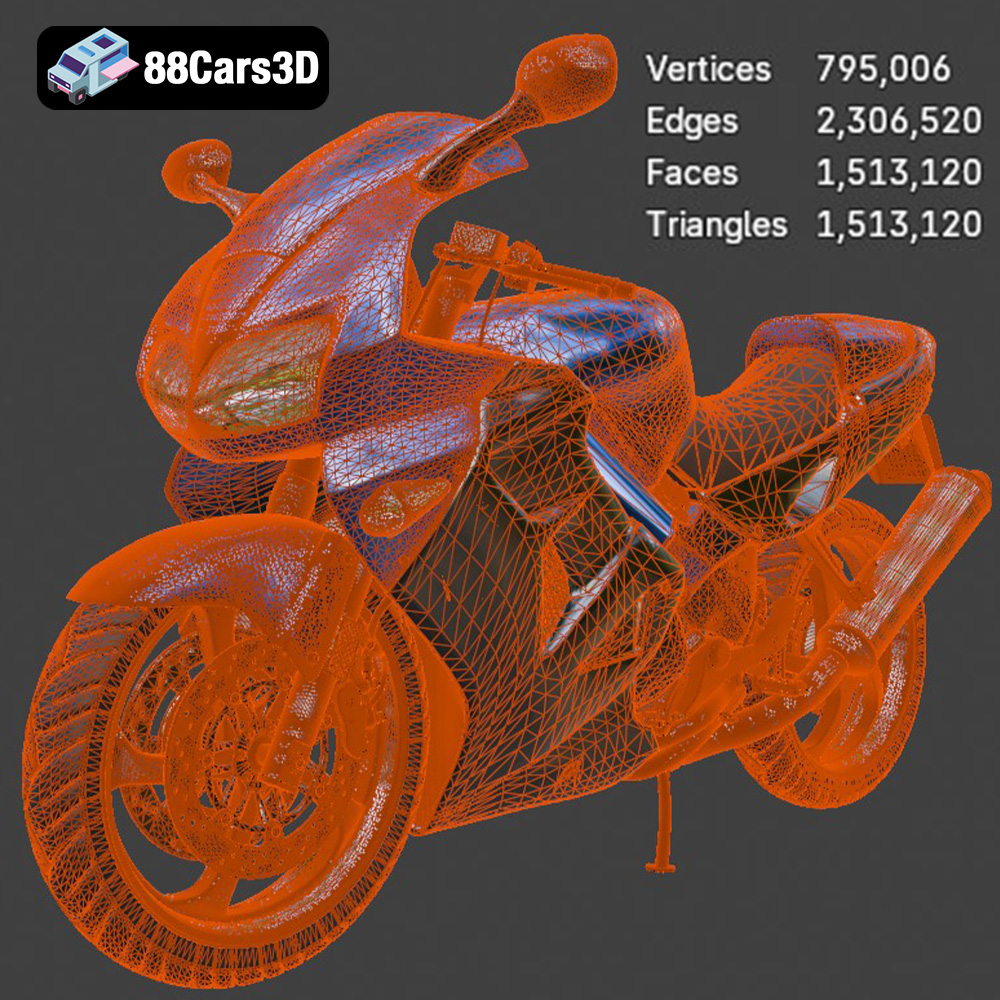
The product description highlights “clean polygon geometry” and topology “optimized for smooth rendering and seamless subdivision.” What this means in practice is that the model is constructed with well-ordered, predominantly quad-based polygons, free from common issues like n-gons (polygons with more than four sides), flipped normals, or excessive density in unnecessary areas. This clean structure is crucial for smooth deformation during animation and, more importantly, for subdivision surface modeling. When a subdivision modifier is applied (e.g., Turbosmooth in 3ds Max or Subdivision Surface in Blender), the VFR model will smoothly interpolate its surfaces, adding detail without introducing artifacts or pinching. This allows artists to work with a relatively low-poly base model for efficiency while having the option to render incredibly high-detail surfaces for close-up shots or cinematics.
Modern rendering relies heavily on PBR (Physically Based Rendering) workflows. The Honda VFR 801 3D Model comes with “realistic materials,” which implies adherence to PBR principles. This means that textures and shaders are designed to simulate how light interacts with surfaces in the real world, producing consistent and accurate results under any lighting conditions. Key PBR maps typically include Albedo (color), Normal (surface detail), Roughness (micro-surface variations impacting reflections), Metallic (metalness), and Ambient Occlusion (self-shadowing). High-resolution, carefully painted or procedurally generated textures for the VFR’s paint, chrome, rubber, plastic, and leather components are essential for achieving that “unmatched realism” whether viewed in a game engine or a offline renderer.
Precision in 3D modeling includes maintaining accurate scaling and proportions relative to the real-world object. The Honda VFR 801-002 3D Model is designed with “accurate scaling.” This is vital for several reasons: it ensures that the model fits correctly into architectural visualizations, maintains believability in game environments, and is suitable for manufacturing processes like 3D printing where real-world dimensions matter. Without accurate scaling, a model can look out of place, or worse, cause significant problems in downstream workflows. This attention to detail reflects a professional approach to 3D asset creation, providing users with a reliable foundation for their projects.
The journey through the intricate world of 3D modeling reveals that true quality lies not just in visual appeal, but in the meticulous technical execution and versatility of the underlying asset. The Honda VFR 801 3D Model stands as a prime example of such excellence. With its clean topology, realistic PBR materials, accurate scaling, and a comprehensive suite of industry-standard file formats – from .blend and .max for intricate design work, to .fbx and .unreal for real-time applications, and specialized formats like .glb and .stl for AR/VR and 3D printing – it truly is a professional-grade asset ready for any challenge.
Whether you’re developing the next big game, crafting breathtaking automotive renders, designing immersive AR/VR experiences, or prototyping physical models, investing in high-quality 3D car models like the Honda VFR 801 3D Model is a decision that pays dividends in efficiency, flexibility, and ultimately, superior visual results. Assets like these empower artists and developers to push creative boundaries and achieve unparalleled realism in their projects. Explore this and many other premium 3D car models and vehicle assets at 88cars3d.com, where quality and versatility meet.
Experience unmatched realism with the Honda VFR 801-002 3D Model. Constructed with meticulous attention to detail, this professional 3D asset captures the dynamic essence and engineering precision of the iconic Honda VFR. It is designed to elevate your visual projects with accurate scaling and true-to-life aesthetics. Key features include clean polygon geometry, realistic materials, and exceptional detailing. The topology is fully optimized for smooth rendering and seamless subdivision, ensuring professional-grade results whether utilized for static imagery or dynamic animations. This versatile 3D model is ideal for a wide range of applications. From digital rendering and simulation to game development and immersive AR/VR experiences, it integrates seamlessly into your existing pipeline to deliver outstanding visual fidelity.
$39.99
.arvr
.blend
.car3dmodel
.fbx
.gameasset
.glb
.honda
.max
.motorcycle
.obj
.ply
.rendering
.simulation
.sportbike
.stl
.twowheeler
.unreal
.vfr