Get 20% OFF All Premium 3D & STL Models!

In the rapidly evolving world of 3D visualization, the demand for high-quality, production-ready assets is greater than ever. Whether you’re a game developer crafting immersive open worlds, an architect populating a sprawling urban scene, or a marketing agency producing stunning automotive renders, the foundational element remains the same: meticulously detailed 3D models. These digital representations are the building blocks that bring visions to life, enabling everything from realistic simulations to captivating virtual experiences. A premium 3D model doesn’t just look good; it’s engineered for performance, compatibility, and versatility across a myriad of platforms and software.
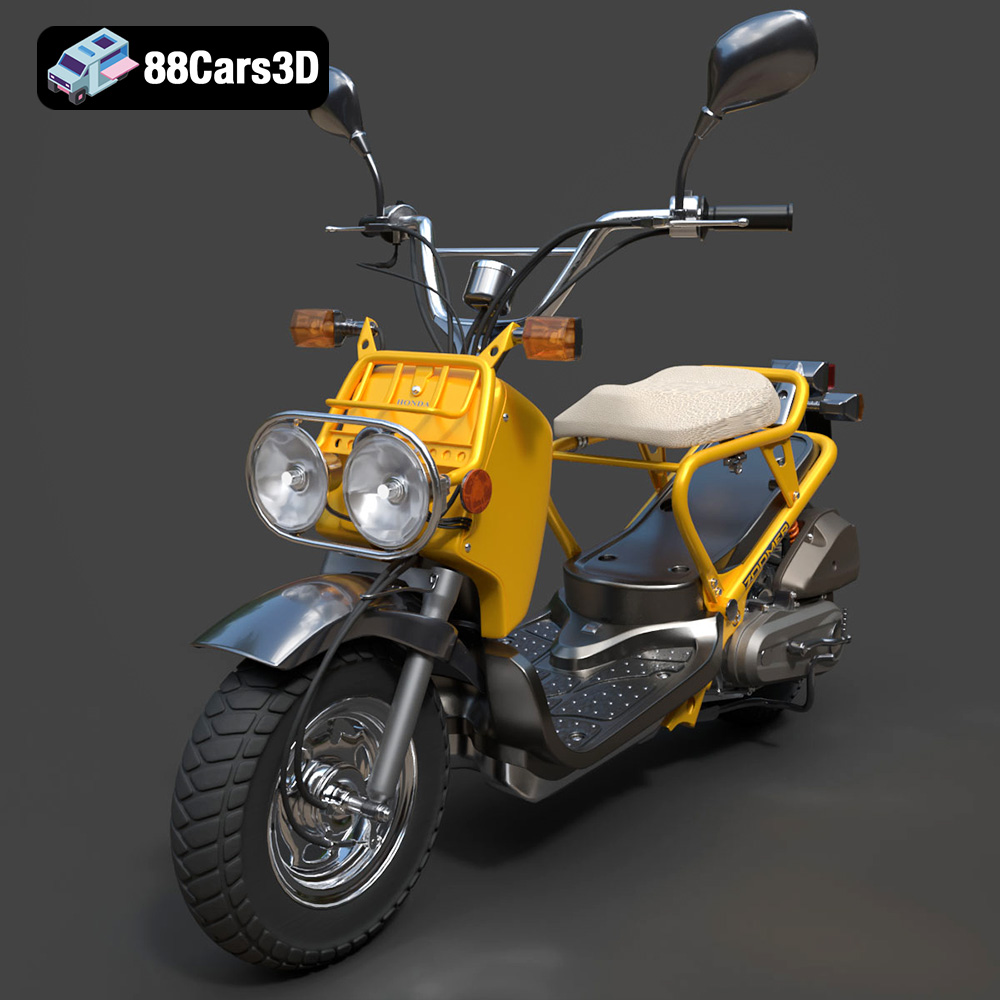
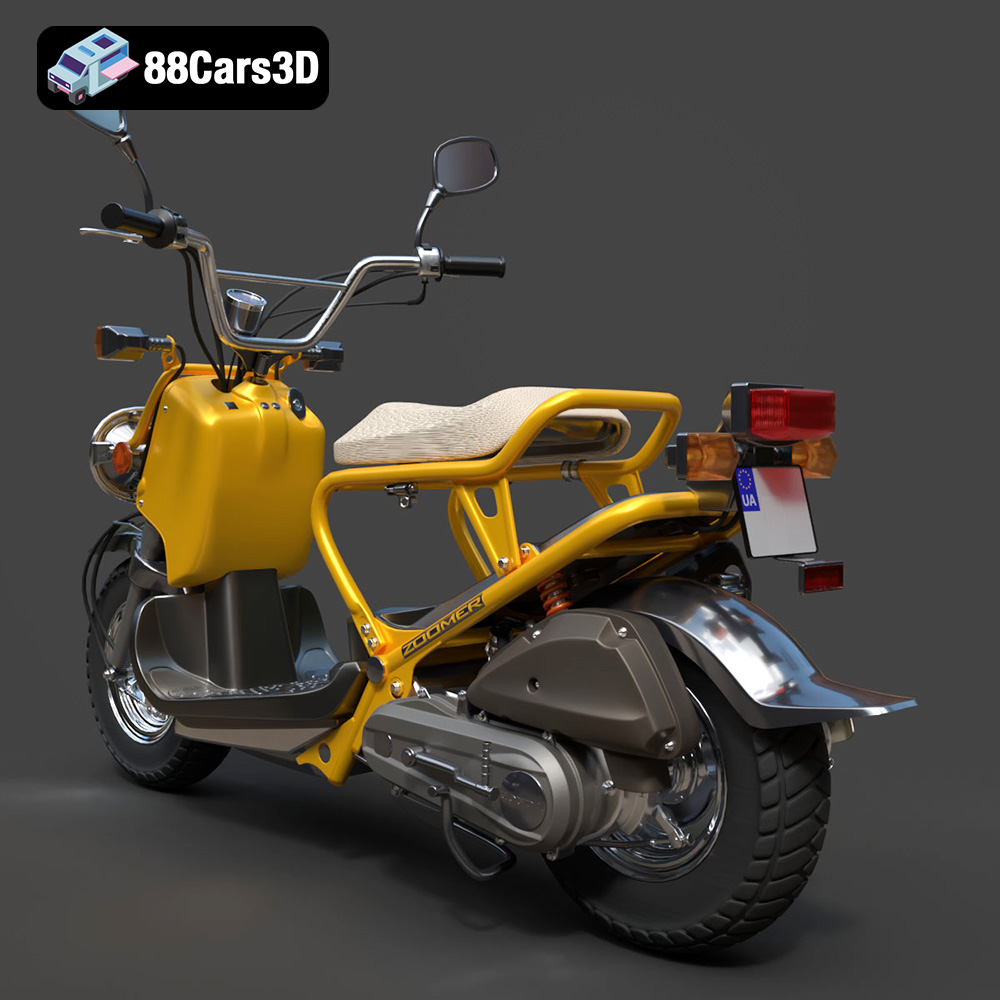
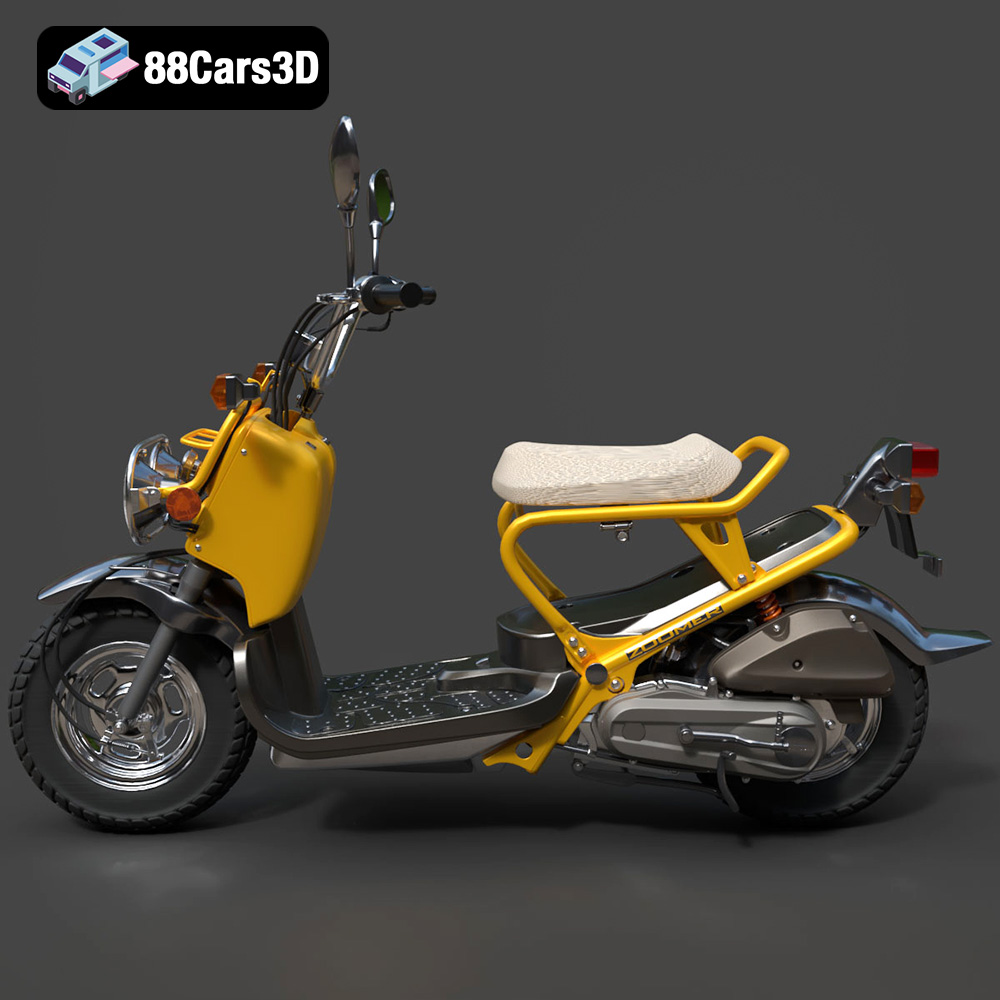
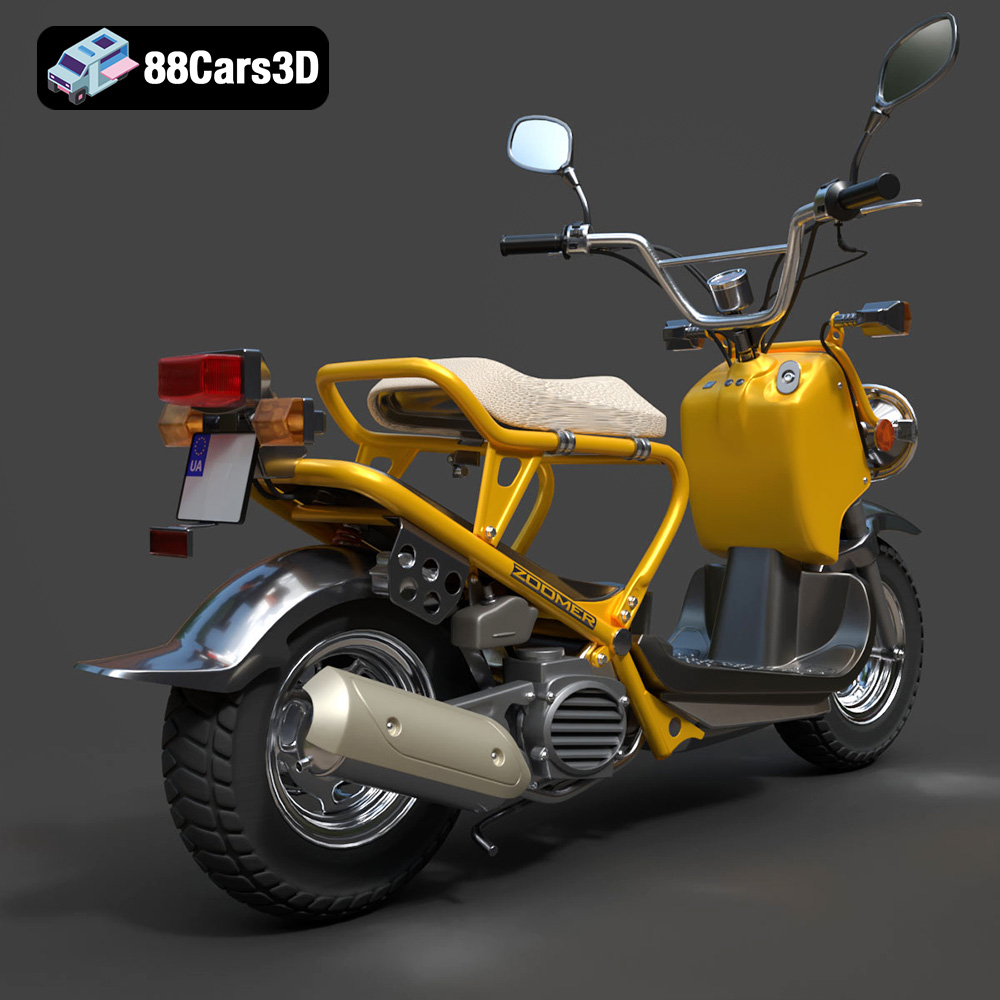
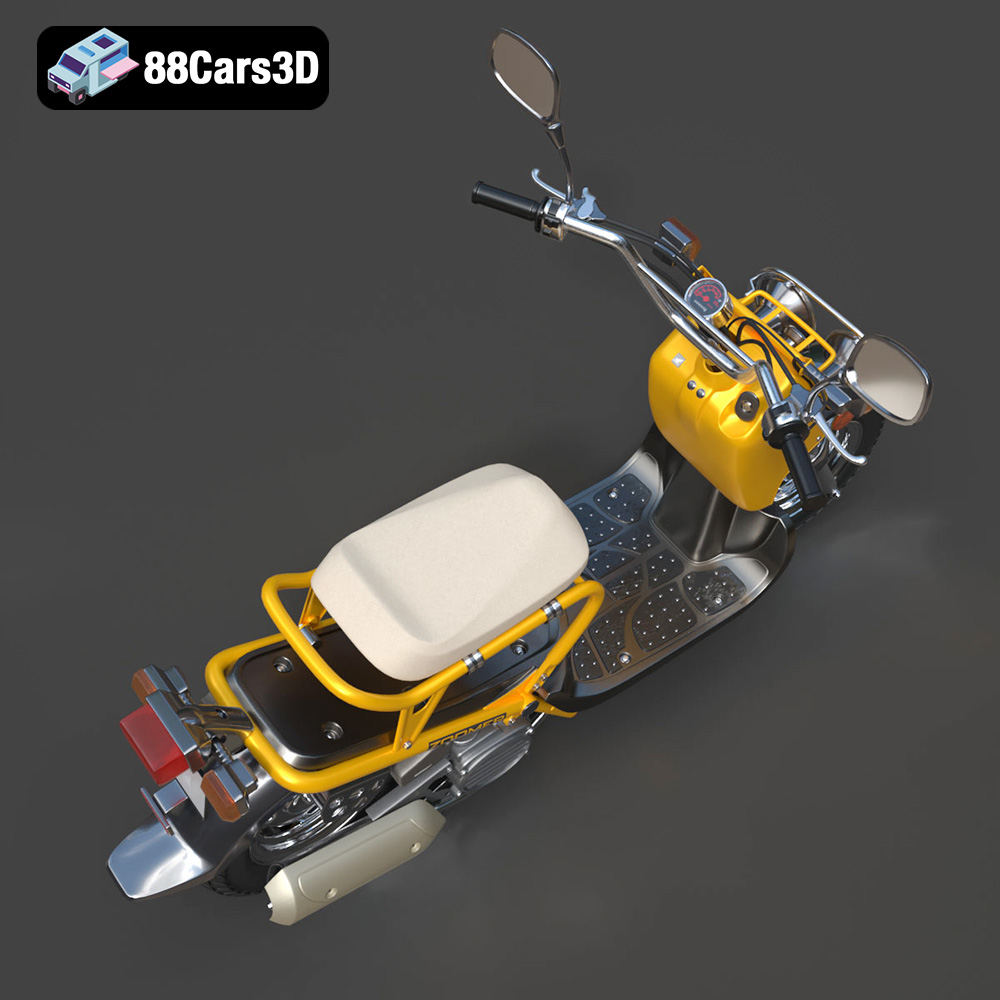
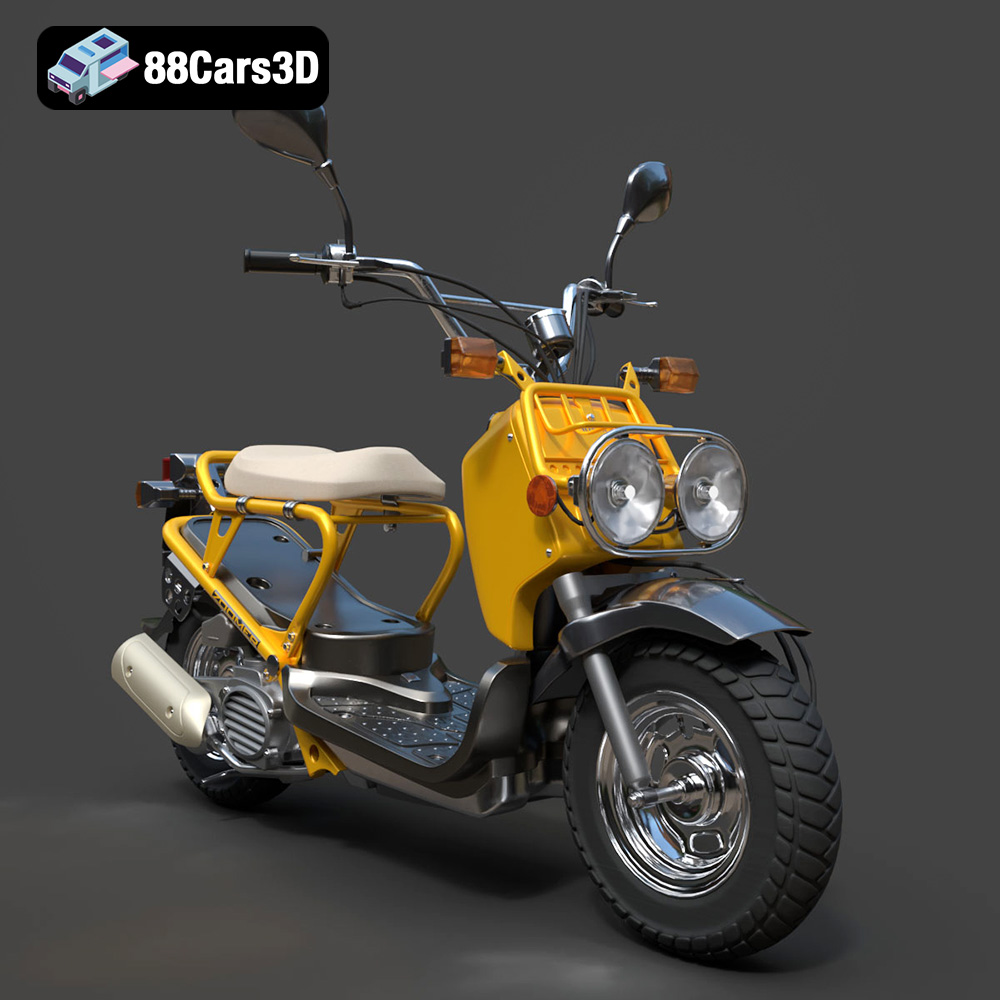
One such exemplary asset that embodies this standard of excellence is the Honda Zoomer 50 2005 3D Model. This particular model stands out for its meticulous craftsmanship, capturing the iconic rugged charm of the scooter with unparalleled precision. Its clean geometry, realistic materials, and professional quality construction make it an ideal choice for a wide array of detailed visualizations and dynamic projects. From game development to high-fidelity architectural visualization, understanding the technical underpinnings and practical applications of such an asset is crucial for any professional working in the 3D space.
The versatility of a 3D model often hinges on the range of file formats it supports. Each format is designed with specific use cases in mind, offering unique advantages in terms of compatibility, data preservation, and optimization. When selecting a 3D car model, or any 3D asset, knowing which format best suits your project’s pipeline is paramount. The Honda Zoomer 50 2005 3D Model, for instance, is offered in a comprehensive suite of formats, ensuring seamless integration into virtually any professional workflow.
The .blend format is the native file type for Blender, the powerful open-source 3D creation suite. A .blend file typically contains not just the raw mesh data, but also materials, textures, lighting setups, animation data, cameras, and even custom scripts. For artists working primarily in Blender, this format offers the most complete and editable version of the model. It allows for direct manipulation of the scene, full access to modifiers, node-based materials, and the ability to render directly using Cycles or Eevee with the provided lighting. For the Honda Zoomer 50, a .blend file means you get an editable scene ready for further customization or direct rendering.
.fbx (Filmbox) is a proprietary file format owned by Autodesk, widely regarded as the industry standard for exchanging 3D data between different software applications. Its strength lies in its ability to store a vast amount of 3D information, including models, materials, textures, animations, and skeletal data, in a single file. This makes .fbx ideal for game engines like Unreal Engine and Unity, as well as for transferring assets between 3ds Max, Maya, and other DCC tools. When you acquire a 3D car model in .fbx, you’re getting an asset optimized for efficient import into real-time pipelines, complete with well-structured hierarchies and PBR material setups.
The .obj (Wavefront Object) format is one of the oldest and most universally supported 3D file formats. It’s a simple, text-based format that primarily stores geometry data (vertices, normals, texture coordinates, and faces) and can link to external .mtl (material) files for basic material definitions. While it doesn’t support advanced features like animation or rigging, its simplicity and widespread compatibility make it an excellent choice for cross-software compatibility. If you need a clean mesh that can be imported into almost any 3D application for further processing or re-texturing, .obj is a reliable choice.
.glb (GLB format for glTF) is a relatively newer format that has gained significant traction, especially in the realms of Augmented Reality (AR), Virtual Reality (VR), and web-based 3D applications. It’s a binary container for the glTF (Graphics Language Transmission Format) model, meaning it bundles all necessary assets like geometry, materials, textures, and animations into a single, compact file. This optimization for efficient transmission and loading makes .glb perfect for interactive 3D experiences on the web or in mobile AR/VR apps, offering fast load times and excellent visual quality.
.stl (STereoLithography) is the most common file format used for 3D printing. It represents a 3D model as a series of connected triangles (a tessellated surface) without any color, texture, or material information. Its sole purpose is to describe the surface geometry of an object. While not suitable for rendering or animation, an .stl file is essential for preparing a model for physical fabrication. For models like the Honda Zoomer 50, having an .stl option means you can create physical prototypes or miniature replicas.
.ply (Polygon File Format or Stanford Triangle Format) is a file format designed to store 3D data from 3D scanners. It supports properties like color, transparency, normals, texture coordinates, and data confidence values, making it highly versatile for storing complex mesh data. While not as common for general asset exchange as .fbx or .obj, .ply is often used in scientific and engineering applications, CAD software, or for storing precise scan data, offering a robust representation of geometry for analysis or reconstruction.
The .unreal format, or more accurately, assets pre-configured for Unreal Engine, implies a model package specifically prepared for Epic Games’ powerful real-time engine. This goes beyond a simple .fbx import; it often includes Unreal Engine project files, optimized material setups leveraging PBR workflows, collision meshes, LODs (Levels of Detail), and potentially even Blueprints for interactive elements. For game developers or real-time visualization specialists, an .unreal package for the Honda Zoomer 50 2005 3D Model means significantly reduced setup time and immediate integration into a functional scene.
Finally, the .max format is the native file type for Autodesk 3ds Max, a leading software for 3D modeling, animation, rendering, and visualization. Similar to .blend, a .max file contains the complete scene data, including geometry, modifiers, materials, textures, lighting, cameras, and animation. For users deeply integrated into the Autodesk ecosystem, having the model in its native .max format ensures maximum editability and compatibility with advanced rendering engines like V-Ray or Corona Renderer, allowing for the highest fidelity automotive rendering.
Achieving photorealism in 3D car models requires an intricate blend of artistic skill and technical precision. The “professional quality construction” mentioned for the Honda Zoomer 50 2005 3D Model highlights key technical attributes that distinguish a superior asset from an amateur one. These details are critical for performance, flexibility, and visual fidelity across all applications.
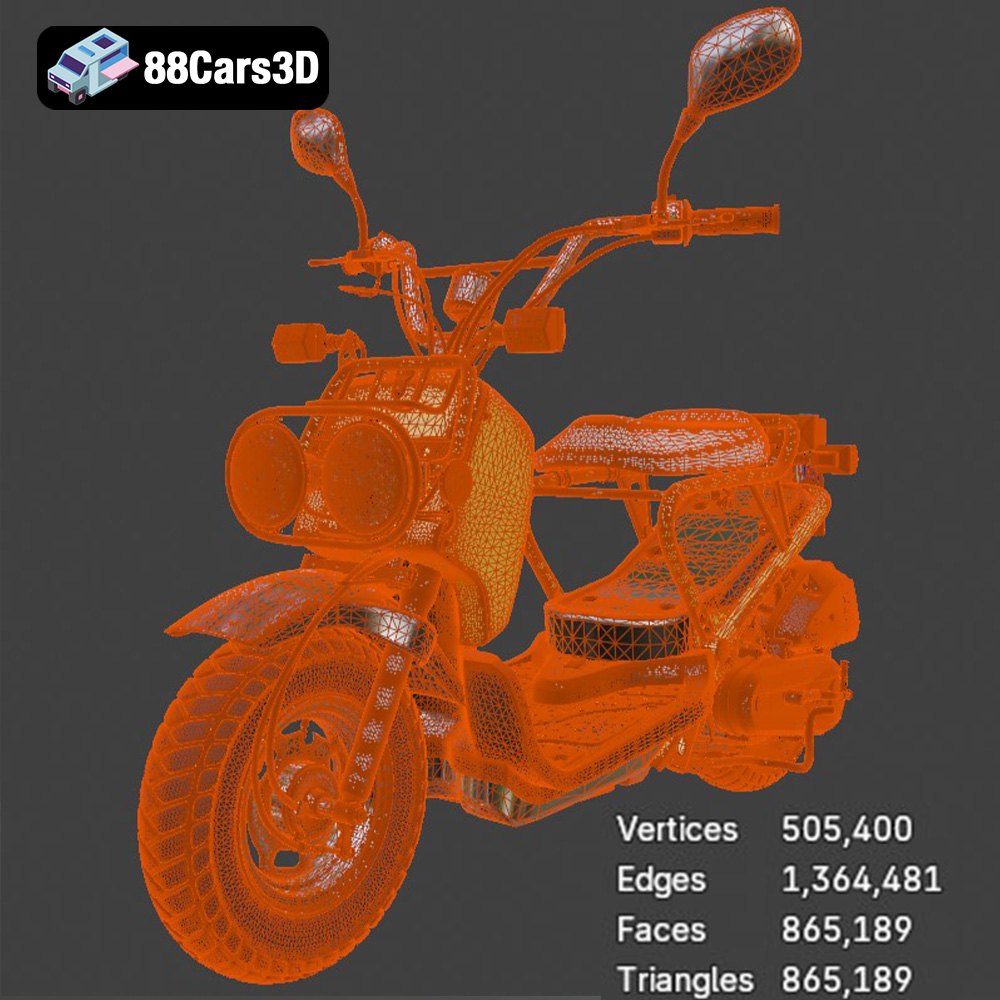
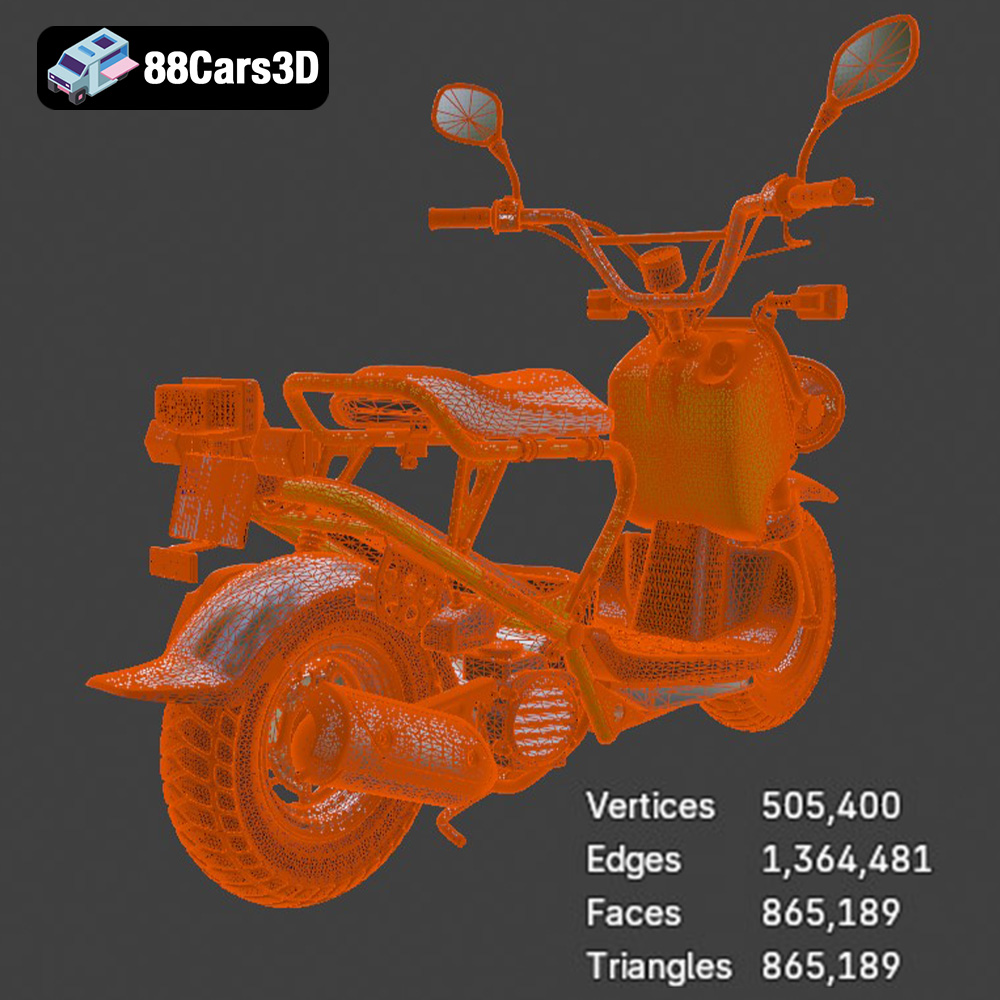
At the heart of any high-quality 3D model is its geometry. “Clean geometry” refers to a mesh that is well-structured, primarily composed of quads (four-sided polygons), with efficient edge flow that supports smooth deformations and subdivisions. This is crucial for both rendering and animation. For automotive assets, an optimal polygon count is also vital. High-fidelity renders often demand models with millions of polygons, achieved through subdivision surfaces to capture every curve and nuance of the vehicle’s body. Conversely, game assets require optimized meshes, typically with lower poly counts and carefully crafted Levels of Detail (LODs) to maintain performance without sacrificing visual quality at varying distances. The Honda Zoomer 50 2005 3D Model ensures structural components are modeled with strict attention to detail, indicating a thoughtful approach to topology that caters to diverse performance needs.
The visual realism of a 3D model is heavily dependent on its materials and textures, especially in the age of Physically Based Rendering (PBR). PBR materials accurately simulate how light interacts with surfaces in the real world, requiring several texture maps:
High-resolution UV maps (often 4K or 8K) are essential for wrapping these textures without distortion. Professional models feature clean, non-overlapping UVs and expertly crafted PBR texture sets that accurately represent paint, rubber, chrome, glass, and other materials. The “realistic materials” of the Honda Zoomer 50 model ensure that when rendered, its surfaces behave just as they would in the physical world, contributing to unparalleled precision in visualizations.
The true value of a versatile 3D asset, such as those found on 88cars3d.com, lies in its seamless integration into various professional pipelines. A single high-quality model like the Honda Zoomer 50 2005 3D Model can serve multiple purposes, significantly streamlining development and production for studios and individual artists alike.
For cinematic quality images and animations, software like 3ds Max and Blender, coupled with powerful rendering engines such as V-Ray, Corona, Cycles, or Octane, are the tools of choice. Artists leverage the .max and .blend files to set up intricate lighting scenarios using HDRI (High Dynamic Range Image) environment maps and specific area lights. They can experiment with various camera angles, depths of field, and post-processing effects to achieve stunning automotive rendering. For instance, the Honda Zoomer 50 could be placed in a bustling urban street scene, with realistic reflections on its paintwork and chrome components, showcasing its design under dynamic lighting conditions for marketing materials or architectural visualizations.
Game developers demand assets that are not only visually appealing but also highly optimized for real-time performance. The .fbx and .unreal formats of the Honda Zoomer 50 2005 3D Model are specifically tailored for this. In Unreal Engine or Unity, developers would import the model, apply optimized PBR materials, set up collision meshes for realistic physics interactions, and implement Levels of Detail (LODs). LODs automatically swap out higher-polygon models for lower-polygon versions as the player moves further away, ensuring smooth frame rates without a noticeable drop in visual quality. This model is perfect for populating virtual cities in open-world games, acting as a rideable vehicle, or even as an interactive element in simulation training scenarios.
As immersive experiences become more prevalent, the need for optimized 3D content for AR, VR, and web browsers grows. The .glb format of the Honda Zoomer 50 2005 3D Model is invaluable here. It allows for quick loading and efficient rendering in webGL environments, making it suitable for online product configurators, virtual showrooms, or interactive marketing campaigns. Imagine interacting with the Zoomer 50 in augmented reality on your smartphone, placing it in your driveway, or exploring its details in a virtual reality experience. The model’s “optimized for AR/VR” characteristic ensures a smooth, engaging user experience.
The applications for high-quality 3D car models extend far beyond simple static images. They are powerful tools for innovation, problem-solving, and engaging audiences in diverse industries.
Automotive manufacturers and marketers rely heavily on 3D models for concept visualization, virtual showrooms, and advertising campaigns. Before a single physical prototype is built, designers can iterate on car designs using 3D models, exploring different color schemes, material finishes, and features in a virtual environment. For marketing, a model like the Honda Zoomer 50 2005 3D Model can be used to create stunning promotional videos, interactive online experiences, or even personalized configurators where customers can customize their scooter in real-time. This reduces the need for expensive photoshoots and physical prototypes, offering incredible flexibility and cost savings.
Precision 3D models are fundamental to creating realistic simulations. Driving simulators, for instance, utilize highly accurate vehicle models to replicate real-world physics and driver feedback, providing invaluable training for emergency services, professional drivers, or even novice learners. Beyond driving, these models can be integrated into virtual maintenance training programs, allowing technicians to practice complex procedures in a safe, risk-free environment. The “meticulously crafted” details of the Honda Zoomer 50 2005 3D Model make it an excellent candidate for such simulation scenarios, providing a high degree of fidelity for accurate training.
Architectural visualization (Arch-Viz) often requires more than just buildings; it needs context. Populating a street scene, a parking lot, or a residential driveway with realistic 3D car models adds a crucial layer of realism and scale to an architectural render. A well-placed Honda Zoomer 50 2005 3D Model can infuse a scene with life, showing how urban spaces might be utilized, or adding character to a residential setting. Its seamless integration into varied environments is a testament to its professional construction, ensuring it enhances, rather than detracts from, the overall visual impact of an Arch-Viz project.
While often overlooked for rendering-focused models, the ability to 3D print a digital asset opens up avenues for physical prototyping and collectible creation. With the Honda Zoomer 50 2005 3D Model available in .stl format, designers can easily prepare the model for 3D printing. This could involve creating miniature replicas, testing ergonomic features, or even prototyping custom accessories. The transition from a digital asset to a tangible object further extends the utility and value of such a meticulously crafted model.
In the fast-paced world of 3D production, time is money. While the allure of creating every asset from scratch might appeal to some, the practical realities of project deadlines and budget constraints often dictate a more efficient approach. This is where marketplaces like 88cars3d.com prove invaluable, offering a curated selection of high-quality 3D car models ready for immediate deployment.
Modeling a complex vehicle like the Honda Zoomer 50 from scratch, ensuring clean topology, accurate proportions, detailed PBR materials, and multiple file format exports, can take hundreds of hours for even an experienced artist. By purchasing a pre-made, production-ready model, studios and freelancers can drastically cut down on development time and costs. This allows teams to focus their resources on other critical aspects of a project, such as scene composition, animation, or interactive logic, rather than reinventing the wheel for every asset. The modest investment in a professional model like the Honda Zoomer 50 2005 3D Model yields significant returns in efficiency.
When relying on pre-made assets, quality assurance is paramount. Reputable marketplaces like 88cars3d.com vet their products to ensure they meet professional standards. This means users can expect clean geometry, well-optimized meshes, correctly set up UVs, and high-resolution PBR textures. Such consistency and reliability are crucial for projects requiring a cohesive visual style or those destined for high-stakes presentations and commercial release. Knowing that a 3D model is built to professional quality reduces the risk of encountering technical issues down the line, saving valuable troubleshooting time.
The world of 3D modeling thrives on detail, precision, and versatility. From the intricate curves of a vehicle’s body to the nuanced reflections of its paintwork, every element contributes to the overall realism and impact of a digital creation. High-quality 3D assets are not just visually appealing; they are engineered tools that empower artists and developers to bring their most ambitious projects to life, saving invaluable time and resources in the process.
The Honda Zoomer 50 2005 3D Model stands as a testament to this philosophy. Its meticulous craftsmanship, clean geometry, realistic materials, and extensive format support (.blend, .fbx, .obj, .glb, .stl, .ply, .unreal, .max) make it an exceptionally versatile asset. Whether your goal is to produce stunning automotive rendering, develop immersive game assets, create compelling AR/VR experiences, or simply visualize a street scene with authentic detail, this model provides the technical foundation you need. Investing in such production-ready assets from platforms like 88cars3d.com not only ensures professional results but also unlocks creative potential by allowing you to focus on the art of storytelling and interaction. Elevate your next project with assets designed for excellence.
Discover the realistic Honda Zoomer 50 2005 3D Model, meticulously crafted to represent the iconic rugged scooter. This model delivers unparalleled precision, making it an excellent choice for detailed visualizations and dynamic projects. Key features include clean geometry, realistic materials, and professional quality construction. The structural components are modeled with strict attention to detail, ensuring seamless integration into varied environments. This 3D model is perfect for diverse applications, including game development, rendering, AR/VR experiences, and visualization. Whether used in a street scene simulation or a dedicated showcase, it provides exceptional results.
$39.99
.arvr
.blend
.car3dmodel
.fbx
.gameasset
.glb
.honda
.max
.moped
.motorcycle
.obj
.ply
.rendering
.scooter
.simulation
.stl
.unreal
.zoomer50