Get 20% OFF All Premium 3D & STL Models!

The allure of hypercars transcends the physical realm, captivating enthusiasts and designers alike. Capturing the essence of automotive marvels like the Koenigsegg Jesko, with its intricate aerodynamics, sculpted lines, and raw power, in a digital format is a monumental task. It demands not just artistic vision, but also a deep understanding of 3D modeling principles, technical precision, and compatibility across diverse platforms. For professionals in automotive visualization, game development, AR/VR, and cinematic rendering, the demand for exceptionally clean, accurate, and optimized 3D car models is constant.
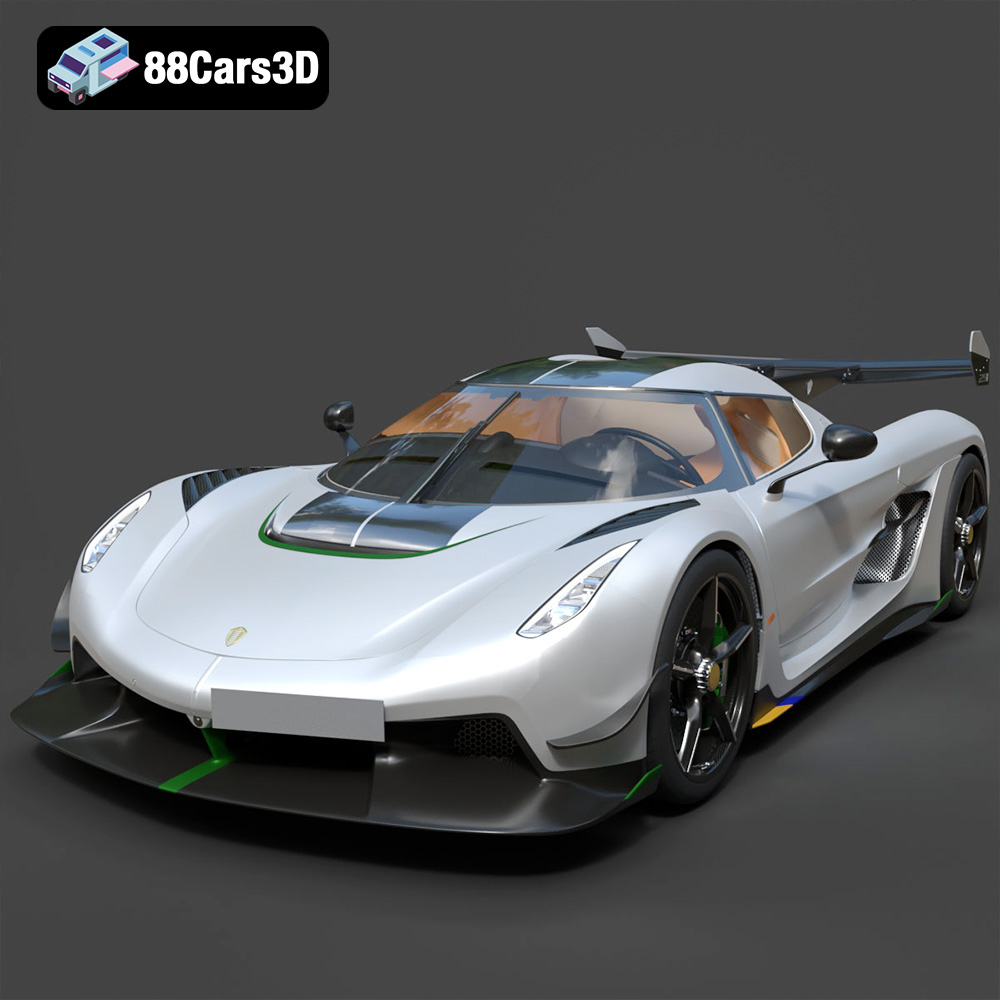
Enter the Koenigsegg Jesko 2020 3D Model, a professional-grade asset meticulously crafted to meet these exacting standards. This isn’t just a static representation; it’s a versatile foundation for advanced digital projects, engineered for seamless integration and optimal performance. Whether you’re aiming to render a breathtaking marketing visual, integrate a high-performance vehicle into a next-gen game, or develop an immersive virtual showroom, this model offers the fidelity and flexibility required to elevate your work. Its clean geometry, precise edge flow, and realistic materials make it an indispensable tool for anyone serious about digital automotive artistry, setting a benchmark for quality available through platforms like 88cars3d.com.
The versatility of any professional 3D asset lies not just in its visual fidelity but also in its compatibility across various software and pipelines. The Koenigsegg Jesko 2020 3D Model exemplifies this with a comprehensive suite of file formats, each serving specific purposes and workflows. Understanding when and why to use each format is crucial for maximizing efficiency and achieving desired outcomes in your projects.
The .blend file is the native format for Blender, a powerful open-source 3D creation suite. When you acquire a .blend file for the Koenigsegg Jesko, you receive a fully editable scene that typically includes the model’s geometry, textures, materials, lighting setup, and often even camera configurations. This format is ideal for artists who work within Blender and require complete control over the asset. You can modify topology, adjust materials, experiment with different lighting scenarios, or even integrate the car into complex animations within the Blender environment. It offers the highest degree of flexibility for customization and advanced artistic endeavors.
The .fbx (Filmbox) format is an industry-standard interchange format developed by Autodesk, widely adopted for its robust support of 3D models, animation, and scene data. It’s the go-to format for game developers and real-time artists, particularly for importing assets into game engines like Unreal Engine and Unity. An .fbx file of the Koenigsegg Jesko will typically contain the mesh data, UV layouts, material assignments, and potentially even animation rigs or blend shapes if present. Its strength lies in preserving hierarchical relationships and clean data transfer, making it excellent for ensuring your 3D car models behave as expected within interactive environments.
The .obj (Wavefront Object) format is one of the most widely supported and universal 3D file formats. It’s a simple, text-based format that primarily stores geometric data (vertices, normals, texture coordinates) and references to external material files (.mtl). While it doesn’t typically store animation or rigging data, its widespread compatibility makes it an excellent choice for transferring 3D car models between different software applications where advanced scene information isn’t required. If you need to import the Koenigsegg Jesko into a less common 3D application or simply require the mesh data without complex material setups, .obj is a reliable option.
The .glb (GL Transmission Format Binary) is a relatively newer format specifically designed for efficient transmission and loading of 3D scenes and models in web and AR/VR applications. It’s a binary version of glTF, which packages all necessary assets (geometry, materials, textures, animations) into a single, compact file. This optimization makes the Koenigsegg Jesko .glb file perfect for interactive web viewers, augmented reality experiences on mobile devices, or virtual reality environments where performance and quick loading times are paramount. It’s an essential format for showcasing 3D car models in modern digital contexts.
The .stl (STereoLithography) format is the standard file type for 3D printing. It represents a 3D model as a series of connected triangles (a tessellated surface). While it lacks color, texture, or material information, its simplicity makes it universally compatible with 3D printers and slicing software. For those looking to physically prototype or create scale models of the Koenigsegg Jesko, the .stl file provides the necessary geometric data to bring the digital model into the physical world. Ensuring the model is manifold and watertight in this format is crucial for successful prints.
The .ply (Polygon File Format or Stanford Triangle Format) is another format for storing 3D data, particularly useful for scanned data and high-precision meshes. It can store not only geometry but also properties like color, transparency, normals, and even confidence values. For engineering analysis, scientific visualization, or applications requiring a highly accurate representation of the mesh without the overhead of scene data, the .ply format for the Koenigsegg Jesko can be invaluable. It offers a robust alternative to .obj for pure mesh data, often used in CAD or reverse engineering workflows.
The .unreal file implies a pre-configured asset package specifically prepared for Unreal Engine. This often goes beyond a simple .fbx import, potentially including custom material setups using Unreal’s PBR system, LODs (Levels of Detail), collision meshes, and blueprints optimized for game logic or interaction. For developers working with Unreal Engine, having an .unreal file for the Koenigsegg Jesko significantly streamlines the integration process, saving countless hours on asset preparation and optimization, allowing for immediate use in real-time environments.
The .max file is the native format for Autodesk 3ds Max, a leading software for 3D modeling, animation, and rendering in architectural visualization, product design, and cinematic production. Similar to the .blend file for Blender, the .max file for the Koenigsegg Jesko provides a fully editable scene, including geometry, materials, textures, lights, and cameras configured within 3ds Max. This format is crucial for professionals who rely on 3ds Max for high-end rendering with engines like V-Ray or Corona, offering unparalleled control over every aspect of the scene for photorealistic output or complex animations.
The availability of these diverse formats for the Koenigsegg Jesko 2020 3D Model ensures that no matter your preferred software or project requirements, you have a professional-grade solution at your fingertips. This commitment to compatibility and quality is what sets exceptional 3D car models apart, enhancing workflows across the entire digital spectrum.
Creating a 3D model of a hypercar like the Koenigsegg Jesko is a blend of artistic skill and technical precision. It’s about more than just replicating its appearance; it’s about capturing its essence in a digital form that performs optimally across various applications. The Koenigsegg Jesko 2020 3D Model available at 88cars3d.com exemplifies these principles, showcasing a masterful execution of detailed digital artistry.
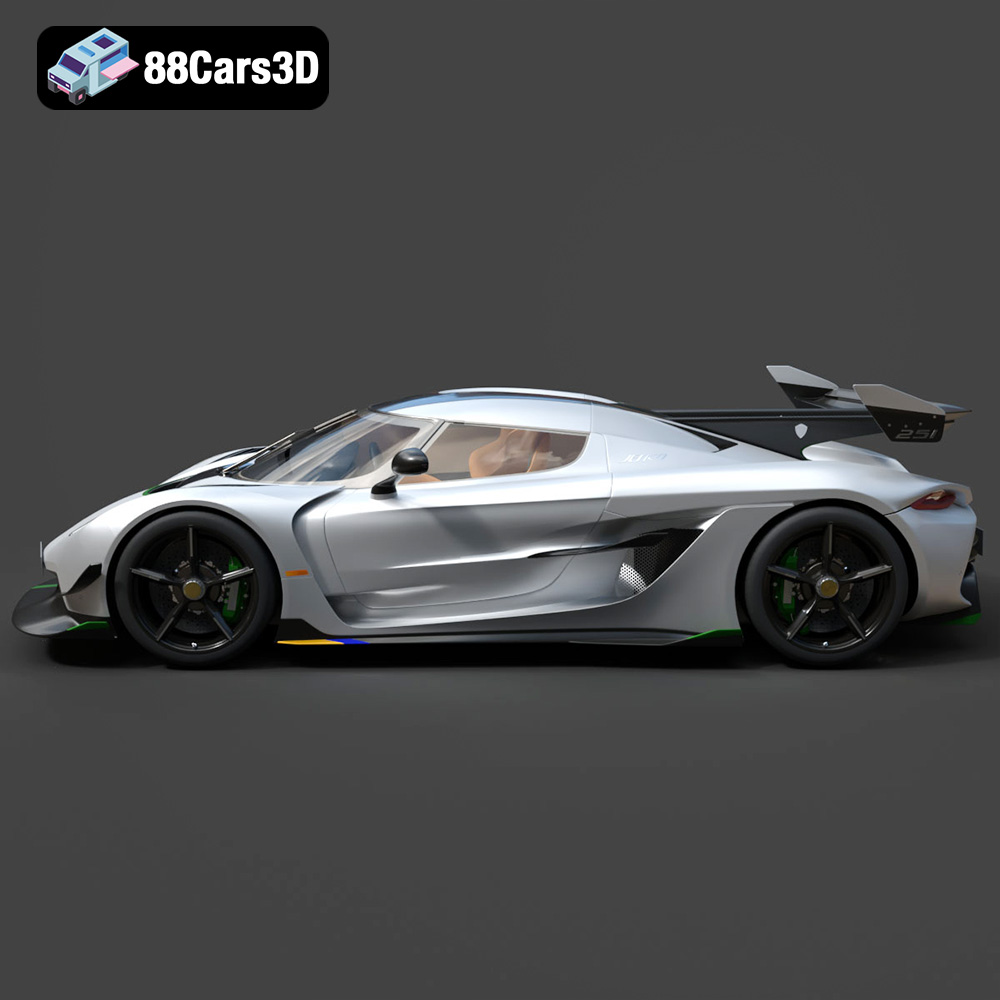
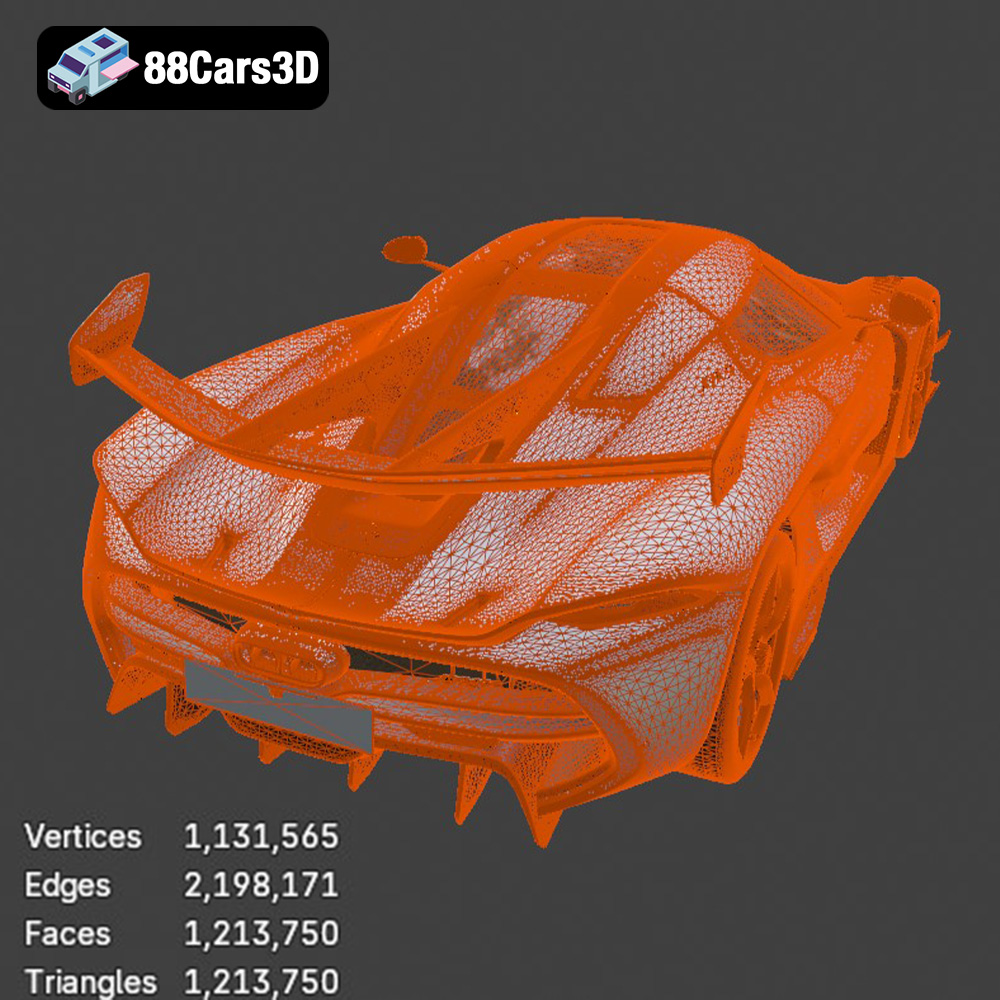
At the heart of any high-quality 3D model is its geometry. The Koenigsegg Jesko is renowned for its complex aerodynamic surfaces and sharp, aggressive lines. Replicating this digitally requires exceptionally clean geometry and precise edge flow. “Clean geometry” refers to a mesh composed of mostly quad polygons, free from non-manifold geometry, ngons, or excessively stretched triangles. “Edge flow” dictates how these polygons are organized to follow the natural curves and contours of the car. Correct edge flow ensures that when the model is subdivided (for higher detail), or deformed (for animation), it maintains its intended shape and smooth surfaces without pinching or distortion. This meticulous attention to detail in the Jesko model ensures that reflections are pristine, shadows are accurate, and the model holds up under extreme close-ups, making it ideal for high-end automotive rendering.
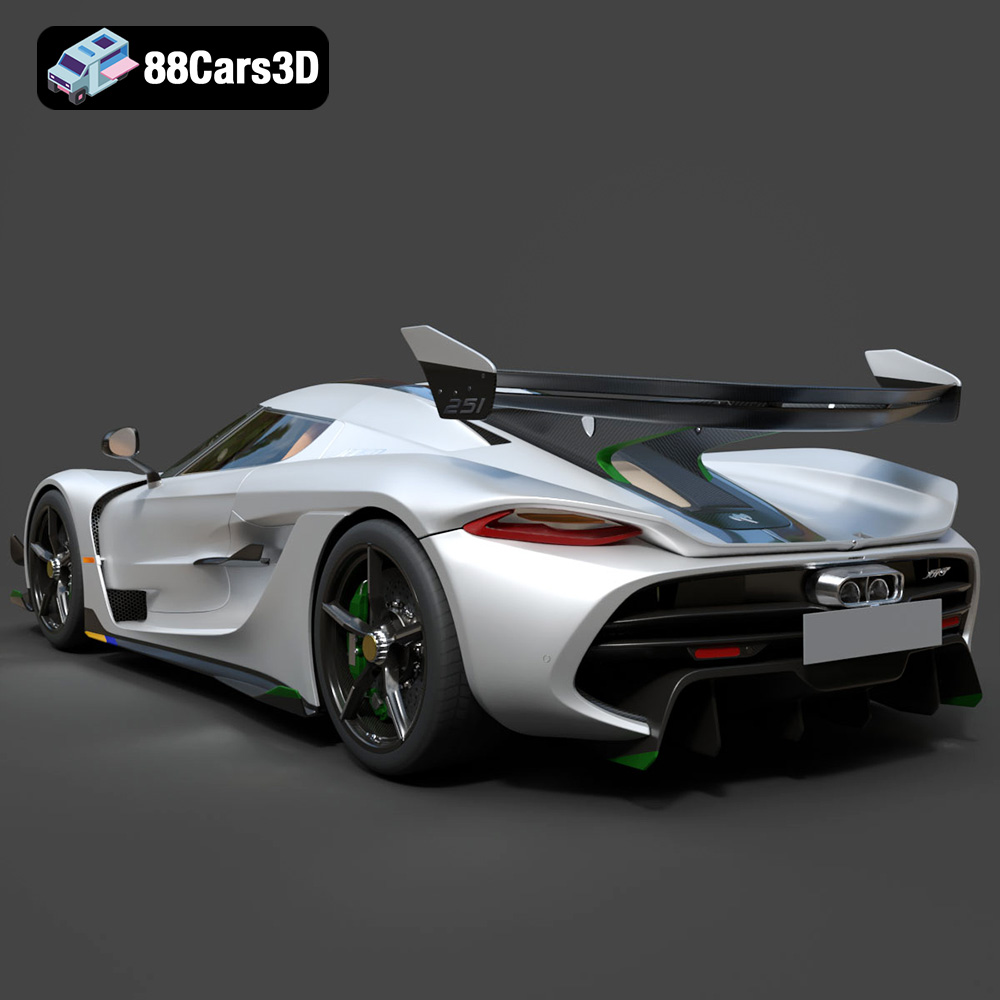
Beyond the underlying mesh, the visual authenticity of a 3D car model is heavily reliant on its materials and textures. Modern rendering relies on Physically Based Rendering (PBR) workflows, which simulate how light interacts with surfaces in the real world. This involves using various texture maps such as Albedo (base color), Normal (surface detail), Roughness (micro-surface imperfections), Metallic (metallic properties), and Ambient Occlusion (contact shadows). For the Koenigsegg Jesko, this means faithfully recreating its signature paint finishes, the intricate weave of carbon fiber, the transparency and reflectivity of glass, and the subtle brushed texture of metal components. The “realistic materials” feature of the Jesko model ensures that it responds accurately to light in any scene, providing a believable and immersive visual experience, whether in a static render or a dynamic game environment.
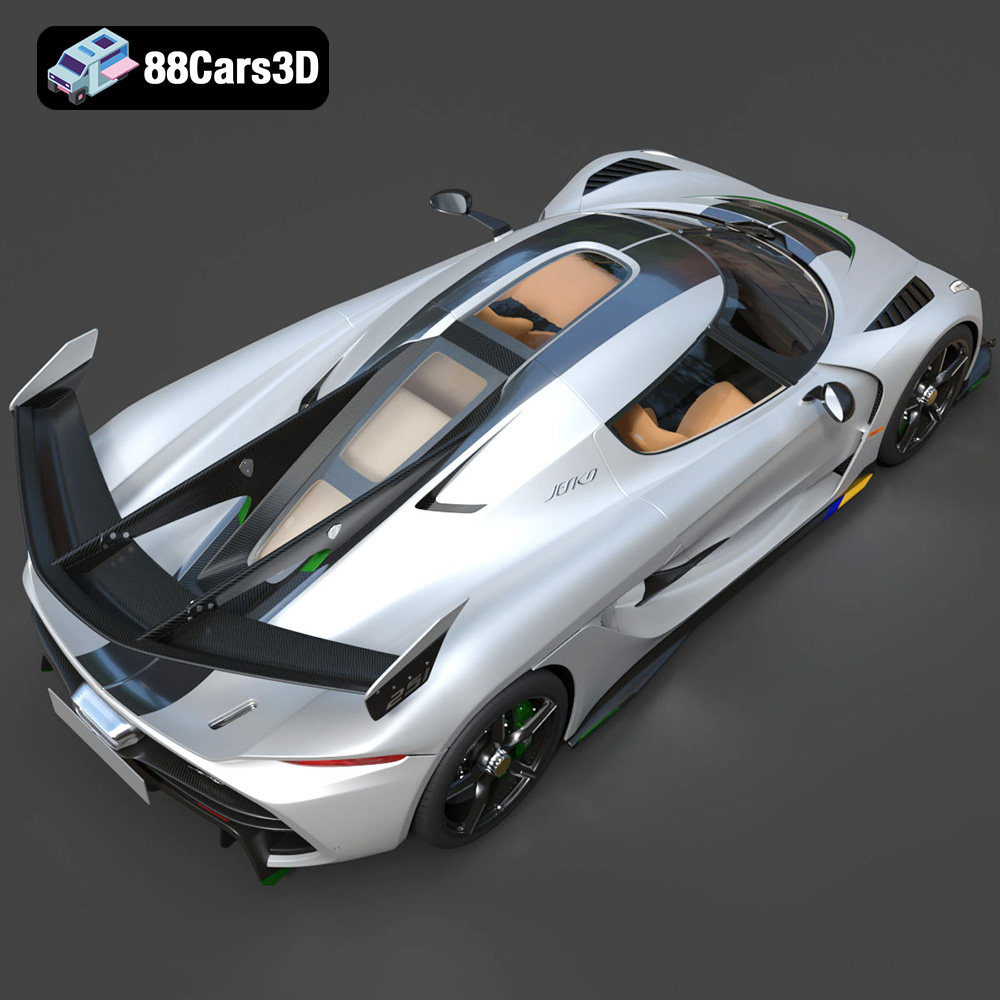
A beautiful model is only truly professional if it’s also optimized for its intended use. This involves a delicate balance between visual fidelity and performance, especially critical for game development and real-time applications. Optimization considers polygon counts – ensuring the model has enough detail without unnecessary overhead that could bog down render times or frame rates. Effective UV mapping is also key; it’s the process of unfolding the 3D model’s surface into a 2D space, allowing textures to be applied accurately and efficiently. Well-executed UVs prevent texture stretching and facilitate efficient light baking, crucial for consistent lighting. The Koenigsegg Jesko 2020 3D Model is built to professional standards, ensuring that its exceptional detail doesn’t come at the cost of performance, making it a truly versatile asset for various digital environments.
The versatility of the Koenigsegg Jesko 2020 3D Model extends across a broad spectrum of professional applications. Its diverse file formats and high-quality construction make it a valuable asset for designers, developers, and artists in various industries.
For automotive studios, marketing agencies, and visualization artists, the primary goal is often to create stunning, photorealistic imagery. Using the .max file with industry-standard renderers like V-Ray or Corona in 3ds Max, artists can easily integrate the Koenigsegg Jesko into complex studio lighting setups, high-dynamic-range image (HDRI) environments, and sophisticated camera animations. The model’s clean topology and realistic materials mean less time spent on cleaning up geometry and more time focusing on artistic composition, lighting, and camera angles to showcase its incredible design. This allows for the rapid creation of promotional content, design reviews, or even virtual car configurators that demand absolute visual authenticity.
In the fast-paced world of game development, efficiency and performance are paramount. The Koenigsegg Jesko’s .fbx and .unreal formats are specifically designed for seamless integration into game engines like Unreal Engine and Unity. Developers can import these assets with confidence, knowing that the geometry is optimized, UVs are correctly laid out, and materials are prepared for PBR workflows. This significantly reduces the time and effort typically required for asset preparation. Once imported, the model can be further optimized with custom LODs (Levels of Detail) to ensure performance across different hardware specifications, and collision meshes can be generated for realistic physics interactions. This “game-engine ready” approach makes the Jesko model a powerful asset for creating immersive racing simulations, open-world adventures, or interactive showrooms.
As augmented reality (AR) and virtual reality (VR) continue to gain traction, the need for optimized 3D car models for immersive experiences becomes critical. The .glb format of the Koenigsegg Jesko 2020 3D Model is perfectly suited for these applications. Its single-file packaging and optimization for web and mobile platforms ensure quick loading times and smooth performance in AR apps, VR walkthroughs, or interactive 3D viewers embedded directly into websites. Imagine a virtual showroom where potential buyers can walk around, inspect, and even customize the Jesko in real-time on their phones or through a VR headset. This model provides the foundation for such cutting-edge interactive experiences, pushing the boundaries of digital product showcasing.
While the visual appeal of 3D car models like the Koenigsegg Jesko is often the primary focus, their utility extends far beyond mere rendering. These digital assets can serve crucial roles in engineering, analysis, and physical prototyping, bridging the gap between digital design and tangible reality.
For designers, engineers, and hobbyists, the ability to translate a digital model into a physical object is invaluable. The .stl format provided with the Koenigsegg Jesko 2020 3D Model is the industry standard for 3D printing. It allows users to create physical scale models, rapid prototypes for design reviews, or even custom parts. Before printing, the model would typically be checked for manifold geometry (ensuring a watertight mesh) and appropriate wall thickness. This capability enables tangible exploration of the Jesko’s design, helping to identify potential issues or simply marvel at its form in a physical medium. Similarly, the .ply format can be used for more detailed polygon mesh outputs that might be converted for certain manufacturing processes or used in advanced prototyping scenarios.
High-precision 3D car models are not just for aesthetics; they are critical tools in engineering and scientific simulation. The clean geometry and accurate proportions of the Koenigsegg Jesko model lend themselves well to computational fluid dynamics (CFD) for aerodynamic analysis, crash simulations, or even basic kinematic studies. Engineers can import the model into specialized software to simulate airflow around the vehicle, test structural integrity, or evaluate suspension dynamics. The .ply format, known for its ability to store detailed mesh data, can be particularly useful in these scenarios, providing a solid foundation for extracting precise measurements and performing complex calculations that inform real-world design decisions and performance optimizations.
The Koenigsegg Jesko 2020 3D Model isn’t just a technical marvel; it’s a canvas for boundless creativity. Its high fidelity and flexible formats empower artists to push the boundaries of digital storytelling, customization, and education.
The visual impact of the Koenigsegg Jesko is undeniable, making it a perfect subject for cinematic animations and compelling storytelling. Film and commercial studios can leverage the model for high-impact sequences, from dramatic unveils to thrilling chase scenes. Using the .max or .blend files, animators can rig the vehicle for realistic suspension, wheel rotation, and door movements. Advanced camera work, dynamic lighting, and environmental effects can bring the Jesko to life, crafting narratives that captivate audiences and showcase the hypercar’s raw power and elegance. This model provides the foundation for award-winning visual effects and automotive advertising.
Professional 3D artists often require the flexibility to modify and iterate upon existing models. The editable .blend and .max files of the Koenigsegg Jesko provide this crucial capability. Artists can easily create custom liveries, experiment with different wheel designs, add aftermarket accessories, or even modify body panels for conceptual variations. This iterative process is invaluable for automotive designers exploring new concepts or for game artists creating unique variants for in-game content. The clean geometry ensures that any modifications can be integrated smoothly without introducing topological issues, allowing for rapid and confident customization.
Beyond entertainment and design, the Koenigsegg Jesko 2020 3D Model can serve as an exceptional educational and training tool. Educators can use it to teach complex automotive design principles, aerodynamics, or the intricacies of hypercar engineering. Through interactive simulations in game engines or detailed breakdowns in 3D modeling software, students can explore the vehicle’s components, understand its construction, and visualize its performance characteristics. This hands-on, interactive learning experience can be far more engaging and effective than traditional methods, providing invaluable insights into the world of high-performance automotive engineering and design.
In the demanding world of digital content creation, the quality and versatility of your assets can make all the difference. The Koenigsegg Jesko 2020 3D Model stands out as a paramount example of professional-grade artistry and technical excellence. From its meticulously crafted geometry and realistic materials to its comprehensive array of file formats, this model is engineered to seamlessly integrate into diverse workflows, whether you’re building cinematic renders in 3ds Max, developing immersive games in Unreal Engine, or prototyping a physical model via 3D printing.
It represents not just a visual replica of an iconic hypercar but a powerful, optimized tool for professionals across industries. Its inclusion of .blend, .fbx, .obj, .glb, .stl, .ply, .unreal, and .max formats ensures maximum compatibility and utility, streamlining production and freeing artists to focus on creativity rather than technical hurdles. For anyone seeking to elevate their projects with unparalleled realism and performance, the Koenigsegg Jesko 2020 3D Model is an indispensable asset, readily available to enhance your digital toolkit at 88cars3d.com. Embrace the future of digital automotive design and experience the difference true quality makes.
Experience unparalleled realism with the Koenigsegg Jesko 2020 3D Model. This meticulously crafted asset captures every intricate detail of the iconic hypercar, providing a professional-grade solution for advanced digital projects.
Key features include exceptionally clean geometry, precise edge flow, and realistic materials that elevate the visual authenticity of your scenes. The model is built to professional standards, ensuring seamless integration and optimal performance across various digital environments without unnecessary polygon overhead.
Perfect for a wide range of applications, this 3D model excels in game development, architectural rendering, automotive visualization, and immersive AR/VR experiences. Whether you are creating a cinematic animation or a real-time interactive simulation, this asset delivers outstanding digital results.
The package includes the following file formats for maximum compatibility:
$39.99
.arvr
.blend
.car3dmodel
.fbx
.gameasset
.glb
.hypercar
.jesko
.koenigsegg
.max
.obj
.ply
.rendering
.simulation
.sportsCar
.stl
.unreal