Get 20% OFF All Premium 3D & STL Models!

In the dynamic realms of automotive design, game development, cinematic rendering, and immersive AR/VR experiences, the quality of your 3D assets can make or break a project. Precision, fidelity, and versatility are paramount, dictating not only visual appeal but also performance and workflow efficiency. As digital landscapes become increasingly sophisticated, the demand for truly exceptional 3D car models has never been higher, serving as the foundational elements for everything from photorealistic visualizations to interactive simulations.
Imagine effortlessly dropping a meticulously crafted vehicle into your scene, knowing it’s optimized for real-time engines, ready for animation, and prepared for high-resolution rendering. This level of readiness significantly accelerates production cycles, allowing artists and developers to focus on creativity rather than remedial mesh cleanup or material setup. It’s about providing a robust starting point that empowers innovation.
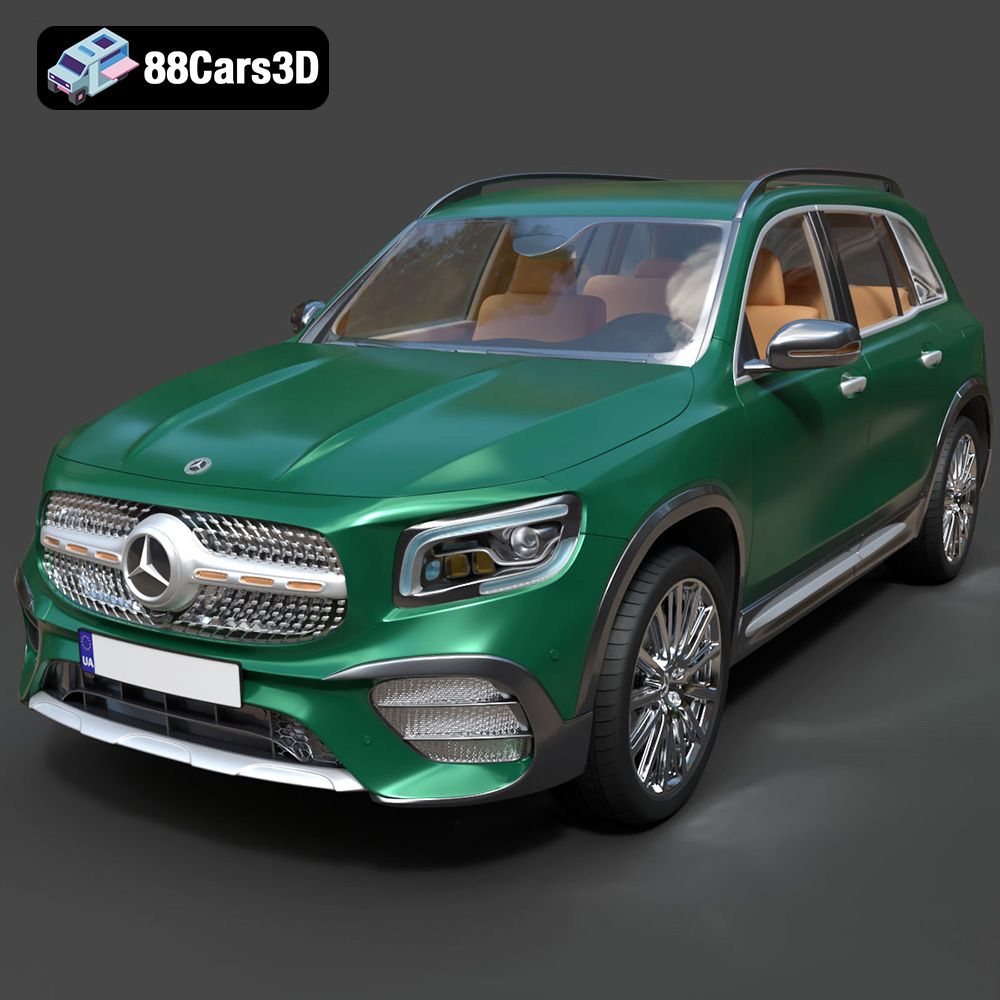
Today, we’re diving deep into the technical brilliance behind such assets, using the exquisite Mercedes-Benz GLB-Class Mk1 AMG Line 2019 3D Model as our prime example. This particular model, available on 88cars3d.com, encapsulates the blend of rugged versatility and premium luxury that defines its real-world counterpart, translated into a digital replica designed for maximum utility across diverse professional applications.
Navigating the world of 3D content often begins with understanding the various file formats. Each format serves a specific purpose, catering to different software, workflows, and output requirements. Choosing the right format is crucial for maintaining data integrity, optimizing performance, and ensuring compatibility across your creative pipeline. Here’s a detailed breakdown of the common formats often provided with high-quality 3D car models, like the Mercedes-Benz GLB-Class from 88cars3d.com:
The Mercedes-Benz GLB-Class Mk1 AMG Line 2019 3D Model offers this extensive array of formats, ensuring that no matter your software or end goal, you have the right tool for the job.
Creating a compelling 3D car model is a sophisticated blend of artistic vision and engineering precision. It’s not merely about replicating shapes; it’s about capturing the essence, the feel, and the intricate details that make a vehicle recognizable and desirable. For automotive rendering and visualization, this means going beyond basic geometry.
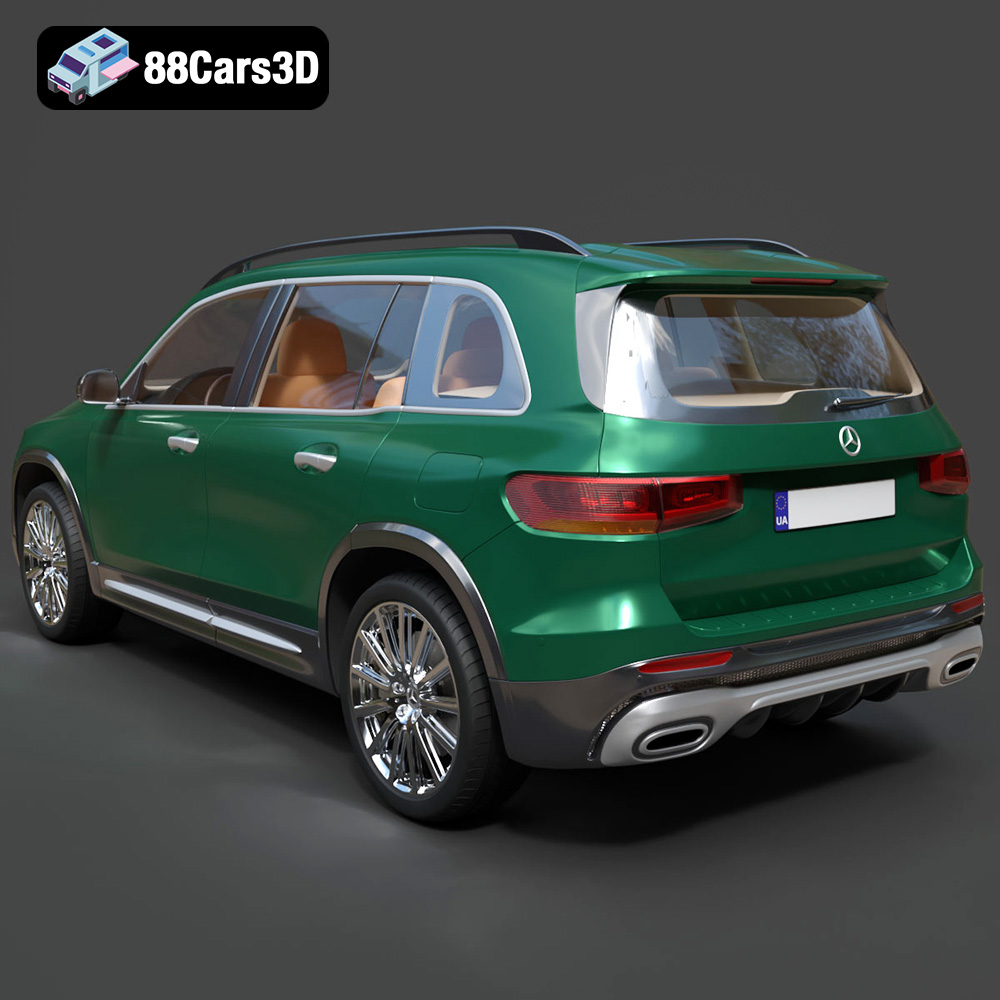
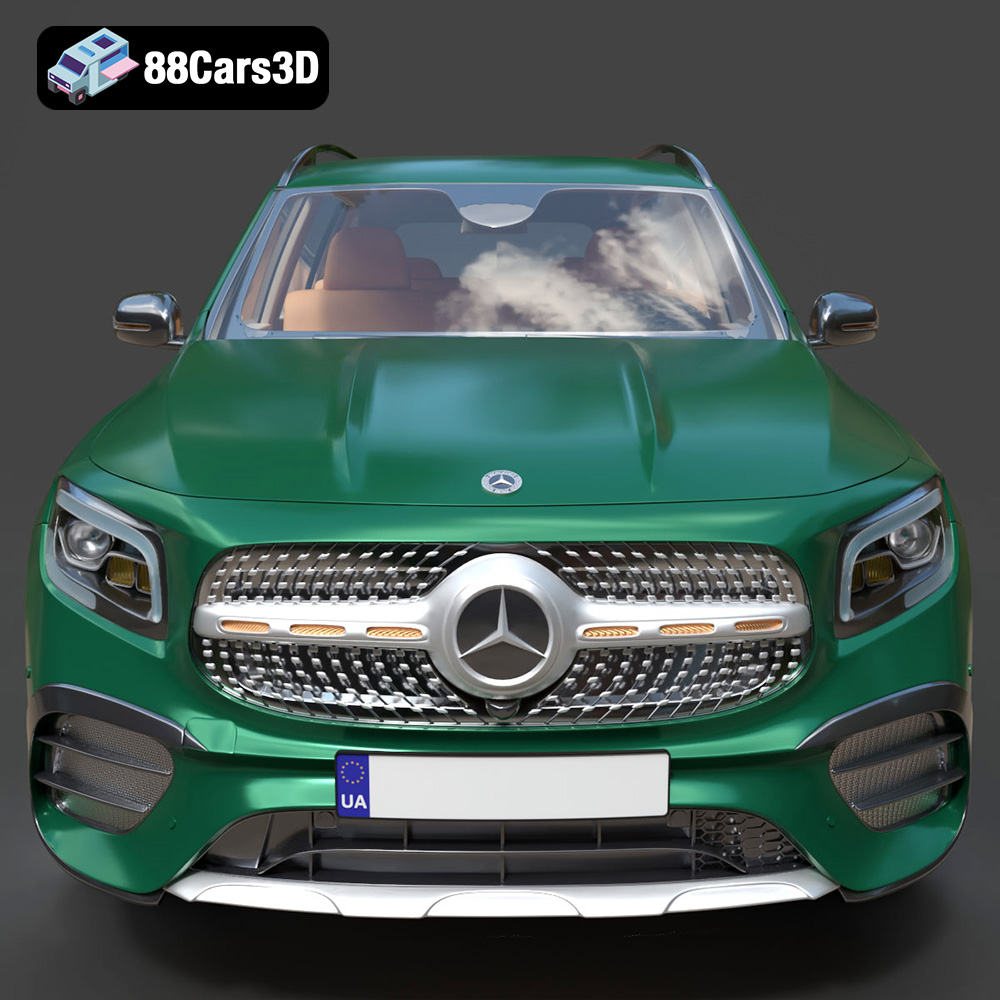
The Mercedes-Benz GLB-Class, with its distinctive boxy silhouette and aggressive AMG Line styling, presents a unique challenge for 3D artists. A high-quality model must accurately translate these design cues into a digital form. This includes the signature diamond radiator grille, the sporty front aprons, and the prominent dual exhaust system that define the AMG Line. Every curve, every crease, and every panel gap must be meticulously sculpted to reflect the manufacturer’s intent. This level of accuracy is critical for brand campaigns, product configurators, and any application where authenticity is paramount.
One of the most crucial technical aspects of a professional 3D car model is its topology. The Mercedes-Benz GLB-Class Mk1 AMG Line 2019 3D Model boasts an optimized topology of approximately 250,000 triangles. This polycount strikes an impeccable balance: it’s high enough to convey exceptional visual realism and smooth surfaces even up close, yet efficient enough for real-time performance in game engines like Unreal and Unity. Lower polycounts might sacrifice detail, while excessively high counts lead to performance bottlenecks. Achieving this balance requires expert modeling techniques, clean mesh flow, and efficient use of polygons, ensuring that edge loops support deformation and shading without unnecessary density.
A truly versatile 3D car model is one that seamlessly integrates into various professional pipelines, offering immediate value and accelerating project timelines. The Mercedes-Benz GLB-Class from 88cars3d.com is engineered with this adaptability in mind, providing a robust asset for diverse applications.
For game developers, the Mercedes-Benz GLB-Class 3D Model is a ready-to-use game asset. Its optimized ~250,000 triangle count is ideal for inclusion in open-world games, racing titles, and simulators where performance is critical. The model comes with proper pivot setups for steering, wheel rotation, and suspension travel, significantly reducing the time spent on rigging and animation. This means developers can immediately integrate the vehicle into physics engines and implement driving mechanics, saving countless hours of preparation. With PBR texturing, the model reacts realistically to lighting conditions within Unreal or Unity, adding depth and immersion to any virtual environment.
For artists focused on automotive rendering, whether in 3ds Max, Blender, or other rendering suites, this GLB-Class model offers a pristine foundation. The high-fidelity geometry and PBR textures ensure that surfaces like the metallic paint, intricate stitching on the interior, and the reflective chrome accents respond accurately to studio lighting setups. This enables the creation of breathtaking marketing visuals, print ads, and lifestyle scenes. Imagine a cinematic sequence showcasing the GLB-Class navigating an urban environment or parked against a luxurious architectural backdrop – the model’s inherent quality shines through every pixel, delivering a premium feel that aligns with the Mercedes-Benz brand.
The .glb format, included with the model, makes it perfectly suited for AR/VR applications and interactive virtual showrooms. Its optimization for web and mobile platforms ensures quick loading times and smooth performance, critical for immersive experiences. Users can interact with the GLB-Class in augmented reality, placing it in their driveway, or exploring its interior in a virtual reality environment. For vehicle configurators, the model’s separate components and customizable materials allow customers to virtually change colors, wheel designs, and interior trims, offering an engaging and personalized pre-purchase experience that leverages the power of real-time 3D.
Beyond its versatility, the true value of the Mercedes-Benz GLB-Class Mk1 AMG Line 2019 3D Model lies in its meticulously crafted technical details, which ensure both visual realism and functional integrity.
The model’s exterior is a testament to precision. It features accurate Mercedes-Benz GLB-Class (Mk1) AMG Line frame geometry and proportions, ensuring the digital replica is indistinguishable from its real-world counterpart. Critical for dynamic scenes, the model includes separate wheels, suspension, and steering components. This segregation allows for seamless animation of driving mechanics: the wheels can rotate independently, the suspension can articulate over bumps, and the steering can turn with realistic pivots. Even subtle details like the sport-tuned suspension and the aggressive AMG specific dual exhaust system are accurately modeled, adding to the overall authenticity.
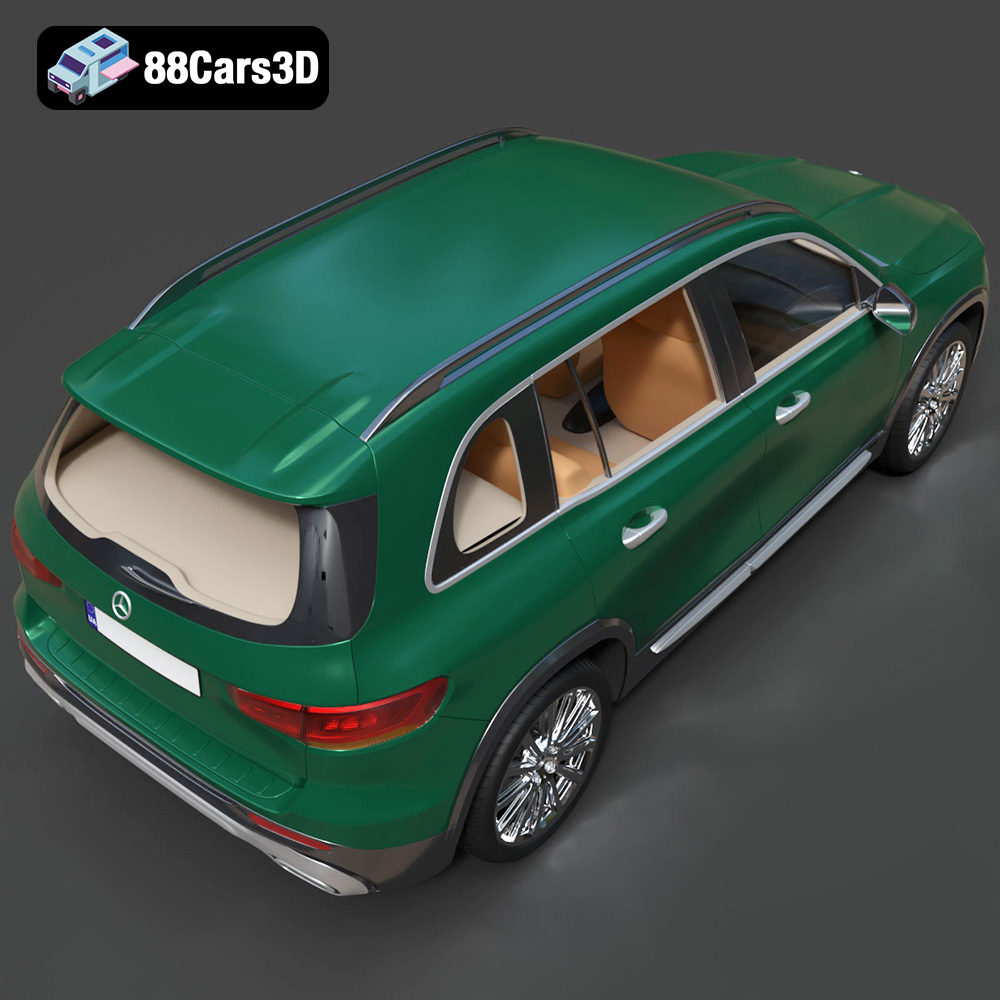
The interior of the GLB-Class model is equally detailed, providing an immersive experience for first-person perspectives in gaming or VR simulations. It includes detailed sport seating with intricate stitching and contouring, replicating the luxury and ergonomics of the actual vehicle. The Nappa leather multifunction sports steering wheel with precise switchgear, along with the accurate MBUX dual-screen digital instrument cluster and infotainment system, are all meticulously modeled. This level of interior fidelity is crucial for simulations, virtual tours, and any scenario where the user will be inside the vehicle, enhancing realism and engagement significantly.
The model utilizes PBR (Physically Based Rendering) texturing, a modern standard that ensures materials react realistically to various lighting conditions, just as they would in the real world. This means metallic paints will shimmer authentically, rubber tires will absorb light appropriately, and glass will refract light with proper reflections. Furthermore, the model is designed for customization. Users can easily change body colors (e.g., Mountain Grey, Cosmos Black, or custom finishes), modify tire textures (street variants vs. winter tread), and adjust material finishes (matte, gloss, metallic, carbon fiber accents). This flexibility is vital for adapting the model to specific project needs or brand guidelines.
The utility of a high-quality 3D car model like the Mercedes-Benz GLB-Class extends across numerous industries, providing tangible benefits and enabling innovative solutions.
Consider a new generation urban racing game. Developers can integrate the GLB-Class model directly into their engine, leveraging its optimized polycount and animation-ready components. Players could choose from various GLB-Class trims, customize their vehicles, and experience realistic driving physics within a sprawling city environment. The detailed interior allows for compelling cockpit views, enhancing immersion during high-speed chases or scenic drives. The model’s efficiency means more vehicles can be on screen simultaneously without compromising frame rates, leading to a richer gaming experience.
Automotive manufacturers and dealerships are increasingly turning to virtual showrooms to showcase their vehicles. With the GLB-Class 3D model, they can create interactive web-based or VR applications where potential buyers can explore the car in detail, open doors, inspect the interior, and even customize features in real-time. This provides an engaging alternative to traditional showrooms, reaching a wider audience and offering a personalized viewing experience from anywhere in the world. The .glb format is particularly beneficial here for web and mobile deployment.
Architects and real estate developers often use 3D car models to populate their renderings, adding scale, realism, and a sense of lifestyle to their designs. The GLB-Class, with its premium appeal, can be placed outside a luxury home or within an urban street scene to elevate the overall visual impact of an architectural rendering. Marketers, too, can utilize the model for compelling digital advertisements or lifestyle campaigns, placing the vehicle in aspirational settings to evoke a desired brand image without the need for expensive photoshoots or physical prototypes.
For designers and hobbyists, the ability to convert the model to .stl format opens up avenues for 3D printing. Whether for creating scaled prototypes for design review or producing highly detailed display models, the precise geometry ensures accurate physical reproductions. The provided 3D print settings, including recommended scales and support requirements, guide users through the process, allowing for the creation of intricate physical replicas of the GLB-Class, perfect for collectors or as tangible representations of a digital design.
The true power of a professionally crafted 3D car model lies in its inherent flexibility, allowing users to tailor it to specific project requirements without sacrificing quality or performance.
The Mercedes-Benz GLB-Class 3D Model is built with customization in mind. Its PBR materials mean that changing body colors, from standard factory finishes like Mountain Grey or Cosmos Black to entirely custom hues, is a straightforward process. Beyond paint, artists can easily modify tire textures to represent different tread patterns (e.g., street, winter, or off-road variants) or adjust material finishes. Imagine switching between a glossy metallic paint and a sleek matte finish, or adding subtle carbon fiber accents to the exterior trim. This level of granular control over materials ensures the model can be perfectly integrated into any visual narrative or brand aesthetic.
A high-quality 3D asset should perform well under diverse lighting conditions. The GLB-Class model’s PBR textures and clean geometry ensure it looks fantastic whether illuminated by a bright midday sun, the soft glow of twilight, or the stark contrast of a night scene. Artists can adapt the model’s lighting for different daytime or night-time environments, leveraging global illumination and realistic reflections to create impactful visuals. For example, in an architectural visualization, the car’s reflections could dynamically interact with a building’s glass facade, enhancing the realism of the entire scene. The model’s proper UV mapping also allows for easy application of decals or grime textures for environmental storytelling.
While the GLB-Class model is already optimized (~250,000 triangles), professionals working on extremely resource-constrained projects (e.g., mobile AR, older gaming hardware) might require further optimization. This could involve generating additional Levels of Detail (LODs) – lower polygon versions of the model that swap in as the camera moves further away. Baking advanced lighting or reflections into static textures can also reduce real-time computation. The clean topology of the initial model makes these advanced optimization steps easier to implement, providing a solid foundation for any level of fidelity requirement.
In the rapidly evolving landscape of 3D content creation, the value of high-quality, meticulously crafted 3D car models cannot be overstated. They serve as essential building blocks, empowering artists, developers, and designers to bring their visions to life with unparalleled realism and efficiency. From accelerating game development cycles to creating immersive AR/VR experiences and producing stunning automotive renderings, the right assets are critical.
The Mercedes-Benz GLB-Class Mk1 AMG Line 2019 3D Model exemplifies this dedication to quality. With its balanced topology, PBR texturing, animation-ready components, and comprehensive file format support, it offers an indispensable tool for any professional workflow. Whether you’re designing the next big racing title, visualizing a luxury showroom, or crafting a photorealistic advertisement, this model provides the foundation for success.
For those seeking to elevate their projects with premium 3D models that combine technical excellence with artistic fidelity, exploring the curated selection at 88cars3d.com is an investment in quality and efficiency. Discover how professional-grade 3D car models can transform your digital creations and drive your projects forward.
Experience the perfect blend of rugged versatility and premium luxury with our meticulous 3D model of the Mercedes-Benz GLB-Class (Mk1) AMG Line 2019. This compact crossover SUV stands out with its distinctive boxy silhouette, commanding stance, and aggressive AMG Line styling cues, including the signature diamond radiator grille, sporty front aprons, and prominent dual exhaust system. Designed to encapsulate the modern elegance and muscular heritage of the Mercedes-Benz brand, this digital replica captures every striking curve and sophisticated detail.
This high-fidelity, game-ready 3D model is meticulously crafted with optimized topology (~250,000 triangles), striking an impeccable balance between exceptional visual realism and efficient real-time performance. Designed for maximum versatility, the model features PBR texturing and precise structural proportions, making it a premium asset for game engines, high-end rendering, and immersive interactive media.
Perfect for urban racing games, luxury vehicle configurators, architectural visualizations, and mobile AR experiences.
.blend, .fbx, .obj, .glb, .stl, .ply, .unreal, .max
Tags:
mercedes-benz, glb-class, amg-line, 2019, compact-suv, luxury-suv, game-ready, low-poly, optimized, car-3d-model, game-asset, rendering, vr-ar, blend, fbx, obj, glb, stl, ply, unreal, maxVespa VNB 125-B 3D Model 3D Printable STL
$39.99
.2019
.blend
.fbx
.glb
.luxury suv
.max
.obj
.ply
.rendering
.stl
.unreal
amg-line
car-3d-model
compact-suv
game asset
game-ready
glb-class
low-poly
mercedes-benz
optimized
VR/AR