Get 20% OFF All Premium 3D & STL Models!

In the dynamic world of 3D visualization, from breathtaking cinematic renders to immersive real-time game environments and augmented reality experiences, the demand for exceptionally detailed and technically sound 3D assets is paramount. Automotive design, in particular, thrives on precision, realism, and a seamless integration of digital models into diverse pipelines. Whether you’re an automotive designer showcasing a new concept, a game developer crafting an open-world racing title, or an architect integrating vehicles into a visualization, the quality of your 3D car models directly impacts the final output.
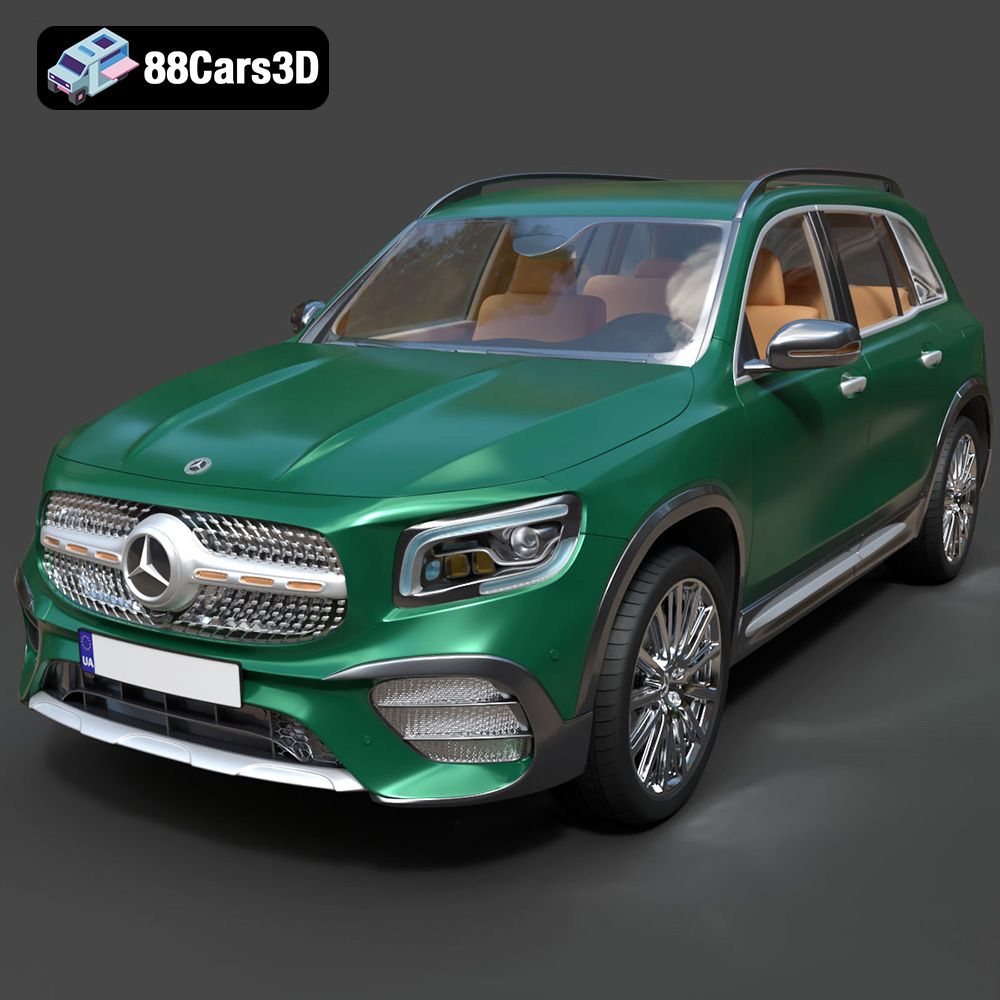
Today, we’re going to explore what makes a truly outstanding 3D car model, using a prime example of excellence: the Mercedes-Benz GLB-Class Mk1 AMG Line 2019 3D Model. This meticulously crafted asset, available on 88cars3d.com, encapsulates the rugged versatility and premium luxury of its real-world counterpart, offering an unparalleled foundation for a myriad of professional applications. We’ll delve into the intricate details of its construction, explore the versatility of its file formats, and discuss how such a high-fidelity asset integrates into cutting-edge workflows.
Creating a truly photorealistic and performant 3D car model is a complex endeavor that marries artistic vision with rigorous technical execution. It’s about more than just replicating a shape; it’s about capturing the essence, the engineering, and the subtle nuances that define a vehicle.
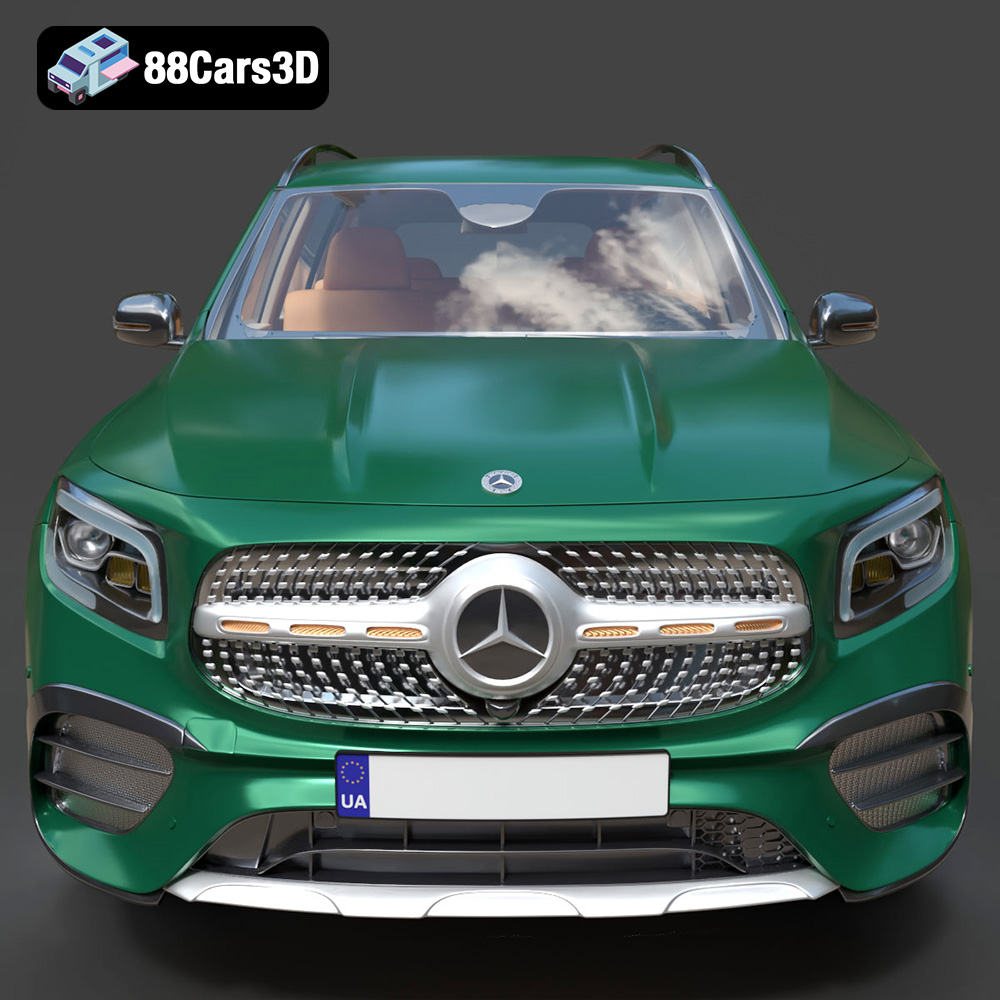
The journey of a premium 3D car model begins with exhaustive research, often involving detailed blueprints, photographic references, and even LiDAR scans of the physical vehicle. For a model like the Mercedes-Benz GLB-Class AMG Line 2019, this means accurately translating its distinctive boxy silhouette, commanding stance, and aggressive AMG Line styling cues into digital geometry. Every curve, every panel gap, and every design element, such as the signature diamond radiator grille or the prominent dual exhaust system, must be meticulously modeled to real-world scale accuracy. This foundational precision ensures that the digital asset is not only visually correct but also structurally sound for various applications, from close-up renders to physics simulations in game engines.
Beyond geometric accuracy, the visual fidelity of 3D car models largely relies on Physically Based Rendering (PBR) texturing. PBR materials accurately simulate how light interacts with surfaces in the real world, accounting for properties like albedo (base color), metallicness, roughness, normal maps (for fine surface details), and ambient occlusion. For an automotive asset, this translates into realistic paint finishes that reflect light with proper metallic sheen and clear coat effects, tire rubber with appropriate diffuse and specular characteristics, and interior materials like leather and chrome that respond authentically to lighting conditions. The use of PBR texturing ensures that the Mercedes-Benz GLB-Class model will look convincing under any lighting setup, be it a sun-drenched exterior scene or a mood-lit studio render, making it a truly versatile asset for automotive rendering.
While maximum detail is always a goal, a truly professional 3D car model strikes a crucial balance between visual realism and efficient performance. This is where optimization comes into play. A “game-ready” asset, like the GLB-Class model with its ~250,000 triangles, is meticulously crafted to maintain high-end visual realism while ensuring it runs smoothly in real-time engines such as Unreal or Unity. This involves careful polygon budgeting, clean topology, efficient UV mapping, and baking high-detail normal maps from high-poly sculpts onto lower-poly meshes. Such optimization is critical for interactive experiences like video games, AR/VR applications, and real-time configurators, where every frame counts. Conversely, for pure cinematic rendering or high-resolution still images, even higher polygon counts might be acceptable, but the principle of clean, efficient geometry remains a hallmark of quality.
The versatility of a 3D model is often defined by the file formats it supports. Each format is designed with specific use cases and software compatibility in mind, making the choice of format crucial for different pipelines. The Mercedes-Benz GLB-Class Mk1 AMG Line 2019 3D Model comes with a comprehensive suite of formats, ensuring maximum utility across the industry.
The .blend format is the native file type for Blender, the powerful open-source 3D creation suite. A .blend file is a complete scene package, containing not just the mesh data but also materials, textures (often packed within the file), lighting, camera setups, animations, physics simulations, and even scripts. For users deeply integrated into the Blender ecosystem, a .blend file offers the most flexibility for editing, scene manipulation, and rendering with Blender’s Cycles or Eevee engines. It’s ideal for those who want full creative control and access to the original project’s setup, allowing for easy modification of geometry, shaders, or scene composition.
.fbx (Filmbox) is arguably the most widely adopted proprietary 3D exchange format, developed by Autodesk. It excels at transferring comprehensive 3D data, including geometry, materials, textures, bones, skinning, and animation, between various 3D software applications and game engines. This makes it ideal for Unreal, Unity, and real-time pipelines where complex animated assets need to be moved efficiently. While powerful, users should be aware of potential conversion issues related to material definitions or animation curves across different software versions. For the GLB-Class model, .fbx ensures seamless integration into major game development environments and professional rendering suites that aren’t native to Blender.
The .obj (Wavefront OBJ) format is a universal standard for storing 3D geometry data. It’s a simpler, text-based format primarily designed for mesh data (vertices, normals, UVs, faces) and can reference external material (.mtl) files for basic color and texture information. Its strength lies in its widespread compatibility, making it an excellent choice for cross-software transfers where only the core geometry and basic UV mapping are needed. While it doesn’t support animation or advanced material properties, its simplicity ensures almost any 3D application can open and interpret an .obj file, making it a reliable fallback for foundational mesh data. This is invaluable for the Mercedes-Benz GLB-Class model when compatibility is a higher priority than embedded full scene data.
.glb (GL Transmission Format Binary) is a binary version of glTF (GL Transmission Format), designed for efficient transmission and loading of 3D scenes and models by applications. It’s optimized for AR, VR, and browser-based display, making it a cornerstone for web-based 3D viewers and augmented reality experiences. A .glb file packs all necessary assets (model, textures, animations) into a single, self-contained file, minimizing HTTP requests and speeding up load times. This format is perfect for integrating the GLB-Class into virtual showrooms or interactive mobile AR applications, where performance and quick deployment are crucial.
.stl (Stereolithography) is the de facto standard file format for 3D printing. It represents a 3D model as a series of connected triangles, defining only the surface geometry of an object without color, texture, or material information. For hobbyists and professionals looking to produce physical prototypes or scale models of the Mercedes-Benz GLB-Class, the .stl format is essential. While not suitable for rendering or animation, its straightforward representation of watertight meshes makes it ideal for slicing software used in 3D printing, enabling the creation of tangible objects from digital designs.
The .ply (Polygon File Format) is another common format for storing 3D data, particularly popular in academic and research fields, as well as for storing data from 3D scanners. It supports properties such as color, transparency, surface normals, texture coordinates, and data confidence values, which .stl does not. This format is often used for precision mesh representations and can be beneficial when the GLB-Class model needs to be integrated into CAD workflows or used for analysis where additional vertex or face properties are important. It provides a more robust data set than .obj for specific scientific or engineering applications.
While not a standalone file type in the traditional sense, the inclusion of an .unreal file implies a pre-configured asset or a project file specifically prepared for direct import or use within Unreal Engine. This often means the asset has been optimized, materials are set up with Unreal’s PBR shaders (e.g., as .uasset files), and possibly includes LODs (Levels of Detail) or collision meshes. This provides game developers with an engine-ready asset, saving considerable time and effort in the import and setup process, allowing them to quickly drop the Mercedes-Benz GLB-Class into their projects.
The .max format is the native file type for Autodesk 3ds Max, a leading software for 3D modeling, animation, and rendering. Similar to .blend, a .max file stores all scene information, including geometry, materials, textures, lighting, cameras, animation data, and plugins. For professionals working within the 3ds Max ecosystem, this format offers the highest degree of editability and ensures that all specific features and modifiers applied within 3ds Max are preserved. This is crucial for studios that rely on 3ds Max for their primary automotive rendering and animation pipelines, offering the full power to manipulate the GLB-Class model within its native environment.
The featured Mercedes-Benz GLB-Class Mk1 AMG Line 2019 3D Model is a testament to the comprehensive approach described above. It’s not just a generic car model; it’s a detailed digital replica optimized for diverse professional applications, embodying both visual authenticity and technical efficiency.
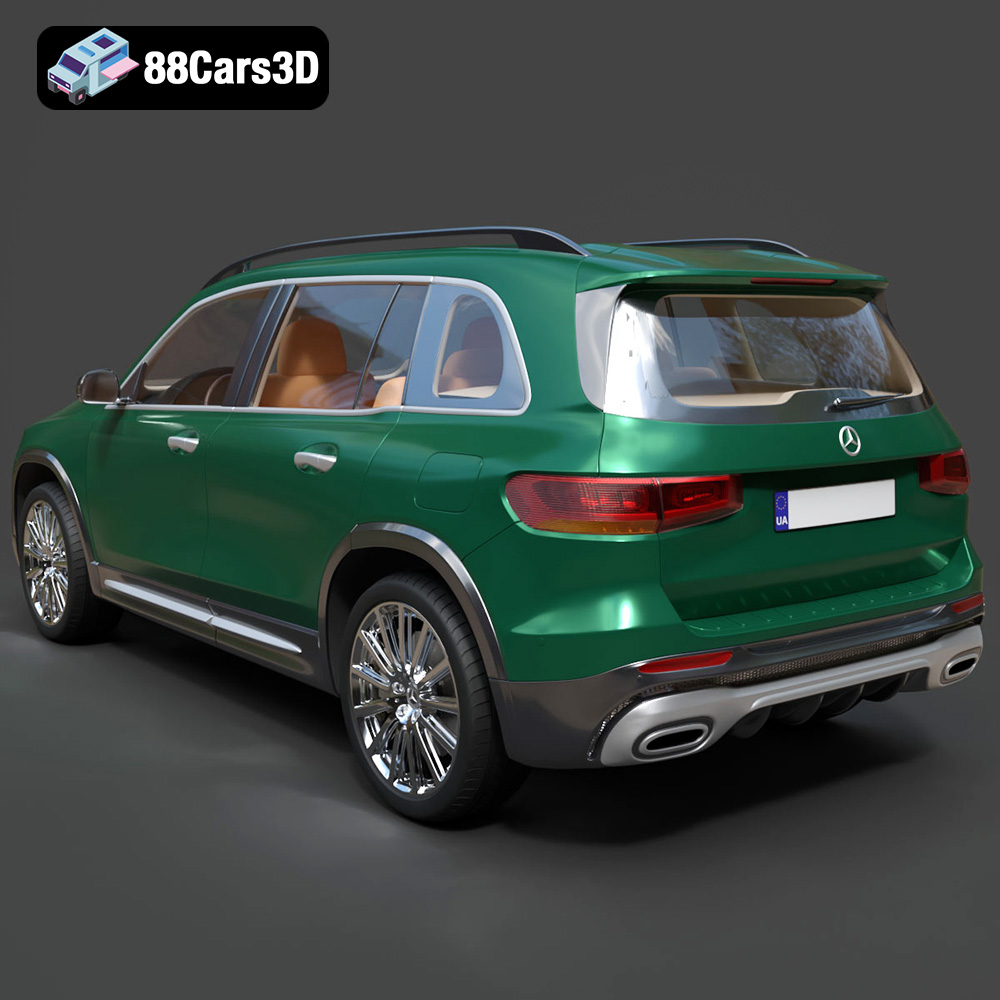
This particular model meticulously captures the aggressive yet refined aesthetic of the GLB-Class AMG Line. From the accurate frame geometry and proportions to the detailed engine block and undercarriage components, every element has been considered. The AMG-specific dual exhaust system and rear diffuser are faithfully recreated, as are the high-detail LED High Performance headlamps and distinctive taillight clusters. The authentic AMG 5-twin-spoke light-alloy wheels and performance tires are a highlight, reflecting light realistically thanks to PBR texturing. Even the sport-tuned suspension detailing is present, allowing for accurate visual representation and potential animation. Crucially, components like wheels, suspension, and steering are separated for seamless animation, providing full control for dynamic scenes or interactive configurators.
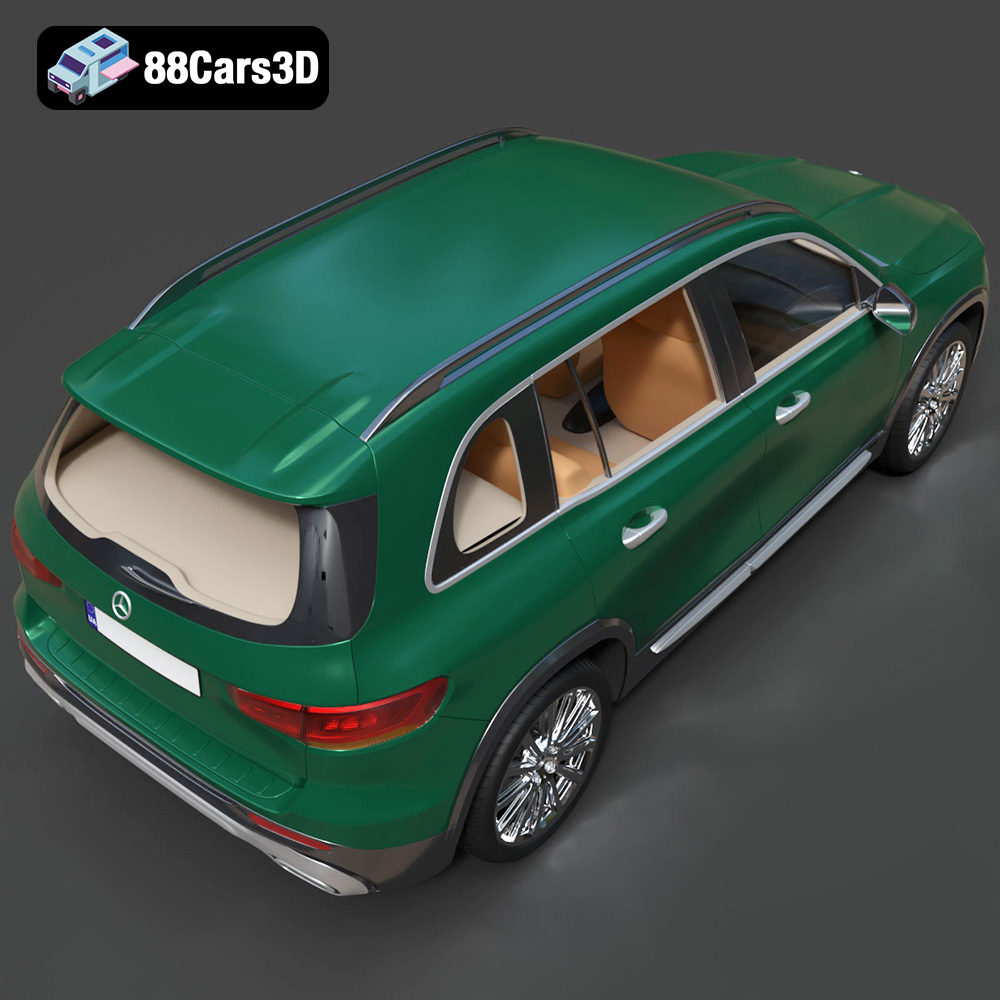
The quality extends beyond the exterior. The cockpit and interior features are equally impressive, providing a rich experience for first-person POV in gaming and VR simulations. Detailed sport seating with intricate stitching and contouring adds a layer of luxury, while the Nappa leather multifunction sports steering wheel with precise switchgear demonstrates exceptional attention to detail. The accurate MBUX dual-screen digital instrument cluster and infotainment system, along with the detailed central console, air vents, and pedals, create an immersive interior environment. This level of interior fidelity is vital for applications where users will directly interact with or be placed inside the vehicle, such as virtual showrooms or driving simulators.
The technical specifications of this model are designed for maximum utility. Its “game-ready” optimization, with approximately 250,000 triangles, ensures it can be deployed efficiently in real-time engines like Unreal and Unity without sacrificing visual quality. The real-world scale accuracy is based on the actual vehicle chassis, making it suitable for architectural visualizations or forensic simulations where precise dimensions are critical. Furthermore, the proper pivot setup for steering, wheel rotation, and suspension travel is a key advantage for animators and game developers, allowing for immediate and realistic vehicle dynamics without extensive rigging setup. This comprehensive technical foundation makes the Mercedes-Benz GLB-Class model from 88cars3d.com a premium asset for any project.
The true value of a high-quality 3D car model lies in its ability to seamlessly integrate into various professional workflows, enhancing efficiency and elevating the final output.
For cinematic visuals and stunning still images, the Mercedes-Benz GLB-Class 3D model is perfectly suited for high-end rendering in software like 3ds Max (using renderers like V-Ray or Corona) and Blender (with Cycles or Eevee). In these environments, artists can leverage the model’s clean geometry and PBR textures to create photorealistic lighting setups, apply advanced shaders, and compose dynamic scenes. Imagine the GLB-Class parked in a sleek urban environment or navigating a scenic mountain road, rendered with breathtaking detail. The .max and .blend files provide native access, allowing full artistic control over materials, camera angles, and animation sequences for advertising campaigns, product showcases, or architectural visualizations.
The “game-ready” nature and the inclusion of the .fbx and .unreal formats make this GLB-Class model a powerhouse for real-time applications. In Unreal Engine (or Unity), developers can quickly import the optimized mesh, leverage its PBR materials, and integrate it into interactive environments. Its optimized polycount is critical for maintaining high frame rates in open-world games or racing titles. With separate wheels and suspension components, it’s straightforward to set up vehicle physics and animation blueprints, allowing players to drive a highly realistic Mercedes-Benz GLB-Class. This also extends to virtual production, where real-time rendering is used for quick iterations and on-set visualization.
Beyond traditional rendering and game development, this 3D car model opens doors to cutting-edge interactive experiences. For AR/VR, the .glb format is invaluable, enabling the creation of immersive virtual showrooms where customers can explore the GLB-Class in 3D, customize colors, and even place it virtually in their driveway using mobile AR. Its optimized geometry ensures smooth performance on a range of devices. For those interested in the tangible, the .stl format allows for 3D printing, converting the digital asset into a physical model. With recommended settings for resin printing, hobbyists can create highly detailed display-scale replicas, turning a digital design into a tangible object that reflects the meticulous detail of the original model.
A high-quality 3D asset provides more than just an accurate representation; it offers a canvas for boundless creativity and customization, allowing artists and developers to tailor the model to their specific project needs.
The flexibility of the Mercedes-Benz GLB-Class 3D model allows for extensive visual customization. Users can effortlessly change body colors, experimenting with authentic factory finishes like Mountain Grey or Cosmos Black, or venturing into bespoke custom hues. The PBR materials allow for modifications to tire textures, switching between street variants and winter treads, or adjusting material finishes from matte to gloss, metallic, or adding carbon fiber accents. Furthermore, the model adapts seamlessly to different lighting setups, allowing artists to create distinct daytime or night-time environments, dramatically altering the mood and presentation of the vehicle. This level of control is essential for branding, advertising, and creating diverse scene variations without needing multiple assets.
With its properly set up pivots for steering, wheel rotation, and suspension travel, the GLB-Class model is primed for animation. Animators can create dynamic driving sequences, intricate camera moves around and through the vehicle, or showcase specific features like door opening or trunk access. This functionality is invaluable for automotive marketing videos or interactive configurators where users can explore the car’s mechanics and features dynamically. The separate components ensure a smooth animation pipeline, saving precious development time.
Ultimately, a model of this caliber serves as a versatile base for countless projects. Its robust technical foundation and high level of detail mean it can be adapted and extended for future requirements, whether that involves creating custom body kits, adding accessories, or integrating it into entirely new digital ecosystems. Investing in a meticulously crafted asset like the Mercedes-Benz GLB-Class Mk1 AMG Line 2019 3D Model from 88cars3d.com ensures that your projects benefit from a foundation of excellence, reducing development time and elevating visual standards.
The world of 3D modeling demands precision, versatility, and an unwavering commitment to quality. As we’ve explored, a truly professional 3D car model, such as the Mercedes-Benz GLB-Class Mk1 AMG Line 2019 3D Model, is much more than just a digital representation. It is a carefully engineered asset optimized for a broad spectrum of applications, from stunning automotive rendering to demanding game development, immersive AR/VR experiences, and even tangible 3D prints.
The meticulous attention to detail in its exterior and interior, combined with its optimized topology, PBR texturing, and extensive file format support (.blend, .fbx, .obj, .glb, .stl, .ply, .unreal, .max), makes this model an indispensable resource for any digital artist or developer. It provides the technical foundation for realistic visuals, efficient real-time performance, and unparalleled creative freedom. When seeking high-quality 3D car models to elevate your projects, consider resources like 88cars3d.com, where excellence in digital automotive assets is the standard.
Embrace the power of premium 3D assets to transform your visions into stunning realities, one meticulously crafted polygon at a time.
Experience the perfect blend of rugged versatility and premium luxury with our meticulous 3D model of the Mercedes-Benz GLB-Class (Mk1) AMG Line 2019. This compact crossover SUV stands out with its distinctive boxy silhouette, commanding stance, and aggressive AMG Line styling cues, including the signature diamond radiator grille, sporty front aprons, and prominent dual exhaust system. Designed to encapsulate the modern elegance and muscular heritage of the Mercedes-Benz brand, this digital replica captures every striking curve and sophisticated detail.
This high-fidelity, game-ready 3D model is meticulously crafted with optimized topology (~250,000 triangles), striking an impeccable balance between exceptional visual realism and efficient real-time performance. Designed for maximum versatility, the model features PBR texturing and precise structural proportions, making it a premium asset for game engines, high-end rendering, and immersive interactive media.
Perfect for urban racing games, luxury vehicle configurators, architectural visualizations, and mobile AR experiences.
.blend, .fbx, .obj, .glb, .stl, .ply, .unreal, .max
Tags:
mercedes-benz, glb-class, amg-line, 2019, compact-suv, luxury-suv, game-ready, low-poly, optimized, car-3d-model, game-asset, rendering, vr-ar, blend, fbx, obj, glb, stl, ply, unreal, maxVespa VNB 125-B 3D Model 3D Printable STL
$39.99
.2019
.blend
.fbx
.glb
.luxury suv
.max
.obj
.ply
.rendering
.stl
.unreal
amg-line
car-3d-model
compact-suv
game asset
game-ready
glb-class
low-poly
mercedes-benz
optimized
VR/AR