Get 20% OFF All Premium 3D & STL Models!

In the dynamic world of digital content creation, where photorealism and interactive experiences reign supreme, the demand for meticulously crafted 3D assets has never been higher. From blockbuster movies to immersive video games, architectural visualizations, and cutting-edge AR/VR applications, a project’s success often hinges on the quality and fidelity of its core components. Automotive design, in particular, stands as a testament to the blend of artistry and technical precision required in 3D modeling. Few vehicles encapsulate timeless design and elegant engineering quite like the Vespa, and its digital representation demands an equal level of detail.
Today, we’ll delve into the intricacies of professional 3D model creation, exploring the critical factors that elevate an asset from good to exceptional. We’ll uncover workflows, technical specifications, and the diverse applications that high-quality models enable. As a prime example of this professional-grade craftsmanship, we will frequently reference the Vespa 946 3D Model – an asset available on 88cars3d.com that perfectly illustrates the meticulous attention to detail required for modern digital pipelines. This model is not just a visual representation; it’s a versatile tool engineered for seamless integration into the most demanding professional projects, embodying the iconic elegance of the real-world scooter in a digital format.
The versatility of a 3D model in professional pipelines is often defined by the range and quality of its supported file formats. Each format serves a specific purpose, optimized for different software, engines, or end-use applications. A comprehensive asset, like the Vespa 946 3D Model, provides a suite of formats, ensuring maximum compatibility and utility for designers, developers, and artists across various disciplines. Understanding these formats is crucial for efficient workflow and successful project execution.
The .blend format is the native file type for Blender, the powerful open-source 3D creation suite. When you acquire a .blend file, you’re gaining access to the complete scene setup, including the fully editable mesh data, materials, textures, lighting, cameras, and even animation data if present. For artists working primarily in Blender, this format offers unparalleled flexibility, allowing for direct modification, rigging, custom rendering setups using Cycles or Eevee, and easy integration into larger Blender projects. It’s the ideal choice for those who need to tweak every parameter or re-purpose parts of the model within a Blender-centric workflow.
.fbx (Filmbox) is a proprietary file format developed by Autodesk, widely recognized as the industry standard for 3D data interchange between various software applications and game engines. It’s renowned for its robust support for not just geometry, but also materials, textures, animations, skinning, and even camera and light data. Its strength lies in its ability to encapsulate complex scene data in a single file, making it invaluable for transferring models like the Vespa 946 into environments like Unreal Engine, Unity, 3ds Max, Maya, or Cinema 4D. For game developers and real-time visualization specialists, .fbx is often the go-to choice due to its optimization for performance and comprehensive feature set.
The .obj (Wavefront Object) format is one of the oldest and most widely supported 3D file formats. It’s a universal standard, meaning almost every 3D software can import and export it. While it’s excellent for geometry and UV mapping, its capabilities for materials and animations are more limited compared to .fbx. Materials are typically defined in an accompanying .mtl file. The .obj format is a reliable choice for ensuring cross-software compatibility, especially when the primary concern is the mesh data itself. It’s a foundational format, perfect for simple transfers and a safety net for interoperability.
.glb (GLB format, often referred to as ‘glTF Binary’) is a compact, binary representation of the glTF (GL Transmission Format) standard. It’s specifically designed for efficient transmission and loading of 3D scenes and models on the web, in AR/VR applications, and mobile platforms. A .glb file bundles the 3D model, textures, and animations into a single file, making it incredibly streamlined for quick deployment and real-time viewing in browser-based viewers, AR experiences (like on iOS or Android), and virtual reality environments. Its efficiency and comprehensive PBR material support make it a critical format for cutting-edge interactive digital experiences, offering an ideal solution for showcasing the Vespa 946 in a browser or AR app.
The .stl (Stereolithography) format is the ubiquitous standard for 3D printing. It represents a 3D model as a series of connected triangles (a triangular mesh) without any color, texture, or material information. Its simplicity makes it universally compatible with 3D printers and slicing software. For projects requiring physical prototypes or custom collectibles of the Vespa 946, the .stl file is indispensable, ensuring a clean, manifold mesh ready for fabrication. While it lacks visual fidelity, its precision for physical output is unmatched.
.ply (Polygon File Format or Stanford Triangle Format) is another format for storing 3D data, particularly useful for scanned data, CAD, and scientific applications. It supports both polygon meshes and point clouds and can store a wider range of properties per vertex or face than .stl, including color, transparency, normals, and texture coordinates. While less common for general game or rendering assets than .fbx or .obj, it offers a robust solution for detailed mesh analysis, reverse engineering, or when precision in geometric representation and additional vertex attributes are paramount. For highly detailed models like the Vespa 946, a .ply file could be valuable for specific engineering or analytical tasks.
The .unreal format signifies an asset specifically optimized and often pre-configured for the Unreal Engine. While typically assets are imported via .fbx into Unreal, receiving a file explicitly labeled .unreal suggests a streamlined workflow, potentially with pre-setup materials, blueprints, or scene configurations tailored for the engine. This can drastically reduce setup time and ensure the model performs optimally within Unreal’s real-time rendering environment, making the Vespa 946 immediately usable for stunning cinematics or interactive experiences.
Finally, the .max format is the native file type for Autodesk 3ds Max, a leading 3D modeling, animation, and rendering software widely used in architectural visualization, product design, and game development. Like .blend, a .max file provides the complete scene, including editable geometry, modifiers, materials, lighting, and animation. For professionals operating within a 3ds Max pipeline, this format offers full control over the asset, enabling advanced rendering with V-Ray or Corona, complex animation sequences, and integration with other 3ds Max-specific tools and plugins. It allows for the highest level of customization and refinement for projects demanding the ultimate in visual fidelity for the Vespa 946.
The availability of this diverse range of formats with the Vespa 946 3D Model highlights its professional-grade utility, ensuring creators have the right tool for every job, from photorealistic rendering to interactive experiences and even 3D printing.
Creating a 3D model that truly stands out requires more than just replicating shapes; it demands an understanding of form, function, and the subtle nuances that define an object’s character. The Vespa 946 3D Model exemplifies this meticulous approach, transforming a real-world design icon into a digital asset of exceptional quality.
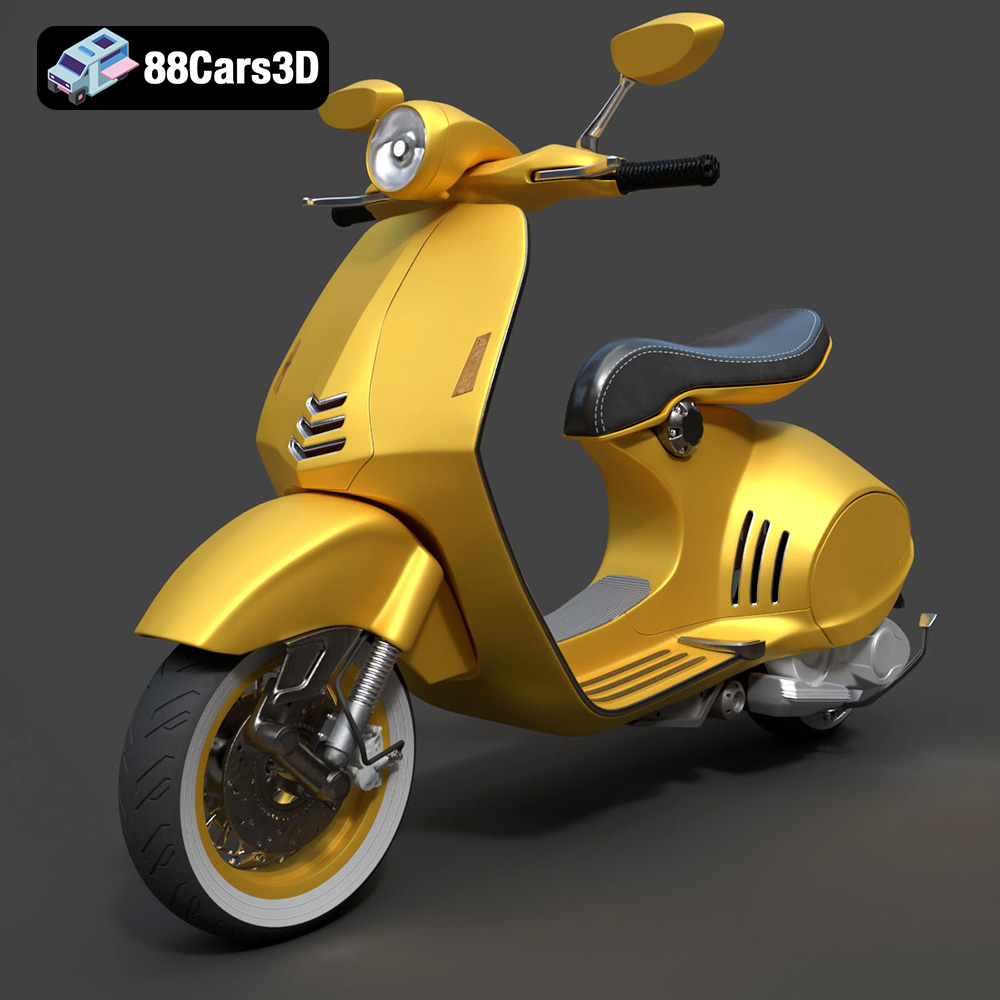
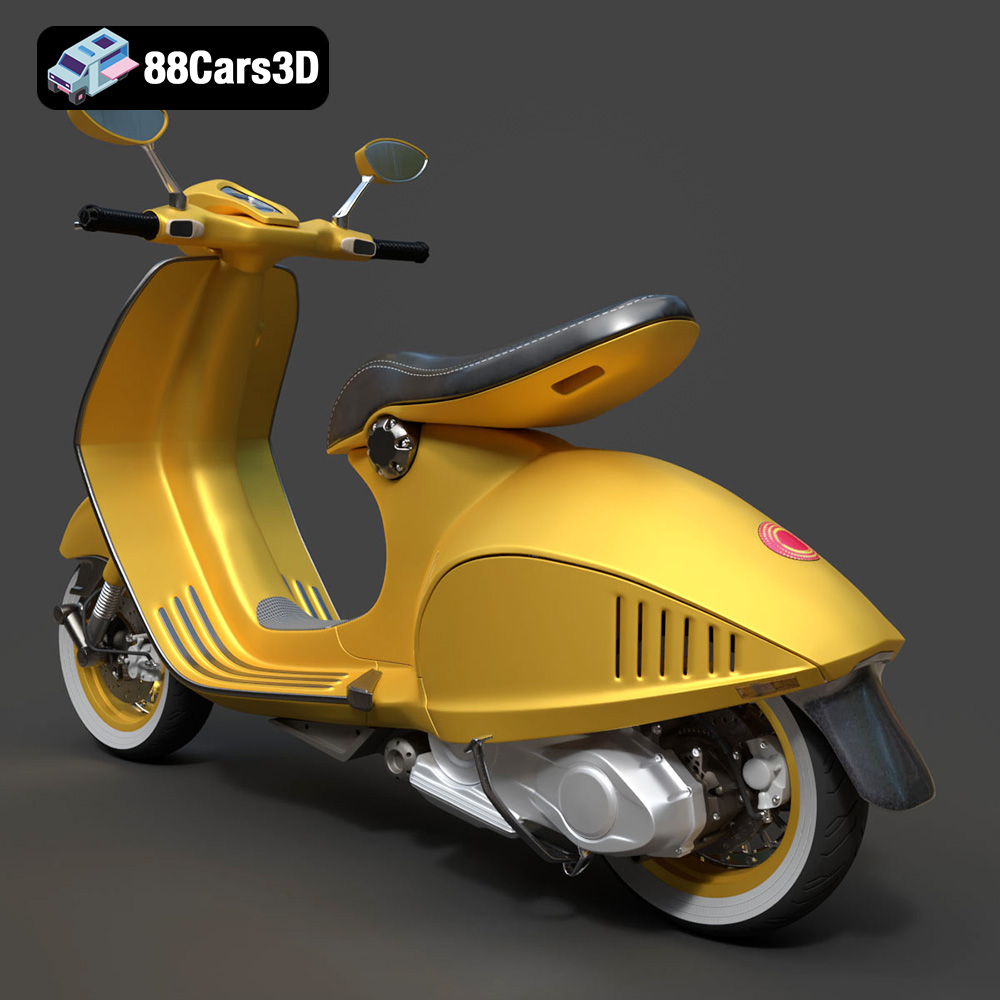
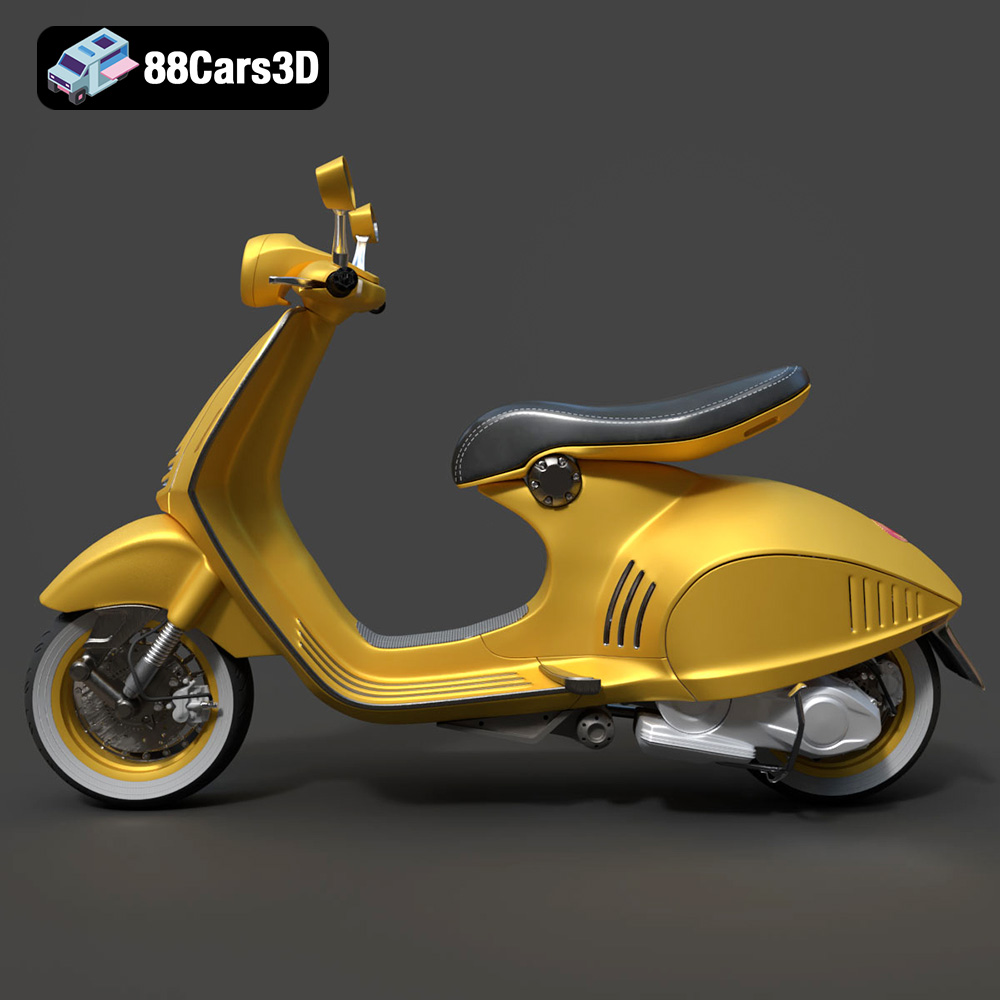
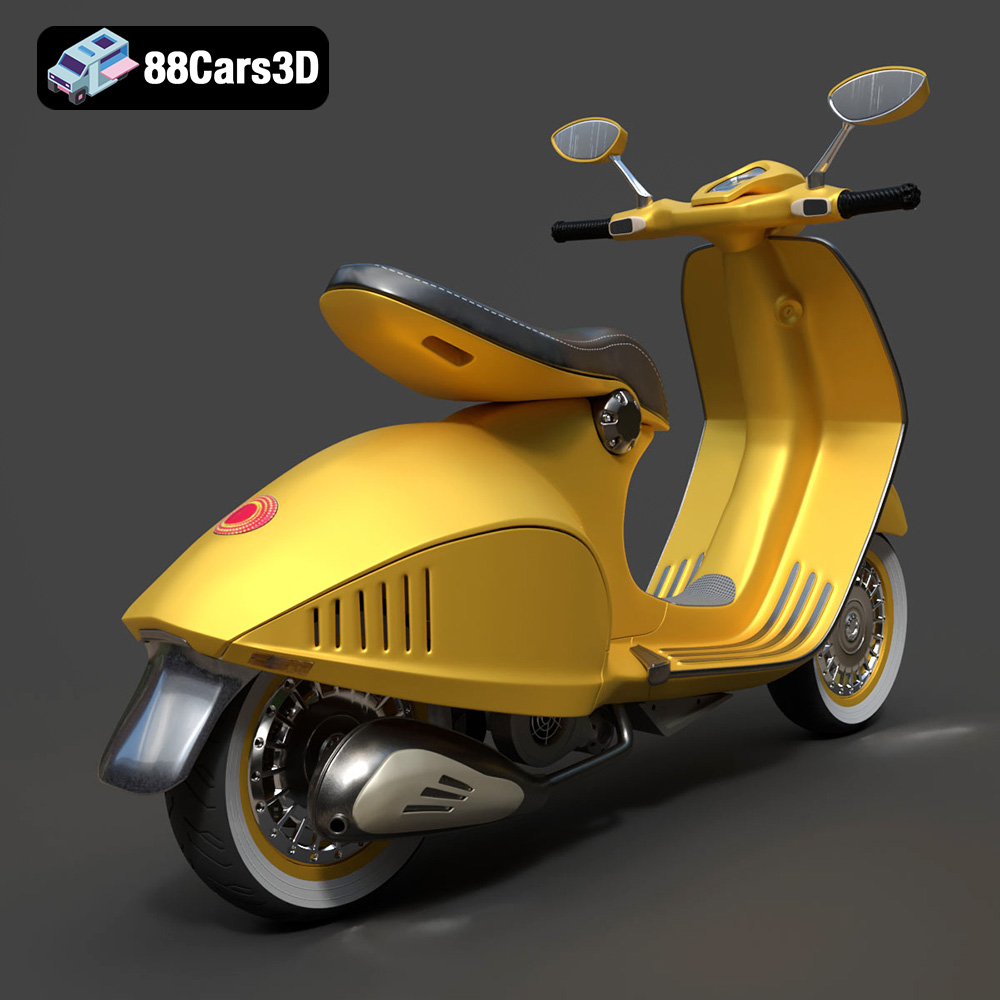
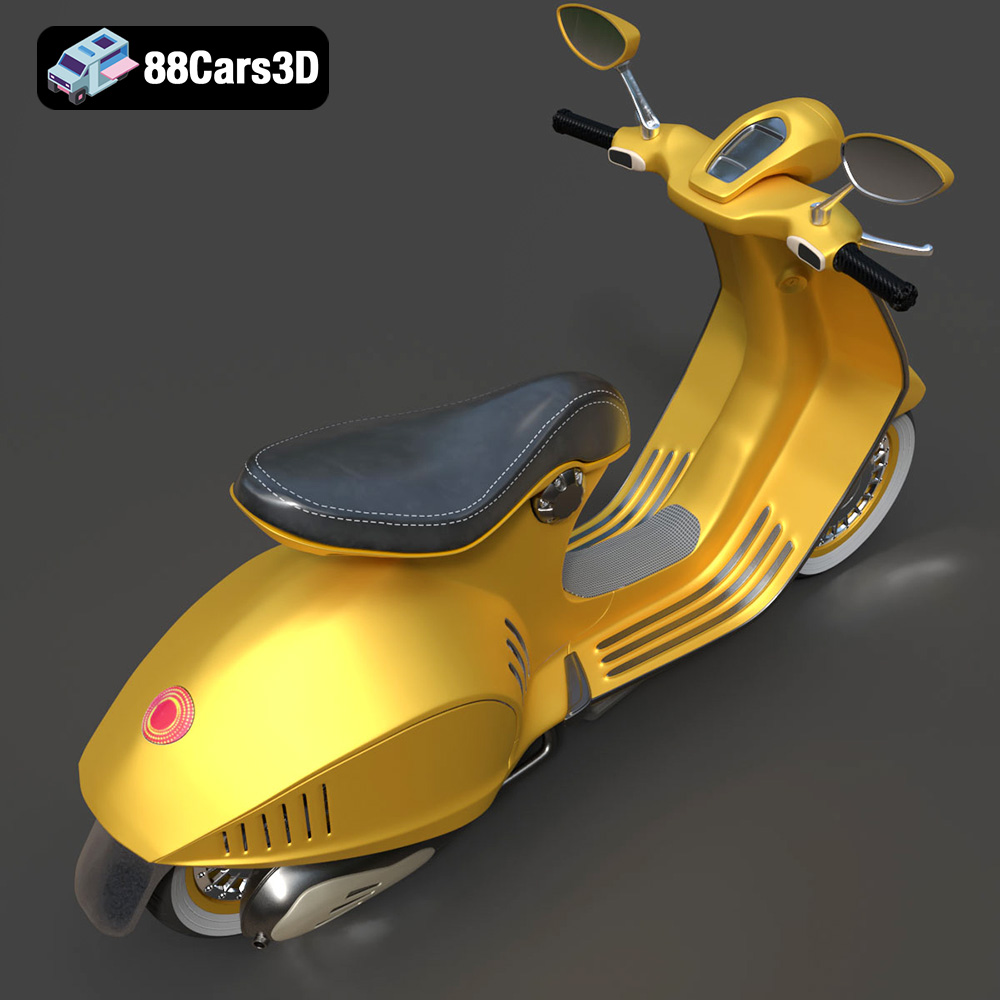
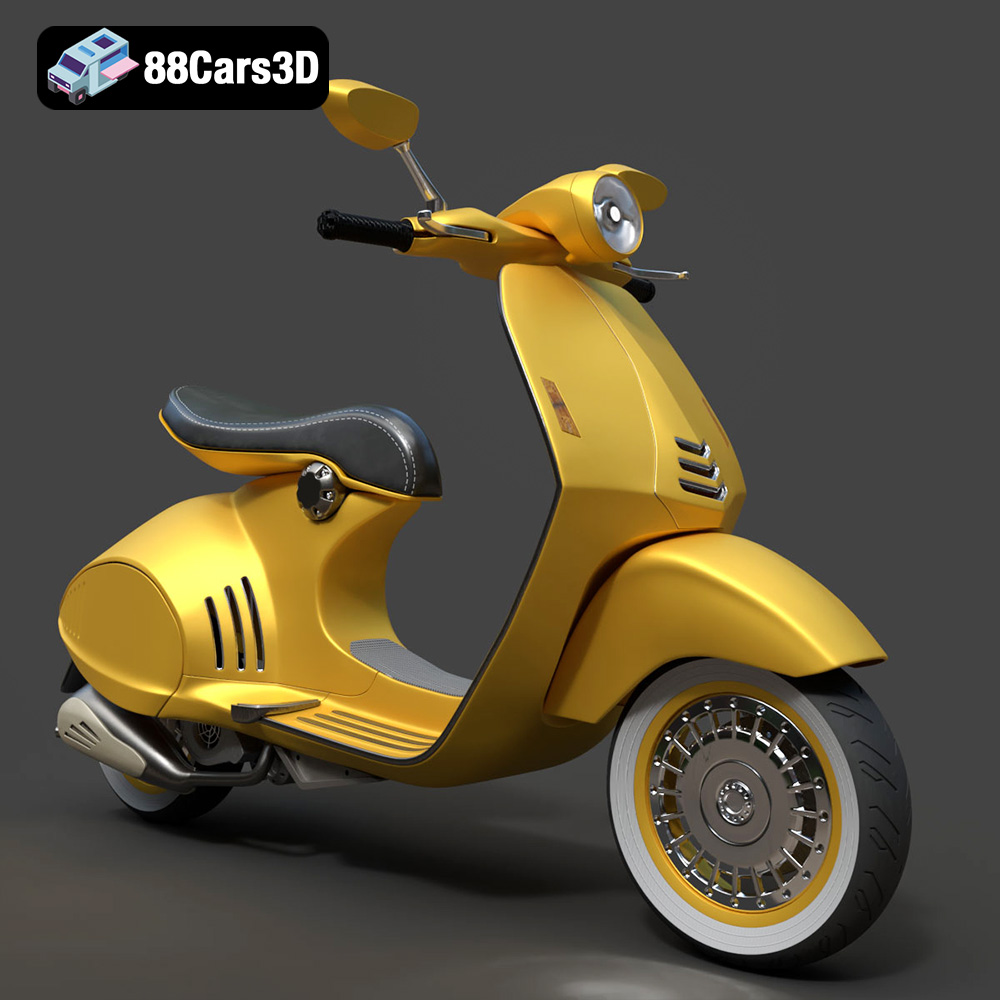
The first impression of any high-quality 3D asset comes from its form. For the Vespa 946, this means capturing the “authentic curves and refined aesthetics” that make it instantly recognizable. This isn’t a task for simple extrusions or basic primitives. Instead, it involves sophisticated polygonal modeling, often starting from blueprints and reference images, to precisely sculpt every line and contour. The digital artisan carefully crafts the body panels, the elegant single-sided swingarm, and even the intricate detailing of the handlebars and instrument cluster. For close-up studio renders, where every reflection and highlight will be scrutinized, precision is paramount. The “true-to-life realism” comes from maintaining consistent curvature, smooth transitions between surfaces, and accurately representing the subtle bevels and fillets that define the Vespa’s premium feel. Features like the “distinct seating” texture and the “polished chassis” reflect not only the shape but also the intended material properties, which are foundational to the model’s visual integrity.
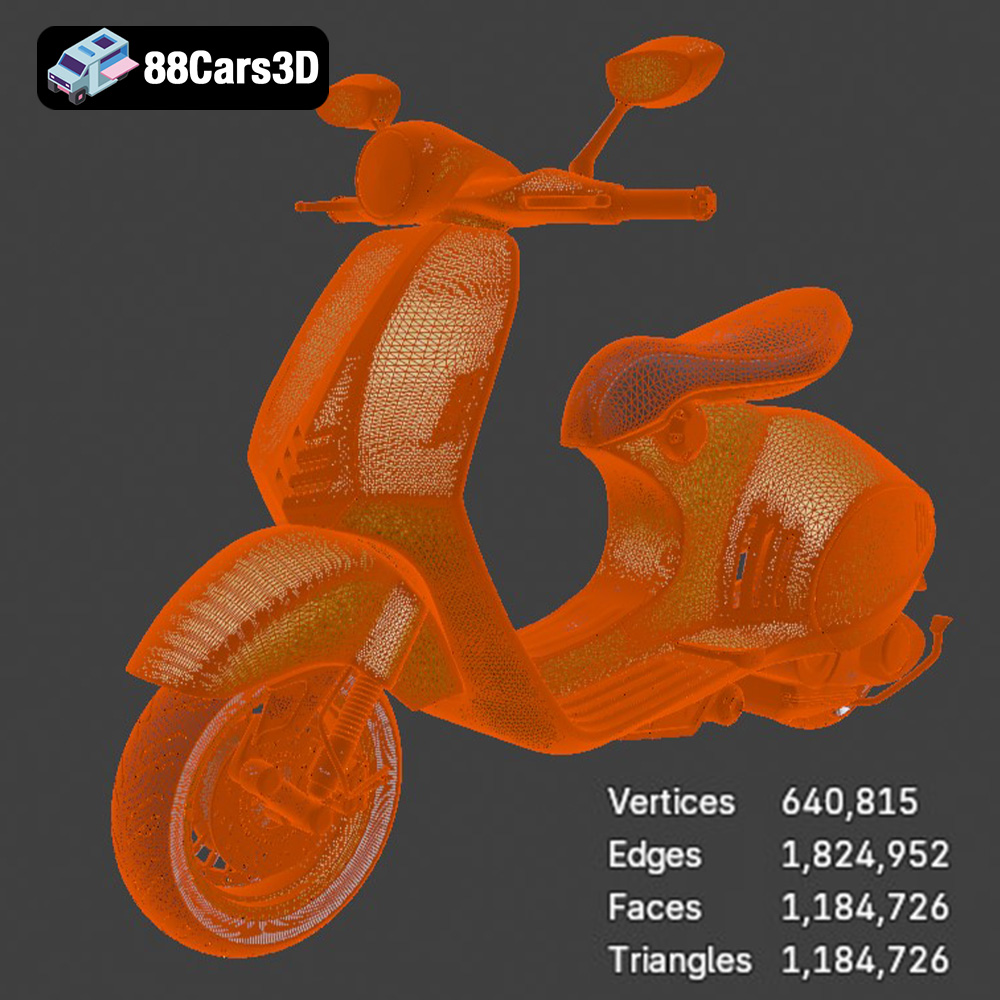
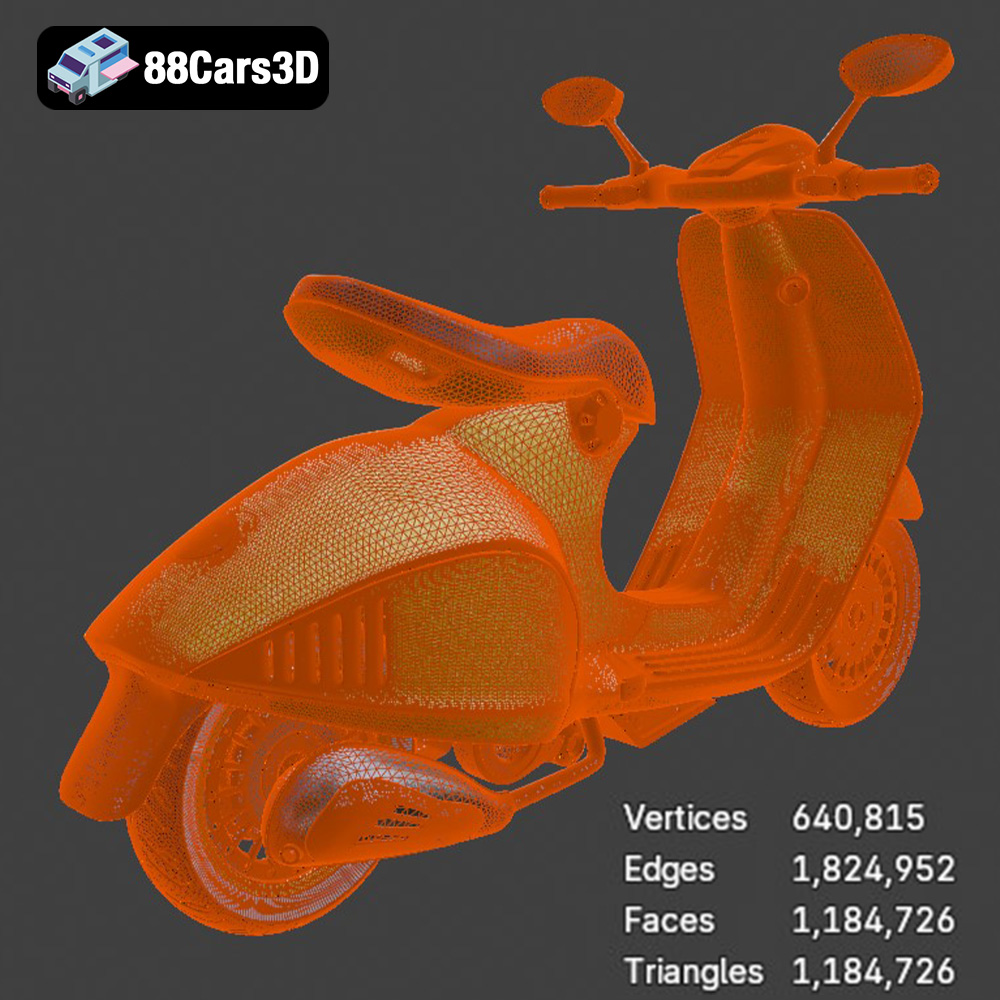
Beyond raw polygon count, the quality of a 3D model is heavily reliant on its underlying geometry and material setup. The description of the Vespa 946 3D Model emphasizes “clean geometry and optimized polygon counts.” Clean geometry refers to a well-structured mesh, typically composed of quads (four-sided polygons), that allows for smooth subdivisions without pinching or artifacts. This “professional-grade topology” is crucial for seamless integration into various pipelines and ensures optimal performance, whether for static renders or real-time applications. An optimized polygon count means finding the right balance between visual detail and computational efficiency – enough polygons to capture the Vespa’s intricate details, but not so many that it bogs down a scene or game engine. This balance is often achieved through intelligent modeling techniques and the strategic use of subdivision surfaces where appropriate.
Equally vital are “realistic materials, accurate texturing, and a highly detailed structure.” Modern rendering relies on Physically Based Rendering (PBR) workflows, which mimic how light interacts with real-world surfaces. This involves texture maps for diffuse color (albedo), metallic properties, roughness, normal details (for fine surface texture without adding geometry), and ambient occlusion. For the Vespa 946, this translates to chrome that shines authentically, paintwork with appropriate reflectivity and subtle imperfections, rubber textures that feel tactile, and leather for the seat that shows subtle grain. Accurate UV mapping, which unwraps the 3D model’s surface into 2D space for texture application, is a foundational element ensuring textures appear correctly and without distortion, contributing significantly to the model’s overall realism and enabling “demanding digital creations.”
The real value of a high-quality 3D asset like the Vespa 946 3D Model lies in its utility across diverse professional workflows. From generating stunning promotional imagery to populating immersive digital worlds, these assets are indispensable tools for creators.
For those in advertising, product design, or architectural visualization, photorealistic rendering is paramount. Software like 3ds Max, often coupled with render engines like V-Ray or Corona, provides an unparalleled environment for creating breathtaking visuals. With the included .max file for the Vespa 946, artists gain direct access to an editable project. This means they can fine-tune materials, adjust lighting setups—from dramatic studio backdrops to realistic outdoor environments with HDRI (High Dynamic Range Image) lighting—and set up complex camera animations. The high fidelity of the model’s geometry and PBR materials ensures that every reflection, shadow, and surface imperfection contributes to an image that is virtually indistinguishable from a photograph. Similarly, Blender users benefit from the .blend file, enabling them to leverage Cycles or Eevee for equally stunning results. These editable formats mean the Vespa 946 isn’t just a static object; it’s a dynamic canvas ready for bespoke artistic direction for any automotive rendering project.
Consider a scenario where a marketing agency needs to feature the Vespa 946 in an upcoming print campaign. Instead of expensive photography shoots, they can use the 3D model. In 3ds Max, they could place the Vespa in a sleek, minimalist studio environment, adjusting rim lights to highlight its chrome accents and setting up a softbox to illuminate its iconic curves. With the professional-grade topology, they can even apply turbosmooth modifiers to achieve ultra-smooth surfaces for extreme close-ups without artifacts. The realistic materials included with the model mean less time spent on material creation and more time on lighting and composition, delivering stunning renders quickly and efficiently.
The demands of game development and real-time interactive experiences are distinct, prioritizing performance and optimization alongside visual quality. Here, formats like .fbx and the specifically optimized .unreal become crucial. The Vespa 946 3D Model is described as “game-engine ready,” meaning its geometry is optimized for real-time rendering, potentially with efficient UV maps and PBR textures that perform well under varying light conditions within an engine like Unreal or Unity.
When importing the .fbx or .unreal file into Unreal Engine, for example, developers can quickly set up materials using the engine’s robust material editor, linking the albedo, normal, roughness, and metallic maps provided. Collision meshes can be automatically generated or custom-created to ensure realistic interaction within the game world. Furthermore, for open-world games or scenarios where the Vespa 946 might be viewed from varying distances, Level of Detail (LOD) models can be generated from the high-poly base model, allowing the engine to swap to simpler meshes at greater distances to maintain high frame rates. This meticulous preparation ensures the Vespa 946 can be seamlessly integrated into driving simulations, virtual showrooms, or as an environmental prop in an immersive game world, providing stunning visual fidelity without compromising performance, thereby serving as an excellent game asset.
The utility of a premium 3D model like the Vespa 946 extends far beyond traditional rendering and game development, touching various innovative fields that leverage digital assets for creation and communication.
Architectural visualization relies heavily on 3D models to bring proposed buildings and environments to life. While the primary focus is often the structure itself, the inclusion of contextual elements, such as 3D car models and other vehicles, is vital for adding realism, scale, and a sense of habitation to a scene. Imagine an archviz project showcasing a chic urban cafe with outdoor seating. Placing the Vespa 946 3D Model casually parked nearby instantly elevates the scene, injecting a sense of European style and authenticity. It tells a story, implying activity and lifestyle, making the architectural design more relatable and appealing. The model’s high-quality materials and accurate scale ensure it blends seamlessly into the scene, enhancing the overall visual narrative without distracting from the main subject. Its clean topology and optimized geometry also mean it can be easily integrated into complex architectural scenes without burdening render times.
The physical manifestation of digital designs is an increasingly important application, driven by advancements in 3D printing technology. The availability of an .stl file for the Vespa 946 3D Model opens up exciting possibilities for rapid prototyping, creating physical collectibles, or even producing custom components. For 3D printing, the .stl format is essential because it represents the model as a watertight mesh of triangles, which is exactly what a 3D printer needs to interpret the object’s geometry. Before printing, the model would be passed through a ‘slicer’ program which generates the layers for the printer. The “suitable for 3D printing and prototyping” designation implies that the model’s geometry is manifold (has no holes or non-solid areas), which is critical for successful printing. This means enthusiasts could print a scaled-down replica of the iconic scooter, designers could create physical mock-ups, or educators could use it as a tangible learning aid. The inclusion of the .ply format also offers potential for more detailed analysis or specialized industrial applications where precise mesh data is required for manufacturing processes or quality control.
The immersive nature of Augmented Reality (AR) and Virtual Reality (VR) environments, alongside interactive web-based 3D viewers, demands highly optimized and efficiently packaged 3D assets. The .glb format, specifically designed for these applications, is a game-changer for deploying models like the Vespa 946 into cutting-edge experiences. With a .glb file, the entire model—including its geometry, materials, and textures—is contained within a single binary file. This makes it incredibly fast to load and display in AR apps on smartphones, VR headsets, or embedded directly into web pages. Imagine being able to “place” the Vespa 946 in your driveway using an AR app, or rotating it in a 360-degree interactive viewer on an e-commerce website. This level of engagement significantly enhances product visualization, virtual showrooms, and interactive storytelling. The “optimized for AR/VR and web-based visualization” aspect ensures that the model meets the strict performance requirements of these real-time, often mobile-first, platforms without sacrificing visual quality, offering a seamless and engaging user experience.
In the fast-paced world of digital production, time is often the most valuable commodity. Developing high-quality 3D models from scratch can be an incredibly time-consuming and resource-intensive endeavor, often requiring specialized skills in modeling, texturing, and optimization. This is where online marketplaces like 88cars3d.com provide immense value, offering a curated selection of professional-grade 3D assets that are ready for immediate integration into projects.
When you purchase a model like the Vespa 946 3D Model from 88cars3d.com, you are not just acquiring a digital file; you are investing in expertly crafted digital engineering. The description highlights “meticulously crafted,” “clean geometry,” and “optimized polygon counts” – these are hallmarks of a truly professional asset. Such models are built to rigorous standards, ensuring they perform optimally whether in a high-fidelity rendering pipeline or a real-time game engine. This attention to detail eliminates countless hours of development time for artists and studios, allowing them to focus on creative direction, scene composition, and project deadlines rather than the laborious process of asset creation and optimization.
Moreover, the versatility offered by the comprehensive range of included file formats—from .blend and .max for editable scene work, to .fbx and .unreal for game engines, .glb for AR/VR, and .stl for 3D printing—means that a single purchase provides solutions for multiple potential applications. This adaptability makes assets from 88cars3d.com incredibly cost-effective. Instead of needing to commission or create different versions of a model for various platforms, creators have a single, robust asset that caters to a broad spectrum of digital needs. For anyone seeking to elevate their projects with stunning automotive realism, investing in high-quality 3D car models from a reputable source like 88cars3d.com is a smart and strategic decision, ensuring both visual excellence and efficient workflow.
The journey from an iconic physical design like the Vespa 946 to a versatile, high-fidelity 3D model is a testament to the skill and technical prowess within the digital art community. We’ve explored how meticulous modeling, optimized geometry, and realistic materials converge to create an asset that is not only visually stunning but also highly functional across a multitude of professional applications. From the critical importance of understanding diverse file formats like .blend, .fbx, and .glb, to integrating these assets into demanding workflows for automotive rendering, game development, architectural visualization, AR/VR experiences, and even 3D printing, the value of a well-engineered 3D model is undeniable.
The Vespa 946 3D Model stands out as a prime example of such an asset, ready to enhance any digital project with its “true-to-life realism” and “professional-grade topology.” For creators and studios aiming for excellence and efficiency, sourcing high-quality 3D models from platforms like 88cars3d.com is a strategic move. It allows you to leverage expert craftsmanship, save invaluable development time, and deliver breathtaking results that truly captivate your audience. Whether you’re crafting the next big game, designing an immersive virtual experience, or producing stunning photorealistic renders, the right 3D assets are your foundation for success. Explore the possibilities and elevate your creations by integrating meticulously crafted models into your pipeline today.
Experience the iconic elegance of the Vespa 946 with this meticulously crafted 3D model. Designed to replicate the authentic curves and refined aesthetics of the renowned scooter, this asset provides true-to-life realism for professional projects. Whether for close-up studio renders or dynamic environments, every detail from the distinct seating to the polished chassis has been modeled with precision.
Built with clean geometry and optimized polygon counts, this model ensures seamless integration into various pipelines. It features realistic materials, accurate texturing, and a highly detailed structure, making it a perfect choice for demanding digital creations. The professional-grade topology guarantees smooth subdivisions and optimal performance.
This Vespa 946 3D model is highly versatile and ideal for a wide range of applications, including game development, architectural visualization, AR/VR experiences, animation, and realistic rendering. It provides creators with a ready-to-use asset that elevates the visual fidelity of any scene.
$39.99
.946
.arvr
.blend
.car3dmodel
.fbx
.gameasset
.glb
.max
.motorcycle
.obj
.ply
.rendering
.scooter
.simulation
.stl
.unreal
.vespa