Get 20% OFF All Premium 3D & STL Models!

In the dynamic world of digital content creation, the demand for realistic and impeccably detailed 3D assets continues to escalate. From cinematic automotive advertisements to immersive virtual reality experiences and high-performance game environments, the quality of your 3D models directly impacts the final product’s visual integrity and audience engagement. Achieving a truly professional outcome often hinges on the foundation laid by expertly crafted digital assets.
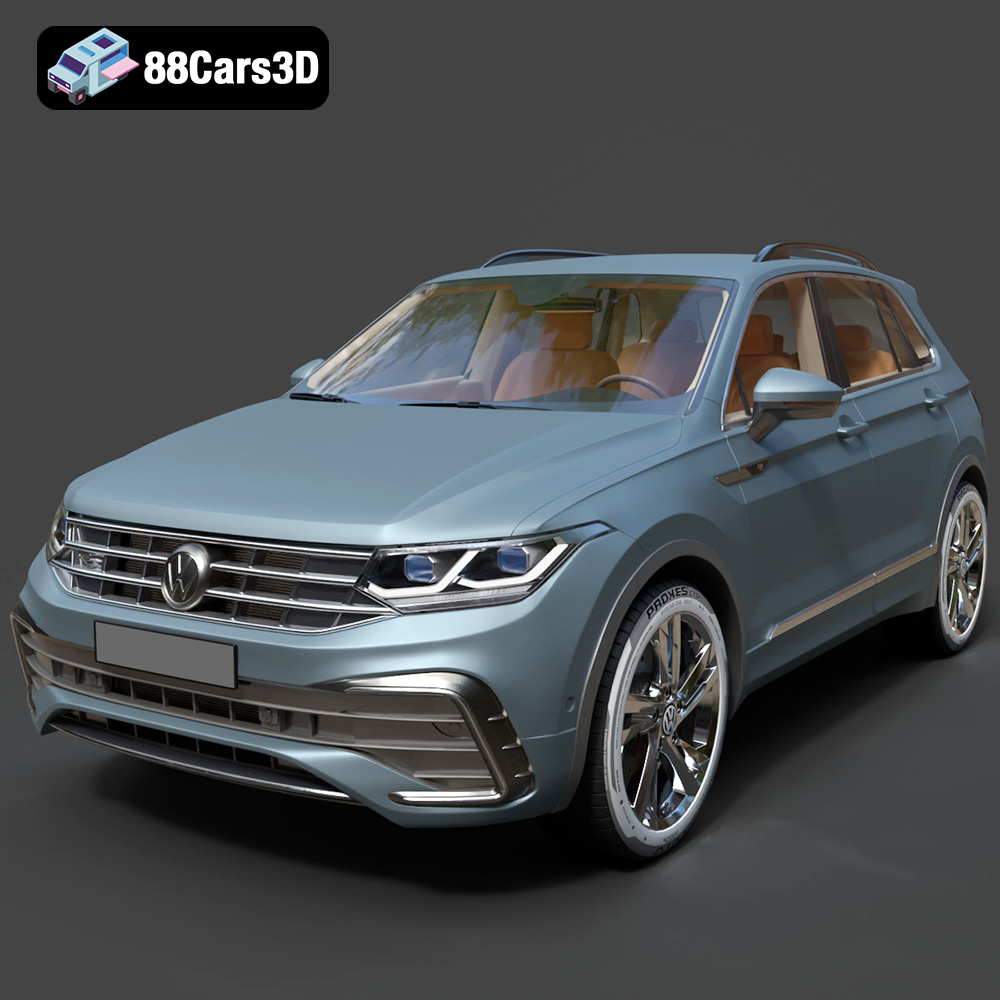
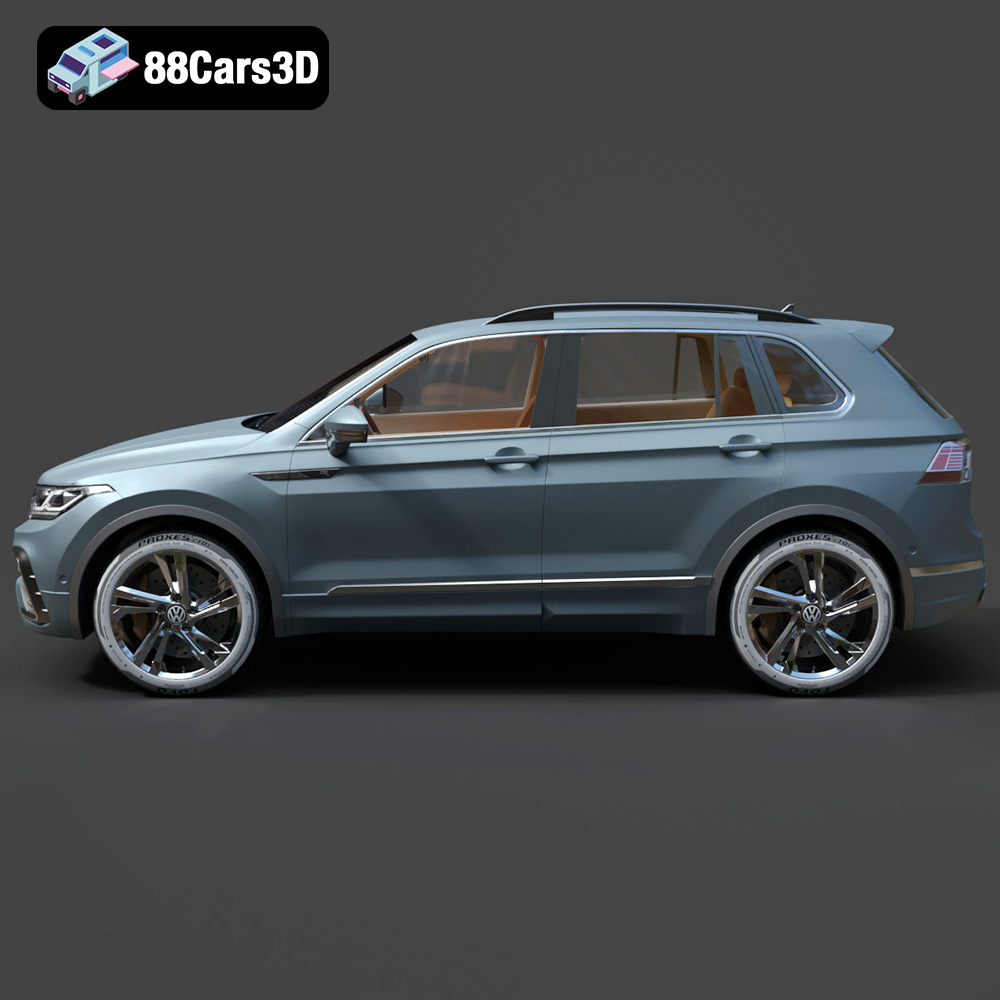
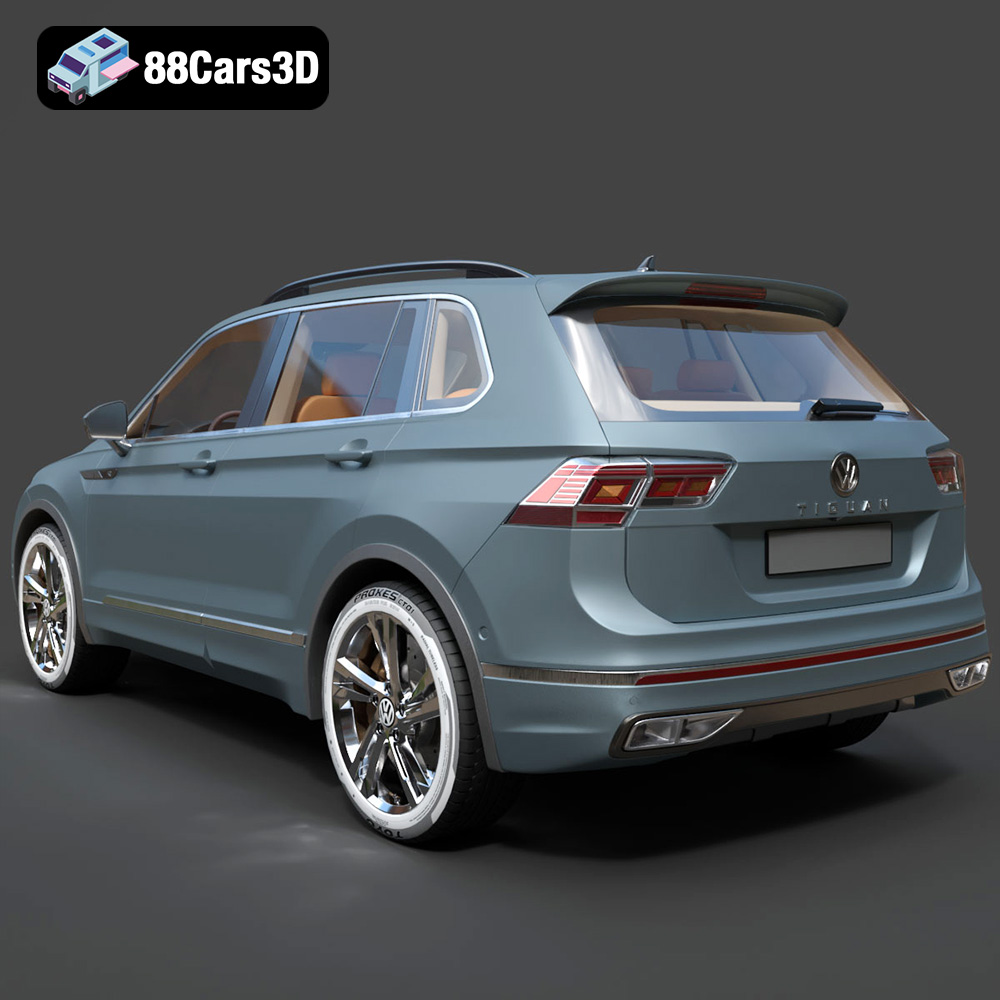
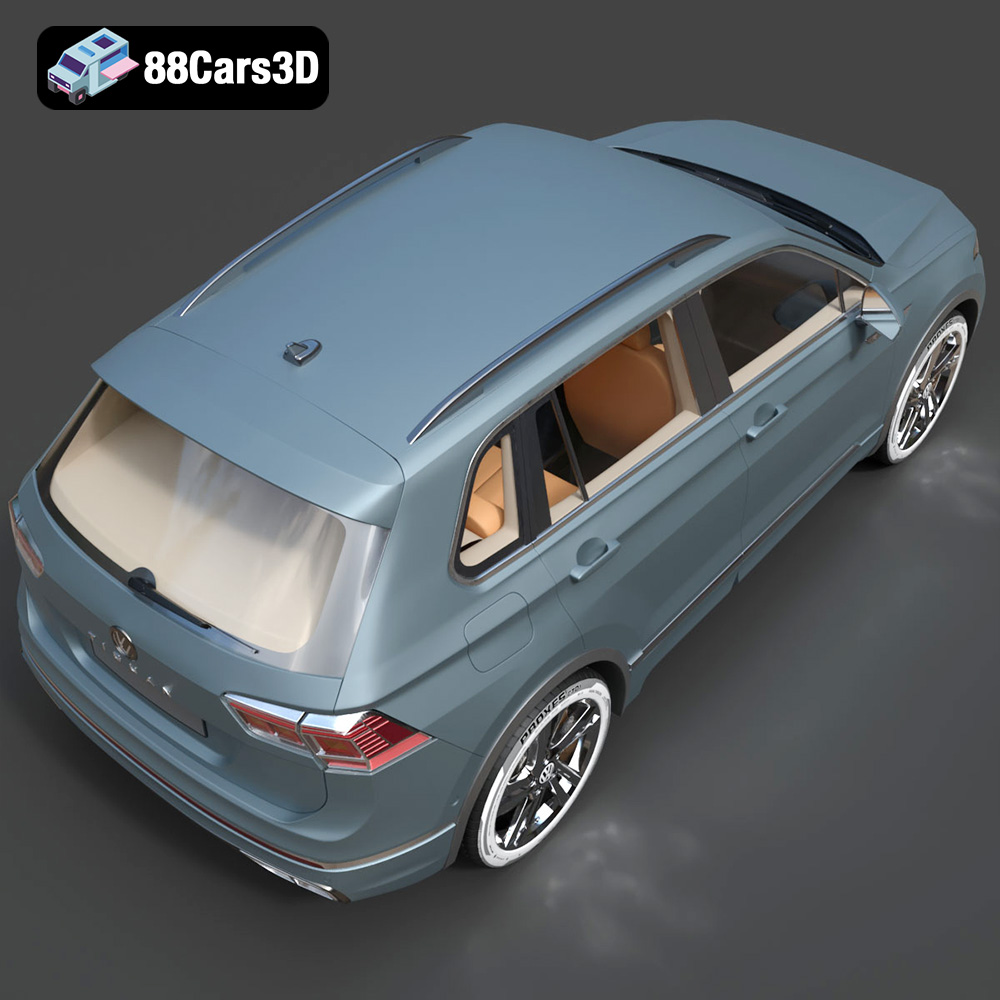
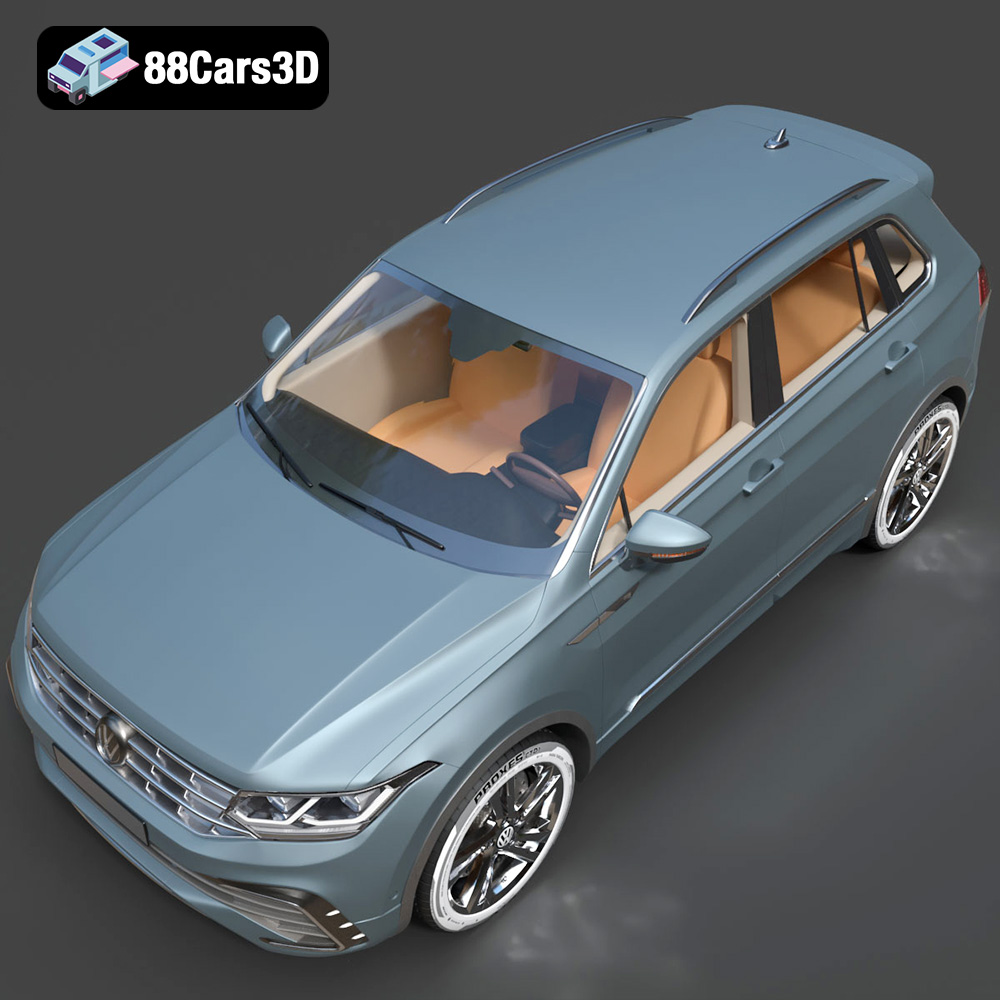
Today, we’ll delve deep into the technical intricacies and versatile applications of premium 3D car models, exploring how they integrate into various professional pipelines. We’ll use the Volkswagen Tiguan 2021 3D Model as a prime example, a digital replica designed to meet rigorous industry standards. This model perfectly captures the modern styling, dynamic stance, and sophisticated details of the popular SUV, offering an exceptional asset for a diverse array of digital projects. Its clean geometry, accurate proportions, and realistic materials make it a benchmark for quality and efficiency, crucial for creators aiming for outstanding results.
The automotive industry has long been a pioneer in leveraging 3D visualization, from initial concept design to marketing and sales. For independent artists, studios, and developers, having access to high-quality 3D car models is not just a convenience; it’s a critical component for delivering top-tier visual content. These models serve as the backbone for simulations, renders, and interactive experiences that demand absolute precision.
Automotive rendering requires an uncompromising level of detail. Every curve, panel gap, and material reflection must be accurate to convince the viewer of the vehicle’s authenticity. A low-quality model, riddled with bad topology or inaccurate proportions, will instantly break immersion, no matter how skilled the renderer. Professional 3D car models, like the Volkswagen Tiguan 2021, are meticulously crafted to ensure correct real-world scale, smooth surface continuity, and precise interpretation of the original design. This attention to detail is paramount for creating photorealistic imagery for marketing campaigns, product configurators, or engineering reviews.
High-fidelity 3D models act as the essential bridge between an abstract design concept and its tangible perception. Designers can iterate rapidly, visualize changes in real-time, and present compelling visual narratives without the need for expensive physical prototypes. This capability significantly accelerates development cycles and reduces costs. For agencies producing commercials or virtual showrooms, these assets streamline production, allowing more focus on creative direction and less on fixing foundational model issues. They are the building blocks that transform a vision into a convincing digital reality.
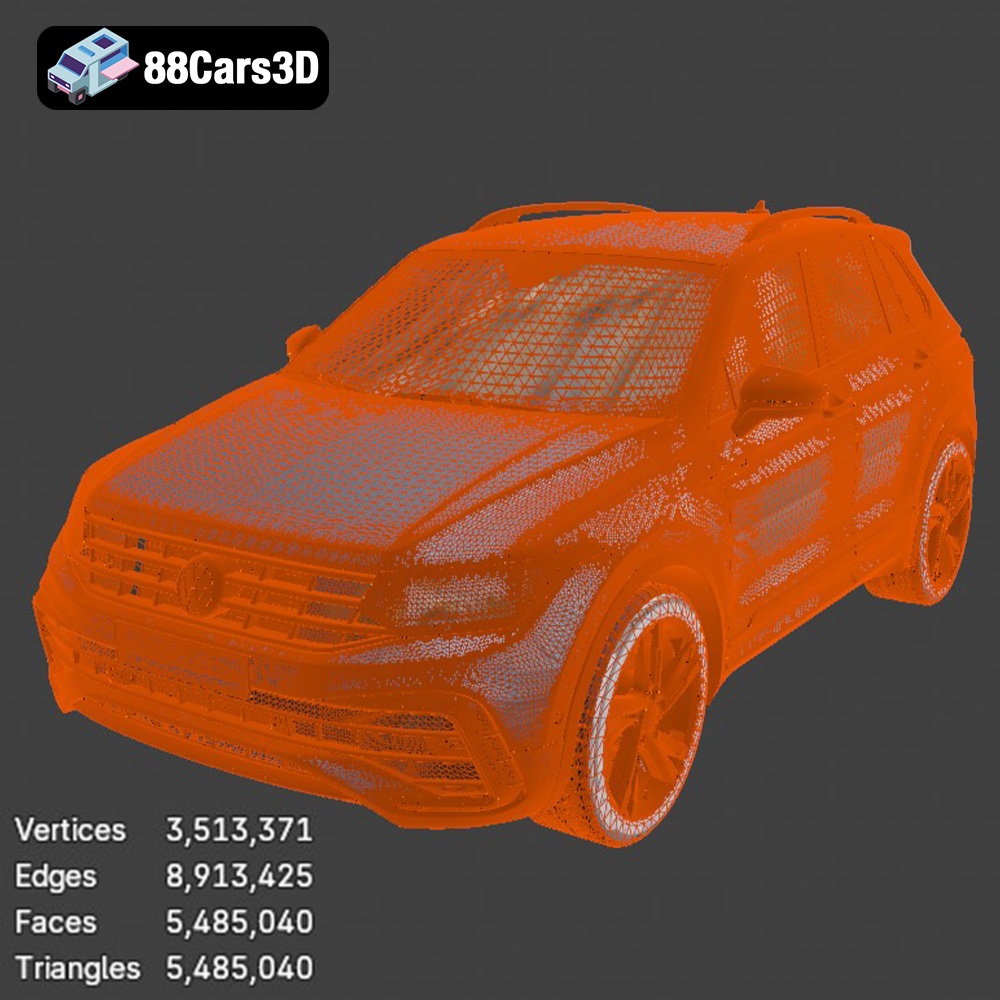
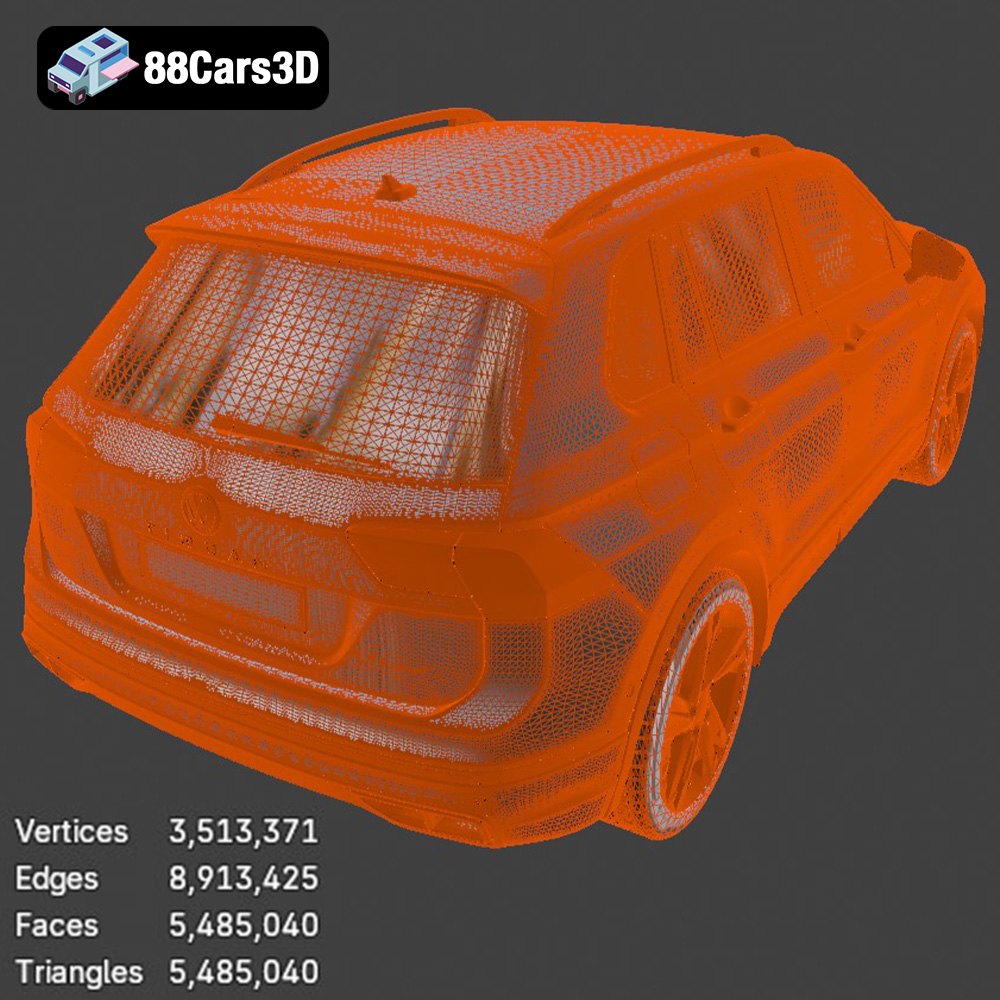
The Volkswagen Tiguan 2021 3D Model exemplifies what makes a professional asset truly valuable. It’s engineered with an emphasis on performance and visual fidelity, featuring clean geometry and accurate proportions. This well-structured topology allows for seamless workflow integration, ensuring outstanding results in both tight studio close-ups and expansive dynamic environments. For any project demanding high standards, starting with such a robust asset saves countless hours in preparation and optimization, allowing artists to dive straight into lighting, texturing, and animation with confidence.
The world of 3D modeling is rich with various file formats, each designed for specific purposes and optimized for different stages of a production pipeline. Understanding these formats and their respective strengths is crucial for efficient workflow management and ensuring compatibility across diverse software packages. The Volkswagen Tiguan 2021 3D Model, available on 88cars3d.com, offers a comprehensive package of these formats, ensuring maximum versatility for any professional endeavor.
The `.blend` file is Blender’s native format. It encapsulates an entire Blender scene, including the 3D mesh, materials, textures, lighting setups, cameras, animations, and even physics simulations. This format is ideal for users working primarily within Blender who require full editability. When you download the Volkswagen Tiguan 2021 3D Model in `.blend` format, you get a ready-to-render scene, complete with pre-configured materials and potentially a lighting setup, allowing for immediate modifications or rendering with Blender’s powerful Cycles or Eevee render engines. Its comprehensive nature makes it perfect for artists who need to delve deep into the model’s structure, adjust UVs, or animate specific components.
Developed by Autodesk, the `.fbx` (Filmbox) format is an industry-standard for exchanging 3D data between various software applications, particularly prevalent in game development and animation. It supports geometry, materials, textures, animations, skinning, and blend shapes. Its robust support for skeletal animations makes it the go-to format for importing character and vehicle models into game engines like Unreal Engine and Unity. The Volkswagen Tiguan 2021 3D Model in `.fbx` format would typically be optimized for real-time performance, potentially including LOD (Level of Detail) meshes and clean topology, making it an excellent game asset that can be dropped directly into an engine pipeline with minimal preparation.
The `.obj` (Wavefront Object) format is one of the most widely supported 3D model formats. It is a simple, text-based format that primarily stores geometry data (vertices, normals, texture coordinates, and faces) and can reference external `.mtl` (material) files for basic material properties. While it doesn’t support animation or rigging, its universal compatibility makes it an excellent choice for transferring static mesh data between almost any 3D software. For the Tiguan model, the `.obj` file would serve as a clean, universal mesh for those who need basic geometry for sculpting, retopology, or integration into less common 3D applications.
`.glb` (GL Transmission Format Binary) is the binary version of glTF, an open-standard 3D file format developed by the Khronos Group. It’s specifically designed for efficient transmission and loading of 3D scenes and models in web and real-time applications. A `.glb` file embeds all necessary data (geometry, materials, textures, animations) into a single compact file, making it ideal for augmented reality (AR), virtual reality (VR), and browser-based visualization. The Volkswagen Tiguan 2021 3D Model as a `.glb` asset would be perfectly optimized for interactive 3D viewers on websites or for deployment in AR/VR applications where file size and loading speed are critical.
The `.stl` (Stereolithography) format is the de-facto standard for 3D printing. It represents a 3D model as a series of connected triangles, describing only the surface geometry of an object without color, texture, or material information. The key characteristic of an `.stl` file for 3D printing is that it must represent a watertight, manifold mesh – meaning there are no holes, overlapping faces, or internal geometry that would confuse a 3D printer. The Tiguan model in `.stl` format would be a solid, printable mesh, ready for additive manufacturing processes, ideal for rapid prototyping or creating physical scale models.
`.ply` (Polygon File Format or Stanford Triangle Format) is another format that stores 3D data, often used for scanned 3D objects or for detailed mesh analysis. Like `.obj`, it can store geometry, but it can also include additional properties like color per vertex, normal vectors, and even transparency, making it richer than `.stl` for certain visualization needs. It’s frequently used in scientific, engineering, and CAD applications where precise mesh information and additional vertex attributes are important. For the Volkswagen Tiguan 2021 3D Model, a `.ply` file would provide a detailed polygon mesh suitable for advanced visualization or technical analysis.
While not a universal file format in the same way as `.fbx` or `.obj`, `.unreal` often refers to a model specifically prepared and potentially packaged for direct import or use within the Unreal Engine ecosystem. This might involve a `.uasset` file or a collection of optimized `.fbx` files with Unreal-specific material setups and collision meshes. This format implies that the model has undergone specific optimizations and configurations (e.g., proper scale, PBR materials, LODs) to ensure peak performance and visual quality within Unreal Engine, saving developers significant setup time. The `.unreal` version of the Tiguan model would be a ‘plug-and-play’ asset for Unreal users.
The `.max` file is Autodesk 3ds Max’s native file format, similar to how `.blend` works for Blender. It contains all scene data, including geometry, materials, textures, lighting, cameras, animation, and any modifiers or plug-in specific data. This format is crucial for professionals working in 3ds Max who need full access to the model’s construction, modifiers stack, and rendering settings. The Volkswagen Tiguan 2021 3D Model in `.max` format provides an editable project file, allowing artists to easily integrate it into complex scenes, apply advanced rendering techniques with V-Ray or Corona, and create high-end animations.
Automotive rendering is an art form that blends technical proficiency with aesthetic judgment. The goal is to produce images that are indistinguishable from photographs, or even surpass them in terms of dramatic presentation. This requires not only powerful software but also a deep understanding of lighting, materials, and camera techniques, all built upon an excellent 3D model.
Autodesk 3ds Max, often paired with rendering engines like V-Ray or Corona Renderer, is a cornerstone of professional automotive visualization. The `.max` file format provided with the Volkswagen Tiguan 2021 3D Model offers an immediate advantage here. Artists can load the model directly, preserving all its clean geometry, UV mapping, and potentially pre-configured material slots. The workflow typically involves:
The Tiguan model’s pre-configured `.max` file significantly reduces initial setup time, allowing artists to focus on the artistic aspects of lighting and composition.
Blender has emerged as a formidable contender in the 3D industry, particularly with its powerful Cycles and Eevee render engines. For artists utilizing Blender, the `.blend` file of the Volkswagen Tiguan 2021 3D Model offers a complete and editable scene. This means materials are already set up using Blender’s nodal material system, and the model is ready for immediate rendering or integration into a larger animation project. Blender’s strength lies in its comprehensive toolset:
The accessibility of the `.blend` format for the Tiguan model empowers Blender artists to produce high-quality automotive rendering and animation without external conversions or re-materialization.
Physically Based Rendering (PBR) is the cornerstone of modern photorealistic rendering. It ensures that materials react to light in a way that accurately mimics real-world physics, leading to consistent and believable results across different lighting conditions. A high-quality 3D car model like the Volkswagen Tiguan 2021 includes properly unwrapped UVs and often comes with a set of PBR texture maps (Albedo/Base Color, Metallic, Roughness, Normal, Ambient Occlusion). Understanding and manipulating these maps is key to achieving stunning renders:
The careful construction of these PBR textures for the Tiguan model is what allows it to shine in any render engine, from V-Ray to Unreal Engine.
The demand for interactive, real-time experiences is exploding, making 3D car models invaluable assets for game developers and AR/VR creators. The challenge here is to maintain visual fidelity while adhering to strict performance budgets. This is where optimized game assets shine, and the Volkswagen Tiguan 2021 3D Model is specifically designed for such demanding applications.
Unreal Engine is a powerhouse for creating visually stunning games, cinematic experiences, and interactive architectural visualizations. The `.fbx` and `.unreal` formats provided for the Volkswagen Tiguan 2021 3D Model are perfectly suited for this environment. A typical workflow involves:
Imagine a high-end racing simulator where the Tiguan 2021 needs to perform flawlessly, or an automotive configurator allowing users to explore the car in a virtual showroom. The optimized nature of the Tiguan model ensures it can meet these performance demands without sacrificing visual quality, making it an ideal game asset.
Unity is another popular real-time engine, particularly favored for mobile games, AR applications, and VR experiences. The `.fbx` and `.glb` formats of the Volkswagen Tiguan 2021 3D Model are critical here. For AR/VR, file size and rendering efficiency are even more critical than for traditional games. Unity workflows include:
A car dealership could use an AR app built with Unity and the Tiguan model to allow customers to “see” the vehicle in their garage before buying, providing an unparalleled sales tool.
In real-time environments, every polygon, texture call, and material instruction contributes to the frame rate. High-quality 3D car models designed for these platforms come with optimizations built-in:
These considerations are paramount, and purchasing a model like the Volkswagen Tiguan 2021 3D Model from 88cars3d.com ensures these optimizations have been carefully addressed by experts.
The utility of a high-quality 3D model extends far beyond screens. The ability to physically manifest a digital design opens doors for rapid prototyping, collectible creation, and even engineering analysis. For this, specific file formats and model characteristics are essential.
Imagine needing a scale model of the Volkswagen Tiguan 2021 for a trade show, a design review, or even a custom dashboard accessory. A well-constructed 3D model, when converted into the appropriate format, can be sent directly to a 3D printer. This allows for tangible iteration and validation of designs, bridging the gap between digital ideation and physical presence.
For 3D printing, the `.stl` format is king. As discussed, it represents a watertight, manifold mesh, free from errors that would cause problems for the slicing software. The `.ply` format, offering more precision in vertex data, can also be used in certain industrial 3D printing applications or for reverse engineering. When preparing a 3D car model for printing, key technical aspects include:
The availability of the Tiguan model in `.stl` format signifies its readiness for such physical output, a testament to its robust and clean geometry.
While often discussed in the context of rendering and animation, accurate and clean topology is equally vital for 3D printing. A model with efficient quad-based topology is easier to clean up, repair, and convert into a manifold mesh suitable for printing. Bad topology can lead to errors that are difficult to resolve, wasting time and material in the printing process. The “well-structured topology” mentioned in the description of the Volkswagen Tiguan 2021 3D Model is thus a crucial indicator of its versatility, not just for screen-based applications but for physical manufacturing as well.
Choosing the correct 3D car model is a critical decision that can significantly impact project timelines, budget, and final quality. With numerous options available, understanding what to look for is paramount.
When evaluating 3D car models, several technical aspects demand scrutiny:
A model like the Tiguan 2021, explicitly stating “accurate proportions” and “realistic materials,” provides confidence in these fundamental aspects.
While custom modeling offers ultimate control, the time and cost involved can be prohibitive for many projects. Purchasing a high-quality, pre-made 3D car model is often a far more efficient and economical solution. The time saved in modeling, unwrapping, and basic material setup can be redirected towards creative refinement, lighting, and animation, ultimately leading to a superior final product within budget and timeline constraints. The initial investment in a professional asset quickly pays dividends in production efficiency.
For professionals seeking reliable and high-fidelity 3D car models, platforms like 88cars3d.com specialize in delivering assets that meet rigorous industry standards. The Volkswagen Tiguan 2021 3D Model is a prime example of the quality available. By offering models with clean topology, accurate dimensions, PBR materials, and a diverse range of optimized file formats, 88cars3d.com caters to the specific needs of automotive rendering specialists, game developers, AR/VR creators, and even 3D printing enthusiasts. Investing in such assets ensures you start your projects with a strong technical foundation, allowing you to focus on innovation and creativity.
In the evolving landscape of digital content, the quality of your 3D assets is non-negotiable. High-fidelity 3D car models are the unsung heroes of automotive visualization, game development, and immersive experiences, providing the precision and versatility required for professional output. From the intricate details demanded by cinematic rendering in 3ds Max or Blender to the optimized performance essential for real-time applications in Unreal Engine or Unity, a meticulously crafted model acts as a foundational asset.
The Volkswagen Tiguan 2021 3D Model perfectly embodies these principles, offering a realistic digital replica engineered for seamless integration into diverse professional pipelines. Its comprehensive suite of file formats, including .blend, .fbx, .obj, .glb, .stl, .ply, .unreal, and .max, ensures compatibility and efficiency for virtually any project. Whether you’re aiming for breathtaking photorealism, interactive game assets, or even physical prototypes, this model provides the necessary technical groundwork.
By understanding the nuances of 3D model formats, the demands of various professional workflows, and the importance of quality assets, creators can confidently navigate the complexities of digital production. Platforms like 88cars3d.com are instrumental in providing these professional-grade solutions, empowering artists and developers to achieve their creative visions with unparalleled realism and efficiency.
Experience the precision of the Volkswagen Tiguan 2021 3D Model, a realistic digital replica designed to meet professional standards. This model perfectly captures the modern styling, dynamic stance, and sophisticated details of the popular SUV, providing an exceptional asset for a diverse array of digital projects.Engineered with an emphasis on performance and visual fidelity, this 3D vehicle features clean geometry, accurate proportions, and realistic materials. The well-structured topology allows for seamless workflow integration, ensuring outstanding results in both tight studio close-ups and expansive dynamic environments.This versatile model is optimized for demanding applications, making it an excellent choice for game development, cinematic rendering, augmented and virtual reality (AR/VR) experiences, and architectural visualization. The comprehensive package is structured to integrate flawlessly into your preferred professional pipeline.Available file formats include:
Tags: .volkswagen, .tiguan, .suv, .crossover, .car3dmodel, .rendering, .simulation, .gameasset, .arvr, .blend, .fbx, .obj, .glb, .stl, .ply, .unreal, .max
$39.99
.arvr
.blend
.car3dmodel
.crossover
.fbx
.gameasset
.glb
.max
.obj
.ply
.rendering
.simulation
.stl
.tiguan
.unreal
.volkswagen
SUV