Get 20% OFF All Premium 3D & STL Models!

In the exhilarating world of motorsports, few names command as much respect and awe as the Yamaha R1. A true superbike legend, the R1 represents the pinnacle of performance, design, and engineering prowess. Its aggressive stance, powerful crossplane engine, and race-bred aerodynamics have captivated enthusiasts for decades. But what if you could harness this iconic machine’s essence, not just on the track, but within the digital realm? For 3D artists, game developers, automotive designers, and visualization specialists, the answer lies in meticulously crafted 3D car models.
The availability of high-quality digital assets fundamentally transforms how we create, innovate, and experience virtual worlds. Today, we delve into the comprehensive capabilities and professional applications of a truly exceptional asset: the Yamaha R1 3D model. This model, available for download on 88cars3d.com, is far more than just a static representation; it’s a dynamic, game-ready asset engineered to seamlessly integrate into demanding production pipelines, from hyper-realistic renders to immersive real-time simulations. We’ll explore the technical nuances that make this model stand out, its versatility across various industries, and how it can elevate your next project.
Creating a 3D model of a complex vehicle like the Yamaha R1 is an intricate dance between artistic vision and technical precision. It demands an understanding of real-world mechanics, an eye for aesthetic detail, and a deep knowledge of 3D software and optimization techniques. A truly professional asset isn’t just about looking good; it’s about being functional, efficient, and versatile.
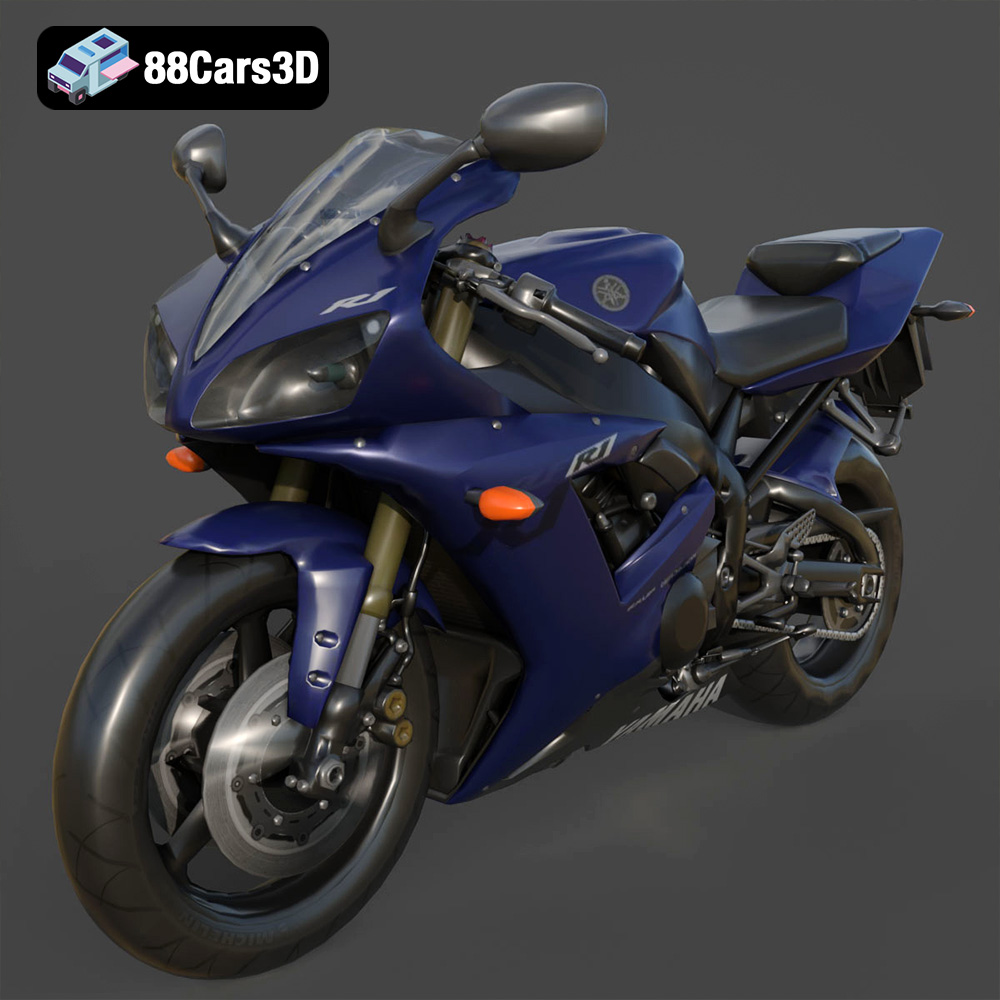
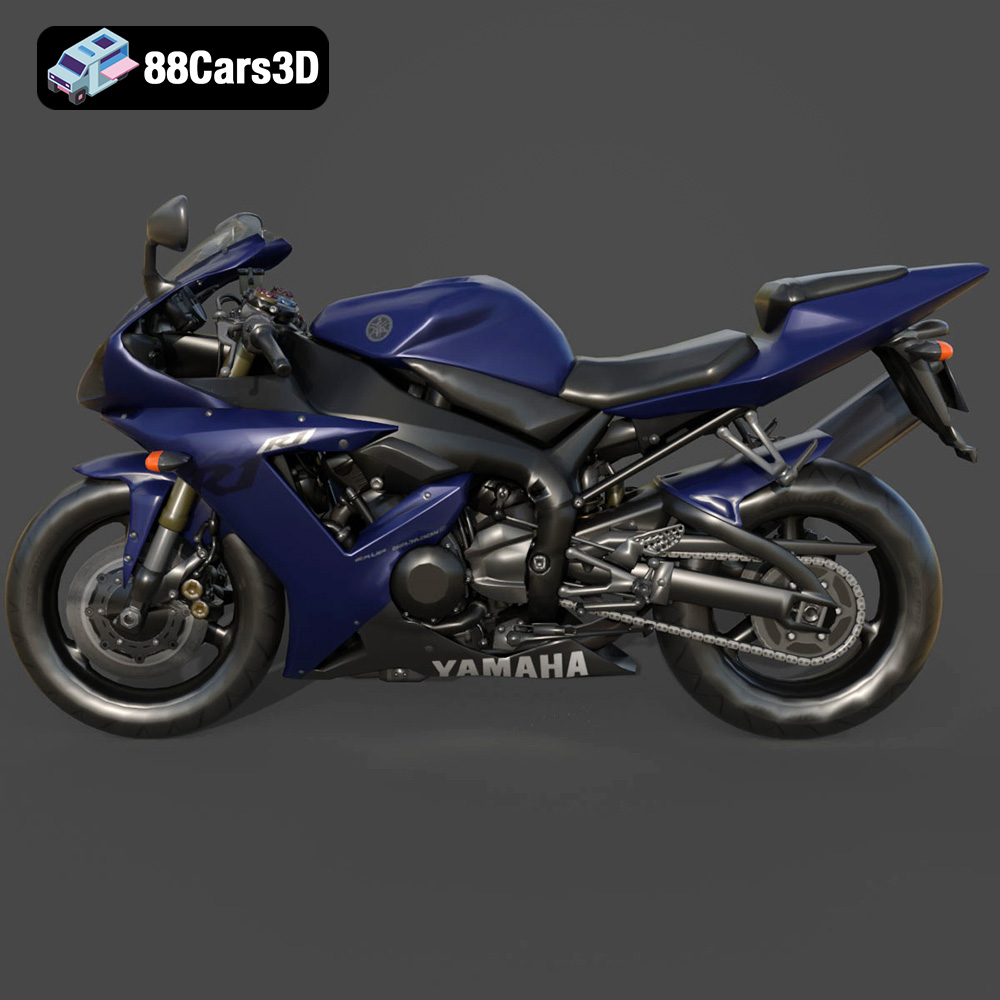
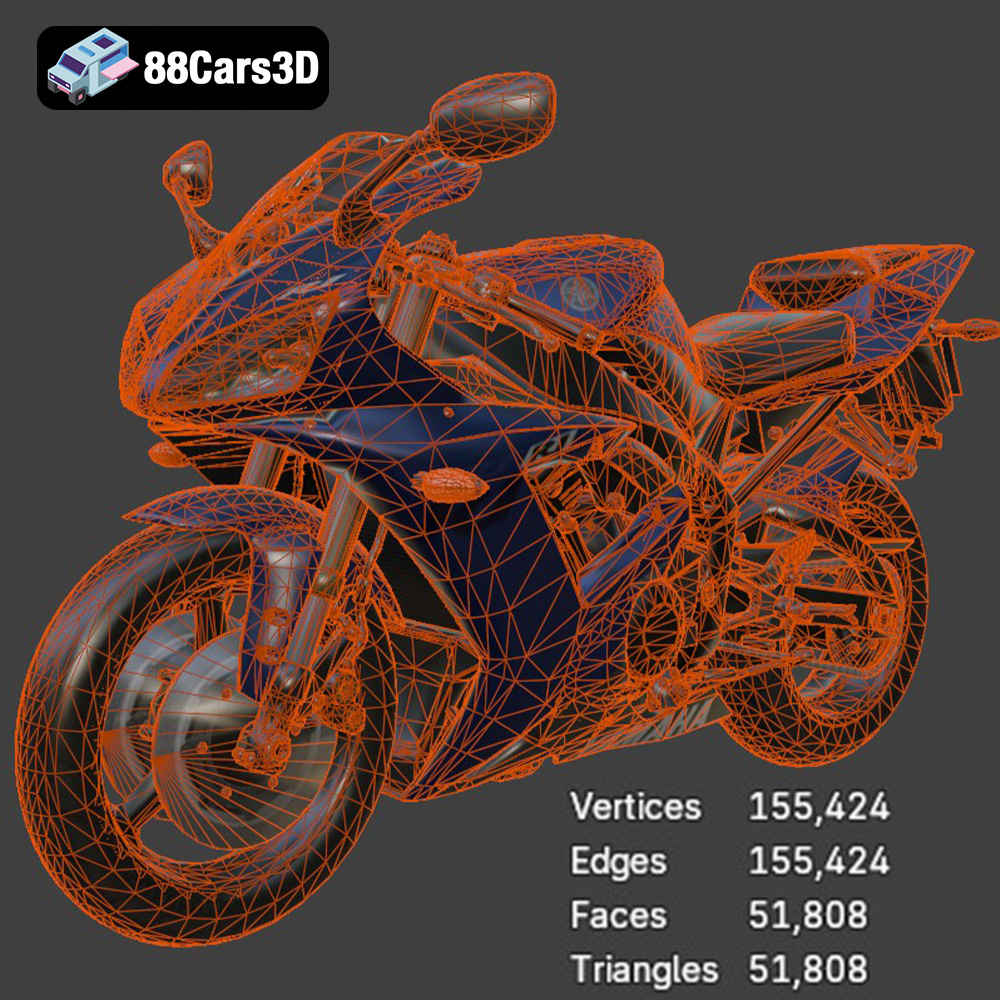
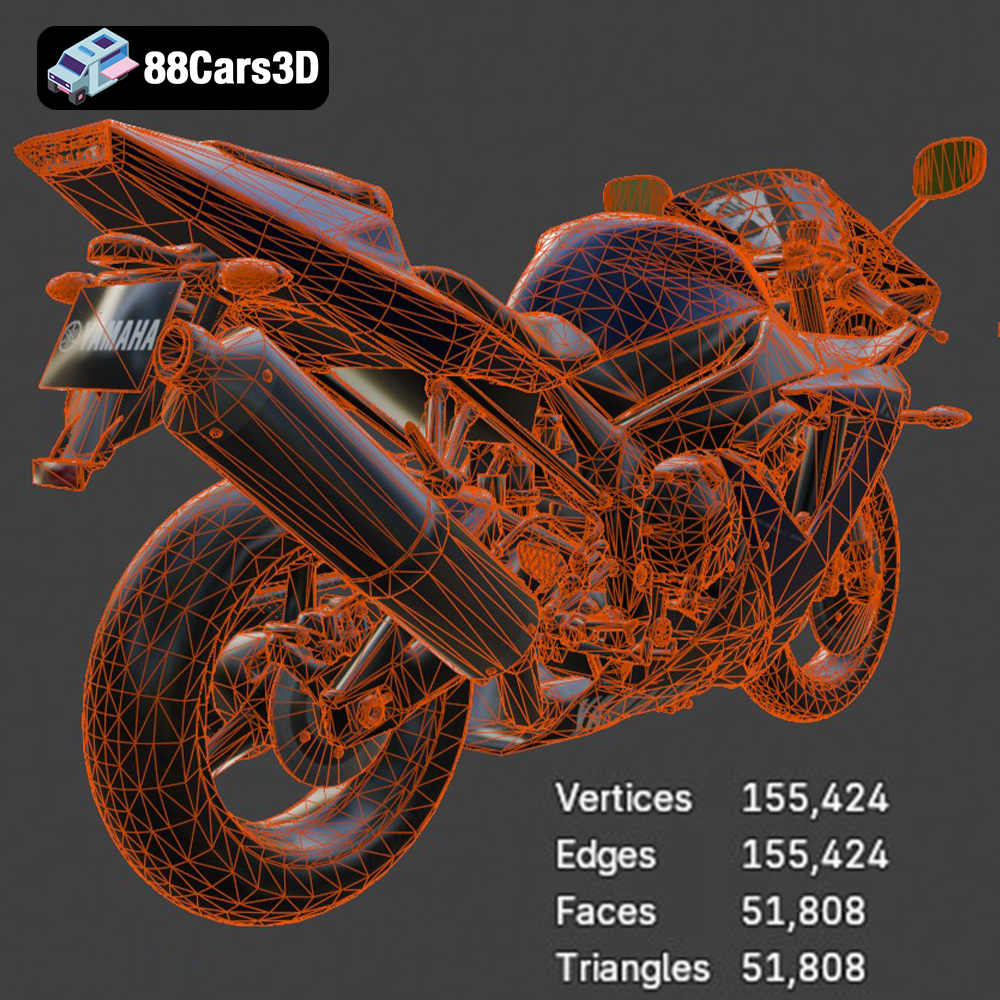
The foundation of any high-quality 3D model is its mesh topology. For a superbike like the Yamaha R1, capturing its distinctive lines – the aggressive aerodynamic fairings, the commanding Deltabox frame, and the intricate details of the 998cc inline-4 crossplane engine – requires careful polygon distribution. The Yamaha R1 3D model boasts an optimized topology of approximately 180,000 triangles. This poly count is a critical technical specification, striking a perfect balance: it’s high enough to maintain exceptional visual fidelity, replicating subtle curves and mechanical components accurately, yet low enough to be considered “game-ready.” This means it won’t unduly tax real-time rendering engines, ensuring smooth frame rates even in complex scenes. Clean edge flow and quad-based geometry, wherever possible, further enhance deformation capabilities for animation and ease of editing.
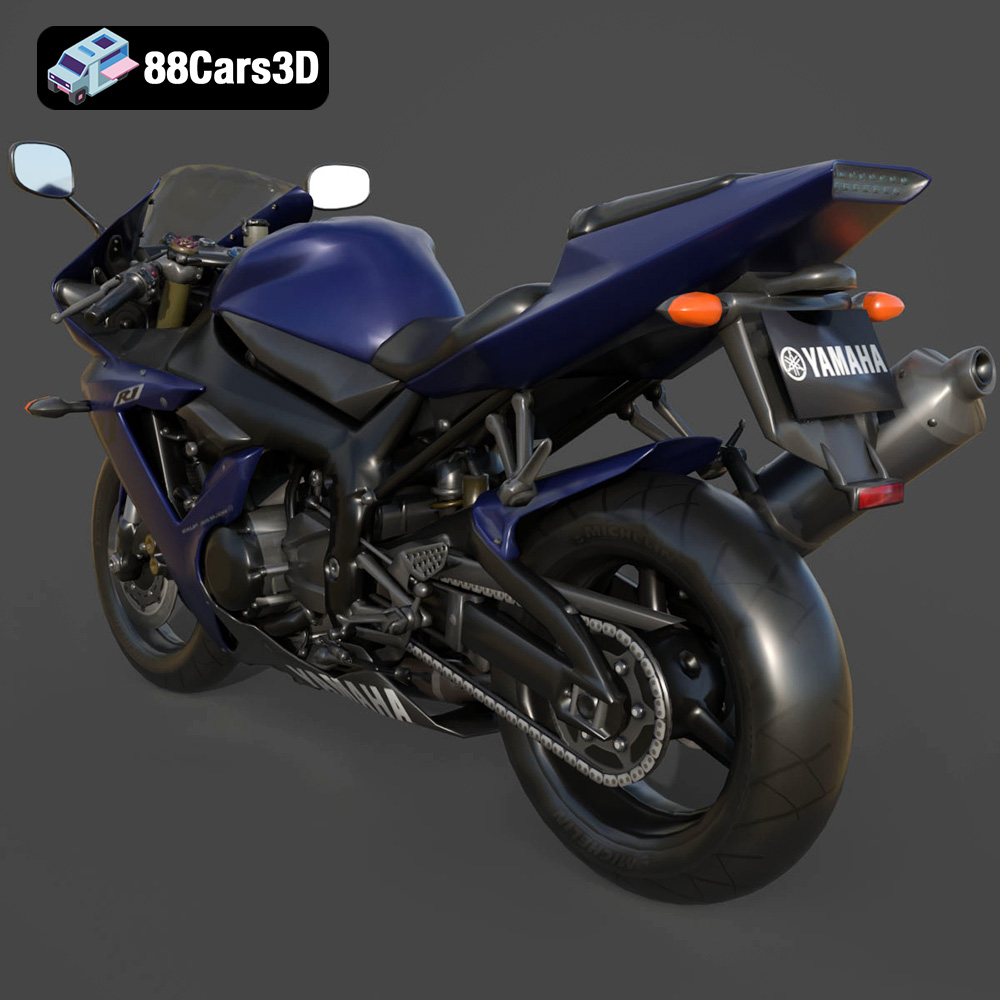
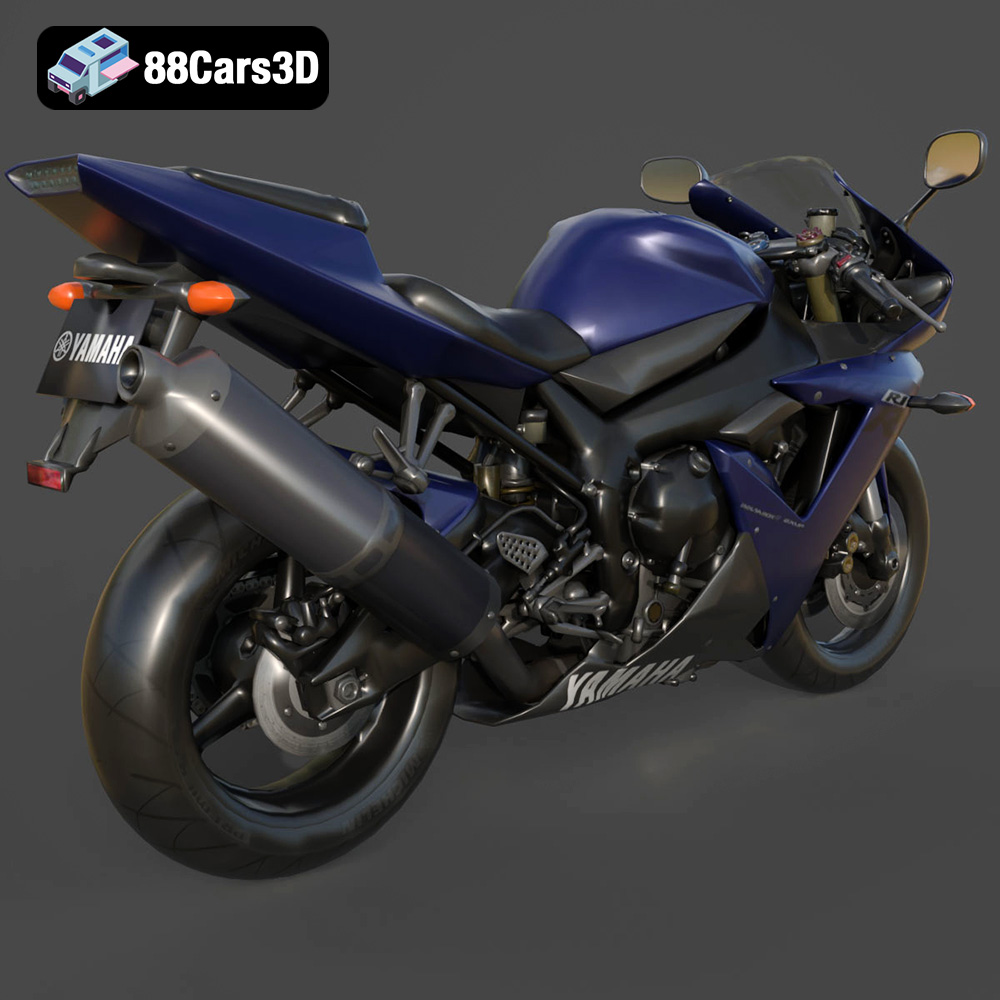
Beyond the mesh, textures and materials bring a model to life. Modern 3D rendering relies heavily on Physically Based Rendering (PBR) workflows, which simulate how light interacts with surfaces in the real world. For the Yamaha R1, this means accurately representing the sheen of its painted fairings, the metallic gleam of its titanium-style exhaust system, the subtle reflections on its twin-eye LED headlights, and the realistic grip of its track tires. High-resolution textures, often including albedo (color), roughness, metallic, normal, and ambient occlusion maps, are essential. The model’s detailed textures ensure that these attributes are accurately conveyed, making it suitable for both close-up renders and dynamic, fast-paced game environments. Furthermore, meticulous UV mapping ensures that these textures wrap seamlessly around the model, preventing stretching or distortion and providing a clean canvas for custom liveries or wear-and-tear effects.
One of the most crucial aspects of working with 3D assets, especially for professional pipelines, is understanding file formats. Each format serves a specific purpose, offering unique advantages for different stages of production, from initial modeling to final rendering or real-time deployment. The Yamaha R1 3D model is conveniently offered in a comprehensive suite of formats, ensuring maximum compatibility and flexibility for users across various platforms and applications.
The .blend file format is the native format for Blender, a powerful and increasingly popular open-source 3D creation suite. A .blend file typically contains the entire scene, including the 3D model’s mesh data, materials, textures, lighting, camera setups, animations, and even physics simulations. For artists primarily working in Blender, this format offers the most flexibility, allowing for full editability of all model components, direct access to modifiers, node-based materials, and any included rigging or animation. If you plan on dissecting the Yamaha R1 model, customizing its components, or re-texturing it within Blender, the .blend file is your go-to choice, providing a complete, ready-to-work project file.
.fbx (Filmbox): Developed by Autodesk, .fbx is arguably the most widely adopted proprietary 3D file format for exchanging data between various 3D applications and game engines. It supports not only geometry and materials but also rigging, skinning, animation, and cameras. Its robust nature makes it ideal for game development pipelines (Unreal, Unity) where animated elements and complex hierarchies are common. For the Yamaha R1, an .fbx export ensures that the separate wheels, suspension, and steering components retain their pivot points and hierarchies, crucial for animation setup in engines. It’s an excellent choice for seamless integration into most professional 3D workflows.
.obj (Wavefront OBJ): The .obj format is a simple, universal 3D geometry definition file that has been around for decades. It primarily stores vertex positions, UV coordinates, normals, and material group information, often accompanied by an .mtl (material) file for basic material properties. While it doesn’t support animation or rigging like .fbx, its widespread compatibility makes it an excellent choice for straightforward mesh import into almost any 3D software or rendering application. If you need a clean mesh of the Yamaha R1 for static renders or basic scene setups in a diverse software ecosystem, .obj is a reliable, universal option.
.ply (Polygon File Format): Also known as the Stanford Triangle Format, .ply is a precision mesh format primarily used for storing 3D data from 3D scanners, CAD software, or for scientific analysis. It can store a variety of properties beyond just geometry, such as color per vertex, normal information, and even material properties. While less common for general game assets, the inclusion of .ply for the Yamaha R1 model caters to specialized applications requiring precise geometric data, such as reverse engineering, detailed structural analysis, or integration into CAD/CAM pipelines where geometric fidelity is paramount.
.glb (GL Transmission Format Binary): .glb is a binary version of the glTF (Graphics Library Transmission Format) specification, designed for efficient transmission and loading of 3D scenes and models in web and AR/VR applications. It encapsulates all necessary data—geometry, textures, materials, animations—into a single, self-contained file. Its optimization for real-time rendering and small file size makes it perfect for immersive virtual showrooms, mobile AR configurators, and browser-based 3D viewers where the Yamaha R1 can be interactively displayed on websites without heavy loading times.
.unreal: This isn’t a single file format in the traditional sense, but rather an indicator that the asset is “engine-ready” for Unreal Engine. Often, this means the model (likely an .fbx) has been specifically prepared, potentially with correct scale, material setups, collision meshes, and a logical folder structure ready for direct import and use within an Unreal Engine project. For the Yamaha R1, an .unreal tag suggests that the model is already optimized to leverage Unreal’s powerful rendering capabilities, making integration into a next-gen racing title or a hyper-realistic automotive configurator significantly smoother.
The .stl (STereoLithography) format is the industry standard for 3D printing. It represents a 3D model as a collection of unconnected triangles, defining only the surface geometry of an object. For hobbyists or professionals looking to bring the digital Yamaha R1 into the physical world, the .stl file is essential. While it lacks color or texture information, its simplicity makes it ideal for direct input into slicer software for preparing a model for printing. This allows for the creation of display-scale models or prototypes of specific components, perfect for those who appreciate the physical form of this superbike.
Finally, the .max file format is the native format for Autodesk 3ds Max, another industry-leading 3D modeling, animation, and rendering software. Similar to Blender’s .blend, a .max file contains the entire project data, including the model, materials, lights, cameras, modifiers, and animation. For professionals operating within the 3ds Max ecosystem, this file provides the most comprehensive and editable version of the Yamaha R1 model, allowing for advanced rendering setups with V-Ray or Corona, complex animation sequences, or detailed architectural visualizations that might feature the superbike.
The inclusion of such a diverse array of formats for the Yamaha R1 3D model from 88cars3d.com underscores its adaptability, ensuring that regardless of your software preference or project requirements, you have the right tool for the job.
Game development demands a unique blend of visual fidelity and uncompromising performance. The Yamaha R1 3D model is specifically engineered to excel in this demanding arena, providing a premium asset for racing titles, open-world adventures, and immersive simulators.
The “game-ready” designation isn’t just a buzzword; it signifies that the Yamaha R1 3D model has undergone crucial optimization steps. Its approximately 180,000 triangles represent a carefully chosen polygon budget, detailed enough for close-up views and cinematic sequences, yet efficient enough for real-time rendering at high frame rates. This optimization extends to the model’s structure: real-world scale accuracy ensures correct physics interactions within game engines, while a proper pivot setup for steering, wheel rotation, and suspension travel is critical. These pivots are essential for animators and programmers to implement realistic vehicle dynamics, allowing the R1 to lean into turns, absorb bumps, and accelerate authentically on virtual tracks.
For leading game engines like Unreal Engine and Unity, seamless integration is paramount. The Yamaha R1 model, ideally imported via .fbx, typically arrives with clean geometry and properly mapped UVs. Artists would then proceed to set up PBR materials within the engine, connecting texture maps (albedo, normal, roughness, metallic, ambient occlusion) to create realistic surface appearances. Further steps include creating various Levels of Detail (LODs) to automatically swap lower-polygon versions of the model at a distance, optimizing performance without noticeable visual degradation. Collision meshes, essential for physical interaction within the game world, would also be generated, often automatically or with minor manual tweaks, ensuring the R1 interacts correctly with terrain and other objects. The inclusion of an “.unreal” optimized format for the Yamaha R1 from 88cars3d.com directly addresses this need, streamlining the asset pipeline for developers.
PBR materials are fundamental for achieving visual consistency across different lighting conditions and rendering environments. The Yamaha R1 model’s PBR textures ensure that whether it’s bathed in harsh sunlight or illuminated by neon streetlights, its materials (paint, metal, rubber, glass) react realistically. Clean and well-organized UV mapping is equally vital. It dictates how 2D textures are wrapped around the 3D geometry. Proper UVs prevent texture stretching, allow for efficient texture packing, and are crucial for baking complex lighting or ambient occlusion effects directly onto the model, further enhancing its visual realism and performance in real-time applications.
The versatility of a well-crafted 3D asset extends far beyond traditional game development. The Yamaha R1 3D model is a powerful tool for a diverse range of innovative applications, bridging the gap between digital content and immersive experiences, marketing, and even physical manufacturing.
Augmented Reality (AR) and Virtual Reality (VR) are transforming how users interact with products. The Yamaha R1 3D model is perfectly suited for creating immersive virtual showrooms where potential buyers can explore the superbike in 360 degrees, customize colors, and even “sit” on the bike virtually. For AR configurators, the model can be projected into the real world via a smartphone, allowing users to visualize the R1 parked in their driveway, scaled accurately. The .glb file format, optimized for web and AR/VR, is particularly advantageous here due to its efficiency and ability to package all necessary data into a single, easily deployable file, making it a prime asset for mobile AR experiences or interactive web-based product viewers.
In the automotive industry, realistic visualization is key for marketing, concept development, and client presentations. The Yamaha R1 model offers exceptional fidelity for creating stunning still renders and cinematic animations for brand campaigns. Imagine the R1 artfully positioned in a sleek studio setup, showcasing its aerodynamic lines under dramatic lighting, or speeding through a picturesque landscape in a high-octane commercial. Its detailed geometry, accurate proportions, and PBR-ready materials allow artists to achieve photorealistic results, making it an invaluable asset for showcasing the R1’s design and performance attributes in various lifestyle scenes and promotional materials. Such high-quality 3D car models save immense time and resources compared to traditional photography or physical prototyping.
For enthusiasts and collectors, the ability to physically hold a representation of their favorite superbike is a unique pleasure. The inclusion of the .stl file format allows the Yamaha R1 3D model to transition from the digital screen to a tangible object via 3D printing. This opens up possibilities for display-scale models (recommended scales: 1:12, 1:18, 1:24), prototypes, or even custom parts. For optimal results, resin printing is often recommended for fine details like the exhaust system, handlebars, and delicate fairing vents. Users are advised to consider print settings such as layer height (0.04–0.12 mm), wall thickness (1.2–2.0 mm), and infill (20–30%). Supports will be required for intricate or overhanging parts. Post-processing, including sanding, priming, and applying authentic factory colors with metallic finishes, can truly bring the printed R1 to life, showcasing the meticulous detail captured in the original 3D asset.
Integrating a high-quality 3D asset like the Yamaha R1 into a professional production pipeline requires understanding how it fits into various stages, from initial setup to final delivery. The versatility and optimization of this model make it a robust choice for diverse projects.
Consider a team developing a next-generation motorcycle racing game. Upon acquiring the Yamaha R1 3D model from 88cars3d.com, their workflow might involve several key steps. First, the 3D artists would import the .fbx file into their chosen game engine (e.g., Unreal Engine). They would verify the model’s scale, pivot points for wheels and steering, and material assignments. Texture artists would then meticulously connect the provided PBR textures, fine-tuning roughness and metallic values to match the desired look. Technical artists would create LODs to optimize performance, ensuring the bike looks great up close but doesn’t burden the rendering pipeline when viewed from afar. Programmers would integrate the model with the game’s physics system, leveraging the accurately separated and pivoted components to simulate realistic suspension travel, tire deformation, and lean angles during cornering. Finally, animators would create rider animations and integrate them with the R1’s model, ensuring a seamless and immersive racing experience.
For an automotive marketing agency tasked with creating an interactive virtual showroom for Yamaha, the R1 3D model becomes a central component. They might choose to develop this showroom using a real-time engine or a web-based AR/VR platform. The .glb version of the model would be ideal for web deployment, offering efficient loading and interactivity. 3D artists would integrate the R1 into a beautifully lit virtual environment, perhaps a modern studio or a dynamic outdoor setting. UI/UX designers would implement interactive elements, allowing users to rotate the bike, zoom in on details like the crossplane engine or exhaust, and change paint colors and material finishes in real-time. The model’s clean structure facilitates these customization options without complex re-modeling, enabling a rich, engaging product exploration experience for potential customers globally.
Professional projects often demand a high degree of customization and iterative changes based on client feedback. The well-structured Yamaha R1 3D model is designed to facilitate this. Its clean topology and separated components mean artists can easily make modifications: changing body/tank colors, modifying tire textures (e.g., from track-focused to street variants), adjusting material finishes (matte, gloss, metallic), or adapting lighting setups for different environments or moods. For example, a client might request a custom livery for a special edition R1 or a particular aesthetic for a visual campaign. The model’s foundation allows artists to quickly apply these changes, generate new renders, and iterate efficiently, saving valuable production time and ensuring client satisfaction. This level of adaptability is a hallmark of truly professional 3D car models and assets.
In the fast-evolving landscape of 3D content creation, the demand for high-quality, technically sound, and versatile assets is constant. The Yamaha R1 3D model stands out as a prime example of such an asset. Its meticulous detail, optimized polycount, game-ready features, and extensive file format compatibility make it an indispensable tool for a broad spectrum of applications. Whether you’re a game developer seeking realistic vehicle assets, an AR/VR innovator crafting immersive experiences, a visualization specialist aiming for photorealistic renders, or a hobbyist venturing into 3D printing, this model offers a robust foundation.
Its ability to transition smoothly between different software environments and real-time engines, coupled with its comprehensive customization options, positions it as a go-to choice for professionals. Investing in a premium asset like this Yamaha R1 model from 88cars3d.com not only saves precious development time but also ensures that your final output maintains the highest standards of visual fidelity and performance.
The journey from a legendary superbike to a high-fidelity digital asset is paved with precision, technical expertise, and an understanding of diverse application needs. The Yamaha R1 3D model embodies these qualities, offering an unparalleled resource for creators across various industries. From its optimized geometry for game development to its suitability for immersive AR/VR experiences, stunning automotive rendering, and even tangible 3D prints, this model provides exceptional value.
As the digital frontier expands, the importance of high-quality 3D car models cannot be overstated. They are the building blocks of virtual worlds, the stars of marketing campaigns, and the heart of interactive simulations. The Yamaha R1 3D model, available at 88cars3d.com, is more than just a purchase; it’s an investment in efficiency, realism, and creative potential, empowering you to bring your boldest digital visions to life with the thrill of a superbike legend.
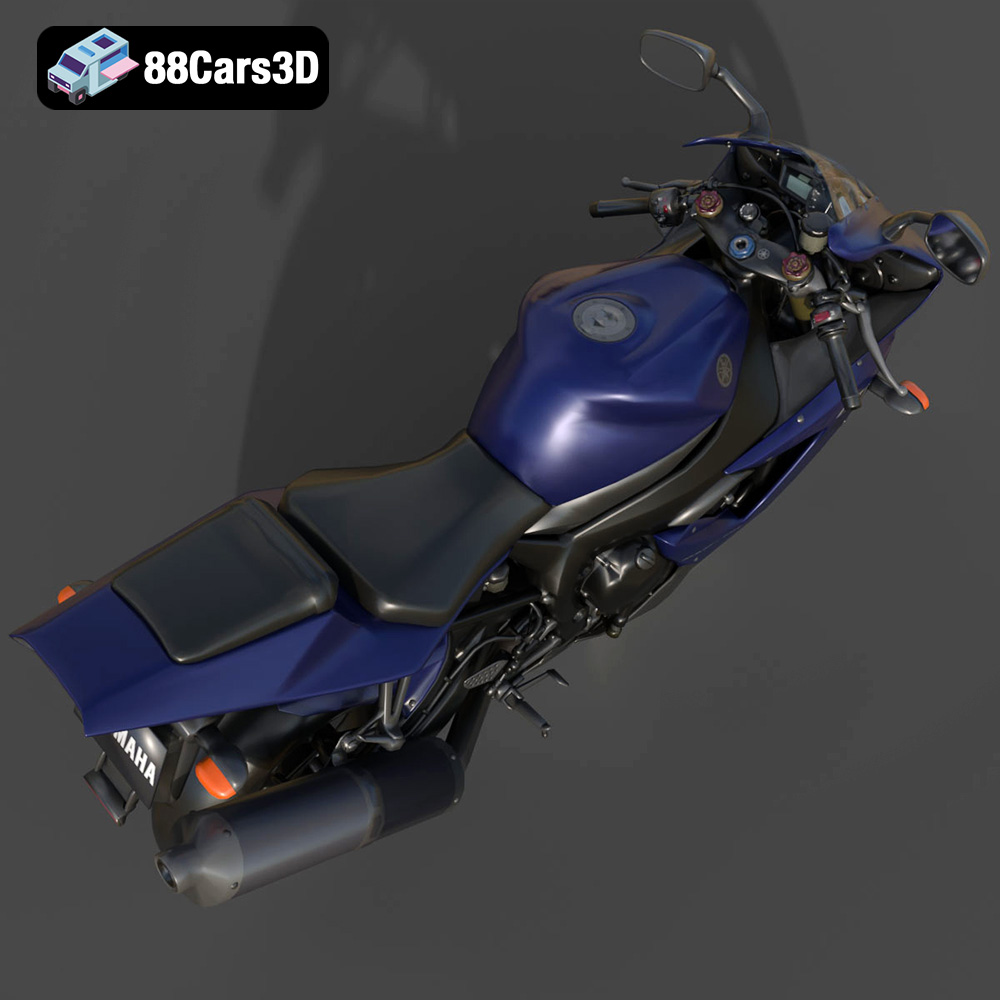
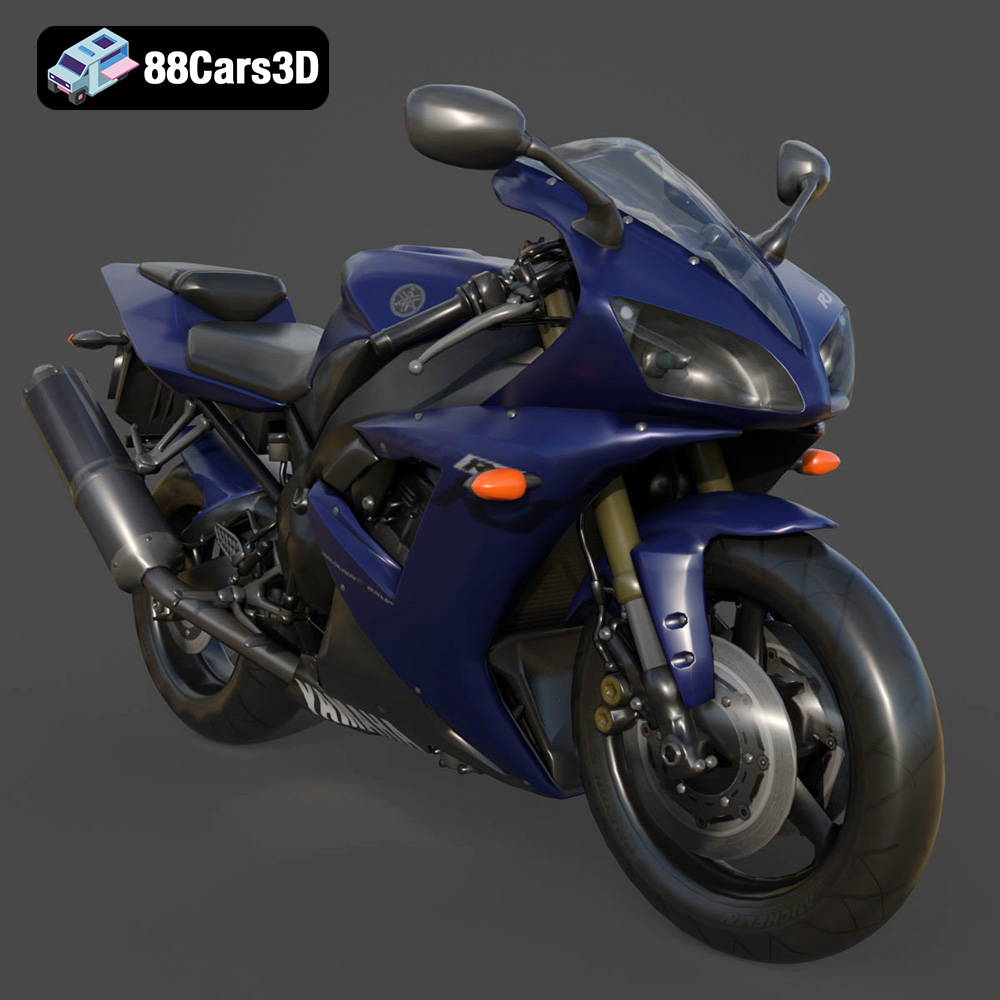
Experience the thrill of the track with this meticulously crafted 3D model of the legendary Yamaha R1. Known for its superbike heritage and uncompromising performance, the R1 features aggressive aerodynamic styling, a commanding Deltabox frame, and the iconic 998cc inline-4 crossplane engine. This model perfectly captures the essence of the real-world machine, highlighting key visual elements like the distinctive twin-eye LED headlights, dynamic fairing vents, and a high-performance exhaust system. Engineered with exceptional attention to detail, this 3D model boasts a highly optimized topology of approximately 180,000 triangles, making it fully game-ready without sacrificing visual fidelity. The clean mesh structure and detailed textures ensure seamless integration into real-time rendering engines and complex animation pipelines. Whether you are developing a high-speed racing simulation, an immersive virtual showroom, or a high-end cinematic render, this asset delivers unparalleled realism and performance.
$19.99
.blend
.fbx
.glb
.max
.motorcycle
.obj
.ply
.rendering
.sportbike
.stl
.superbike
.unreal
.yamaha
game asset
game-ready
low-poly
motorcycle-3d-model
optimized
r1
VR/AR
yamaha-r1