Get 20% OFF All Premium 3D & STL Models!

In the rapidly evolving landscape of digital design, visualization, and interactive entertainment, the demand for high-fidelity 3D models is greater than ever. From automotive manufacturers showcasing their next-generation vehicles to game developers building expansive virtual worlds, the precision and realism of digital assets are paramount. It’s not just about creating a model; it’s about capturing an essence, a vision, and a dynamic presence that resonates with audiences.
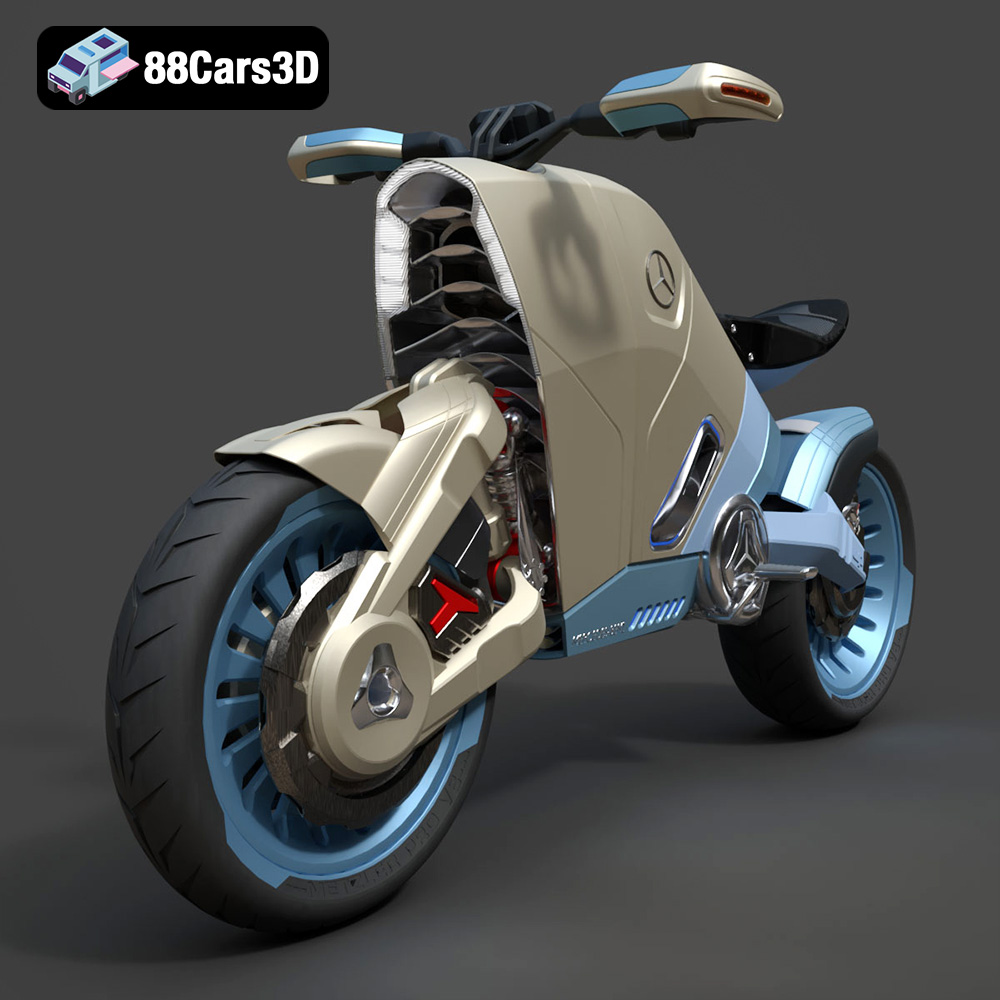
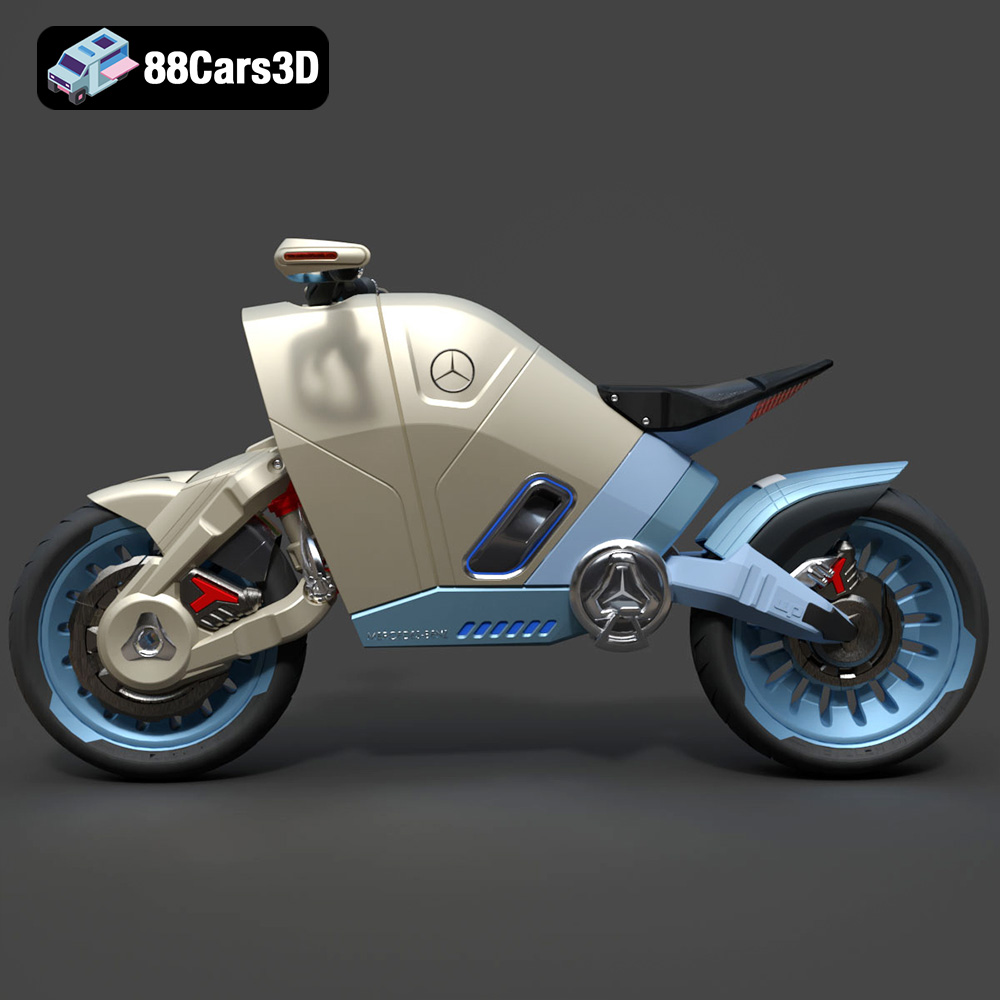
Today, we’re delving into a prime example of this digital craftsmanship: the SMARANZA Mercedes Concept Electrical Motorcycle 3D Model. This exceptional asset is more than just a collection of polygons; it’s a meticulously engineered vision of futuristic mobility, blending iconic Mercedes-Benz design principles with cutting-edge electric vehicle aesthetics. Whether you’re an architect visualizing a cyberpunk cityscape, a game developer crafting an immersive racing experience, or a branding specialist needing a show-stopping render, high-quality 3D car models like this concept motorcycle provide the foundation for breathtaking digital content. Its availability across multiple versatile file formats positions it as an invaluable resource for professionals seeking top-tier game assets and automotive rendering solutions.
The automotive industry has always been at the forefront of technological innovation, and its design processes are no exception. The transition from physical clay models to advanced digital sculpting and visualization has revolutionized how vehicles are conceived, refined, and presented. High-quality 3D models are the backbone of this transformation, offering unparalleled flexibility, speed, and cost-effectiveness.
Before a single physical prototype is built, a vehicle undergoes countless iterations in the digital realm. Designers can sculpt, modify, and texture every curve and component with precision, experimenting with different aesthetics and functionalities. A model like the SMARANZA Mercedes Concept Electrical Motorcycle allows designers to explore the intricate details of futuristic aerodynamic bodywork, advanced LED lighting, and ergonomic cockpit designs without the limitations of physical constraints. This iterative process is crucial for refining concepts, identifying potential issues, and ensuring that the final design meets both aesthetic and engineering standards. It’s a powerful tool for visual storytelling, enabling rapid development of brand campaigns and product showcases long before manufacturing begins.
Digital prototyping drastically reduces the time and cost associated with traditional design methods. Instead of building expensive physical models for every design tweak, artists and engineers can make instant changes in their 3D software. This efficiency extends beyond the initial design phase, impacting marketing, sales, and even user experience. For instance, interactive configurators built with optimized 3D car models allow potential customers to explore customization options in real-time. Game developers leverage these same principles to populate vast open worlds or create adrenaline-pumping racing simulations, where every frame counts and visual fidelity is paramount. The ability to quickly adapt and deploy digital assets makes them indispensable in today’s fast-paced creative industries.
One of the critical aspects of working with 3D assets, especially specialized 3D car models like the SMARANZA Mercedes Concept Electrical Motorcycle, is understanding the various file formats available. Each format serves a distinct purpose, offering specific advantages for different workflows, software, and end-use applications. Choosing the correct format ensures compatibility, preserves data integrity, and optimizes performance for your project, whether it’s for automotive rendering, game development, or 3D printing.
The .blend format is native to Blender, the popular open-source 3D creation suite. A .blend file typically encapsulates an entire Blender project, including mesh data, materials, textures, lighting, cameras, animations, rigging, and even scene settings. For users primarily working within Blender, this is the most comprehensive and editable format. It allows for full artistic control, enabling easy modifications to geometry, shaders, and animations. If you plan to extensively customize or animate the SMARANZA Mercedes Concept Electrical Motorcycle within Blender, this is your go-to format, providing a complete, ready-to-work project file.
Autodesk’s .fbx (Filmbox) format is a widely adopted proprietary format known for its robust interoperability. It’s particularly favored in game development and animation pipelines because it can store not just mesh data but also materials, textures, skeletal animation, rigging, morph targets, and camera information in a single file. This makes it incredibly efficient for transferring complex assets between different 3D software applications (like 3ds Max to Maya) and, crucially, for importing into real-time game engines such as Unreal Engine and Unity. For a game-ready asset like the SMARANZA concept motorcycle, an .fbx file ensures that all its intricate components, proper pivot setups, and material assignments are preserved when integrated into your game project.
The Wavefront .obj format is a universal standard for exchanging 3D geometry data. It’s a relatively simple, text-based format that primarily stores vertex positions, UV coordinates, vertex normals, and face definitions. While it’s excellent for static mesh data and highly compatible across virtually all 3D software, it typically doesn’t natively support animations, rigging, or advanced material properties within the file itself (though it can reference external .mtl material files). For designers needing a clean, straightforward mesh of the SMARANZA Mercedes Concept Electrical Motorcycle for import into less common software or for basic modeling tasks, .obj offers broad compatibility and ease of use.
.glb is the binary version of the GL Transmission Format (.gltf), an open-standard format for 3D scenes and models. It’s designed for efficient transmission and loading of 3D content, especially on the web, in AR (Augmented Reality), and VR (Virtual Reality) applications. A .glb file packages all necessary data—geometry, materials, textures, animations—into a single, compact binary file. This optimization makes it perfect for displaying the SMARANZA Mercedes Concept Electrical Motorcycle in interactive online viewers, mobile AR experiences, or light VR showrooms, where quick loading times and seamless integration are essential.
The .stl (Stereolithography) format is the standard for 3D printing. It represents the surface geometry of a 3D object using a mesh of interconnected triangles. Crucially, .stl files contain no color, texture, or material information—only the raw geometric shape. When preparing the SMARANZA Mercedes Concept Electrical Motorcycle for physical manifestation, converting it to .stl is the necessary step. While the model is highly detailed, generating a clean .stl ensures optimal printability, allowing enthusiasts and professionals to bring this futuristic design into the physical world as a display-scale model, as detailed in the product’s 3D print settings.
The .ply (Polygon File Format) is often used to store 3D data from 3D scanners or for CAD applications. Like .obj, it defines an object’s geometry, but it can also include additional properties such as color, transparency, surface normals, and texture coordinates per vertex or per face. It’s a more flexible format than .obj for certain types of data and is often favored in scientific, engineering, or detailed analysis contexts where precise data capture and storage are crucial. For advanced users working with the SMARANZA Mercedes Concept Electrical Motorcycle in a technical analysis pipeline, .ply might offer advantages over .obj for preserving specific mesh attributes.
While “.unreal” isn’t a universally recognized file extension for individual 3D models in the same way .fbx or .obj are, in the context of commercial 3D assets, it typically signifies an asset pack or a highly optimized model specifically prepared for direct import and use within Unreal Engine. This often means the model (likely an FBX internally) has been rigorously tested, has appropriate collision meshes, optimized materials, and is set up with correct pivots and scaling to minimize post-import work. For game developers leveraging the SMARANZA Mercedes Concept Electrical Motorcycle as a key game asset, an “Unreal Engine-ready” version ensures a smooth and efficient workflow, minimizing setup time and maximizing performance within the engine.
The .max format is the native file type for Autodesk 3ds Max, a powerful 3D modeling, animation, and rendering software. Similar to a .blend file for Blender, a .max file contains the entire scene data, including all geometry, textures, materials, lighting, cameras, animations, and modifier stacks. This format is ideal for professionals who use 3ds Max as their primary software and require full editability to customize, animate, or render the SMARANZA Mercedes Concept Electrical Motorcycle with the full suite of 3ds Max’s features. It provides the highest level of control and detail for complex rendering projects or cinematic animations.
The SMARANZA Mercedes Concept Electrical Motorcycle 3D Model, available on 88cars3d.com, is an exemplary piece of digital artistry and engineering. It’s designed not just to look good, but to perform flawlessly across a variety of demanding applications. Let’s break down what makes this asset a standout.
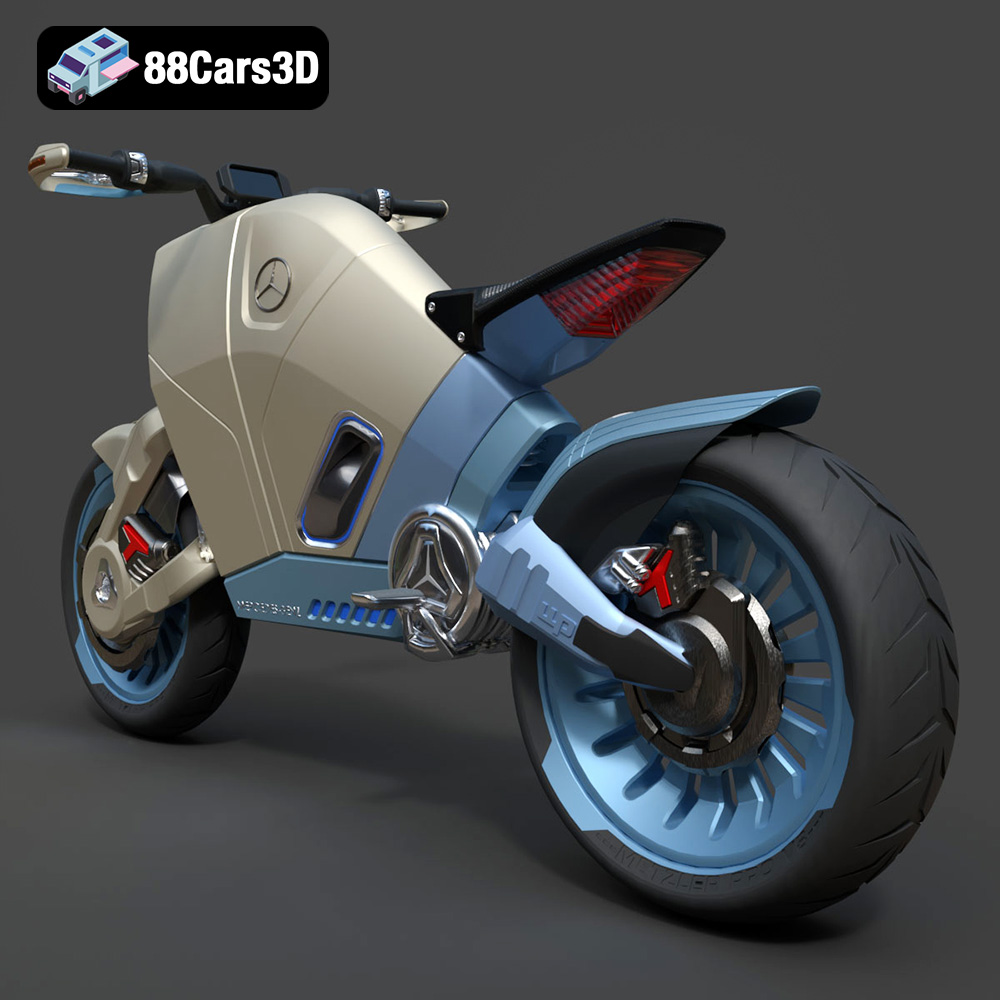
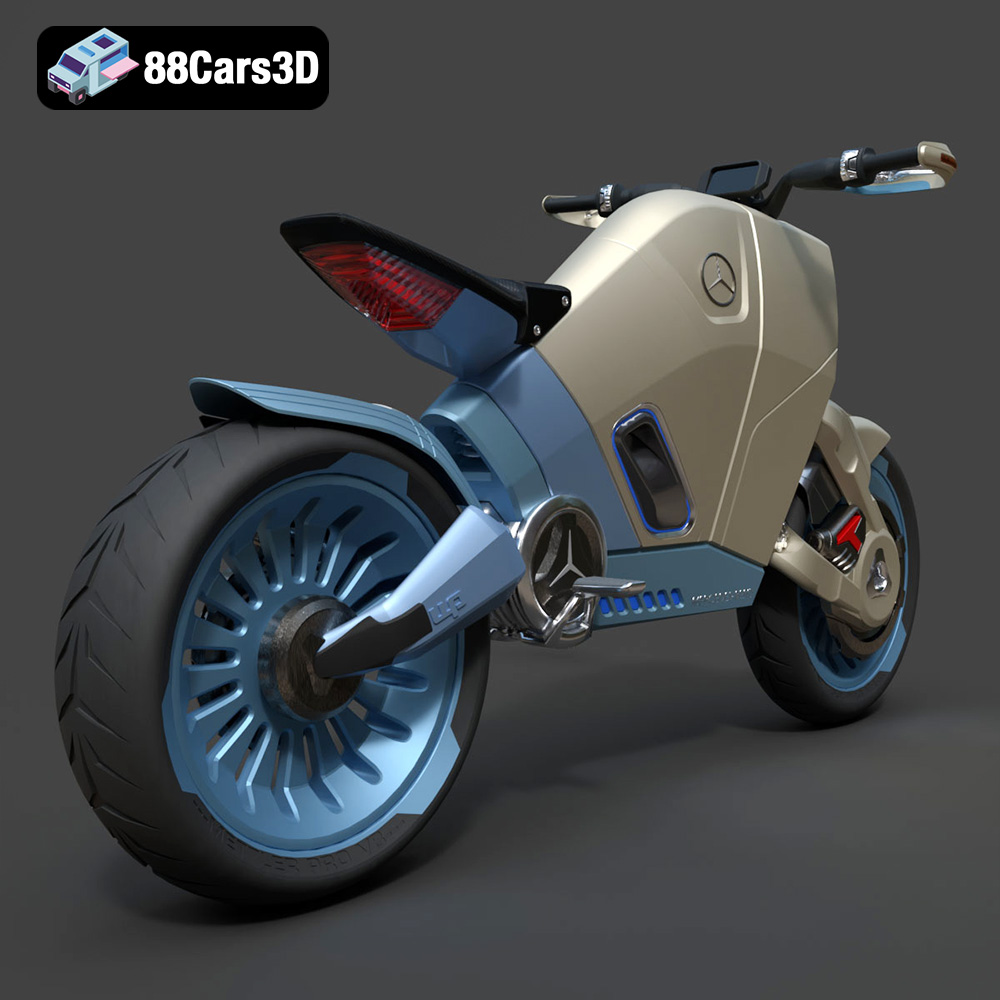
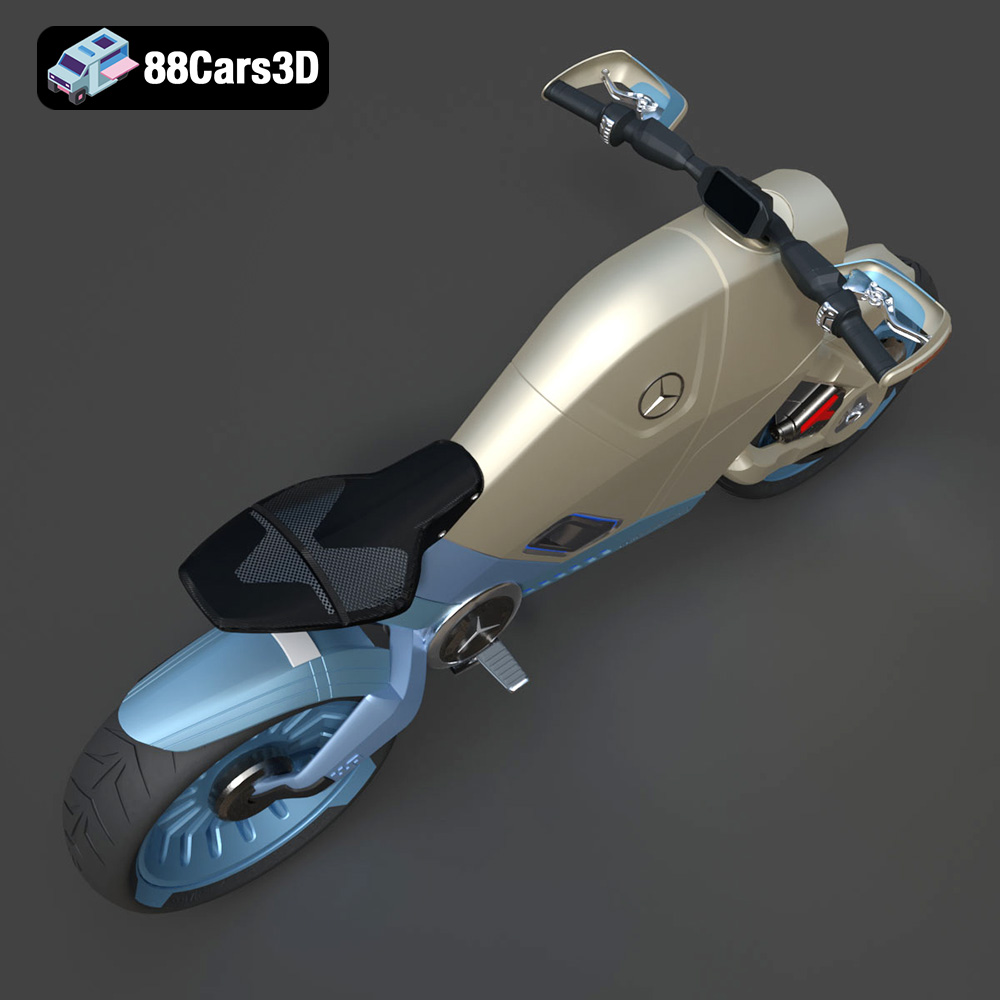
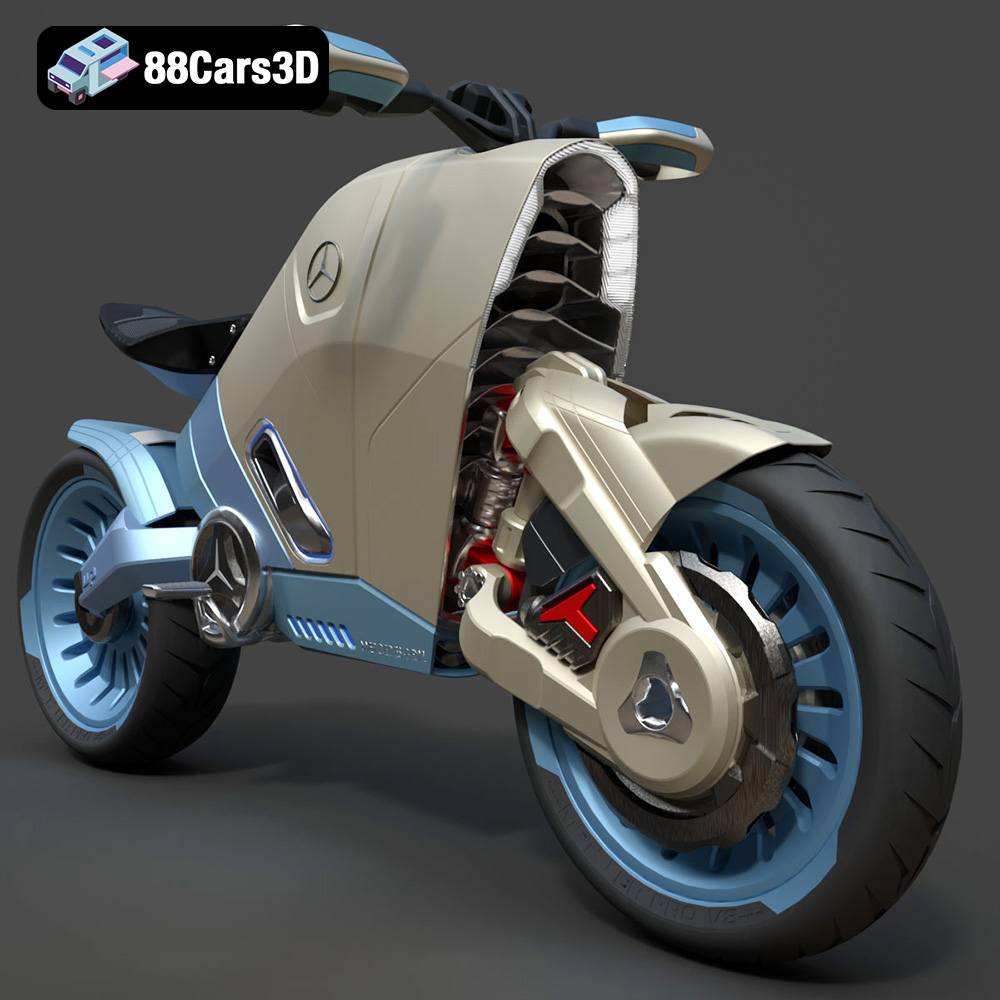
The model captures the breathtaking vision of a futuristic Mercedes-Benz electric motorcycle with stunning accuracy. Its ultra-sleek, streamlined fairing isn’t merely stylistic; it implies advanced aerodynamics crucial for high-performance electric mobility. Key exterior features include an accurately modeled SMARANZA Mercedes Concept frame, detailed high-performance electric motor and battery pack housing, and seamless panel integration. The advanced LED light strips and signature Mercedes-styled illumination add a touch of sci-fi elegance, while the next-generation wheel design with high-traction conceptual tires and cutting-edge conceptual suspension geometry underscore its futuristic intent. Importantly, components like wheels, suspension, and steering are separated, enabling dynamic animation in cinematic sequences or interactive simulations, making it a perfect game asset.
Beyond the exterior, the interior—or in this case, the cockpit—is equally impressive. The model features an ergonomic futuristic racing saddle seamlessly integrated into the bodywork, suggesting both comfort and control at high speeds. The advanced sleek handlebar design with touch-sensitive conceptual controls and a holographic-style digital instrument cluster with HUD elements immerse the viewer in a truly next-generation riding experience. Minimalist conceptual levers and foot controls further emphasize the vehicle’s advanced nature. For game developers, the optimized geometry for first-person POV in gaming is a critical advantage, allowing players to feel truly connected to this futuristic machine.
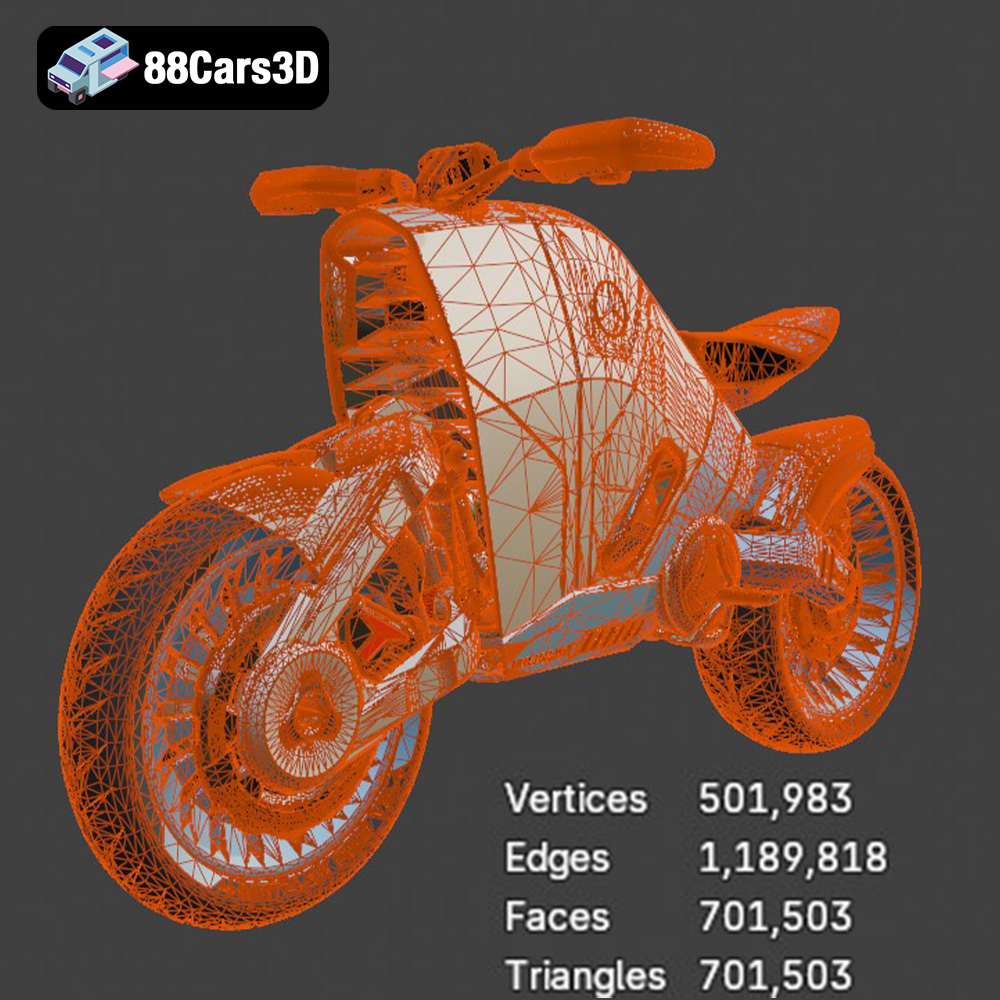
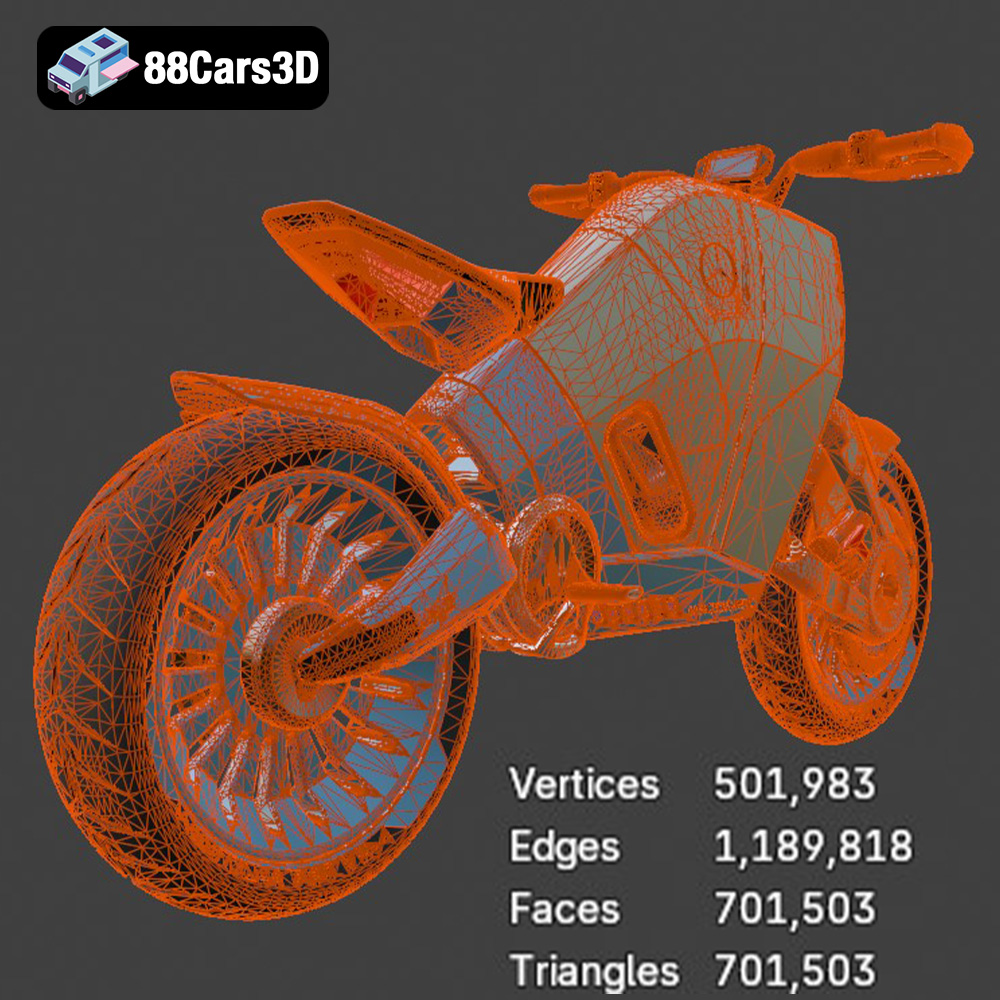
Technical precision is where this 3D model truly shines. It is “Game-Ready & Optimized,” boasting a balanced triangle count that strikes a perfect balance between high-end visual realism and flawless performance in real-time engines like Unreal and Unity. This clean topology ensures minimal poly count while maintaining smooth surfaces and intricate details, a common challenge in creating high-quality game assets. Furthermore, the model exhibits real-world scale accuracy based on actual vehicle chassis proportions, which is vital for integration into existing digital environments and for consistent scaling across projects. Proper pivot setup for steering, wheel rotation, and suspension travel simplifies animation and interaction, saving countless hours for animators and riggers. This meticulous attention to technical detail makes it a versatile asset for automotive rendering and interactive experiences alike.
The versatility of the SMARANZA Mercedes Concept Electrical Motorcycle 3D Model is evident in its adaptability across various professional workflows. Its multi-format availability and optimized structure make it a prime candidate for a wide range of creative and technical applications.
For game developers, this model is a dream come true. Its “Game-Ready & Optimized” nature means it integrates seamlessly into leading engines like Unreal Engine and Unity. The balanced triangle count prevents performance bottlenecks, ensuring smooth frame rates even in complex scenes. Clean topology and proper UV mapping (implied by “clean topology” and “game-ready”) are crucial for efficient texture application and lighting calculations within the engine. With separate components for wheels, steering, and suspension, developers can easily implement realistic vehicle physics and animation systems. Imagine this electric motorcycle zipping through futuristic open-world games, dominating racing titles, or serving as a detailed vehicle in immersive simulators. The availability of an “.unreal” package further streamlines the import process, often providing pre-configured materials and collision meshes for a truly plug-and-play experience, significantly speeding up development time for any project involving detailed 3D car models.
Architectural visualization artists, product designers, and advertising agencies will find this model exceptional for high-fidelity automotive rendering. The native .max and .blend formats provide full editability within 3ds Max and Blender, allowing artists to fine-tune every aspect. They can adjust material finishes (matte, gloss, metallic), change body colors to match specific brand aesthetics, and modify tire textures for different scenarios (off-road vs. street). The detailed geometry allows for stunning close-up shots, showcasing the futuristic design under various studio lighting setups or integrated into elaborate lifestyle scenes. With advanced rendering engines, artists can create photorealistic images and cinematic animations that captivate audiences and effectively communicate design intent or marketing messages.
The demand for immersive content is skyrocketing, and the SMARANZA Mercedes Concept Electrical Motorcycle is perfectly suited for AR/VR applications. Its optimized geometry and the inclusion of the .glb format make it ideal for quick loading and smooth interaction in virtual showrooms, interactive configurators, and mobile AR experiences. Imagine a customer virtually placing this futuristic motorcycle in their driveway via their smartphone, exploring its details from every angle. In VR, users could sit on the saddle, interact with the holographic controls, and experience the vehicle as if it were truly present. This level of immersive visualization is invaluable for product showcasing, training, and creating engaging brand experiences, extending the utility of high-quality 3D car models beyond traditional screens.
One of the most exciting aspects of modern 3D modeling is the ability to bridge the gap between the digital and physical realms through 3D printing. The SMARANZA Mercedes Concept Electrical Motorcycle 3D Model is not just for screens; it’s also designed to be convertible into a tangible display piece, perfect for hobbyists, collectors, or design studios wanting a physical representation.
The inclusion of the .stl format is key for 3D printing. When preparing the model for printing, meticulous attention to detail ensures a successful outcome. The recommended scales (1:12 / 1:18 / 1:24) are ideal for desktop FDM or resin printers, offering a good balance between detail and print size. For fine details and smooth surfaces, resin printing is highly recommended, especially given the motorcycle’s sleek contours and intricate components. A layer height between 0.04–0.12 mm will capture these nuances effectively. Critical settings also include a wall thickness of 1.2–2.0 mm for structural integrity and an infill of 20–30% for a robust yet not overly heavy model. Supports will be required for overhangs, particularly for parts like handlebars and potentially the unique suspension geometry, and the suggested print orientation (frame angled, wheels separate) helps optimize for structural integrity and minimizes visible support marks.
Bringing a 3D print to life often involves a significant post-processing stage. For a model of this caliber, sanding, priming, and careful painting are essential. Achieving an “authentic factory colors with metallic finishes” look, as suggested in the product description, will elevate the printed model from a prototype to a high-quality display piece. Utilizing airbrushing techniques and automotive-grade paints can replicate the luxurious finish associated with Mercedes-Benz. This process allows creators to fully appreciate the design in a tactile form, offering a unique perspective on the digital asset and showcasing the incredible detail inherent in 3D car models from platforms like 88cars3d.com.
In the dynamic world of digital content creation, flexibility and longevity are paramount. The SMARANZA Mercedes Concept Electrical Motorcycle 3D Model is built with these principles in mind, offering extensive customization options that ensure its relevance across diverse projects and future iterations.
The model’s clean topology and robust UV mapping (inherent in a game-ready asset) are the foundations for unparalleled material and texture customization. Users can easily “change body/tank colors” to match specific branding, design themes, or personal preferences, exploring a spectrum from classic factory colors to bespoke custom finishes. The ability to “modify tire textures” opens up possibilities for different environments – imagine street-slick tires for a futuristic urban race or a more aggressive tread for a rugged, off-world adventure. Adjusting “material finishes” between matte, gloss, or various metallic sheens allows for endless permutations, ensuring the motorcycle always fits the desired visual tone of a scene or game level. This adaptability is crucial for any asset intended for high-end automotive rendering or game asset integration.
Beyond surface aesthetics, the model’s inherent modularity is a significant advantage. With “separate wheels, suspension, and steering components,” artists and developers have the freedom to animate each part independently, creating dynamic sequences. Furthermore, this separation facilitates potential future modifications or upgrades, allowing for the creation of variations or entirely new conceptual components. If a project requires a slightly different suspension design or a unique wheel variant, the existing structure provides an excellent base for rapid iteration. This foresight in design ensures that the SMARANZA Mercedes Concept Electrical Motorcycle 3D Model remains a valuable asset for years to come, capable of evolving with project needs and technological advancements.
The world of 3D modeling continues to push the boundaries of creativity and technical achievement, offering unparalleled tools for designers, artists, and developers. The SMARANZA Mercedes Concept Electrical Motorcycle 3D Model stands as a testament to this evolution—a meticulously crafted, versatile asset that encapsulates the future of electric mobility and cutting-edge design. Its rich detail, game-ready optimization, and availability across a comprehensive range of file formats make it an indispensable resource for professionals working in automotive rendering, game development, AR/VR, and even 3D printing.
From its sleek exterior and detailed cockpit to its technical prowess and extensive customization options, this 3D model provides a robust foundation for bringing visionary projects to life. Whether you’re animating a cinematic, building an immersive virtual world, or producing a stunning product visualization, the SMARANZA Mercedes Concept Electrical Motorcycle delivers the quality and flexibility demanded by today’s leading creative industries. For this and a vast array of other high-quality 3D car models and game assets, explore the curated collection at 88cars3d.com, where innovation meets exceptional digital craftsmanship.
The SMARANZA Mercedes Concept Electrical Motorcycle is a breathtaking vision of the future, blending iconic Mercedes-Benz luxury and aerodynamic precision with next-generation electric mobility. This striking concept vehicle features an ultra-sleek, streamlined fairing, a state-of-the-art electric drivetrain housing, and futuristic LED signature lighting that redefines two-wheeled transport. Its seamless integration of high-performance styling and eco-conscious engineering makes it a standout piece for any sci-fi or modern automotive digital environment. Meticulously modeled with exceptional visual fidelity and an optimized triangle count, this 3D model delivers striking realism while remaining fully game-ready. Its clean topology ensures flawless performance in real-time engines, making it an invaluable asset for interactive applications such as game development, AR/VR experiences, animation, and high-end visualization.
$39.99
.blend
.fbx
.futuristic
.glb
.max
.obj
.ply
.rendering
.smaranza
.stl
.unreal
concept-motorcycle
electric-motorcycle
game asset
game-ready
low-poly
mercedes-benz
motorcycle-3d-model
optimized
sci-fi
VR/AR