Get 20% OFF All Premium 3D & STL Models!

The Sikorsky UH-60 Black Hawk is a symbol of American military might and a truly versatile machine. Now, thanks to 88cars3d.com, you can bring this iconic helicopter to life through the magic of 3D printing. This guide provides a detailed walkthrough on how to successfully 3D print the Sikorsky UH-60 Black Hawk US 3D Model, covering everything from pre-print preparation to post-processing finishing touches. Whether you’re a seasoned 3D printing enthusiast or a beginner, this article will equip you with the knowledge to create a stunning replica of this legendary helicopter.
Before diving into the printing process, proper preparation of your 3D model is crucial for achieving optimal results. This involves inspecting the model for any errors, choosing the right orientation, and generating appropriate support structures.
The first step is to thoroughly inspect the STL files. While models from 88cars3d.com are generally high-quality, it’s always good practice to check for any non-manifold edges, holes, or intersecting faces. Software like Meshmixer, Netfabb, or Cura can be used to automatically detect and repair these issues. Fixing these problems before printing will prevent errors during the slicing and printing stages. It’s often useful to run a “check validity” command within your slicing software.
The orientation of the model on the build plate significantly impacts print quality, support usage, and structural integrity. For the UH-60 Black Hawk, printing the fuselage horizontally or at a slight angle is generally recommended. This minimizes the need for supports on critical areas and maximizes the strength of the printed part. Carefully consider the orientation of smaller parts like the rotors and landing gear to ensure they are printed with optimal detail and minimal support interference.
Given the complex geometry of the UH-60 Black Hawk, supports are essential for printing overhanging features like the rotors, landing gear, and antennas. Use your slicing software to generate supports automatically, but always review and manually adjust their placement. Focus on supporting areas with steep overhangs or delicate details. Consider using tree-like supports, which are easier to remove and leave fewer blemishes on the printed surface. Remember to optimize support density and interface settings to balance support strength and ease of removal.
Choosing the right file format is critical for a successful 3D printing experience. While the Sikorsky UH-60 Black Hawk US 3D Model comes in various formats, understanding their specific uses is vital. Here’s a detailed look at common file formats used in 3D modeling and 3D printing:
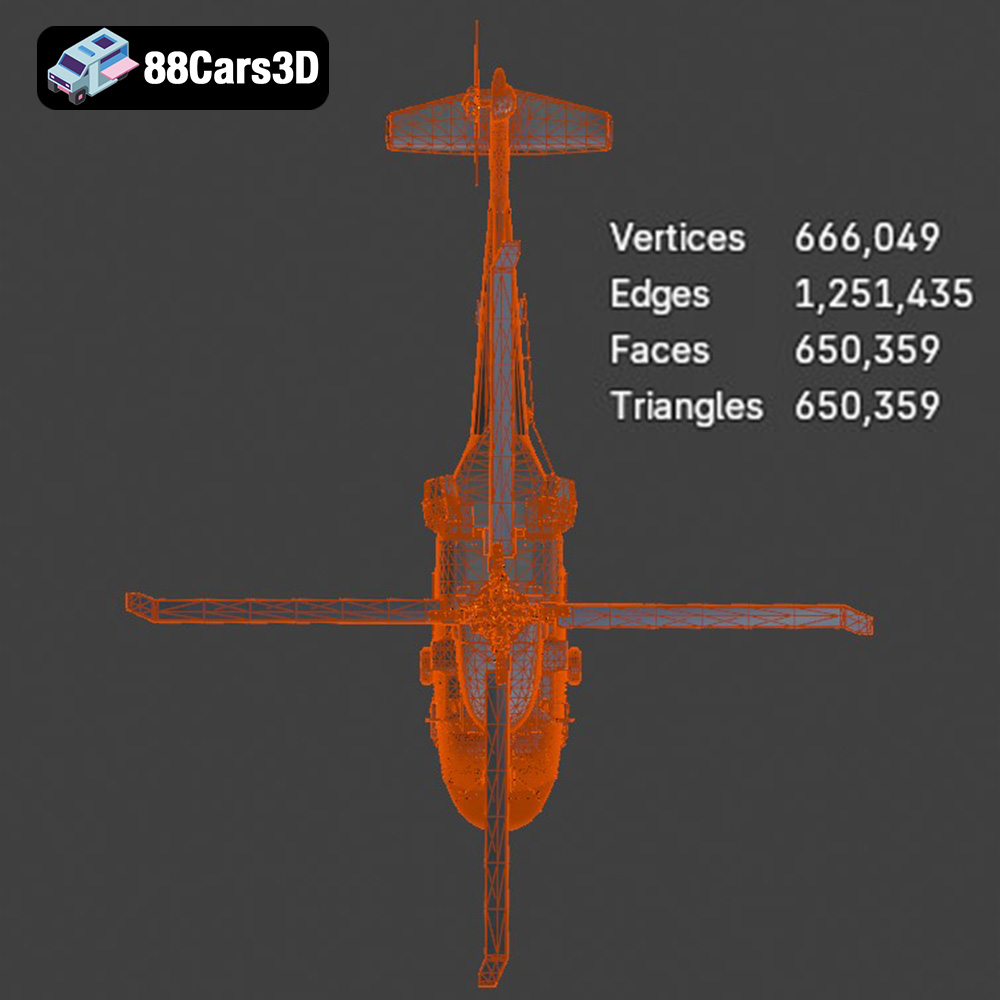
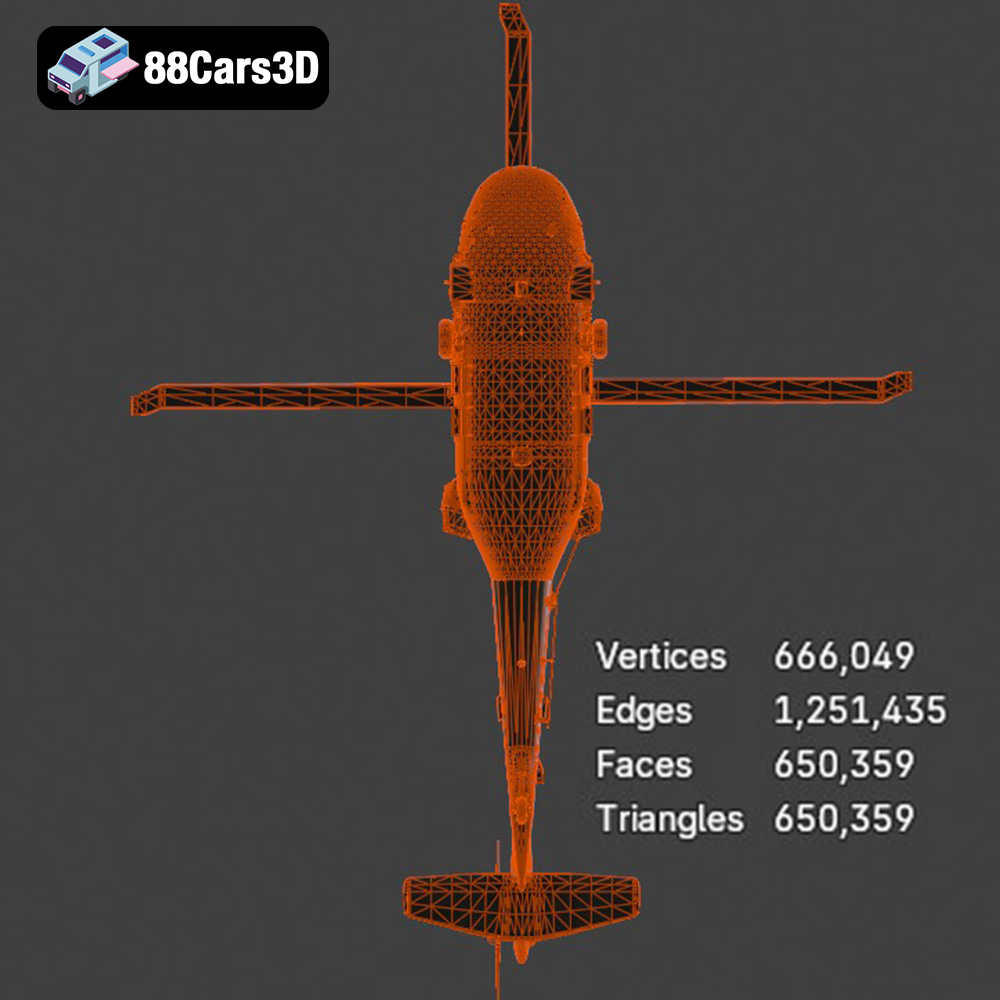
The STL (stereolithography) file format is the undisputed king of 3D printing. It represents the surface geometry of a 3D object as a collection of triangles. Its simplicity and widespread compatibility make it the most common choice for 3D printing. Slicing software readily accepts STL files and uses them to generate the instructions for your 3D printer. When working with the UH-60 Black Hawk model, the STL format will be your go-to for creating printable files. However, STL files only contain mesh data; they don’t include information about color, texture, or materials. Ensure the STL export settings in your modeling software are set to a high resolution to capture the fine details of the Black Hawk model. A high triangle count translates to a smoother, more accurate print.
OBJ is a more versatile file format than STL, as it can store color and texture information alongside the 3D geometry. This makes it suitable for 3D printing models in full color (if your printer supports it). While STL is excellent for single-color prints, OBJ is necessary if you want to capture any intricate color schemes or camouflage patterns of the UH-60 Black Hawk. However, keep in mind that OBJ files can be larger than STL files due to the added texture data.
PLY (Polygon File Format) is another format capable of storing color and texture data, but it’s primarily known for its ability to represent 3D data with high precision. PLY files often use point clouds or polygon meshes to capture intricate details, making them suitable for high-resolution 3D scans or complex models. If you’re aiming for an exceptionally detailed print of the UH-60 Black Hawk and your software supports PLY, it can be a good alternative to STL or OBJ.
The .blend file format is specific to Blender, a popular open-source 3D modeling software. This format contains the entire Blender scene, including the model’s geometry, textures, materials, lighting, and animation data. If you want to customize the UH-60 Black Hawk model before 3D printing – perhaps adding custom decals, modifying the cockpit, or creating different versions – the .blend file is the way to go. You can make your changes in Blender and then export the modified model to STL for 3D printing.
FBX (Filmbox) is a proprietary file format developed by Autodesk. It’s widely used in the gaming and film industries for exchanging 3D data between different software packages. FBX files can store geometry, textures, materials, animations, and even skeletal data. While not directly used for 3D printing, you might use the FBX version of the UH-60 Black Hawk model to import it into slicing software that supports material assignments. This could be useful for printers capable of multi-material printing or for visualizing how different materials would look on the final product.
GLB is a binary file format for 3D models that’s designed for efficient transmission and loading in web applications. It’s often used for displaying 3D models in augmented reality (AR) applications. You can use the GLB file to preview the UH-60 Black Hawk model in a real-world environment using your smartphone or tablet before committing to a 3D print. This allows you to visualize the size and appearance of the finished model in your desired display location.
Similar to .blend for Blender, the .max format is specific to Autodesk 3ds Max, another industry-standard 3D modeling software. It contains the entire 3ds Max project, allowing for extensive customization and modification of the model. If you’re a 3ds Max user, the .max file gives you complete control over the UH-60 Black Hawk, allowing you to make intricate changes and then export the final version to STL for 3D printing.
When preparing the UH-60 Black Hawk US 3D Model from 88cars3d.com for 3D printing, the STL format is the most practical starting point. However, the other formats offer valuable options for customization, texturing, and previewing the model before you begin the printing process.
The choice of 3D printing technology and materials significantly impacts the final result. For the UH-60 Black Hawk, both Fused Deposition Modeling (FDM) and Stereolithography (SLA) technologies can be used, but each has its own advantages and disadvantages.
FDM printing, using materials like PLA (Polylactic Acid) and PETG (Polyethylene Terephthalate Glycol), is a popular choice for hobbyists due to its affordability and ease of use. PLA is biodegradable and offers good detail for larger parts, while PETG provides increased strength and temperature resistance. For the UH-60 Black Hawk, PLA can be used for the fuselage and non-critical components, while PETG is recommended for parts that require higher durability, such as the landing gear and rotor blades.
* **Printer Settings for FDM:**
* Layer Height: 0.1-0.2mm (balances detail and print time)
* Infill: 20-30% (provides sufficient internal support)
* Print Speed: 40-60mm/s (reduces the risk of warping)
* Bed Temperature: 60°C (ensures good adhesion)
* Nozzle Temperature: 200-220°C (for PLA), 230-250°C (for PETG)
Resin printing (SLA/DLP) excels at producing highly detailed parts with smooth surfaces. This makes it an excellent choice for smaller components of the UH-60 Black Hawk, such as the cockpit interior, intricate engine details, and rotor hubs. Resin printers use liquid resin that is cured by UV light, resulting in exceptional precision.
* **Printer Settings for Resin:**
* Layer Height: 0.025-0.05mm (for maximum detail)
* Exposure Time: Varies depending on the resin (refer to resin manufacturer’s recommendations)
* Lift Distance: 5-7mm (ensures proper separation from the FEP film)
* Lift Speed: 60-80mm/min (prevents suction forces)
* Bottom Layer Exposure Time: 50-60s (for strong adhesion to the build plate)
The recommended scale for 3D printing the UH-60 Black Hawk is 1:35, 1:48, or 1:72, as suggested by 88cars3d.com. At these scales, you can achieve a good balance between detail and print size. For FDM printing, larger scales are generally more forgiving, while resin printing allows you to capture intricate details even at smaller scales.
Slicing software is the bridge between your 3D model and the 3D printer. Popular slicing programs include Cura, Simplify3D, PrusaSlicer, and Chitubox (for resin printing). Configuring the slicer correctly is critical for achieving high-quality prints.
For FDM printing, focus on these key settings:
* **Layer Height:** A lower layer height (0.1-0.15mm) will result in smoother surfaces and finer details but will increase print time.
* **Wall Thickness:** A wall thickness of 1.2-2.0mm provides sufficient strength for the fuselage and other structural components.
* **Infill Pattern:** Choose an infill pattern that balances strength and material usage. Gyroid, honeycomb, or grid patterns are good options.
* **Infill Density:** An infill density of 20-30% is generally sufficient for the UH-60 Black Hawk model. Increase the density for parts that need extra strength.
* **Support Settings:** Experiment with different support types (tree, linear) and densities to find the best balance between support strength and ease of removal.
For resin printing, these settings are crucial:
* **Layer Height:** Resin printing allows for much finer layer heights (0.025-0.05mm) compared to FDM. This results in exceptional detail.
* **Exposure Time:** This is the most critical setting for resin printing. It determines how long each layer is exposed to UV light. Refer to the resin manufacturer’s recommendations and perform test prints to dial in the optimal exposure time.
* **Lift Distance and Speed:** These settings control how the build plate lifts after each layer is cured. Proper lift settings prevent suction forces and ensure that each layer is properly separated from the FEP film.
* **Support Settings:** Resin printing also requires supports for overhanging features. Optimize support placement and density to minimize support marks on the printed surface.
Once the 3D printing process is complete, post-processing is essential to refine the model and achieve a professional finish. This involves removing supports, sanding surfaces, and applying paint or other finishes.
Carefully remove the supports using pliers or a sharp knife. Take your time to avoid damaging the printed part. After support removal, use sandpaper to smooth out any rough edges or blemishes left by the supports. Start with a coarser grit sandpaper (220-320) and gradually move to finer grits (400-600) for a smooth finish. For resin prints, you may need to use wet sanding to achieve the best results.
Applying a primer coat is essential for achieving a smooth and uniform paint finish. Use a spray primer designed for plastics and apply it in thin, even coats. After the primer has dried, you can apply the desired paint colors. For the UH-60 Black Hawk, authentic military colors such as olive drab or matte black are popular choices. Use masking tape to create precise lines and details. Consider using an airbrush for a professional-looking finish.
The UH-60 Black Hawk model may consist of multiple parts that need to be assembled. Use a suitable adhesive, such as super glue or epoxy, to join the parts together. Pay attention to alignment and ensure that the parts are securely bonded. Add finishing details such as decals, weathering effects, and cockpit details to enhance the realism of the model.
Even with careful preparation, 3D printing issues can arise. Here are some common problems and their solutions:
* **Warping:** This occurs when the printed part lifts off the build plate due to uneven cooling. To prevent warping, ensure the build plate is properly leveled and heated. Use a brim or raft to increase adhesion.
* **Stringing:** This is when thin strands of plastic are left between printed parts. Stringing is often caused by excessive nozzle temperature or retraction settings. Adjust these settings in your slicing software.
* **Layer Shifting:** This occurs when the layers of the print are misaligned. Layer shifting can be caused by loose belts, a wobbly build plate, or excessive print speed. Tighten belts, stabilize the build plate, and reduce print speed.
* **Support Issues:** Supports may fail to properly support overhanging features, resulting in sagging or distorted parts. Increase support density, adjust support placement, and ensure that the supports are securely attached to the build plate.
* **Resin Printing Failures:** Resin prints can fail due to insufficient exposure time, improper lift settings, or contamination of the resin. Refer to the resin manufacturer’s recommendations and carefully clean the build plate and resin tank.
With meticulous preparation, careful execution, and a little troubleshooting, you can successfully 3D print a stunning replica of the Sikorsky UH-60 Black Hawk using the model available at 88cars3d.com.
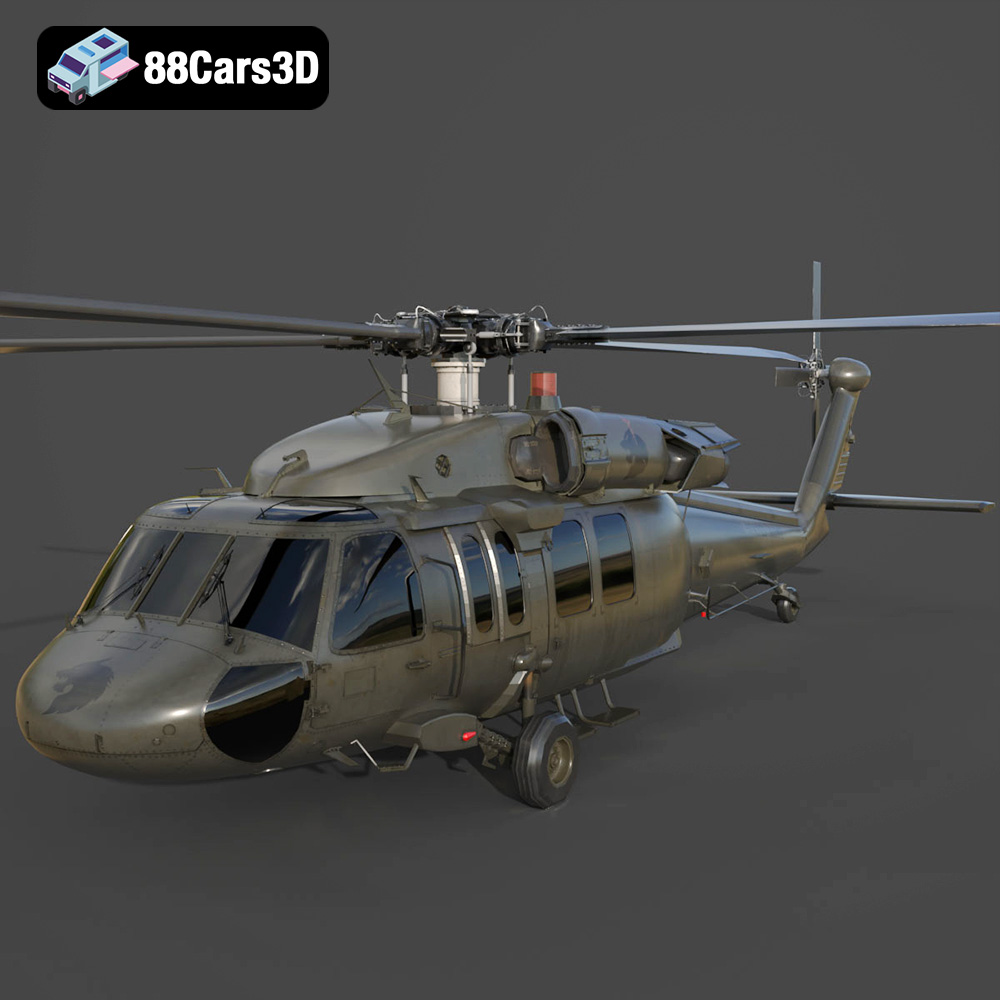
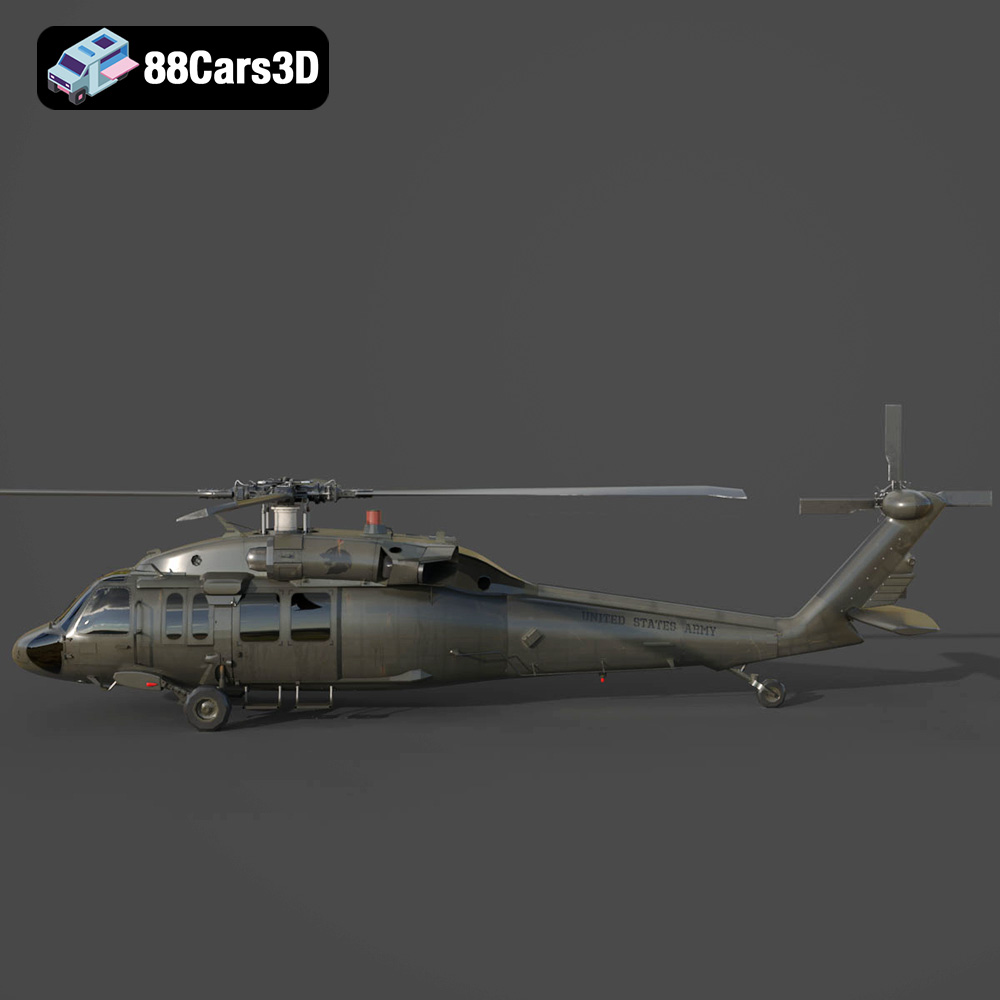
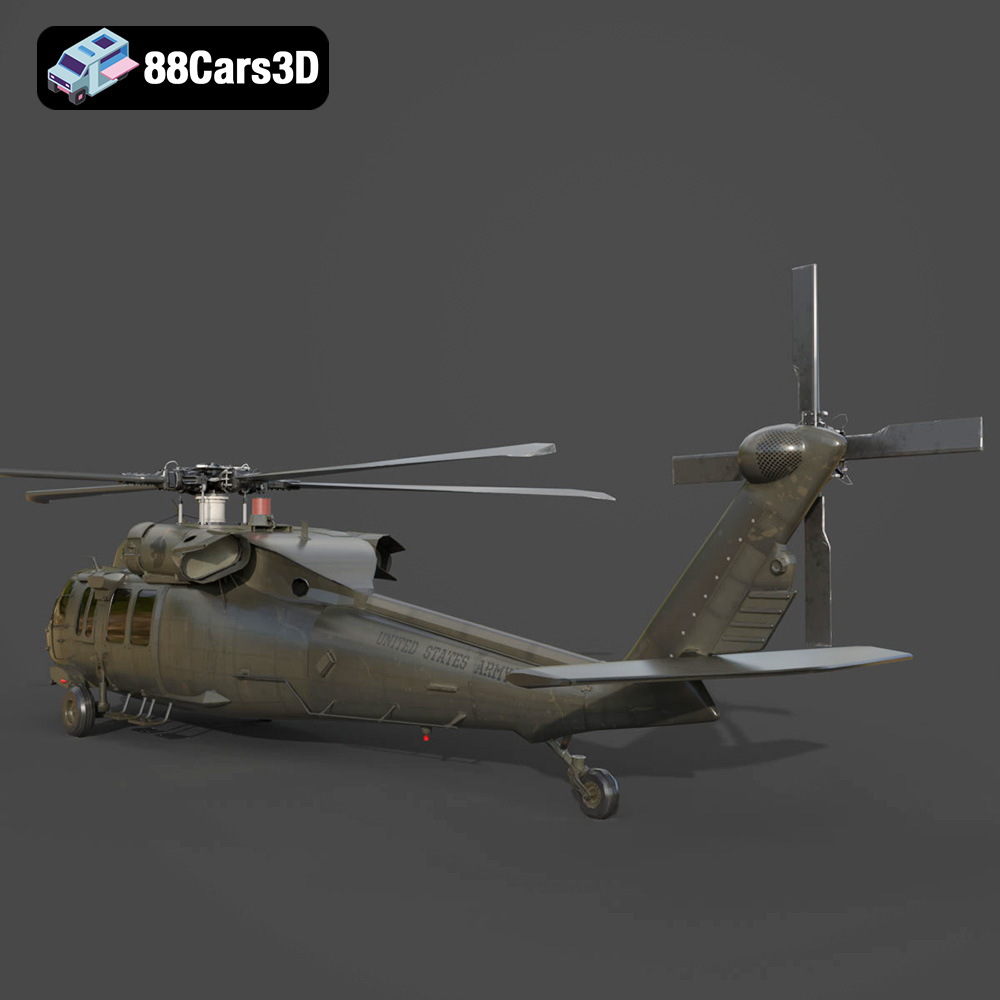
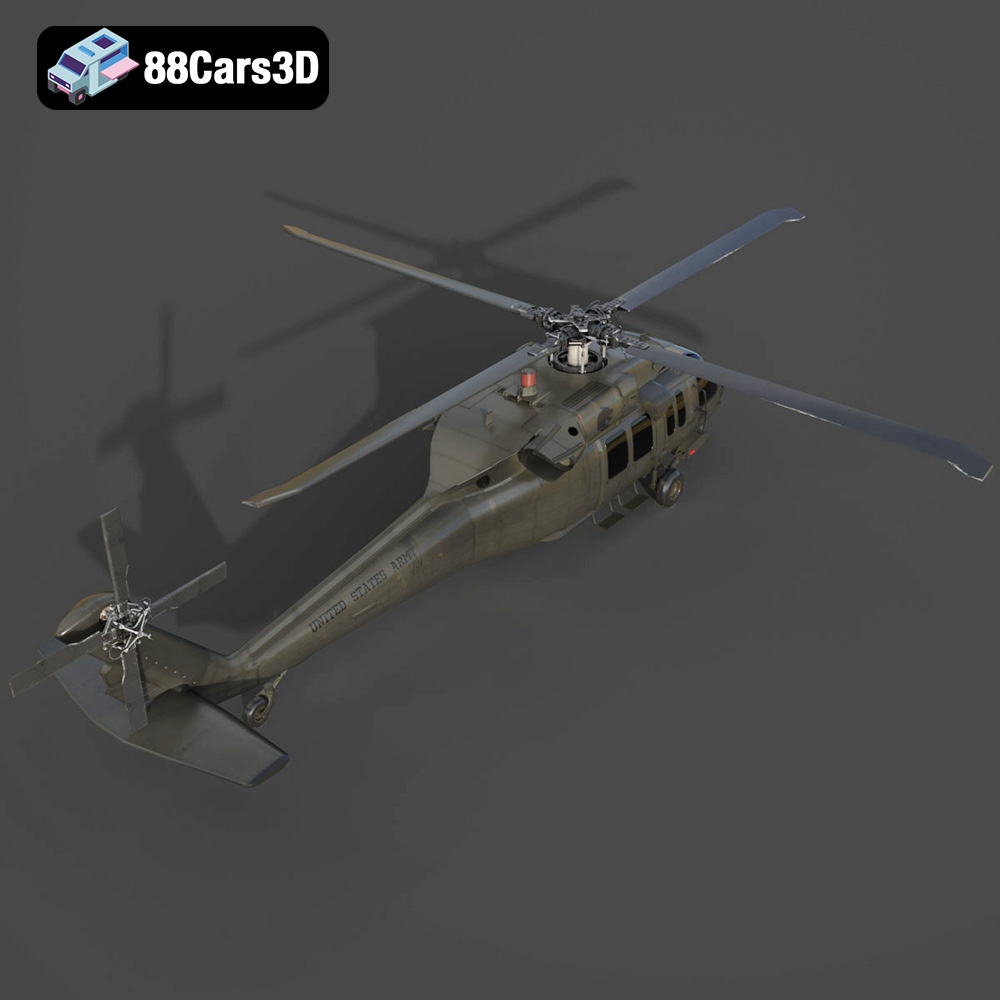
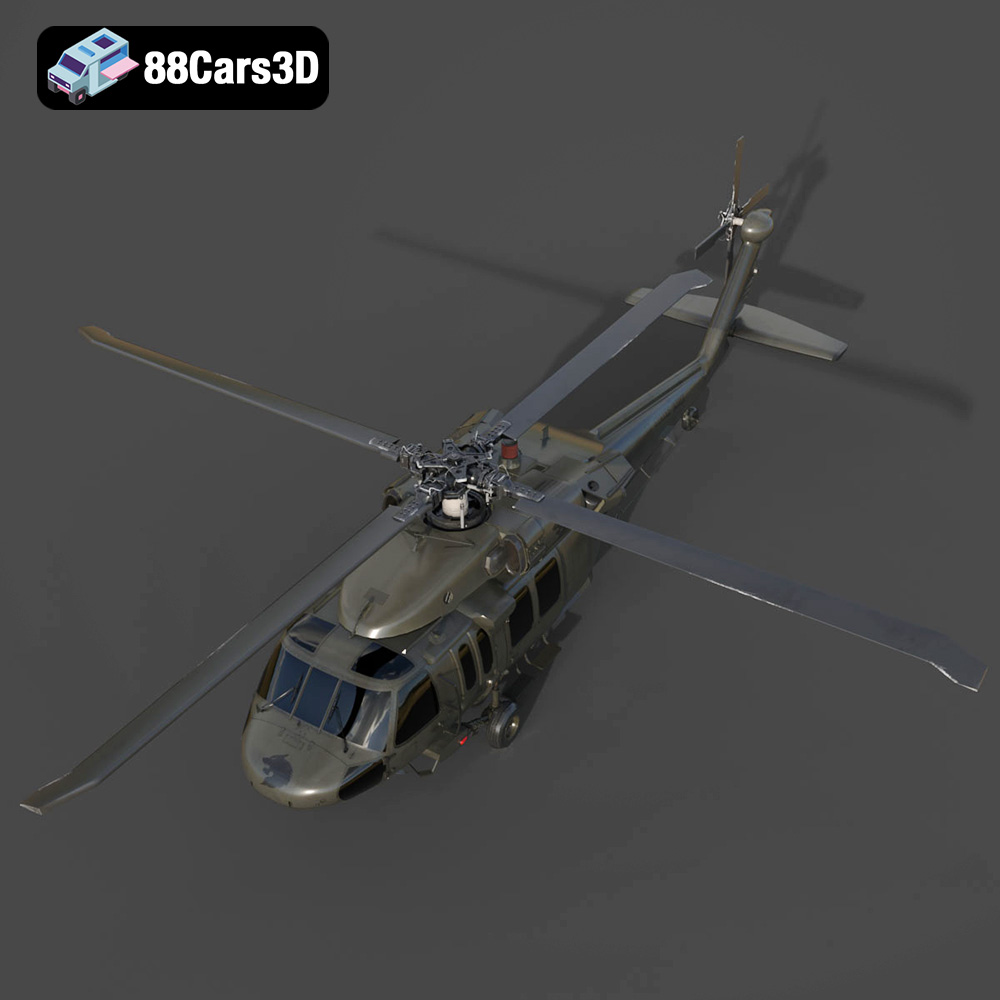
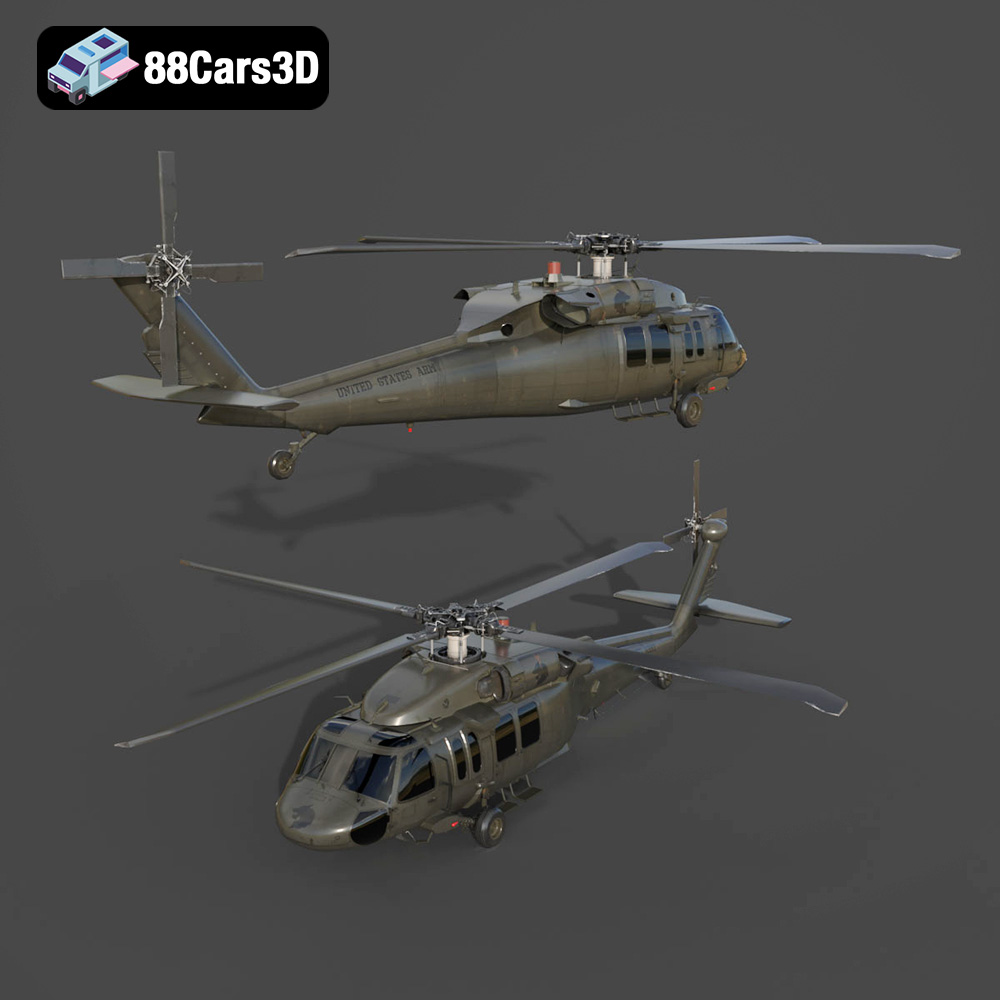
The Sikorsky UH-60 Black Hawk is the backbone of the U.S. Army’s tactical transport fleet, renowned for its versatility, ruggedness, and iconic silhouette. This 3D model meticulously captures the legendary military utility helicopter, featuring its distinct twin-engine housing, formidable four-blade main and tail rotors, and robust military fuselage. Built to reflect its real-world counterpart’s aggressive yet functional military styling, it embodies air assault, medevac, and troop transport readiness.
$39.99
.blend
.fbx
.glb
.max
.obj
.ply
.rendering
.sikorsky
.stl
.unreal
black-hawk
game asset
game-ready
helicopter-3d-model
low-poly
military-helicopter
optimized
uh-60
us-army
VR/AR