Get 20% OFF All Premium 3D & STL Models!

In the rapidly evolving landscape of digital content creation, the demand for exceptionally realistic and versatile 3D assets has never been higher. From breathtaking cinematic renders and immersive game worlds to precise engineering visualizations and cutting-edge AR/VR experiences, high-quality 3D models form the backbone of professional projects. Automotive design, in particular, thrives on this precision, where every curve, reflection, and material finish must be impeccably rendered to convey authenticity.
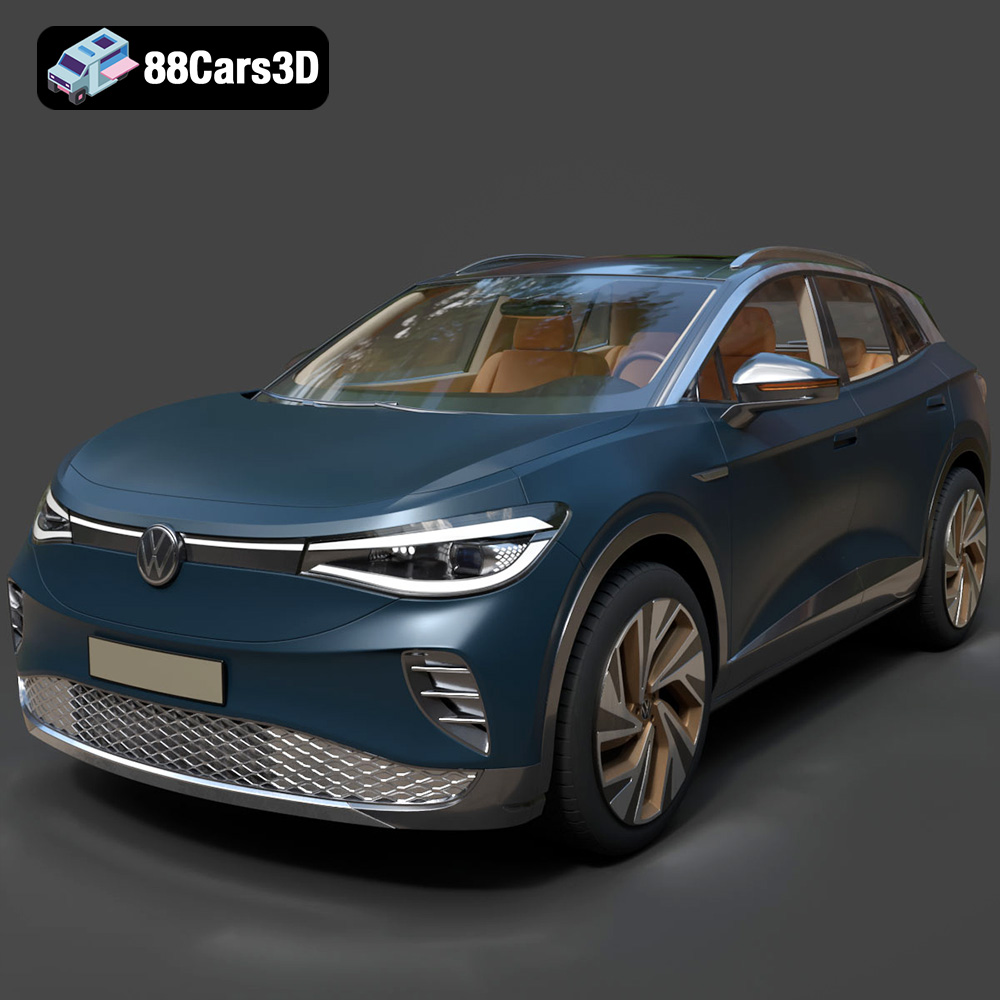
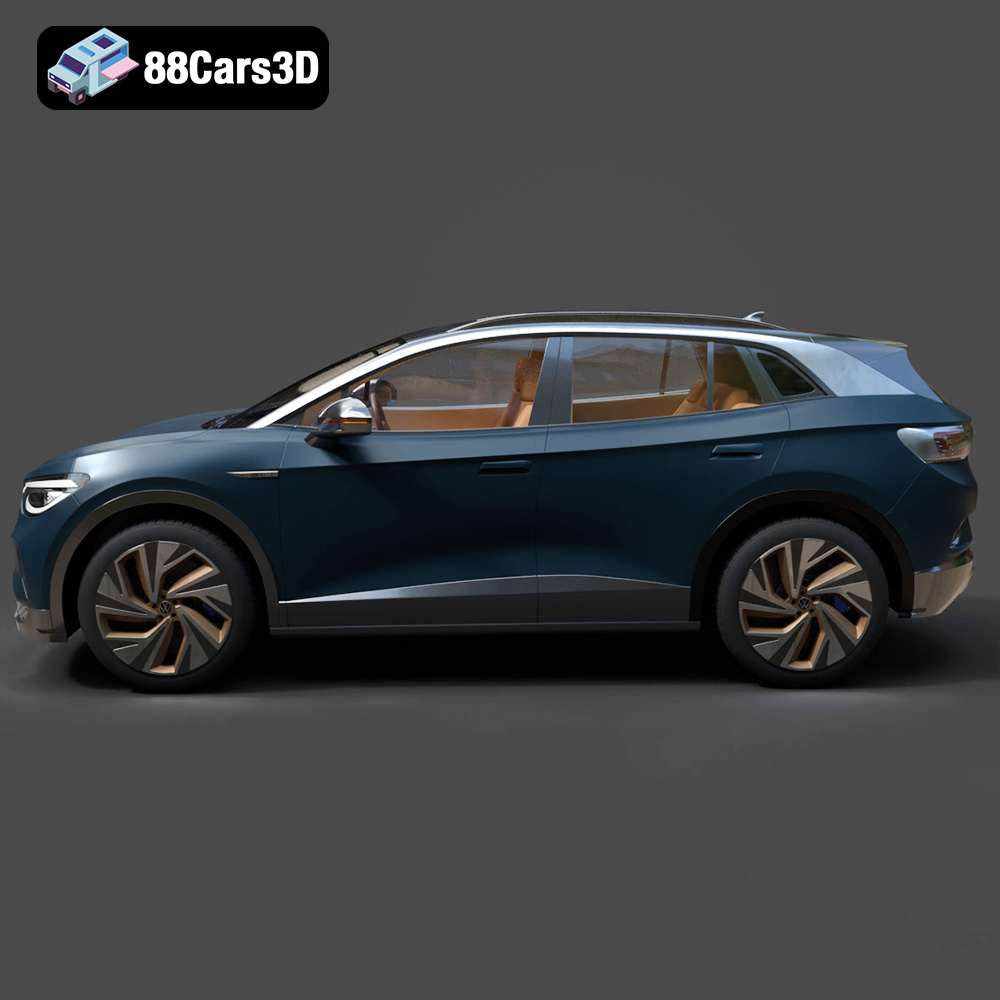
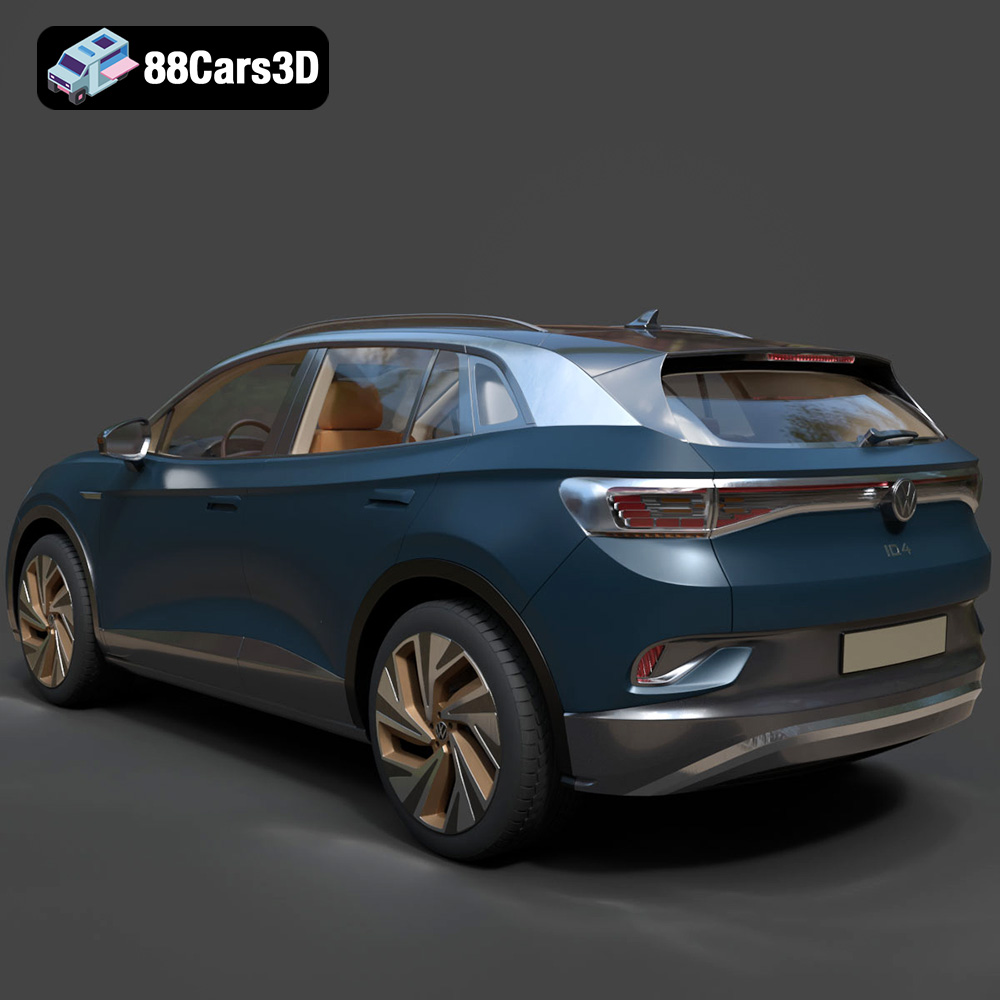
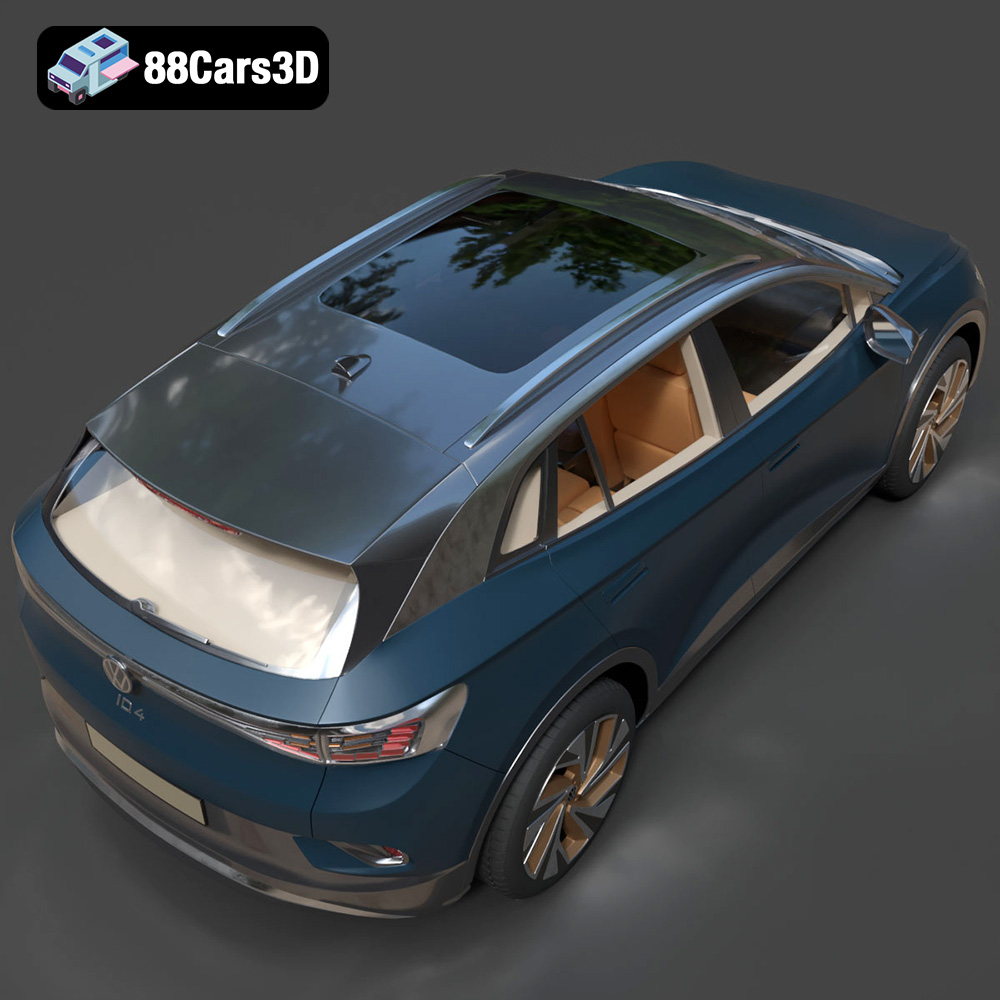
At the forefront of this digital revolution are meticulously crafted 3D car models, designed to meet the rigorous standards of modern production pipelines. Among these stands the Volkswagen ID4 2021 3D Model, an outstanding example of digital craftsmanship. This model doesn’t just represent a vehicle; it embodies a commitment to detail, offering professionals a robust foundation for a wide array of applications. Its accurate representation of the popular electric SUV’s aerodynamic curves and modern design makes it an invaluable asset for anyone seeking to integrate a contemporary EV into their digital environment.
Whether you’re an automotive designer showcasing a new color palette, a game developer populating an urban street, an advertiser creating compelling visuals, or an architect integrating a vehicle into a scene, the quality of your 3D car models dictates the perceived realism and professionalism of your work. This article will delve into the technical considerations, diverse applications, and workflows enabled by such high-fidelity assets, using the Volkswagen ID4 2021 3D Model as our guiding example.
The flexibility and utility of any 3D model are intrinsically tied to the file formats it supports. Professional-grade assets, like the Volkswagen ID4 2021 3D Model available on 88cars3d.com, typically come with a comprehensive suite of formats, ensuring seamless integration across various software and pipelines. Understanding the nuances of each format is crucial for optimizing workflows and achieving desired outcomes.
The .blend format is Blender’s native file type. It’s more than just a mesh container; it’s a complete scene file. This means it can store not only the geometry, UVs, and materials but also lighting setups, camera positions, animations, rigging, physics simulations, and even scripts. For users working within the Blender ecosystem, a .blend file offers maximum editability and immediate access to the original project’s entire configuration. The Volkswagen ID4 2021 3D Model’s .blend file includes materials and a lighting setup, allowing for quick rendering or further customization within Blender without having to rebuild essential scene elements.
Developed by Autodesk, .fbx (Filmbox) is arguably the most widely used proprietary 3D file format for transferring models between different 3D software applications and game engines. Its strength lies in its ability to store not just geometry, UVs, and materials, but also animations, rigs, cameras, and lights in a relatively efficient manner. It’s the go-to format for robust data exchange, particularly between modeling software like 3ds Max or Maya and game engines like Unreal Engine and Unity. The Volkswagen ID4 model’s .fbx version is specifically designed to be game-engine ready, ensuring efficient import and setup for real-time environments.
.obj (Wavefront OBJ) is one of the oldest and most universal 3D file formats. It’s an open standard, making it widely supported across virtually all 3D software. OBJ files are excellent for transferring static mesh data, including vertices, faces, UV coordinates, and normals. They also link to .mtl (material template library) files for basic material properties. While .obj does not support animations, rigging, or scene information, its simplicity and widespread compatibility make it an indispensable format for pure geometry transfer. The Volkswagen ID4’s .obj variant guarantees compatibility with any major 3D software for artists who prioritize clean mesh data.
.glb (GLB format, an extension of glTF) is a relatively newer format designed specifically for efficient transmission and loading of 3D scenes and models in web and real-time applications, especially AR and VR. It’s a binary format that embeds all textures, materials, and animations directly into a single file, reducing HTTP requests and speeding up load times. Its compact nature and optimization for modern graphics APIs like WebGL make it ideal for interactive web experiences, augmented reality applications, and virtual reality simulations. The Volkswagen ID4 model in .glb is perfect for deploying interactive car configurators on websites or showcasing the vehicle in AR apps.
.stl (STereoLithography) is the de facto standard file format for 3D printing. It represents a 3D model as a series of connected triangles, describing only the surface geometry of an object without color, texture, or other model attributes. For 3D printing, the mesh needs to be “watertight” (manifold) to ensure a solid, printable object. While simple, its ubiquity in manufacturing and prototyping makes it essential for physical output. The Volkswagen ID4 2021 3D Model, when exported as .stl, provides a solid foundation for creating physical prototypes or scale models of the vehicle.
The .ply (Polygon File Format or Stanford Triangle Format) is a versatile format often used for storing 3D data from 3D scanners, CAD software, and scientific applications. It can store a variety of properties including color, transparency, surface normals, texture coordinates, and data confidence values, unlike the simpler .stl. It supports both polygon meshes and point clouds, making it valuable for detailed mesh analysis, reverse engineering, and applications requiring high precision geometric data. Engineers or designers needing to perform specific analyses on the Volkswagen ID4’s detailed geometry would find the .ply format highly beneficial.
The .unreal designation often refers to assets that are specifically pre-configured or optimized for direct use within Unreal Engine. This might mean the .fbx file has been set up with particular import settings, or the asset includes native Unreal Engine project files (.uasset) with materials, textures, and blueprints already applied. Such a file significantly streamlines the process for game developers or virtual production artists. For the Volkswagen ID4 2021 3D Model, a .unreal file ensures minimal setup time and immediate visual fidelity within the powerful real-time renderer.
Similar to .blend for Blender, the .max format is the native file type for Autodesk 3ds Max. It stores the complete 3ds Max scene, including geometry, materials, textures, lighting, cameras, animation, and rendering settings. For professionals operating within a 3ds Max pipeline, the .max file provides the highest level of editability and ensures all original scene components are intact. The Volkswagen ID4 model’s .max file is invaluable for those looking to leverage 3ds Max’s robust rendering engines like V-Ray or Corona for high-end automotive visualization and animation.
Automotive visualization is an art form that merges technical precision with creative flair. High-quality 3D car models are the bedrock of this discipline, enabling designers and marketers to showcase vehicles long before physical prototypes exist. The Volkswagen ID4 2021 3D Model, with its “exceptional realism” and “intricately modeled interior and exterior elements,” exemplifies the kind of asset crucial for achieving stunning visual results.
For top-tier automotive rendering, artists typically turn to powerful ray-tracing engines like V-Ray, Corona Renderer, or Arnold, often integrated within software like 3ds Max or Blender. The process involves crafting sophisticated materials that accurately mimic real-world surfaces – from the metallic flake paint and reflective glass to the subtle textures of interior upholstery and dashboard plastics. Clean geometry and accurate UV mapping, inherent in the Volkswagen ID4 3D Model, are fundamental here, allowing textures to be applied without distortion and reflections to behave correctly.
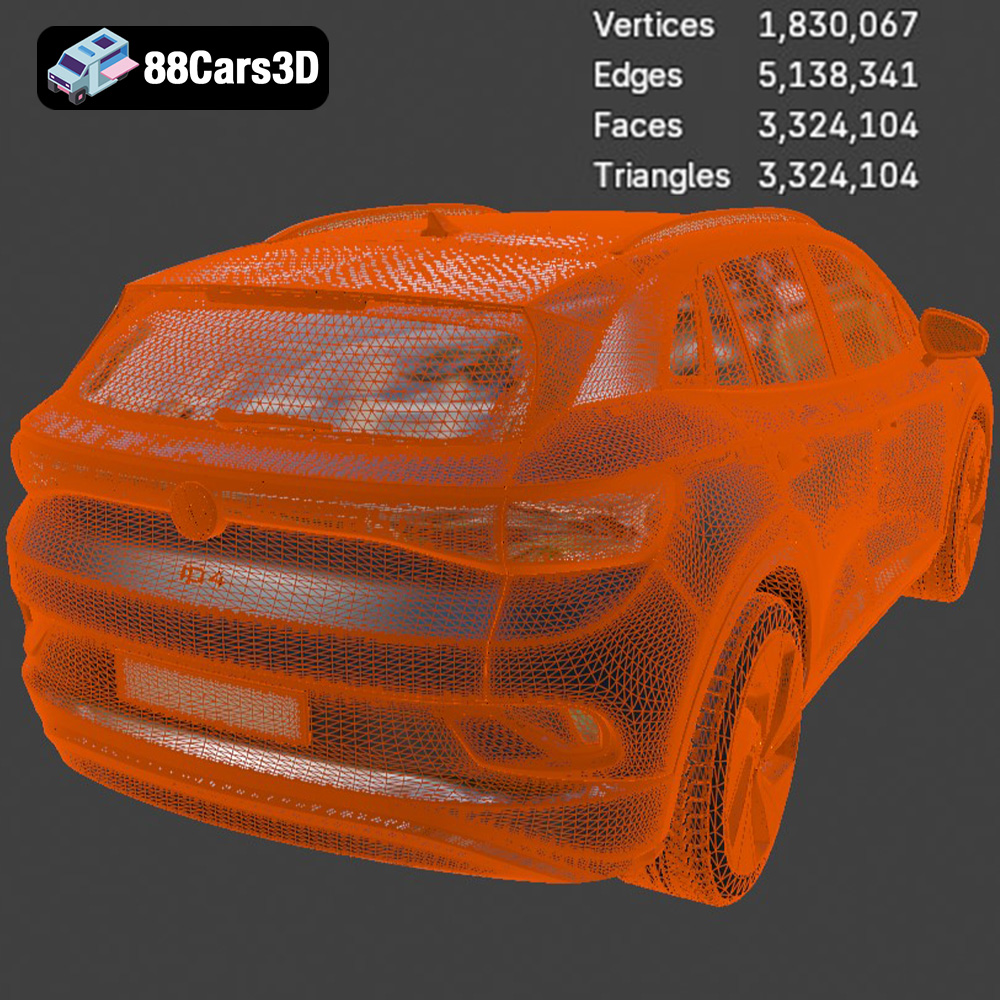
For automotive visualizations, particularly those destined for close-up shots or interactive presentations, the level of detail is paramount. The Volkswagen ID4 2021 3D Model shines in this regard, boasting an “intricately modeled interior and exterior elements.” This includes precise door panel lines, detailed headlight and taillight assemblies, accurate wheel designs, and a faithfully recreated cockpit with dashboard instruments, seats, and steering wheel.
Automotive manufacturers rely heavily on high-fidelity 3D car models for marketing and advertising campaigns. Before physical cars are ready, digital twins like the Volkswagen ID4 2021 3D Model are used to create promotional videos, print ads, and online configurators. This saves immense costs and time associated with traditional photography and filming. Agencies can quickly generate multiple scenarios, color variations, and feature showcases without moving a single physical car.
In the realm of interactive media – video games, AR/VR, and real-time simulations – the demands on 3D assets shift from purely visual fidelity to a balance of aesthetics and performance. The Volkswagen ID4 2021 3D Model, explicitly stated as “game-engine ready” with included .fbx and .unreal formats, is tailored to meet these unique challenges, serving as an excellent 3D car model asset for modern interactive projects.
Unlike offline rendering where computation time is less critical, real-time environments require assets that are highly optimized to maintain smooth frame rates. This involves strategic management of polygon count, efficient UV layouts, and well-structured material setups.
Unreal Engine and Unity are the leading platforms for real-time content creation, and they both leverage the .fbx format for importing 3D models. The Volkswagen ID4 2021 3D Model’s .fbx and .unreal files are designed for seamless integration.
The rise of augmented and virtual reality has opened new avenues for 3D car models. Whether for training simulations, interactive product showcases, or immersive entertainment, the ability to place a realistic vehicle within a virtual or mixed reality environment is powerful. The Volkswagen ID4 model’s .glb format is particularly suited for these applications due to its optimized structure.
While the visual fidelity of 3D car models is often the primary focus, their utility extends into tangible applications and technical analysis. The inclusion of .stl and .ply formats for the Volkswagen ID4 2021 3D Model highlights its versatility, allowing designers, engineers, and hobbyists to transition from screen to physical reality or to conduct precise analytical studies.
The .stl format is the universal language for 3D printing, enabling the creation of physical prototypes, scale models, and custom parts. For product designers and engineers, being able to quickly generate a physical representation of a concept car or a specific component is invaluable for form factor validation, ergonomic testing, and client presentations. The Volkswagen ID4 model, when converted to a watertight .stl, can be brought to life through various additive manufacturing processes.
The .ply format, known for its ability to store precise polygon meshes and point cloud data, is crucial for certain engineering and analytical applications. It allows for a more granular examination of a model’s geometry beyond visual rendering.
In a fast-paced digital production environment, time is often the most valuable commodity. Developing a highly detailed 3D car model from scratch, like the Volkswagen ID4 2021, can take hundreds of hours of expert modeling, texturing, and optimization. This is where the strategic acquisition of professional-grade 3D car models from marketplaces like 88cars3d.com becomes an intelligent business decision.
Purchasing a pre-made, high-quality 3D asset significantly accelerates project timelines and reduces production costs. Instead of allocating resources to model creation, teams can immediately jump into integration, scene building, lighting, and rendering. This is particularly true for complex subjects like automotive models, where accurate proportions, intricate details, and clean topology are critical. For just $39.99, the Volkswagen ID4 2021 3D Model offers an incredible return on investment by providing a ready-to-use asset across multiple formats.
When you purchase a professional 3D model, you’re not just buying geometry; you’re investing in quality assurance. Assets from reputable sources like 88cars3d.com undergo rigorous checks for clean topology, accurate UVs, proper scaling, and material setup. This ensures that the model will behave predictably in various software and rendering environments, minimizing unforeseen technical hurdles.
The digital realm continues to expand, driven by the relentless pursuit of realism and immersion. At the heart of this pursuit lie high-fidelity 3D assets, particularly intricate 3D car models that accurately represent the vehicles of our world. We’ve explored how a single, well-crafted model can serve a multitude of professional applications, from stunning automotive rendering and dynamic game development to precise 3D printing and engineering analysis.
The Volkswagen ID4 2021 3D Model stands as a testament to the versatility and quality demanded by today’s digital artists and engineers. Its comprehensive file format support—ranging from .blend and .max for complete scene editing, to .fbx and .unreal for game engines, .glb for AR/VR, and .stl/.ply for physical and analytical applications—ensures that it is a robust solution for nearly any pipeline. By leveraging such meticulously engineered 3D car models, creators can streamline their workflows, enhance their visual output, and ultimately drive digital excellence in their respective fields.
For professionals seeking to elevate their projects with top-tier 3D assets, exploring the curated selection of 3D car models available at 88cars3d.com offers a gateway to efficiency, quality, and creative freedom.
Experience exceptional realism with the Volkswagen ID4 2021 3D Model. This extensively detailed model perfectly captures the aerodynamic curves and modern design of the popular electric vehicle, providing an accurate representation suitable for professional digital environments. Engineered with precision, this model features clean geometry, accurate proportions, and realistic materials. The intricately modeled interior and exterior elements ensure seamless integration into close-up shots and demanding digital scenes. Ideal for a wide range of professional applications, this model is perfect for automotive visualization, game development, rendering, AR/VR experiences, and interactive simulations.
$39.99
.arvr
.blend
.car3dmodel
.crossover
.electricvehicle
.ev
.fbx
.gameasset
.glb
.id4
.max
.obj
.ply
.rendering
.simulation
.stl
.unreal
.volkswagen
SUV