Get 20% OFF All Premium 3D & STL Models!

In today’s fast-paced digital landscape, the demand for hyper-realistic and performance-optimized 3D assets is at an all-time high. From immersive video games and cutting-edge automotive visualizations to interactive AR/VR experiences and even precise 3D prints, the quality of a 3D model can make or or break a project. Automotive design, in particular, requires an unparalleled level of detail and accuracy, pushing the boundaries of what digital artists and engineers can achieve.
At the heart of many professional workflows lies the need for robust, versatile 3D car models that can seamlessly integrate into diverse pipelines without compromising on visual fidelity or technical performance. This is precisely where meticulously crafted assets shine, offering a foundation of authenticity and efficiency. Consider, for instance, a model that effortlessly blends everyday practicality with thrilling performance: the Volkswagen Jetta GLI 2019. This vehicle, known for its GTI-borrowed turbocharged engine and aggressive styling, embodies the perfect balance of sophistication and sportiness. When translated into a 3D model, it becomes a powerful tool for creators, providing a detailed and game-ready asset that can elevate any project from concept to photorealistic reality. Such models are more than just digital replicas; they are crucial components in shaping the future of digital content creation, offering both artistic freedom and technical precision for designers and developers alike.
The choice of a 3D model file format is far from trivial; it dictates compatibility, ease of use, and the specific capabilities available to artists and developers. A truly versatile 3D car model, like the Volkswagen Jetta GLI 2019 available on 88cars3d.com, provides a wide array of formats, each tailored for distinct applications. Understanding these formats is crucial for optimizing workflows and ensuring seamless integration into various software and engines. Each format serves a unique purpose, from raw editable scenes to optimized real-time assets, catering to every stage of a digital production pipeline.
The .blend format is native to Blender, an incredibly popular open-source 3D creation suite. When you download a .blend file, you’re getting a fully editable Blender scene, complete with materials, textures, lighting, and any animation data. This format is ideal for artists who want to delve deep into the model’s construction, make significant modifications, or integrate it into their existing Blender projects. It offers maximum flexibility for custom rigging, complex material adjustments, or even re-topologizing the mesh for specific needs. For a model like the Jetta GLI 2019, having the .blend file allows for extensive customization of body colors, interior details, or even adapting it for specific rendering styles within Blender’s Cycles or Eevee renderers.
.fbx (Filmbox) is arguably one of the most widely supported 3D file formats, making it an industry standard for data exchange between different 3D software and, critically, for real-time pipelines like Unreal Engine and Unity. It efficiently stores not only mesh data but also materials, textures, animations, and even skeletal information. For game developers, .fbx is often the go-to format due to its robust support for game engine import, ensuring that the model, its PBR materials, and any setup (like pivot points for wheel rotation or suspension) are preserved. The Volkswagen Jetta GLI 2019’s .fbx ensures a smooth transition into any game development environment, retaining its ~250k triangle optimization and high-quality PBR textures.
The .obj (Wavefront Object) format is another highly compatible option, known for its simplicity and universality. While it stores mesh data, UV coordinates, and material references (via an accompanying .mtl file), it typically doesn’t handle animations or complex scene data as comprehensively as .fbx. However, its broad support across virtually all 3D software makes it excellent for basic geometry transfer and archival purposes. If you need to bring the Jetta GLI into a less common 3D application or simply require a clean mesh for sculpting or re-modeling, .obj is a reliable choice.
.glb (GL Transmission Format Binary) is a relatively newer format gaining significant traction, particularly for web-based 3D, AR (Augmented Reality), and VR (Virtual Reality) applications. It’s a binary version of the glTF format, packing all necessary model data—geometry, materials, textures, and even animations—into a single, self-contained file. This makes .glb extremely efficient for streaming and display in browsers or mobile AR/VR viewers, as it requires fewer HTTP requests than other formats. For interactive automotive configurators or virtual showrooms featuring the Jetta GLI 2019, .glb offers an optimized, performant solution for rich, interactive experiences across various devices.
The .stl (STereoLithography) format is the cornerstone of 3D printing. It represents a 3D model as a collection of interconnected triangles, defining only the surface geometry without color, texture, or material information. While simplistic, its widespread adoption by 3D printers and slicer software makes it indispensable for physical output. The Volkswagen Jetta GLI 2019 model is convertible to .stl, allowing hobbyists and professionals alike to bring a tangible representation of the car to life. Specific print settings, like recommended scale and support structures, are often provided to ensure a successful physical rendition.
.ply (Polygon File Format) is a versatile format capable of storing a wide range of data beyond simple geometry, including color, transparency, and even normal vectors per vertex or face. It’s often used for scanned 3D data, CAD applications, or scientific analysis where precision and additional data attributes are crucial. While less common for general game asset creation, its inclusion ensures that the Jetta GLI model can be integrated into specialized pipelines requiring higher data fidelity or specific mesh properties, offering a robust representation for engineering or measurement purposes.
The inclusion of an .unreal file (or an Unreal Engine-specific asset package/project) signifies a model that has been pre-processed and optimized specifically for direct import and use within Unreal Engine. This often means textures are properly packed, materials are set up with PBR shaders, and collision meshes might already be generated. For developers working with Unreal, this format streamlines the workflow significantly, reducing the time spent on manual setup and ensuring that the Jetta GLI 2019 model is truly “engine-ready” for immediate deployment in real-time environments, racing simulators, or open-world games.
Finally, the .max format is the proprietary scene file for Autodesk 3ds Max, a powerful 3D modeling, animation, and rendering software. Similar to .blend, it offers a fully editable scene file, preserving all aspects of the model’s creation within 3ds Max, including modifiers, rigging, lighting, and advanced materials. This format is invaluable for professionals who use 3ds Max as their primary tool, allowing them to access the original construction of the Jetta GLI 2019 model, animate its components, or render it using V-Ray, Corona, or other advanced renderers. It provides the highest level of detail and control for artists seeking to integrate the model into high-end cinematic sequences or detailed architectural visualizations.
The availability of such a comprehensive suite of file formats for the Volkswagen Jetta GLI 2019 3D model underscores its versatility and value, allowing professionals to choose the optimal format for their specific project needs, ensuring maximum compatibility and efficiency across diverse digital ecosystems.
Crafting a compelling 3D car model is a delicate balance between artistic interpretation and rigorous technical accuracy. It demands an understanding of real-world physics, automotive design principles, and the nuances of digital rendering. For a vehicle like the Volkswagen Jetta GLI 2019, which carries a strong identity as a premier sports sedan, capturing its essence in three dimensions requires meticulous attention to every curve, panel gap, and material finish. The goal is to create a digital twin that evokes the same sense of performance and sophistication as the physical car.
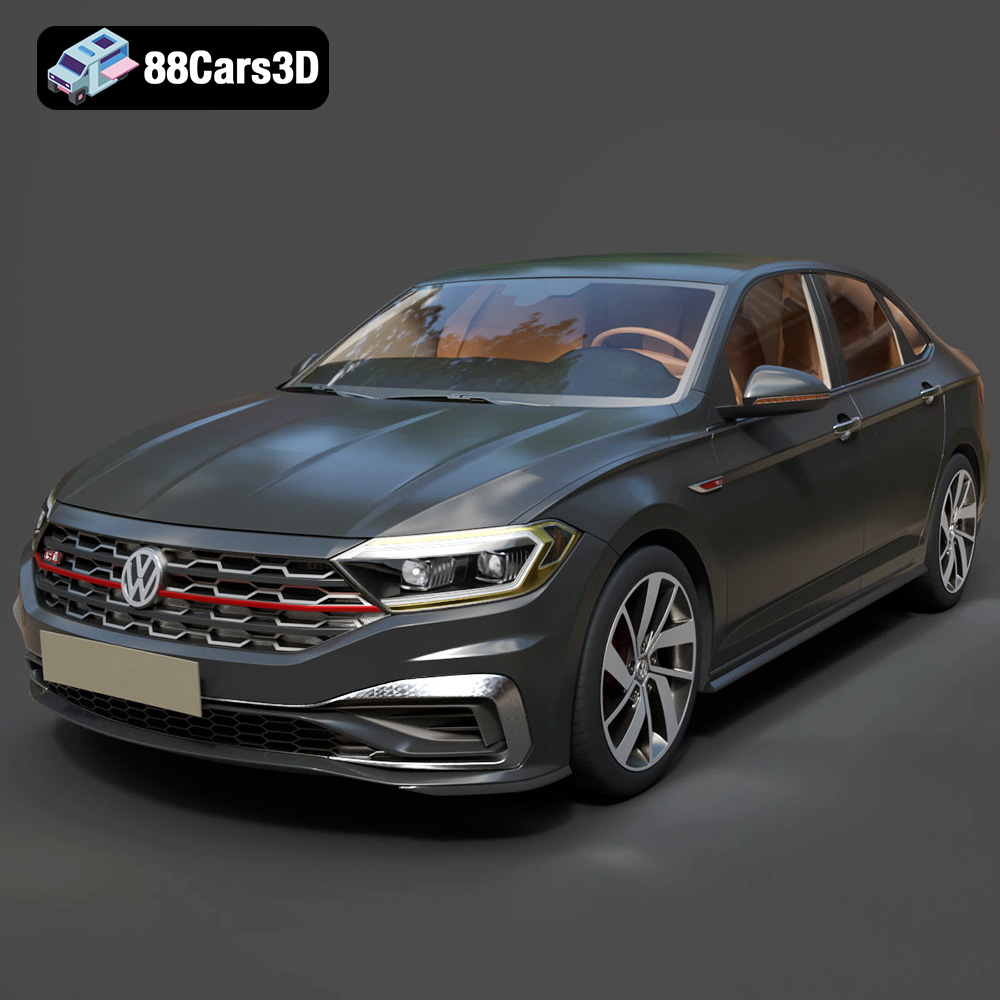
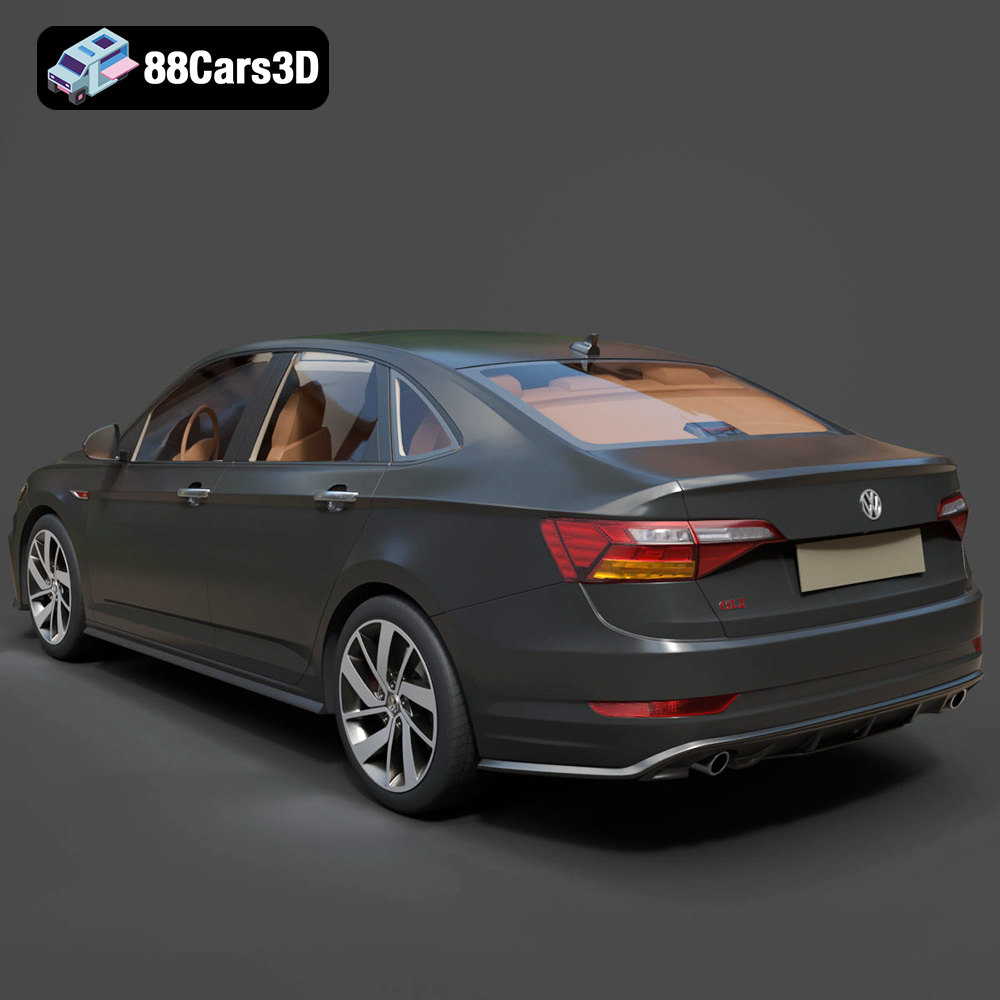
The exterior of any car is its public face, and for the Jetta GLI, this means its aggressive honeycomb grille, iconic red accents, and sleek aerodynamic profile. A high-quality 3D model must replicate these elements with stunning topological accuracy. This includes precise frame geometry and proportions, ensuring the digital model mirrors the real vehicle’s stance and silhouette. Details extend to the engine block, with a representation of the 2.0L TSI turbocharged 4-cylinder, and the sport-tuned dual exhaust system with its distinctive chrome tips. Signature LED projector headlights and sleek taillight clusters must cast realistic light and reflections, while exclusive GLI alloy wheels, performance tire treads, and detailed red brake calipers are essential for close-up shots. Furthermore, the model incorporates sport suspension lowering details, giving it that aggressive, track-ready posture. Crucially, components like wheels, suspension, and steering are often separated, allowing for realistic animation in driving simulations or cinematic sequences. This modularity is a testament to the model’s professional-grade construction, enabling dynamic interactions and lifelike movements.
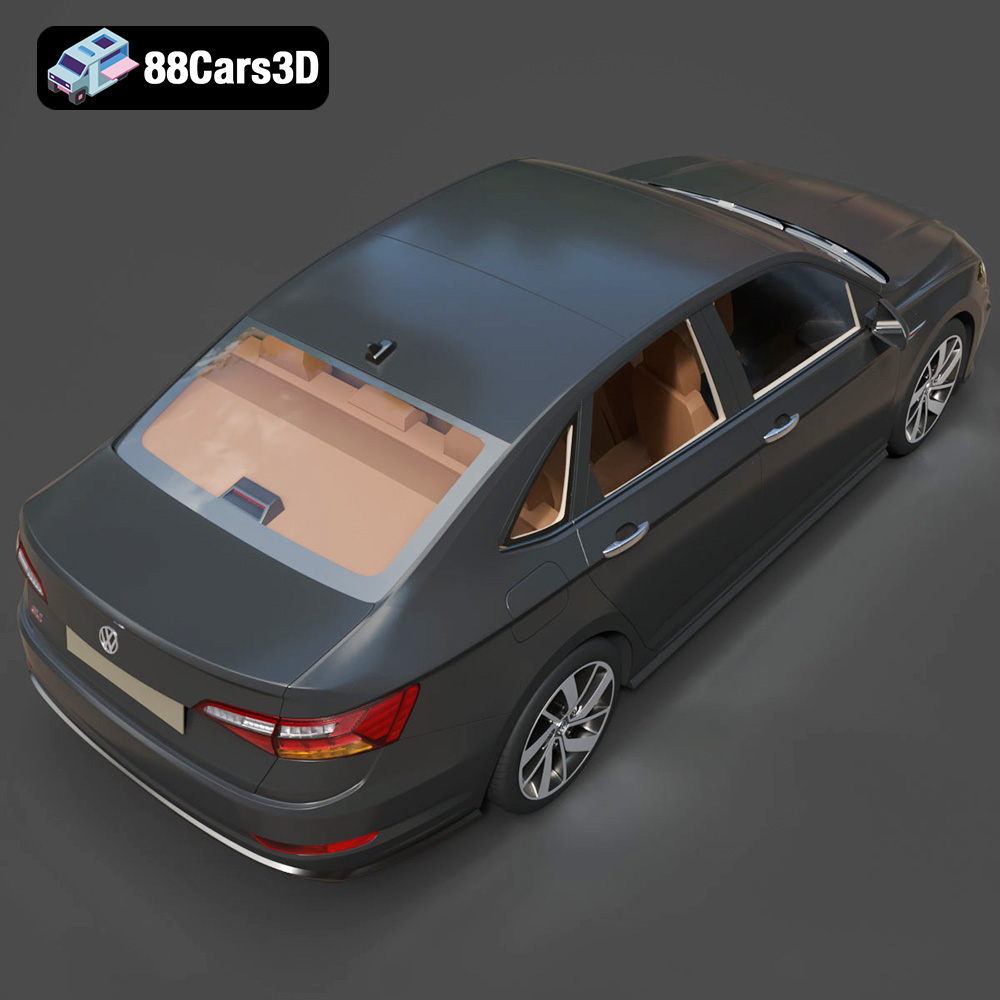
Beyond the gleaming exterior, the interior of a vehicle offers another layer of immersion, especially in gaming and VR applications. The Volkswagen Jetta GLI 2019 3D model doesn’t shy away from this, featuring a meticulously crafted cockpit. This includes sport seats adorned with signature red contrast stitching details, a leather-wrapped, flat-bottom sport steering wheel, and a fully realized digital cockpit and modern infotainment instrument cluster. Every control, from pedals to the shift lever and center console, is accurately modeled, providing a convincing environment for first-person perspectives. This level of interior detail is not just for show; it’s optimized geometry for first-person POV in gaming, ensuring that players or users in VR experiences feel truly present inside the vehicle. Such fidelity is crucial for simulations, virtual tours, and any application where the user interacts directly with the car’s interior, reinforcing the sense of realism and immersion.
While visual fidelity is paramount, a 3D model’s true utility in modern production often hinges on its performance optimization, particularly for real-time applications like video games and interactive experiences. The challenge lies in achieving photorealistic results without overburdening the rendering engine. This is where strategic poly count management and proper technical setup become critical, ensuring a smooth and responsive user experience.
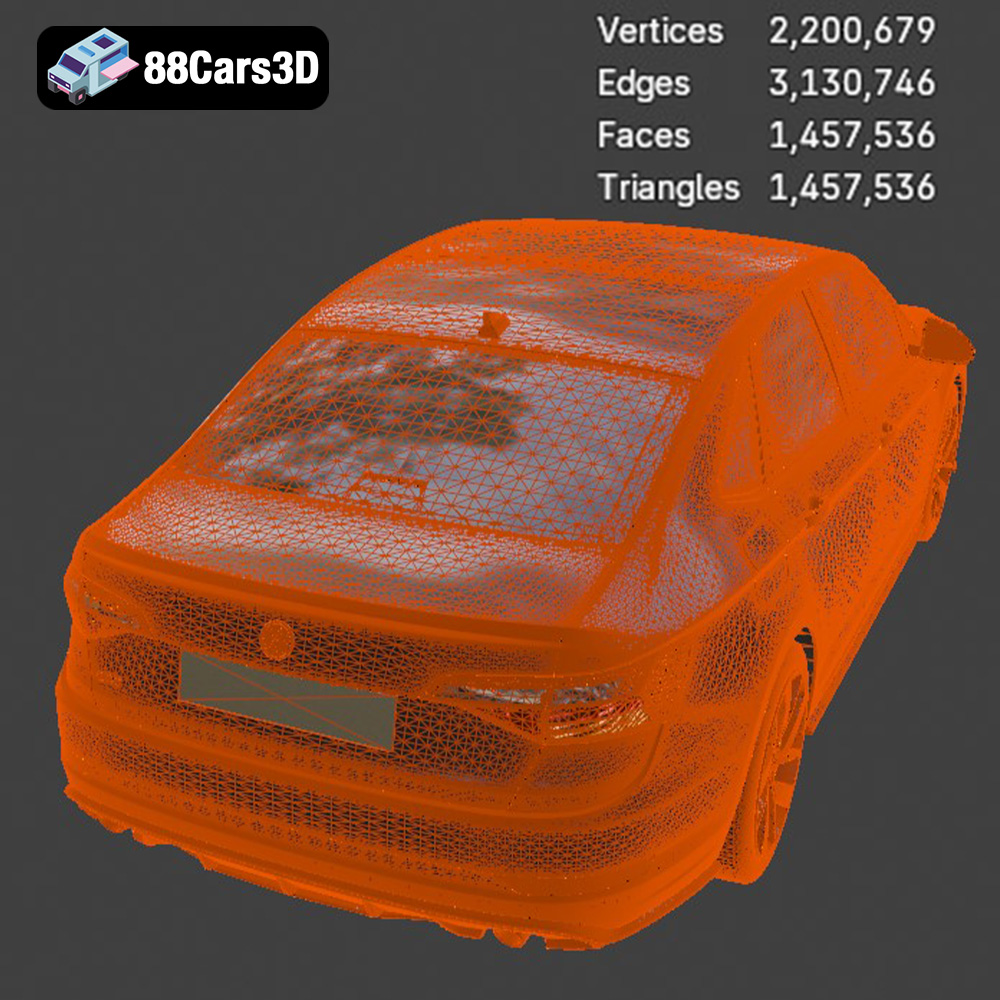
The Volkswagen Jetta GLI 2019 3D model exemplifies this delicate balance with its game-ready optimization, boasting approximately 250,000 triangles. This poly count strikes a perfect equilibrium, allowing for high-end visual realism suitable for close-up shots and high-definition rendering, while simultaneously ensuring excellent real-time performance in demanding engines like Unreal and Unity. For context, complex models with millions of polygons are often reserved for pre-rendered cinematics or static visualizations. A ~250k triangle count for a vehicle, especially one with a detailed interior and engine block representation, is a testament to efficient modeling practices. It ensures that the model can be instantiated multiple times in a game environment without causing significant frame rate drops, making it ideal for open-world games, racing titles, and virtual cityscapes where numerous vehicles might be present simultaneously. The use of highly detailed PBR (Physically Based Rendering) materials further enhances this, allowing a relatively lower polygon count to appear more complex through realistic surface interactions with light.
Beyond the mesh, the technical setup of a 3D car model is vital for its functional integration into professional workflows. The Jetta GLI 2019 model is built with real-world scale accuracy, based on actual vehicle chassis dimensions. This ensures correct proportions and interaction with other scaled assets in a scene, eliminating the need for tedious manual adjustments during import. Crucially, it features proper pivot setup for steering, wheel rotation, and suspension travel. This means that when imported into a game engine like Unreal Engine, the wheels are ready to rotate around their correct axes, the steering can be animated realistically, and the suspension can articulate over rough terrain without complex manual rigging. For developers working in Unreal Engine, this translates to significant time savings. They can directly utilize or easily adapt the existing pivot points for their vehicle physics systems, whether they’re setting up a simple driving mechanic or integrating it into an advanced car simulation blueprint. The ‘unreal’ file format specifically caters to this, often including pre-configured assets that expedite the integration process, allowing designers to focus on gameplay and scene development rather than basic asset preparation. This attention to technical detail makes the Jetta GLI model a truly plug-and-play asset for professional game development.
The utility of a meticulously crafted 3D car model extends far beyond the realm of video games. Its inherent versatility makes it an invaluable asset across a multitude of industries, transforming how products are visualized, marketed, and experienced. From high-stakes brand campaigns to intricate engineering analyses, a high-quality model like the Volkswagen Jetta GLI 2019 acts as a digital chameleon, adapting to diverse requirements while maintaining its core integrity and realism.
In architectural visualization (ArchViz), 3D car models are essential for breathing life and context into static building renders. Placing a realistic car, such as the Jetta GLI, in front of a newly designed building or within a virtual garage instantly adds a sense of scale, realism, and a human element. It helps prospective clients envision themselves in the space, understanding how the environment functions in a real-world scenario. The high visual fidelity and PBR materials of the Jetta GLI model ensure it integrates seamlessly into photorealistic ArchViz scenes, complementing the detailed surroundings without appearing out of place. Furthermore, the automotive industry itself heavily relies on 3D models for interactive product configurators. These online tools allow potential buyers to customize their desired vehicle with different paint colors, wheel options, and interior trims in real-time. The Jetta GLI 2019 model, with its separable components and customizable materials, is perfectly suited for such applications. Its optimized geometry ensures smooth, responsive interaction, enabling users to explore countless variations of the car before making a purchase decision. This immersive experience significantly enhances engagement and aids in the sales process.
Augmented Reality (AR) and Virtual Reality (VR) are rapidly transforming how we interact with digital content, and 3D automotive models are at the forefront of this revolution. The Volkswagen Jetta GLI 2019 3D model is perfect for immersive virtual showrooms, where customers can “walk around” and “sit inside” the car from the comfort of their home, examining every detail as if it were physically present. This level of interaction provides a richer, more engaging experience than traditional 2D images or videos. For AR experiences, the Jetta GLI can be projected onto a real-world surface via a smartphone or tablet, allowing users to place a virtual car in their driveway or living room. This is particularly powerful for automotive marketing, allowing potential buyers to visualize how the car fits into their lives and environments. The model’s optimized polycount and the availability of the .glb format are crucial here, as AR/VR platforms often demand highly efficient assets to ensure smooth performance on mobile devices and VR headsets. The ability to switch body colors, modify tire textures, and adjust material finishes further enhances these interactive experiences, offering a truly personalized virtual encounter with the vehicle.
Beyond digital displays, the Jetta GLI 2019 3D model also caters to the growing world of 3D printing. For display-scale hobbyists or professional designers needing physical prototypes, the model can be converted to the .stl format. This allows for the creation of miniature replicas, collectibles, or even functional parts (depending on scale and detail). The product description provides specific print settings, recommending scales like 1:12, 1:18, or 1:24, and suggesting resin printing for optimal fine details. Guidance on layer height, wall thickness, infill, and supports ensures that the digital model translates successfully into a physical object. The recommendation to print the frame angled for structural integrity and wheels separately highlights the thought put into practical 3D printing applications, further extending the model’s versatility from purely digital to tangible forms.
The true power of a professional 3D car model lies not just in its initial fidelity, but in its adaptability. Creative professionals often require the flexibility to modify, re-texture, or animate assets to perfectly fit their unique project vision. The Volkswagen Jetta GLI 2019 3D model is designed with this in mind, offering extensive customization options and compatibility with industry-standard workflows in software like 3ds Max and Blender.
For artists and studios utilizing Autodesk 3ds Max, the inclusion of the native .max file format is a game-changer. It provides direct access to the model’s original construction, allowing for comprehensive modifications. Users can delve into the modifier stack, adjust polygon flow, re-rig components, or fine-tune materials with advanced renderers like V-Ray or Corona. This is invaluable for cinematic rendering, where subtle changes in reflectivity, paint flake, or interior stitching can elevate a scene. Similarly, for the burgeoning community of Blender users, the .blend file offers the same level of granular control. Artists can leverage Blender’s powerful modeling and sculpting tools to add bespoke modifications, integrate the car into complex environments, or create custom animations using its robust animation system. Both .max and .blend formats typically come with PBR (Physically Based Rendering) material setups, which are crucial for achieving photorealistic results. PBR materials accurately simulate how light interacts with surfaces in the real world, ensuring that changes to body/tank colors, tire textures (e.g., switching between off-road and street variants), or material finishes (matte, gloss, metallic) will look authentic and respond correctly to varying lighting conditions. This level of customizability empowers artists to adapt the Jetta GLI 2019 to any scene or artistic style, from gritty realism to stylized renders.
The ability to transition a digital asset into a physical object opens up a whole new dimension of application. The Volkswagen Jetta GLI 2019 3D model is not just for screens; it’s also prepared for 3D printing. The .stl format, specifically designed for additive manufacturing, allows users to fabricate a tangible replica. The product description provides detailed 3D print settings, which are crucial for successful output. Recommended scales (1:12, 1:18, 1:24) help users determine the appropriate size for their print. Technical parameters like layer height (0.04–0.12 mm) and wall thickness (1.2–2.0 mm) are specified to ensure both detail preservation and structural integrity. The recommendation for resin printing over FDM for fine details is a practical tip for hobbyists aiming for showroom-quality miniatures. Furthermore, advice on infill (20–30%), the necessity of supports for intricate parts (exhaust, mirrors), and optimal print orientation (frame angled, wheels separately) demonstrates a deep understanding of 3D printing best practices. Finally, the mention of post-processing steps like sanding, primer, and applying authentic factory colors with metallic finishes guides users towards achieving a professional, finished product. This comprehensive guidance transforms the digital Jetta GLI into a versatile asset for both virtual and physical worlds, highlighting the comprehensive nature of the models available on 88cars3d.com.
The landscape of digital content creation is continually evolving, yet the foundational need for high-quality 3D assets remains constant. As we’ve explored, a meticulously crafted 3D car model is far more than just a digital replica; it’s a versatile, performance-optimized tool that drives innovation across diverse industries, from gaming and automotive design to AR/VR and 3D printing. The Volkswagen Jetta GLI 2019 3D model stands as a prime example of such an asset, embodying the crucial balance between stunning visual fidelity and technical readiness for real-world applications.
With its game-ready optimization, detailed exterior and interior features, and a comprehensive suite of file formats—including .blend, .fbx, .obj, .glb, .stl, .ply, .unreal, and .max—this model ensures maximum compatibility and efficiency across any professional workflow. It empowers creators to integrate it seamlessly into Unreal Engine for immersive racing simulators, utilize it in 3ds Max for high-end architectural visualizations, or even translate it into a physical object via 3D printing. The emphasis on real-world scale, proper pivot setups, and PBR materials ensures that every render and interaction is grounded in realism.
Whether you are a game developer striving for authentic driving experiences, an architect visualizing a future urban landscape, a marketer crafting an interactive product configurator, or a hobbyist bringing a beloved vehicle to life through 3D printing, the right 3D asset can be the catalyst for your success. Products like the Volkswagen Jetta GLI 2019 3D model, available on 88cars3d.com, represent the pinnacle of digital automotive artistry and engineering, providing a reliable and inspiring foundation for your next project. Investing in such premium 3D car models is investing in efficiency, quality, and the limitless possibilities of digital creativity.
The Volkswagen Jetta GLI 2019 combines everyday practicality with thrilling performance, standing out as a premier sports sedan in its class. Known for its GTI-borrowed turbocharged engine, aggressive honeycomb grille with iconic red accents, and sleek aerodynamic profile, this vehicle strikes the perfect balance between track-ready styling and modern sophistication. From its distinctive front fascia to the dual exhaust setup, every element of this athletic sedan has been meticulously captured. This meticulously crafted 3D model features game-ready optimization with approximately 250,000 triangles, ensuring high-end visual fidelity without compromising real-time performance in modern engines. With stunning topological accuracy and highly detailed PBR materials, it provides unmatched realism for close-up shots and gameplay alike. Perfect for immersive racing simulators, urban environment open-world games, high-end architectural visualizations, and interactive automotive configurators.
$39.99
.2019
.blend
.fbx
.glb
.max
.obj
.ply
.rendering
.sedan
.stl
.unreal
.volkswagen
car-3d-model
game asset
game-ready
jetta-gli
low-poly
optimized
sports-sedan
VR/AR