Get 20% OFF All Premium 3D & STL Models!

The world of 3D visualization is constantly evolving, driven by an insatiable demand for realism and immersion across industries. From blockbuster video games to cutting-edge architectural visualization, and from intricate industrial design to virtual reality training simulations, high-quality 3D models form the bedrock of compelling digital experiences. While sleek sports cars and elegant sedans often capture the spotlight, there’s an undeniable gravitas and a unique set of technical challenges that come with rendering the workhorses of our modern world: commercial trucks. These titans of the highway, like the iconic Volvo VNL series, represent not just vehicles but complex logistical systems.
Crafting a digital replica of such a machine requires meticulous attention to detail, optimized geometry, and an understanding of diverse industry applications. This brings us to a prime example of such precision engineering in the digital realm: the Volvo VNL Tractor Truck 2002 3D Model. This particular asset offers a fantastic case study in how a well-prepared 3D model can serve a multitude of professional needs, from game development and cinematic rendering to AR/VR experiences and even 3D printing. It embodies the blend of historical significance, functional design, and technical adaptability that professional artists and developers seek when sourcing premium 3D car models for their projects.
In the complex ecosystem of 3D design and development, choosing the right file format is as critical as selecting the model itself. Each format is designed with specific strengths and intended applications, dictating how a model integrates into different software environments, preserves data, and performs in real-time or rendering pipelines. The Volvo VNL Tractor Truck 2002 3D Model, available on 88cars3d.com, is a prime example of an asset offered with comprehensive format support, ensuring maximum flexibility for creators. Let’s delve into the nuances of these essential formats:
The .blend format is Blender’s proprietary file type, representing a complete Blender project scene. When you download a .blend file, you’re not just getting the geometry; you’re receiving the entire setup: mesh data, materials (often node-based PBR shaders), textures, lighting, cameras, animation rigs, modifiers, and even scene settings. This makes it invaluable for users who primarily work within Blender, offering full editability and the ability to dissect and understand the model’s construction as intended by the original artist. It’s ideal for deep customization, animation, and rendering within Blender’s powerful environment.
.fbx (Filmbox) is arguably the most ubiquitous 3D interchange format in the entertainment industry. Developed by Autodesk, it excels at preserving complex scene data, including geometry, materials (often PBR definitions), textures, animation, skeletal data, and blend shapes, while allowing seamless transfer between different 3D applications like 3ds Max, Maya, Blender, and directly into game engines like Unreal Engine and Unity. For game developers, .fbx is often the go-to for exporting animated characters and vehicles, ensuring that all rig and animation data, along with optimized meshes, are correctly interpreted by the game engine. Its robustness makes it ideal for real-time pipelines and collaborative workflows.
The .obj (Wavefront Object) format is a highly universal and widely supported format, primarily known for its simplicity and broad compatibility. It stores geometric data, including vertices, normals, UV coordinates, and faces. While it can reference external material (.mtl) files for basic color and texture maps, it doesn’t support advanced material properties like PBR or complex animation. .obj is excellent for static mesh transfers between almost any 3D software, making it a reliable choice for initial model import, archival purposes, or when only the raw geometry and UVs are needed. It’s a foundational format for cross-software compatibility.
.glb (GL Transmission Format Binary) is the binary version of glTF, a modern, royalty-free specification for the efficient transmission and loading of 3D scenes and models by engines and applications. .glb packages all necessary assets (geometry, materials, textures, animations) into a single, self-contained binary file, making it incredibly efficient for web-based 3D viewers, augmented reality (AR), and virtual reality (VR) experiences. Its compact size and ease of integration make it perfect for applications where performance and rapid loading are paramount, such as interactive product configurators or mobile AR apps.
The .stl (Stereolithography) format is the undisputed standard for 3D printing. It represents a 3D model as a series of connected triangles, describing only the surface geometry of an object. Unlike other formats, .stl files do not contain color, texture, or material information. They are purely for describing the shape to a 3D printer. The Volvo VNL model’s availability in .stl format directly supports hobbyists and professionals looking to create physical prototypes or display models, allowing for precise manufacturing or prototyping using additive methods.
The .ply (Polygon File Format) is often used in applications that deal with scanned 3D data, such as reverse engineering, CAD, or scientific visualization. It can store various properties for each vertex and face, including color, normals, transparency, and texture coordinates. While less common for general 3D asset exchange, its ability to store precise data makes it suitable for highly technical analysis, capturing intricate surface details, or bridging between 3D modeling and engineering applications where data integrity is paramount.
The .unreal designation implies an asset specifically packaged and optimized for direct import and use within Unreal Engine. This often means the asset has already undergone a conversion process, with materials set up to Unreal’s PBR standards, proper collision meshes generated, LODs (Levels of Detail) configured, and possibly even basic blueprints for functionality. This format streamlines the workflow significantly for Unreal Engine developers, saving time on setup and ensuring the model performs optimally in real-time environments.
Similar to .blend for Blender, the .max format is Autodesk 3ds Max’s native file type. It encapsulates the entire 3ds Max scene, including geometry, complex material setups (V-Ray, Corona, Arnold), lighting, cameras, animation, and any modifiers or procedural elements applied. For 3ds Max users, this format offers the highest degree of editability and flexibility, allowing artists to fully explore and modify the original artist’s scene, making it ideal for high-fidelity rendering, advanced animation, and integration into existing 3ds Max projects.
By providing this diverse array of formats, 88cars3d.com ensures that assets like the Volvo VNL Tractor Truck 2002 3D Model are immediately usable and adaptable across the broadest spectrum of professional workflows, truly embodying the concept of versatile game assets and automotive rendering solutions.
Creating a truly functional and visually appealing 3D car model, especially one as robust as a commercial truck, is a demanding task that blends artistic vision with rigorous technical standards. The Volvo VNL Tractor Truck 2002 3D Model exemplifies this synthesis, meticulously engineered to be both aesthetically accurate and performance-optimized. Its design reflects a deep understanding of what developers and artists need for their projects, whether it’s for dynamic game physics or photorealistic marketing renders.
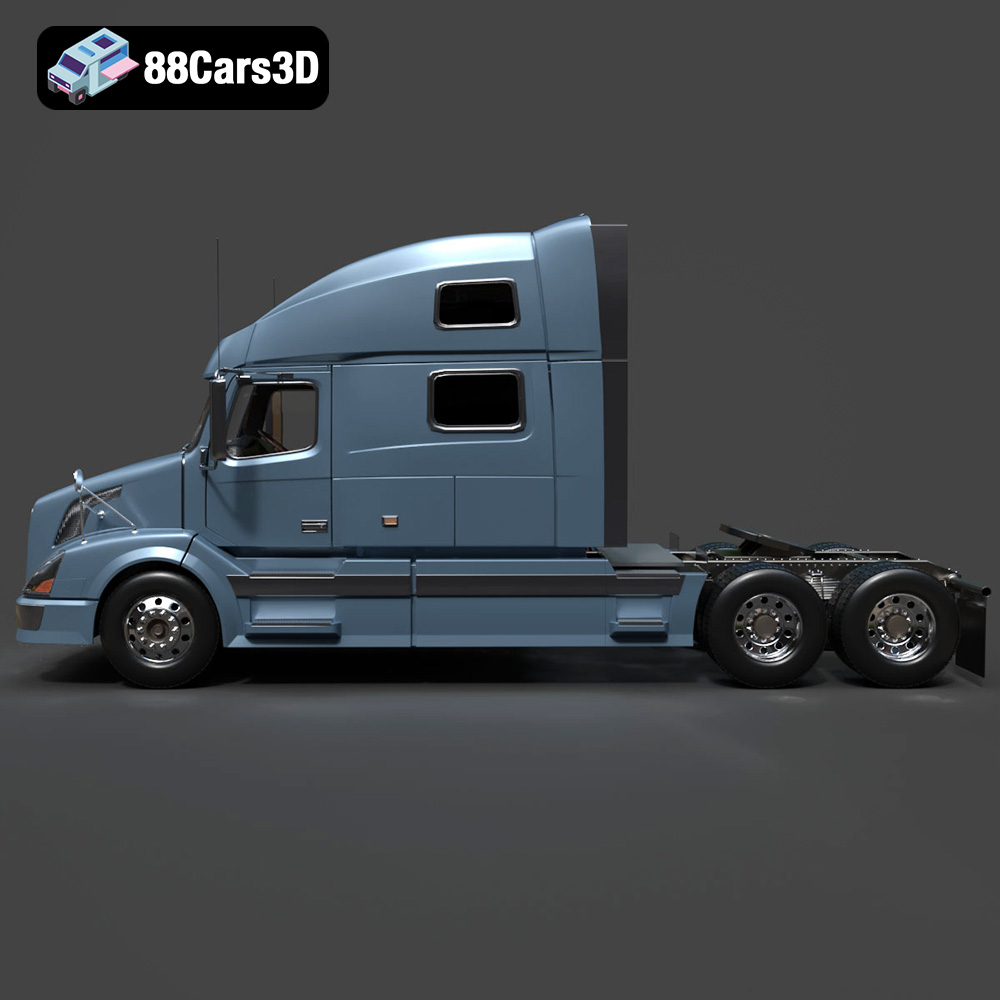
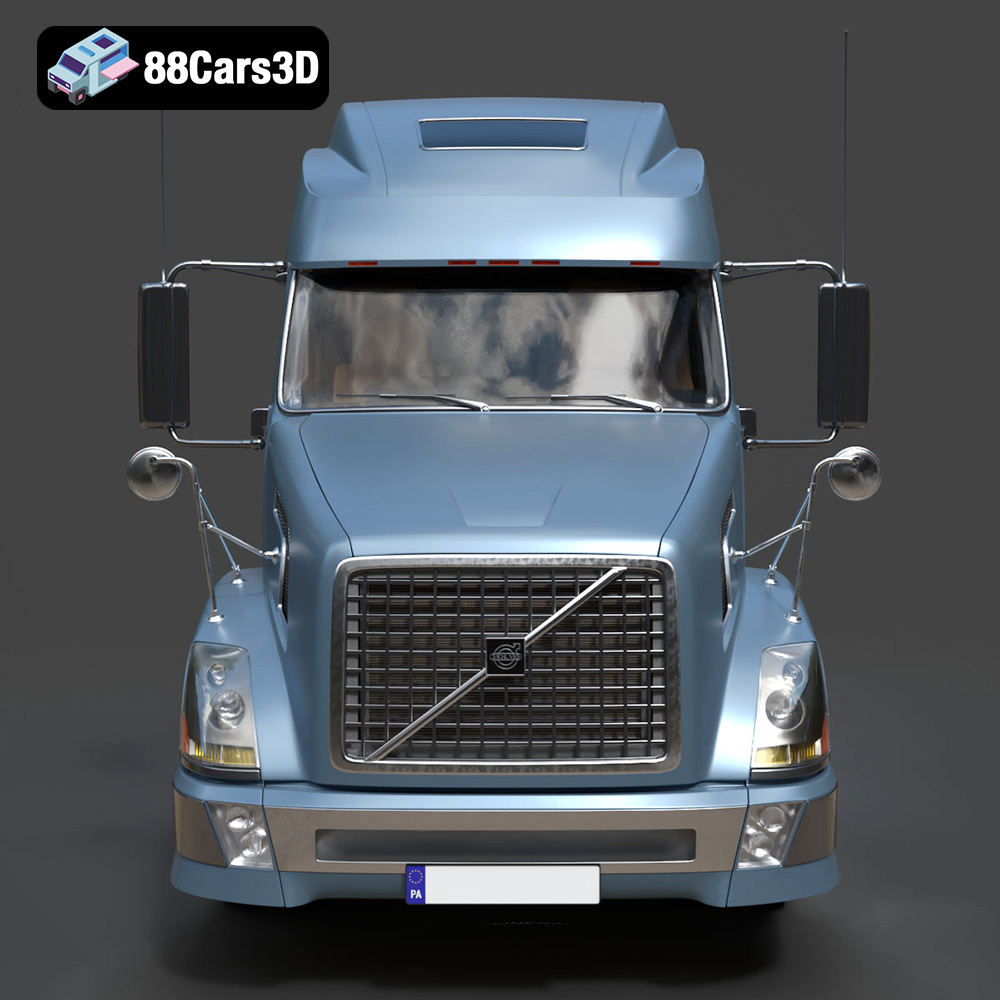
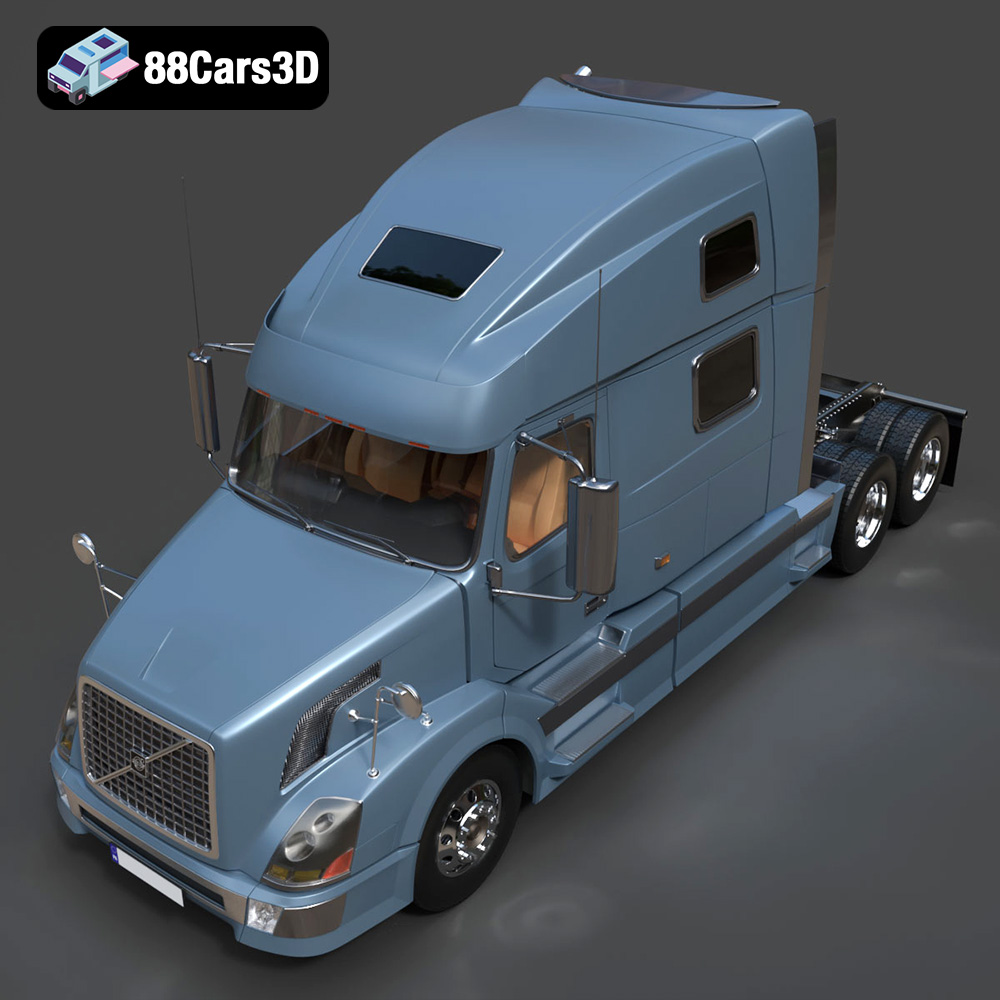
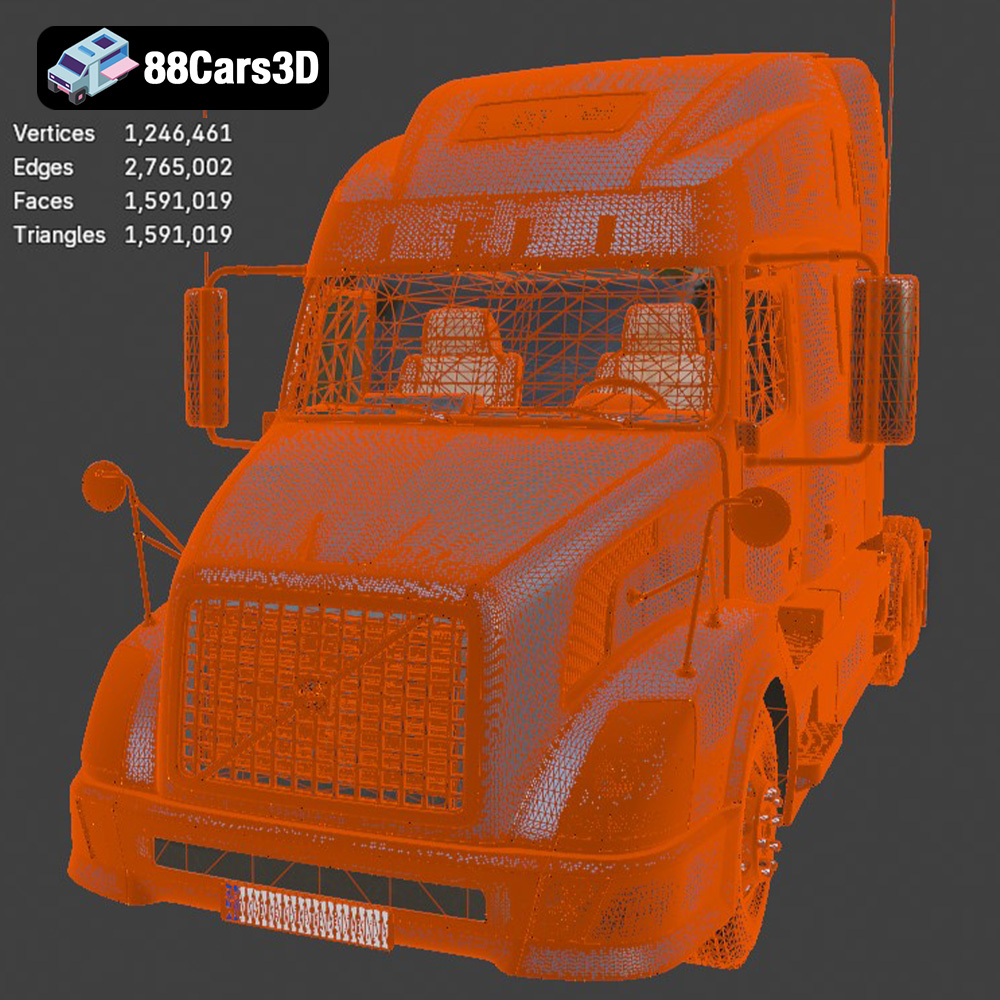
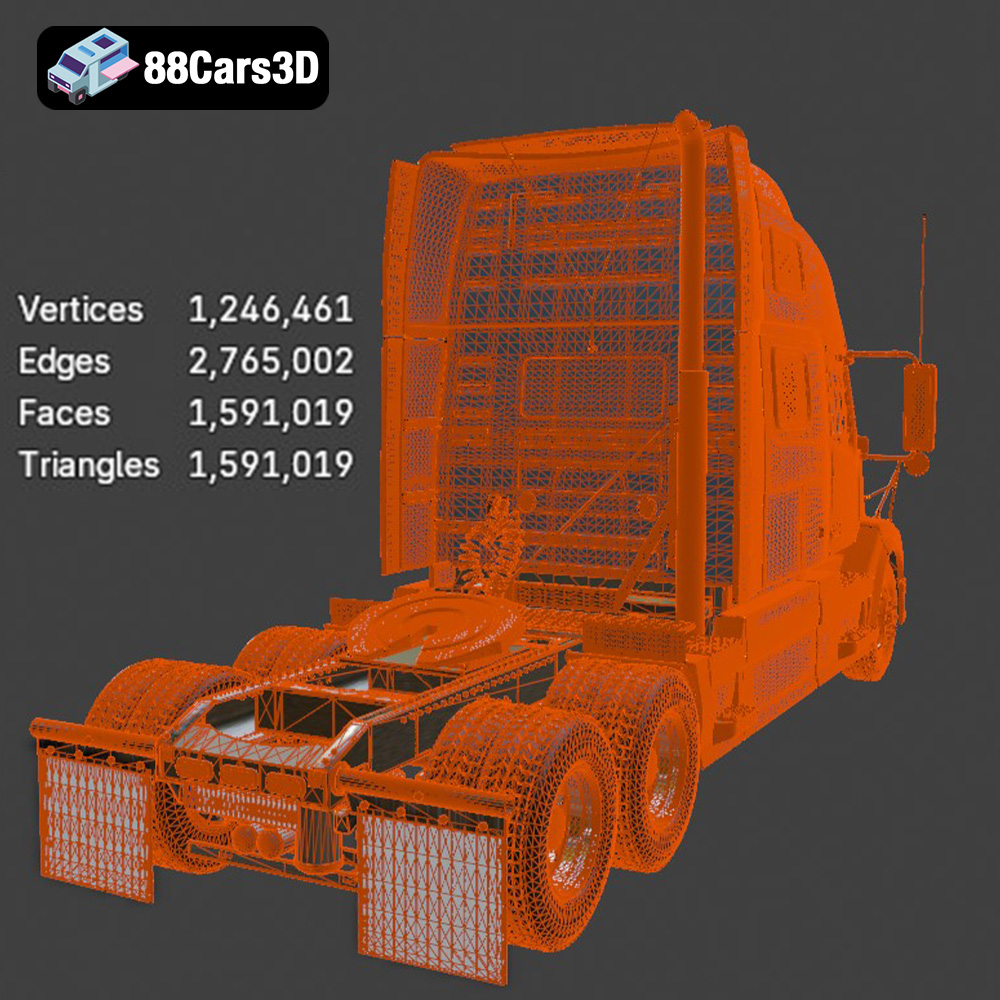
The exterior of the Volvo VNL 3D model is a testament to precision. It accurately captures the iconic aerodynamic cab geometry and proportions that defined the 2002 VNL series. Crucially, the model features a “game-ready & optimized” ~200,000 triangle count. This number strikes a critical balance: it’s high enough to convey stunning visual realism, capturing the distinct sloped hood, prominent grille, and heavy-duty chassis, but low enough to ensure smooth real-time rendering in demanding game engines like Unreal and Unity. This optimization is a hallmark of professional game assets, preventing performance bottlenecks while maintaining visual integrity.
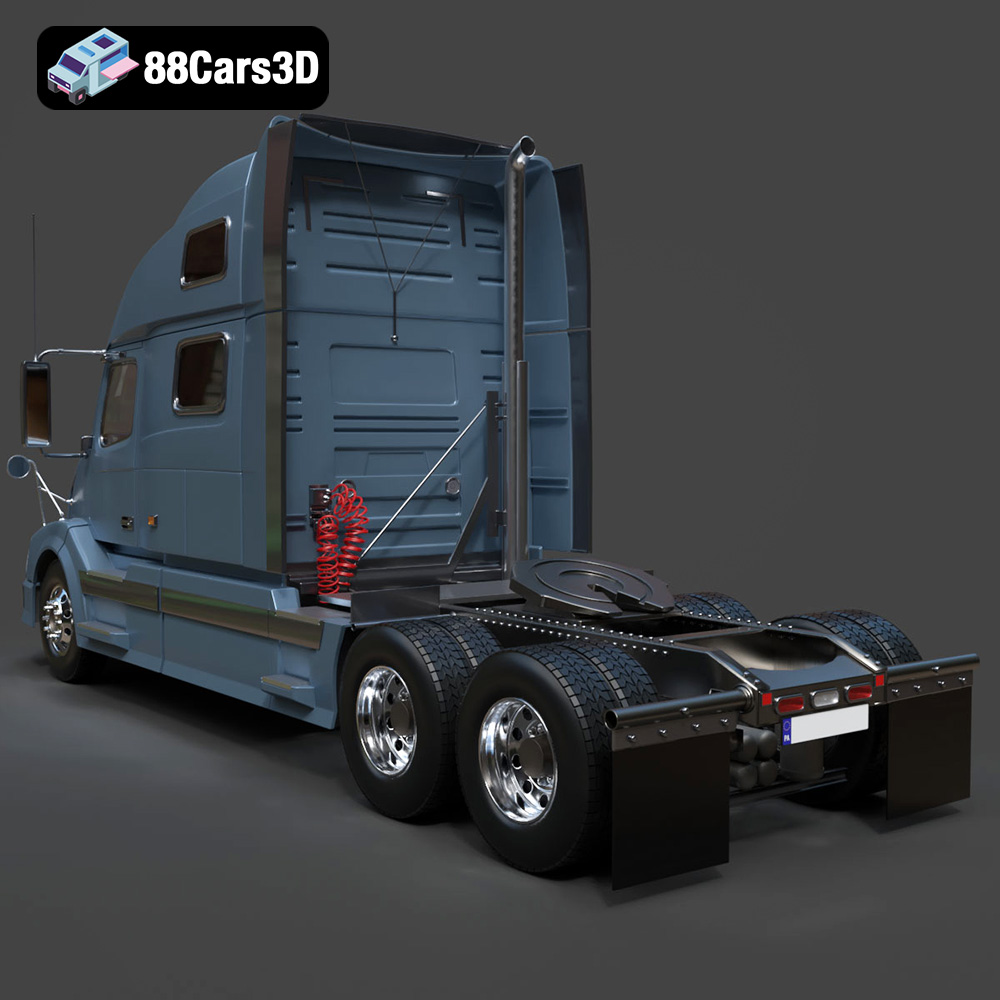
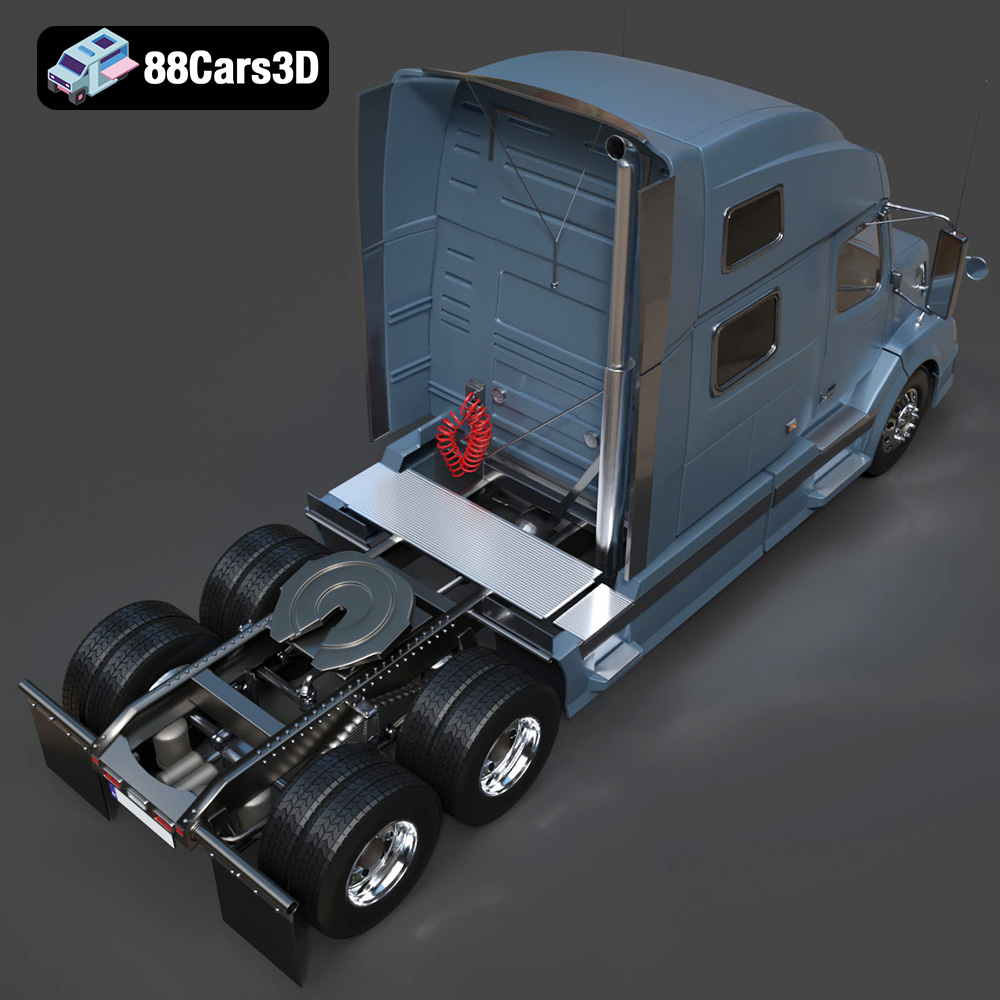
Beyond static beauty, the model is built for motion. Separate components for the wheels, suspension, and steering mean it’s ready for complex animation sequences. The fifth-wheel coupling system, a vital element for any tractor truck, is also detailed and set up with proper pivots for realistic trailer attachment and movement. The dual vertical exhaust stacks, aerodynamic fairings, and accurate lighting details—including large halogen headlights and cab roof markers—all contribute to a believable presence on any virtual highway or industrial scene, making it an ideal asset for automotive rendering scenarios.
While the exterior captivates, a truly immersive 3D car model also delivers inside the cab. The Volvo VNL model includes a detailed driver air-ride seat and a blockout of the spacious sleeper cab. This interior, though optimized, features an authentic heavy-duty commercial steering wheel, a wrap-around instrument cluster with dials and gauges, and accurate control details such as air brake valves and a manual shifter.
This level of interior detail is crucial for projects like trucking simulators, where players spend significant time in a first-person perspective. The optimized geometry ensures that even with a detailed cockpit, performance remains fluid, providing a convincing and interactive environment. For architectural visualization or industrial training, these interior elements can be used for virtual walkthroughs, allowing users to experience the ergonomics and functionality of the truck’s operational space.
The true value of a high-quality 3D asset lies in its seamless integration into diverse professional workflows. The Volvo VNL Tractor Truck 2002 3D Model is designed with this versatility in mind, offering solutions for game developers, rendering artists, and AR/VR specialists alike.
For game developers, the Volvo VNL model is a potent addition to any virtual world. Its “game-ready” optimization and ~200,000 triangle count are perfectly suited for real-time engines. Developers working with Unreal Engine can leverage the dedicated .unreal format for direct, optimized import, or utilize the .fbx format for both Unreal and Unity.
The workflow typically involves importing the model, applying PBR (Physically Based Rendering) materials using the provided textures, setting up collision meshes for realistic interaction with the environment, and configuring Levels of Detail (LODs) to ensure performance scalability across different distances. For vehicle physics, the separate components for wheels, suspension, and steering are invaluable, allowing for authentic driving dynamics in trucking simulators or open-world highway games. This model significantly reduces development time, providing a solid foundation for robust vehicle implementation.
When photorealism is the goal, the Volvo VNL model shines in professional rendering environments. Artists using 3ds Max can utilize the .max format for a fully editable scene, while Blender users can dive into the .blend file. These native formats allow for complete control over lighting, camera angles, and advanced material customization.
The detailed exterior, including the heavy-duty chassis, fifth-wheel, and accurate lighting components, becomes a canvas for stunning automotive rendering. Artists can set up studio lighting for product showcases, integrate the truck into expansive highway scenes, or visualize industrial logistics operations with unparalleled fidelity. The ability to modify tire textures (highway rib vs. traction variants) and adjust material finishes (matte plastics, chrome grilles, metallic paint) allows for highly tailored visual narratives, making it an excellent resource for marketing campaigns or design presentations.
The demand for immersive experiences in AR and VR, as well as interactive 3D content on the web, is rapidly growing. The Volvo VNL’s inclusion of the .glb format makes it perfectly poised for these applications. The self-contained nature of .glb files, embedding all geometry, materials, and textures, allows for easy integration into web-based 3D viewers (e.g., using Three.js or Babylon.js), virtual fleet showrooms, or mobile AR experiences.
Imagine a virtual training configurator where new drivers can explore the VNL’s cockpit in VR, or an interactive AR app that allows a potential buyer to place a full-scale digital Volvo VNL in their driveway using their smartphone. The optimized geometry ensures smooth performance on various devices, providing engaging and accessible interactive 3D content without sacrificing visual quality.
The versatility of the Volvo VNL Tractor Truck 2002 3D Model extends beyond digital screens, venturing into the tangible world of 3D printing. For hobbyists, collectors, or even industrial designers needing physical prototypes, the provision of the .stl format is a significant advantage. This allows creators to bring a scaled-down version of this iconic heavy-duty truck into existence.
The product description for this model, available on 88cars3d.com, provides invaluable guidance for 3D printing, recommending scales like 1:24, 1:32, or 1:43. For achieving the fine details of the VNL, such as the cab roof markers or the grille texture, resin printing is often recommended due to its ability to achieve very thin layer heights (0.04–0.12 mm). FDM printers can also be used, though at slightly larger scales.
Critical print settings include a wall thickness of 1.2–2.0 mm for structural integrity and an infill of 20–30%. Given the truck’s complex geometry, supports are required for overhanging parts like the exhaust stacks, side mirrors, and the intricate fifth-wheel coupling. Strategic print orientation is also advised: the frame printed angled for strength, with the cab and wheels printed separately for optimal detail and easier post-processing. After printing, typical post-processing steps like sanding, priming, and painting with authentic fleet colors or metallic finishes can transform the raw print into a stunning miniature replica, perfect for dioramas or display.
A high-quality 3D asset should not only be accurate but also adaptable. The Volvo VNL Tractor Truck 2002 3D Model offers robust customization options, ensuring it remains a valuable asset for a multitude of projects and evolving creative needs. This inherent flexibility is key to future-proofing your digital investment.
One of the most impactful ways to customize any 3D car model is through its materials and textures. The Volvo VNL model allows for easy modification of body colors, enabling artists to switch from a standard fleet white to vibrant custom company liveries, reflecting branding or specific project requirements. Beyond base colors, material finishes can be adjusted. Imagine the glint of polished chrome on the grille or exhaust stacks, contrasting with the utilitarian matte plastics of the interior, or the lustrous metallic paint of a premium hauling setup. These material tweaks can dramatically alter the perception and application of the model, from a gritty industrial scene to a polished marketing render. The ability to swap out tire textures, from highway rib variants for efficiency to deep traction patterns for rugged environments, further enhances its adaptability.
A 3D model rarely exists in isolation; its environment plays a crucial role in its presentation. The Volvo VNL model’s adaptability extends to its integration within various digital scenes. Lighting can be adjusted to reflect different times of day—a bright, sunlit highway for a daytime haul or dramatic, long shadows under streetlights for a night driving scenario. Weather effects can be simulated, with wet, reflective surfaces adding realism to a rainy scene.
The truck can be placed in diverse settings: a bustling logistics hub, a quiet rest stop, or traversing a vast open-world landscape. Its accurate real-world scale makes it easy to integrate with other architectural or environmental assets, creating cohesive and believable visualizations. This ease of customization and integration ensures that the Volvo VNL 3D model can evolve with your creative vision, providing a durable and dynamic foundation for countless future projects.
In the fast-paced world of 3D content creation, time is a precious commodity. Sourcing pre-made, high-quality 3D car models and game assets can dramatically accelerate development cycles and elevate the visual fidelity of any project. The meticulous detail, optimized topology, and extensive format support of the Volvo VNL Tractor Truck 2002 3D Model exemplify the kind of professional-grade assets that empower creators to focus on their artistic vision rather than spending countless hours on foundational modeling.
When you invest in a premium asset like this, you’re not just buying a digital file; you’re acquiring a ready-to-use solution that has undergone rigorous development and optimization. This ensures consistency, reduces debugging, and guarantees a high standard of realism right out of the box. For developers of trucking simulators, producers of industrial animations, or designers of immersive AR/VR experiences, the cost-effectiveness of integrating a pre-optimized model far outweighs the effort of building one from scratch.
Platforms like 88cars3d.com specialize in curating such exceptional 3D car models, providing a trusted source for artists and developers worldwide. The Volvo VNL Tractor Truck 2002 3D Model stands as a testament to the commitment to quality found on 88cars3d.com, offering an unparalleled asset for anyone looking to bring the power and presence of commercial vehicles to their digital projects.
The Volvo VNL Tractor Truck 2002 3D Model is far more than just a collection of polygons; it’s a meticulously crafted digital asset designed to meet the rigorous demands of modern 3D production. From its game-ready optimization and detailed interior for immersive simulators to its animation readiness and comprehensive file format support, it truly bridges the gap between artistic vision and technical execution. Whether you’re building a cutting-edge game, producing photorealistic automotive renders, crafting engaging AR/VR experiences, or even fabricating physical models via 3D printing, this Volvo VNL offers a versatile and high-performance foundation. Its blend of historical accuracy, technical precision, and adaptability makes it an invaluable addition to any professional’s asset library, streamlining workflows and enhancing output. Explore this exemplary model and other high-quality 3D car models on 88cars3d.com to elevate your next project.
The 2002 Volvo VNL Tractor Truck represents a pivotal era in commercial freight transportation, renowned for its aerodynamic design, exceptional driver comfort, and robust heavy-hauling capabilities. This meticulously crafted 3D model captures the imposing presence of the iconic semi-truck, featuring its signature sloped hood, prominent front grille, distinct dual exhaust stacks, and the spacious sleeper cab architecture that made it an industry standard. Engineered with exceptional attention to detail, this 3D model features game-ready topology with an optimized triangle count that delivers stunning visual fidelity without compromising performance. Designed seamlessly for heavy-duty vehicle simulators, industrial animations, and logistics visualizations, the geometry ensures smooth real-time rendering in major engines while preserving the intricate mechanical details of a true commercial workhorse. Perfect for trucking simulators, highway driving games, industrial freight visualization, and large-scale logistics animations.
$39.99
.blend
.fbx
.glb
.max
.obj
.ply
.rendering
.stl
.unreal
.volvo
2002
car-3d-model
commercial-vehicle
game asset
game-ready
heavy-duty-truck
low-poly
optimized
semi-truck
truck-3d-model
vnl-tractor-truck
VR/AR