Get 20% OFF All Premium 3D & STL Models!

In the dynamic world of digital content creation, from hyper-realistic automotive rendering to immersive game environments and groundbreaking AR/VR experiences, the quality of 3D assets is paramount. Professionals across industries demand models that offer not just visual appeal, but also technical integrity, optimization, and versatility. A meticulously crafted 3D model can be the linchpin of a successful project, ensuring smooth workflows and stunning final outputs. It’s about bringing vision to life with unparalleled detail and performance.
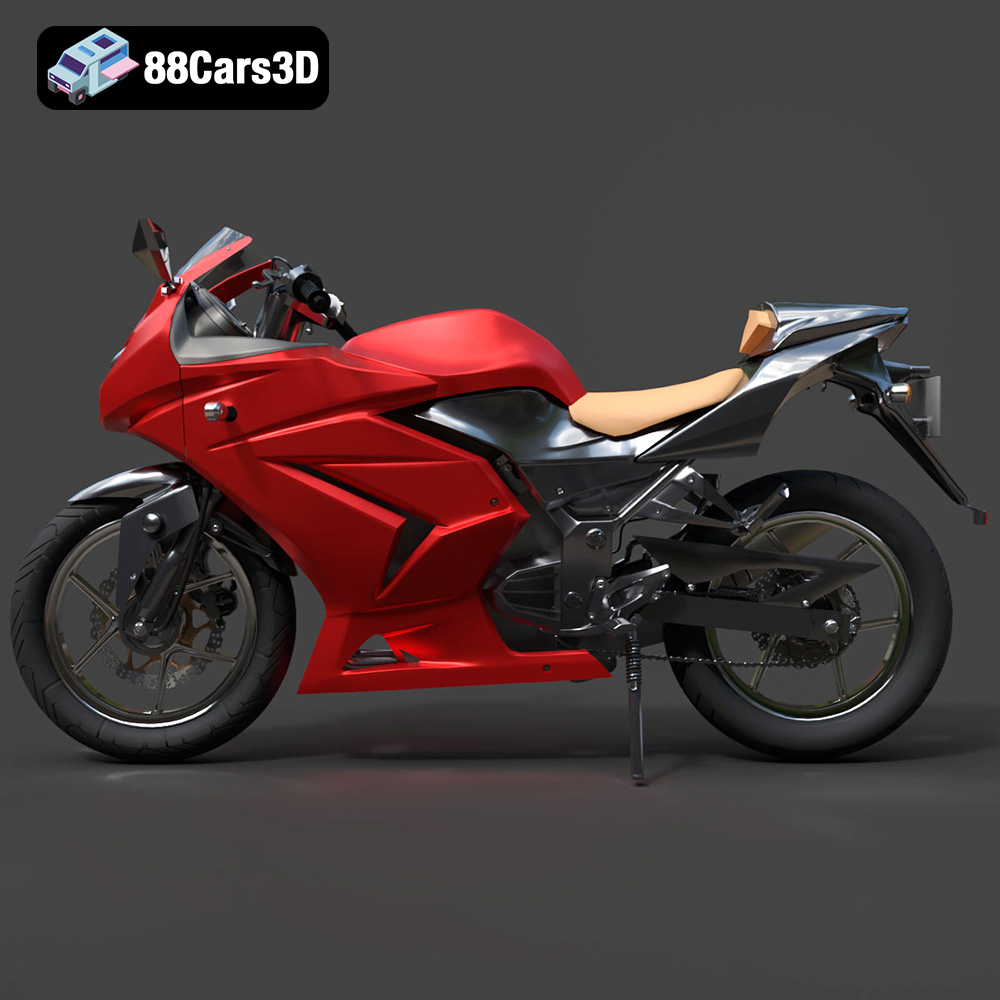
Today, we’re diving deep into what makes a premium 3D vehicle model truly stand out, using a prime example of digital craftsmanship: the Kawasaki Ninja 3D Model. This asset embodies the blend of artistic fidelity and technical optimization that professionals seek, capturing the legendary sportbike’s aggressive lines and high-performance spirit. Its design and included features make it an ideal foundation for a multitude of applications, setting a high bar for excellence in 3D vehicle asset development.
The journey of any 3D model, from concept to final render or game integration, relies heavily on its file format. Each format serves distinct purposes, catering to different software ecosystems, workflows, and end-user applications. Understanding these formats is crucial for any professional working with 3D assets, as selecting the right one can dramatically impact compatibility, performance, and the fidelity of your project. The Kawasaki Ninja 3D Model, available on 88cars3d.com, exemplifies this versatility by offering a comprehensive suite of formats, ensuring its adaptability across virtually any professional pipeline.
The .blend format is the native file type for Blender, the powerful open-source 3D creation suite. When you acquire a .blend file, you’re getting a fully editable Blender scene, complete with all mesh data, materials, textures, lighting setups, camera information, and even animation data. This makes it incredibly valuable for artists and studios that primarily use Blender, offering maximum flexibility for customization, rigging, and rendering. For the Kawasaki Ninja 3D Model, the .blend file provides a complete, ready-to-tweak project file, ideal for those who want to delve into the model’s intricate structure and tailor it extensively within Blender.
.fbx (Filmbox) is arguably the most widely adopted proprietary file format for 3D data exchange, developed by Autodesk. It’s a binary file format that can store entire 3D scenes, including models, animation, cameras, and lights. Its strength lies in its excellent compatibility with a vast array of 3D software (including Autodesk products like 3ds Max and Maya), game engines like Unreal Engine and Unity, and real-time pipelines. For game development, .fbx is often the go-to choice due to its robust support for mesh data, animation, and PBR (Physically Based Rendering) materials, making it perfect for bringing the Kawasaki Ninja 3D Model into any modern game environment.
The .obj (Wavefront OBJ) format is a simple, text-based file format for representing 3D geometry. It’s a universal standard, highly compatible across almost all 3D software applications. While it primarily stores mesh data (vertices, normals, texture coordinates), it typically references external .mtl (Material Template Library) files for material definitions and texture paths. Its simplicity ensures excellent cross-software compatibility, making it a reliable choice for basic model exchange when complex scene data or animations aren’t required. The .obj version of the Kawasaki Ninja 3D Model guarantees it can be opened and worked with in virtually any 3D package.
.glb (GL Transmission Format Binary) is the binary version of glTF, a royalty-free specification for the efficient transmission and loading of 3D scenes and models by applications. It’s often referred to as the “JPEG for 3D” due to its optimization for performance-critical applications, particularly in augmented reality (AR), virtual reality (VR), and browser-based display (WebGL). A .glb file bundles the 3D model, textures, and animations into a single, compact file, making it incredibly easy to share and integrate into web applications or mobile AR/VR experiences. The Kawasaki Ninja 3D Model in .glb format is tailor-made for interactive virtual showrooms or mobile AR apps.
.stl (Stereolithography) is the de facto standard file format for 3D printing and rapid prototyping. It represents a 3D model as a series of connected triangles (a tessellated mesh), defining only the surface geometry of the object without color, texture, or other CAD attributes. While simple, its ubiquity in the 3D printing world makes it indispensable. The Kawasaki Ninja 3D Model’s availability in .stl format means it’s ready to be sent to a 3D printer, allowing enthusiasts and professionals to create physical replicas, a unique offering from 88cars3d.com for hobbyists and prototypers alike.
The .ply (Polygon File Format or Stanford Triangle Format) is a versatile format often used for storing 3D data from 3D scanners, CAD applications, and other precision-focused workflows. It can store not only the geometry but also color, transparency, and even normal vectors for each vertex or face. While less common for general 3D asset exchange than .fbx or .obj, its ability to handle detailed point cloud data and complex mesh properties makes it valuable for specific engineering, architectural, or analytical applications, ensuring the Kawasaki Ninja 3D Model can be integrated into such niche workflows.
The .unreal file designation typically refers to assets specifically prepared and optimized for direct import or use within Unreal Engine. This could mean a pre-packaged Unreal Engine asset, a Ue project file, or an .fbx file meticulously configured with materials, collision, and LODs (Levels of Detail) that adheres strictly to Unreal Engine’s import guidelines. An “.unreal” file for the Kawasaki Ninja 3D Model signifies that it’s designed for seamless integration, minimizing setup time and maximizing performance within real-time environments, making it game-ready out of the box.
Similar to .blend for Blender, the .max format is the native file type for Autodesk 3ds Max, a leading software for 3D modeling, animation, rendering, and visualization. A .max file contains the complete scene data, including all geometry, textures, materials, lighting, cameras, animation keyframes, and modifiers. For users entrenched in the 3ds Max ecosystem, this format offers the highest level of editability and ensures that all project settings and complex scene setups are preserved. The .max file for the Kawasaki Ninja 3D Model provides maximum flexibility for 3ds Max users to modify, animate, and render the model within their preferred software environment.
Beyond mere aesthetics, the true value of a premium 3D model lies in its technical specifications and underlying structure. The Kawasaki Ninja 3D Model is a testament to this philosophy, meticulously engineered to deliver both visual fidelity and optimal performance. Its design philosophy directly addresses the demands of various professional applications, from high-end rendering to real-time interactive experiences.
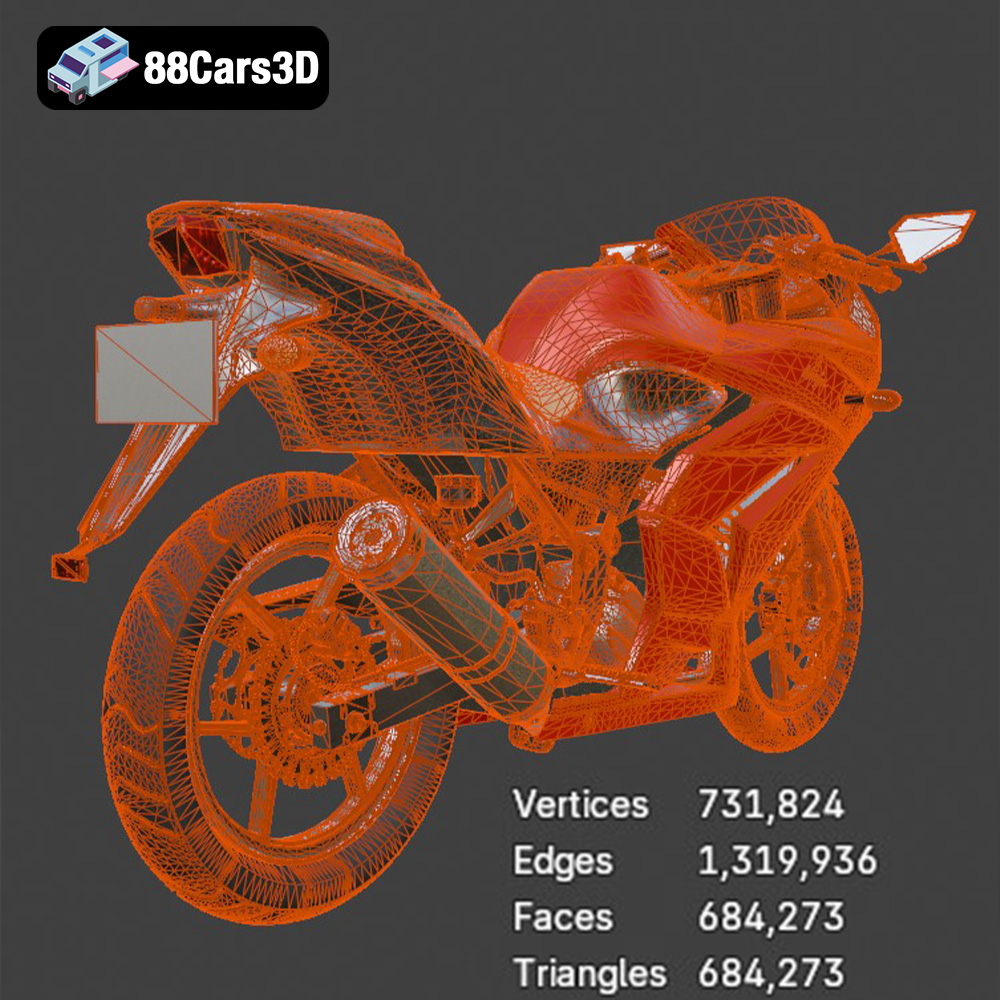
One of the most critical aspects of any 3D asset, especially for game development and real-time applications, is its topology and polygon count. The Kawasaki Ninja 3D Model boasts an optimized topology with approximately 150,000 triangles. This figure represents a carefully calculated balance: it’s high enough to capture the nuanced curves and intricate details of the Ninja’s aggressive styling – from its dual-headlight fascia to its muscular fairings and detailed inline-four engine – yet low enough to ensure efficient processing in game engines like Unreal and Unity. This “game-ready” optimization is crucial, preventing performance bottlenecks while maintaining high-end visual realism. Each polygon serves a purpose, contributing to the model’s authentic silhouette without introducing unnecessary computational overhead.
Faithful recreation of a real-world object demands an obsessive attention to detail and adherence to real-world scale. The Kawasaki Ninja 3D Model excels in this regard. Its geometry accurately reflects the genuine Kawasaki Ninja frame proportions and dimensions, ensuring that any render or simulation will be true to life. Key exterior features, such as the sport-tuned upswept exhaust system with realistic metallic shading, high-performance alloy wheels, sport-compound tires, telescopic front forks, and rear monoshock suspension, are all intricately modeled. Crucially, components like wheels, suspension, and steering are separated with proper pivot setups, enabling realistic animation of wheel rotation, steering, and suspension travel. The cockpit doesn’t disappoint either, featuring an ergonomic split-seat design, clip-on handlebars with integrated switchgear, a digital/analog hybrid instrument cluster, and adjustable rearset footpegs. This level of granular detail, combined with optimized geometry, is ideal for first-person POV in gaming, allowing for truly immersive experiences.
The true measure of a high-quality 3D asset like the Kawasaki Ninja 3D Model lies in its seamless integration into diverse professional workflows. Its multi-format availability and optimized structure make it a versatile tool for various industries.
For game developers, time and performance are of the essence. The Kawasaki Ninja 3D Model, with its game-ready ~150,000 triangle count and .fbx / .unreal file formats, is an ideal asset for open-world games, racing titles, and simulators. In Unreal Engine, developers can import the .fbx or .unreal asset, which comes with pre-set pivots for animation, making it easy to rig for physics-based vehicle systems. High-quality PBR materials ensure that the bike reacts realistically to various lighting conditions within the game engine. Similarly, Unity users can leverage the .fbx for straightforward import and integration into their game projects, quickly populating urban environments or track layouts with this iconic sportbike. Its optimized polycount means multiple instances can be used without significantly impacting frame rates, a critical factor for large-scale games.
For artists and studios focused on automotive rendering and visualization, precision and photorealism are paramount. The Kawasaki Ninja 3D Model, available in .max and .blend formats, provides a complete scene for direct manipulation within Autodesk 3ds Max and Blender, respectively. Designers can leverage these editable files to fine-tune lighting, camera angles, and material properties to achieve stunning, marketing-ready renders. Imagine the Ninja in a dramatic studio lighting setup, showcasing its metallic finishes, or placed within a vibrant urban street scene. The detailed engine block and suspension components are perfect for close-up shots in promotional videos or product configurators, highlighting engineering excellence. The .obj format also offers a universally compatible option for integration into other rendering pipelines like Cinema 4D or Maya, ensuring maximum flexibility for studio projects.
The burgeoning fields of Augmented Reality (AR) and Virtual Reality (VR) demand highly optimized assets that can perform smoothly on various devices. The Kawasaki Ninja 3D Model in .glb format is specifically designed for this purpose. Its compact, single-file nature makes it perfect for fast loading in immersive virtual showrooms, where potential customers can explore the bike in 360 degrees, or for mobile AR applications, allowing users to place the digital model in their real-world environment. For web-based configurators or interactive product displays, the .glb format integrates seamlessly with WebGL libraries, offering an engaging user experience directly through a browser. This versatility makes the model a valuable asset for virtual training simulations, interactive product demos, or innovative marketing campaigns.
The utility of a premium 3D model isn’t confined to digital screens. For hobbyists, designers, and engineers, the ability to transition a digital asset into a physical object opens up new avenues for creation and exploration. The Kawasaki Ninja 3D Model caters to this demand with its inclusion of the .stl format, making it suitable for 3D printing.
When preparing a complex 3D model like a motorcycle for 3D printing, specific considerations come into play. The Kawasaki Ninja 3D Model is designed with this in mind, offering a robust mesh that translates well to physical output. Recommended scales (1:12, 1:18, 1:24) provide a balance between detail retention and manageable print size. For optimal results, especially for fine details such as the exhaust, mirrors, and handlebars, resin printing is recommended, allowing for layer heights as low as 0.04–0.12 mm. This precision ensures that even the smallest elements of the Ninja’s intricate design are accurately reproduced. Careful attention to wall thickness (1.2–2.0 mm) and infill (20–30%) ensures structural integrity, while print orientation (frame angled, wheels separate) helps to minimize print failures and improve overall strength.
The journey from a raw 3D print to a display-worthy model involves a skilled post-processing phase. For the Kawasaki Ninja 3D Model, this can include sanding to smooth out layer lines, applying a primer coat for better paint adhesion, and finally, painting with authentic factory colors and metallic finishes. Hobbyists can truly bring their miniature Ninja to life by mimicking the iconic lime green, metallic black, or other distinctive color schemes. The separate parts, such as wheels and steering components, not only facilitate animation in the digital realm but also simplify the painting and assembly process for physical models, allowing for cleaner lines and more intricate detailing. This tangible aspect of 3D printing adds another layer of value to an already versatile digital asset.
A truly professional 3D asset offers more than just out-of-the-box excellence; it provides a robust foundation for extensive customization. The Kawasaki Ninja 3D Model is built with this flexibility in mind, allowing artists and designers to adapt it to a wide array of project requirements and creative visions. This adaptability is key for agencies, studios, and individual creators who need to maintain unique branding or fit specific aesthetic demands.
The ability to easily modify key visual attributes is critical for many projects. With the Kawasaki Ninja 3D Model, customization options are readily available. Users can effortlessly change body and tank colors to match specific brand campaigns, custom liveries, or even historical racing schemes. This means the model can be integrated into diverse marketing materials, from sleek corporate presentations to vibrant lifestyle advertisements, all while maintaining its iconic form. Adjusting material finishes—switching between matte, gloss, or metallic looks—can dramatically alter the perception of the bike, allowing for tailored visual storytelling. For instance, a matte black finish might convey stealth and aggression, while a high-gloss metallic red might evoke speed and passion.
Beyond static renders, the Kawasaki Ninja 3D Model’s separated parts and adaptable materials are invaluable for interactive applications. In a virtual configurator, for example, users could dynamically swap out tire textures (e.g., street variants for daily riding simulations versus off-road variants for an adventure game concept) or apply custom decal sets. The ability to adjust lighting for different environments further enhances its versatility; a realistic studio setup can be transitioned to a moody, rain-soaked street scene or a sun-drenched race track with ease. This dynamic adaptability ensures that the model remains relevant and engaging across a wide spectrum of interactive experiences, from real-time product showcases to expansive virtual worlds, providing endless possibilities for creative expression and user engagement.
In summary, the demand for high-quality, technically sound 3D models continues to grow across industries. From the high-stakes world of game development and cinematic rendering to the innovative frontiers of AR/VR and 3D printing, professionals require assets that are not only visually striking but also optimized for performance and incredibly versatile.
The Kawasaki Ninja 3D Model stands as a prime example of such an asset. Its meticulous detailing, optimized polycount, real-world scale, and comprehensive suite of included file formats (.blend, .fbx, .obj, .glb, .stl, .ply, .unreal, .max) ensure it fits seamlessly into virtually any professional workflow. Whether you’re crafting an immersive racing simulation, producing a photorealistic automotive rendering, designing an interactive AR experience, or even 3D printing a scale model, this asset provides the foundation for exceptional results. It embodies the precision and flexibility that modern digital artists and developers expect, making complex projects more manageable and outputs more impactful.
For those seeking to elevate their projects with premium 3D car models and vehicle assets that meet the highest standards of technical excellence and artistic fidelity, 88cars3d.com offers a curated selection designed to empower your creative vision. The Kawasaki Ninja 3D Model is just one example of the quality and versatility you can expect from their marketplace, providing the tools you need to build stunning digital worlds and experiences.
The Kawasaki Ninja is a legendary nameplate in the world of sportbikes, known for its aggressive styling, track-focused performance, and cutting-edge aerodynamics. This 3D model accurately captures the sleek profile, dual-headlight fascia, and muscular fairings that define the Ninja’s iconic silhouette. From the detailed inline-four engine to the upswept exhaust system, every element has been faithfully recreated to showcase its racing heritage.
This 3D model boasts optimized topology and a game-ready triangle count, delivering exceptional visual fidelity without compromising real-time performance. Designed for maximum versatility, it features high-quality materials and distinct separated parts, making it an ideal asset for game development, AR/VR experiences, high-end animation, and product visualization.
Perfect for high-speed racing simulations, urban environment renders, virtual showrooms, and promotional videos.
.blend, .fbx, .obj, .glb, .stl, .ply, .unreal, .max
Tags:
kawasaki, ninja, sports-bike, superbike, game-ready, low-poly, optimized, motorcycle-3d-model, game-asset, rendering, vr-ar, blend, fbx, obj, glb, stl, ply, unreal, maxVespa VNB 125-B 3D Model 3D Printable STL
$39.99
.blend
.fbx
.glb
.kawasaki
.max
.ninja
.obj
.ply
.rendering
.stl
.superbike
.unreal
game asset
game-ready
low-poly
motorcycle-3d-model
optimized
sports-bike
VR/AR