Get 20% OFF All Premium 3D & STL Models!

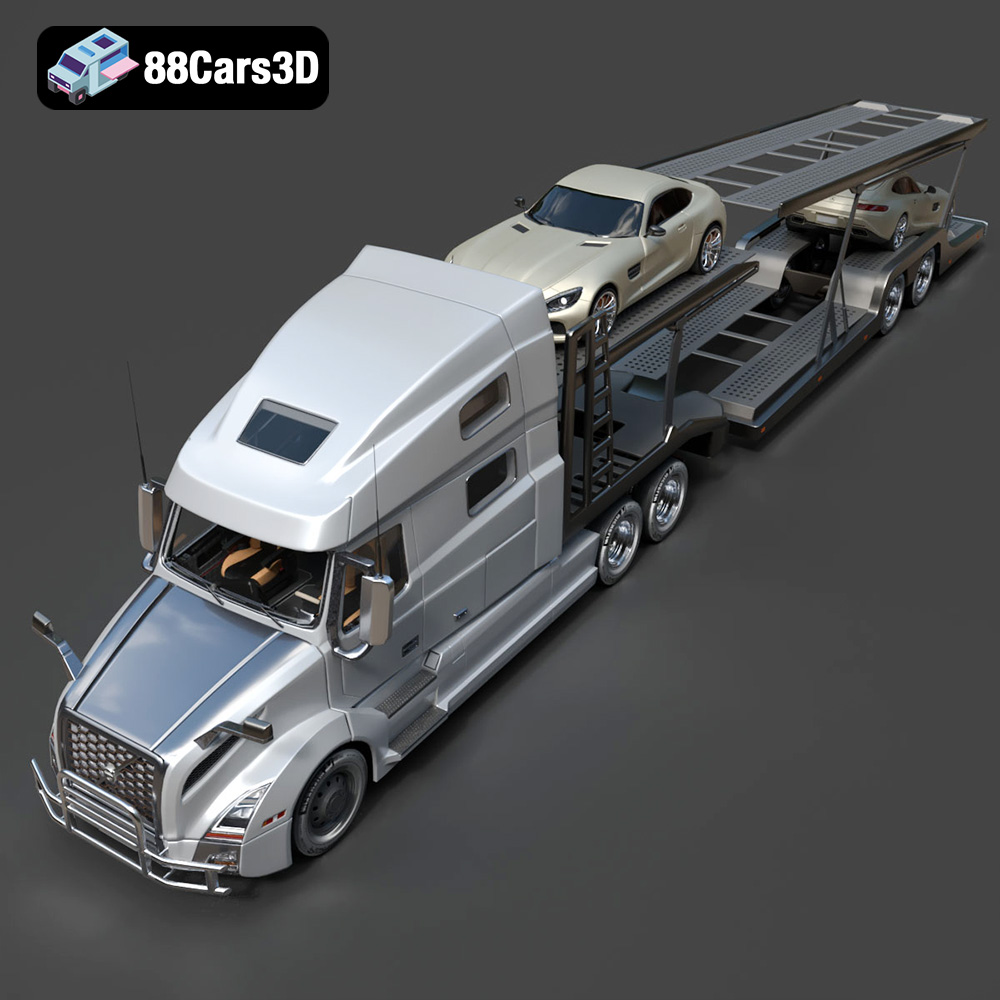
The Volvo Trucks Benz GT-001 3D model, available at 88cars3d.com, is a fantastic example of how digital design translates into the physical world through 3D printing. This intricately detailed model offers a unique opportunity to explore the capabilities of your 3D printer and create a tangible representation of a modern concept truck. This blog post will guide you through the process of successfully 3D printing this model, covering everything from pre-print preparation to post-processing techniques. Whether you’re a seasoned 3D printing enthusiast or a beginner looking to tackle a challenging project, this guide will provide the knowledge and insights you need to bring the Volvo Trucks Benz GT-001 to life.
Before you even load the STL file into your slicer, proper preparation is key. This stage involves inspecting the model, making any necessary repairs, and choosing the right orientation for optimal print quality.
The first step is to thoroughly inspect the downloaded STL file using software like Meshmixer, Netfabb, or even your slicer’s built-in repair tools. Look for non-manifold edges, holes, or inverted normals. These errors can lead to print failures or artifacts in the final product. Repairing these issues ensures a smooth and error-free printing process. For instance, Meshmixer offers an “Auto Repair” function that automatically detects and fixes common mesh problems. If your slicer allows, use its mesh analysis tools to identify problematic areas before slicing.
Orientation is critical for maximizing print quality and minimizing the need for supports. For the Volvo Trucks Benz GT-001, consider printing the cab section with the roof facing upwards. This minimizes the number of supports needed on the exterior surfaces, preserving detail and reducing post-processing effort. The chassis can be printed on its side to maximize bed adhesion and structural integrity. Experiment with different orientations within your slicing software to visualize the support structure and choose the option that best balances detail, support usage, and print time.
Before printing, decide on the desired scale of your model. The Volvo Trucks Benz GT-001 3D model can be scaled up or down to suit your needs. However, consider the limitations of your printer’s build volume and the potential for increased print times and material consumption when scaling up. If you intend to assemble multiple parts, ensure that all components are scaled uniformly to maintain proper fit and proportions. Keep in mind that scaling down too much can result in loss of fine details, especially with FDM printing.
Choosing the right file format is crucial for a smooth 3D printing workflow. While the Volvo Trucks Benz GT-001 model is available in multiple formats, some are better suited for 3D printing than others. Understanding the nuances of each format ensures compatibility, optimal mesh quality, and ultimately, a successful print.
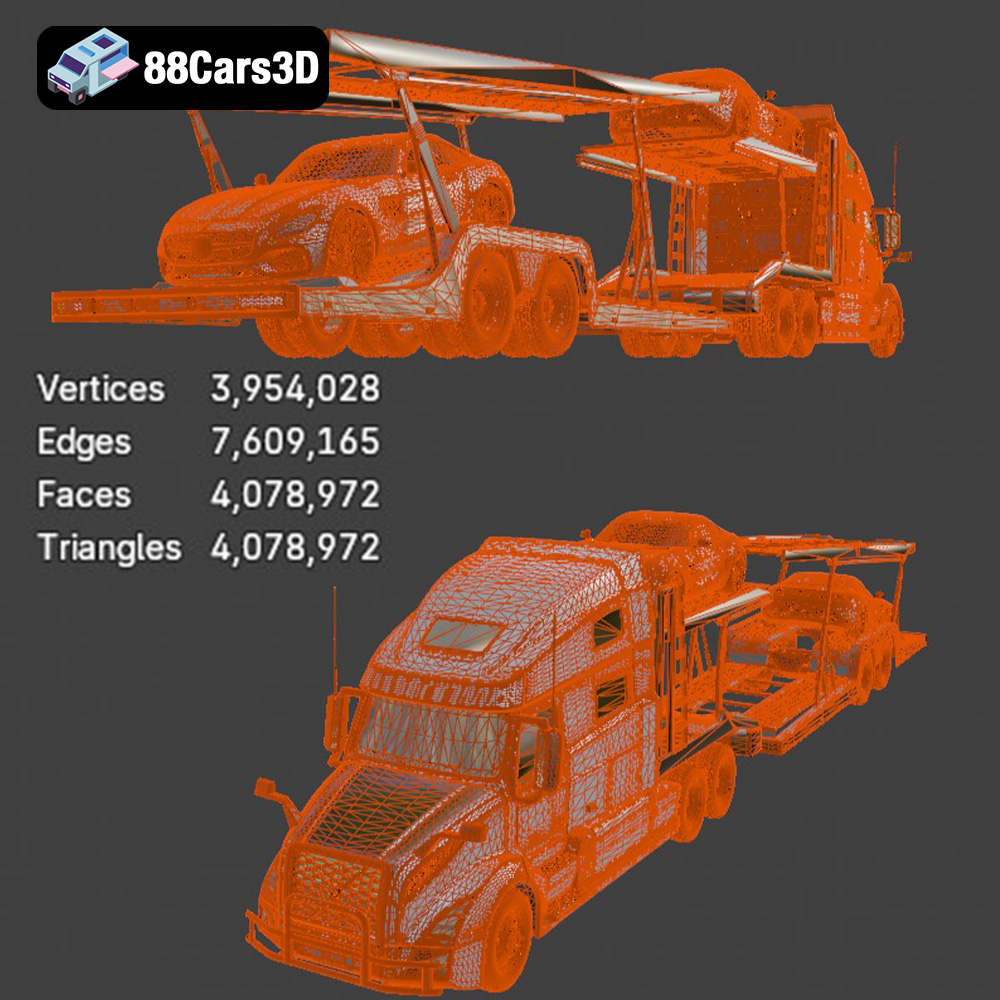
The .stl (Stereolithography) file format is the de facto standard for 3D printing. It represents the 3D model’s surface geometry as a collection of triangles. This simplicity makes it universally compatible with virtually all 3D printing software and hardware. When preparing the Volvo Trucks Benz GT-001 for 3D printing, the STL format is your go-to choice. However, it’s essential to understand that STL files only contain mesh data and lack color or texture information. For the Volvo Trucks Benz GT-001, this means the STL will be a single-color print unless you apply post-processing techniques like painting. The quality of an STL file depends heavily on the number of triangles used to represent the model. A higher triangle count results in a smoother surface but also increases file size and processing time. 88cars3d.com ensures that their STL files are optimized for 3D printing with a balance between detail and file size. Before slicing, always check the STL file for errors and repair them if necessary, as mentioned earlier.
While less common for direct 3D printing than STL, the .obj (Wavefront Object) format offers the advantage of supporting color and texture information. This can be beneficial if you plan to use a multi-material or full-color 3D printer, although this is rare for hobbyists. If you want to add custom textures or colors to the Volvo Trucks Benz GT-001, you might consider using the OBJ format during the design phase. However, most slicers will disregard the color information for standard single-material prints.
The .ply (Polygon File Format) is another mesh format capable of storing color and texture data, and it is often used for storing data from 3D scanners. It’s less common for 3D printing compared to STL, but it can be useful for highly detailed models where preserving intricate surface information is paramount. However, ensure your slicing software fully supports the PLY format before using it.
Formats like .blend (Blender), .fbx (Filmbox), .glb (GL Transmission Format), and .max (3ds Max) are primarily used for 3D modeling, animation, and game development. These formats contain much more information than just mesh data, including materials, lighting, animation rigs, and scene setups. While you can’t directly 3D print these files, they are invaluable for customizing the Volvo Trucks Benz GT-001 model before exporting it as an STL. For example, you could modify the model in Blender (.blend) to add custom details or split it into separate parts for easier printing and assembly. Once you’ve made your changes, export the modified model as an STL file for 3D printing. The .fbx and .glb formats are useful for previewing the model with materials and textures in various applications before printing. 88cars3d.com provides these various formats to give you maximum flexibility over how you use the model.
Slicing software is the bridge between your 3D model and your 3D printer. It converts the STL file into a series of instructions (G-code) that the printer can understand. The choice of slicing software and its settings significantly impact the final print quality.
Popular slicing software options include Cura, PrusaSlicer, Simplify3D, and IdeaMaker. Cura and PrusaSlicer are excellent free options with a wide range of features and support for various printers. Simplify3D is a paid option known for its advanced control and customization options. IdeaMaker is a free option from Raise3D, particularly well-suited for their printers but compatible with others as well. Experiment with different slicers to find the one that best suits your needs and printer. For the Volvo Trucks Benz GT-001, Cura and PrusaSlicer are recommended for their ease of use and robust support settings.
Several key parameters in your slicing software directly affect the print quality and success rate. Layer height determines the resolution of the print; a lower layer height results in a smoother surface but increases print time. For the Volvo Trucks Benz GT-001, a layer height of 0.1mm to 0.2mm is recommended for a good balance between detail and print time. Infill density affects the strength and weight of the print; a higher infill density results in a stronger but heavier model. For a display model like the GT-001, an infill density of 15-20% is usually sufficient. Print speed impacts both print time and quality; a slower print speed generally results in better quality but increases print time. Experiment with different speeds to find the optimal balance for your printer and material. Support settings are crucial for overhangs and complex geometries. Use support structures strategically to minimize their impact on the visible surfaces of the model.
The Volvo Trucks Benz GT-001 model likely contains overhangs that will require support structures. Most slicing software offers automatic support generation, but it’s often beneficial to manually adjust the support placement to minimize material usage and improve surface finish. Focus on supporting areas like the roof of the cab, the wheel arches, and any other significant overhangs. Use dissolvable supports (PVA) if you have a dual-extrusion printer for easier removal and a cleaner finish. Optimize support settings such as support density, support angle, and support interface layer to balance support strength and ease of removal.
The choice of material significantly affects the final appearance, strength, and durability of your 3D printed Volvo Trucks Benz GT-001. Consider the intended use of the model when selecting your filament.
PLA (Polylactic Acid) is a biodegradable thermoplastic polymer derived from renewable resources like corn starch or sugarcane. It’s easy to print with, has low warping, and produces a smooth surface finish. PLA is an excellent choice for beginners and for creating visually appealing display models like the Volvo Trucks Benz GT-001. However, PLA is not very heat-resistant and can become brittle over time, so it’s not ideal for functional parts or outdoor use. PLA typically requires a printing temperature of 190-220°C and a bed temperature of 50-60°C.
PETG (Polyethylene Terephthalate Glycol-modified) is a modified version of PET, the plastic used in water bottles. It offers a good balance of strength, flexibility, and heat resistance. PETG is more durable than PLA and less prone to warping than ABS. It’s a good choice for parts that need to withstand some stress or heat. PETG typically requires a printing temperature of 220-250°C and a bed temperature of 70-80°C. It might require slightly more tuning of retraction settings than PLA to avoid stringing.
ABS (Acrylonitrile Butadiene Styrene) is another common 3D printing filament known for its strength and heat resistance. However, ABS is more difficult to print with than PLA or PETG, as it’s prone to warping and requires a heated enclosure. Resin printing (SLA/DLP) offers the highest level of detail and surface finish but is more expensive and requires more post-processing. For the Volvo Trucks Benz GT-001, resin printing would be ideal for capturing the intricate details of the model, but it’s generally more suitable for experienced users due to the complexities of resin printing. Specialty filaments like carbon fiber-reinforced PLA or TPU (flexible filament) can also be used for specific applications, but they may require specialized printer setups and settings.
Achieving a successful 3D print of the Volvo Trucks Benz GT-001 requires careful attention to print settings. These settings will vary depending on your printer, material, and desired print quality.
The optimal printing temperature will depend on the material you choose. Refer to the filament manufacturer’s recommendations for the recommended temperature range. Experiment with small temperature adjustments to fine-tune the print quality. Print speed also plays a crucial role. A slower print speed generally results in better quality but increases print time. For PLA, a print speed of 40-60 mm/s is a good starting point. For PETG, you might need to reduce the speed to 30-50 mm/s to avoid stringing.
Stringing occurs when molten filament oozes from the nozzle during travel moves, leaving thin strands of plastic between different parts of the print. To prevent stringing, adjust the retraction settings in your slicing software. Retraction involves pulling the filament back into the nozzle during travel moves. Increase the retraction distance and retraction speed to minimize stringing. Also, ensure that your nozzle temperature is not too high, as this can also contribute to stringing.
Good bed adhesion is essential for preventing warping and ensuring that the print sticks to the build plate. Clean the build plate thoroughly with isopropyl alcohol before each print. Use a bed adhesive like glue stick or hairspray to improve adhesion, especially with materials like ABS or PETG. Ensure that the bed is properly leveled and that the nozzle is at the correct distance from the bed. A slightly squished first layer is usually a good indicator of proper bed adhesion.
Post-processing is the final stage in the 3D printing process, where you refine the printed parts to achieve the desired appearance and functionality. This may involve removing supports, sanding, painting, and assembling multiple parts.
Carefully remove the support structures from the printed parts. Use pliers, cutters, or a sharp knife to remove the supports without damaging the model. For dissolvable supports, simply soak the parts in water until the supports dissolve. Once the supports are removed, use sandpaper to smooth any rough areas or blemishes on the surface of the model. Start with a coarse grit sandpaper (e.g., 220 grit) and gradually move to finer grits (e.g., 400, 600, 800 grit) for a smooth finish.
Painting can enhance the appearance of your 3D printed Volvo Trucks Benz GT-001 and make it look more realistic. Apply a primer coat to the model to create a smooth and uniform surface for the paint to adhere to. Use acrylic paints or spray paints designed for plastics. Apply multiple thin coats of paint rather than one thick coat to avoid drips and runs. Consider using masking tape to create clean lines and sharp edges. After painting, apply a clear coat to protect the paint and add a glossy or matte finish.
If the Volvo Trucks Benz GT-001 model consists of multiple parts, assemble them carefully using glue or screws. Ensure that the parts fit together properly and that the assembly is strong and stable. Add any final details or embellishments, such as decals, stickers, or custom parts, to complete the model. With careful post-processing, your 3D printed Volvo Trucks Benz GT-001 will be a stunning display piece.
Discover exceptional digital realism with the Volvo Trucks Benz GT-001 3D Model, crafted for professionals seeking precision and accuracy in vehicle design. This model captures the robust presence and intricate aesthetic of the original vehicle, providing an incredible asset for your digital environment.
$39.99
.arvr
.benz
.blend
.car3dmodel
.commercialvehicle
.concepttruck
.fbx
.gameasset
.glb
.gt001
.max
.obj
.ply
.rendering
.simulation
.stl
.truck
.unreal
.volvo
.volvotrucks