Get 20% OFF All Premium 3D & STL Models!

In the dynamic realm of 3D content creation, the demand for exceptionally detailed and technically sound automotive assets has never been higher. From breathtaking cinematic renders and hyper-realistic game environments to immersive AR/VR experiences and even precise 3D prints, the quality of a 3D model forms the bedrock of any successful project. For professionals and enthusiasts alike, selecting a model that not only looks stunning but also offers robust technical advantages is paramount.
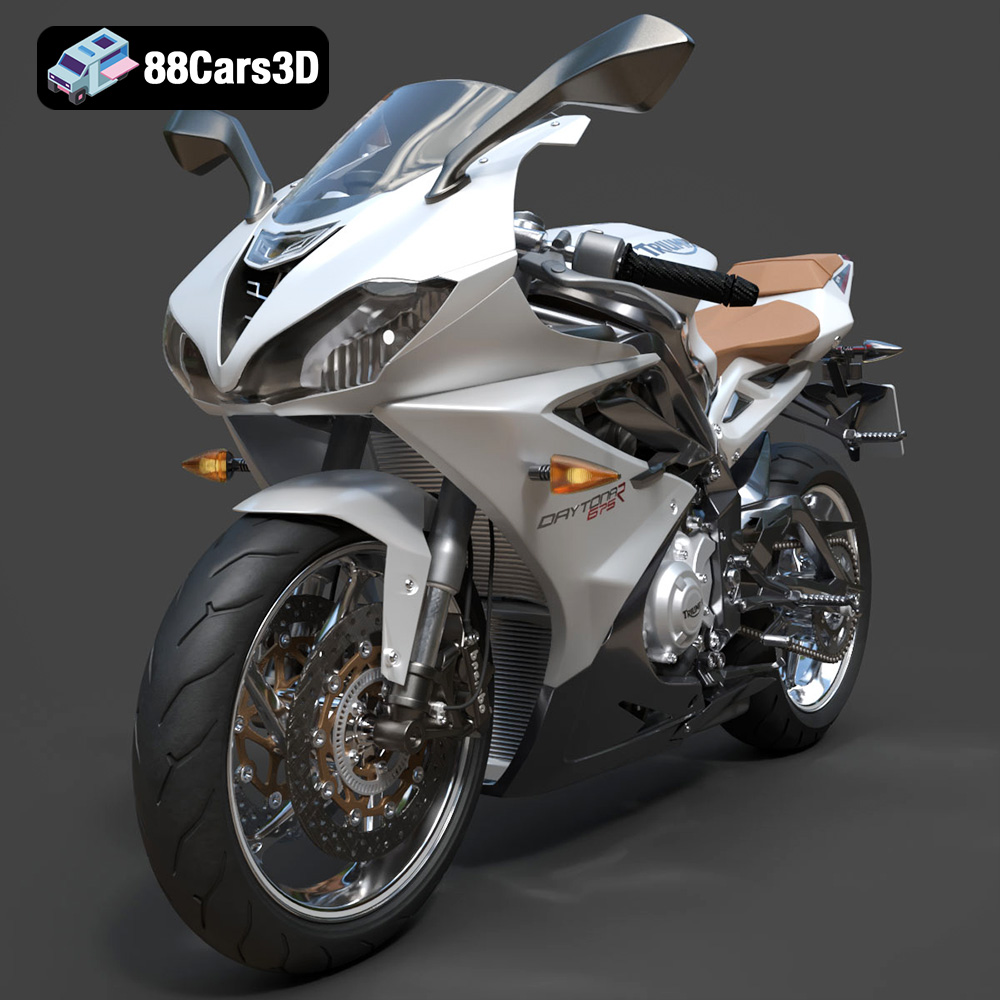
Today, we delve into the world of high-performance motorcycle modeling, using an outstanding example: the Triumph Daytona 675R ABS 2015 3D Model. This legendary middleweight supersport, celebrated for its track-focused prowess, iconic triple-cylinder engine, and razor-sharp handling, translates into an equally impressive digital asset. Available on 88cars3d.com, this model exemplifies the blend of visual fidelity and technical optimization that modern projects demand.
Throughout this comprehensive guide, we will explore the critical technical aspects that define a top-tier 3D vehicle model. We’ll examine file formats, optimization strategies for real-time applications, diverse professional workflows, and the expansive possibilities that such a versatile asset unlocks across various industries. Whether you’re a game developer, an automotive designer, a visualization artist, or a 3D printing enthusiast, understanding these nuances is key to unleashing the full potential of your creative endeavors.
The choice of a 3D file format is far more than a minor technicality; it’s a fundamental decision that dictates compatibility, workflow efficiency, and the ultimate utility of your 3D asset. Each format carries specific strengths, designed for particular applications and software ecosystems. Understanding these distinctions is crucial for seamless integration and optimal performance, especially when working with complex assets like the Triumph Daytona 675R ABS 2015 3D Model.
The `.blend` format is Blender’s native file type, acting as a complete scene container. When you download the Triumph Daytona 675R model in `.blend` format, you’re not just getting the mesh; you’re getting the entire Blender project. This typically includes the fully editable geometry, meticulously set up materials using Blender’s powerful Cycles or Eevee render engines, textures, UV maps, camera setups, lighting, and even animation data if present. For users already immersed in the Blender ecosystem, this offers unparalleled flexibility. Artists can immediately open the file and begin modifying colors, tweaking materials, adjusting lighting, or integrating the motorcycle into a larger scene without any import/export headaches. It’s perfect for detailed customization, rendering high-quality stills, or complex animation sequences within Blender.
Autodesk’s `.fbx` (Filmbox) format is a widely adopted proprietary file format for 3D content interchange. Its strength lies in its ability to store a vast array of 3D data, including geometry (meshes), materials, textures, animations, rigging, and even camera and light data, making it incredibly versatile. For projects involving real-time engines like Unreal Engine and Unity, `.fbx` is often the preferred choice. The Triumph Daytona 675R in `.fbx` format can be directly imported into these engines, preserving crucial elements like pivot points for individual components (wheels, steering, suspension), UV mapping for texturing, and basic material assignments. While its material definitions can sometimes be simplified upon import, its robust support for mesh data and animations makes it ideal for game development and cinematics pipelines.
The `.obj` (Wavefront OBJ) format is one of the oldest and most universally supported file types for 3D geometry. It’s a simple, text-based format primarily designed to store geometry (vertices, normals, texture coordinates, and faces) and references to external material files (.mtl). While it doesn’t support animation or rigging data, its widespread compatibility makes it an excellent fallback or starting point for cross-software compatibility. If you need to bring the Triumph Daytona 675R into a niche 3D application or want a clean mesh to start a new texturing project, `.obj` is a reliable choice. Its simplicity ensures that the core mesh data is transferred accurately across virtually any 3D software.
`.glb` (GL Transmission Format Binary) is the binary version of the `glTF` format, specifically designed for efficient transmission and loading of 3D scenes and models in web and real-time applications. It packages geometry, materials, textures, and animation into a single, self-contained file, reducing the overhead of multiple file requests. For AR/VR experiences, interactive product configurators on the web, or mobile applications, the `.glb` version of the Triumph Daytona 675R is highly optimized for fast loading and rendering. It supports Physically Based Rendering (PBR) materials, ensuring that the model looks consistent and realistic across different platforms with minimal effort.
The `.stl` (Stereolithography) format is the de facto standard for 3D printing. It represents a 3D model as a collection of unconnected triangular facets, defining only the surface geometry of an object without color, texture, or material information. When converting the Triumph Daytona 675R model to `.stl`, the focus shifts entirely to creating a watertight, manifold mesh suitable for physical fabrication. This format is crucial for hobbyists and professionals who wish to bring the digital model into the physical world, whether for display, prototyping, or scale model building. The accuracy of the original model’s geometry directly translates into the potential fidelity of the printed output.
The `.ply` (Polygon File Format, or Stanford Triangle Format) is another format for storing 3D data, particularly useful for scan data and scientific applications. Like `.obj`, it primarily defines geometry, but it can also store additional properties for vertices and faces, such as color, normals, transparency, or even confidence values. While less common for general animation or rendering than `.fbx` or `.blend`, the `.ply` format for the Daytona 675R could be valuable in specialized contexts like CAD workflows, reverse engineering, or for precise analytical purposes where detailed mesh information beyond basic geometry is required.
The `.unreal` format (often referring to a packaged asset or a specific export pipeline tailored for Unreal Engine) signifies an asset that has been meticulously prepared and potentially exported directly from Unreal Engine or structured for optimal import. While not a standalone file extension in the same way as `.fbx` or `.obj`, its inclusion implies that the Triumph Daytona 675R has undergone significant preparation specific to Unreal Engine’s requirements. This means optimized materials, collision meshes, LODs (Levels of Detail), and proper pivot setups are likely integrated, offering a drag-and-drop solution for developers looking to quickly integrate a high-quality, engine-ready motorcycle into their projects. This format streamlines the development process significantly.
Similar to `.blend` for Blender, the `.max` format is Autodesk 3ds Max’s native file type. It encapsulates an entire 3ds Max scene, including the model’s geometry, modifiers, materials (V-Ray, Corona, Arnold), textures, lighting, cameras, animation timelines, and even render settings. For artists and studios relying on 3ds Max for high-end rendering, architectural visualization, or complex animation, the `.max` version of the Triumph Daytona 675R provides the most comprehensive and editable starting point. It allows for advanced customization, integration into existing scenes, and leveraging 3ds Max’s powerful rendering capabilities for stunning photorealistic results.
The inclusion of such a wide array of formats for the Triumph Daytona 675R ABS 2015 3D Model on 88cars3d.com demonstrates a deep understanding of diverse industry needs. It ensures that regardless of your preferred software or target application, you have the right tool for the job, minimizing conversion headaches and maximizing creative potential.
Creating a 3D model that balances stunning visual realism with the stringent performance demands of real-time applications is an art form. The Triumph Daytona 675R ABS 2015 3D Model stands as an exemplary case, meticulously engineered to be “game-ready” without sacrificing the intricate details that make the real motorcycle iconic. This optimization is crucial for achieving smooth frame rates and immersive experiences in modern game engines and AR/VR environments.
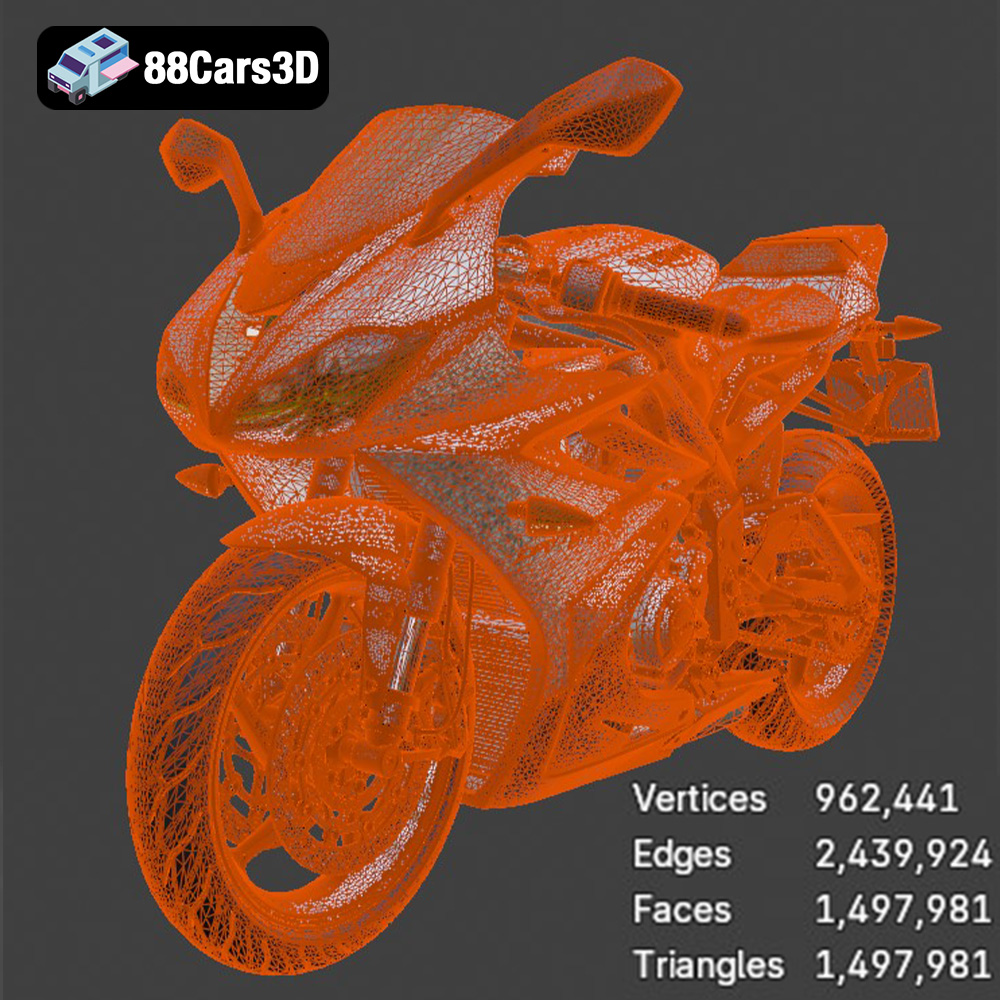
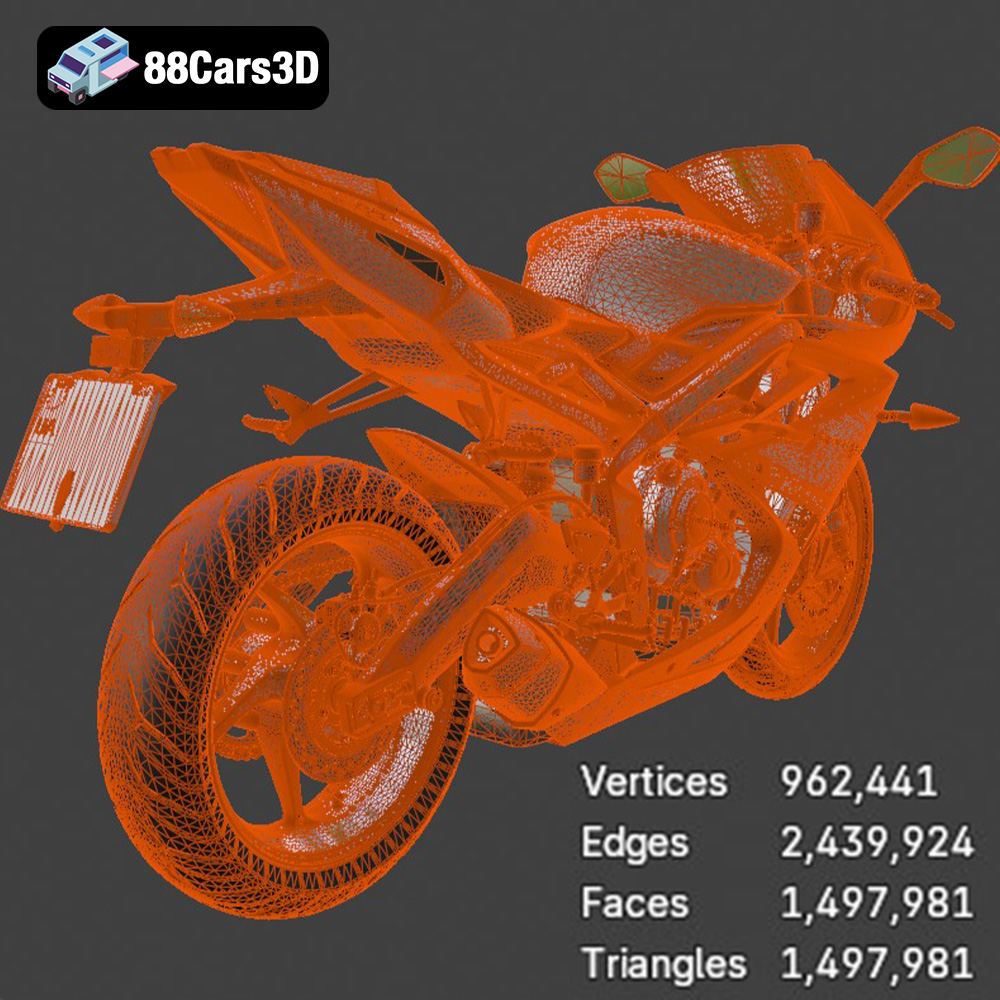
At the heart of any game-ready asset is its topology – the arrangement of vertices, edges, and faces that form the model’s surface. The Daytona 675R model boasts an optimized triangle count of approximately 150,000. This number isn’t arbitrary; it represents a carefully calculated balance. For a detailed vehicle, 150k triangles allows for complex curves, sharp edges, and detailed components to be accurately represented, while remaining well within the performance budgets of modern game engines like Unreal Engine and Unity. Achieving this balance involves skilled poly-reduction techniques, efficient use of edge loops, and ensuring that mesh density is focused where visual fidelity is most critical, such as the engine block, fairings, and cockpit, while less visible areas are optimized for efficiency. Good topology also ensures clean UV mapping for textures and smooth deformation if the model is animated.
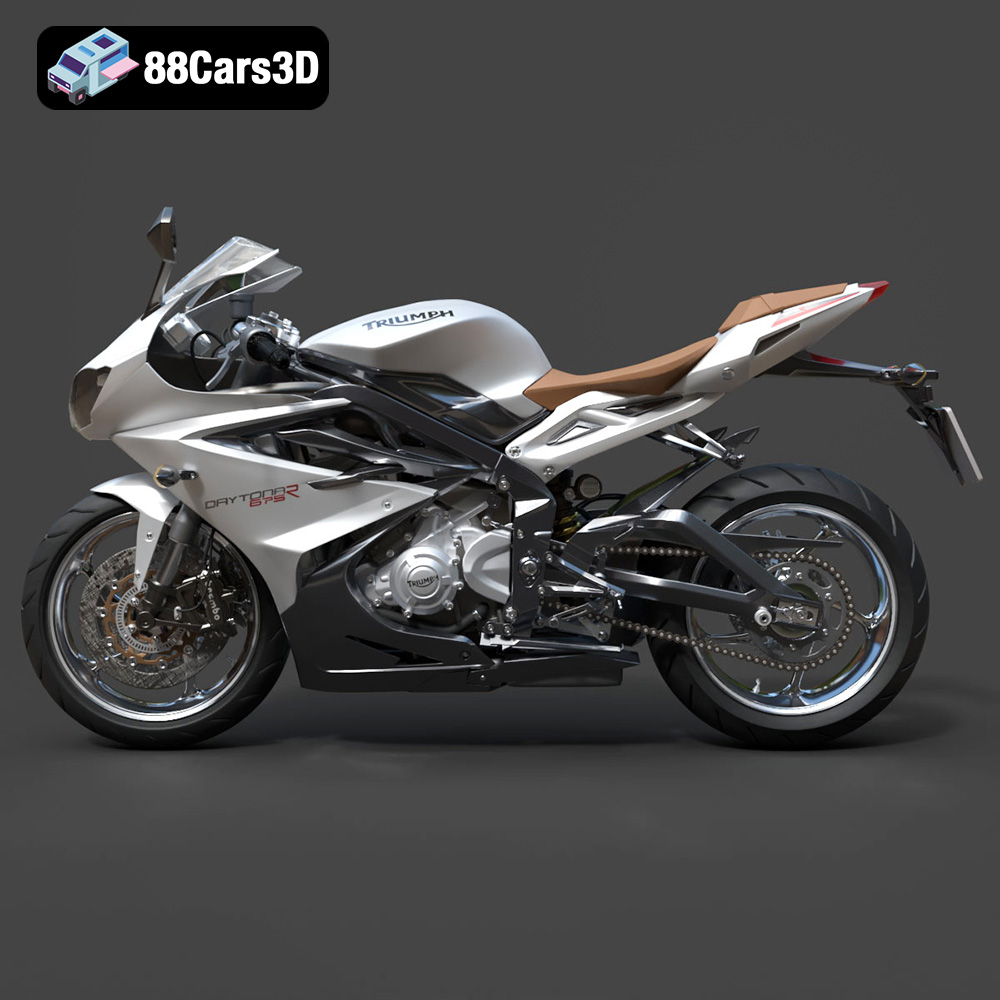
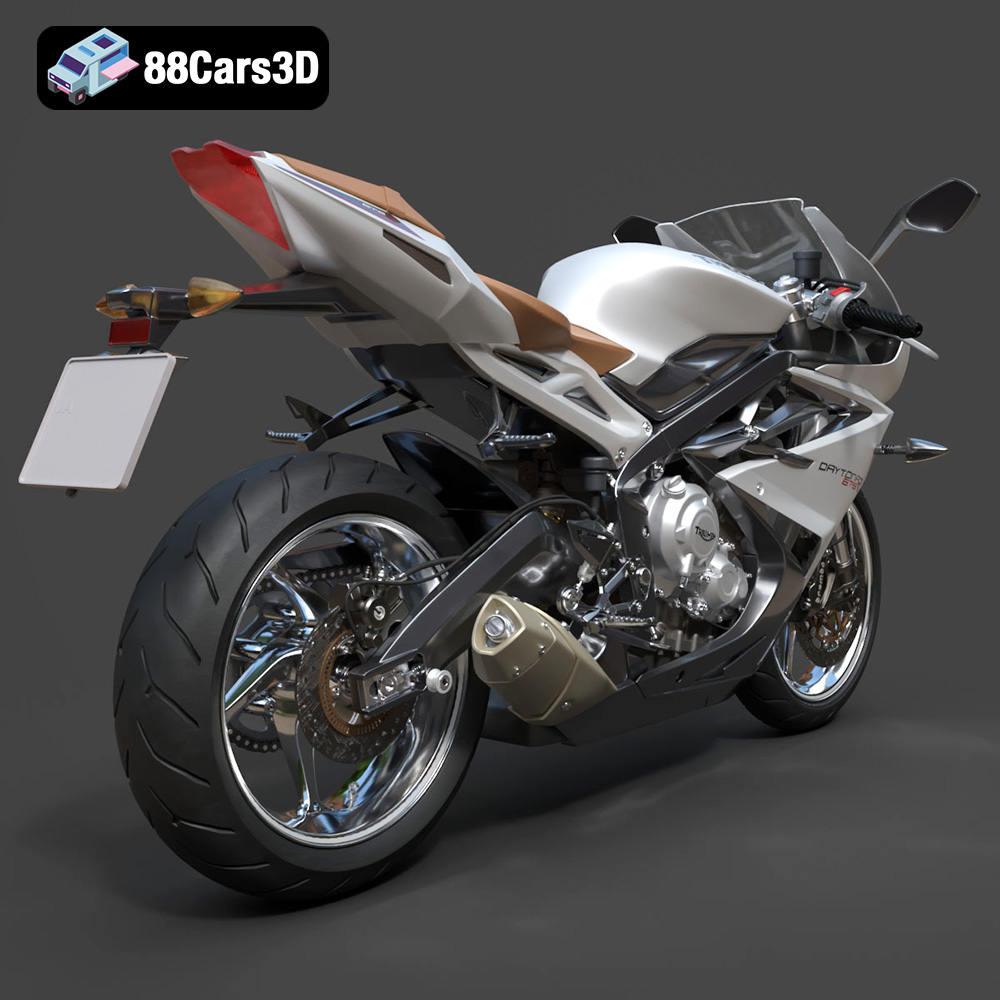
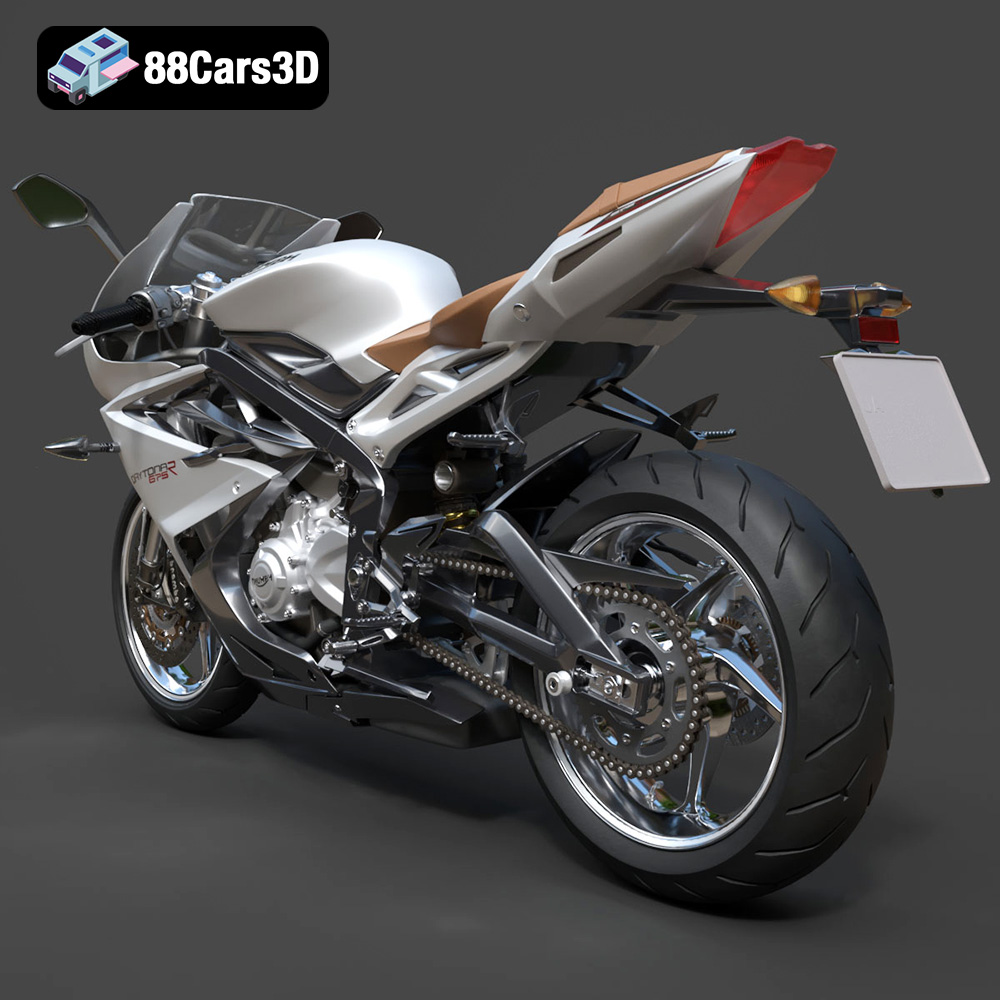
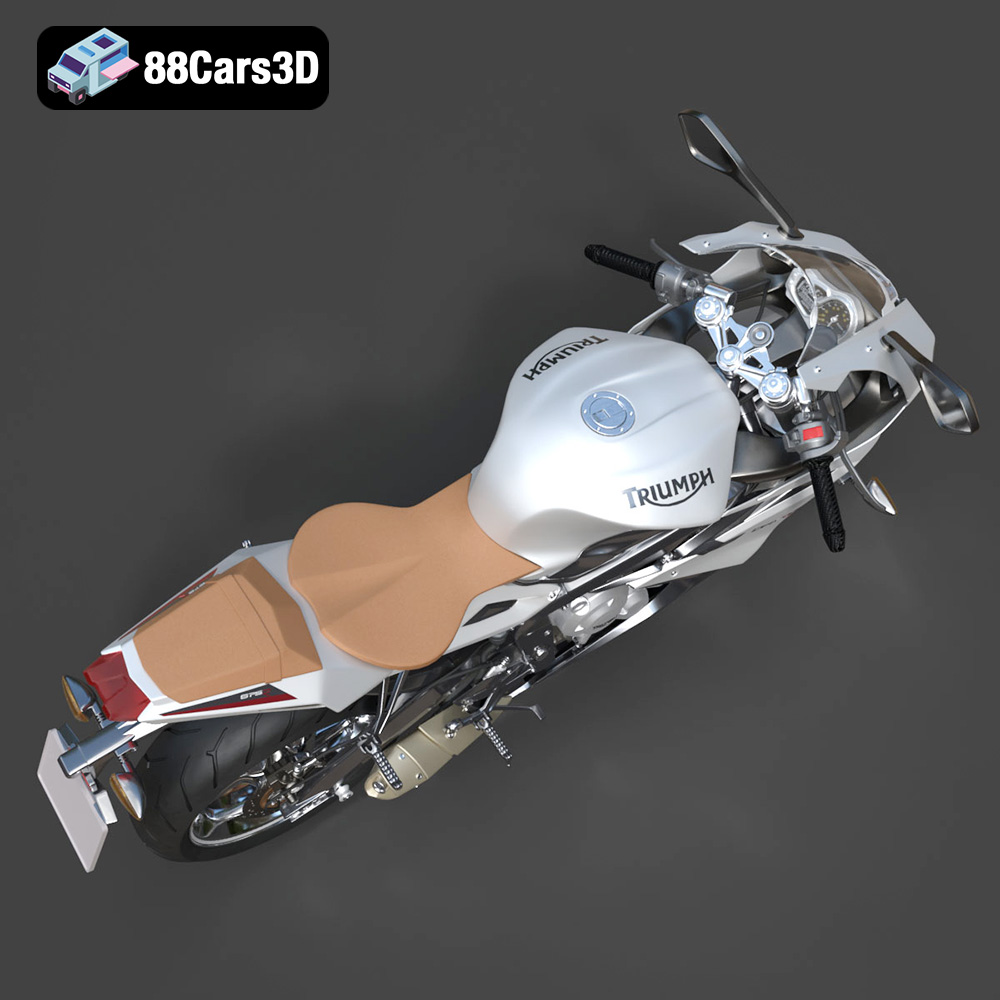
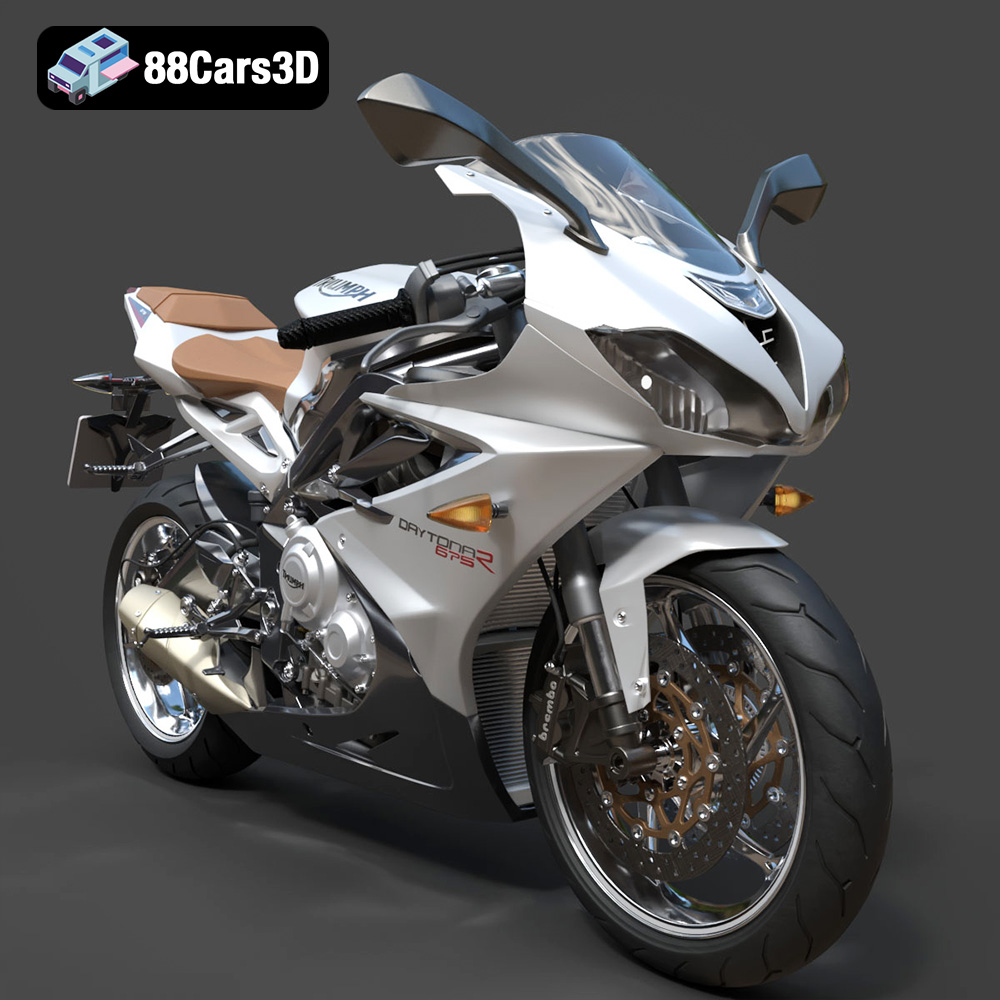
Visual fidelity goes beyond just polycount; it’s about capturing the essence of the real-world object. The Triumph Daytona 675R 3D model excels in this regard, with an obsessive attention to detail. The exterior features include accurate frame geometry, precise proportions, and the distinctive aggressive styling of the aerodynamic fairings. Crucial details like the sleek side-mounted exhaust system with carbon fiber heat shield elements, the aggressive twin-headlight design, and sharp LED taillights are all faithfully recreated. The lightweight cast aluminum wheels are paired with sticky, track-oriented tire treads, enhancing realism. Furthermore, premium components like the Öhlins NIX30 fork and TTX36 rear shock suspension details are not merely visual but are often separated for potential animation, allowing for realistic suspension travel.
Inside the cockpit, the model continues to impress. The sculpted sport saddle, clip-on handlebars with detailed grips, switchgear, and mirrors provide an authentic first-person perspective. The accurate digital/analog combination instrument cluster and detailed rearset footpegs, brake levers, and quickshifter mechanism are all modeled with precision, vital for immersive gaming or realistic virtual showrooms. This granular detail, combined with optimized geometry, makes the Triumph Daytona 675R a versatile and high-performing asset for a myriad of applications.
The true power of a versatile 3D asset like the Triumph Daytona 675R ABS 2015 3D Model lies in its adaptability across different professional workflows. Whether you’re a seasoned artist in an established studio or an independent creator, this model is designed to integrate seamlessly into your preferred software ecosystem, offering robust functionality for rendering, animation, and real-time experiences.
For artists leveraging Autodesk 3ds Max, the `.max` file format provides a native, fully editable scene. This is invaluable for high-end automotive rendering, product visualization, or architectural visualization projects where the motorcycle might serve as a contextual prop or a hero asset. In 3ds Max, the model’s separate components—wheels, suspension, steering—are pre-configured with proper pivot points, streamlining the animation process. This allows artists to quickly set up keyframe animations for steering, wheel rotation, and suspension compression, perfect for product showcases or interactive walkthroughs. When paired with powerful renderers like V-Ray or Corona Renderer, the high-quality topology and PBR-ready materials (which can be easily converted or re-assigned) ensure stunning, photorealistic outputs, showcasing the Daytona’s sleek lines and premium finishes under controlled studio lighting or within an architectural scene.
Blender users benefit from the `.blend` file, offering a complete scene that opens natively without any conversion loss. This provides a fantastic foundation for independent artists or small studios. The model can be directly incorporated into larger environments, whether it’s a bustling city street, a desolate race track, or a stylized abstract scene. Blender’s powerful Cycles and Eevee render engines can take full advantage of the model’s optimized geometry and detailed textures to produce high-quality renders. Artists can easily customize the motorcycle’s materials—changing body colors, adjusting metallic flakes, or altering tire textures—to fit specific artistic visions. Blender’s comprehensive toolset also allows for further detailing, rigging, or integrating the Daytona into complex animation sequences, all within a single, powerful open-source environment.
Game developers and real-time visualization specialists will find the `.fbx` and `.unreal` formats particularly useful for integration into Unreal Engine. The `.fbx` file, when imported, retains the model’s mesh, UVs, and basic material assignments, allowing developers to set up advanced PBR materials within Unreal’s robust material editor. The pre-set pivot points for individual components are critical for implementing interactive elements: wheels can be rotated with physics, suspension can react to terrain, and steering can be controlled by player input. The “game-ready” optimization, with its balanced ~150,000 triangle count, ensures that the Daytona 675R runs efficiently, supporting high frame rates even in complex scenes with multiple vehicles. For more advanced setups, the `.unreal` package could potentially include pre-configured blueprints for vehicle physics, LODs (Levels of Detail) for performance scaling, and optimized collision meshes, providing a near plug-and-play solution for racing simulators, open-world games, or interactive AR/VR training applications.
The availability of the Triumph Daytona 675R ABS 2015 3D Model in these varied formats underscores its utility, making it a valuable asset for almost any 3D production pipeline. This flexibility empowers creators to focus on artistic expression and project goals, rather than wrestling with compatibility issues.
While often optimized for game development, the utility of a high-quality 3D model like the Triumph Daytona 675R ABS 2015 extends far beyond the realm of interactive entertainment. Its precision, detail, and technical advantages make it an indispensable asset across a diverse range of industries, from product marketing to advanced simulation and education.
For game developers, the Triumph Daytona 675R is a dream asset. Its ~150,000 triangle count is perfectly balanced for modern racing titles, open-world games, and motorcycle simulators. The optimized geometry ensures smooth performance and quick loading times, crucial for maintaining immersion. Separated components with proper pivots mean that developers can implement realistic physics for suspension, steering, and wheel rotation, providing a truly authentic riding experience. Imagine integrating this model into a next-generation racing simulator, allowing players to experience the Daytona’s legendary handling on virtual tracks, or featuring it as a collectible vehicle in a sprawling open-world adventure. The game-ready nature of this model significantly cuts down on development time, allowing teams to focus on gameplay and innovative features.
Augmented Reality (AR) and Virtual Reality (VR) are revolutionizing how we interact with digital content. The Triumph Daytona 675R model is an ideal candidate for creating highly immersive AR/VR experiences. For virtual dealership showrooms, customers could explore the motorcycle in 1:1 scale, inspect every detail of its Öhlins suspension and Brembo brakes, and even “sit” on the bike, experiencing its ergonomics from a first-person perspective. Interactive configurators built with this model could allow users to instantly change paint colors, material finishes (matte, gloss, metallic), and even customize accessories in real-time, all within an immersive virtual environment. The `.glb` format is especially well-suited for web-based AR/VR applications, ensuring efficient loading and smooth interaction on various devices, from headsets to mobile phones.
In the world of advertising and product marketing, stunning visuals are paramount. The Triumph Daytona 675R 3D model, with its accurate geometry and detailed features, is perfect for high-end cinematic rendering. Marketing agencies and automotive brands can utilize this model to create photorealistic images and animated sequences for campaigns, product launches, or lifestyle promotions. Imagine a beautifully rendered shot of the Daytona carving through a winding mountain road, or a detailed studio setup highlighting its engineering prowess. Artists can adapt lighting for different environments, showcasing the bike’s sleek design under various atmospheric conditions. The model’s quality ensures that whether it’s a print advertisement, a television commercial, or an online product configurator, the visual representation of the Triumph Daytona 675R is nothing short of breathtaking. 88cars3d.com provides the foundation for such professional-grade content.
Beyond digital displays and real-time simulations, high-quality 3D models have a fascinating journey into the physical world through 3D printing. The Triumph Daytona 675R ABS 2015 3D Model, with its meticulous detailing and robust construction, serves as an excellent foundation for creating impressive physical replicas. Converting a game-ready model into a print-ready asset requires specific considerations, and this model’s inherent quality greatly simplifies the process.
The `.stl` format, included with the Triumph Daytona 675R 3D model, is the industry standard for 3D printing. However, merely converting to `.stl` isn’t always enough. A truly print-ready model requires a “watertight” and “manifold” mesh—meaning it has no holes, self-intersecting faces, or non-uniform normals, ensuring a solid, continuous surface that a 3D printer can interpret. Because the original model is built with optimized topology and precision, it minimizes the post-processing required to make it fully printable. Designers might still need to perform checks in software like Meshmixer or Blender’s 3D Print Toolbox to ensure all internal geometry is removed and fine details are robust enough to withstand the printing process, particularly for extremely small scales. The model’s accurate frame geometry and proportions provide a solid base, ready for scaling to various popular model sizes like 1:12, 1:18, or 1:24.
The success of a 3D print, especially for a detailed vehicle like the Daytona 675R, often hinges on careful print settings and post-processing. Resin printing (SLA/DLP) is highly recommended for this model due to its ability to capture fine details such as the Öhlins suspension components, Brembo brakes, engine fins, and cockpit switchgear at smaller scales. Recommended layer heights of 0.04–0.12 mm are ideal for achieving smooth surfaces and crisp edges. For FDM printers, slightly thicker walls (1.2–2.0 mm) and appropriate infill (20–30%) are suggested for structural integrity. Supports will be crucial for complex overhangs like the exhaust system, mirrors, and handlebars; judicious placement prevents damage during removal. Print orientation also plays a role, with the frame often printed at an angle for strength and wheels printed separately for better quality. After printing, post-processing—sanding, priming, and painting with authentic factory colors, metallic finishes, and clear coats—transforms the raw print into a stunning, display-quality replica. This journey from digital asset to physical object truly showcases the versatility and technical depth of a premium 3D model.
A high-quality 3D model is not merely a static representation; it’s a flexible foundation for creative exploration. The Triumph Daytona 675R ABS 2015 3D Model is designed with customization in mind, allowing artists and developers to adapt it to their specific project needs and maximize its visual impact across various scenarios.
Modern 3D pipelines rely heavily on Physically Based Rendering (PBR) workflows, which ensure that materials behave realistically under any lighting conditions. The Daytona 675R model, with its clean UV mapping and optimized mesh, is perfectly suited for applying and customizing PBR materials. Artists can easily change body and tank colors, experimenting with original factory shades, custom paints, or even stylized finishes like matte, chrome, or pearlescent. Tire textures can be swapped to represent different conditions—from slick track tires to more aggressive street variants. Adjusting the material properties like roughness, metallicness, and normal maps can drastically alter the perception of the surface, making the motorcycle appear brand new, weathered, or even battle-scarred. This level of material adaptability is crucial for creating diverse visual narratives and ensuring the model fits seamlessly into any scene or aesthetic. The inclusion of `.blend` and `.max` files means all original material setups are editable within their native environments, providing a head start.
The way a 3D model is lit dramatically affects its visual appeal. The Triumph Daytona 675R’s detailed geometry and high-fidelity textures respond beautifully to dynamic lighting environments. Artists can adapt the lighting setup to convey different moods and scenarios: a bright, clinical studio for product photography, a dramatic sunset for a cinematic scene, or a harsh, overhead light for an intense gaming moment. Integrating the motorcycle into various environments, whether it’s a realistic outdoor scene with global illumination or a stylized indoor track, is made easier by its optimized structure. The model’s real-world scale accuracy ensures it fits proportionally within any virtual space. Furthermore, the separated components (wheels, steering, suspension) allow for subtle adjustments to shadow casting and light interaction during animation, enhancing the overall realism. This flexibility in lighting and environmental integration empowers creators to consistently achieve striking visuals, making the Daytona 675R a cornerstone asset for any project that demands visual excellence.
The journey through the technical specifications and versatile applications of the Triumph Daytona 675R ABS 2015 3D Model underscores a fundamental truth in 3D content creation: quality and technical foresight pay dividends. From its optimized, game-ready topology and meticulous detailing to its expansive compatibility across numerous file formats, this model is a testament to what a professionally crafted 3D asset should be.
Whether you’re developing the next big racing simulator, crafting an immersive AR/VR experience, producing breathtaking automotive renders for marketing, or even bringing a digital design to life through 3D printing, the Daytona 675R provides a robust, flexible, and high-performance foundation. Its precision-engineered features, coupled with the foresight to provide multiple optimized formats, minimize development friction and maximize creative potential.
Investing in high-quality 3D car models and motorcycle models like the Triumph Daytona 675R from reputable sources like 88cars3d.com is not just about acquiring an asset; it’s about empowering your projects with efficiency, realism, and a seamless workflow. The blend of aesthetic excellence and technical robustness found in this model ensures that your final output will not only meet but exceed professional standards, delivering truly impactful and memorable experiences across all platforms.
The Triumph Daytona 675R ABS 2015 is a legendary middleweight supersport motorcycle celebrated for its track-focused performance, iconic triple-cylinder engine, and razor-sharp handling. Distinctive features include its aggressively styled aerodynamic fairings, sleek side-mounted exhaust system, striking red subframe, premium Öhlins suspension components, and high-performance Brembo brakes.
This high-quality 3D model boasts optimized topology with a balanced triangle count, making it a perfect game-ready asset without sacrificing visual fidelity. Built with precision for game development, AR/VR environments, dynamic animation, and high-end automotive visualization.
Perfect for track racing simulators, high-speed cinematic animations, virtual dealership showrooms, and interactive motorcycle configurators.
.blend, .fbx, .obj, .glb, .stl, .ply, .unreal, .max
Tags:
triumph, daytona-675r, daytona-675r-abs-2015, supersport, sportbike, motorcycle-3d-model, game-ready, low-poly, optimized, game-asset, rendering, vr-ar, blend, fbx, obj, glb, stl, ply, unreal, maxVespa VNB 125-B 3D Model 3D Printable STL
$39.99
.blend
.fbx
.glb
.max
.obj
.ply
.rendering
.sportbike
.stl
.supersport
.triumph
.unreal
daytona-675r
daytona-675r-abs-2015
game asset
game-ready
low-poly
motorcycle-3d-model
optimized
VR/AR