Get 20% OFF All Premium 3D & STL Models!

In the expansive landscape of 3D content creation, the demand for high-quality, meticulously crafted assets remains paramount. From powering immersive game worlds to anchoring photorealistic architectural visualizations, the right 3D model can elevate a project from ordinary to exceptional. Among the most sought-after categories are 3D car models, which bring dynamic realism and narrative depth to countless digital environments. Today, we’re diving deep into an asset that perfectly encapsulates this blend of history and technical excellence: the Volkswagen Passat Mk4 B4 Sedan 1993 3D Model. This isn’t just a nostalgic nod to 90s automotive design; it’s a professionally optimized digital artifact, available on 88cars3d.com, engineered for seamless integration across a spectrum of modern design and development pipelines.
The Volkswagen Passat Mk4 B4 Sedan, produced from 1993 to 1997, holds a unique place in automotive history. It marked a significant evolution from its B3 predecessor, reintroducing a traditional front grille and refining its classic German utilitarian aesthetic. For 3D artists, game developers, and visualization specialists, a detailed model of such an iconic vehicle offers immense value. It provides an authentic piece of digital history, perfect for crafting period-correct scenes, adding character to urban environments, or serving as a focal point in a retro-themed project. This particular 3D model delivers on all fronts, combining historical accuracy with the technical robustness required for today’s demanding workflows.
The allure of classic cars extends far beyond the physical realm, permeating digital spaces with a sense of authenticity and character. The 1993 Volkswagen Passat Mk4 B4 Sedan is a prime example of a vehicle whose understated elegance and reliable reputation make it an ideal subject for 3D representation. Its distinctive silhouette, practical design, and role as a quintessential 90s family car ensure its relevance in various creative projects.
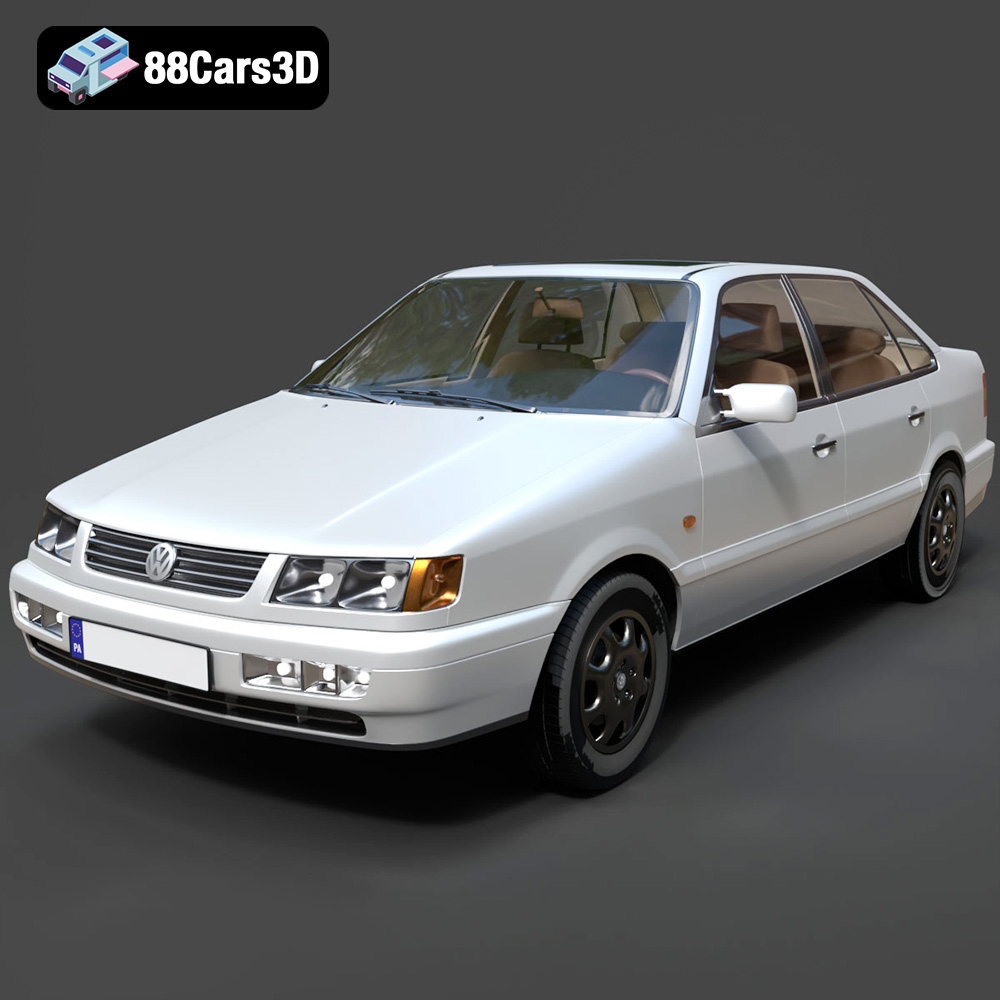
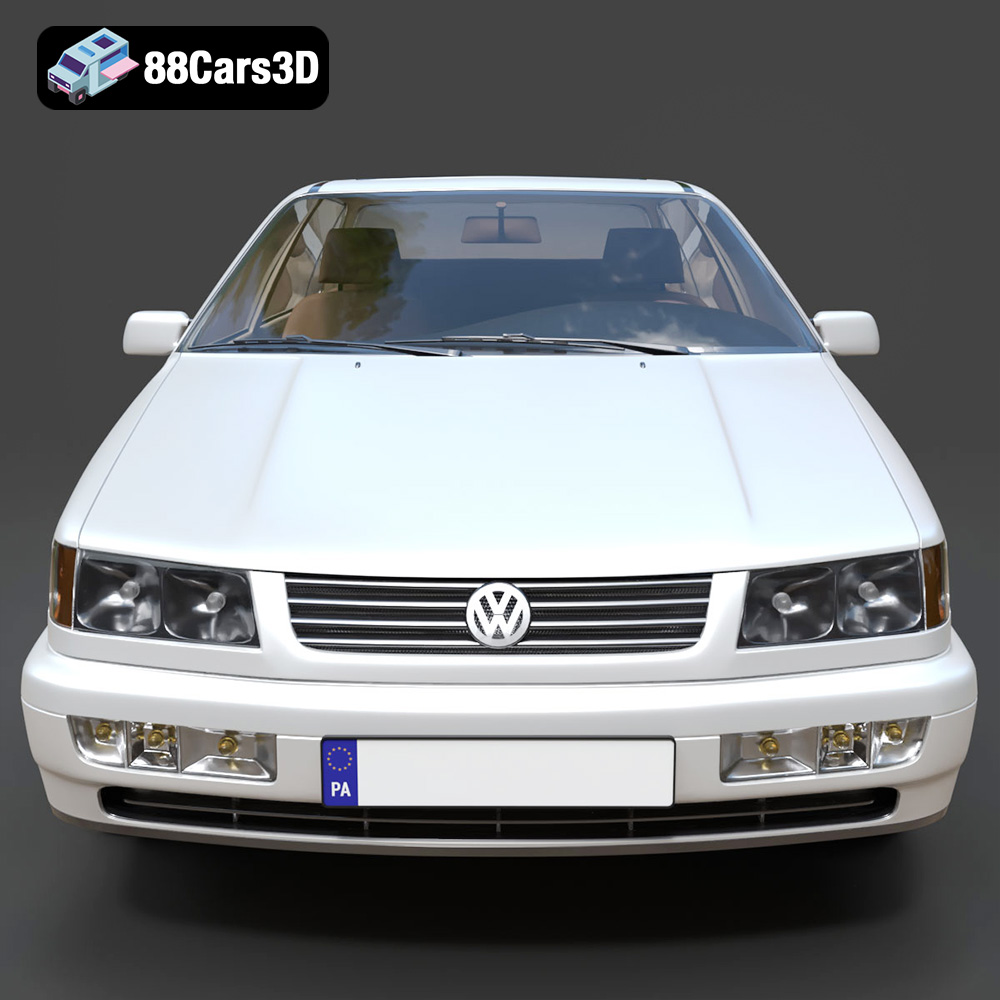
When incorporating a specific vehicle like the Passat B4 into a 3D scene, authenticity is key. This 3D model excels by capturing the very essence of the 1993 sedan. Its accurate chassis geometry and proportions are based on the real-world vehicle, ensuring that every curve and panel line resonates with historical fidelity. From the redesigned front fascia, complete with its authentic grille and halogen headlight assemblies, to the factory-accurate exhaust tip and rear bumper design, no detail has been overlooked. The taillight clusters, integrated turn signals, and period-correct wheel designs with realistic tire tread patterns further enhance the model’s credibility, making it instantly recognizable to enthusiasts and casual observers alike. Beneath the surface, detailed suspension components are modeled, ready for dynamic applications or close-up inspections.
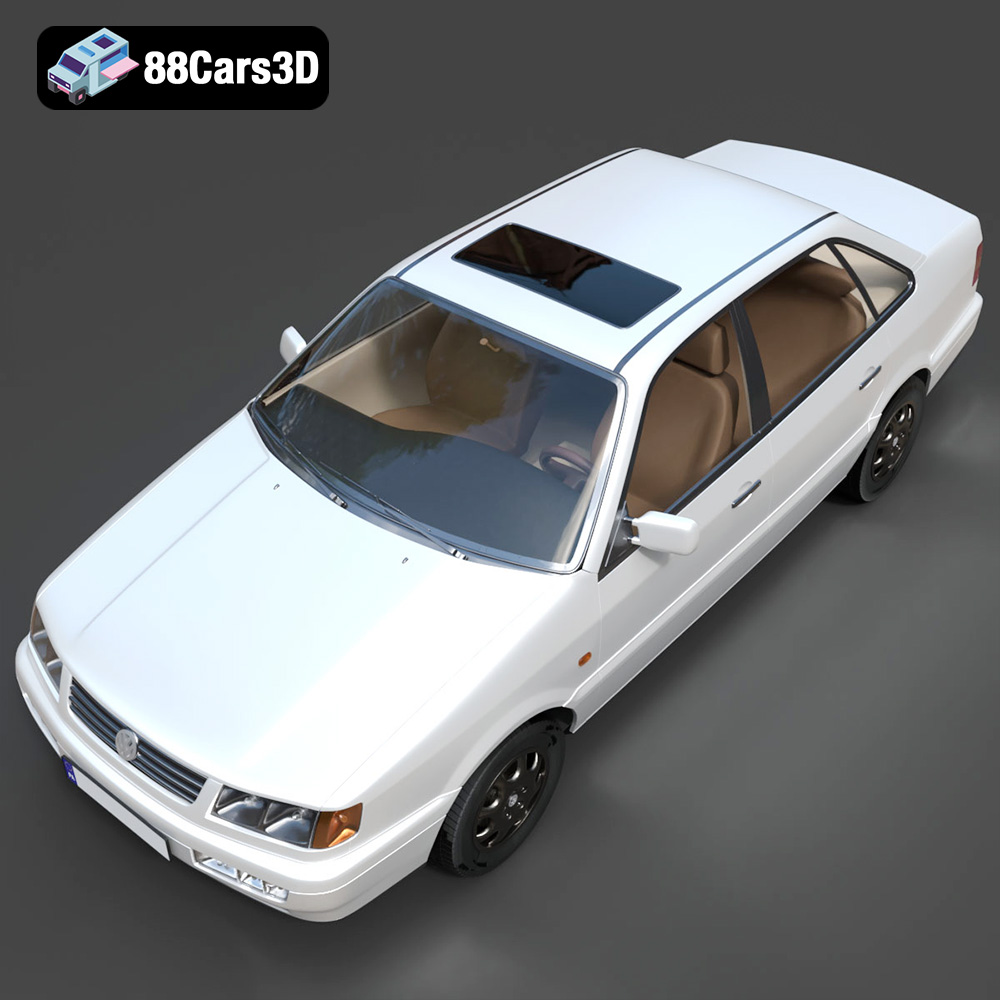
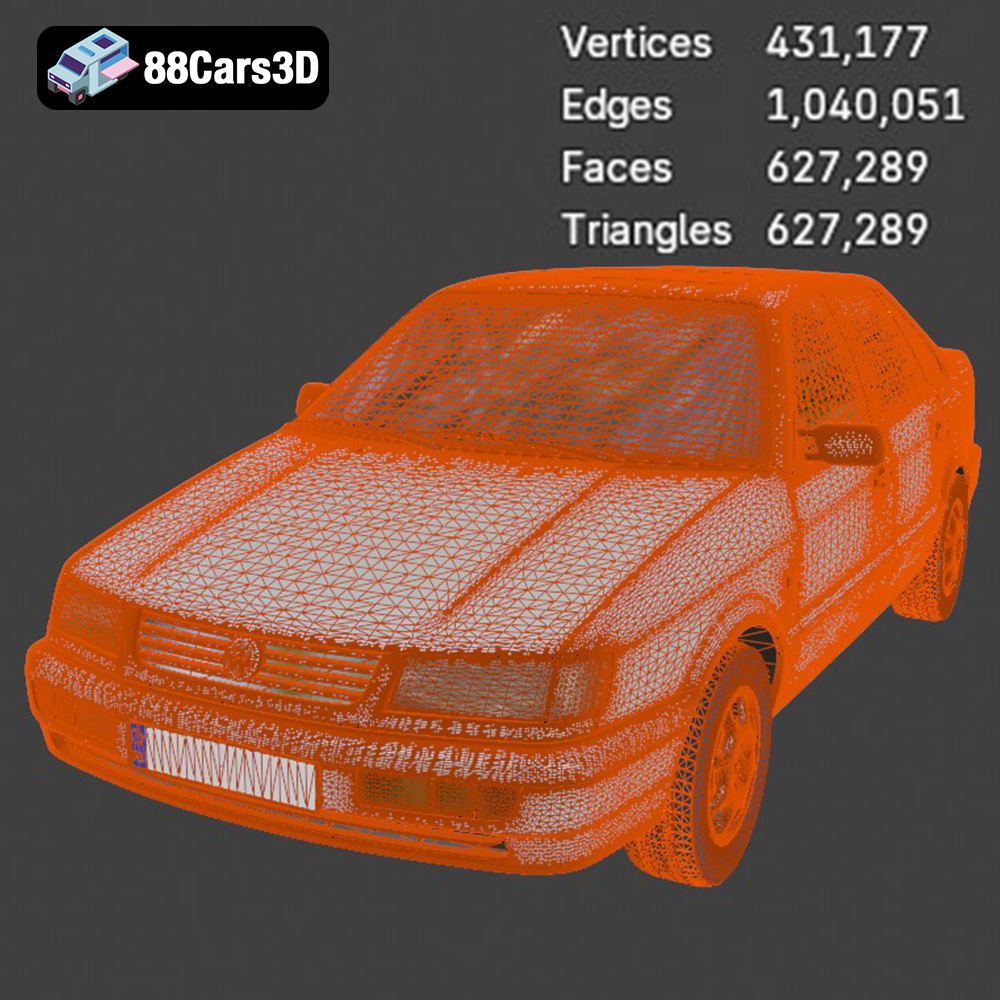
The meticulous attention to detail extends beyond the exterior. The interior, or cockpit, of the Passat Mk4 B4 has been faithfully recreated to reflect the functional, ergonomic design characteristic of 90s European sedans. Accurate seating arrangements, upholstery textures, and the classic four-spoke steering wheel design transport viewers directly into the era. The authentic analog instrument cluster and central dashboard stack, along with detailed interior controls like pedals, shifter, and door panels, are all optimized for various applications. For game developers, this level of interior detail is crucial for first-person perspectives, offering an immersive experience without compromising performance. The model’s balanced geometry, striking an ideal balance between high visual fidelity and performance efficiency (with a game-ready triangle count between 50,000-80,000), means it can be seamlessly integrated into modern real-time engines like Unreal and Unity, maintaining crisp reflections and accurate proportions whether viewed up close or as part of a bustling virtual environment.
The strength of any professional 3D asset lies not just in its visual quality but also in its adaptability. This is primarily dictated by the range of file formats it supports. The Volkswagen Passat Mk4 B4 Sedan 1993 3D Model from 88cars3d.com is provided in a comprehensive suite of formats, ensuring maximum compatibility and utility across diverse professional pipelines. Understanding these formats is crucial for artists, developers, and designers to select the right tool for their specific project needs.
The true value of a premium 3D asset lies in its seamless integration into various professional workflows. The Volkswagen Passat Mk4 B4 Sedan 1993 3D Model is not just a static object; it’s a dynamic asset designed to meet the rigorous demands of modern digital production. Whether you’re building expansive virtual worlds or crafting hyper-realistic marketing visuals, this model offers significant technical advantages.
For game developers, performance is paramount. The Passat B4 model shines here with its optimized triangle count, ranging from 50,000 to 80,000. This sweet spot ensures high visual fidelity without bogging down real-time engines like Unreal Engine or Unity. The model’s game-ready status is further bolstered by its proper pivot setups for steering, wheel rotation, and suspension travel. This means animators can quickly rig and animate the car’s components without tedious adjustments. Consider a scenario where an open-world driving game needs realistic background traffic or a period-accurate vehicle for a specific mission. Importing the .fbx or the dedicated .unreal asset of the Passat B4 provides an immediate, high-quality solution. Its accurate real-world scale and detailed, yet efficient, geometry make it perfect for creating immersive environments where even background vehicles contribute to the overall realism, adding to the rich collection of 3D car models available for game development.
Architectural visualization (Arch-Viz) and cinematic rendering demand photorealism and contextual accuracy. The Passat B4 model, with its crisp reflections and accurate proportions, is an excellent addition to any visualization scene. Imagine an architectural rendering of a 90s European street or a suburban driveway; placing this authentic sedan immediately grounds the scene in a specific time and place. Using the .max file in 3ds Max with renderers like V-Ray or Corona, or the .blend file in Blender with Cycles, artists can achieve stunning results. The model’s detailed exterior and interior features allow for close-up shots, showcasing not just the architecture but the lifestyle it represents. Its robust geometry holds up under complex studio lighting setups and diverse environmental conditions, ensuring that every render is visually compelling and true to life.
Augmented Reality (AR) and Virtual Reality (VR) are increasingly becoming powerful tools for product configurators, virtual showrooms, and immersive educational experiences. The lightweight .glb format of the Passat B4 model is specifically optimized for these applications. Developers can integrate the model into a mobile AR app, allowing users to “place” the virtual car in their real-world environment. In VR, it could be a key interactive element in a historical simulation or a virtual museum exhibit. The model’s balanced geometry ensures smooth performance on AR/VR devices, delivering a responsive and engaging user experience without excessive computational load. This makes it an invaluable asset for creating immersive experiences that leverage the power of real-time 3D.
Transforming a high-quality 3D model into a photorealistic image or animation is an art form that blends technical proficiency with creative vision. The Volkswagen Passat Mk4 B4 Sedan 1993 3D Model provides an excellent foundation for achieving stunning automotive renders. Leveraging its detailed geometry and optimized structure, artists can unlock its full visual potential.
Achieving realistic automotive rendering hinges on sophisticated material creation. For the Passat B4, this means crafting PBR (Physically Based Rendering) materials that accurately simulate real-world surfaces. The car paint shader is crucial; it needs to reproduce metallic flakes, clear coat reflections, and subtle variations in sheen. Artists can experiment with different factory colors or custom finishes, utilizing the model’s well-optimized UVs to ensure seamless texture application. Beyond the body, meticulous attention to details like tire textures, with realistic tread patterns and sidewall imperfections, elevates the realism. Interior materials – such as the fabric upholstery, dashboard plastics, and glass for windows and headlights – all require specific PBR texture sets (Albedo, Roughness, Metallic, Normal) to react correctly to light, making the Passat B4 a perfect canvas for mastering these techniques. The clean topology of the model ensures that these textures wrap smoothly, preventing distortion and maintaining visual integrity.
Lighting is the soul of any render. For automotive rendering, it’s about showcasing the vehicle’s form, emphasizing its lines, and creating a believable environment. Artists can utilize High Dynamic Range Images (HDRIs) to capture realistic global illumination from real-world locations, immediately placing the Passat B4 in a contextual setting, be it a sunny European street or a moody industrial backdrop. Studio lighting setups, employing virtual softboxes, spotlights, and area lights, can highlight specific design elements and create dramatic reflections on the car’s bodywork. Experimenting with different light temperatures and intensities allows for diverse moods – from a warm, nostalgic glow to a crisp, modern presentation. The model’s accurate reflections are particularly responsive to these lighting nuances, bringing out the metallic sheen of the paint and the subtle imperfections of glass surfaces. This approach is fundamental to creating compelling automotive rendering.
No render is complete without a professional post-production phase. Tools like Adobe Photoshop or Affinity Photo can transform a raw render into a polished masterpiece. Techniques such as color grading can adjust the overall mood and tone, enhancing the vintage feel or giving it a contemporary twist. Adding depth of field selectively blurs the foreground and background, drawing the viewer’s eye to the Passat B4. Motion blur, if the car is in an animated sequence, adds a dynamic sense of speed. Lens flares, chromatic aberration, and subtle vignettes can further enhance photographic realism. These post-processing steps are crucial for achieving that final, cinematic quality, allowing the Volkswagen Passat Mk4 B4 Sedan 1993 3D Model to truly shine as a professional-grade asset.
In the dynamic world of 3D content creation, flexibility and adaptability are crucial. A high-quality 3D model like the Volkswagen Passat Mk4 B4 Sedan 1993 isn’t just a static asset; it’s a foundation for endless creative possibilities. Its well-structured design and multiple file formats ensure it’s not only ready for immediate use but also easily customizable and future-proof.
The ability to customize a 3D model is a significant advantage. With the Passat B4, artists can easily modify body colors, experimenting with factory-accurate hues or exploring entirely custom finishes to match a brand’s aesthetic or a specific scene’s requirements. Beyond color, the model allows for adjustments to material finishes—transitioning from matte to gloss, adding metallic flakes, or tweaking the plastic trims to achieve different levels of wear and realism. Tire textures can be swapped to represent all-season, performance, or even worn variants. For interactive applications, lighting can be adapted to different environments, from a bright outdoor scene to a dimly lit garage, showcasing the model’s versatility. These customization options ensure that the Passat B4 can seamlessly fit into any project, whether it’s a precise historical recreation or a stylized artistic interpretation.
A truly professional 3D car model is more than just a detailed mesh; it’s an intelligently organized structure. The Volkswagen Passat B4 model exemplifies this with its separate components, including wheels, suspension, and steering components. This segregation is invaluable for animators, allowing for realistic wheel rotation, independent suspension travel simulations, and accurate steering dynamics without complex re-rigging. Game developers can utilize these separate elements to implement advanced physics systems, leading to more believable driving mechanics. For general 3D artists, this modularity simplifies modifications, enabling them to easily swap out parts, add custom accessories, or even create damaged versions of the vehicle for specific narrative needs. This inherent flexibility extends the lifespan and utility of the 3D model across numerous projects and updates.
Beyond digital displays, the Passat B4 offers the exciting prospect of becoming a physical object through 3D printing. The inclusion of an .stl file makes this possible, allowing hobbyists and professionals alike to create tangible replicas. The product description provides excellent guidelines for 3D print settings: recommended scales (1:12, 1:18, 1:24), layer height (0.04–0.12 mm, with resin printing recommended for fine details), wall thickness, and infill. Crucially, it highlights the need for supports for detailed parts like exhausts, mirrors, and bumpers, and suggests specific print orientations for structural integrity. Post-processing, including sanding, priming, and painting with authentic factory colors and metallic finishes, transforms a raw print into a display-worthy model. This capability adds another dimension to the asset’s value, bridging the gap between digital creation and physical manifestation.
The journey from a historical vehicle to a versatile digital asset is a testament to the power of skilled 3D modeling. The Volkswagen Passat Mk4 B4 Sedan 1993 3D Model stands as an exceptional example of this transformation, offering a meticulously crafted, game-ready, and render-optimized asset for a myriad of applications. From enhancing the realism of vast open-world games and bringing authenticity to architectural visualizations to powering immersive AR/VR experiences and even producing tangible 3D prints, this model demonstrates the profound impact of high-quality 3D car models.
Its comprehensive file format support, allowing seamless integration into 3ds Max, Blender, Unreal, and other platforms, underscores its professional utility. The attention to detail, from its accurate exterior proportions and interior features to its optimized geometry and proper pivot setups, makes it an invaluable addition to any creative’s toolkit. For those seeking to infuse their projects with a touch of 90s nostalgia or simply require a robust and reliable automotive asset, the Volkswagen Passat Mk4 B4 Sedan 1993 3D Model from 88cars3d.com is an investment in quality and versatility. Explore this model and countless other premium 3D assets to elevate your next project.
The 1993 Volkswagen Passat Mk4 (B4) Sedan represents a pivotal moment in German automotive design, blending practical family hauling capabilities with robust, reliable engineering. Known for its clean, understated aesthetic and the distinct introduction of a traditional front grille compared to its B3 predecessor, this classic sedan has cemented its legacy as an icon of 90s European motoring. The model captures the quintessential utilitarian charm, featuring the accurate sedan roofline, distinctive halogen headlight housings, and classic factory wheel options that defined mid-90s Volkswagen styling. This 3D model boasts exceptional quality with optimized topology and a game-ready triangle count. The geometry strikes the ideal balance between high visual fidelity and performance efficiency, ensuring seamless integration into modern real-time engines. Whether utilized for background traffic generation, interactive configurators, or detailed close-up rendering, the model maintains crisp reflections and accurate proportions across the board. Perfect for 90s-themed street scenes, retro driving simulators, architectural visualizations, and immersive virtual environments.
$39.99
.blend
.fbx
.glb
.max
.obj
.passat
.ply
.rendering
.sedan
.stl
.unreal
.volkswagen
1993
b4
car-3d-model
classic-car
family-car
game asset
game-ready
low-poly
mk4
optimized
VR/AR