Get 20% OFF All Premium 3D & STL Models!

In the fast-evolving landscape of digital content creation, the demand for high-quality, authentic assets remains paramount. From hyper-realistic automotive rendering to immersive game environments and compelling architectural visualizations, the foundation of any successful project often lies in its detailed components. Among these, meticulously crafted 3D car models hold a special place, acting as focal points that can elevate an entire scene or gameplay experience. They are not merely static objects; they are vessels of history, engineering, and design, brought to life through polygons and textures.
Today, we delve into the intricate world of digital automotive preservation and its profound impact on various industries. We’ll explore the technical considerations, workflow integrations, and creative possibilities that robust 3D car models unlock. To illustrate these concepts, we’ll frequently reference a truly iconic vehicle: the Fiat 124 Mk1 1966 3D Model. This particular asset from 88cars3d.com exemplifies the blend of historical accuracy, technical optimization, and broad utility that modern digital artists and developers require.
The choice of file format for a 3D model is far more than a technicality; it’s a critical decision that dictates compatibility, functionality, and ease of use across different software and pipelines. Understanding these formats is fundamental for anyone working with 3D car models, especially when integrating assets like the Fiat 124 Mk1 1966 into diverse projects. Each format serves specific purposes, optimized for particular stages of the creative process.
The .blend file format is the native format for Blender, a powerful open-source 3D creation suite. When you download a .blend file, you’re getting a fully editable Blender scene. This includes not just the mesh data, but also materials, textures, lighting, cameras, animations, rigging, and even physics simulations. For artists and studios primarily working in Blender, this format offers maximum flexibility for customization, modifications, and scene setup. It’s ideal for those who wish to delve deep into the model’s construction, adapt its materials, or integrate it seamlessly into an existing Blender-centric workflow without losing any data fidelity.
The Filmbox (.fbx) format, developed by Autodesk, is arguably the most widely adopted interchange format in the 3D industry. It excels at transferring entire scenes, including geometry, animation, skinning, blend shapes, cameras, and lighting, between different 3D software packages (like 3ds Max, Maya, Blender) and, critically, into game engines such as Unreal Engine and Unity. The Fiat 124 Mk1 1966 3D model in .fbx format is perfect for real-time pipelines due to its robust support for PBR (Physically Based Rendering) materials and animation data, making it a go-to for game developers and real-time visualization specialists.
The Wavefront OBJ (.obj) format is one of the oldest and most universally supported 3D file formats. It primarily stores geometric data—vertices, normals, texture coordinates, and faces—and can reference external material (.mtl) and texture files. While it doesn’t typically support animation or rigging, its simplicity and widespread compatibility make it an excellent choice for basic mesh transfer between virtually any 3D software. If your primary need is robust mesh geometry for sculpting, retopology, or foundational modeling, .obj is a reliable option for the Fiat 124 Mk1 1966.
The GL Transmission Format Binary (.glb) is the binary version of glTF, an open-standard 3D file format developed by the Khronos Group. It’s designed for efficient transmission and loading of 3D scenes and models by consolidating all assets (geometry, textures, materials, animations) into a single, self-contained file. This makes .glb exceptionally well-suited for web-based applications, augmented reality (AR), virtual reality (VR), and mobile experiences where file size and quick loading times are crucial. The Fiat 124 Mk1 1966 3D model in .glb ensures a smooth, high-quality display on various modern platforms.
The Stereolithography (.stl) format is the de facto standard for 3D printing. It represents a 3D model as a series of connected triangles, describing only the surface geometry of an object without color, texture, or material information. For hobbyists and professionals looking to physically manifest the Fiat 124 Mk1 1966 as a display model, an .stl file is essential. While it requires careful consideration of mesh integrity and manifold geometry, it’s the gateway to transforming a digital asset into a tangible replica.
The Polygon File Format (.ply) is designed to store geometric information from 3D scanners or CAD systems, making it suitable for scientific, engineering, and industrial applications. It can store a variety of properties including color, transparency, surface normals, texture coordinates, and confidence values per vertex or face. While less common for general artistic workflows than .fbx or .obj, .ply offers a precise and detailed mesh representation, useful for advanced analysis or specific manufacturing processes beyond basic 3D printing. For highly technical applications of the Fiat 124 Mk1 1966, this format offers robust data integrity.
While .unreal isn’t a standalone file extension in the same way as .fbx or .obj, its inclusion typically signifies an asset that has been specifically prepared and optimized for direct import and use within Unreal Engine. This often means the included .fbx (or similar) has been meticulously set up with Unreal-compatible materials, textures, collision meshes, LODs (Levels of Detail), and pivot points, potentially even as a pre-packaged .uasset if provided directly from an Unreal project. This provides a plug-and-play experience, significantly reducing the setup time for game developers using the Fiat 124 Mk1 1966, allowing them to focus on gameplay and environment design.
The .max file format is native to Autodesk 3ds Max, one of the leading software packages for 3D modeling, animation, and rendering. Similar to .blend files for Blender, a .max file contains the complete scene data, including geometry, materials, lighting, cameras, animation keyframes, and modifiers. For professionals who use 3ds Max extensively, this format offers the highest level of control and editability, enabling deep customization, integration into complex scene graphs, or adaptation for high-fidelity automotive rendering projects featuring the Fiat 124 Mk1 1966.
Creating a truly impactful 3D car model goes far beyond simply building a vehicle shape. It demands a rigorous commitment to historical accuracy, meticulous detailing, and a deep understanding of how a physical object translates into a digital asset. The Fiat 124 Mk1 1966 3D model stands as a testament to this philosophy, capturing the essence of this mid-century Italian icon with remarkable precision.
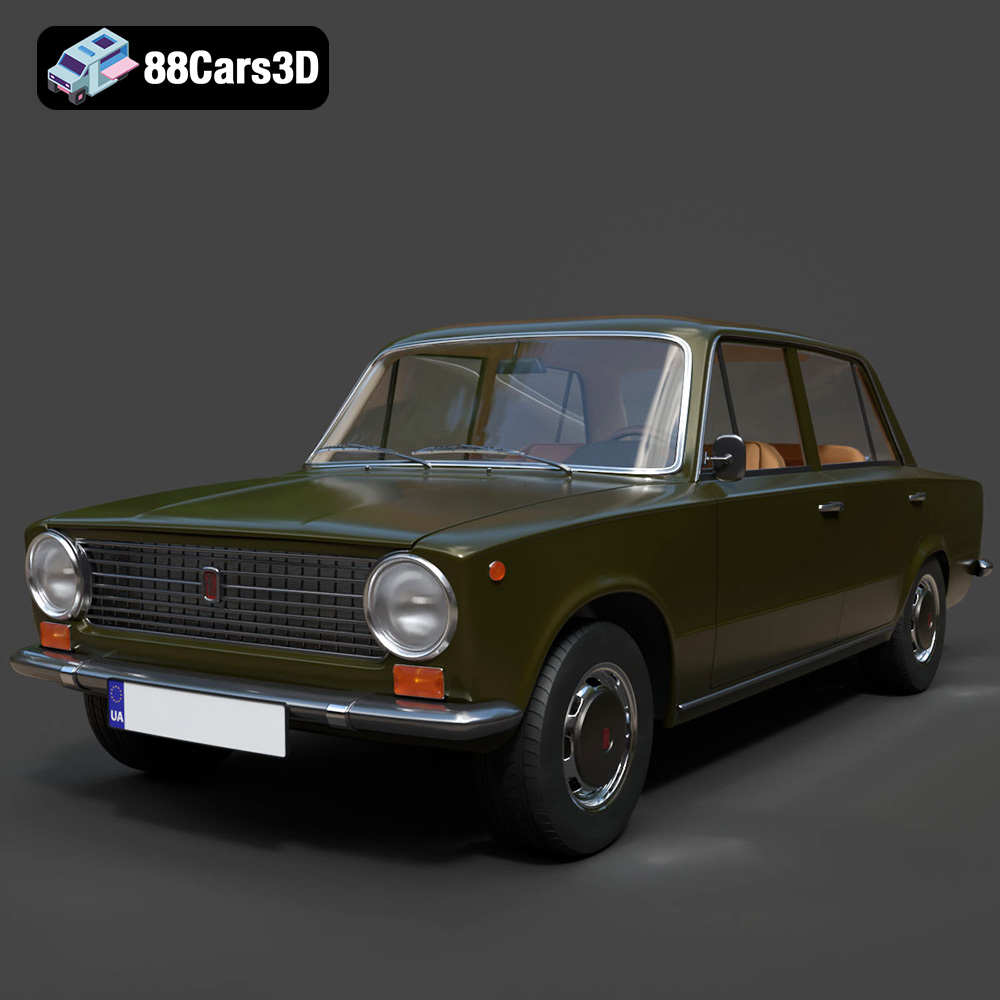
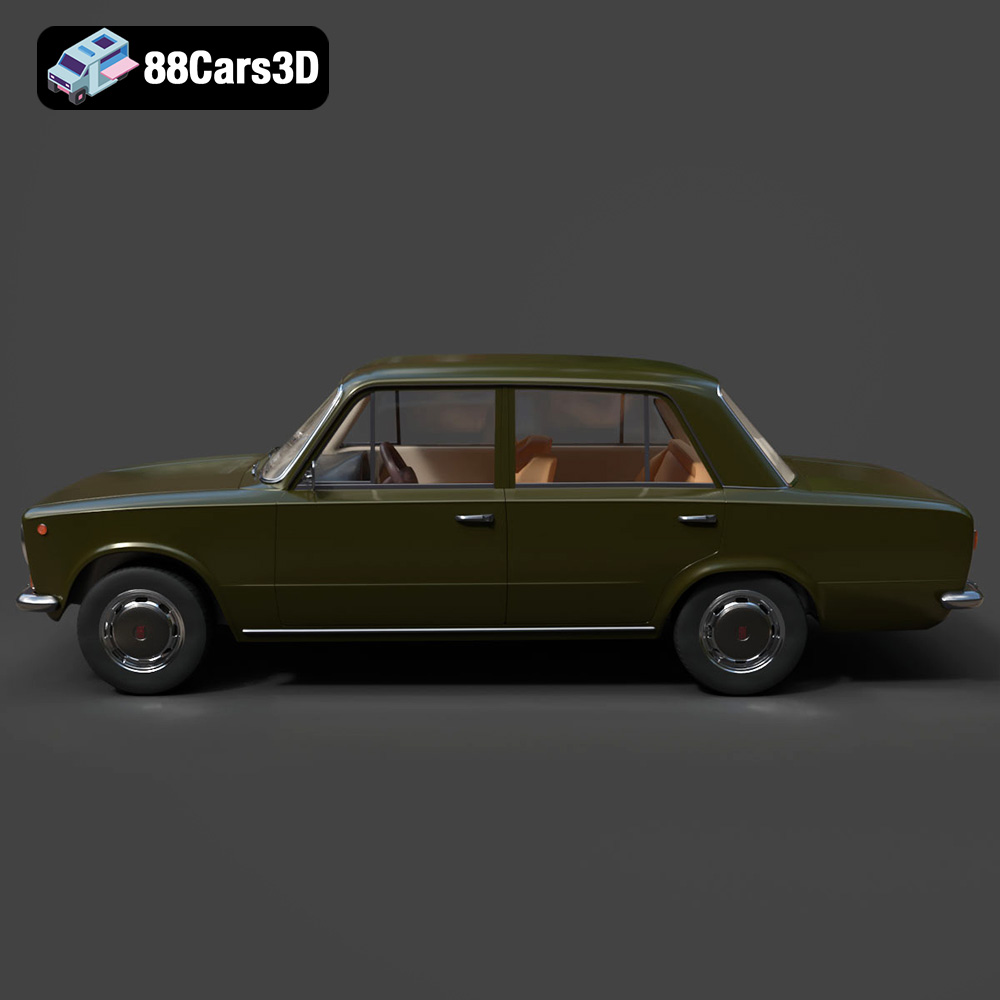
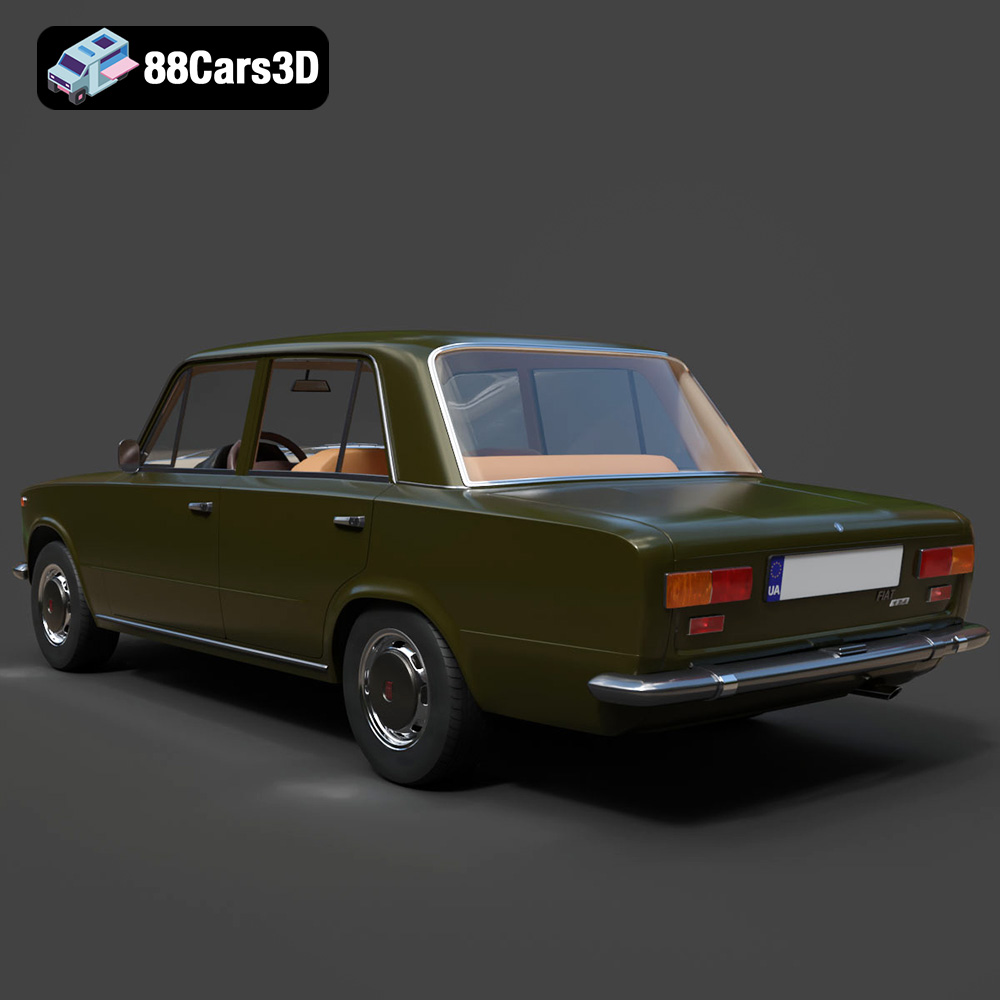
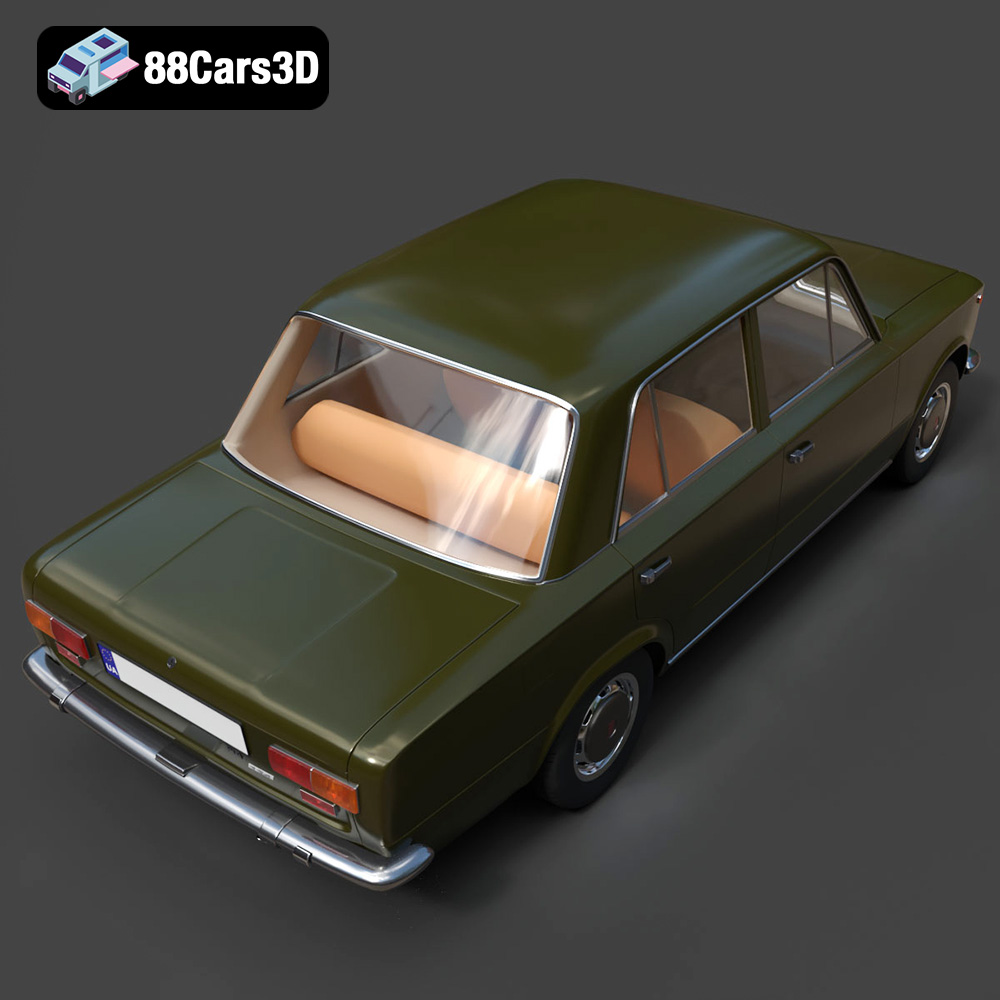
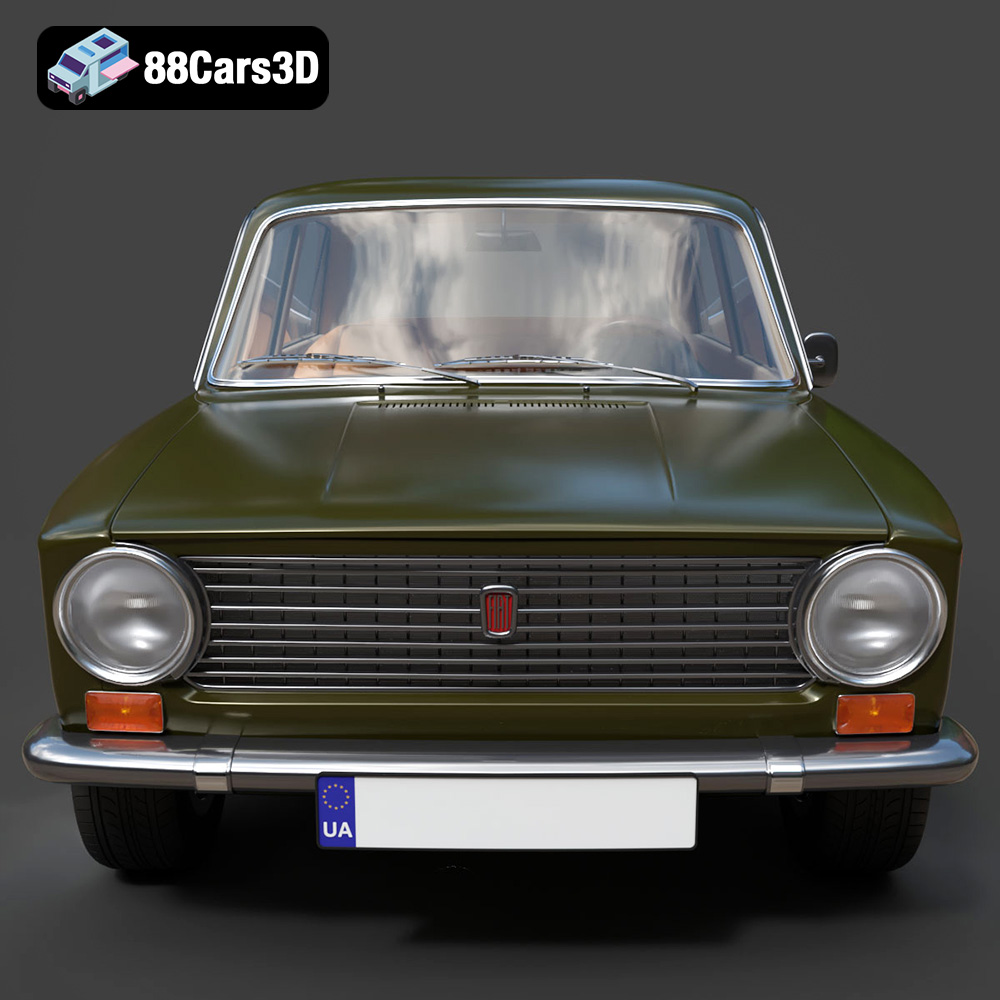
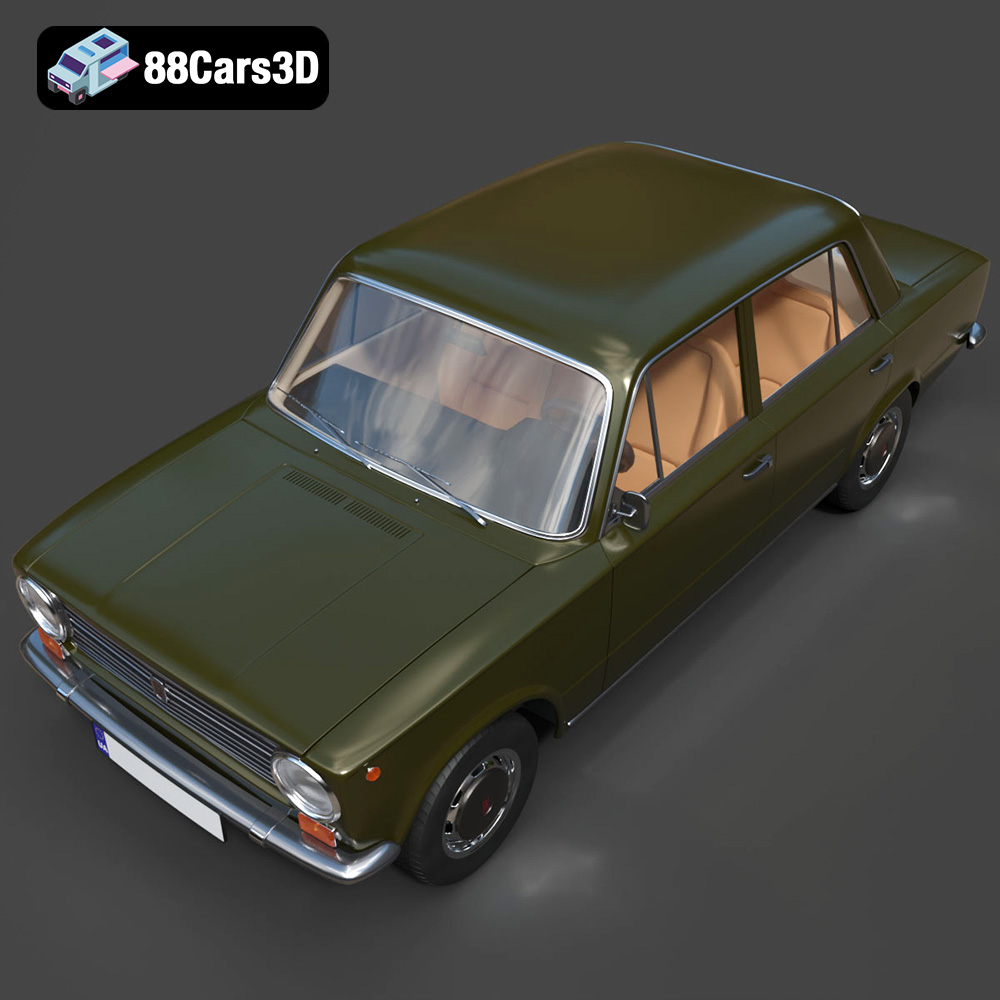
The exterior of a classic car like the Fiat 124 Mk1 tells a story of its era, and this 3D model captures every chapter. From the distinctive round headlamps and signature chrome grille that define its friendly yet robust face, to the elegant, boxy proportions that gave it a revolutionary lightweight feel for its time, no detail is overlooked. The model features an authentic single tailpipe exhaust system, period-correct steel wheels adorned with detailed chrome hubcaps, and vintage tread tires, all contributing to an undeniable sense of authenticity. Even the accurately modeled coil spring suspension and solid rear axle components are rendered, ensuring that whether viewed up close or from a distance, the car’s mechanical integrity shines through. This level of detail is crucial for professional automotive rendering where every surface and reflection matters.
The experience of a classic car isn’t complete without its interior, and the Fiat 124 Mk1 1966 3D model invites users to step inside. The cockpit boasts classic horizontally ribbed vinyl seats and a bench-style rear setup, instantly transporting the viewer to a simpler time. The authentic twin-spoke steering wheel with its original Fiat horn ring, the minimalist analog instrument cluster, and the period-correct dashboard layout are all faithfully recreated. Even the manual floor shifter, pedals, and classic handbrake lever are present, optimized for first-person POV in gaming scenarios. This attention to internal detail is vital for creating immersive virtual experiences, whether for AR/VR tours or in-game driving perspectives, ensuring the model’s versatility as a premium game asset.
Beyond static beauty, a truly versatile 3D car model needs to be engineered for dynamic scenarios. The Fiat 124 Mk1 1966 excels here with separate wheels, suspension, and steering components. This thoughtful separation allows for realistic animation of steering, wheel rotation, and suspension travel, essential for accurate driving simulations or cinematic sequences. The proper pivot setup for these components saves countless hours for animators and riggers, making it a highly functional asset for any project requiring dynamic vehicle interaction. This focus on “rig-ready” engineering is what distinguishes high-quality models from static props.
The real power of a premium 3D car model lies in its technical specifications and how well it can adapt to various production demands. The Fiat 124 Mk1 1966 3D model is a prime example of an asset built with both visual fidelity and performance in mind, making it suitable for a broad spectrum of digital projects.
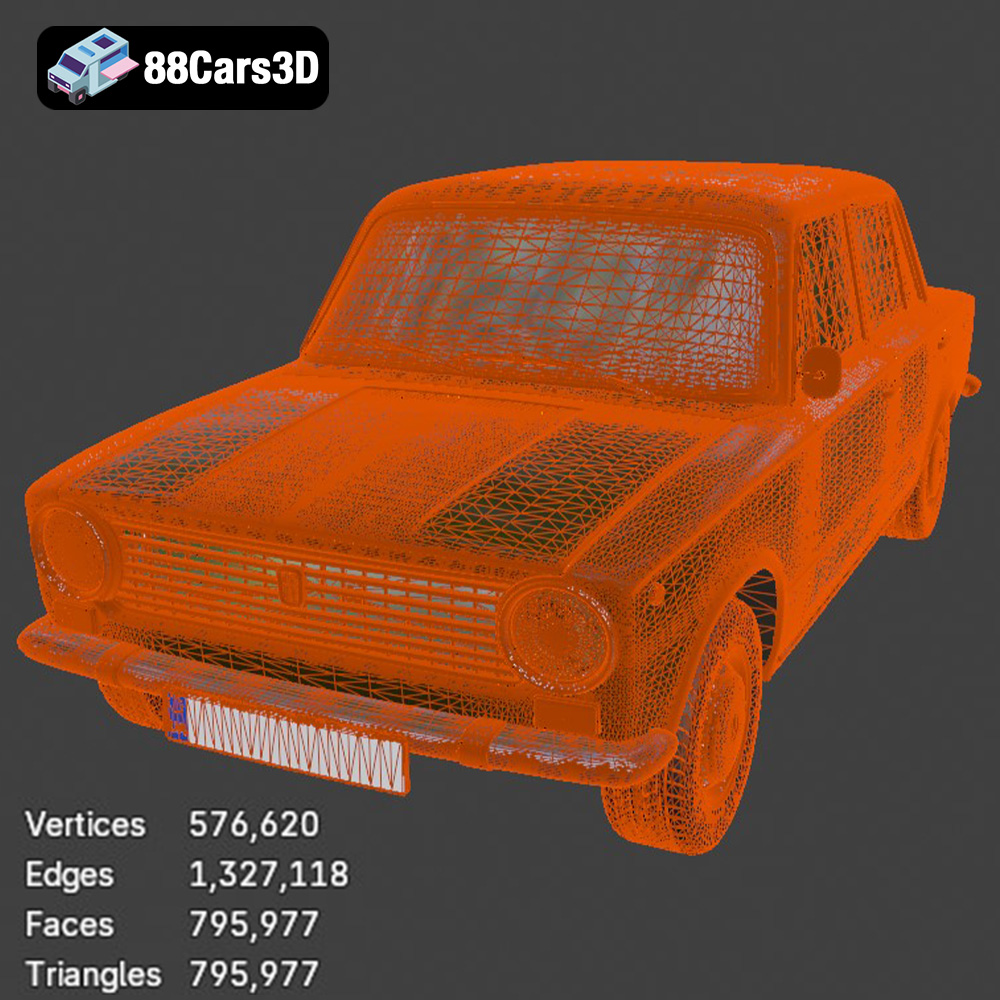
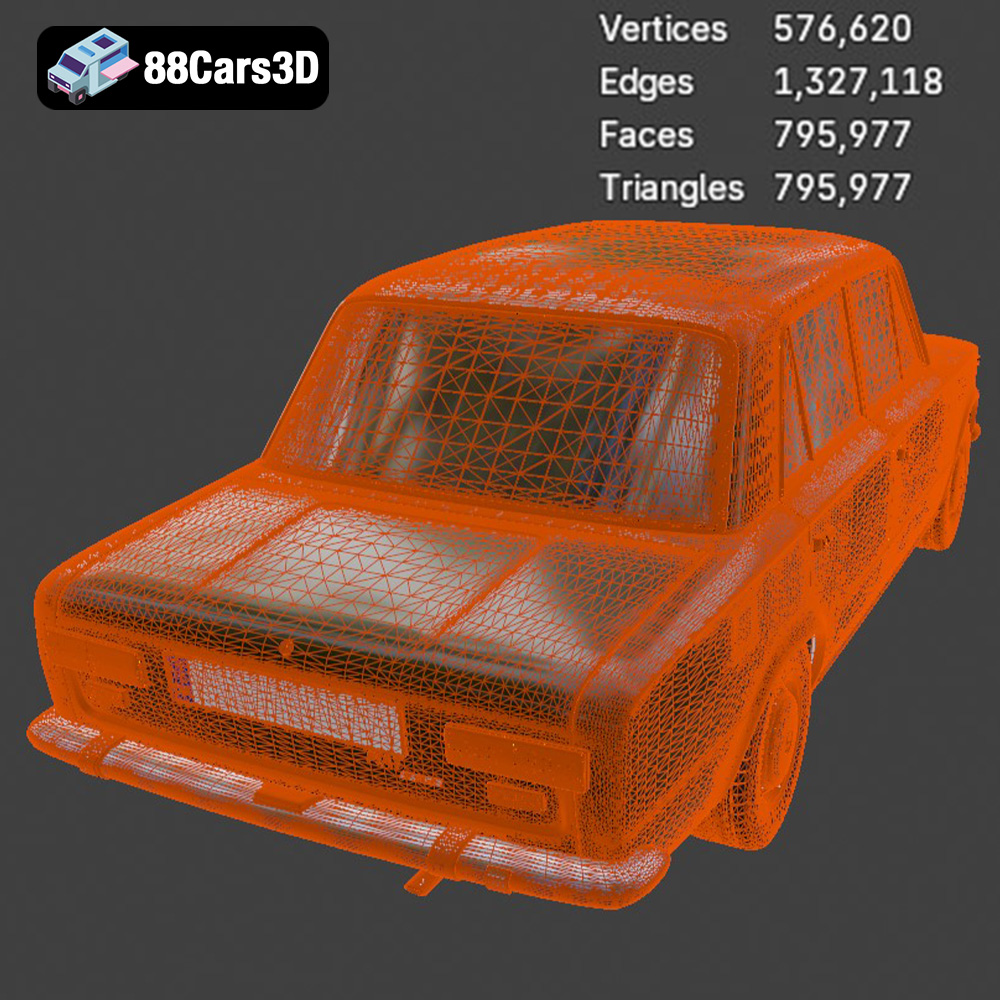
For game developers, the balance between visual quality and performance is a constant challenge. The Fiat 124 Mk1 1966 3D model is “game-ready” with approximately 200,000 triangles. This polycount strikes an ideal balance, providing high-end visual realism without burdening real-time engines like Unreal and Unity. Its clean topology ensures seamless integration, preventing visual artifacts and simplifying UV mapping and texture application. This optimization is crucial for open-world games, racing titles, and simulators where multiple vehicles need to be rendered simultaneously without compromising frame rates, positioning it as a top-tier game asset.
The versatility of this model extends beyond gaming. Its real-world scale accuracy, based on actual vehicle chassis, makes it perfect for architectural visualizations (ArchViz) and professional automotive rendering. For AR/VR experiences, the optimized geometry and precise scale are critical for creating believable immersive environments, whether it’s a virtual showroom or a historical city walkthrough. The ability to customize body/tank colors, modify tire textures, and adjust material finishes (matte, gloss, metallic) allows artists to adapt the model to specific brand campaigns, lifestyle scenes, or studio lighting setups, achieving photorealistic results in rendering engines like V-Ray, Corona, or Octane.
The digital realm often intersects with the physical, and the Fiat 124 Mk1 1966 3D model is designed to bridge this gap. Convertible to the .stl format, it opens the door for 3D printing, catering to hobbyists and collectors who wish to hold a tangible piece of automotive history. Recommended scales (1:12, 1:18, 1:24) allow for various display sizes. Technical specifications like layer height (0.04–0.12 mm, with resin printing recommended for fine details), wall thickness (1.2–2.0 mm), and infill (20–30%) provide clear guidelines. The need for supports for detailed parts (exhaust, mirrors, steering wheel) and specific print orientation advice (frame angled, wheels separately) ensure successful prints, leading to high-quality physical replicas.
High-quality 3D car models are more than just pretty meshes; they are strategic investments that streamline professional workflows across various industries. The Fiat 124 Mk1 1966 3D model from 88cars3d.com offers immediate value through its multi-format availability and robust technical foundation, fitting seamlessly into diverse production pipelines.
For game studios, time is a precious commodity. Acquiring a pre-optimized game asset like the Fiat 124 Mk1 1966 significantly accelerates development. The model’s approximate 200,000 triangle count is specifically designed for real-time performance. Its clean topology and proper pivot setups mean less time spent on optimization, retopology, or rigging. Developers can import the .fbx or the specifically prepared .unreal asset directly into Unreal Engine or Unity, apply PBR materials, and immediately integrate it into gameplay logic. Imagine populating a historical city environment in a driving simulator or a narrative-driven adventure game with authentic vintage vehicles without the lengthy process of modeling from scratch. This model serves as an excellent base for creating variations, destructions, or even AI driver behaviors, providing a solid foundation for robust game experiences.
In architectural visualization, context is everything. Placing a historically accurate vehicle like the Fiat 124 Mk1 1966 into an ArchViz scene can instantly elevate its narrative and realism. Whether it’s illustrating a period-correct street scene, a vintage garage, or a stylish driveway, the model’s detailed exterior and interior enhance the storytelling. For studio rendering, its accurate geometry and separated components (wheels, suspension, steering) allow for dynamic camera angles and sophisticated lighting setups, perfect for product showcases or lifestyle imagery. Artists can easily import the .max, .blend, or .fbx into their rendering software (e.g., 3ds Max, Blender, Cinema 4D, Maya), adjust materials for photorealistic surfaces, and achieve stunning automotive rendering results that captivate clients and audiences.
Professional projects often require a degree of customization. The Fiat 124 Mk1 1966 3D model supports this flexibility through its well-structured design and included file formats. Artists can easily change body colors to match specific brand palettes or historical accuracy, modify tire textures for off-road or street variants, and fine-tune material finishes from matte to gloss or metallic. This adaptability allows for rapid iteration and ensures the model can be tailored to meet precise project requirements without compromising its core quality. For instance, in an AR configurator, users could change the paint color in real-time, showcasing the model’s customization potential.
Investing in high-quality 3D car models is a strategic decision that offers numerous benefits beyond the immediate visual appeal. For studios, independent creators, and businesses, it translates into efficiency, quality, and a competitive edge.
Modeling a complex vehicle from scratch, especially one with historical accuracy like the Fiat 124 Mk1 1966, is an incredibly time-consuming and expensive endeavor. It requires specialized skills in CAD modeling, sculpting, retopology, UV mapping, texturing, and rigging. By sourcing pre-made, optimized assets from marketplaces like 88cars3d.com, developers can save hundreds of hours of labor, redirecting resources to other critical aspects of their projects. This not only accelerates development cycles but also significantly reduces production costs, making premium game assets and rendering models accessible to a wider range of creators.
A well-chosen 3D model can significantly enhance the narrative and immersion of any visual project. The Fiat 124 Mk1 1966, with its unique character and historical significance, can evoke nostalgia, provide period context, or simply add a touch of authentic charm to a scene. In films, advertisements, or virtual reality experiences, highly detailed and accurate vehicles ground the audience in reality, making the digital world more believable and engaging. This emotional connection is invaluable for effective storytelling and branding.
The marketplace at 88cars3d.com is dedicated to providing these essential, high-fidelity 3D car models. Their commitment to detailed product descriptions, diverse file formats, and game-ready optimization ensures that customers receive assets that are immediately usable and of professional-grade quality. The inclusion of formats like .blend, .fbx, .obj, .glb, .stl, .ply, .unreal, and .max for the Fiat 124 Mk1 1966 3D model demonstrates a deep understanding of industry needs, catering to every step of the creative pipeline from initial concept to final rendering or physical production.
The journey of a 3D car model from concept to a fully realized digital asset is a complex one, requiring precision, technical expertise, and an understanding of diverse application needs. The Fiat 124 Mk1 1966 3D Model exemplifies the pinnacle of this craft, offering a meticulously detailed, game-ready, and highly versatile asset for professionals across various sectors. From its accurate exterior and immersive interior to its optimized geometry and broad file format support, it’s designed to streamline workflows and elevate the visual quality of any project.
Whether you are a game developer crafting immersive worlds, an architect visualizing future spaces, an advertiser creating compelling campaigns, or a hobbyist bringing digital models to life through 3D printing, the value of premium 3D car models is undeniable. They are not just objects; they are foundational elements that save time, reduce costs, and empower creators to push the boundaries of digital artistry and technological innovation. For your next project demanding authenticity and performance, consider the exceptional assets available at 88cars3d.com, where quality and versatility drive success.
Step into automotive history with the Fiat 124 Mk1 1966, a defining icon of mid-century Italian motoring. Introduced as a spacious yet compact family sedan, the 124 Mk1 is celebrated for its boxy but elegant styling, revolutionary lightweight construction, and peppy inline-four engine. This meticulously crafted 3D model captures the timeless charm of the original, from its distinctive round headlamps and signature chrome grille to the classic rear-wheel-drive stance and period-correct exhaust system. Constructed with exceptional attention to detail, this 3D model features game-ready optimization with an ideal triangle count that ensures peak performance without sacrificing visual fidelity. The clean topology guarantees seamless integration into game engines like Unreal and Unity, making it a perfect asset for developers, animators, and visualization artists seeking authentic mid-century vehicles. Perfect for historical city environments, classic car rally simulations, architectural visualizations, and immersive VR automotive showrooms.
$19.99
.1966
.blend
.fbx
.fiat
.glb
.max
.mk1
.obj
.ply
.rendering
.sedan
.stl
.unreal
124
car-3d-model
classic-car
game asset
game-ready
low-poly
optimized
vintage-car
VR/AR