Get 20% OFF All Premium 3D & STL Models!

The 2011 Mazda CX-5 marked a turning point for Mazda, showcasing their groundbreaking “Kodo: Soul of Motion” design philosophy. Now, thanks to advancements in 3D printing technology, you can own a miniature replica of this iconic crossover SUV. This guide will walk you through the entire 3D printing process, from selecting the right materials and preparing the STL files to post-processing and painting your finished model. Whether you’re a seasoned 3D printing enthusiast or a newcomer to the world of additive manufacturing, this comprehensive guide will provide the knowledge and techniques necessary to successfully 3D print the Mazda CX-5 2011 3D model. This popular model, available on platforms like 88cars3d.com, offers a fantastic opportunity to showcase the precision and detail achievable with modern 3D printing.
Before diving into the printing process, it’s crucial to understand the different file formats that house the 3D model data. The Mazda CX-5 2011 3D model, like many others available on 88cars3d.com, comes in a variety of formats, each with its own strengths and weaknesses.
The STL (Stereolithography) file format is the workhorse of 3D printing. It represents the 3D model’s surface geometry as a collection of triangles. This simplicity makes it universally compatible with virtually all 3D printing software and printers. However, STL files only store the shape of the object; they don’t contain any information about color, texture, or materials. When working with STL files, the mesh quality is paramount. A poorly constructed STL file with gaps, overlapping triangles, or flipped normals can lead to printing errors. Therefore, it’s essential to inspect the STL file in your slicing software and repair any issues before proceeding. Most slicing programs offer built-in repair tools to automatically fix common problems. The resolution of the STL file also matters. A low-resolution STL will result in a faceted, blocky print, while a high-resolution STL will capture more details but may require more processing power and increase print time. The STL files from 88cars3d.com are optimized for 3D printing, but inspecting them before starting is always a good practice.
The OBJ (Wavefront Object) format is a more versatile format than STL, as it supports color and texture information in addition to geometry. This makes it suitable for 3D printing models with multiple colors or complex surface details, provided your printer supports multi-material or full-color printing. However, OBJ files can be larger than STL files due to the additional data they contain.
The PLY (Polygon File Format) is another format that can store color and texture data. It’s often used for storing 3D scanned data and is known for its ability to represent complex shapes with high precision. However, PLY files may not be as widely supported as STL or OBJ files.
The BLEND file is the native file format for Blender, a popular open-source 3D modeling software. This format is incredibly useful if you want to customize the Mazda CX-5 3D model before printing. You can modify the geometry, add details, or even create variations of the model. However, you’ll need Blender installed to open and edit BLEND files. Before printing, you’ll need to export the modified model as an STL file.
The FBX (Filmbox) format is primarily used for animation and game development. It supports complex data such as animation rigs, textures, and materials. While FBX files can be imported into some slicing software, they are not the ideal format for 3D printing. Typically, you would use FBX to transfer the model between different 3D software applications and then export it as an STL file for printing.
The GLB format is designed for efficient transmission and loading of 3D models, especially in web and AR/VR applications. It’s a binary file format representing 3D models, retaining information about the model’s structure, textures, and animations. While excellent for previews and online distribution, it generally needs conversion to STL for 3D printing compatibility.
The MAX file is the native format for 3ds Max, another professional 3D modeling software package. Like BLEND files, MAX files allow for extensive customization of the 3D model. You’ll need 3ds Max installed to open and edit MAX files. For 3D printing, you’ll need to export the modified model as an STL file.
For 3D printing the Mazda CX-5 2011 3D model, the STL file format is the most practical and widely supported choice. Ensure the STL file is of good quality, with no errors or gaps in the mesh. Use slicing software to inspect and repair the file if necessary.
Once you have your STL file, the next step is to prepare it for printing using slicing software. This software converts the 3D model into a series of layers that the 3D printer can understand.
Choosing the right slicing software is crucial for achieving optimal print results. Popular options include Cura, Simplify3D, PrusaSlicer, and IdeaMaker. Each software has its own strengths and weaknesses, so it’s worth experimenting to find the one that best suits your needs. Cura is a free and open-source option that’s easy to use and has a large community, while Simplify3D is a paid option that offers more advanced features and customization options. PrusaSlicer is another excellent free option, known for its precise and efficient slicing algorithms.
The orientation of the model on the print bed can significantly impact the print quality, support requirements, and overall print time. For the Mazda CX-5 model, printing the main body at an angle (e.g., 45 degrees) can reduce the need for extensive supports on the curved surfaces. Experiment with different orientations in your slicing software to find the optimal configuration. Consider the position of the most detailed features, such as the front grille and rear bumper, and orient the model to minimize the need for supports in these areas. Supports are necessary to hold up overhanging parts of the model during printing. The type and placement of supports can be customized in your slicing software. For complex models like the Mazda CX-5, it’s generally recommended to use tree supports or customizable supports, which can be placed precisely where they are needed.
The Mazda CX-5 3D model description includes recommended scales of 1:12, 1:18, or 1:24. Choose a scale that suits your printer’s build volume and your desired level of detail. If the STL file contains errors, such as gaps or non-manifold geometry, you can use the repair tools in your slicing software or dedicated mesh repair software like MeshMixer or Netfabb to fix them. Repairing the model before slicing is essential for ensuring a successful print.
The choice of material will significantly affect the appearance, strength, and durability of your 3D printed Mazda CX-5 model.
PLA (Polylactic Acid) is a biodegradable thermoplastic that is easy to print and produces good results on most FDM (Fused Deposition Modeling) printers. It’s a good option for beginners due to its low printing temperature and minimal warping. However, PLA is not as strong or heat-resistant as other materials, so it may not be the best choice for models that will be exposed to high temperatures or stress.
PETG (Polyethylene Terephthalate Glycol-modified) is a more durable and heat-resistant alternative to PLA. It’s also relatively easy to print and offers good layer adhesion. PETG is a good choice for models that require more strength and durability.
ABS (Acrylonitrile Butadiene Styrene) is a strong and heat-resistant thermoplastic that is commonly used in automotive applications. However, it’s more difficult to print than PLA or PETG, as it requires higher printing temperatures and is prone to warping. ABS is best suited for experienced 3D printer users who have a printer with a heated bed and enclosure.
For the highest level of detail and the smoothest surface finish, resin printing (SLA or DLP) is recommended. Resin printers use liquid photopolymer resins that are cured by UV light. Resin printing can produce incredibly detailed models with layer heights as low as 0.025mm. However, resin printing is more expensive than FDM printing and requires more post-processing.
Once you’ve chosen your material, you need to configure your printer settings for optimal results.
Layer height determines the resolution of the print. Lower layer heights result in smoother surfaces and more detailed features, but they also increase print time. For the Mazda CX-5 model, a layer height of 0.1mm to 0.15mm is a good balance between detail and print time for FDM printing. For resin printing, layer heights of 0.04mm to 0.08mm are recommended.
Infill density affects the strength and weight of the model. Higher infill densities result in stronger and heavier models, but they also increase print time and material consumption. For the Mazda CX-5 model, an infill density of 20% to 30% is generally sufficient. The infill pattern can also affect the strength and appearance of the model. Common infill patterns include grid, honeycomb, and gyroid.
Print speed and temperature should be adjusted according to the material being used. Refer to the manufacturer’s recommendations for the optimal settings. Generally, slower print speeds result in better print quality.
Customize the support settings in your slicing software to optimize support placement and minimize material waste. Consider using tree supports or customizable supports, which can be placed precisely where they are needed. Adjust the support density, overhang angle, and support interface settings to achieve the best results.
After printing, some post-processing is typically required to achieve a finished look.
Carefully remove the supports from the model using pliers or a sharp knife. Be careful not to damage the model during support removal. Sand the model with progressively finer grits of sandpaper to smooth out any imperfections and layer lines. Start with a coarse grit (e.g., 220 grit) and gradually work your way up to a fine grit (e.g., 400 grit or higher).
Apply a coat of primer to the model to create a smooth surface for painting. Use a spray primer designed for plastics. After the primer has dried, sand it lightly with fine-grit sandpaper. Paint the model with acrylic paints or automotive paints. Consider using an airbrush for a more professional finish. Replicating Mazda’s signature factory finishes, such as Soul Red, will add authenticity to your model.
The Mazda CX-5 3D model likely includes separate parts for the wheels, doors, and steering components. Assemble these parts after painting using glue or screws. Ensure that the parts are properly aligned before securing them.
Even with careful preparation, you may encounter some common 3D printing issues.
Warping occurs when the corners of the model lift off the print bed. This is more common with materials like ABS. To prevent warping, ensure that the print bed is properly leveled and heated. You can also use a brim or raft to increase adhesion to the print bed.
Stringing occurs when thin strands of filament are left between different parts of the model. This is often caused by excessive retraction distance or temperature. Adjust the retraction settings in your slicing software to minimize stringing.
Layer adhesion issues occur when the layers of the model do not bond properly. This can be caused by low printing temperatures or insufficient cooling. Increase the printing temperature or reduce the cooling fan speed to improve layer adhesion.
Before starting the print, it’s helpful to estimate the print time and material cost. The slicing software will typically provide an estimate of the print time based on the selected settings. The material cost can be estimated based on the weight of the model and the price of the filament or resin. Keep in mind that these are just estimates, and the actual print time and material cost may vary.
By following these guidelines, you’ll be well-equipped to successfully 3D print the 2011 Mazda CX-5 model and create a stunning replica of this iconic vehicle. Remember to visit 88cars3d.com for more high-quality 3D car models optimized for 3D printing.
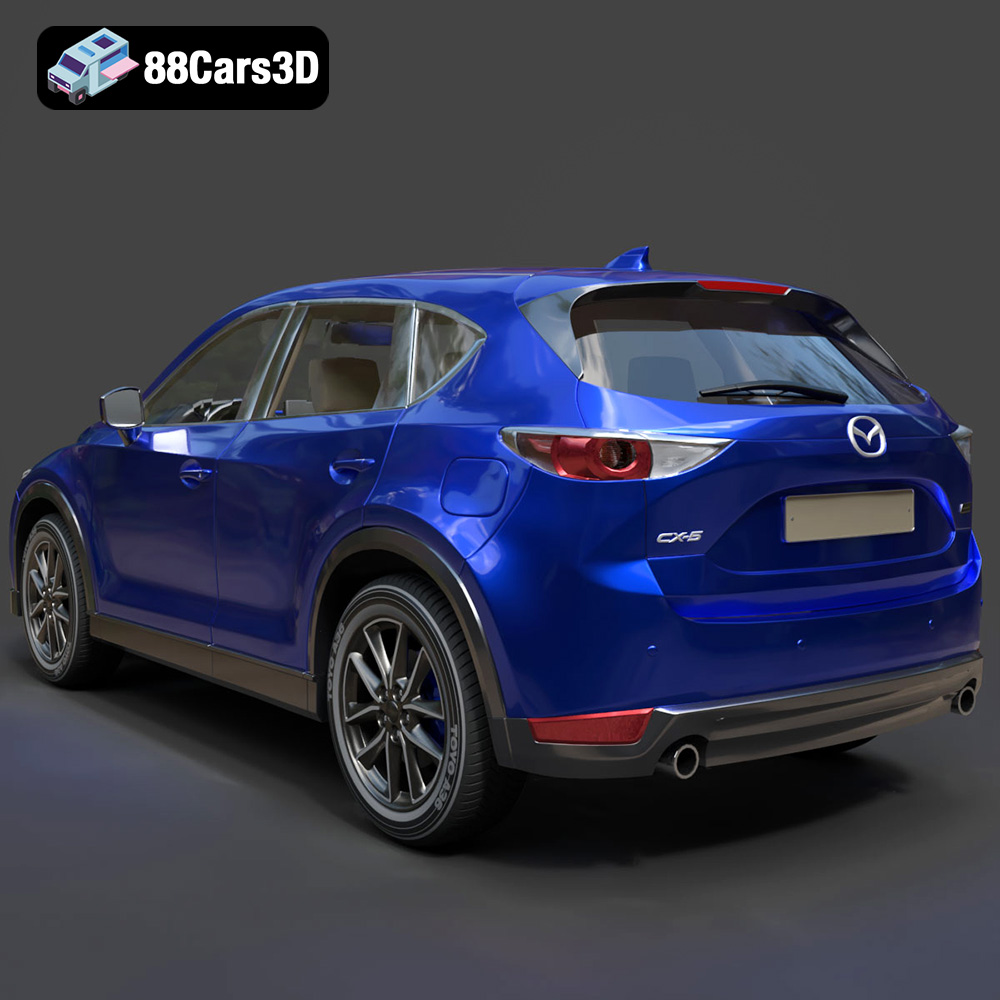
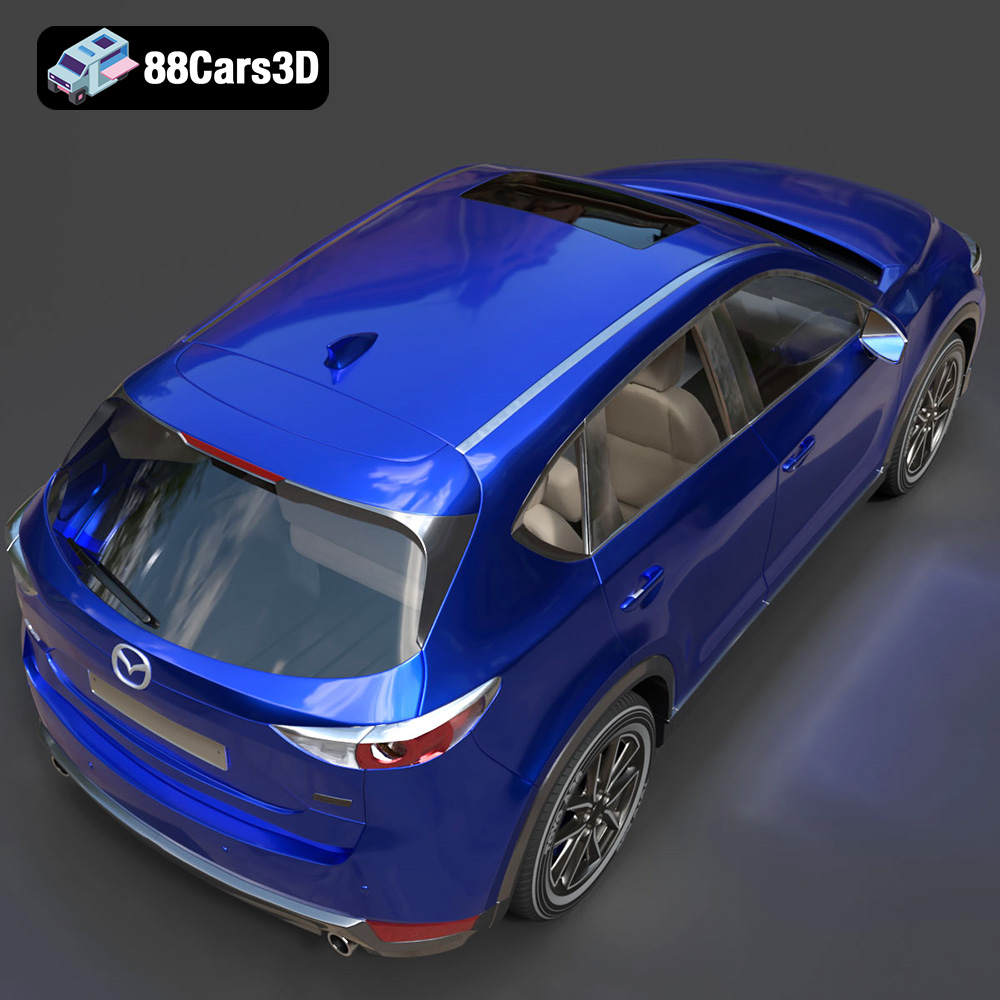
Experience the vehicle that debuted Mazda’s iconic “Kodo: Soul of Motion” design language with this highly detailed 3D model of the 2011 Mazda CX-5. This compact crossover SUV revolutionized its segment by blending sleek, athletic styling with exceptional functionality. Our 3D model captures its dynamic stance, prominent five-point front grille, swept-back headlights, and aerodynamic profile, offering a perfect digital twin of the beloved family vehicle.
$19.99
.2011
.blend
.crossover
.fbx
.glb
.max
.mazda
.obj
.ply
.rendering
.stl
.unreal
car-3d-model
cx-5
game asset
game-ready
kodo-design
low-poly
optimized
SUV
VR/AR