Get 20% OFF All Premium 3D & STL Models!

The Porsche 718 Cayman GT4 isn’t just a car; it’s a statement. A naturally aspirated flat-six symphony, a masterclass in aerodynamic efficiency, and a purist’s dream on the track. For automotive enthusiasts and digital creators alike, translating this visceral experience into the virtual realm presents an exhilarating challenge. It requires an unparalleled level of detail, technical precision, and an understanding of diverse digital pipelines. This is where high-fidelity 3D car models become indispensable tools, bridging the gap between real-world automotive brilliance and the boundless possibilities of digital creation.
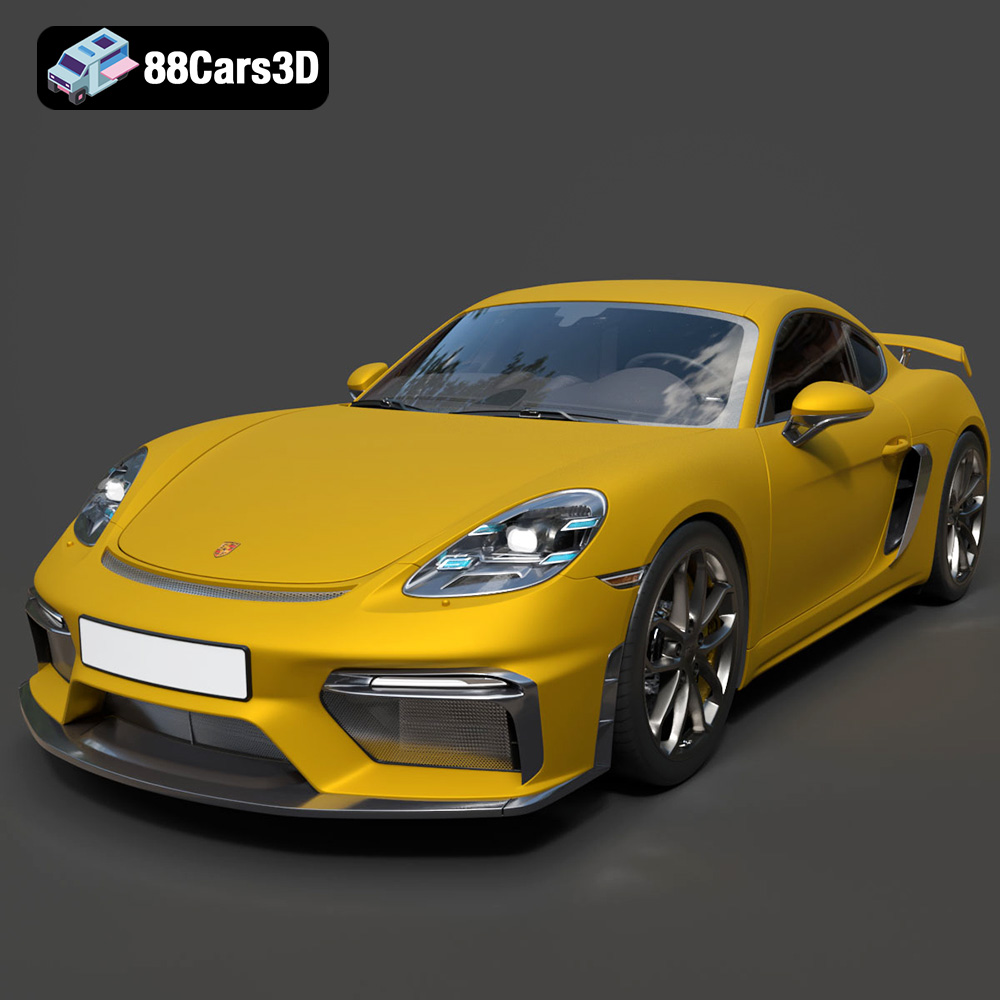
Imagine capturing the aggressive stance, the meticulously sculpted air intakes, the iconic rear wing, and the track-focused interior of the 2020 Porsche 718 Cayman GT4 with absolute fidelity. This isn’t just about aesthetics; it’s about providing a robust, optimized foundation for a myriad of applications, from photorealistic cinematic renders to immersive virtual reality experiences and high-speed racing game simulations. A premium asset, such as the Porsche 718 Cayman GT4 2020 3D model available on 88cars3d.com, empowers professionals to integrate this engineering marvel into their projects seamlessly, offering versatility across multiple software and engine environments.
The versatility of a high-quality 3D asset is often defined by the range of file formats it supports. Each format serves a specific purpose, catering to different software, workflows, and end applications. Understanding these distinctions is crucial for any professional working with 3D models. The Porsche 718 Cayman GT4 2020 3D model, for instance, comes equipped with a comprehensive suite of formats, ensuring maximum compatibility and utility.
.blend – Fully Editable Blender Scene with Materials
The .blend file is the native format for Blender, a powerful and increasingly popular open-source 3D creation suite. When you receive a .blend file, you’re not just getting the mesh; you’re getting a fully editable scene. This includes all the geometry, materials (with PBR textures often linked), lighting setups, cameras, and even animation data as it was authored in Blender. This format is ideal for Blender users who want full control over the asset, enabling them to dissect, modify, re-texture, re-rig, or animate the model directly within their preferred environment without any loss of data during import/export. It guarantees the purest form of the model as intended by the creator within the Blender ecosystem.
.fbx – Ideal for Unreal, Unity, and Real-Time Pipelines
FBX (Filmbox) is a proprietary file format owned by Autodesk and is one of the most widely adopted interchange formats in the 3D industry. It’s renowned for its ability to store a vast array of 3D data, including mesh geometry, materials (though sometimes requiring re-setup in the target software), textures, bones, skinning, camera data, and crucially, animation. Its robust support for animation makes it the go-to format for exporting animated characters and vehicles into game engines like Unreal Engine and Unity. When importing an FBX into these engines, developers can often retain pivot points, hierarchical structures, and even initial material assignments, streamlining the asset integration process for real-time applications.
.obj – Universal Format for Cross-Software Compatibility
OBJ (Object) is a fundamental and universal 3D geometry definition file format. Developed by Wavefront Technologies, it’s one of the oldest and most widely supported formats, making it excellent for cross-software compatibility. An OBJ file primarily stores geometry data – vertices, UV coordinates, normals, and polygonal faces. While it can reference an accompanying .mtl (Material Template Library) file for basic material properties (like color), it generally doesn’t embed textures or complex shading networks. Its strength lies in its simplicity and universal readability, making it perfect for transferring static meshes between almost any 3D software without conversion issues, though material re-application is typically necessary.
.glb – Optimized for AR, VR, and Browser-Based Display
GLB is the binary version of glTF (GL Transmission Format), an open-standard 3D file format developed by the Khronos Group. Often referred to as the “JPEG of 3D,” glTF/GLB is designed for efficient transmission and loading of 3D scenes and models by applications. GLB is particularly efficient because it bundles all necessary data – geometry, materials, textures, animations – into a single file, making it incredibly easy to use for web-based applications, augmented reality (AR), and virtual reality (VR) experiences. Its compact nature and optimization for real-time rendering make it an excellent choice for deploying interactive 3D content in browsers or mobile AR applications, where file size and loading speed are critical.
.stl – Suitable for 3D Printing Output
STL (STereoLithography) is the standard file format for 3D printing. Unlike other formats that describe surface geometry using polygons, an STL file represents a 3D model as a collection of unconnected triangular facets. It contains no color, texture, or material information, focusing solely on the object’s surface geometry. This makes it ideal for additive manufacturing processes, where a physical object is built layer by layer from digital data. For a detailed 3D car model like the Porsche 718 Cayman GT4, converting to .stl allows hobbyists and professionals to physically manifest the digital design on a 3D printer, though specific print settings and considerations are paramount for a successful outcome.
.ply – Precision Mesh Format for CAD or Analysis
PLY (Polygon File Format or Stanford Triangle Format) is another format that describes 3D objects as a collection of polygons, primarily used for storing data from 3D scanners. It can store a wider range of properties than STL, including color, transparency, surface normals, and confidence values for each vertex or face. This makes PLY suitable for applications requiring high-precision mesh data, such as scientific visualization, reverse engineering, CAD integration, or processing complex point cloud data from 3D scans. While less common for general asset exchange than FBX or OBJ, its ability to store rich attribute data makes it valuable in specific technical workflows.
.unreal – Engine-Ready Asset for Real-Time Environments
The “.unreal” format specifically refers to assets pre-packaged or optimized for direct integration into Unreal Engine. While Unreal primarily uses FBX for importing external assets, a “.unreal” file often implies a .uasset file, which is Unreal Engine’s native asset format. This means the model has likely undergone significant optimization, material setup, and potentially even blueprint integration within Unreal Engine itself. This format provides an immediate, drag-and-drop solution for developers, saving considerable time on import settings, material conversion, and initial setup, ensuring the Porsche 718 Cayman GT4 is ready to race or render within the engine without extensive post-import work.
.max – Editable 3ds Max Project for Animation and Rendering
The .max file is the native format for Autodesk 3ds Max, one of the industry-leading 3D modeling, animation, and rendering software packages. Similar to .blend files for Blender, a .max file contains the entire scene data, including all geometry, modifiers, materials (often leveraging advanced renderers like V-Ray or Corona), lighting, cameras, animation keyframes, and scene setup. This format is crucial for professionals who primarily work in 3ds Max, offering the highest level of control and fidelity for further development, complex rigging, advanced animation sequences, or high-end architectural visualization and cinematic rendering projects.
Creating a truly exceptional 3D car model, particularly for an iconic vehicle like the Porsche 718 Cayman GT4, is a blend of artistic skill and meticulous technical execution. It goes beyond simply replicating geometry; it involves understanding the vehicle’s design philosophy, its engineering nuances, and translating them into a digital form that performs flawlessly across diverse platforms. The 88cars3d.com Porsche 718 Cayman GT4 3D model exemplifies this dedication to detail, ensuring that every curve, every vent, and every interior component resonates with the real car’s prestige.
The exterior of the 2020 Porsche 718 Cayman GT4 is a masterclass in functional aesthetics. Its prominent fixed rear wing isn’t merely for show; it’s a critical component for downforce. The large functional air intakes are vital for cooling that formidable naturally aspirated engine. A high-fidelity 3D model must capture these elements with absolute precision. This includes:
While the exterior captures attention, the interior is where the driving experience is truly defined. For a track-focused machine like the GT4, the cockpit is a symphony of purpose-driven design. The digital model extends this precision to the inside, crucial for first-person perspective in games or detailed showroom experiences.
In the fast-paced world of game development and real-time visualization, stunning visuals must coexist with optimal performance. A beautiful model is useless if it causes frame rate drops or excessive load times. The Porsche 718 Cayman GT4 2020 3D model from 88cars3d.com is engineered with this crucial balance in mind, making it a “game-ready” asset.
The core challenge in creating game assets is to strike a perfect balance between visual fidelity and polygon count. Modern game engines like Unreal Engine and Unity are incredibly powerful, but even they have limits. An overly dense mesh, while beautiful in a static render, can cripple real-time performance. This model boasts an optimized triangle count that maintains breathtaking visual fidelity for close-up shots while remaining fully optimized for real-time rendering environments.
A static image, however beautiful, rarely captures the full essence of a high-performance vehicle. For racing simulators, cinematic cutscenes, or interactive configurators, the ability to animate the vehicle’s components is paramount. The Porsche GT4 model is designed with this in mind.
The utility of a premium 3D model extends far beyond traditional screen-based rendering. As technology evolves, so do the applications for high-quality digital assets. The Porsche 718 Cayman GT4 2020 3D model is designed to excel in emerging fields like Augmented Reality (AR), Virtual Reality (VR), and even the tangible world of 3D printing.
Augmented Reality (AR) and Virtual Reality (VR) are transforming how we interact with digital content. Automotive brands, particularly, are leveraging these technologies for marketing, sales, and design reviews. The GT4 model is perfectly suited for such immersive applications.
The journey of a 3D model doesn’t always end on a screen. For enthusiasts, designers, and collectors, the ability to 3D print a digital asset brings it into the physical world. The Porsche 718 Cayman GT4 model offers this unique possibility, convertible to .stl format for display-scale hobbyists.
At its core, a high-quality 3D car model is an invaluable asset for creating breathtaking automotive renders and visualizations. From marketing campaigns to cinematic presentations, the ability to generate photorealistic imagery is paramount. The Porsche 718 Cayman GT4 2020 3D model offers the foundation for exactly this, compatible with major 3D software platforms and cutting-edge rendering engines.
Achieving photorealism in automotive rendering requires more than just a detailed model; it demands careful attention to materials, lighting, and environment. The GT4 model provides the perfect starting point for these complex workflows.
One of the most significant advantages of a digital 3D model is the endless potential for customization. Unlike a physical car, the digital GT4 can be transformed to fit any creative vision without limitation.
The 2020 Porsche 718 Cayman GT4 represents the pinnacle of track-focused sports car engineering, and its digital counterpart stands as a testament to the power of modern 3D modeling. From its meticulously crafted exterior to its game-ready optimized interior, this 3D model is more than just a collection of polygons; it’s a versatile tool engineered for professional-grade applications. Whether you’re a game developer seeking realistic vehicle dynamics, an AR/VR specialist building immersive experiences, a rendering artist crafting photorealistic automotive visualizations, or a hobbyist dreaming of a 3D-printed masterpiece, this model provides an exceptional foundation.
The availability of numerous file formats – .blend, .fbx, .obj, .glb, .stl, .ply, .unreal, .max – ensures unparalleled compatibility across the industry’s leading software and engines. This flexibility, combined with its high fidelity and game-ready optimization, makes the Porsche 718 Cayman GT4 3D model a strategic asset for any creative professional. It saves valuable development time, streamlines workflows, and ultimately empowers artists and developers to bring their most ambitious visions to life with precision and performance. Discover the difference a truly premium 3D car model can make for your next project by exploring the comprehensive selection at 88cars3d.com.
The 2020 Porsche 718 Cayman GT4 is a mid-engine track weapon that perfectly balances motorsport heritage with modern performance. Known for its naturally aspirated 4.0-liter flat-six engine, aggressive aerodynamics, and unmistakable Porsche styling, this sports car delivers a pure, unfiltered driving experience. From its prominent fixed rear wing and large functional air intakes to its dual sport exhaust system and aggressive rear diffuser, every element is meticulously designed for maximum downforce and cooling.
This high-fidelity 3D model boasts exceptional topology and game-ready optimization, featuring carefully calculated triangle counts to ensure maximum performance without sacrificing detail. It maintains breathtaking visual fidelity suitable for close-up shots while remaining fully optimized for real-time rendering environments. Whether you are developing a high-speed racing simulator, crafting an immersive AR/VR showroom, or producing photorealistic cinematic animations, this digital asset provides the perfect foundation.
Perfect for high-speed racing games, virtual automotive configurators, photorealistic studio renders, and lifestyle visual campaigns.
.blend, .fbx, .obj, .glb, .stl, .ply, .unreal, .max
Tags:
porsche, 718-cayman-gt4, 2020, sports-car, track-car, game-ready, low-poly, optimized, car-3d-model, game-asset, rendering, vr-ar, blend, fbx, obj, glb, stl, ply, unreal, maxVespa VNB 125 3D Model 3D Printable STL
$39.99
.2020
.blend
.fbx
.glb
.max
.obj
.ply
.porsche
.rendering
.sports car
.stl
.unreal
718-cayman-gt4
car-3d-model
game asset
game-ready
low-poly
optimized
track-car
VR/AR