Get 20% OFF All Premium 3D & STL Models!

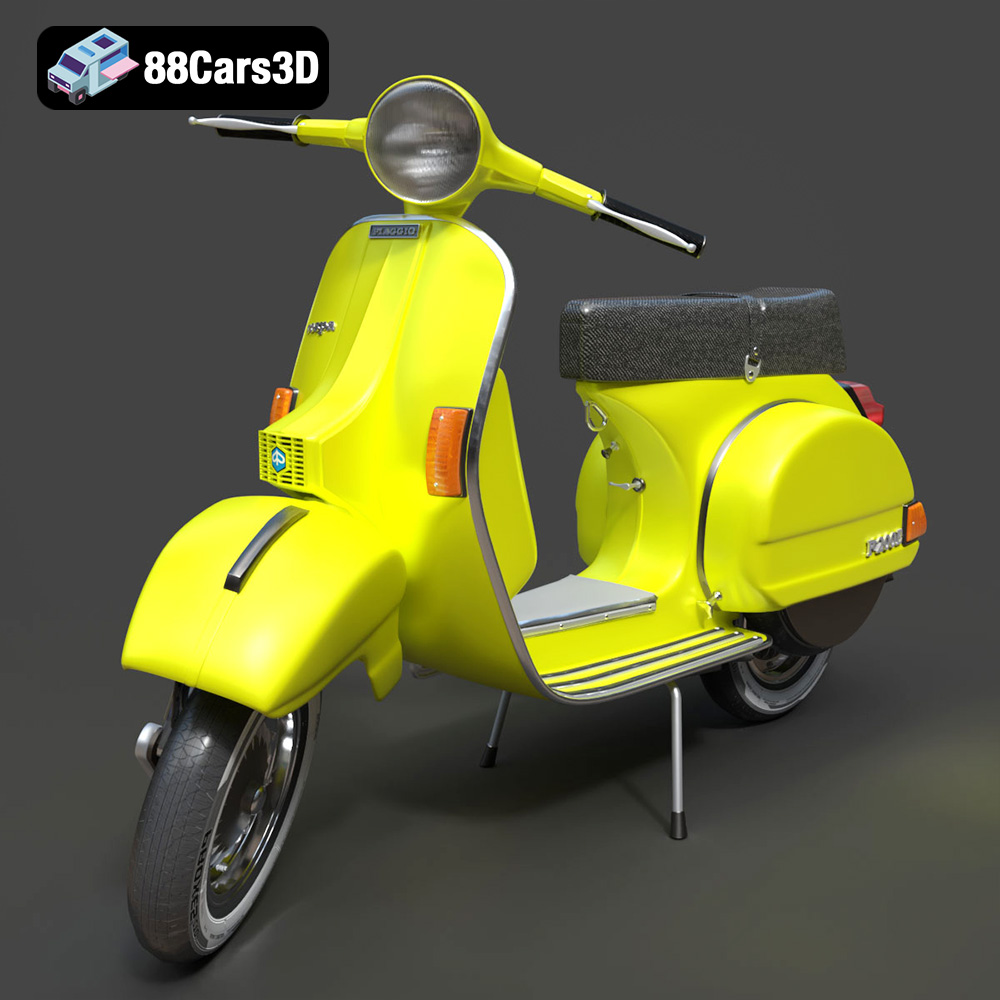
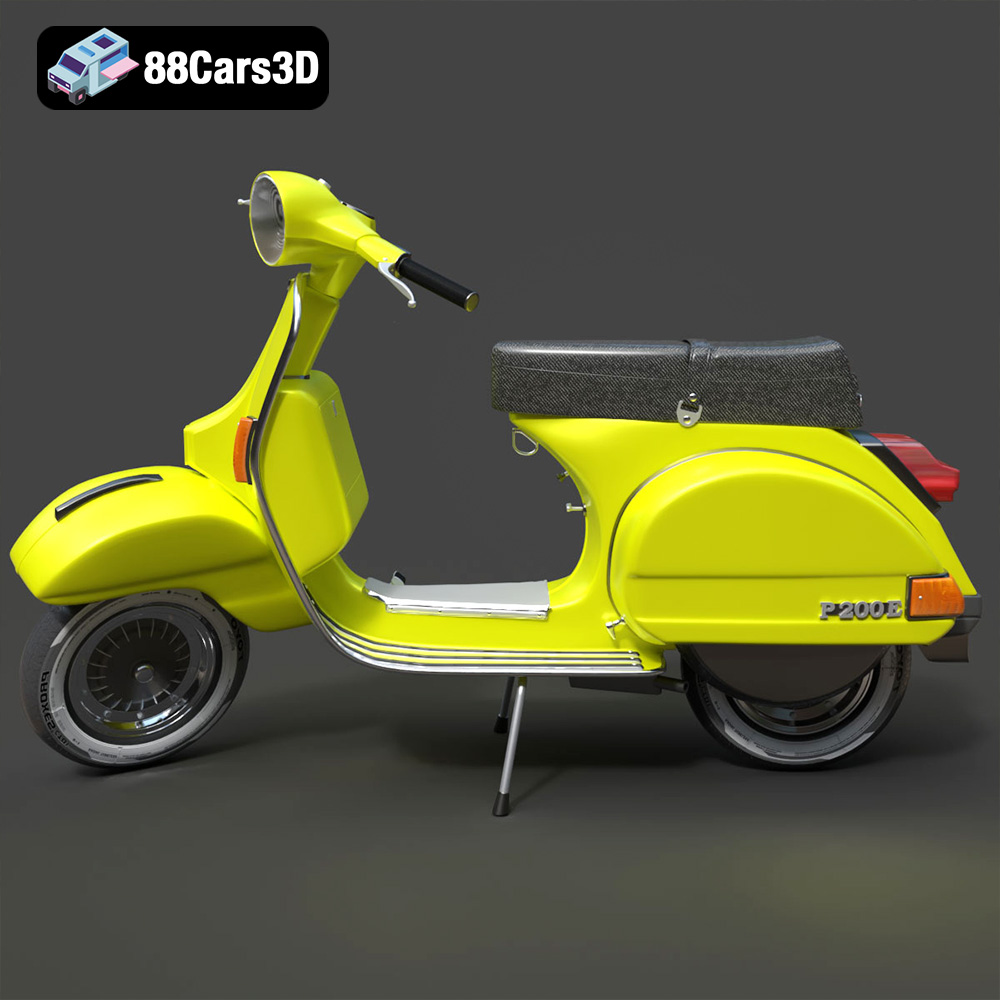
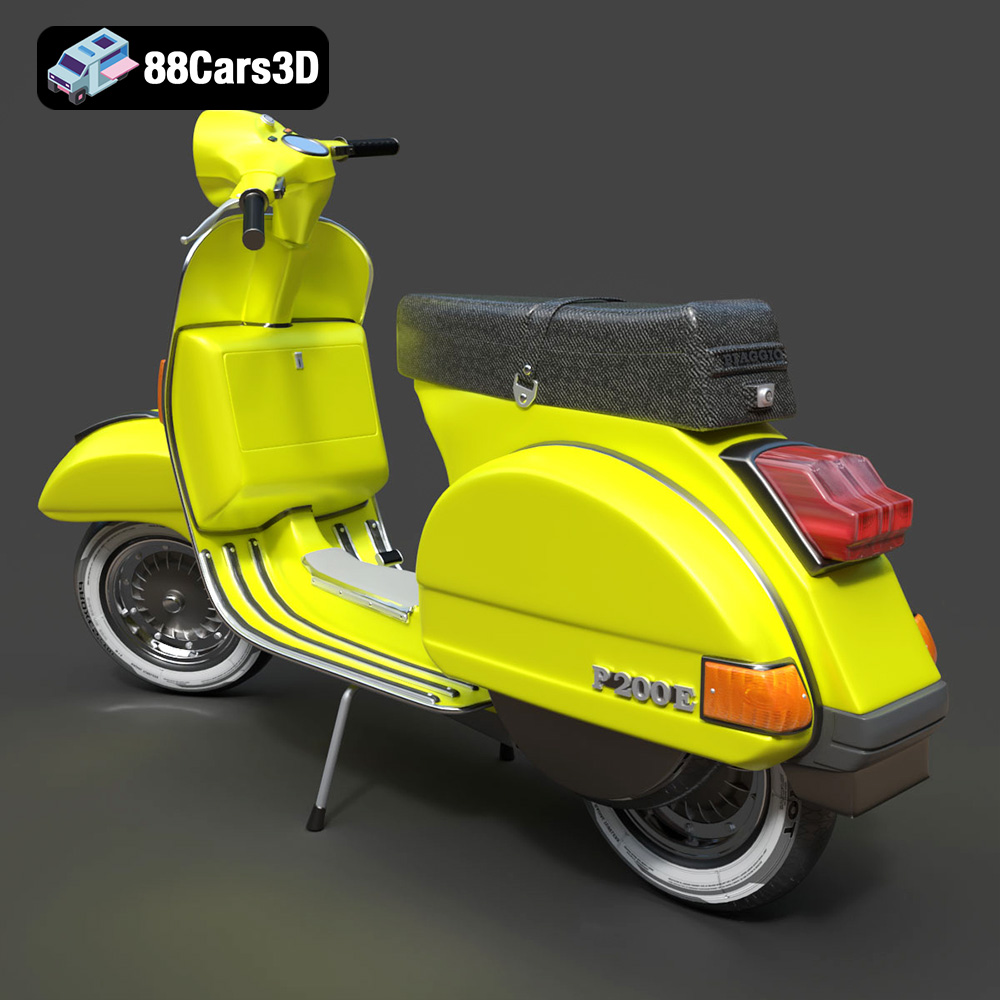
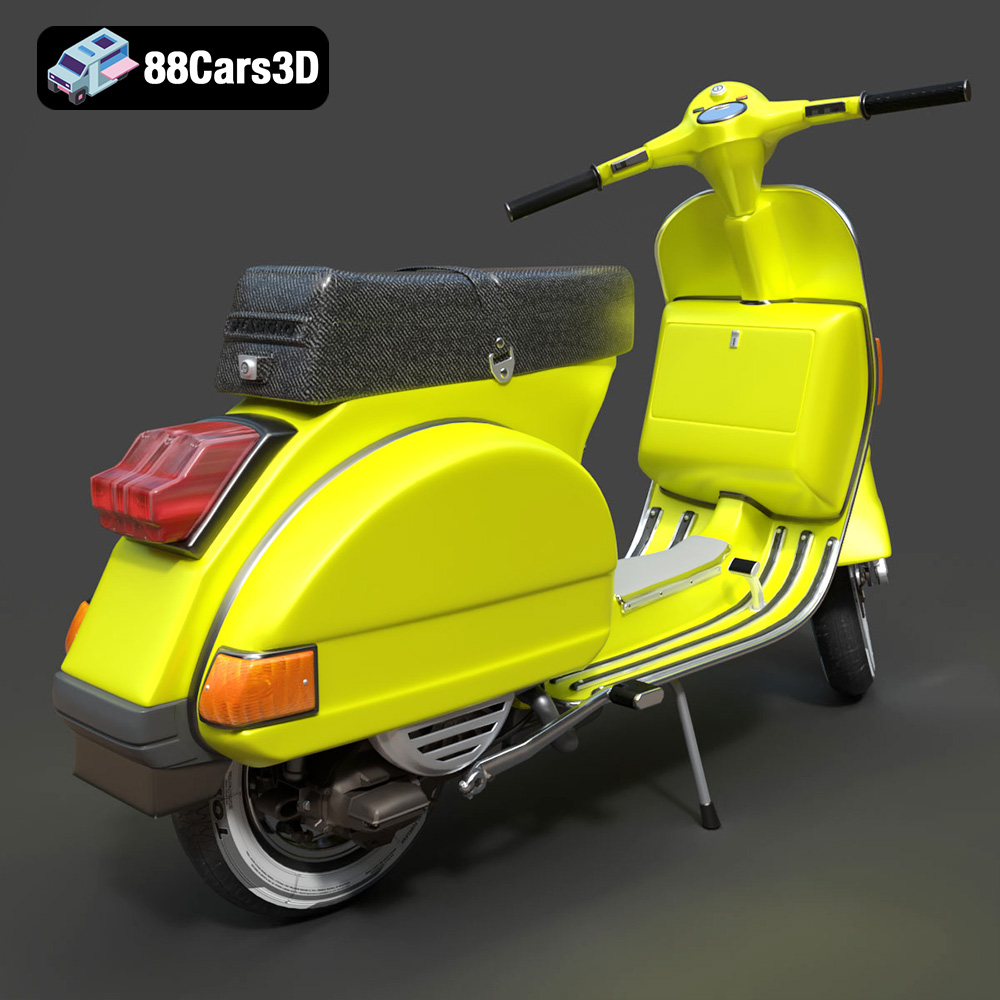
The Vespa P200E, a symbol of Italian design and scooter culture, can now grace your desk, shelf, or gaming world thanks to the power of 3D printing. With a meticulously crafted 3D model available at 88cars3d.com, enthusiasts and hobbyists can bring this classic scooter to life. This guide will walk you through every step of the 3D printing process, from pre-print preparation to post-processing finishing touches, ensuring a successful and rewarding experience.
The choice of 3D printer and material significantly impacts the final quality and durability of your 3D printed Vespa P200E. Considering the model’s intricate details and potential for functional parts, a careful decision is crucial.
* **Fused Deposition Modeling (FDM):** FDM printers are widely accessible and cost-effective. They use filaments like PLA, PETG, and ABS. While suitable for larger components like the Vespa’s frame, FDM may struggle to capture the finest details of the engine housing or instrument cluster.
* **Resin Printing (SLA/DLP/MSLA):** Resin printers excel at producing high-resolution prints with exceptional detail. They are ideal for smaller components like the wheels, handlebars, and intricate engine parts. Resin prints, however, may require more post-processing and can be more brittle than FDM prints. For the Vespa P200E, resin is highly recommended due to the level of details.
* **PLA (Polylactic Acid):** An excellent general-purpose filament for FDM printing. PLA is biodegradable, easy to print, and available in a wide range of colors. It’s suitable for non-functional parts like the Vespa’s frame.
* **PETG (Polyethylene Terephthalate Glycol):** A more durable and heat-resistant alternative to PLA. PETG is a good choice for parts that may be exposed to higher temperatures or require more strength, such as the wheels and suspension components.
* **ABS (Acrylonitrile Butadiene Styrene):** A strong and heat-resistant filament that’s often used for functional parts. ABS is more challenging to print than PLA and PETG, requiring a heated bed and enclosure to prevent warping.
* **SLA Resin:** Offers the highest level of detail and is ideal for smaller, intricate components. Various types of resin are available, including standard resin, tough resin, and flexible resin. Choose a resin that suits the specific requirements of each part.
The digital blueprint of your Vespa P200E exists in various file formats, each with its own strengths and weaknesses concerning 3D printing. Choosing the correct format ensures compatibility, quality, and ease of use throughout the printing process.
STL (Stereolithography) is the de facto standard file format for 3D printing. It represents the surface geometry of a 3D object as a collection of triangles. Its simplicity makes it universally compatible with slicing software and 3D printers. The STL format, however, only stores the mesh data, lacking color, texture, or material information. Because of this, it works best when paired with post-processing techniques like painting. For the Vespa P200E, the provided STL files (available at 88cars3d.com) are ideal for direct import into your slicer.
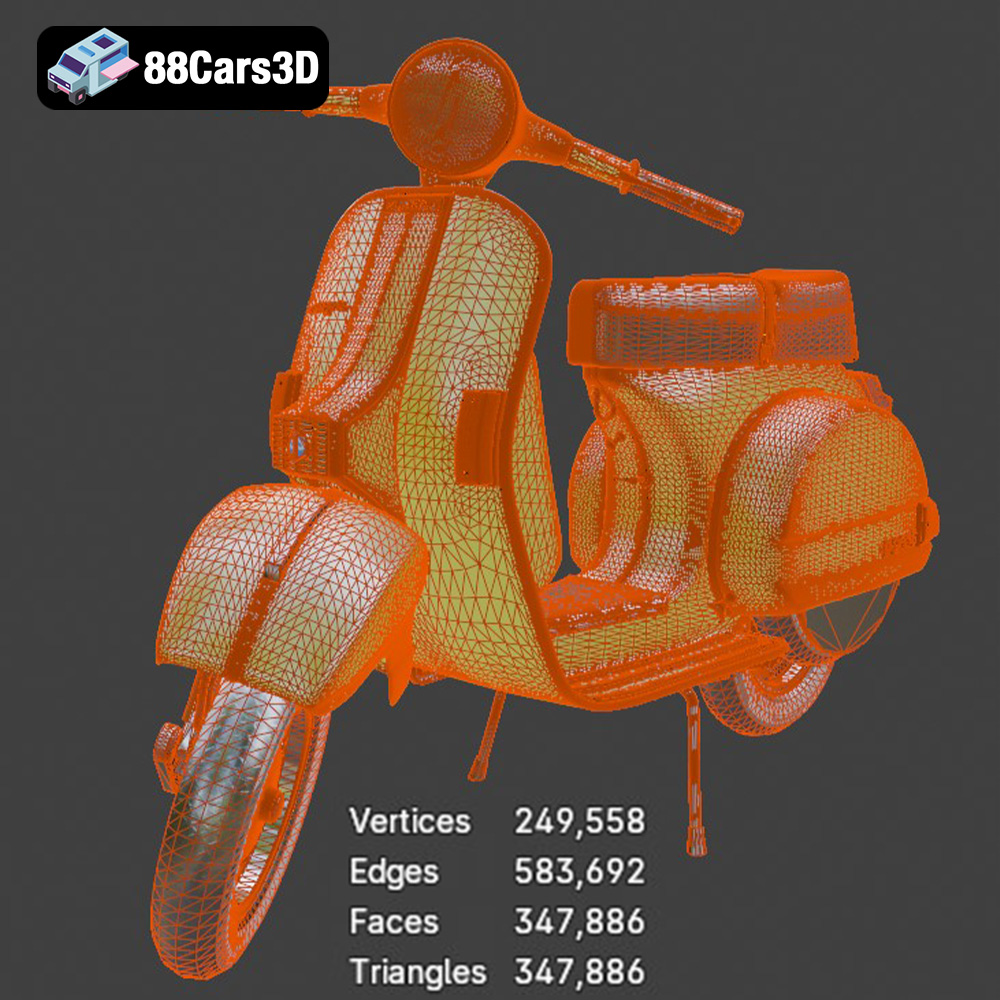
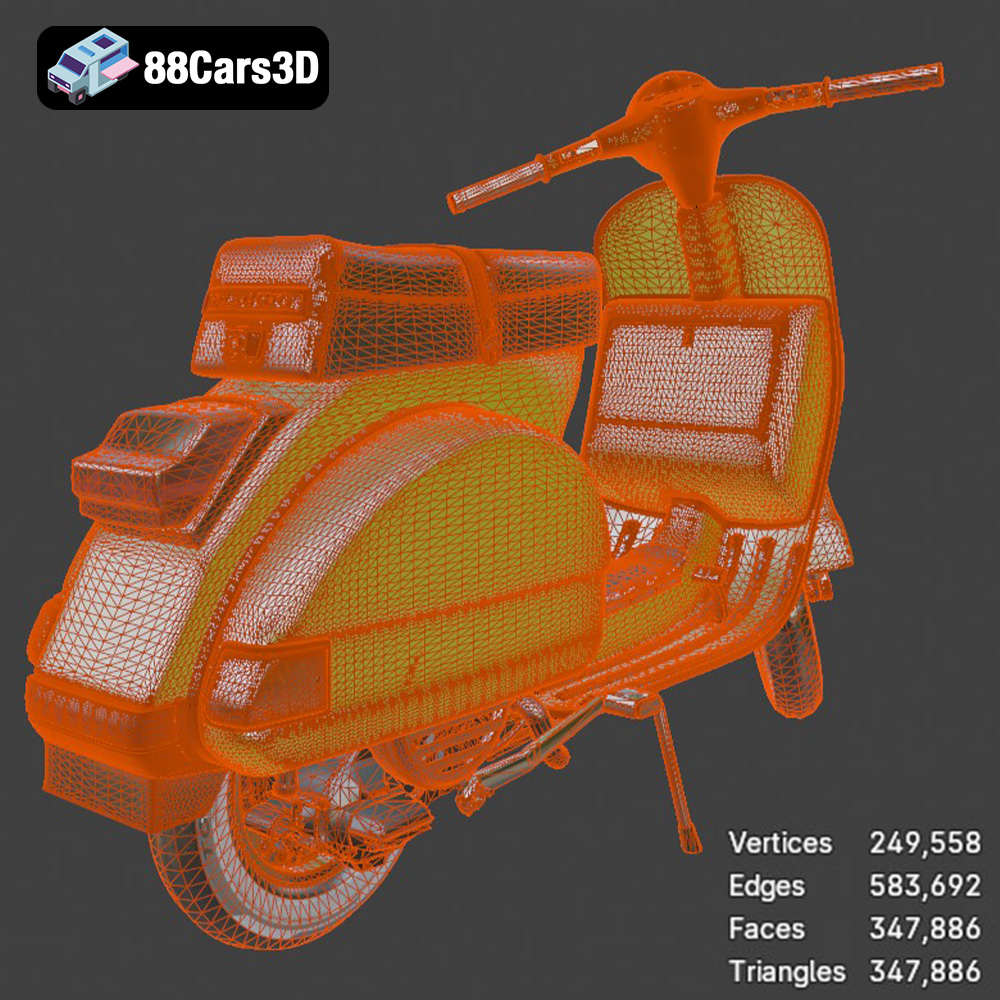
Mesh quality within an STL file is crucial. A poorly optimized mesh can lead to faceting, inaccuracies, and printing issues. Ensure that the STL file has a sufficient number of triangles to capture the model’s curves and details accurately. Repairing mesh errors, such as non-manifold edges or holes, within your slicing software is critical for successful printing. The STL file must be “watertight,” meaning it forms a closed, continuous surface. Slicing software typically includes tools to automatically detect and repair these common issues.
OBJ (Object) is another common 3D file format that, unlike STL, can store color and texture information. This makes it suitable for colored 3D prints (although this requires specialized printers). OBJ files are compatible with most 3D software and slicing programs.
PLY (Polygon File Format) is designed for storing 3D data acquired from scanning technologies. It can store color, normals, and other properties per vertex, allowing for highly detailed and accurate representations of 3D objects. This format is often used in scientific and engineering applications.
BLEND files are native to Blender, a free and open-source 3D creation suite. This format preserves the entire Blender scene, including meshes, textures, materials, and animations. Using the .blend file for the Vespa P200E allows for extensive customization before exporting to a printable format.
FBX (Filmbox) is a proprietary format developed by Autodesk. It’s commonly used for exchanging data between different 3D software packages, including Maya, 3ds Max, and Unity. FBX files can store mesh data, textures, materials, and animation information.
GLB (GL Transmission Format Binary) is a binary file format that represents 3D models in a compact and efficient manner. GLB files are often used for web-based 3D viewing and augmented reality (AR) applications. The GLB format is great for previewing the Vespa P200E model in AR before committing to a print.
MAX files are native to 3ds Max, another professional 3D modeling and animation software package. Similar to BLEND files, MAX files store the entire scene, allowing for complete customization before exporting to a printable format.
Before sending the 3D model to your printer, careful preparation is essential to ensure a successful print. This involves using slicing software to convert the 3D model into instructions that your printer can understand.
* **Cura:** A free and open-source slicer that’s compatible with most FDM printers. Cura offers a wide range of settings and features, making it suitable for both beginners and experienced users.
* **Simplify3D:** A commercial slicer that offers advanced features and precise control over the printing process. Simplify3D is known for its excellent support and customization options.
* **ChiTuBox:** A popular slicer for resin printers. ChiTuBox offers specialized features for resin printing, such as hollowing, support generation, and exposure settings.
* **Orientation:** Proper orientation is crucial for minimizing support material and maximizing print quality. For the Vespa P200E frame, printing it at an angle (as recommended in the product description from 88cars3d.com) can provide better structural integrity and reduce the need for extensive support structures.
* **Supports:** Supports are necessary for overhanging features like the handlebars, exhaust, and mirrors. Use your slicing software to generate appropriate supports. Consider using tree supports or lightweight supports to minimize material usage and improve surface finish. For resin prints, carefully plan support placement to avoid damaging delicate features during removal.
* **Layer Height:** A lower layer height produces smoother surfaces and finer details. The product description recommends a layer height of 0.04–0.12 mm for resin printing. For FDM printing, a layer height of 0.1–0.2 mm is a good starting point.
* **Wall Thickness:** Increasing wall thickness enhances the strength and durability of the print. A wall thickness of 1.2–2.0 mm, as suggested in the product details, is generally sufficient for the Vespa P200E.
* **Infill Density:** Infill density affects the strength and weight of the print. A higher infill density increases strength but also increases material usage and print time. An infill density of 20–30%, as stated in the product description, is a good balance for most parts.
* **Print Speed:** Adjust print speed according to your printer and material. Slower speeds generally improve print quality but increase print time.
* **Temperature Settings:** Set the appropriate temperature for your chosen filament or resin. Refer to the manufacturer’s recommendations.
Achieving the best possible print quality for the Vespa P200E requires fine-tuning your printer settings. Consider these specific recommendations:
* **Orientation:** Angle the frame to distribute stress and minimize support material.
* **Infill:** Use a rectilinear or gyroid infill pattern for strength.
* **Supports:** Place supports strategically on the underside of the frame.
* **Orientation:** Print wheels flat on the build plate for optimal roundness.
* **Supports:** Use minimal supports to avoid damaging the tire treads.
* **Orientation:** Print handlebars upright with supports for the grips and controls.
* **Resolution:** Use a fine layer height to capture the intricate details.
* **Resolution:** Resin printing is recommended for the best detail.
* **Supports:** Carefully place supports to avoid damaging small features.
Post-processing is the key to transforming a raw 3D print into a finished masterpiece.
Carefully remove supports using pliers, cutters, or a sharp knife. Take your time to avoid damaging the print. For resin prints, soaking the part in warm water can soften the supports and make them easier to remove.
Sand the surface of the print to remove layer lines and imperfections. Start with coarse-grit sandpaper (e.g., 220 grit) and gradually move to finer grits (e.g., 400, 600, 800 grit) for a smooth finish. Wet sanding can help to reduce dust and improve the sanding process.
Apply a primer to the print to create a uniform surface for painting. Primer also helps to fill in small imperfections and improve paint adhesion. Use multiple thin coats of primer for the best results.
Paint the Vespa P200E with authentic factory colors or create your own custom design. Use acrylic paints or enamel paints, and apply multiple thin coats for a smooth, even finish. Consider using stencils or masking tape to create intricate details.
Assemble the printed parts using glue, screws, or friction fits. Ensure that all parts fit together properly and are securely attached.
Even with careful preparation, 3D printing can sometimes present challenges. Here are some common issues and their solutions:
* **Cause:** Uneven cooling or poor bed adhesion.
* **Solution:** Use a heated bed, apply adhesive to the build plate, or enclose the printer.
* **Cause:** Filament oozing from the nozzle during travel moves.
* **Solution:** Adjust retraction settings, reduce print temperature, or increase travel speed.
* **Cause:** Poor layer adhesion or insufficient heating.
* **Solution:** Increase print temperature, reduce print speed, or increase layer height.
* **Cause:** Insufficient support density or weak support structures.
* **Solution:** Increase support density, use stronger support structures, or adjust support placement.
The print time and material cost will vary depending on the size of the model, the print settings, and the chosen material. A 1:12 scale Vespa P200E can take anywhere from 10 to 30 hours to print using FDM, while a resin print can take 5-15 hours. The material cost can range from $5 to $20, depending on the type and quantity of filament or resin used.
3D printing the Vespa P200E 3D model download from 88cars3d.com is a rewarding project that combines technology, creativity, and a love for classic design. By following this comprehensive guide, you can overcome challenges and create a stunning replica of this iconic scooter. From choosing the right materials and optimizing print settings to mastering post-processing techniques, every step contributes to the final result. Whether you’re a seasoned 3D printing enthusiast or a beginner, the Vespa P200E is a project that’s sure to impress.
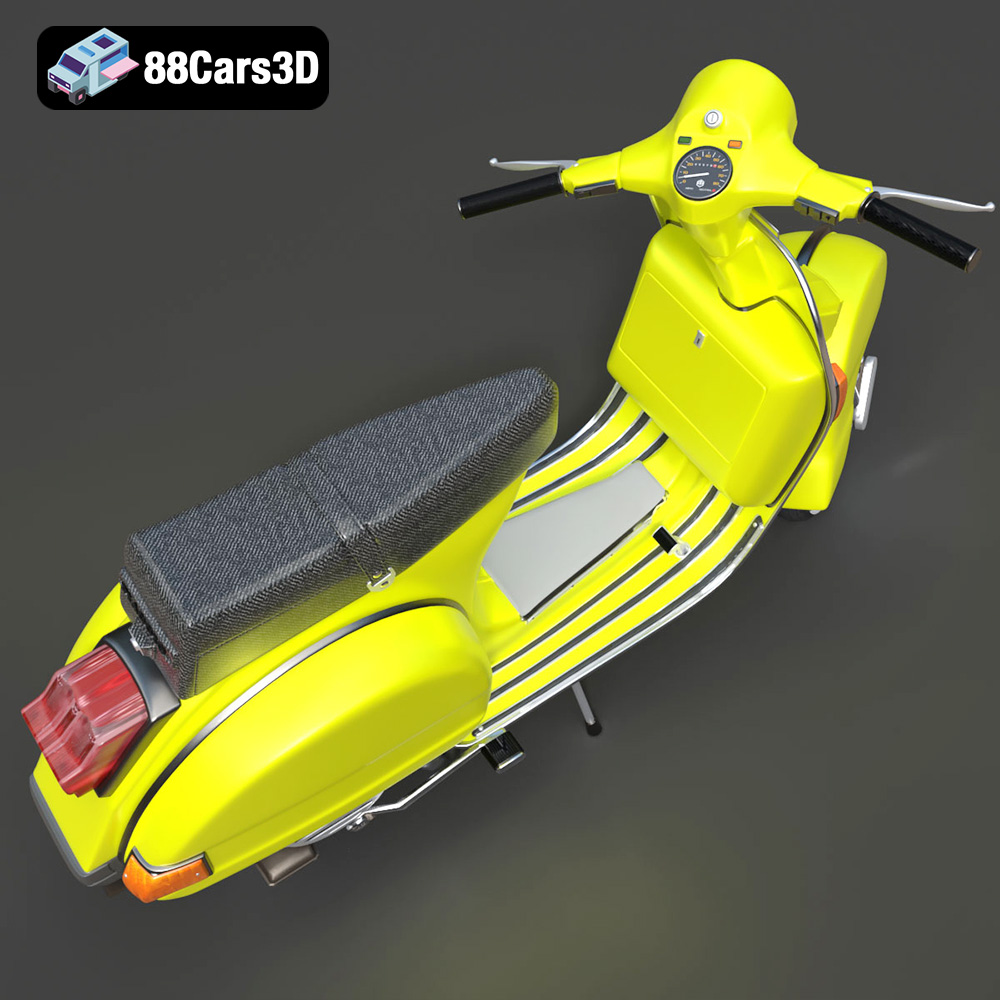
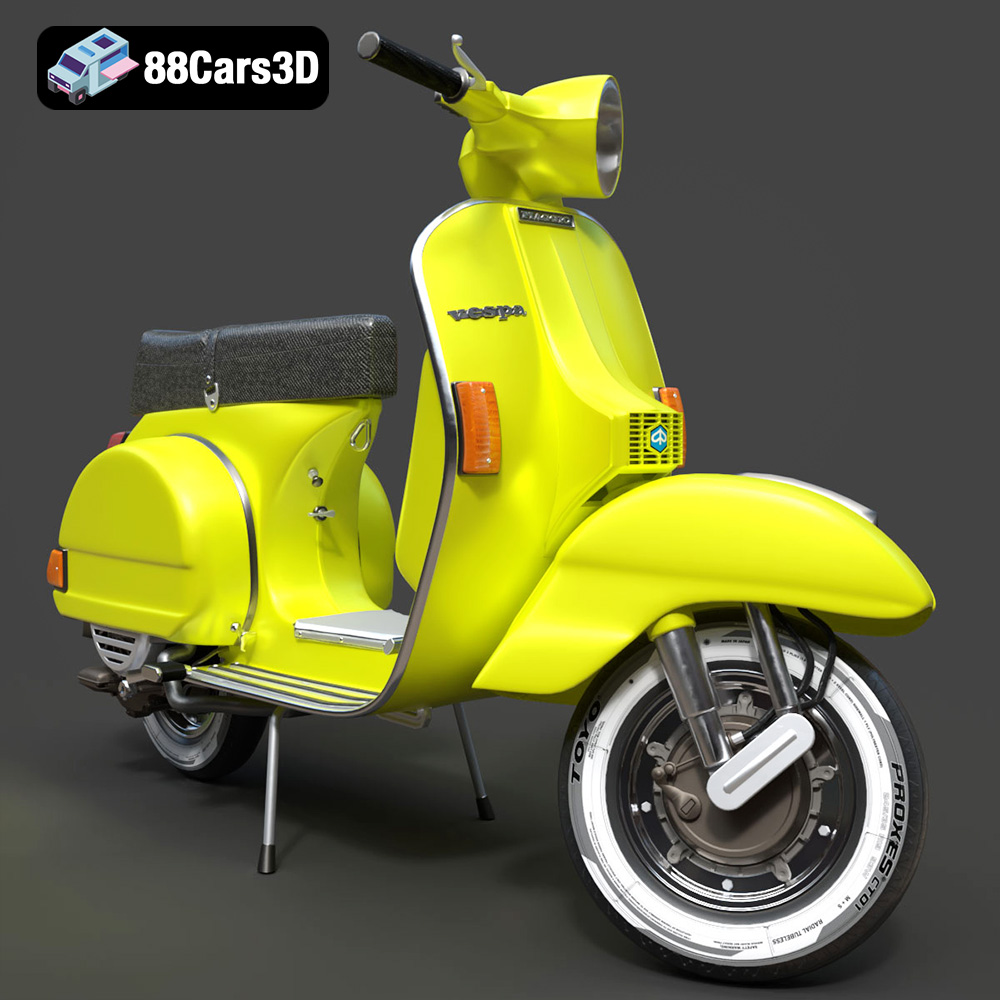
The Vespa P200E is a true icon of Italian design, celebrated for its timeless styling and reliable 2-stroke engine. This 3D model perfectly captures the scooter’s distinctive step-through frame, signature rear engine cowlings, and classic vintage aesthetic that made it a cultural phenomenon.
$39.99
.blend
.fbx
.glb
.max
.obj
.ply
.rendering
.scooter
.stl
.unreal
.vespa
.vintage
classic-scooter
game asset
game-ready
low-poly
motorcycle-3d-model
optimized
p200e
VR/AR