Get 20% OFF All Premium 3D & STL Models!

In the dynamic world of 3D design, where realism and efficiency are paramount, the demand for high-quality 3D models continues to skyrocket. From blockbuster cinematic productions to immersive virtual reality experiences and cutting-edge automotive design visualization, the foundation of every breathtaking digital scene lies in its assets. Specifically, for projects requiring vehicles, a meticulously crafted 3D car model can elevate an entire presentation, injecting an undeniable sense of authenticity and detail.
For professionals and enthusiasts alike, the pursuit of perfection in automotive rendering often leads to a crucial decision: building a model from scratch or leveraging a pre-made, expertly designed asset. While the former offers ultimate customization, the latter provides an invaluable head start, saving countless hours without compromising on fidelity. This is where premium 3D car models shine, offering a shortcut to stunning visuals.
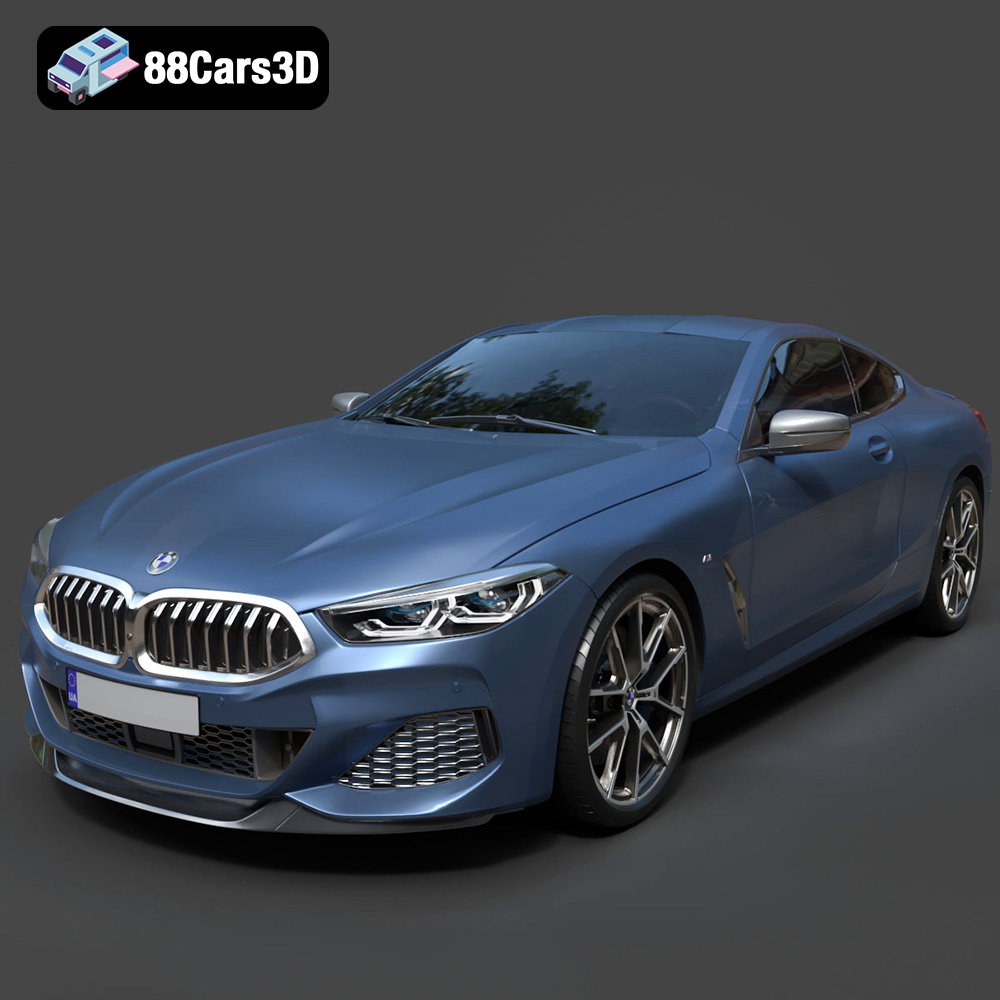
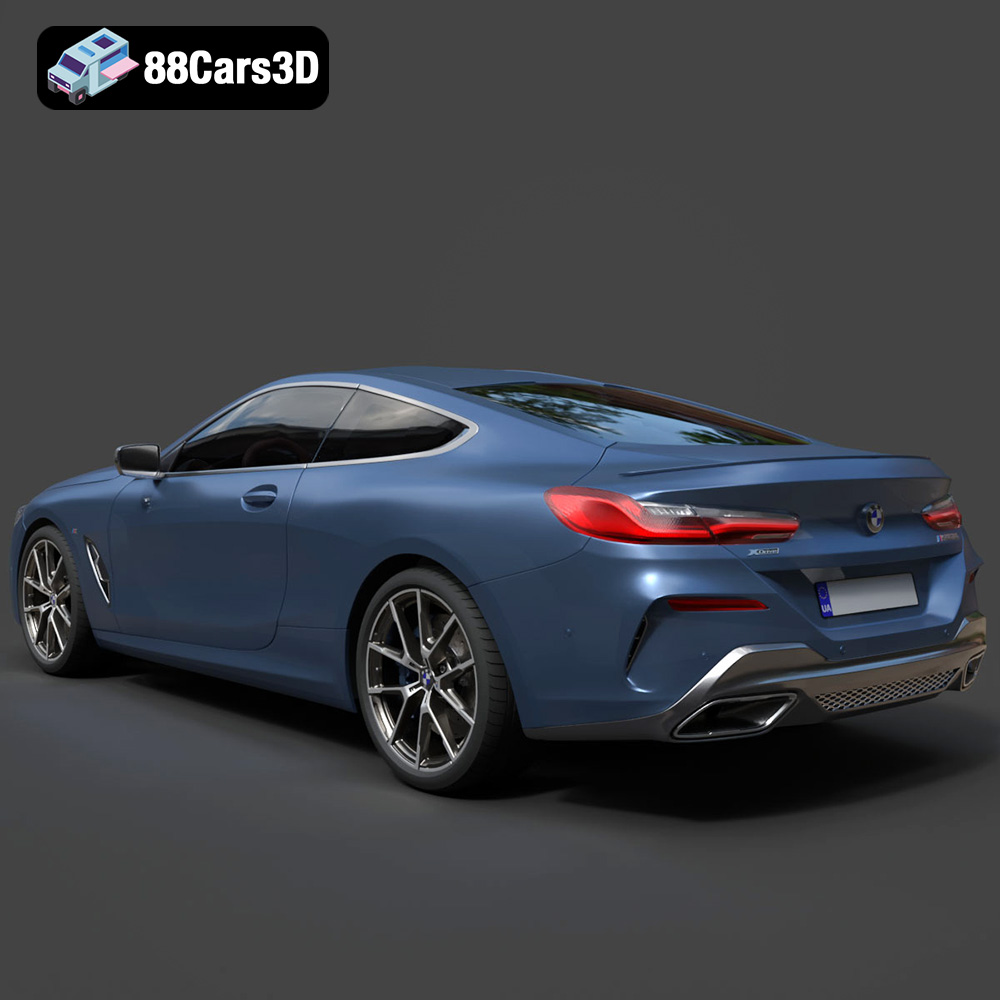
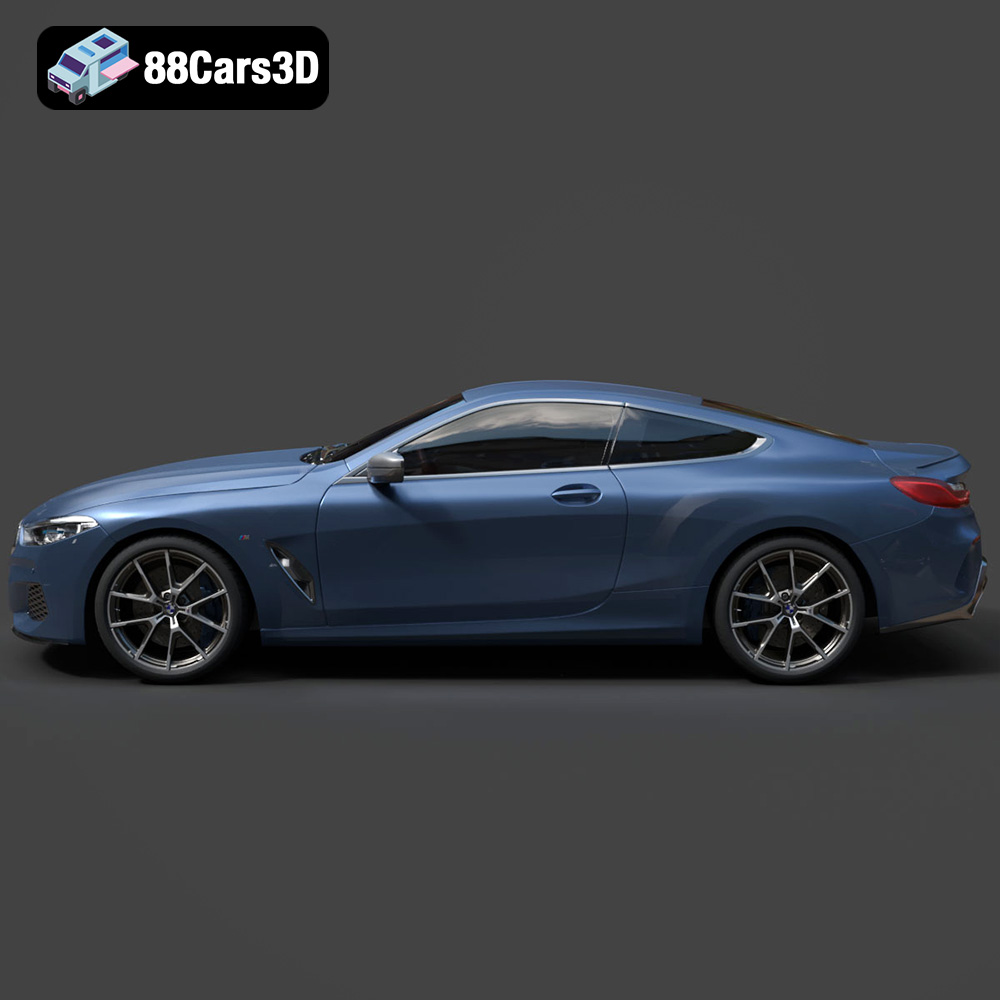
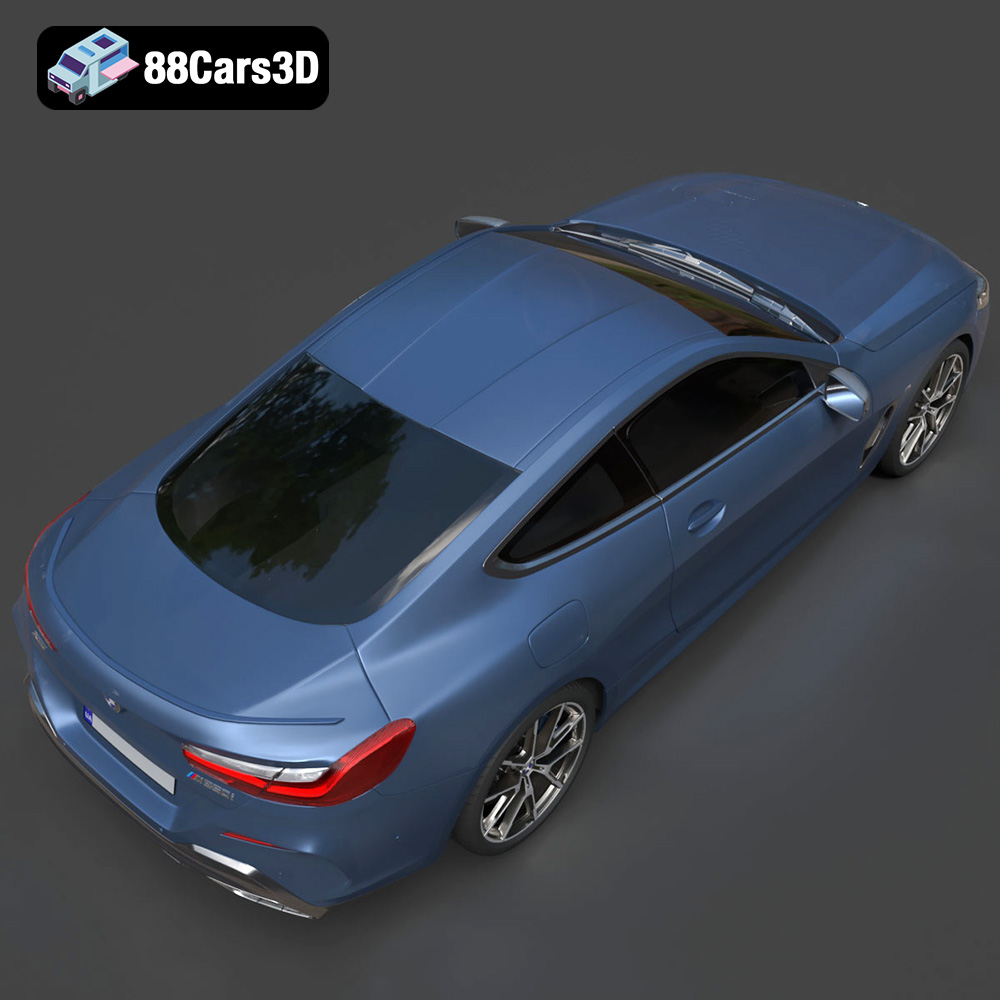
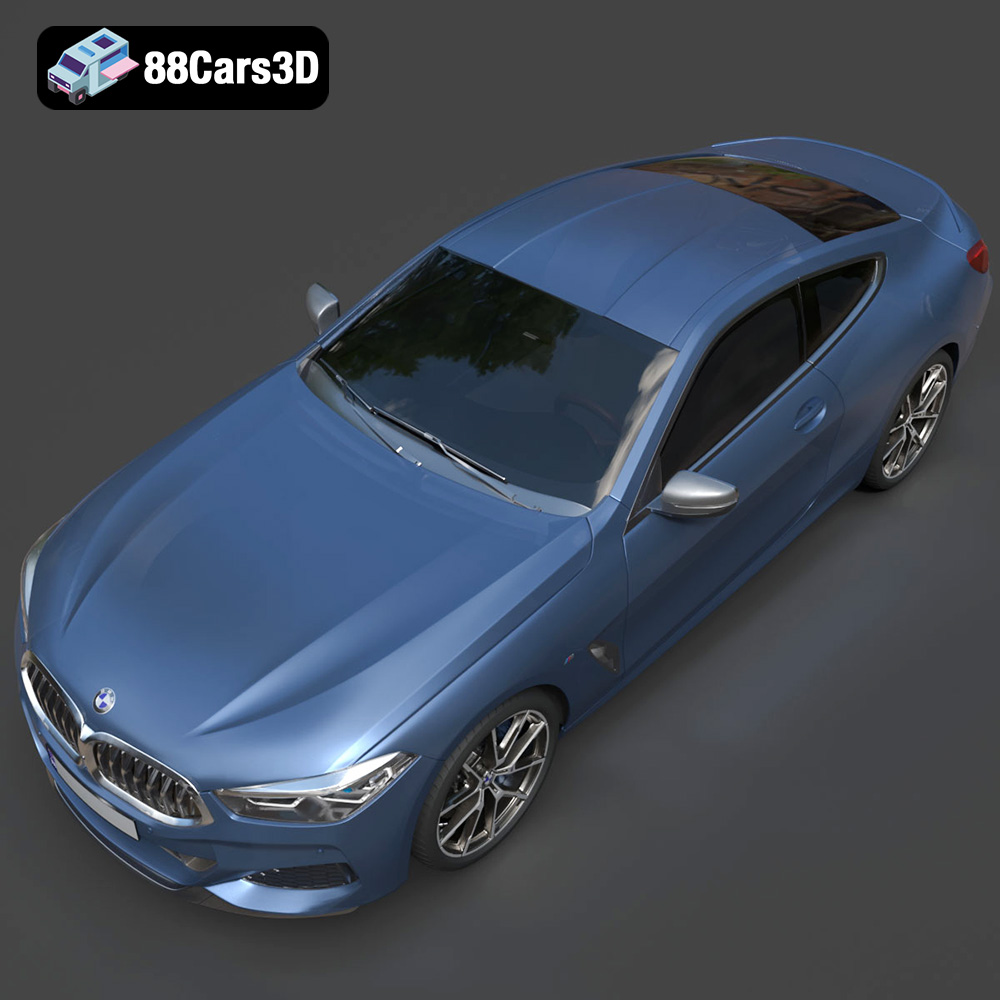
Today, we’re diving deep into the technical intricacies and creative potential unlocked by a prime example of such an asset: the BMW 8-Series M850i G15 Coupe 2019 3D Model. This particular model, available on 88cars3d.com, encapsulates the essence of luxury sports car design with unparalleled realism, making it an indispensable tool for a multitude of digital applications. We’ll explore how such a model is engineered, its versatility across various platforms, and why investing in professional-grade assets is a game-changer for serious 3D artists and developers.
The journey of a 3D model, from creation to deployment, often involves navigating a diverse landscape of file formats. Each format is designed with specific applications, compatibilities, and data efficiencies in mind. Understanding these nuances is critical for selecting the right asset for your project and ensuring a smooth workflow. The BMW 8-Series M850i G15 Coupe 2019 3D Model exemplifies versatility by being offered in a comprehensive suite of these formats, catering to virtually any professional pipeline.
The .blend file format is the native format for Blender, a powerful open-source 3D creation suite. When you acquire a .blend file for a 3D car model like the BMW M850i, you’re not just getting the mesh; you’re often receiving a fully editable Blender scene. This typically includes the model with its materials, textures, lighting setups, and even camera configurations. For artists working primarily in Blender, this format offers the most direct and uncompromised access to the model’s structure, allowing for easy modifications, custom animations, and direct rendering within Blender’s Cycles or Eevee engines. Its strength lies in its comprehensive scene data and the ability to preserve all aspects of the original Blender project.
.fbx (Filmbox) is a proprietary file format developed by Autodesk, widely recognized as the industry standard for 3D data exchange, particularly between different 3D software applications and game engines. It’s incredibly robust, capable of storing not just mesh data (vertices, faces, UVs) but also animations, skinning, camera information, and lighting. For game development, especially with Unreal Engine and Unity, .fbx is the preferred format due to its efficient handling of complex scene data and excellent compatibility. The .fbx version of the BMW M850i 3D model is typically optimized for real-time performance, with appropriate polygon counts and baked textures, making it truly “game-engine ready.”
.obj (Wavefront OBJ) is one of the oldest and most universally supported 3D file formats. It’s a simple, text-based format that primarily stores geometric data: vertices, UV coordinates, normals, and faces. Material definitions are typically linked via a separate .mtl (material template library) file. While it doesn’t support animation or complex scene data like .fbx, its strength lies in its unparalleled compatibility. Virtually every 3D software package can import and export .obj files, making it an excellent choice for cross-software workflows and as a fallback option when specific format support is uncertain. The .obj version of our BMW model ensures broad accessibility for any 3D artist.
.glb (GL Transmission Format Binary) is the binary version of .gltf, an open standard designed for efficient transmission and loading of 3D scenes and models by engines and applications. It’s quickly becoming the go-to format for augmented reality (AR), virtual reality (VR), and web-based 3D applications because it packages all necessary data (geometry, materials, textures, animations) into a single, compact file. This optimization allows for faster loading times and seamless integration into interactive web experiences or mobile AR apps, making the .glb variant of the BMW 8-Series M850i ideal for immersive digital showcases.
.stl (Stereolithography) is the de facto standard file format for 3D printing. It represents a 3D model as a series of connected triangles (a tessellation) that describe the surface geometry without any color or texture information. While simple, its ubiquity in the additive manufacturing industry makes it essential for anyone looking to physically prototype or print their 3D models. An .stl version of the BMW M850i would be suitable for creating physical scale models, rapid prototyping, or even custom car parts, demonstrating the model’s utility beyond purely digital realms.
.ply (Polygon File Format or Stanford Triangle Format) is another format for storing 3D data, particularly useful for scanned data, CAD, and scientific applications where precision and a wide range of properties are important. It can store various information beyond basic geometry, such as color, transparency, surface normals, and even confidence values for each vertex or face. While less common for general 3D model exchange, the .ply format for the BMW M850i could be valuable for advanced geometric analysis, reverse engineering, or specific industrial visualization tasks requiring high fidelity point cloud or polygonal data.
The .unreal designation typically refers to assets specifically prepared and optimized for direct import or use within Unreal Engine projects. While .fbx is the primary import format, an .unreal asset might imply a pre-configured package, potentially including correctly set up materials, LODs (Levels of Detail), collision meshes, and even blueprints for interactive elements. This format saves significant time in the asset integration pipeline, allowing developers to drop the BMW M850i directly into their scenes with minimal setup, ensuring it looks and performs as intended within the engine’s rendering framework.
Finally, .max is the native file format for Autodesk 3ds Max, a powerful 3D modeling, animation, rendering, and compositing software. Similar to .blend for Blender, a .max file contains the complete scene data, including all objects, materials, textures, lighting, cameras, and animation curves specific to 3ds Max. For users of 3ds Max, this format provides the highest level of detail and editability, making it ideal for high-end architectural visualization, product rendering, and animation studios that rely on 3ds Max for their primary workflow. The .max version of the BMW 8-Series M850i ensures seamless integration into professional visualization pipelines where 3ds Max is the tool of choice.
Automotive visualization is a highly specialized field demanding precision, aesthetic understanding, and technical prowess. It involves translating real-world vehicles into stunning digital representations for marketing, design reviews, and virtual showrooms. A high-quality 3D car model, such as the BMW 8-Series M850i G15 Coupe 2019, is the cornerstone of this process, enabling artists to create visuals indistinguishable from photography.
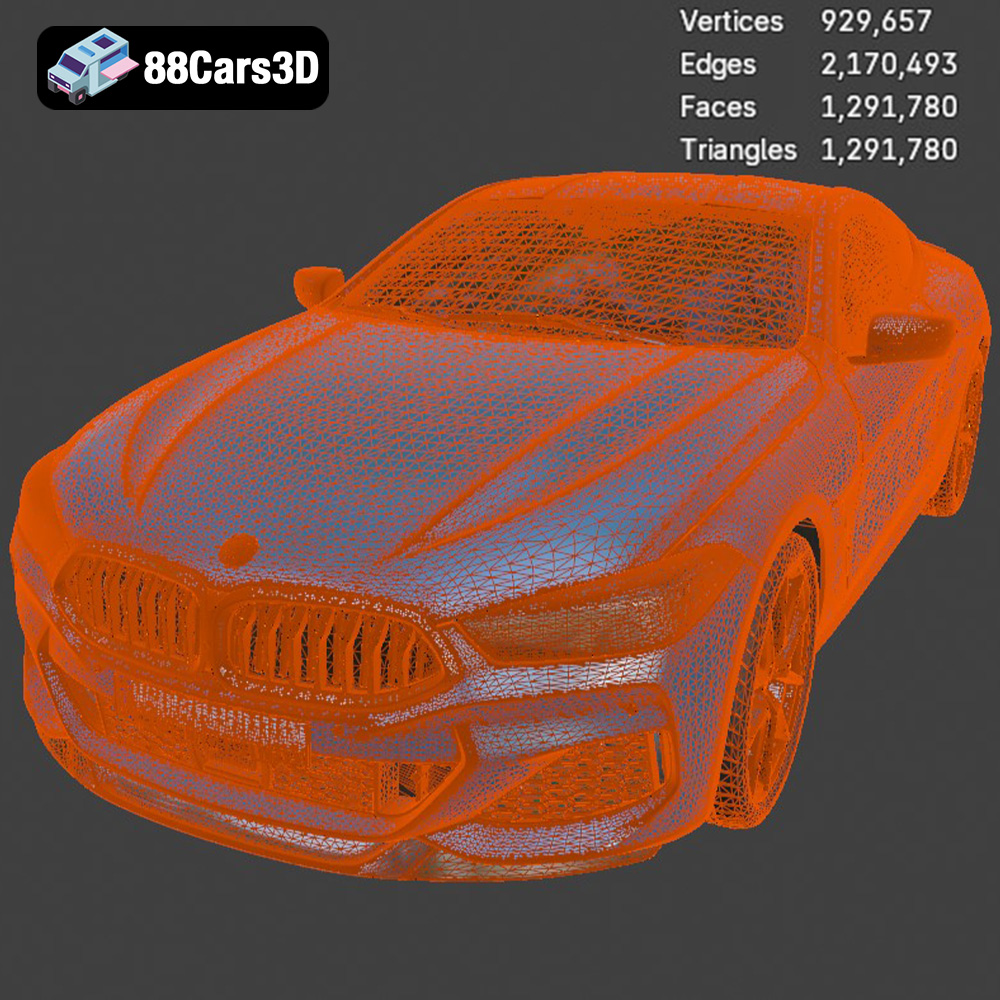
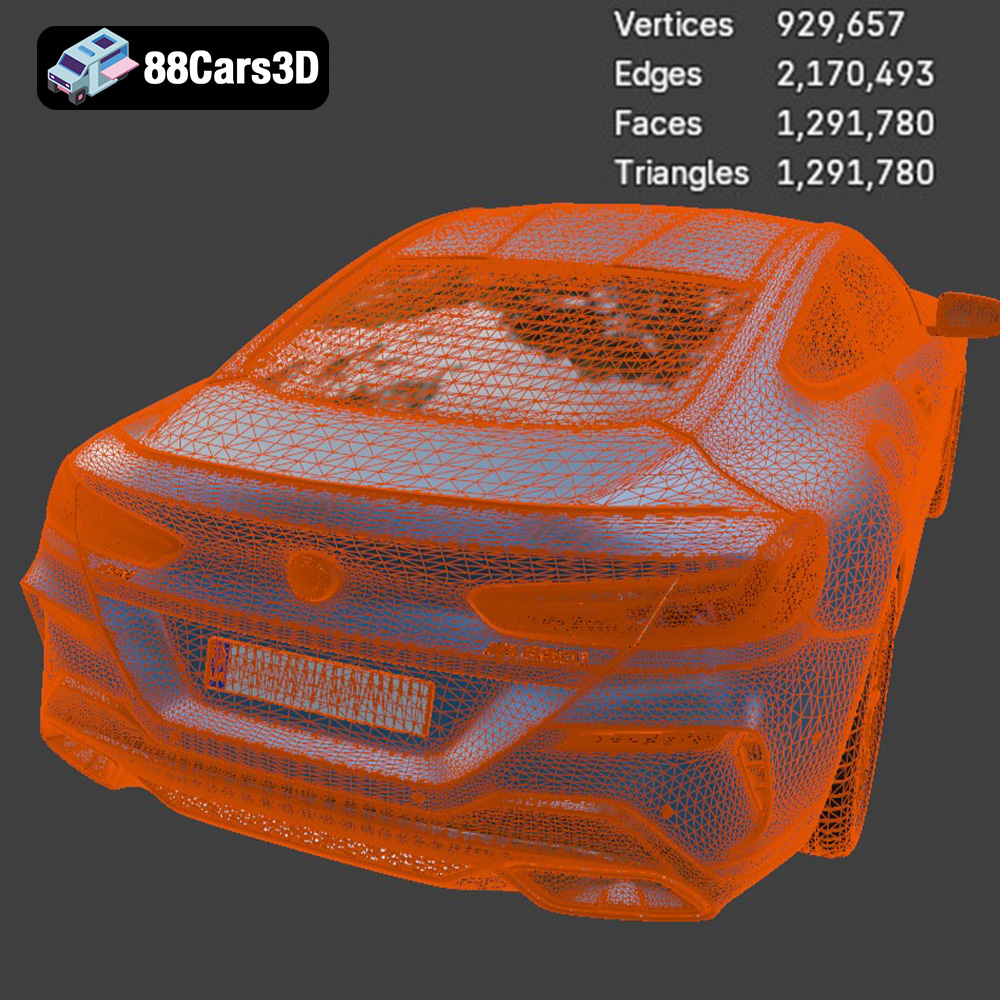
The first step in achieving photorealism is meticulous modeling. The BMW M850i model begins with clean geometry, meaning the mesh is well-organized, free from artifacts, and built with an optimized polygon distribution. This is crucial for several reasons. Firstly, clean geometry ensures smooth subdivisions, allowing artists to effortlessly increase mesh density for close-up shots without introducing unsightly pinches or distortions. Secondly, it contributes to excellent performance during rendering and animation, as the software doesn’t struggle with malformed polygons. Capturing the sleek proportions and aggressive styling of an iconic car like the 8-Series M850i requires not just an eye for detail but also a deep understanding of automotive design principles, from the curvature of the fenders to the sharp lines of the grille.
Beyond the mesh, the application of realistic materials and sophisticated lighting is what truly brings a 3D car model to life. For the BMW M850i, this means accurately recreating the nuanced reflections of the metallic paint, the subtle texture of the leather interior, the intricate patterns of the carbon fiber trim, and the refractive properties of the glass and headlights. Physically Based Rendering (PBR) workflows are essential here, simulating how light interacts with surfaces in the real world. This includes specifying accurate albedo (base color), roughness, metallicness, normal maps, and displacement maps. When combined with carefully positioned virtual studio lighting, HDRI (High Dynamic Range Image) environments, and global illumination, these materials transform the raw 3D model into an object of visual delight, making it ideal for cinematic rendering and high-fidelity product showcases.
Imagine an automotive manufacturer launching a new vehicle. Traditionally, this involved costly photoshoots in exotic locations. With advanced 3D car models like the BMW 8-Series M850i from 88cars3d.com, marketing teams can generate an infinite array of static renders, animated sequences, and interactive configurators without ever building a physical prototype. They can place the car in any environment imaginable – a bustling city street, a serene mountain pass, or a futuristic cityscape – all from the comfort of their studio. This flexibility, coupled with the ability to instantly change colors, trim options, or even weather conditions, makes 3D visualization an indispensable tool for modern automotive marketing, offering both creative freedom and significant cost savings.
While cinematic rendering focuses on ultimate visual fidelity, real-time applications like video games, augmented reality (AR), and virtual reality (VR) demand a delicate balance between visual quality and performance. A well-optimized 3D car model, like the BMW 8-Series M850i G15 Coupe, is engineered to excel in these demanding interactive environments.
Real-time engines have strict polygon budgets to maintain high frame rates. A single, high-resolution model suitable for close-up renders would cripple performance in a game or VR experience. Therefore, optimization involves careful polygon budgeting and the implementation of Levels of Detail (LODs). This means creating multiple versions of the same model, each with a progressively lower polygon count. When the BMW M850i is far from the camera in a game, a low-poly LOD is rendered; as it approaches, the engine seamlessly swaps to a higher-poly version. This technique ensures optimal performance without sacrificing perceived detail where it matters most, making the provided .fbx and .unreal formats particularly valuable for developers.
Beyond geometry, texture and material management are crucial for real-time performance. Rather than using numerous small textures, artists often create texture atlases, consolidating multiple textures into a single, larger image. This reduces draw calls, improving rendering efficiency. Similarly, material instancing allows variations of a base material (e.g., different car colors) to be created from a single parent material, saving memory and CPU cycles. The BMW 8-Series M850i model, designed for excellent performance, implicitly incorporates these principles, with its realistic materials and intricate detailing configured for efficient rendering within game engines like Unreal Engine and Unity.
Augmented Reality and Virtual Reality demand highly optimized assets for seamless, lag-free experiences. The .glb format, specifically designed for AR/VR and web-based visualization, is key here. Its single-file nature and efficient data structure make it ideal for rapidly loading and displaying complex models like the BMW M850i on mobile devices or within VR headsets. Imagine a virtual showroom where prospective buyers can interact with the BMW M850i in full 3D, changing colors, opening doors, and even “sitting” inside, all powered by a precisely optimized .glb asset. This level of immersive visualization is a powerful application for high-quality 3D car models.
The utility of a professional 3D car model extends beyond purely digital realms. With advancements in additive manufacturing and analytical software, these models can serve as blueprints for physical objects or as datasets for engineering scrutiny, demonstrating their comprehensive value.
The .stl file format provides a direct bridge from the digital design space to the physical world through 3D printing. For product designers, engineers, or even passionate hobbyists, having an .stl version of a high-fidelity model like the BMW 8-Series M850i G15 Coupe allows for rapid prototyping and the creation of physical scale models. This enables tactile evaluation of the car’s form factor, proportions, and even potential fitment issues for custom accessories. Automotive design studios frequently use 3D printed models for early concept validation, a testament to the practical application of well-structured 3D data.
The .ply format, known for its precision in representing mesh data, finds its niche in more technical applications. For engineers or researchers, a .ply model of the BMW M850i could be used for detailed geometric analysis. This might involve stress testing simulations on virtual components, aerodynamic flow studies, or even reverse engineering to understand manufacturing tolerances or design intricacies. While typically generated from 3D scans, having a clean, professionally modeled .ply asset provides a pristine dataset for such advanced technical visualization and analysis, offering insights that might be challenging to derive from less precise models.
Integrating a new 3D asset into an existing professional workflow requires flexibility and compatibility. The BMW 8-Series M850i G15 Coupe 2019 3D Model is specifically designed with this in mind, offering native support for leading software packages, thereby streamlining the creative process for artists and developers.
Autodesk 3ds Max remains a cornerstone in many visualization and animation studios. The inclusion of a native .max file for the BMW M850i provides 3ds Max users with an immediately usable and fully editable project. This means the model comes with its geometry, materials, textures, and potentially lighting setups ready to go. Artists can dive straight into setting up complex studio renders using V-Ray or Corona Renderer, create sophisticated camera animations, or integrate the vehicle into architectural visualization scenes with minimal fuss. The robust features of 3ds Max, combined with a clean .max asset, empower high-fidelity output for demanding projects.
Blender has emerged as a formidable force in the 3D industry, prized for its open-source nature and powerful capabilities. The .blend file for the BMW M850i is a complete Blender scene, offering artists full control over every aspect. This includes tweaking materials with Blender’s node-based shader editor, adjusting the existing lighting setup, or even dissecting the model’s topology for learning and modification. For independent artists, small studios, or those embracing a more flexible pipeline, the .blend format provides an accessible entry point to professional-grade automotive 3D modeling and rendering, facilitating creative exploration without proprietary software barriers.
Unreal Engine is synonymous with real-time realism, powering everything from AAA games to virtual production and architectural walkthroughs. The “game-engine ready” .fbx and pre-configured .unreal assets of the BMW M850i are engineered for seamless integration into Unreal’s ecosystem. This means textures are often optimized, materials are set up with PBR shaders, and the mesh may include LODs and collision geometry. Developers can efficiently import the model, set up dynamic lighting, create realistic reflections using ray tracing or screen-space reflections, and even implement physics-based vehicle dynamics, bringing the luxury sports coupe to life in fully interactive environments. This direct compatibility significantly accelerates development timelines for projects requiring high-quality automotive assets in real-time.
In a world saturated with digital content, the distinction between good and exceptional often boils down to the quality of the assets used. For 3D car models, this distinction is particularly stark. Investing in a professional-grade model like the BMW 8-Series M850i G15 Coupe 2019 3D Model from 88cars3d.com isn’t just a purchase; it’s an investment in efficiency, fidelity, and future-proofing your projects.
Creating a high-fidelity 3D car model from scratch is an incredibly time-consuming and labor-intensive process. It requires expert modeling, UV mapping, texturing, and material creation, often taking hundreds of hours for a single vehicle. By utilizing a pre-made, professionally designed asset, artists and studios can instantly access a ready-to-use model, freeing up valuable time and resources. This allows teams to focus on other critical aspects of their project, such as scene composition, animation, or interactive mechanics, significantly accelerating project timelines.
The description of the BMW 8-Series M850i model emphasizes “unparalleled realism,” “clean geometry,” “optimized polygon distribution,” “realistic materials,” and “intricate detailing.” These aren’t just buzzwords; they represent the hallmarks of a truly professional asset. Such models are built by experienced artists who understand the nuances of automotive design and the technical requirements of various 3D applications. This attention to detail ensures that the model not only looks stunning in close-up shots but also performs efficiently across diverse platforms, from cinematic rendering to demanding game environments and AR/VR experiences.
A truly valuable 3D car model is versatile. The BMW M850i G15 Coupe 2019 3D Model’s availability in multiple formats (.blend, .fbx, .obj, .glb, .stl, .ply, .unreal, .max) underscores its adaptability. Whether your project involves high-end rendering, game development, AR/VR, 3D printing, or technical visualization, there’s a format tailored to your specific needs. This versatility makes the model a one-stop solution for a wide range of digital projects, maximizing its value and utility across different professional pipelines. It’s an asset that grows with your project, adaptable to virtually any creative or technical challenge you might encounter.
The journey through the intricacies of 3D car modeling reveals a profound blend of art and technical expertise. From the initial meticulous creation of clean geometry to the final deployment across diverse platforms, every step demands precision and foresight. The BMW 8-Series M850i G15 Coupe 2019 3D Model stands as a shining example of what a premium asset can offer, embodying unparalleled realism, optimized performance, and versatile compatibility.
We’ve explored how a robust understanding of file formats empowers seamless integration into professional workflows, whether you’re crafting photorealistic automotive visualizations in 3ds Max and Blender, building immersive game assets for Unreal Engine, or developing interactive AR/VR experiences with the compact .glb format. The ability to pivot between high-fidelity rendering and real-time optimization, or even transition to physical prototyping via 3D printing with .stl, underscores the comprehensive utility of such a well-crafted digital asset.
Ultimately, investing in high-quality 3D car models is a strategic decision for any serious professional. It saves invaluable time, ensures visual excellence, and provides the flexibility to meet the demands of an ever-evolving digital landscape. For those seeking to elevate their projects with meticulously detailed and production-ready 3D car models, exploring the offerings at 88cars3d.com, particularly the remarkable BMW 8-Series M850i G15 Coupe 2019 3D Model, is a clear path to achieving truly outstanding results.
Experience unparalleled realism with the BMW 8-Series M850i G15 Coupe 2019 3D Model. Designed to meet professional standards, this model captures the sleek proportions and aggressive styling of the iconic luxury sports coupe, ensuring exceptional visual fidelity for any digital project. Built with clean geometry and optimized polygon distribution, the model guarantees smooth subdivisions and excellent performance. It features realistic materials and intricate detailing, making it ideal for close-up shots and demanding environments. This versatile 3D asset is perfectly suited for a wide range of applications, including game development, cinematic rendering, AR/VR experiences, and automotive visualization. Available in .blend, .fbx, .obj, .glb, .stl, .ply, .unreal, .max formats.
$39.99
.8series
.arvr
.blend
.bmw
.car3dmodel
.coupe
.fbx
.g15
.gameasset
.glb
.luxurycar
.m850i
.max
.obj
.ply
.rendering
.simulation
.sportsCar
.stl
.unreal