Get 20% OFF All Premium 3D & STL Models!

In the dynamic worlds of game development, architectural visualization, automotive design, and immersive AR/VR experiences, the quality of your 3D assets can be the defining factor between a mediocre project and a groundbreaking one. Every detail, from the curve of a fender to the gleam of a headlight, contributes to the overall realism and user engagement. High-fidelity 3D models are no longer a luxury but a necessity, serving as the bedrock for compelling visual narratives and interactive environments.
Today, we delve into the intricate world of professional 3D asset creation, exploring how meticulously crafted models elevate projects across various industries. We’ll examine the technical considerations, workflow integrations, and creative possibilities that emerge when you start with a superior foundation. To illustrate this, we’ll spotlight a prime example of such craftsmanship: the Honda CBR600RR 3D Model. This legendary supersport motorcycle, renowned for its racing heritage and iconic design, provides an excellent case study for the application of advanced 3D modeling techniques, demonstrating how a single asset can be leveraged across diverse professional pipelines.
The choice of a 3D model file format is far more critical than simply picking an extension. Each format is engineered for specific purposes, offering unique advantages in terms of data fidelity, software compatibility, and operational efficiency. Understanding these distinctions is fundamental for any professional working with 3D assets, ensuring smooth workflows and optimal performance across different applications.
The .blend format is the native file type for Blender, the powerful open-source 3D creation suite. It encapsulates an entire Blender scene, including not just the mesh geometry but also materials, textures, lighting, cameras, animation data, and even physics simulations. This makes .blend files ideal for artists and developers who primarily work within the Blender ecosystem, providing a fully editable and self-contained project. Its robustness allows for complex scene management, making it perfect for iterative design and detailed scene construction. When acquiring a .blend file, you gain full access to the original project structure, enabling extensive modifications and creative explorations.
Autodesk’s .fbx (Filmbox) format is arguably the most widely adopted interchange format in the 3D industry, particularly favored for game development and animation pipelines. Its strength lies in its ability to store a vast array of data beyond just geometry, including animation, rigging, skinning, materials, textures (though often referenced externally), and camera/light data. This makes .fbx incredibly versatile for transferring animated 3D car models and characters between different software packages like Maya, 3ds Max, Unity, and Unreal Engine. For real-time applications, .fbx is often the go-to format due to its comprehensive data capture and optimized structure.
The .obj (Wavefront OBJ) format is a classic and highly universal choice for transferring 3D geometry. It’s a plain text format, making it exceptionally compatible across virtually all 3D software. However, .obj primarily stores mesh geometry (vertices, normals, texture coordinates, faces) and material references (.mtl file for basic color and texture maps), but it generally does not support animations, rigging, or advanced material networks. It’s an excellent choice when you need to share pure mesh data with maximum compatibility, especially for static models or as a base for further development in a new environment.
.glb (GL Transmission Format Binary) is the binary version of the glTF format, specifically designed for efficient transmission and loading of 3D scenes and models in web and real-time applications, including augmented reality (AR) and virtual reality (VR). A .glb file is self-contained, embedding all textures and data directly within a single binary file, which simplifies sharing and ensures consistent rendering across different platforms. Its compact size and optimized structure make it perfect for browser-based viewers, mobile AR experiences, and low-latency interactive applications, making it a critical format for modern digital delivery of 3D assets.
.stl (STereoLithography) is the de facto standard file format for 3D printing. It represents a 3D model as a collection of unconnected triangular facets, defining only the surface geometry without color, texture, or other advanced attributes. While simple, this format is universally recognized by 3D slicing software, which converts the model into printable layers. For projects like physically producing the Honda CBR600RR model, an .stl file is essential, requiring careful preparation to ensure watertight meshes and optimal printability, as we’ll explore later.
The .ply (Polygon File Format or Stanford Triangle Format) is a versatile format often used for storing 3D data from 3D scanners, CAD applications, and scientific analysis. It supports a wide range of properties for each vertex and face, including color, transparency, normals, and even confidence values. While less common for general game assets, .ply is excellent for high-precision models, especially those intended for reverse engineering, detailed analysis, or integration into engineering workflows where exact surface data is paramount.
The .unreal designation typically refers to assets specifically packaged and optimized for direct import and use within Unreal Engine. While not a standalone file extension in the traditional sense, it signifies a model (often originally .fbx) that has been pre-configured with Unreal-specific materials, collision meshes, LODs (Levels of Detail), and sometimes even blueprint setups. This “engine-ready” state significantly streamlines integration into Unreal projects, saving countless hours for game developers by providing assets that are immediately functional within the powerful real-time environment. This is particularly valuable for complex assets like realistic 3D car models.
Similar to .blend for Blender, .max is the native file format for Autodesk 3ds Max. It stores a complete 3ds Max scene, including all geometry, modifiers, materials, textures, lighting, cameras, animation, and scene settings. It’s a comprehensive project file, allowing full editability and control over every aspect of the scene. For professionals working with 3ds Max for architectural visualization, automotive rendering, or complex animation, the .max file is invaluable for its fidelity and flexibility, providing the foundation for high-end rendering and detailed scene composition.
Choosing the right format is a strategic decision that impacts compatibility, performance, and the scope of future modifications. For a robust asset like the Honda CBR600RR 3D model, providing a range of formats ensures maximum utility across all potential professional applications, from high-fidelity cinematic rendering to game asset development and even physical prototyping.
Creating a truly authentic 3D model of an iconic vehicle like the Honda CBR600RR requires a masterful blend of artistic vision and technical precision. It’s about more than just replicating shapes; it’s about capturing the essence, the engineering, and the spirit of the machine. The Honda CBR600RR 3D Model available on 88cars3d.com stands as a testament to this meticulous approach, offering an unparalleled level of detail and optimization for professional use.
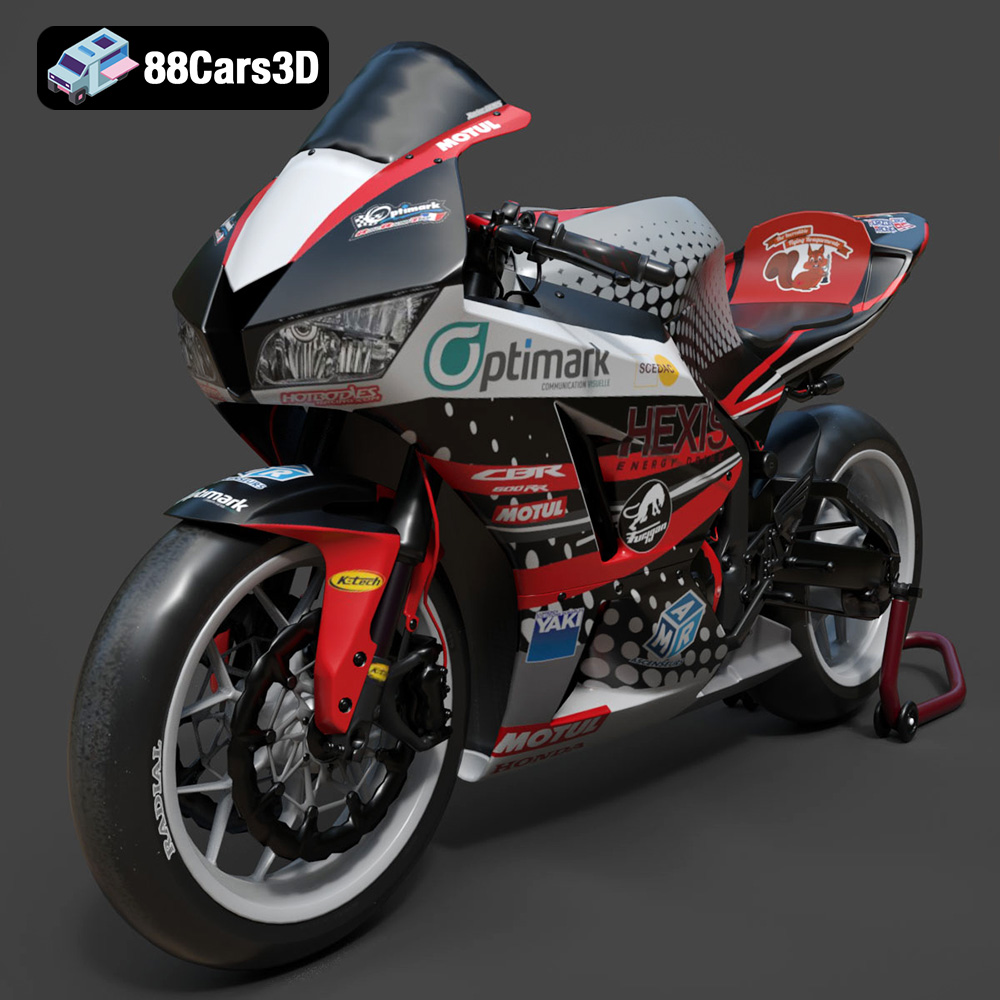
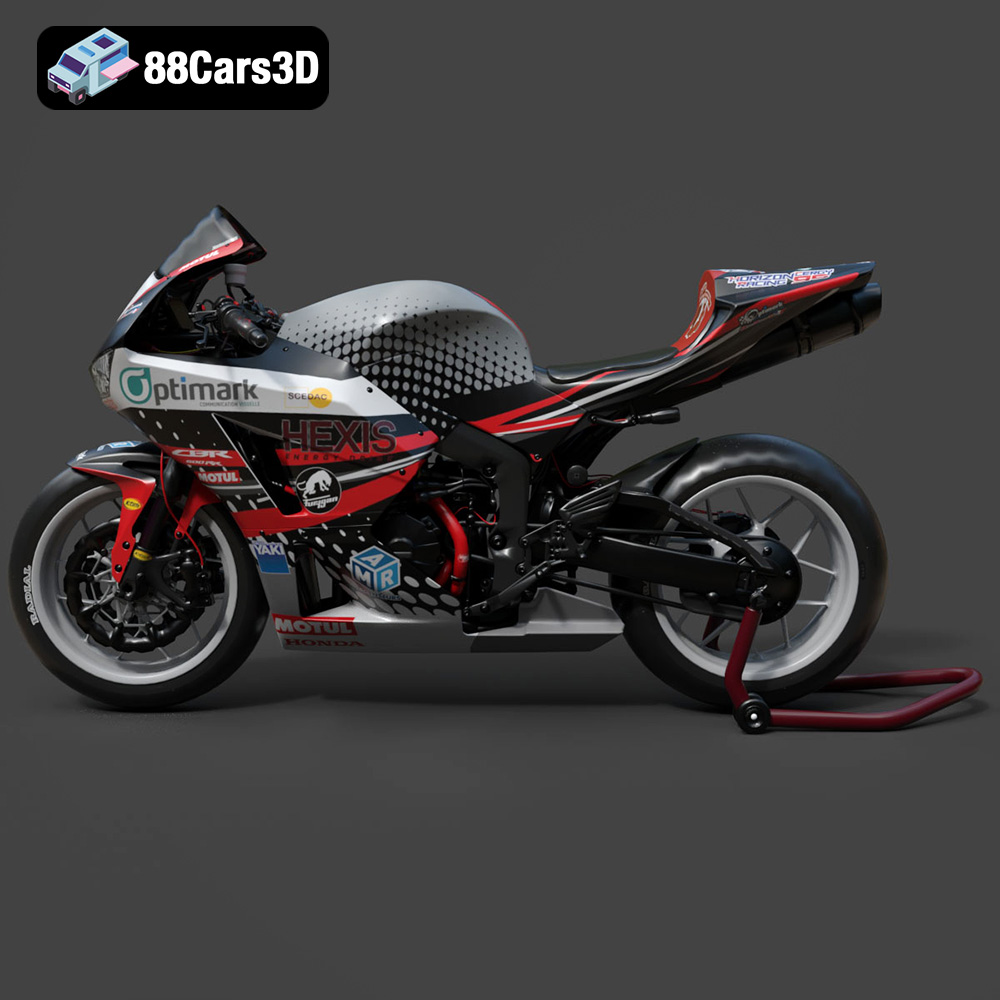
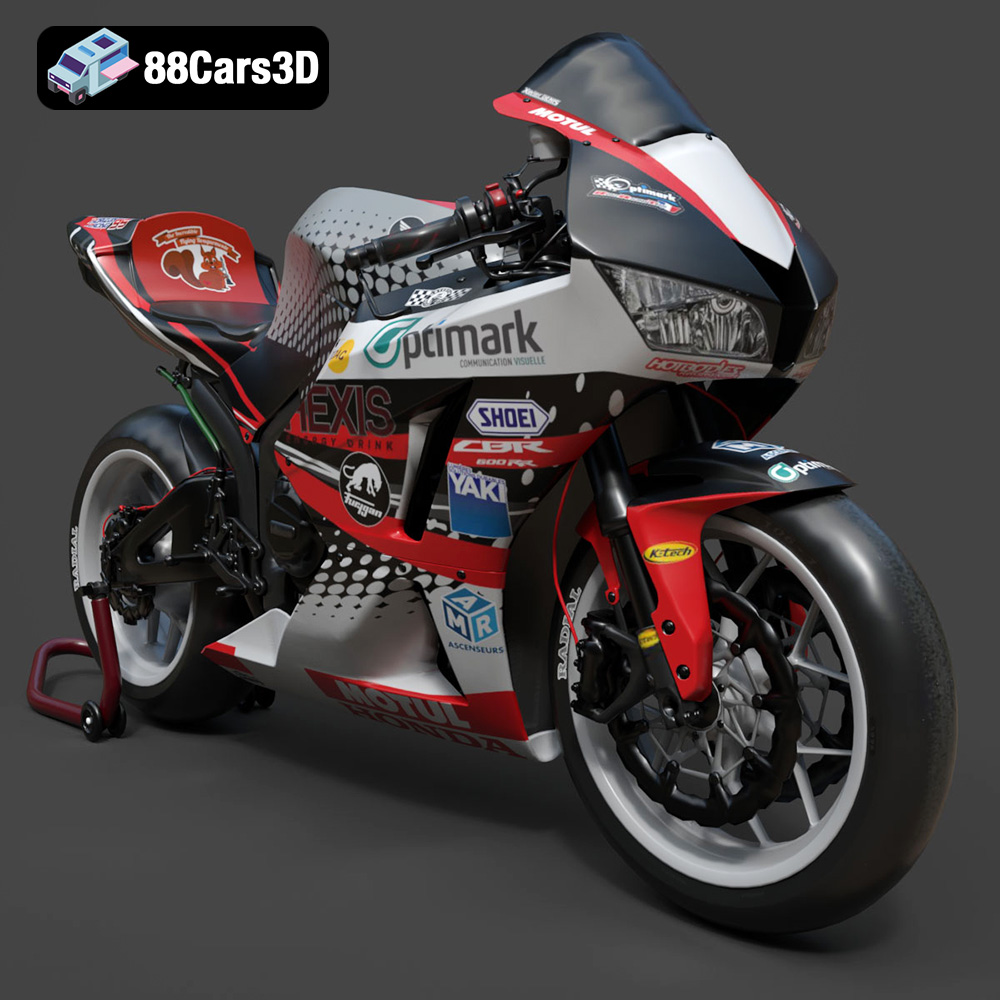
The first impression of any supersport bike is its aggressive stance and aerodynamic contours, and this 3D model captures it flawlessly. The accurate Honda CBR600RR frame geometry and realistic proportions are a direct result of precise blueprint matching and diligent observation. The model meticulously recreates the aerodynamic fairings, which are not just aesthetic but functionally designed to cut through the air. The iconic center-up under-seat exhaust system, a signature design element of the CBR600RR, is rendered with realistic tailpipe texturing, reflecting the subtle wear and heat effects seen on a real exhaust. Furthermore, the signature dual front headlights, aerodynamic windscreen, and intricate LED taillights are all modeled with exacting detail, ensuring that every angle projects authenticity.
No high-performance motorcycle is complete without its wheels and suspension. This model features precision-cast alloy wheels paired with high-performance, track-ready tires, complete with appropriate tread patterns and sidewall details. The fully detailed inverted front fork suspension and rear monoshock assembly are not merely visual; they are separated components, allowing for realistic animation of suspension travel, crucial for dynamic simulations or cinematic sequences. Even the smallest components like brake calipers, rotors, and chain drive are present, contributing to an overall sense of mechanical accuracy that delights the eye.
Beyond the exterior, the rider’s cockpit is where the true interaction happens, and this model does not disappoint. The track-focused split rider and passenger saddle feature authentic material textures, replicating the look and feel of high-grip seating surfaces. Low-slung clip-on handlebars are intricately modeled with highly detailed grips and switchgear, including brake and clutch levers, throttle mechanisms, and various control buttons. The digital-analog hybrid instrument cluster is accurately represented, with legible dials and readouts, perfect for close-up shots or first-person camera views in gaming. Intricate control details, such as rearset footpegs, the gear shifter, and brake levers, are all present and correctly positioned, making the model ideal for immersive first-person POV in racing games or virtual riding simulators.
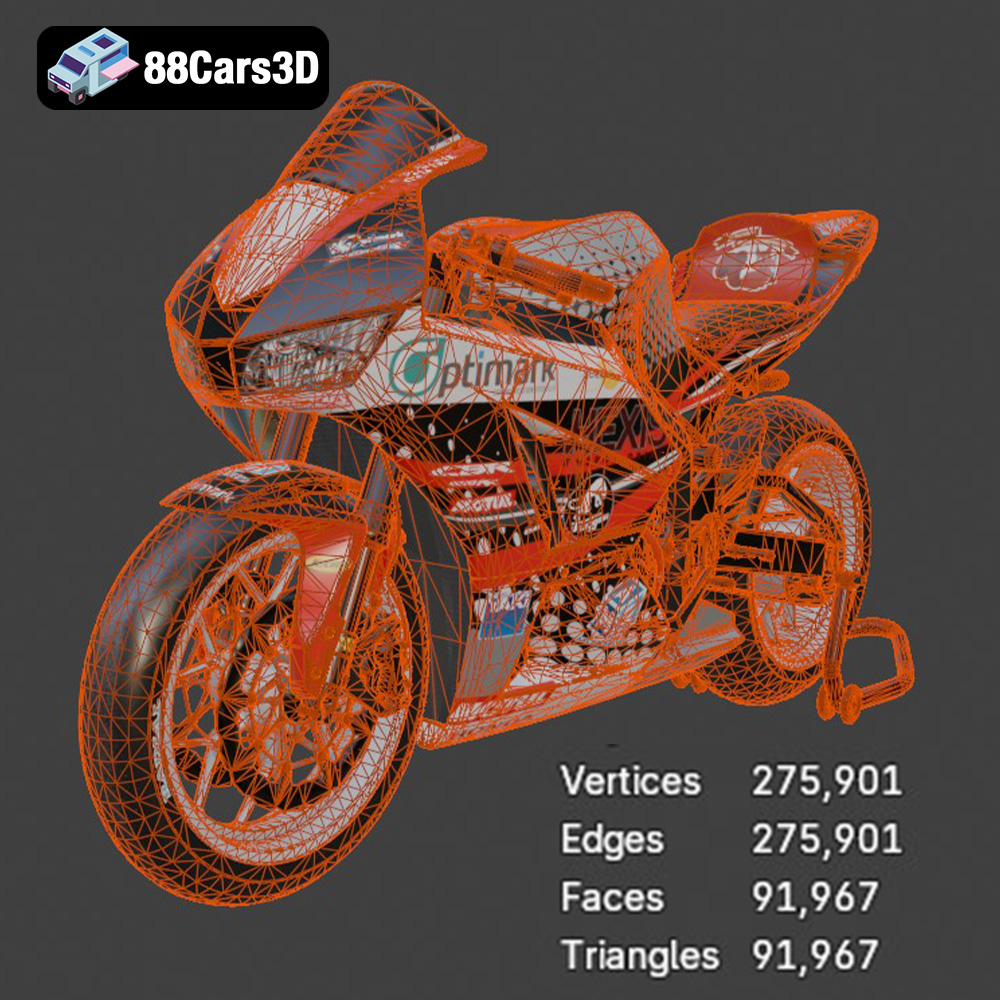
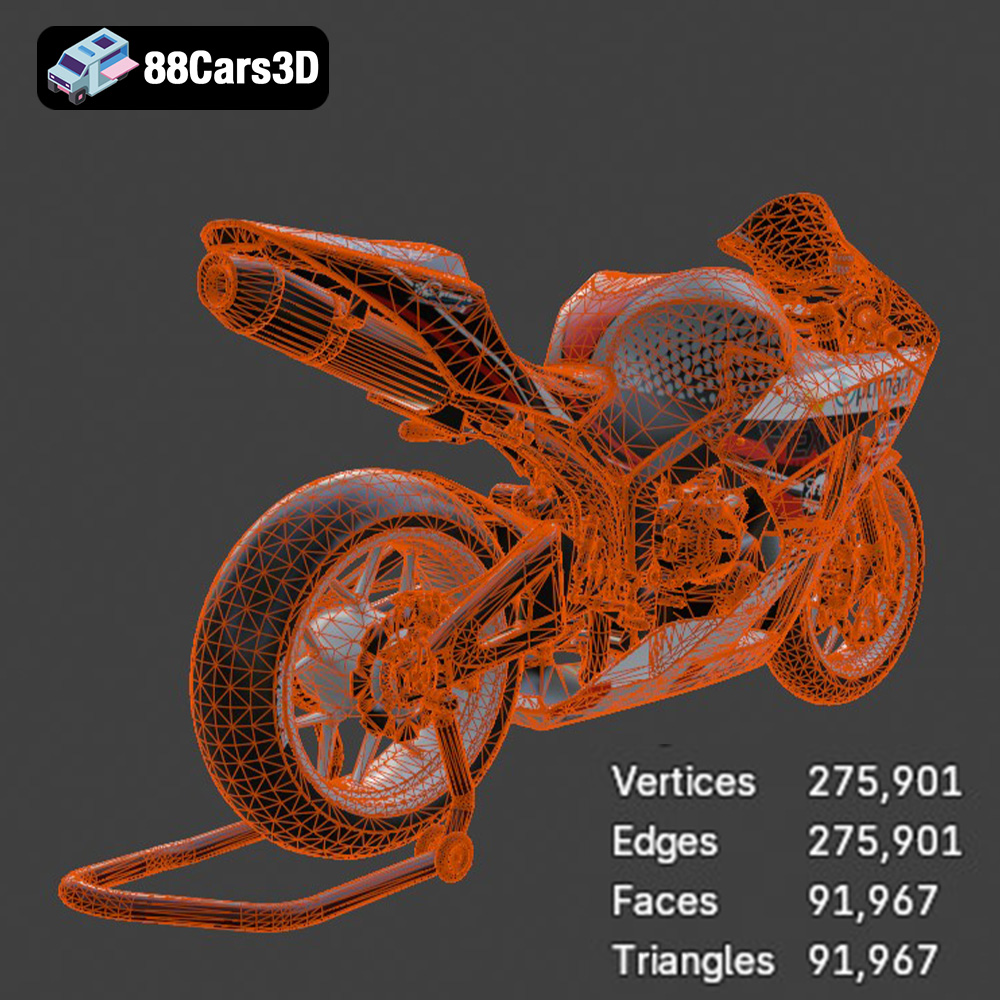
The true genius of this Honda CBR600RR 3D model lies in its technical specifications, which offer a perfect balance between visual fidelity and real-time performance. With an optimized 150,000 triangle count, it strikes an exceptional balance, providing high-end visual realism without compromising rendering speed or framerates in demanding real-time engines like Unreal and Unity. This “game-ready” attribute means less time spent on optimization and more time on creative development. Furthermore, the model is built to real-world scale accuracy, based on actual vehicle chassis dimensions, ensuring correct proportions and interaction with other scaled assets. Crucially, it features proper pivot setups for steering, wheel rotation, and suspension travel, making it animation-ready straight out of the box. This attention to technical detail ensures that the asset is not just beautiful, but also robust and functional across a multitude of professional applications.
The true value of a high-quality 3D asset, especially complex automotive rendering models like the Honda CBR600RR, becomes apparent in its seamless integration into diverse professional workflows. This model, meticulously crafted for versatility, serves as a powerful foundation across various creative and technical domains.
For game developers, the Honda CBR600RR 3D model is a significant asset. Its optimized 150,000 triangle count is a sweet spot for modern game engines like Unreal Engine and Unity, offering high visual quality without heavily impacting performance. This makes it ideal for inclusion in open-world games, dedicated racing titles, and realistic driving simulators. The model comes with proper pivot setups for crucial elements like wheels, steering, and suspension, which are essential for realistic physics and animation. Developers can easily integrate it into vehicle systems, define collision meshes, and apply dynamic material instances for damage or customization. The inclusion of an “engine-ready” .unreal format further streamlines the process, allowing for immediate deployment and iteration within the Unreal ecosystem. Imagine the exhilaration of speeding through a virtual city or track on this perfectly rendered sportbike.
Beyond interactive environments, the Honda CBR600RR model excels in static and animated rendering for marketing, advertising, and product visualization. Utilizing formats like .max (for 3ds Max) or .blend (for Blender), artists can leverage advanced rendering engines such as V-Ray, Corona, or Cycles to produce breathtaking, photorealistic images and animations. The detailed geometry, authentic material textures, and accurate proportions make it perfect for studio lighting setups, lifestyle scenes, and brand campaigns. Imagine a sleek, cinematic shot of the CBR600RR gleaming under artificial studio lights or parked against a picturesque backdrop, used for a digital brochure or a high-impact commercial. The model’s quality ensures that close-up shots reveal intricate details, from the texture of the seat to the subtle reflections on the fairings, providing unparalleled visual fidelity for any automotive rendering project.
The rise of augmented reality (AR) and virtual reality (VR) demands highly optimized yet detailed 3D assets. The Honda CBR600RR 3D model is perfectly suited for these immersive applications. Its efficient geometry and ready-to-use textures make it ideal for virtual showrooms where users can explore the bike from any angle, customize its colors, and even “sit” on it in a VR environment. For mobile AR experiences, the lightweight .glb format is invaluable, allowing the bike to be projected into real-world spaces via a smartphone camera, enabling interactive configurators or dynamic product demonstrations. These applications provide a new dimension of engagement, allowing potential customers or enthusiasts to experience the motorcycle in a truly interactive and memorable way.
While the digital realm offers boundless possibilities, there’s a unique satisfaction in holding a physical manifestation of a 3D model. The Honda CBR600RR 3D model extends its utility beyond screens, providing a solid foundation for 3D printing, enabling hobbyists and professionals alike to bring this iconic motorcycle into the tangible world.
The inclusion of the .stl format is crucial for 3D printing. This format strips away all non-essential data, leaving only the pure geometric surface represented by triangles, which is exactly what 3D slicers need to prepare a model for printing. However, converting a high-detail rendering model into a print-ready STL isn’t always straightforward. It requires careful attention to ensure the mesh is “watertight” (no holes or non-manifold geometry) and that all parts are correctly scaled and oriented for optimal printability. The designers of the Honda CBR600RR 3D model have anticipated this, providing a model that is inherently well-structured for such conversion, minimizing post-processing digital clean-up.
To achieve the best results when 3D printing the Honda CBR600RR, specific print settings are recommended. For scale, common hobbyist scales like 1:12, 1:18, or 1:24 are advised, striking a balance between detail and print size. Layer height is critical for capturing fine details; a range of 0.04–0.12 mm is suggested, with resin printing (SLA/DLP) being highly recommended for its ability to reproduce intricate components like the exhaust system, mirrors, and handlebars with exceptional fidelity. FDM printers can also be used, but fine-tuning and smaller nozzles would be necessary. Wall thickness should be between 1.2–2.0 mm to ensure structural integrity without wasting material, and an infill of 20–30% provides a good balance of strength and material economy. Supports will be required for overhangs and delicate parts, especially the under-seat exhaust, the handlebars, and the fairings, to prevent sagging and ensure accurate geometry. Careful print orientation, such as printing the main frame angled, can enhance structural integrity and reduce the need for excessive supports. Printing wheels separately is often beneficial for achieving smooth surfaces and simplifying post-processing.
Once printed, the physical Honda CBR600RR model enters the realm of traditional model making. Post-processing is key to bringing out its full potential. This typically involves sanding to smooth layer lines or support marks, followed by applying a primer to create a uniform surface for painting. The real magic happens with authentic factory colors and metallic finishes, meticulously applied to mimic the real bike’s vibrant paintwork and polished components. This blend of digital precision and traditional craftsmanship allows enthusiasts to own a tangible piece of automotive art, further extending the lifecycle and application of the original 3D asset from 88cars3d.com.
The true mark of a professional-grade 3D asset is not just its inherent quality but also its adaptability. The Honda CBR600RR 3D model is built with customization in mind, offering artists and developers a wide range of options to tailor the asset to their specific project requirements and creative visions.
One of the most immediate and impactful customization options is the ability to change body and tank colors. Whether it’s replicating specific factory colors like Grand Prix Red, exploring historical liveries, or experimenting with completely custom finishes, the model’s material setup allows for easy modification. This extends to adjusting material finishes – from a sleek, glossy sheen to a sophisticated matte or a high-tech carbon fiber texture. These changes can dramatically alter the perception of the motorcycle, allowing it to fit seamlessly into different scenes or marketing campaigns. For instance, a glossy red CBR600RR might evoke speed and passion, while a matte black version could convey a more stealthy, aggressive aesthetic. Similarly, the ability to modify tire textures, switching between track slicks for a racing simulation or street tread variants for a city environment, adds another layer of realism and context to the model.
Beyond surface properties, the model’s design facilitates adaptation of lighting for different environments. In a 3D scene, lighting is paramount to realism and mood. With this model, artists can integrate it into various lighting scenarios, from bright outdoor sunlight to dramatic studio setups or moody nighttime scenes. The model’s accurate geometry and material properties will react realistically to different light sources, allowing for compelling shadows, reflections, and highlights. This flexibility means the same model can be used in a diverse range of visual contexts, from a high-octane racing game cinematic to a serene product visualization, without needing extensive rework.
The technical advantages, such as proper pivot setups for steering, wheel rotation, and suspension travel, are not just for visual accuracy but also for animation and interactive experiences. Developers can animate the handlebars, spin the wheels, and simulate suspension compression for dynamic scenes. This built-in animatability significantly reduces development time for game assets or interactive configurators, where user interaction often involves manipulating these very components. The separated parts also allow for creating dynamic effects, like turning headlights on/off, adjusting mirrors, or even simulating minor damage states, offering a truly versatile and interactive asset.
The journey from concept to a fully realized 3D asset, ready for diverse professional applications, is intricate. It demands expertise, precision, and an unwavering commitment to quality. This is precisely where platforms like 88cars3d.com distinguish themselves. By offering premium 3D car models and motorcycle assets, they provide a vital resource for industries that rely on high-fidelity digital content.
The Honda CBR600RR 3D Model is a prime example of the high standards upheld by 88cars3d.com. It’s not merely a collection of polygons; it’s a meticulously engineered digital twin, optimized for everything from demanding game engines to intricate 3D printing processes. This dedication to delivering models with professional-grade topology, optimized polycounts, accurate real-world scale, and broad file format compatibility significantly reduces production timelines and elevates the final output of any project.
Whether you are a game developer needing realistic vehicle assets, an automotive designer visualizing new concepts, an architect integrating vehicles into renderings, or a hobbyist looking to 3D print an iconic machine, the quality found on 88cars3d.com ensures you start with the best possible foundation. It democratizes access to assets that would otherwise require extensive in-house modeling efforts, allowing creators to focus their energy on innovation and creativity rather than foundational asset creation.
In the rapidly evolving landscape of digital media, the demand for high-quality 3D assets continues to grow exponentially. From blockbuster video games and immersive AR/VR experiences to captivating advertising campaigns and precision 3D prints, the foundational quality of a 3D model dictates the success of a project. We’ve explored the critical role of understanding various file formats, the intricate details that comprise a professional-grade model like the Honda CBR600RR 3D Model, and its versatile applications across gaming, rendering, AR/VR, and 3D printing.
The Honda CBR600RR 3D model exemplifies how a meticulously crafted asset, optimized for both visual fidelity and performance, can seamlessly integrate into and elevate diverse professional workflows. Its game-ready topology, accurate real-world scale, comprehensive detail, and broad file format support make it an invaluable tool for creators. This caliber of asset not only saves invaluable development time but also empowers artists and developers to push the boundaries of realism and immersion in their projects.
Investing in such high-quality 3D car models and motorcycle assets from trusted sources like 88cars3d.com is a strategic decision that pays dividends in production efficiency, visual excellence, and audience engagement. As digital frontiers continue to expand, the precision and versatility of assets like the Honda CBR600RR will remain at the forefront of innovation, driving the next generation of interactive and visual experiences.
Experience the thrill of the track with our highly detailed 3D model of the Honda CBR600RR, a legendary middleweight supersport motorcycle celebrated for its racing heritage and razor-sharp handling. This model perfectly captures the aerodynamic fairings, the iconic center-up under-seat exhaust system, and the aggressive stance that defines Honda’s performance lineage. From the meticulously modeled inline-four engine casing to the signature dual headlights, every visual element is crafted to reflect the true spirit of this iconic sportbike. Constructed with professional-grade topology and sitting at an optimized 150,000 triangle count, this 3D model offers the perfect balance between high-end visual fidelity and game-ready performance. It is meticulously engineered for seamless integration into real-time engines, rendering software, and interactive media, providing exceptional realism without compromising rendering speed or framerates. Perfect for high-octane racing games, motorcycle driving simulators, immersive virtual showrooms, and dynamic lifestyle visualizations.
$39.99
.blend
.cbr600rr
.fbx
.glb
.honda
.max
.motorcycle
.obj
.ply
.rendering
.sportbike
.stl
.supersport
.unreal
game asset
game-ready
low-poly
motorcycle-3d-model
optimized
VR/AR