Get 20% OFF All Premium 3D & STL Models!

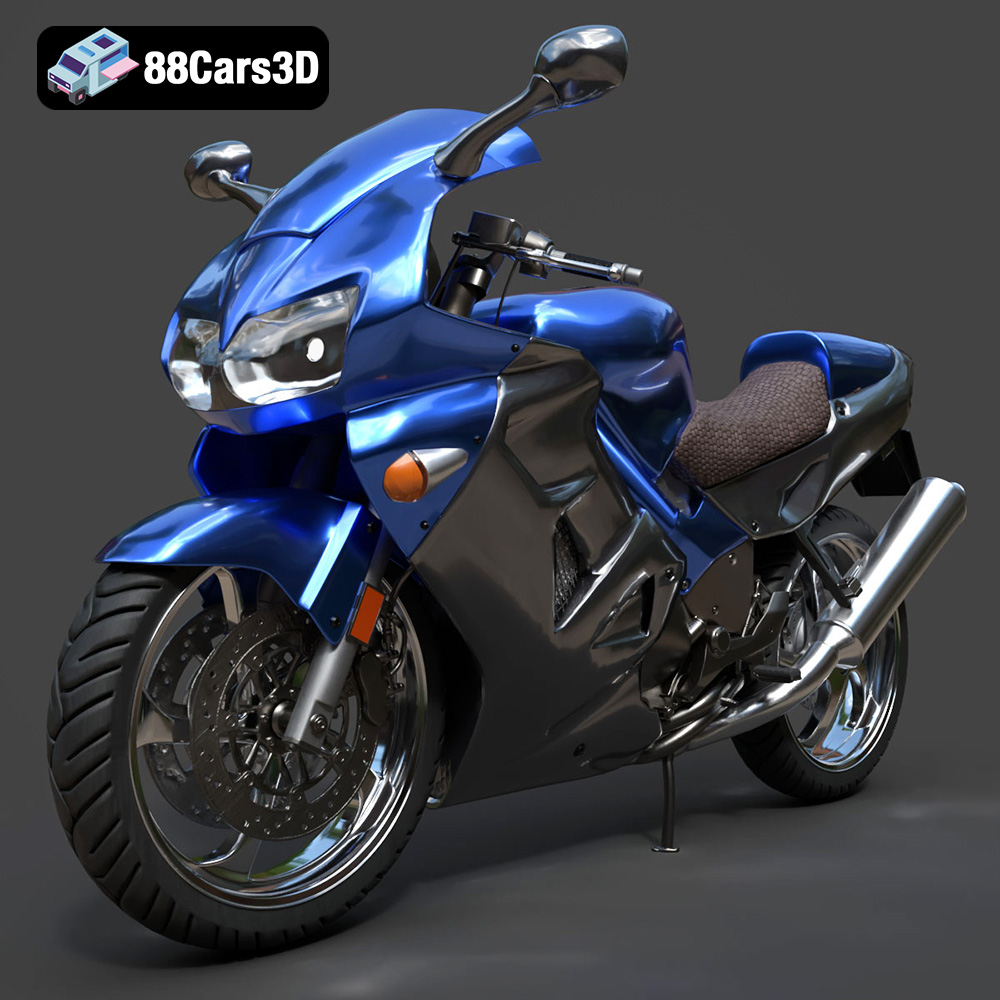
In the dynamic worlds of automotive design, game development, cinematic rendering, and cutting-edge AR/VR experiences, the demand for impeccably detailed and technically robust 3D models is constant. A high-quality 3D asset doesn’t just look good; it acts as a foundational element, streamlining workflows, ensuring consistency, and ultimately elevating the visual fidelity of your entire project. Imagine capturing the sleek lines, powerful stance, and intricate engineering of an iconic sportbike with absolute precision, ready for any application. This is precisely what a meticulously crafted asset like the Honda VFR 801 3D Model offers to professionals and enthusiasts alike.
The Honda VFR 801 is not just any motorcycle; it’s a testament to performance and design. Translating that real-world complexity into a digital format requires expertise, a keen eye for detail, and a deep understanding of 3D topology and material science. When you invest in a professional-grade 3D model, you’re not just buying geometry; you’re acquiring countless hours of skilled labor, technical optimization, and artistic refinement. This blog post will delve into the critical aspects of professional 3D car models, explain the nuances of various file formats, and illustrate how an exceptional asset, such as the Honda VFR 801 3D Model available at 88cars3d.com, can seamlessly integrate into and enhance a multitude of digital pipelines, from stunning automotive rendering to immersive game environments.
One of the first considerations when acquiring any 3D asset is understanding the various file formats it comes in. Each format serves a specific purpose, offering unique advantages for different stages of a project or target platforms. The Honda VFR 801 3D Model, recognizing the diverse needs of modern digital production, is supplied in a comprehensive suite of formats, ensuring maximum compatibility and utility. Knowing which format to use and when is crucial for optimizing your workflow and achieving the best possible results.
The .blend file is Blender’s native format and offers a complete, editable scene. For users of Blender, this is invaluable. It typically includes not just the raw mesh data, but also all materials, textures, lighting setups, cameras, and even animations if present. When working with the Honda VFR 801 .blend file, artists can immediately dive into rendering with Cycles or Eevee, modify materials, adjust lighting, or even dissect the model’s construction for learning purposes. It provides the most flexibility for those who wish to deeply customize or simply render the model out-of-the-box within the Blender ecosystem, making it a powerful foundation for automotive rendering projects.
The .fbx (Filmbox) format is a widely adopted proprietary file format developed by Autodesk, serving as a universal standard for 3D data exchange, especially in game development and animation. Its strength lies in its ability to store not only mesh data and UVs but also materials, textures, bones, skinning, and animation data in a single file. For game engines like Unreal Engine and Unity, importing an .fbx file of the Honda VFR 801 is typically a straightforward process, providing a robust, game-engine-ready format. This format is ideal when you need to transfer complex animated scenes or highly detailed static game assets between different software packages.
The .obj (Wavefront OBJ) format is one of the most widely supported and simplest 3D geometry definitions. It’s a universal format that virtually every 3D application can import and export. While it excels at storing pure mesh data, including vertices, normals, UV coordinates, and faces, it handles materials and textures through a separate .mtl (material template library) file, which often needs to be re-linked or reconstructed in the target software. The Honda VFR 801 .obj file is perfect for cross-software compatibility, offering a clean, foundational mesh for artists who prefer to rebuild materials or integrate the model into less common or niche applications.
The .glb (GL Transmission Format Binary) is an increasingly important format, especially for web-based 3D, Augmented Reality (AR), and Virtual Reality (VR) applications. It’s the binary version of glTF, designed for efficient transmission and loading of 3D scenes and models. A .glb file is self-contained, embedding all textures, materials, and animations directly within a single file, making it incredibly easy to share and deploy. For interactive web experiences or lightweight AR/VR applications featuring the Honda VFR 801 3D Model, the .glb format ensures optimal performance and a seamless user experience, making it a critical asset for modern immersive platforms.
The .stl (Stereolithography) format is the de facto standard for 3D printing. It represents a 3D model as a series of connected triangles, essentially describing the surface geometry without any color, texture, or material information. The Honda VFR 801 .stl file is meticulously prepared to be suitable for 3D printing, allowing designers and engineers to create physical prototypes or miniature replicas of the sportbike. When preparing an STL for printing, careful consideration of mesh integrity and scale is paramount to ensure a successful physical output.
The .ply (Polygon File Format) is another popular format, often used for storing 3D data from 3D scanners, CAD software, and various scientific applications. It can store a wider range of properties than .obj, including color, transparency, normals, texture coordinates, and even reliability information for each vertex and face. The Honda VFR 801 .ply file offers a robust and precise mesh representation, making it particularly useful for engineering analysis, simulation, or archival purposes where detailed polygon data is critical.
Specifically tailored for Epic Games’ Unreal Engine, the .unreal asset refers to a model that has been pre-configured and optimized within the engine’s ecosystem. This often means it comes with appropriate material setups, potentially LODs (Levels of Detail), and collision meshes already applied, significantly reducing setup time. The .unreal asset of the Honda VFR 801 3D Model provides an almost plug-and-play solution for developers working in Unreal Engine, ensuring it’s instantly ready for real-time environments, saving precious development time for game assets.
Similar to .blend for Blender, the .max file is the native project file for Autodesk 3ds Max, a leading software in architectural visualization, motion graphics, and game development. It contains the entire scene, including geometry, materials, textures, lighting, cameras, and animations. For professionals using 3ds Max, the .max file for the Honda VFR 801 allows for complete artistic control, enabling intricate automotive rendering setups, complex animations, or deep integration into existing 3ds Max projects, providing an editable canvas for high-end production.
Beyond simply having a model in a preferred file format, the intrinsic quality of the 3D geometry and materials defines its true value. A professional 3D car model, such as the Honda VFR 801, stands apart due to its meticulous construction, which is paramount for achieving photorealistic results and efficient performance across diverse applications.
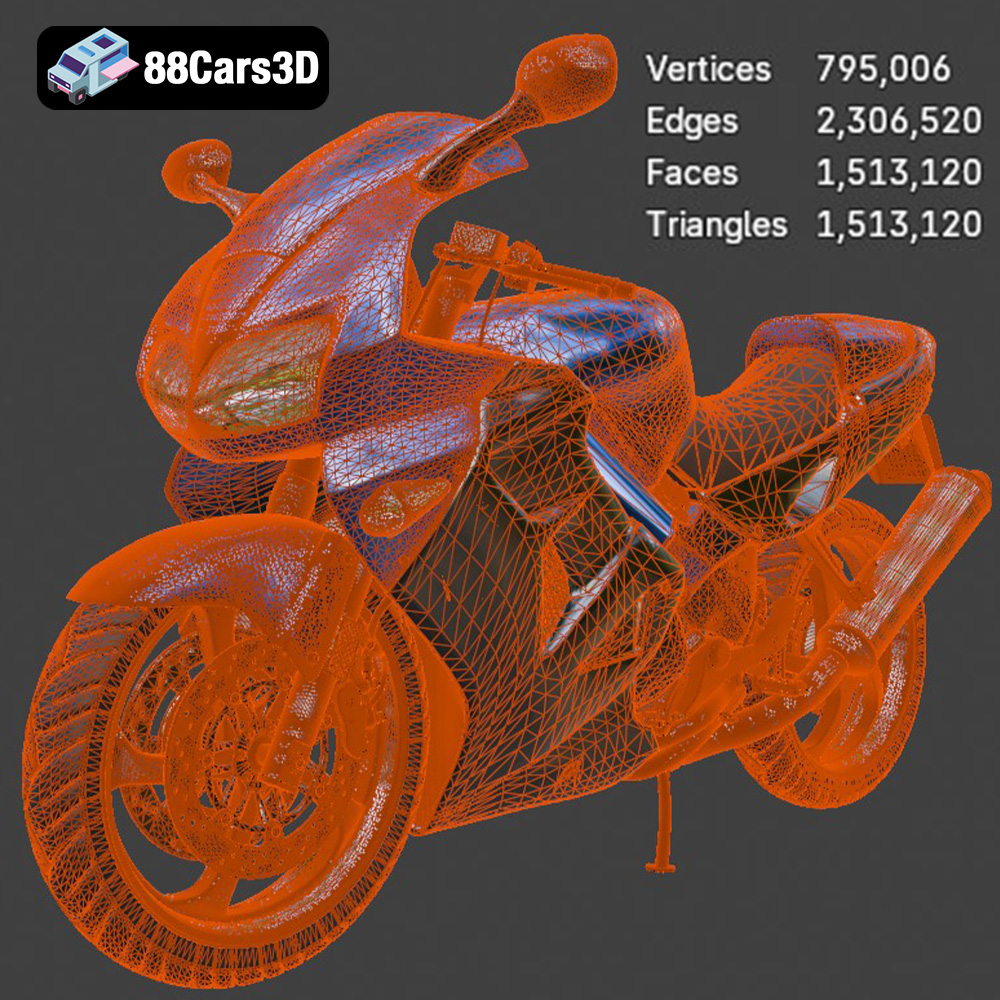
At the core of any high-quality 3D model is its topology. The Honda VFR 801 3D Model boasts clean polygon geometry, primarily composed of quads (four-sided polygons). This is critical for several reasons: it ensures smooth deformation during animation, prevents shading artifacts, and allows for seamless subdivision. Subdivision surfacing (e.g., using a Subdivision Surface modifier in Blender or Turbosmooth in 3ds Max) enables artists to dynamically increase the mesh detail for close-up shots without having an excessively heavy base mesh. Optimized poly counts strike a balance between detail and performance, making the model versatile for both high-end rendering and real-time game development environments. Poor topology, in contrast, leads to jagged edges, stretching textures, and cumbersome editing, turning a project into a frustrating endeavor.
The visual appeal of any 3D model heavily relies on its materials and texturing. The Honda VFR 801 3D Model features realistic materials, often employing Physically Based Rendering (PBR) workflows. PBR materials accurately simulate how light interacts with surfaces in the real world, accounting for properties like albedo (base color), roughness, metallicness, normal maps, and ambient occlusion. High-resolution textures (e.g., 2K, 4K, or even 8K) provide crisp details, from the subtle grain of a tire to the metallic flake in the paint. Crucially, professional models have proper UV unwrapping – a process where the 3D surface is flattened into 2D space without overlapping, allowing textures to be applied accurately and efficiently without distortion. This attention to detail is what gives the Honda VFR 801 its “true-to-life aesthetics.”
Accuracy extends beyond just visual appeal. A professional 3D model is built to real-world scale. This ensures that when the Honda VFR 801 is dropped into a scene, it fits perfectly alongside other objects, whether it’s an architectural visualization, a vehicle lineup in a game, or an AR experience. Accurate scaling is vital for realistic physics simulations, camera perspective, and overall scene believability. Models built without proper scale can lead to countless hours of frustrating adjustments, compromising the integrity of the project.
The versatility of the Honda VFR 801 3D Model lies in its ability to seamlessly integrate into various professional pipelines. Its robust construction and multiple file formats ensure that whether your goal is a stunning render or a performant game asset, it’s ready for action.
For high-end automotive rendering, software like 3ds Max, Blender, Maya, combined with powerful renderers such as V-Ray, Corona, Cycles, or Octane, are the tools of choice. The .max and .blend files of the Honda VFR 801 provide an excellent starting point. Artists can import the model, which often comes with pre-configured materials, and then focus on lighting, camera angles, and environment design. Imagine creating a photorealistic advertisement for Honda, showcasing the VFR 801 gleaming under studio lights or parked against a breathtaking landscape. The clean topology allows for extreme close-ups without pixelation, while PBR materials ensure that reflections and refractions behave exactly as they would in reality. This level of detail is essential for marketing materials, product configurators, and design reviews, where every curve and material choice needs to be perfectly represented.
The world of game development demands a balance between visual fidelity and performance. Here, the .fbx and .unreal files of the Honda VFR 801 truly shine. Game developers can import the optimized .fbx directly into Unreal Engine or Unity. The model’s clean topology, efficient UVs, and pre-configured materials (in the .unreal version) significantly reduce the time spent on asset preparation. Developers can then focus on implementing game logic, setting up physics, designing interactive elements, and optimizing for various platforms. Whether it’s a high-fidelity racing simulation where the VFR 801 tears down the track, a vast open-world game where it serves as a player vehicle, or a detailed cutscene, this 3D model provides a reliable foundation for game assets that look stunning without crippling frame rates.
As AR and VR technologies become more prevalent, the need for lightweight, optimized 3D models grows. The .glb format of the Honda VFR 801 3D Model is specifically designed for this. A single .glb file can be easily embedded into websites for interactive 3D viewers, deployed in AR apps for “see in your space” functionality, or integrated into VR environments for immersive explorations. Imagine an interactive virtual showroom where potential buyers can walk around, examine the Honda VFR 801 from every angle, customize its colors, or even hear its engine roar, all rendered seamlessly in a web browser or a mobile AR application. The optimization inherent in the .glb format ensures quick loading times and smooth interactions, crucial for engaging user experiences.
The utility of a high-quality 3D model extends far beyond just visual representation. The Honda VFR 801 3D Model can be a valuable tool across various other industries and specialized applications.
In fields requiring realistic simulation, such as professional rider training or engineering analysis, the accurate representation of the Honda VFR 801 is invaluable. The model can be integrated into advanced simulators to provide a true-to-life training environment, allowing virtual riders to practice maneuvers, understand vehicle dynamics, or even learn maintenance procedures in a safe, controlled digital space. The precision of the .ply format, for instance, could be leveraged for detailed structural analysis or airflow simulations around the vehicle.
For designers, engineers, or hobbyists looking to bring digital assets into the physical world, the .stl file of the Honda VFR 801 3D Model is indispensable. While 3D printing requires careful consideration of wall thickness, support structures, and material properties, having a clean, watertight STL model is the critical first step. This allows for the creation of physical prototypes, scale models for presentations, or even custom parts that can be tested and iterated upon, bridging the gap between digital design and tangible objects.
Automotive designers often use existing vehicle models as a base for conceptualizing new ideas or modifications. The fully editable nature of the .blend and .max files for the Honda VFR 801 provides an ideal foundation. Designers can experiment with new fairing designs, custom paint schemes, accessory placements, or even explore radical redesigns, all within a realistic context. This accelerates the design process, allowing for rapid iteration and visualization of various concepts before committing to expensive physical prototypes.
In a world where time is money and quality is paramount, sourcing professional-grade 3D car models from a reliable marketplace is a strategic decision. The Honda VFR 801 3D Model, along with a wide array of other exceptional 3D car models, exemplifies the commitment to quality found at 88cars3d.com. By providing assets with clean geometry, realistic materials, and diverse file formats, 88cars3d.com empowers creators to focus on their artistic vision and technical implementation, rather than spending countless hours on modeling from scratch or fixing substandard assets. Investing in such detailed and versatile 3D assets ensures consistency, accelerates production timelines, and ultimately elevates the standard of your final projects, whether for automotive rendering, game development, or cutting-edge AR/VR experiences.
The journey from concept to a compelling digital experience is paved with quality assets. The Honda VFR 801 3D Model stands as a prime example of what a professional-grade 3D model should be: meticulously detailed, technically optimized, and incredibly versatile. From its clean polygon geometry and PBR materials to its comprehensive array of file formats, including .blend, .fbx, .obj, .glb, .stl, .ply, .unreal, and .max, this asset is engineered to meet the stringent demands of modern production pipelines. Whether you’re crafting a photorealistic automotive rendering, developing an immersive game, creating an engaging AR/VR experience, or even preparing for 3D printing, the Honda VFR 801 3D Model offers the foundation for exceptional results. It’s more than just a model; it’s a catalyst for creativity and efficiency in any digital endeavor, ready to be driven into your next project.
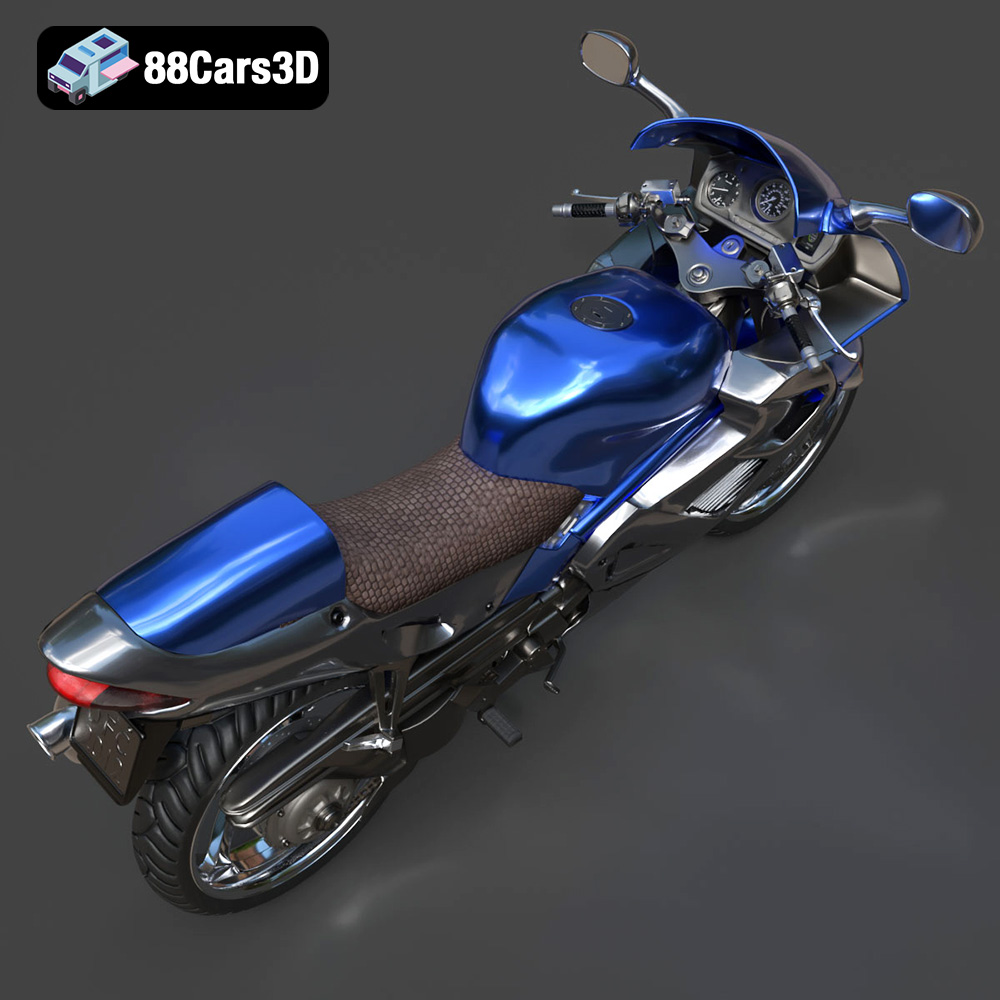
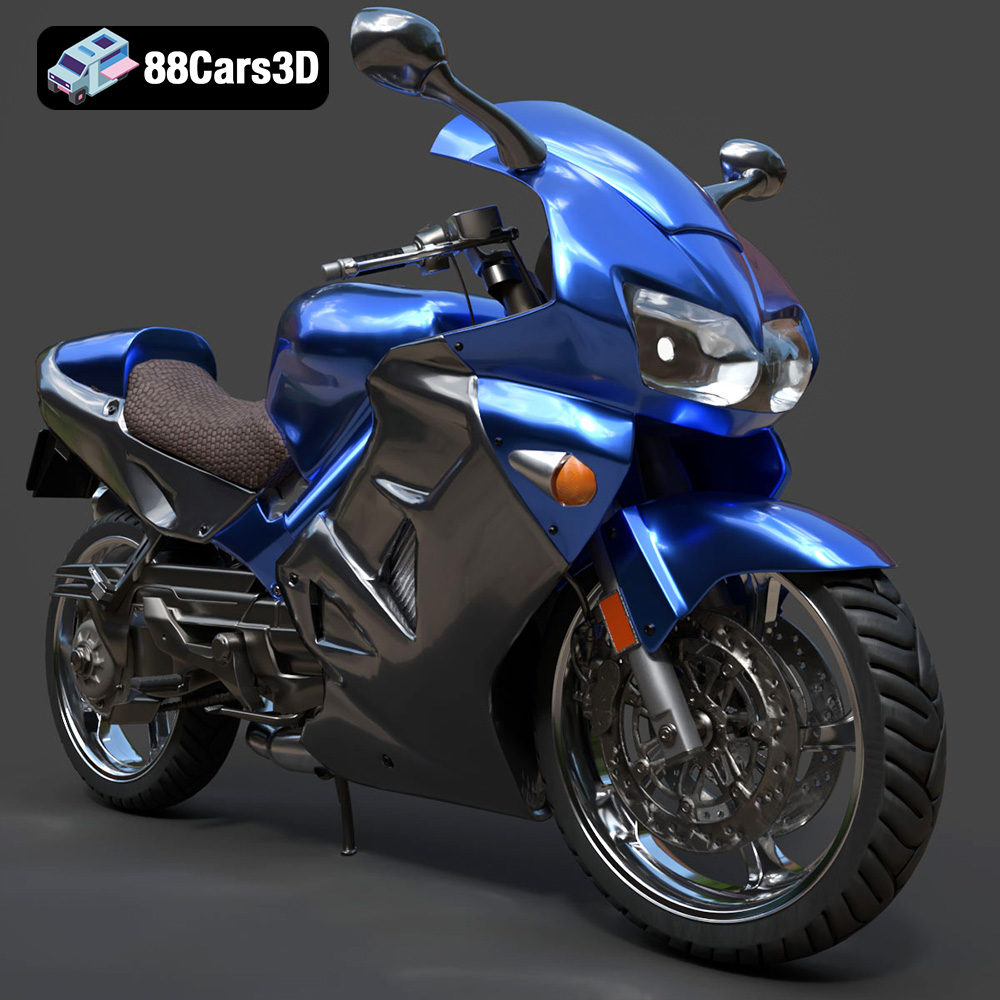
Experience unmatched realism with the Honda VFR 801-002 3D Model. Constructed with meticulous attention to detail, this professional 3D asset captures the dynamic essence and engineering precision of the iconic Honda VFR. It is designed to elevate your visual projects with accurate scaling and true-to-life aesthetics. Key features include clean polygon geometry, realistic materials, and exceptional detailing. The topology is fully optimized for smooth rendering and seamless subdivision, ensuring professional-grade results whether utilized for static imagery or dynamic animations. This versatile 3D model is ideal for a wide range of applications. From digital rendering and simulation to game development and immersive AR/VR experiences, it integrates seamlessly into your existing pipeline to deliver outstanding visual fidelity.
$39.99
.arvr
.blend
.car3dmodel
.fbx
.gameasset
.glb
.honda
.max
.motorcycle
.obj
.ply
.rendering
.simulation
.sportbike
.stl
.twowheeler
.unreal
.vfr