Get 20% OFF All Premium 3D & STL Models!

In the rapidly evolving landscape of digital content creation, the demand for hyper-realistic and functionally robust 3D assets has never been higher. From immersive video games and cutting-edge virtual reality experiences to photorealistic architectural visualizations and product configurators, high-quality 3D car models stand as pivotal components. These assets are more than just digital sculptures; they are intricate data packages, meticulously engineered to perform flawlessly across a spectrum of professional applications.
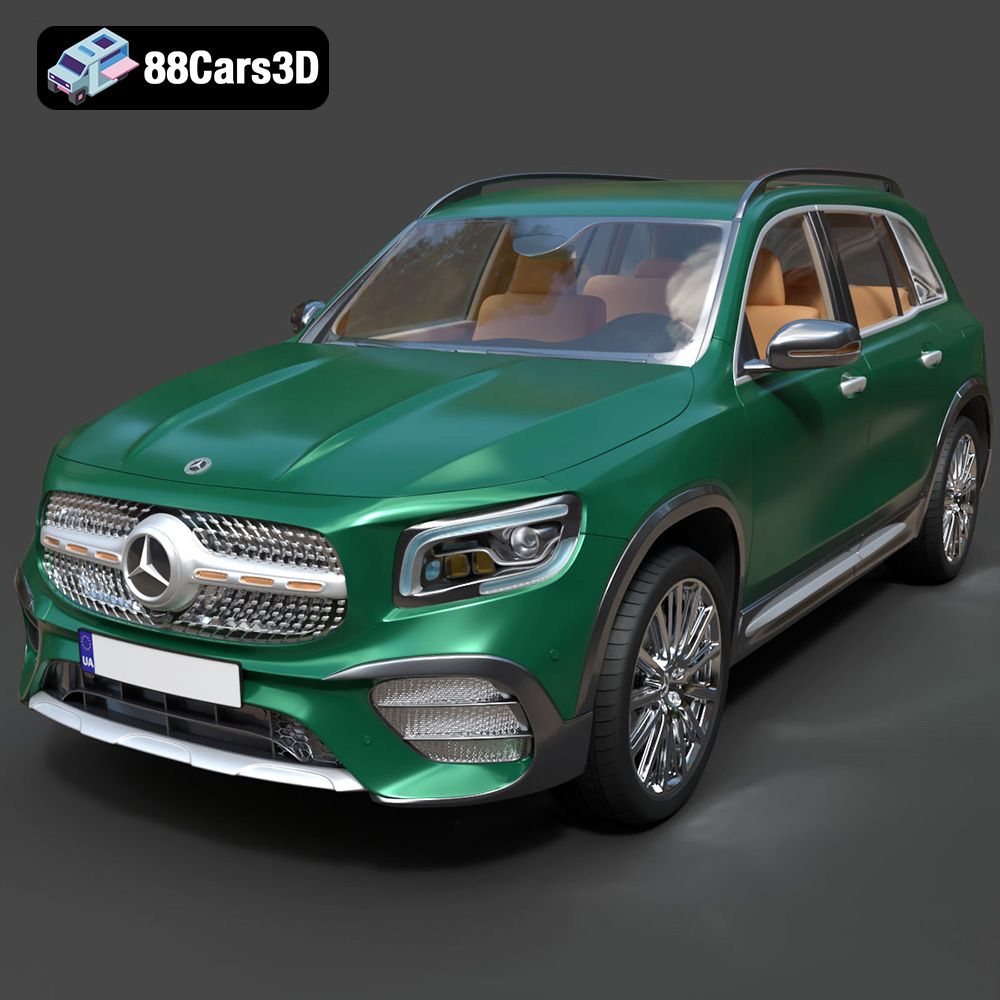
The pursuit of perfection in automotive 3D modeling demands a blend of artistic vision and technical mastery. Every curve, every reflection, and every interior detail must be faithfully recreated to deliver an authentic digital counterpart. This level of precision is exemplified by models such as the Mercedes-Benz GLB-Class Mk1 AMG Line 2019 3D Model, a testament to detailed craftsmanship, offering rugged versatility intertwined with premium luxury. Such a model doesn’t just look good; it’s optimized for performance, ready to be dropped into game engines, rendered in stunning cinematics, or even prepared for 3D printing. Understanding the nuances behind these sophisticated assets is key to unlocking their full potential in your creative projects.
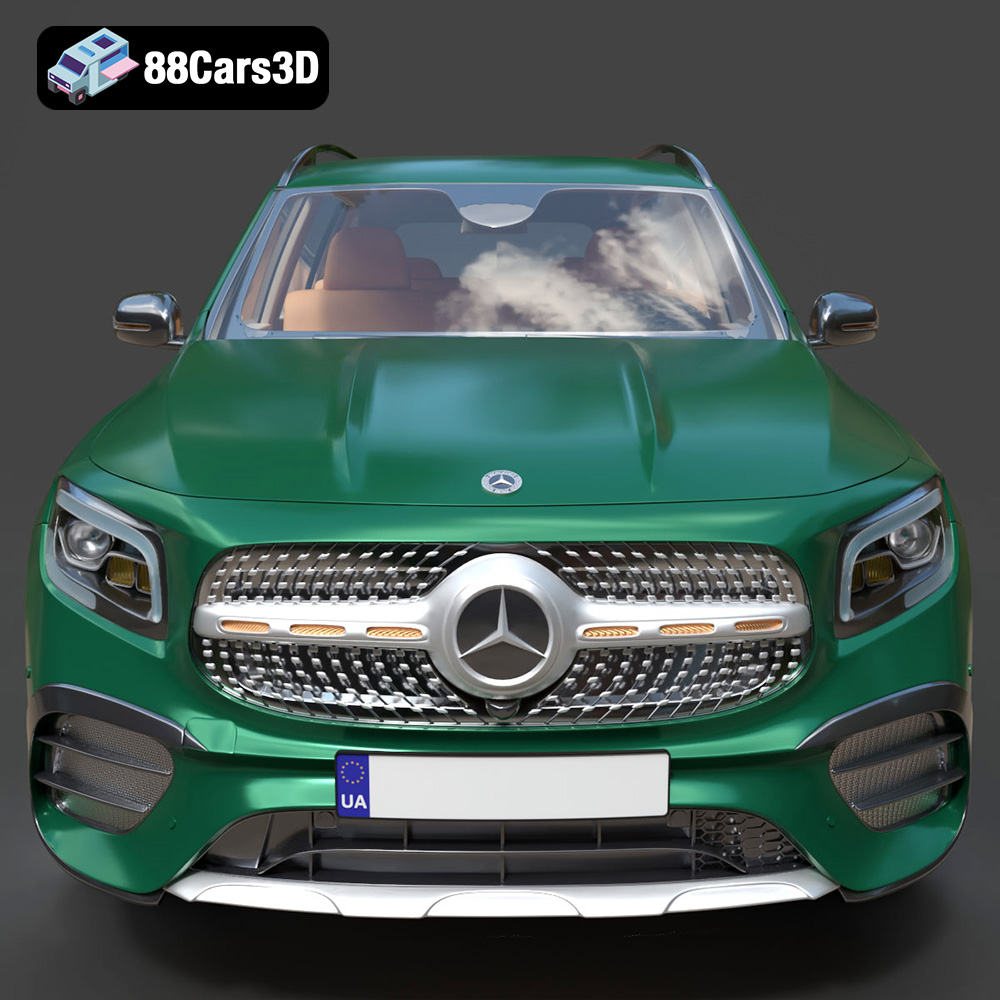
Creating a truly exceptional 3D car model begins long before any polygons are pushed. It starts with comprehensive research, gathering blueprints, photographic references, and technical specifications of the real-world vehicle. For a model like the Mercedes-Benz GLB-Class Mk1 AMG Line 2019, this means studying every aspect of its distinctive boxy silhouette, commanding stance, and aggressive AMG Line styling cues, from the signature diamond radiator grille to the prominent dual exhaust system. This foundational knowledge ensures that the digital replica not only looks convincing but is also dimensionally accurate, capturing the essence and engineering of its physical counterpart.
A high-quality 3D car model must strike an impeccable balance between visual fidelity and technical efficiency. This is particularly crucial for real-time applications like video games and AR/VR, where performance directly impacts user experience. Optimization involves strategic polycount management, efficient UV mapping, and the implementation of Physically Based Rendering (PBR) textures. The Mercedes-Benz GLB-Class Mk1 AMG Line 2019 3D Model, with its optimized topology (~250,000 triangles), exemplifies this balance, providing exceptional visual realism without compromising real-time performance. This makes it a premium asset for game engines and immersive interactive media.
Navigating the world of 3D modeling often requires a deep understanding of various file formats, each serving specific purposes and catering to different software environments or use cases. The choice of format can significantly impact compatibility, performance, and the level of detail retained in your projects. When acquiring a versatile 3D asset, such as the Mercedes-Benz GLB-Class Mk1 AMG Line 2019 3D Model, it’s common to receive it in multiple formats to ensure maximum applicability. Let’s delve into the most common and crucial ones:
The .blend format is the native file type for Blender, the popular open-source 3D creation suite. When a model is provided in .blend, it offers the ultimate flexibility for Blender users. It encapsulates the entire Blender scene, including the 3D model geometry, materials (often set up with PBR shaders), textures, lighting, cameras, animation data, modifiers, and even scene settings. This means you can open the file and immediately begin editing, retexturing, animating, or rendering within Blender without any loss of information or setup. It’s ideal for artists who want to delve deep into the model’s construction, make extensive modifications, or simply use Blender as their primary workflow tool.
The .fbx (Filmbox) format is arguably the most widely used and respected interchange format in the 3D industry, especially prevalent in game development. Developed by Autodesk, FBX is designed to transfer 3D model data between different software applications like 3ds Max, Maya, Blender, Unity, and Unreal Engine. It supports geometry, materials (though PBR setups might need re-linking of textures in the target software), textures, bones, skinning, animation, and more. Its robustness and widespread support make it ideal for game engines, real-time pipelines, and scenarios where assets need to move seamlessly between multiple production stages. When importing the GLB-Class into Unreal or Unity, .fbx is often the go-to choice for preserving pivots, hierarchy, and animation potential.
The .obj (Wavefront OBJ) format is a much older but still incredibly common and universal format primarily for geometric data. It’s a simple, text-based format that defines 3D geometry – vertices, faces, UV coordinates, and normals – along with references to external material files (.mtl) that describe surface properties and texture maps. While .obj doesn’t natively support animation, rigging, or scene setup, its simplicity and widespread compatibility across virtually all 3D software make it an excellent choice for basic model exchange. It’s often used when you only need the pure mesh geometry and plan to set up materials and animation from scratch in your target application. It’s a reliable fallback for cross-software compatibility.
The .glb (GLB – GL Transmission Format Binary) is a binary version of the glTF (GL Transmission Format) specification, a royalty-free standard for 3D scenes and models. GLB files are highly optimized for web-based applications, AR (Augmented Reality), and VR (Virtual Reality) experiences. They bundle all necessary data – geometry, materials, textures, animations – into a single, self-contained file, making them incredibly efficient for loading and displaying 3D content in browsers, mobile apps, and real-time interactive environments. If you’re looking to display your Mercedes-Benz GLB-Class model in an online configurator or a mobile AR experience, .glb is the format of choice due to its compact size and performance.
The .stl (Stereolithography) format is the undisputed standard for 3D printing. It represents a 3D model as a series of connected triangles, essentially a raw mesh that describes only the surface geometry of an object without color, texture, or material information. When preparing the GLB-Class for physical reproduction, converting it to .stl is the first step. While simple, its ubiquity ensures compatibility with virtually every 3D printer and slicing software. The product description highlights the GLB-Class’s suitability for 3D printing, with recommendations for scale, layer height, and support structures, making .stl a critical inclusion for hobbyists and professionals alike.
The .ply (Polygon File Format or Stanford Triangle Format) is another popular format for storing 3D data, particularly useful for scanned data, CAD, and scientific applications where precision and detailed mesh information are paramount. Like .obj and .stl, it can store geometry, but it can also include additional properties such as color, transparency, texture coordinates, normals, and even data from 3D scanners, making it more robust than .obj for certain use cases. It allows for the description of specific mesh characteristics beyond simple vertices and faces, often used in academia and engineering for analysis and visualization of complex geometries.
The .unreal format refers to assets specifically packaged or saved within the Unreal Engine environment. While not a standalone file format in the traditional sense like FBX, it signifies that the model has been imported, optimized, and prepared within Unreal Engine itself. This often means PBR materials are set up, collision meshes are applied, LODs (Levels of Detail) are generated, and other engine-specific properties are configured. For developers working with the GLB-Class, having an “engine-ready” asset saves significant time and effort in the import and setup process, allowing for immediate integration into an Unreal project.
The .max format is the native file type for Autodesk 3ds Max, a powerful 3D modeling, animation, and rendering software. Similar to Blender’s .blend file, a .max file contains the complete 3ds Max scene, including geometry, materials, textures, lighting, cameras, animation, modifiers, and plugin-specific data. It offers the most comprehensive editing capabilities for users who work within 3ds Max, allowing full control over the model’s construction, rigging, and animation setup. For professionals using 3ds Max for high-end rendering or complex animations, the .max file provides an invaluable foundation.
The availability of the Mercedes-Benz GLB-Class Mk1 AMG Line 2019 3D Model in this diverse range of formats (.blend, .fbx, .obj, .glb, .stl, .ply, .unreal, .max) underscores its versatility and value, ensuring that it can be seamlessly integrated into virtually any professional workflow, regardless of software preference or project requirement.
The journey of transforming a real-world vehicle into a high-fidelity 3D model is a complex one, requiring meticulous attention to detail at every stage. It’s a process that combines artistic interpretation with rigorous technical execution, ensuring the final digital asset is both visually stunning and functionally sound.
Creating intricate automotive geometry demands advanced modeling techniques. Surface modeling, often employing NURBS (Non-Uniform Rational B-Splines) or subdivision surfaces, is critical for achieving the smooth, flowing curves and crisp panel lines characteristic of modern vehicles. For the Mercedes-Benz GLB-Class Mk1 AMG Line 2019, this means accurately replicating the complex interplay of its chassis, the aggressive AMG specific dual exhaust system, and the precise detailing of its LED High Performance headlamps. Every component, from the engine block and undercarriage to the authentic AMG 5-twin-spoke light-alloy wheels, is built with a focus on real-world scale accuracy and structural integrity, crucial for convincing animations and renders.
Photorealism in 3D car models hinges heavily on Physically Based Rendering (PBR) texturing. PBR materials accurately simulate how light interacts with different surfaces in the real world, accounting for properties like roughness, metallicness, and normal maps. For a luxury SUV like the GLB-Class, this translates to lifelike reflections on its body paint, the subtle sheen of Nappa leather in the interior, and the intricate textures of the sport seating with its detailed stitching. Proper UV mapping is essential to ensure these textures wrap seamlessly around the model, preventing distortions and maintaining visual integrity. The result is a model that looks authentic under any lighting condition, a critical advantage for automotive rendering and visualization projects.
Beyond visual fidelity, a professional 3D car model must be optimized for performance, especially for real-time applications. This involves careful polygon budgeting, with models like the GLB-Class boasting around 250,000 triangles – a sweet spot for visual quality and real-time efficiency. Optimization also includes creating efficient UV layouts for texture atlases, setting up proper pivot points for animation (e.g., separate wheels, suspension, and steering components for seamless rotation and travel), and potentially generating Levels of Detail (LODs) for game engines to automatically swap out models based on distance, further boosting performance.
The core utility of high-quality 3D car models shines brightest in interactive real-time environments. Game development, in particular, heavily relies on assets that are not only visually compelling but also meticulously optimized for seamless integration and fluid performance.
Modern game engines like Unreal Engine and Unity provide robust pipelines for importing and deploying 3D car models. Models like the Mercedes-Benz GLB-Class Mk1 AMG Line 2019, provided in formats such as .fbx and even engine-ready .unreal files, streamline this process significantly. Once imported, developers can leverage the engine’s advanced rendering capabilities to set up PBR materials, ensure accurate lighting, and configure physics assets. The separate components for wheels, suspension, and steering, as found in the GLB-Class model, are vital for implementing realistic vehicle physics and animation within the game world, allowing for dynamic driving experiences in open-world titles or racing simulators.
The potential for 3D car models extends far beyond traditional gaming into the exciting realms of Augmented Reality (AR) and Virtual Reality (VR). Immersive virtual showrooms, interactive configurators, and mobile AR experiences are becoming increasingly common. The optimized geometry and PBR texturing of models like the GLB-Class are perfect for these applications, offering users a chance to explore a vehicle in a truly interactive and engaging way. Whether visualizing the car in their driveway via AR or experiencing a full 360-degree virtual tour in VR, the digital model must perform flawlessly in real-time. Formats like .glb are specifically designed for such efficient, web-based, and mobile AR/VR deployments, ensuring quick loading times and smooth interactions.
Consider an urban racing game where players speed through a photorealistic city. The Mercedes-Benz GLB-Class Mk1 AMG Line 2019, with its aggressive styling and detailed exterior features, becomes a protagonist in this digital world. Its optimized polycount (~250,000 triangles) allows for multiple vehicles on screen without bogging down frame rates. Similarly, in a luxury vehicle configurator, a user can explore every angle of the GLB-Class, customize body colors (Mountain Grey, Cosmos Black, or bespoke finishes), modify tire textures, or adjust material finishes (matte, gloss, metallic, carbon fiber accents) in real-time, making informed purchase decisions based on a highly accurate digital representation. The included file formats like .fbx and .glb are crucial for these diverse applications, providing flexibility for development across platforms.
While game development is a significant application, the utility of high-quality 3D car models extends across various industries, providing value in areas demanding visual fidelity and technical precision.
Architectural visualization artists frequently employ 3D car models to breathe life and realism into their renders of buildings and urban environments. A parked Mercedes-Benz GLB-Class Mk1 AMG Line 2019 outside a contemporary home or driving through a newly designed streetscape adds a crucial element of scale, context, and lifestyle. The detailed exterior and interior features of such a model enhance the overall realism, making the scene feel lived-in and dynamic. High-resolution textures and accurate reflections ensure the vehicle blends seamlessly into the rendered environment, catching the eye with its authentic presence. Artists often use 3ds Max or Blender with rendering engines like V-Ray or Corona to achieve these stunning results, utilizing .max or .blend files for full control over lighting and materials.
AR and VR offer revolutionary ways to showcase products, particularly high-value items like luxury vehicles. Imagine a prospective buyer using a mobile AR app to place the Mercedes-Benz GLB-Class Mk1 AMG Line 2019 in their own garage, rotating it, opening doors, and even peering inside the MBUX dual-screen digital instrument cluster. Or a VR experience that transports them to a virtual test drive. The optimized geometry, detailed cockpit, and PBR texturing of premium 3D models are perfectly suited for these highly interactive, immersive experiences, providing an unparalleled level of engagement that transcends traditional brochures or websites. The .glb format, specifically designed for web and mobile 3D, is a game-changer here, offering lightweight yet high-fidelity assets.
The bridge between digital assets and physical objects is 3D printing, and high-quality 3D car models are increasingly being used for this purpose. Enthusiasts, model makers, and designers can convert models like the Mercedes-Benz GLB-Class Mk1 AMG Line 2019 into .stl format for physical reproduction. The product description for the GLB-Class model provides clear 3D print settings, recommending scales (1:12 / 1:18 / 1:24), layer heights, infill percentages, and specific print orientations for components like the frame and wheels. This allows for the creation of intricate, display-scale models, requiring careful post-processing such as sanding, priming, and painting with authentic factory colors to achieve a miniature replica of astonishing fidelity. Resin printing is often recommended for capturing the fine details, ensuring every curve and emblem is faithfully reproduced.
Achieving photorealism in 3D automotive rendering is an art form that demands a keen understanding of lighting, materials, and camera techniques. It’s where the raw data of a 3D model truly comes to life, convincing the viewer that they are looking at a photograph rather than a digital creation.
Professional automotive renders often begin with sophisticated studio lighting setups. These typically involve a combination of large, soft area lights to simulate studio softboxes, creating even illumination and elegant reflections across the vehicle’s body. HDR (High Dynamic Range) image-based lighting is also crucial for capturing realistic ambient light and reflections from a surrounding environment. For a model like the Mercedes-Benz GLB-Class Mk1 AMG Line 2019, the goal is to highlight its distinctive lines, the intricate details of its AMG Line styling, and the luxurious texture of its paintwork. Experimenting with different light temperatures, intensities, and positions can dramatically alter the mood and impact of the render, from dramatic, high-contrast shots to bright, airy showroom presentations.
The realism of an automotive render heavily relies on the quality and setup of its materials. PBR (Physically Based Rendering) shaders are fundamental, accurately simulating how light interacts with surfaces by defining properties such as metallicness, roughness, albedo (base color), and normal maps. For the GLB-Class, this means ensuring the metallic paint has the correct specularity and clear coat reflections, the tires exhibit realistic rubber textures, and the glass accurately reflects and refracts light. Interior materials, like the Nappa leather and detailed sport seating, also require meticulous attention to achieve their soft sheen and textural nuances. Customization options, such as changing body colors or adjusting material finishes (matte, gloss, carbon fiber), further enhance the rendering possibilities, allowing artists to create bespoke visualizations.
Once the initial render is complete, post-processing in image editing software like Photoshop is often employed to add the final polish and cinematic flair. This can include color grading, adding subtle depth of field for focus, enhancing reflections and highlights, introducing lens flares, or compositing the vehicle into a background environment. The goal is to elevate the raw render into a compelling visual narrative, making the Mercedes-Benz GLB-Class Mk1 AMG Line 2019 appear as if it belongs perfectly in a high-end advertisement or a sleek lifestyle magazine spread. This final stage is crucial for achieving the “wow” factor that defines professional automotive rendering.
In a competitive digital landscape, the quality of your 3D assets can be the differentiator between a good project and an exceptional one. Investing in premium 3D car models is not just about aesthetics; it’s about efficiency, reliability, and ultimately, delivering superior results.
Creating a high-fidelity 3D car model from scratch is an incredibly time-consuming and resource-intensive endeavor, often requiring hundreds of hours of a skilled artist’s time. For studios and individual creators, purchasing a game-ready and optimized model like the Mercedes-Benz GLB-Class Mk1 AMG Line 2019 from a reputable marketplace such as 88cars3d.com offers a significant advantage. These models come meticulously crafted, with optimized topology, PBR texturing, and often in multiple file formats, meaning they can be dropped directly into a project with minimal setup. This drastically reduces development cycles and allows artists to focus on creative tasks rather than repetitive modeling.
Premium 3D models are built with technical precision in mind. This includes real-world scale accuracy, proper pivot setups for animation, clean geometry, and consistent PBR material setups. Such attention to detail ensures seamless compatibility with major 3D software platforms and real-time rendering engines like Unreal and Unity. When you acquire an asset from 88cars3d.com, you can be confident that the Mercedes-Benz GLB-Class Mk1 AMG Line 2019 3D Model meets professional standards, reducing the headache of fixing errors or optimizing poorly constructed meshes, which can otherwise derail a project.
A high-quality 3D car model acts as a versatile foundation for a myriad of creative applications. Whether it’s for game development, AR/VR experiences, architectural visualizations, or even 3D printing, a well-constructed asset provides the flexibility needed to adapt to different scenarios. The customization options, from changing body colors to adjusting material finishes, empower artists to tailor the model to their specific vision, ensuring that the digital vehicle perfectly complements the context of their project. This versatility, combined with the assurance of quality, makes premium 3D car models an invaluable asset for any digital creator.
The journey from a real-world vehicle to a meticulously crafted 3D model is a testament to the confluence of art and engineering in the digital age. As we’ve explored, these sophisticated assets are not merely static representations but dynamic tools, capable of driving innovation across diverse industries. From the intricate detailing required for photorealistic rendering to the careful optimization crucial for real-time game performance and immersive AR/VR experiences, every aspect of a premium 3D car model contributes to its unparalleled utility.
The Mercedes-Benz GLB-Class Mk1 AMG Line 2019 3D Model stands as a prime example of such an asset, meticulously designed to offer a perfect balance of visual fidelity and technical efficiency. Its robust set of features, optimized geometry, PBR texturing, and extensive file format support (including .blend, .fbx, .obj, .glb, .stl, .ply, .unreal, and .max) ensure it’s ready for any professional workflow. Whether you’re a game developer seeking realistic vehicles, an architect enhancing a visualization, or an enthusiast venturing into 3D printing, the value of such a high-quality, game-ready 3D model is undeniable.
By understanding the nuances of 3D modeling workflows, file formats, and optimization techniques, creators can leverage these assets to push the boundaries of digital content. Investing in premium 3D car models from platforms like 88cars3d.com not only saves invaluable time and resources but also elevates the quality and impact of your final output, enabling you to bring your creative visions to life with stunning realism and efficiency. The digital road ahead is paved with possibilities, and with the right assets, you’re perfectly equipped to navigate it.
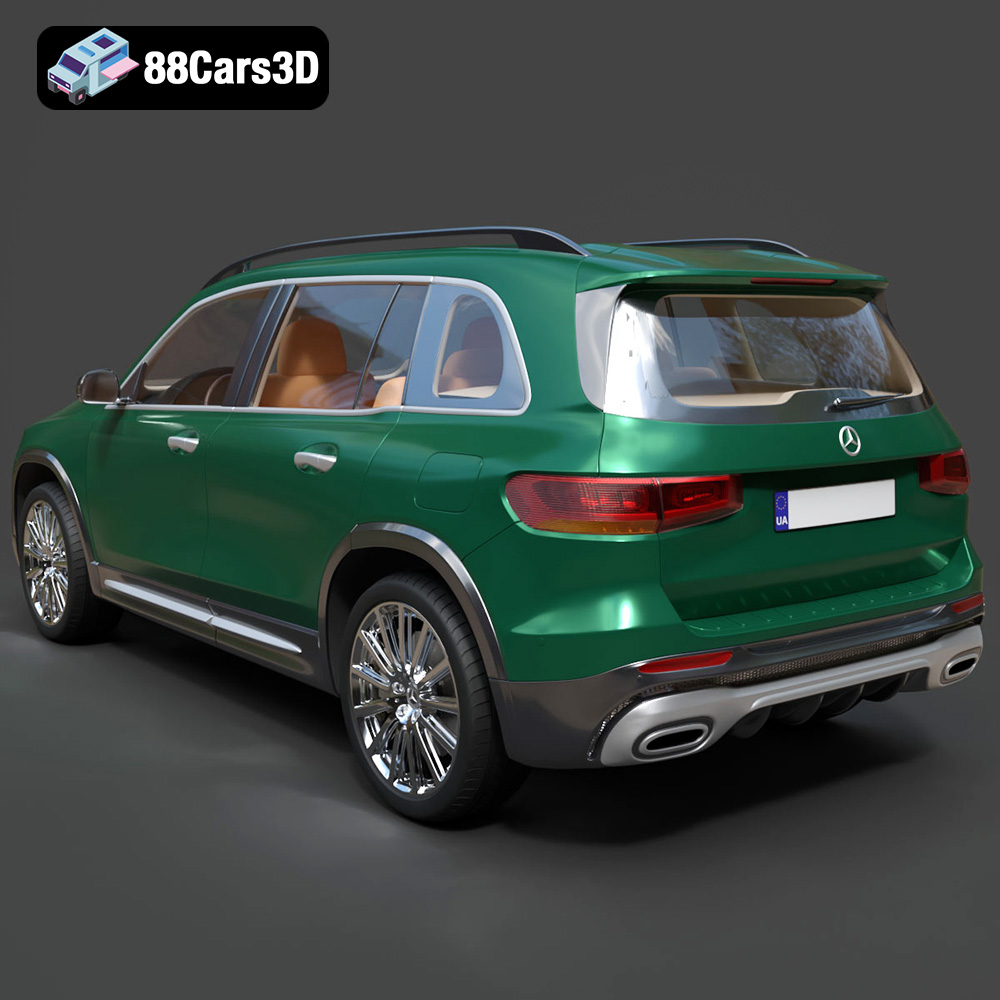
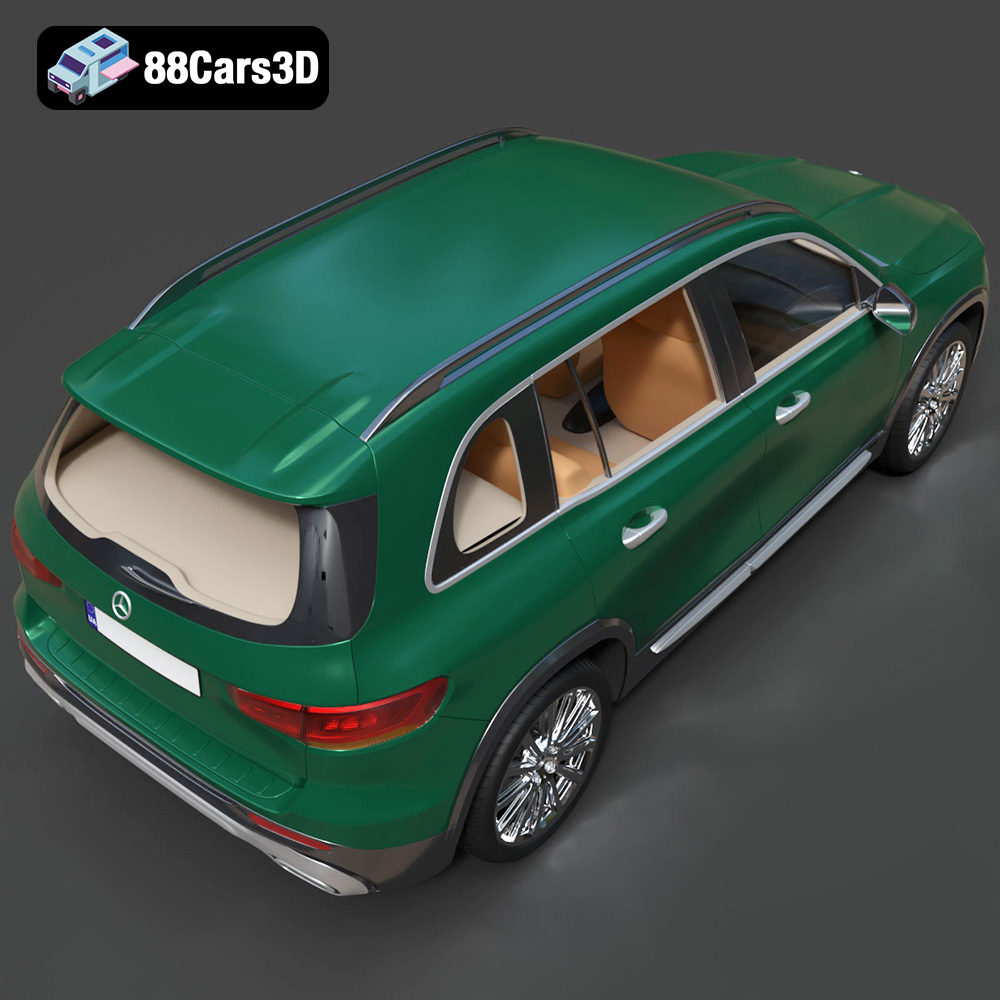
Experience the perfect blend of rugged versatility and premium luxury with our meticulous 3D model of the Mercedes-Benz GLB-Class (Mk1) AMG Line 2019. This compact crossover SUV stands out with its distinctive boxy silhouette, commanding stance, and aggressive AMG Line styling cues, including the signature diamond radiator grille, sporty front aprons, and prominent dual exhaust system. Designed to encapsulate the modern elegance and muscular heritage of the Mercedes-Benz brand, this digital replica captures every striking curve and sophisticated detail.
This high-fidelity, game-ready 3D model is meticulously crafted with optimized topology (~250,000 triangles), striking an impeccable balance between exceptional visual realism and efficient real-time performance. Designed for maximum versatility, the model features PBR texturing and precise structural proportions, making it a premium asset for game engines, high-end rendering, and immersive interactive media.
Perfect for urban racing games, luxury vehicle configurators, architectural visualizations, and mobile AR experiences.
.blend, .fbx, .obj, .glb, .stl, .ply, .unreal, .max
Tags:
mercedes-benz, glb-class, amg-line, 2019, compact-suv, luxury-suv, game-ready, low-poly, optimized, car-3d-model, game-asset, rendering, vr-ar, blend, fbx, obj, glb, stl, ply, unreal, maxVespa VNB 125-B 3D Model 3D Printable STL
$39.99
.2019
.blend
.fbx
.glb
.luxury suv
.max
.obj
.ply
.rendering
.stl
.unreal
amg-line
car-3d-model
compact-suv
game asset
game-ready
glb-class
low-poly
mercedes-benz
optimized
VR/AR