Get 20% OFF All Premium 3D & STL Models!

In the rapidly evolving landscape of automotive design, electric vehicles (EVs) stand at the forefront of innovation, blending sustainable performance with sleek, futuristic aesthetics. The Polestar 2 2020 is a prime example of this synergy, a premium all-electric fastback that commands attention with its minimalist Scandinavian design, signature pixel LED headlights, and a distinctly aerodynamic profile. For professionals across various digital industries, capturing the essence of such a vehicle in a high-fidelity 3D model is not just an artistic pursuit, but a technical imperative.
Whether for hyper-realistic automotive rendering, immersive game development, interactive AR/VR experiences, or precision 3D printing, the demand for meticulously crafted 3D car models has never been higher. This is where assets like the Polestar 2 2020 3D Model truly shine, offering an unparalleled level of detail and optimization for a multitude of applications. Available on platforms like 88cars3d.com, such a model provides a robust foundation for projects that demand both visual excellence and technical efficiency.
The versatility of a 3D model is often defined by the range of file formats it supports. Each format serves a specific purpose, catering to different software environments, project requirements, and output destinations. The Polestar 2 2020 3D Model, for instance, comes with an impressive array of formats, ensuring maximum compatibility and utility across professional pipelines. Understanding these formats is crucial for optimizing workflows and achieving desired results.
The .blend file is Blender’s native format, containing all scene data including meshes, materials, textures, lighting, cameras, animation, and even scripting. For artists and developers primarily working within the Blender ecosystem, this format offers the most flexibility. It allows for full editability of the model, enabling easy modifications to the topology, UV maps, shader nodes, and rigging. The Polestar 2 2020 model in .blend format means a Blender user gains immediate access to a fully set-up scene, ready for rendering with Cycles or Eevee, or for export to other platforms with all data intact.
Autodesk’s .fbx (Filmbox) format is arguably the most widely adopted interchange format in the 3D industry. It’s incredibly robust, capable of storing not just mesh data, but also complex animations, rigs, skinning, materials, and even camera and lighting information. Its strength lies in its ability to bridge different software packages seamlessly. For game development (Unreal Engine, Unity), architectural visualization, and animation studios, the .fbx version of the Polestar 2 2020 is ideal. It ensures that when you import the model, critical elements like pivot points for wheels or doors, and basic material assignments, are preserved, minimizing setup time and potential conversion errors.
The .obj (Wavefront Object) format is a universal standard, prized for its simplicity and wide compatibility. It primarily stores geometric data (vertices, normals, texture coordinates, and faces), along with references to external material files (.mtl). While it doesn’t support animation or rigging as comprehensively as .fbx, its widespread support across virtually all 3D software makes it an indispensable fallback. For clean mesh export, archival, or when dealing with software that has limited .fbx support, the .obj version of the Polestar 2 2020 is a reliable choice, ensuring the core geometry is accessible everywhere.
.glb (GL Transmission Format Binary) is the binary version of glTF, a royalty-free specification for the efficient transmission and loading of 3D scenes and models by applications. Optimized for web-based 3D, AR (Augmented Reality), and VR (Virtual Reality), .glb files package all model data—geometry, textures, animations, and materials—into a single, compact file. This format is perfect for embedding interactive 3D car models directly into websites, creating virtual showrooms, or deploying mobile AR applications featuring the Polestar 2 2020, offering fast loading times and efficient rendering on less powerful hardware.
The .stl (Stereolithography) format represents a 3D model as a series of connected triangles, forming the surface geometry. It is the de facto standard for 3D printing and rapid prototyping. While it lacks color and material information, its simplicity makes it universally compatible with 3D printers and slicing software. For hobbyists or automotive designers looking to create a physical scale model of the Polestar 2 2020, the .stl file is essential. It enables direct conversion from digital mesh to a printable file, following specific print settings for optimal results.
The .ply (Polygon File Format) is another widely used format for storing 3D data, particularly popular in academic and engineering contexts. It supports a variety of properties including color, transparency, normals, texture coordinates, and even material properties. It’s especially common for data originating from 3D scanners, where highly accurate mesh data, often with per-vertex color, is captured. For precise analysis, reverse engineering, or integrating the Polestar 2 2020 model into CAD workflows, the .ply format offers a robust and detailed representation of the geometry.
While not a standalone file extension in the traditional sense like .fbx, the inclusion of “unreal” typically signifies an asset that has been specifically prepared or optimized for the Unreal Engine pipeline. This often means it comes with proper scaling, collision meshes, LODs (Levels of Detail), and possibly pre-configured materials and Blueprints, making it a true plug-and-play asset for game developers. For integrating the Polestar 2 2020 into high-performance real-time simulations or racing games, this “Unreal-ready” designation is a significant time-saver, ensuring seamless integration into Epic’s robust ecosystem.
The .max file is the native format for Autodesk 3ds Max, a powerful software widely used in architectural visualization, automotive design, and film production. Similar to .blend for Blender, the .max file contains the complete scene, including complex modifiers, advanced materials, lighting setups, and intricate animation rigs. For professionals deeply embedded in the 3ds Max workflow, the .max version of the Polestar 2 2020 offers maximum control and customizability, allowing them to leverage 3ds Max’s extensive toolset for high-end rendering with V-Ray or Corona, or for detailed animation sequences.
This extensive range of formats ensures that the Polestar 2 2020 3D Model is not just a high-quality asset, but a highly adaptable one, ready to integrate into virtually any professional pipeline.
Creating a 3D car model that is both visually striking and technically sound requires immense skill and attention to detail. The Polestar 2 2020 3D Model exemplifies this balance, meticulously replicating the vehicle’s unique design language and engineering. It’s more than just a surface; it’s a digital twin built for performance and precision.
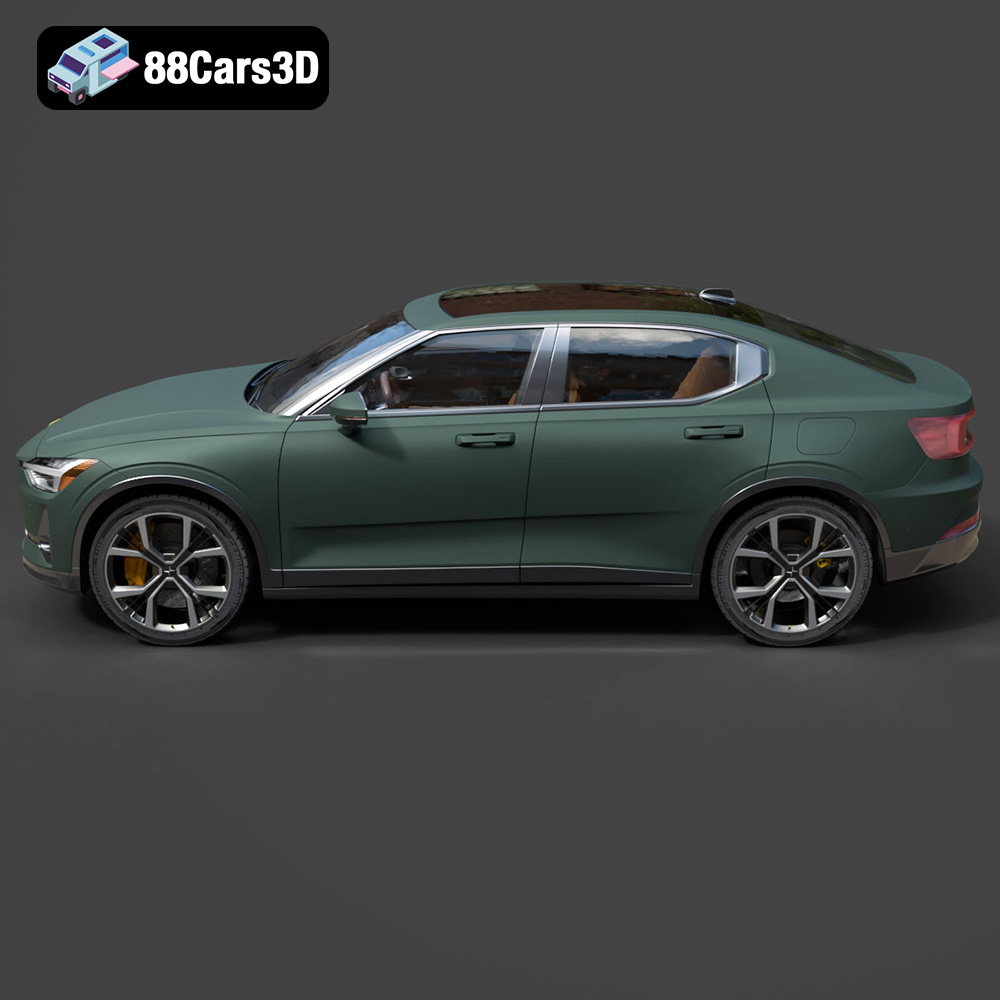
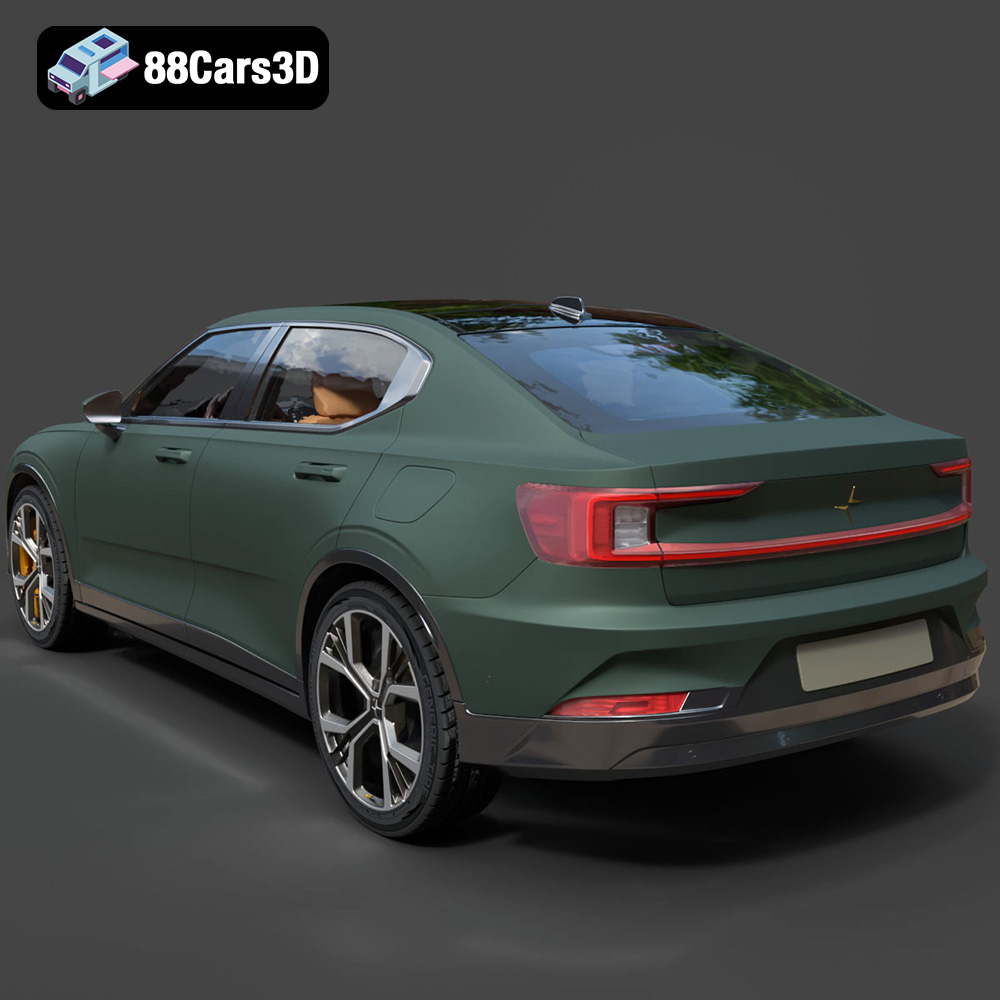
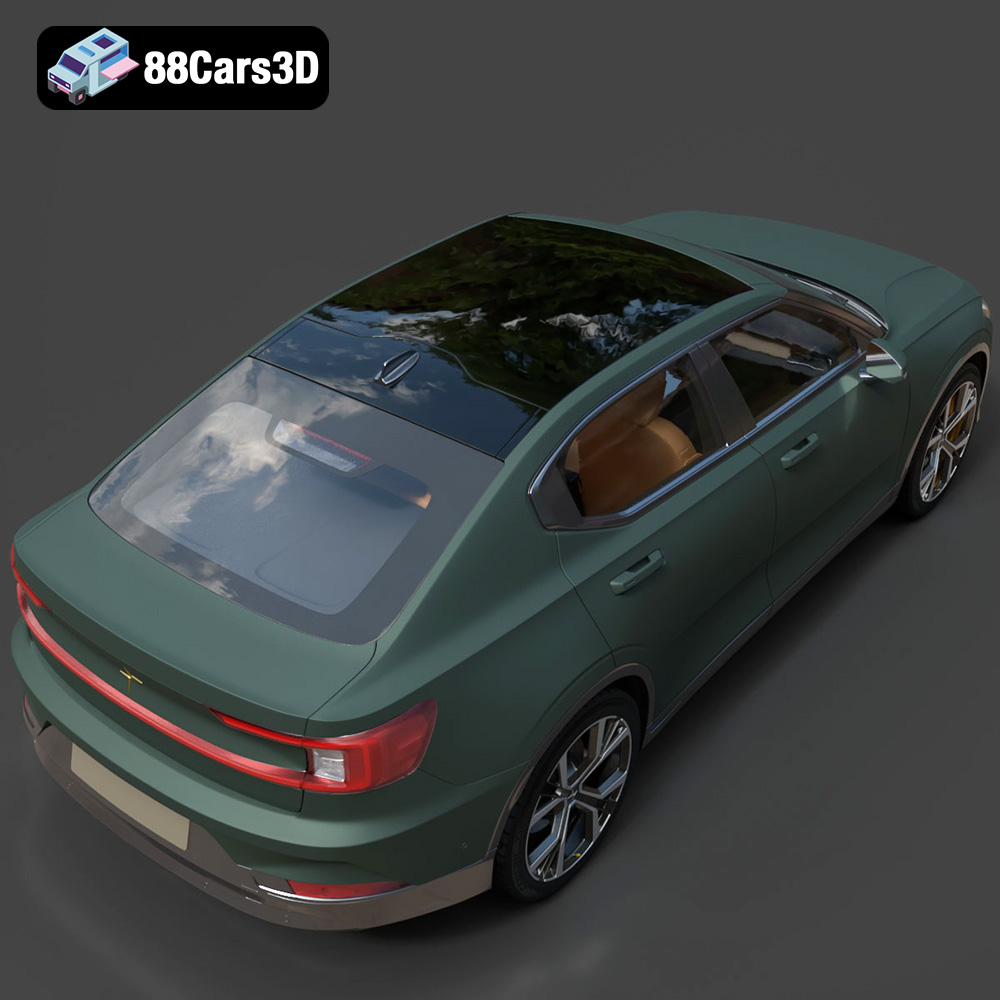
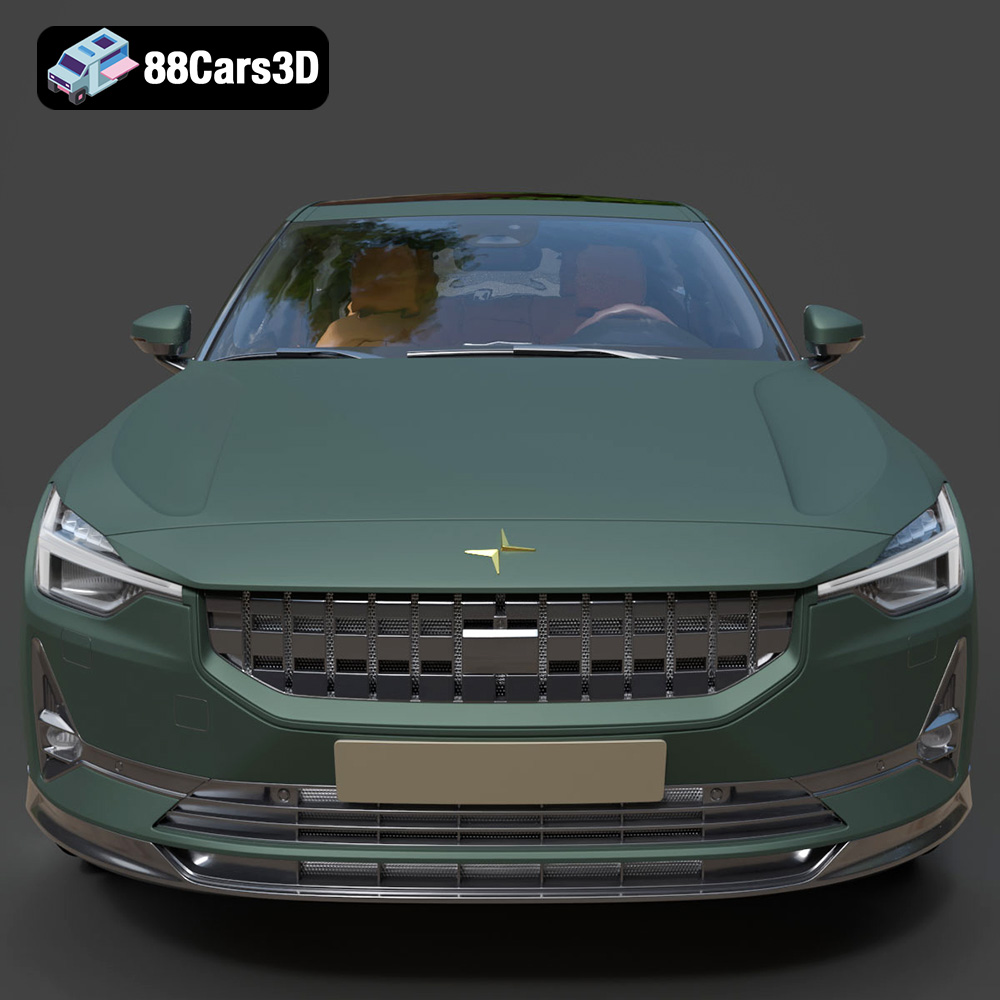
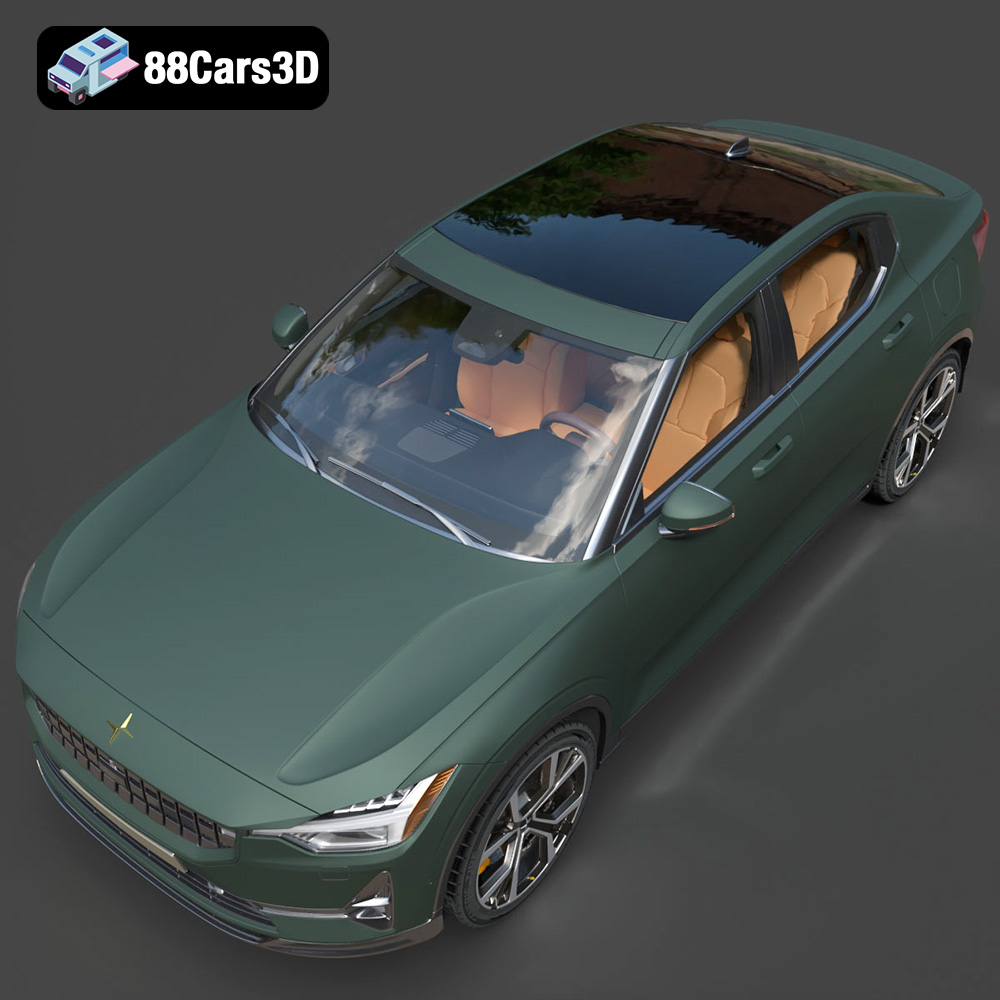
The model accurately reproduces the Polestar 2’s signature exterior features. This includes the distinctive fastback body geometry and aerodynamic proportions that define its silhouette. Special attention has been paid to the iconic pixel LED headlights and the continuous full-width taillight blade, crucial elements that give the Polestar 2 its unique presence. The frameless side mirrors and panoramic roof detailing further enhance its premium feel. Beneath the skin, the model even accounts for the detailed EV battery pack placement and undercarriage, adding a layer of realism often overlooked in simpler models. The aerodynamic alloy wheel rims are carefully modeled, complete with realistic tire tread patterns, while separate components for wheels, suspension, and steering ensure full animation potential.
Stepping into the digital cockpit, the model continues to impress with its faithful recreation of the minimalist Scandinavian vegan interior design. Key features like the accurately modeled steering wheel, digital instrument cluster, and the prominent central portrait-oriented infotainment touchscreen display are all present. The detailed center console, with its distinctive geometric gear selector, completes the immersive experience. For gaming applications, the optimized geometry of the interior is particularly beneficial, allowing for fluid first-person POV experiences without compromising performance.
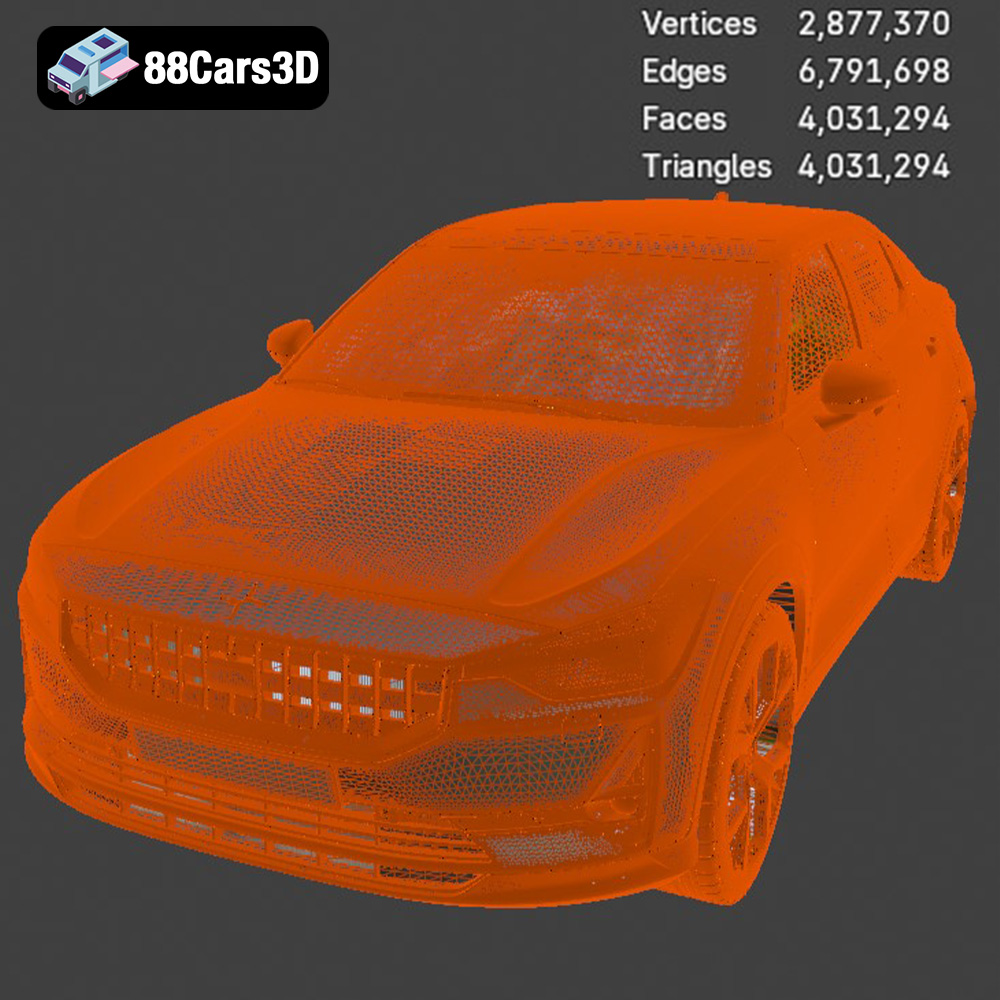
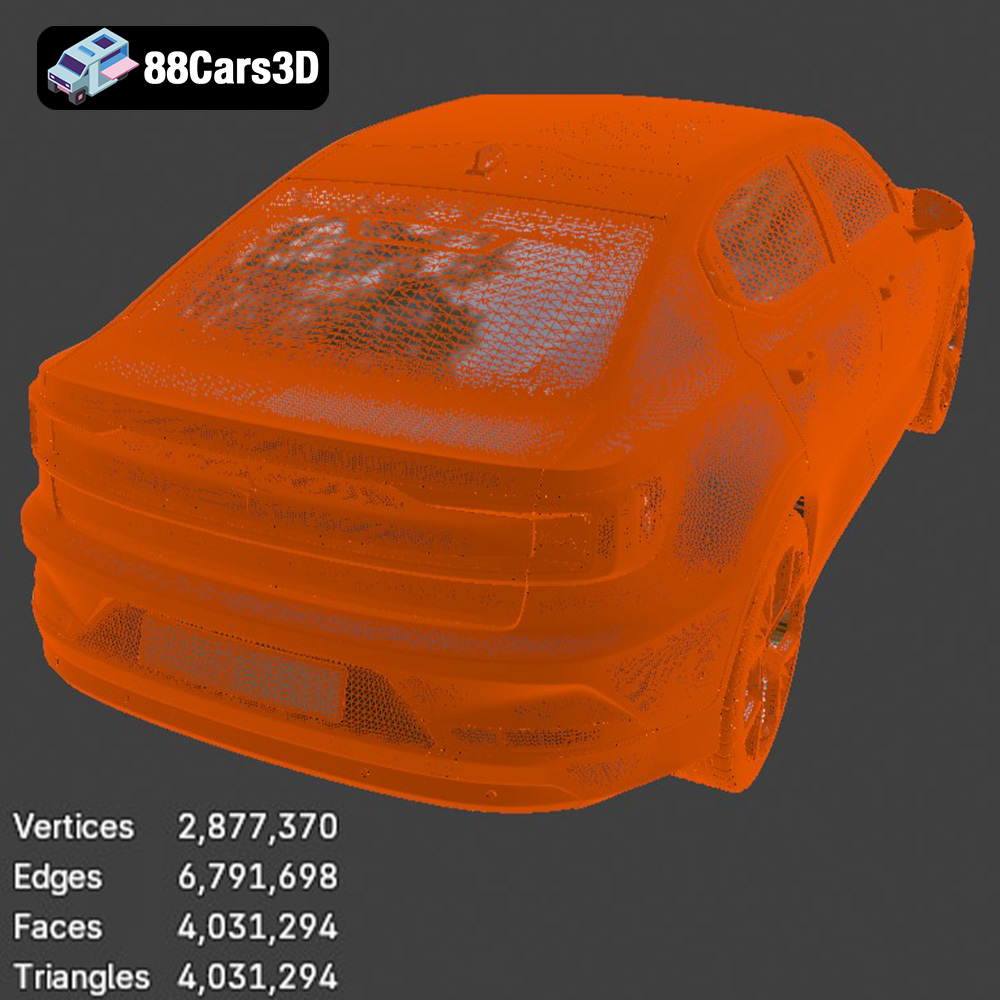
Beyond visual accuracy, the technical specifications of the Polestar 2 2020 3D Model are critical for its diverse applications. With an estimated triangle count of approximately 120,000, the model strikes an optimal balance. This “game-ready” polycount ensures high-end visual realism suitable for close-up renders while remaining efficient enough for real-time engines like Unreal and Unity. Each component is built to real-world scale accuracy, based on actual vehicle chassis data, guaranteeing correct proportions and spatial relationships. Furthermore, proper pivot setups for steering, wheel rotation, and suspension travel are implemented, making the model instantly ready for animation and interactive simulations. This commitment to both aesthetic and technical excellence makes the model a versatile asset for any professional workflow.
The true value of a high-quality 3D car model lies in its ability to integrate seamlessly into complex professional workflows. The Polestar 2 2020 3D Model is engineered to do just that, empowering artists, designers, and developers across various industries.
For game developers, the Polestar 2 2020 3D Model is an ideal game asset. Its optimized polycount of ~120,000 triangles is perfect for integration into modern game engines like Unreal Engine and Unity. The inclusion of an “unreal” optimized format directly supports real-time environments, ensuring efficient rendering and smooth performance. Developers can utilize the accurate pivot setups for realistic vehicle dynamics in racing titles or open-world games. For instance, a studio building an urban driving simulator could easily drop this model into their environment, apply their physics system, and immediately have a high-fidelity, drivable vehicle. The separated components for wheels, suspension, and steering facilitate complex rigging and animation, crucial for realistic gameplay mechanics and cinematic sequences.
In the realm of automotive rendering and visualization, precision and photorealism are paramount. Artists working with 3ds Max, Blender, or other leading rendering software can leverage the detailed geometry and robust file formats (like .max, .blend, .fbx, .obj) of the Polestar 2 2020 model. Imagine creating a stunning marketing campaign for an EV charging network, showcasing the Polestar 2 in a futuristic urban setting, complete with dramatic studio lighting and realistic reflections. The model’s intricate details, from the subtle curves of the body to the intricate lens patterns of the pixel LED headlights, ensure breathtaking visual output. It’s also an excellent asset for architectural visualizations, placing the car within a newly designed building to add realism and scale, or for creating engaging virtual showrooms where potential customers can explore the vehicle in a controlled, high-fidelity environment.
AR (Augmented Reality) and VR (Virtual Reality) offer unparalleled opportunities for immersive experiences. The .glb format, optimized for web and mobile performance, makes the Polestar 2 2020 3D Model perfect for developing interactive AR applications where users can place a life-sized virtual Polestar 2 in their driveway through their smartphone. For VR, imagine a virtual configurator where users can “sit” inside the Polestar 2, customize its interior and exterior, and experience its minimalist design up close. The optimized geometry and clean topology ensure these experiences run smoothly, providing a compelling and interactive way to engage with the vehicle.
The utility of a comprehensive 3D model extends beyond digital displays. The ability to transition from a virtual asset to a tangible object opens up new avenues for prototyping, display, and even hobbyist creation. The Polestar 2 2020 3D Model is fully equipped for this journey.
The inclusion of the .stl format is key for 3D printing. This triangulated mesh file is the universal language for almost all 3D printers. Professionals and hobbyists can take the .stl file, import it into their slicing software (such as PrusaSlicer, Cura, or Chitubox for resin printers), and prepare it for printing. This workflow allows for the creation of physical scale models of the Polestar 2 2020, perfect for desktop displays, design reviews, or even as part of a larger diorama. The model’s clean topology ensures a smooth conversion, minimizing issues like non-manifold geometry often encountered with less optimized models.
To achieve the best results when 3D printing the Polestar 2 2020 model, specific settings are recommended. A scale of 1:12, 1:18, or 1:24 is suggested for a good balance of detail and manageable print time. For capturing the fine details of the Polestar 2’s design, resin printing is highly recommended, paired with a layer height between 0.04 and 0.12 mm. Optimal wall thickness should be between 1.2–2.0 mm, with an infill of 20–30% for structural integrity. Supports will be required for intricate parts like the frameless mirrors, lightblades, and the steering wheel, and careful attention to print orientation (e.g., frame printed angled) can significantly improve the final quality and strength of the model. Post-processing steps like sanding, priming, and applying authentic factory colors with metallic finishes can elevate the printed model to a truly museum-quality piece.
No two projects are identical, and the ability to customize a 3D asset is paramount for delivering unique and tailored results. The Polestar 2 2020 3D Model offers extensive customization options, allowing it to adapt to a wide array of creative visions.
The model’s clean material setup allows for easy modification of body colors. Users can choose from authentic factory EV colors like Snow, Thunder, or Magnesium, or experiment with entirely custom finishes to match specific branding or artistic requirements. Beyond color, materials can be adjusted to replicate various finishes—matte, gloss, or metallic—to achieve desired visual effects. Tire textures can also be swapped out to represent all-season, performance, or even custom tread patterns, adding another layer of visual fidelity and specificity to the scene. This flexibility is invaluable for artists creating bespoke visualizations or interactive configurators.
Adapting the Polestar 2 2020 3D Model to different environmental lighting conditions is straightforward thanks to its professional-grade material setup. Whether rendering the car under a bright midday sun in an urban setting, bathed in the soft glow of a sunset, or illuminated by the artificial lights of a studio, the model’s materials will react realistically to the scene’s lighting. This adaptability extends to integrating the vehicle into diverse digital environments, from bustling cityscapes to serene natural landscapes, or minimalist architectural renders. The model acts as a perfect canvas for showcasing the Polestar 2’s design in any context imaginable.
The Polestar 2 2020 is a vehicle that embodies modern design and sustainable performance, and its digital counterpart, the Polestar 2 2020 3D Model, is engineered to meet the rigorous demands of professional 3D production. With its optimized topology, exquisite attention to design detail, and comprehensive file format support, this model is a powerhouse asset for game development, automotive rendering, AR/VR experiences, and even 3D printing.
It represents the pinnacle of digital craftsmanship, offering both aesthetic beauty and technical robustness. For any project requiring a premium EV asset, this Polestar 2 model provides the quality and versatility needed to achieve outstanding results. Explore this model and many other high-quality 3D car models at 88cars3d.com, and elevate your digital creations to the next level.
Discover the sleek and innovative Polestar 2 2020, a premium all-electric fastback that redefines Scandinavian minimalist design and sustainable performance. This cutting-edge EV features iconic visual elements such as signature pixel LED headlights, a striking full-width taillight blade, frameless mirrors, and a distinctively aerodynamic profile that sets it apart in the modern electric vehicle market. This premium 3D model boasts an optimized topology with an estimated triangle count of 120,000, striking the perfect balance between high-end visual fidelity and game-ready performance. Crafted with exceptional attention to detail, it is perfectly suited for high-end game development, interactive AR/VR experiences, animation, and hyper-realistic visualization. Perfect for urban racing games, sustainable tech showcases, architectural visualizations, and virtual showrooms.
$39.99
.blend
.ev
.fastback
.fbx
.glb
.max
.obj
.ply
.polestar
.rendering
.stl
.unreal
car-3d-model
electric-car
game asset
game-ready
low-poly
optimized
polestar-2
VR/AR