Get 20% OFF All Premium 3D & STL Models!

In the dynamic world of 3D design, the demand for high-quality automotive assets is ever-present and continually evolving. Whether you’re a game developer crafting an immersive racing experience, an architectural visualiser populating a scene with a touch of elegance, or a product designer showcasing a new accessory, the foundation of your project often lies in a meticulously crafted 3D car model. These digital vehicles serve as more than just visual elements; they are complex assemblies of geometry, textures, and materials, engineered for performance, realism, and versatility across various platforms. The journey from a concept sketch to a fully functional, render-ready, or game-optimized car model is a testament to precision and technical expertise.
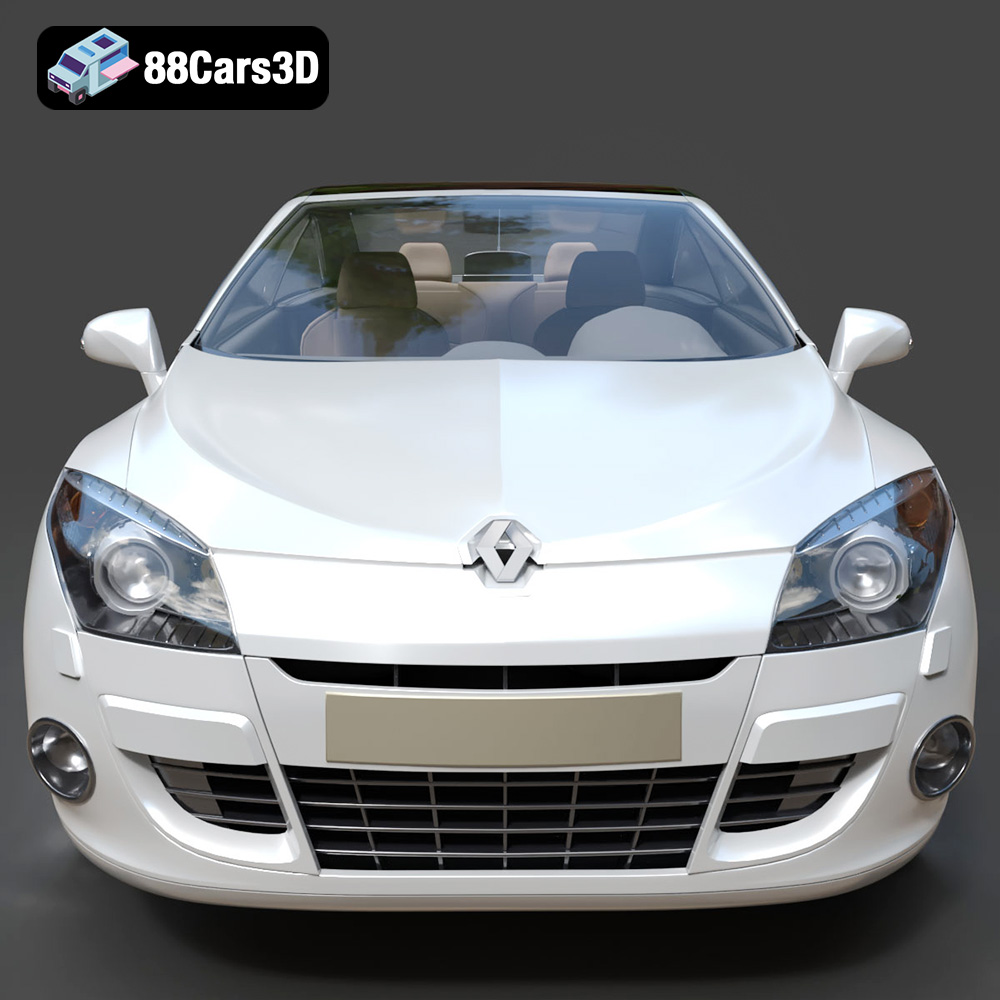
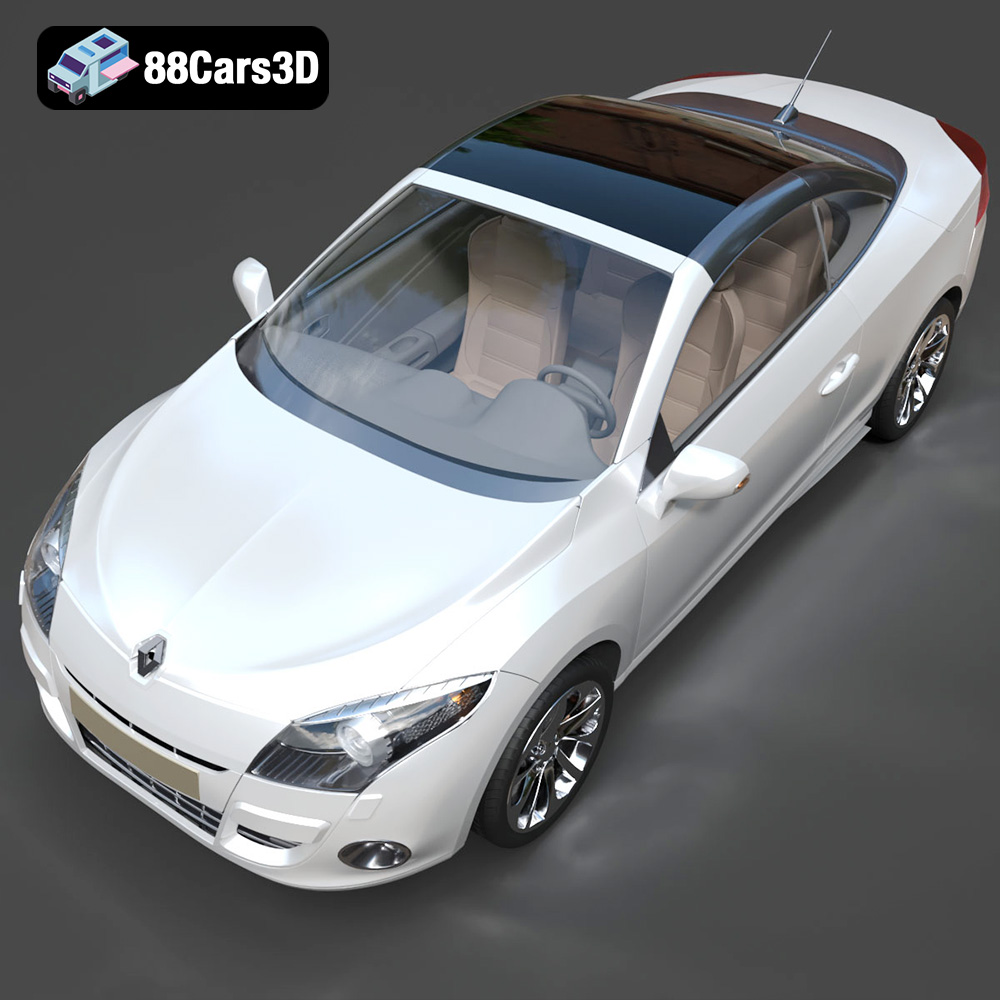
Among the myriad of vehicles that grace our digital landscapes, certain models stand out for their blend of iconic design and practical appeal. A prime example is the Renault Megane CC (Coupe-Cabriolet) 2011, a vehicle renowned for its distinctive panoramic folding glass roof and sleek, aerodynamic profile. This particular model, available as a premium 3D asset from 88cars3d.com, offers an exceptional starting point for professionals seeking unparalleled realism and technical optimization. Its digital counterpart faithfully captures every sweeping curve, distinctive front fascia, and signature exterior element, making it an invaluable addition to any digital project pipeline. Throughout this comprehensive guide, we will explore the intricate facets of working with professional-grade 3D car models, delving into technical specifications, diverse applications, and the crucial role that file formats play in a streamlined workflow, all while showcasing the inherent value of the Renault Megane CC 2011 3D model.
Navigating the landscape of 3D modeling requires a foundational understanding of various file formats, each tailored for specific workflows and applications. The Renault Megane CC 2011 3D model from 88cars3d.com exemplifies this versatility by being offered in a comprehensive suite of formats, ensuring compatibility across virtually any professional pipeline. Choosing the right format is paramount for efficiency, fidelity, and project success.
The .blend format is the native file type for Blender, the powerful open-source 3D creation suite. When you acquire a .blend file, you’re getting a fully editable Blender scene, complete with all its intricacies: mesh data, materials (often using Blender’s Principled BSDF shader for PBR workflows), textures, lighting, cameras, and even animation data if present. For artists and studios primarily working within Blender, this format offers maximum flexibility. You can easily modify the model’s geometry, tweak materials, adjust the scene setup, or integrate it seamlessly into existing Blender projects without any loss of data fidelity that might occur during format conversion.
.fbx (Filmbox) is arguably the most widely adopted proprietary file format for 3D content interchange. Developed by Autodesk, it excels in transferring comprehensive scene data between different 3D applications and game engines. For a 3D car model like the Renault Megane CC 2011, an .fbx file is ideal for pipelines involving Unreal Engine, Unity, 3ds Max, Maya, and Cinema 4D. It efficiently encapsulates geometry, materials (often basic PBR parameters or diffuse maps), textures, skeletal animations, blend shapes, and camera information. Its robustness and widespread support make it the go-to format for real-time applications and complex animation projects where data integrity across software is crucial.
The .obj (Wavefront Object) format is a fundamental, universally compatible file type for transferring 3D geometry. It’s an excellent choice for basic mesh data and UV coordinates, making it highly portable between virtually any 3D software. While it handles geometry and UVs very well, its material definition is often limited to basic color information via an accompanying .mtl file, and it doesn’t support advanced features like animation or complex PBR materials directly. For scenarios where you primarily need the geometric shape of the Renault Megane CC 2011 and intend to set up materials from scratch in your target application, .obj provides a clean, reliable foundation.
.glb (GL Transmission Format Binary) is an increasingly vital format, especially for modern applications. It’s a binary version of glTF, specifically optimized for efficient transmission and loading of 3D scenes and models in AR (Augmented Reality), VR (Virtual Reality), and browser-based environments. A .glb file embeds all necessary assets—geometry, materials, textures, and even animation—into a single, compact file. This “all-in-one” packaging makes the Renault Megane CC 2011 readily deployable for interactive web experiences, virtual showrooms, or mobile AR apps, ensuring quick loading times and broad compatibility across platforms that support WebGL and similar standards.
.stl (Stereolithography) is the de facto standard for 3D printing. It represents a 3D model’s surface geometry using a collection of interconnected triangles, but it does not contain color, texture, or material information. For hobbyists or professionals looking to physically manifest the Renault Megane CC 2011, the .stl format is essential. It defines the shell of the object, which is then sliced into layers by 3D printer software. While the product description for this model highlights specific print settings like recommended scale, layer height, and support requirements, the .stl file provides the fundamental geometric data for the printer to interpret.
The .ply (Polygon File Format or Stanford Triangle Format) is a versatile format for storing 3D data, particularly useful for scanned data, CAD, and scientific applications where precision is paramount. It can store not just geometric information (vertices, faces) but also additional properties like color per vertex, normal vectors, and confidence values. While less common for general game assets, it can be valuable for detailed mesh analysis or when converting a model for very specific engineering or architectural visualization tasks requiring high fidelity point cloud or polygon data.
The inclusion of an .unreal file format (likely an Unreal Engine asset package or scene file) signifies a direct, engine-ready asset specifically tailored for Epic Games’ Unreal Engine. This means the Renault Megane CC 2011 3D model would come pre-configured with materials, possibly collision meshes, and proper pivot points within an Unreal project structure. For developers working within Unreal Engine, this offers significant time savings, allowing for immediate drag-and-drop integration into a game or interactive experience without extensive setup or optimization.
Similar to .blend for Blender, the .max file is the native project format for Autodesk 3ds Max, a leading software for 3D modeling, animation, and rendering. An .max file includes all scene data, including geometry, complex materials, lighting setups, cameras, and animation curves. For users of 3ds Max, this format provides the most comprehensive and editable version of the Renault Megane CC 2011, allowing for advanced rendering setups, intricate animation sequences, and seamless integration into existing 3ds Max scenes for demanding production environments.
Creating 3D car models for real-time environments, such as video games or interactive simulators, is a delicate balance between visual fidelity and performance optimization. The Renault Megane CC 2011 3D model is specifically engineered as a “game-ready” asset, a critical designation that speaks volumes about its technical foundation. This optimization ensures that the model can be rendered efficiently by game engines like Unreal and Unity, maintaining high frame rates without sacrificing visual realism.
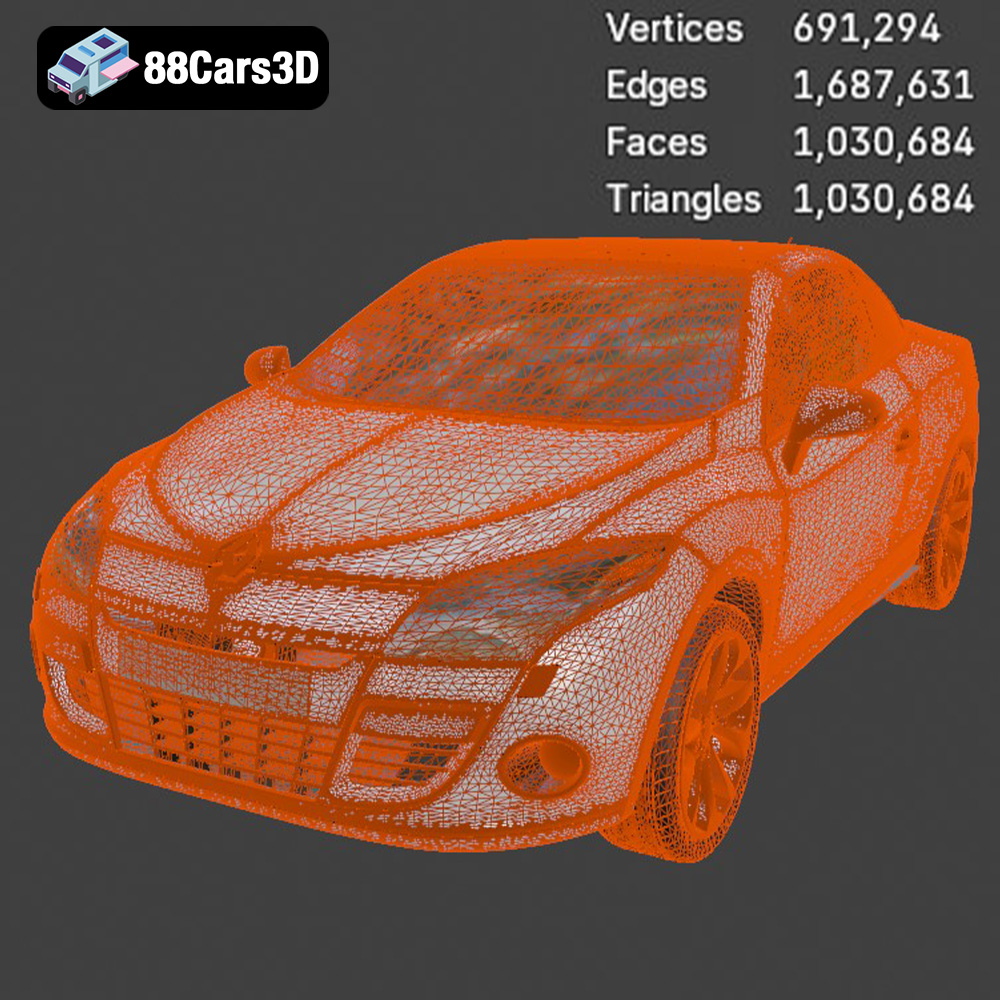
The core of any game-ready asset lies in its topology. The Renault Megane CC 2011 boasts approximately 200,000 triangles. This specific polycount is not arbitrary; it represents a sweet spot, providing enough geometric detail to define the vehicle’s sweeping profile, detailed grille, and intricate panel lines, while remaining lean enough to be processed quickly by a GPU. Poor topology can lead to rendering artifacts, difficult animation, and unnecessary performance overhead. A well-optimized mesh ensures smooth deformations, clean shading, and efficient rendering.
Equally crucial is efficient UV mapping. UVs are the 2D coordinates that tell a 3D application how to wrap a 2D texture onto a 3D mesh. For game assets, UVs must be clean, non-overlapping, and efficiently packed to maximize texture resolution while minimizing VRAM usage. Proper UVs are essential for applying realistic paint finishes, tire tread patterns, and interior details, contributing significantly to the overall visual authenticity of the Renault Megane CC 2011.
Integrating a game-ready automotive 3D model into a real-time engine is a straightforward process when the asset is properly prepared. For the Renault Megane CC 2011, the included .fbx and .unreal formats streamline this. In Unreal Engine, you would typically import the .fbx file, ensuring options for generating collision, importing materials, and creating skeletal meshes (if animated parts are present) are correctly set. Once imported, the model’s materials can be refined using Unreal’s powerful PBR (Physically Based Rendering) material system, applying textures for albedo, normal maps, roughness, metallic, and ambient occlusion. The pre-setup pivot points for wheels, doors, and steering components are invaluable for quickly rigging the vehicle for animation and gameplay mechanics. Similarly, in Unity, the .fbx import process is robust, allowing for the quick setup of materials, physics, and scripting for interactive elements. The optimized polycount ensures that multiple instances of the Renault Megane CC 2011 can populate a scene without crippling performance, making it ideal for open-world racing games or traffic simulations.
Beyond game development, high-quality 3D car models are indispensable tools for achieving stunning photorealistic visualizations. This application often demands even greater attention to detail in materials, lighting, and camera work. The Renault Megane CC 2011 3D model, with its accurate geometry and real-world scale, provides an excellent foundation for professional rendering projects in architectural visualization, advertising, and product marketing.
Photorealistic rendering of a vehicle like the Renault Megane CC 2011 hinges on the masterful application of materials and the subtle art of lighting. Modern rendering engines (like V-Ray, Corona, Redshift, or Cycles in Blender) utilize PBR workflows, mimicking how light interacts with real-world surfaces. This means creating accurate shaders for car paint (often a complex multi-layered metallic flake shader), realistic glass for windows and headlights, chrome for trim, and rubber for tires. The included .blend and .max files would contain pre-configured materials that serve as a strong starting point, ready for refinement.
Lighting is equally critical. Studio lighting setups, often using HDRIs (High Dynamic Range Images) for realistic environmental illumination, can dramatically enhance the perceived realism. Matching the lighting to the car’s environment – whether it’s a sunny coastal road, an urban street at dusk, or a sterile showroom – adds depth and believability. The model’s detailed exterior features, such as the distinctive headlight assemblies and high-quality taillight enclosures, become focal points under precise lighting, revealing intricate details that elevate the render.
In architectural visualization (arch-viz), placing a high-quality 3D car model like the Renault Megane CC 2011 into a scene breathes life and scale into digital buildings. It helps to contextualize the environment, suggesting lifestyle and purpose. Imagine a sleek rendering of a modern home with the Megane CC parked in the driveway, its panoramic roof reflecting the sky – such details significantly enhance the overall impact and narrative of the visualization. The accurate proportions and high fidelity of the 88cars3d.com model ensure it looks natural and in scale within any architectural scene.
For product marketing, the model can be used to showcase car accessories, custom wheels, or even demonstrate advanced lighting technologies. By customizing body colors, adjusting material finishes, or modifying tire textures, artists can adapt the Renault Megane CC 2011 to various marketing campaigns, presenting it in diverse scenarios and moods, from a vibrant urban setting to a serene natural backdrop. This versatility saves immense time and resources compared to traditional photography.
The utility of a versatile 3D car model extends far beyond traditional rendering and game development, venturing into cutting-edge technologies like Augmented Reality (AR), Virtual Reality (VR), and physical 3D printing. The Renault Megane CC 2011 3D model is specifically designed to thrive in these innovative applications, offering formats and optimizations that cater to their unique demands.
The demand for interactive and immersive experiences is rapidly growing, and 3D car models are at the forefront. The inclusion of the .glb format for the Renault Megane CC 2011 is a direct nod to its suitability for AR/VR applications. This single, self-contained file format is perfectly optimized for quick loading and efficient rendering in virtual environments or when overlaying digital content onto the real world. Imagine a virtual showroom where potential buyers can explore the Megane CC in 3D, rotate it, change its color, or even “sit inside” it using a VR headset. Or consider an AR application where you can place a life-sized virtual Megane CC in your driveway using a smartphone, visualizing its footprint and styling in your own environment. The optimized geometry and game-ready nature of this model ensure smooth, responsive interaction in these computationally intensive scenarios, delivering a truly engaging user experience.
Furthermore, for applications like car configurators, the detailed interior features – from the accurate dashboard and infotainment screen to the high-fidelity instrument cluster – become critical for delivering a convincing first-person perspective in VR. The ability to manipulate separate components like doors and the steering wheel further enhances interactivity in these immersive digital experiences.
The bridge between the digital and physical realms is nowhere more tangible than in 3D printing. The Renault Megane CC 2011 3D model comes with an .stl file, making it ready for production on a 3D printer. This allows enthusiasts and professionals alike to create a physical replica of the elegant Coupe-Cabriolet. The product description provides specific, crucial 3D print settings:
This level of detail in 3D print preparation highlights the comprehensive nature of the Renault Megane CC 2011 3D model, extending its utility to manufacturing and hobbyist communities.
Investing in a premium 3D model from a reputable source like 88cars3d.com means acquiring more than just geometry; it means gaining a flexible, adaptable asset that can be tailored to an endless array of creative visions. The Renault Megane CC 2011 3D model is designed with customization in mind, empowering artists and developers to integrate it seamlessly into their professional workflows and projects.
A well-structured 3D car model allows for significant creative freedom and iteration. The Renault Megane CC 2011, with its separate wheels, doors, and steering components, is inherently designed for modification and animation. Artists can easily:
This capacity for customization extends the lifespan and utility of the 3D model, making it a valuable asset across multiple projects and iterations without requiring a complete rebuild.
In professional production environments, time is money. Starting a project with a high-quality, pre-optimized 3D car model like the Renault Megane CC 2011 significantly streamlines the production pipeline. Instead of spending hundreds of hours modeling and optimizing a vehicle from scratch, teams can leverage existing premium assets to focus on other critical aspects of their project, such as environment design, character development, or interactive mechanics.
For studios engaged in game development, architectural visualization, or automotive advertising, the cost-effectiveness and efficiency gained from using such assets are substantial. The included range of file formats (.blend, .fbx, .obj, .glb, .stl, .ply, .unreal, .max) ensures that the model is compatible with virtually any software stack a studio might use, minimizing conversion issues and maximizing immediate utility. This strategic approach to asset acquisition not only accelerates project timelines but also ensures a consistent level of quality across all digital automotive rendering and interactive experiences.
The world of 3D modeling for automotive design is a fascinating intersection of artistry and technical precision. From the intricate geometry of a real-world vehicle to its optimized digital counterpart, every detail contributes to a successful project, whether for immersive games, stunning visualizations, or innovative AR/VR experiences. The Renault Megane CC 2011 3D model stands as a testament to the comprehensive quality and versatility demanded by today’s leading professionals.
By understanding the nuances of various file formats – from the editable depths of .blend and .max, to the universal compatibility of .fbx and .obj, the AR/VR readiness of .glb, and the print-specific precision of .stl and .ply – creators can unlock the full potential of such premium assets. The game-ready optimization, with its balanced polycount and meticulous UV mapping, ensures seamless integration into real-time engines like Unreal and Unity. For those pursuing photorealistic renders, the accurate proportions and detailed features provide an ideal canvas for masterful material and lighting work. And for the frontiers of AR/VR and 3D printing, this model offers the necessary adaptability to drive innovation.
Ultimately, investing in a high-quality 3D car model like the Renault Megane CC 2011 from 88cars3d.com is an investment in efficiency, fidelity, and creative freedom. It empowers artists and developers to focus on their unique vision, confident that their foundational automotive assets are robust, versatile, and engineered for excellence across every digital frontier.
Experience the elegant French styling of the Renault Megane CC (Coupe-Cabriolet) 2011 with this premium 3D model. Known for its iconic panoramic folding glass roof and sleek, aerodynamic bodylines, the Megane CC perfectly bridges the gap between a practical daily driver and a stylish open-top cruiser. This digital replica faithfully captures the vehicle’s sweeping profile, distinct front fascia, and signature exterior elements, offering an unparalleled level of realism for your digital projects.
Engineered with a meticulously optimized topology, this game-ready 3D model boasts an efficient triangle count that guarantees high-end visual fidelity without compromising real-time performance. Whether you are developing an immersive open-world racing game, crafting interactive AR/VR experiences, or producing photorealistic architectural visualizations, this asset delivers exceptional quality and versatility.
Perfect for urban driving simulations, sunny coastal road animations, virtual showrooms, and lifestyle rendering projects.
.blend, .fbx, .obj, .glb, .stl, .ply, .unreal, .max
Tags:
renault, megane-cc, megane, 2011, coupe-cabriolet, convertible, car-3d-model, game-ready, low-poly, optimized, game-asset, rendering, vr-ar, blend, fbx, obj, glb, stl, ply, unreal, maxMercedes Benz CLS 500 3D Model 3D Printable STL
$19.99
.2011
.blend
.convertible
.fbx
.glb
.max
.megane
.obj
.ply
.renault
.rendering
.stl
.unreal
car-3d-model
coupe-cabriolet
game asset
game-ready
low-poly
megane-cc
optimized
VR/AR