Get 20% OFF All Premium 3D & STL Models!

In the dynamic world of 3D visualization, automotive models stand as a cornerstone for everything from cutting-edge game development to hyper-realistic architectural renderings and immersive augmented reality experiences. The demand for assets that perfectly balance fidelity and optimization has never been higher. Professionals constantly seek models that not only look authentic but also integrate seamlessly into diverse workflows without compromising performance.
This pursuit of digital perfection often leads to complex challenges in modeling, texturing, and optimization. However, leveraging expertly crafted assets can dramatically streamline projects, accelerate development cycles, and elevate the final output. Among such assets, the Volkswagen Jetta GLI 2019 3D Model stands out as a prime example of meticulous digital craftsmanship, offering unparalleled realism and game-ready optimization.
The Jetta GLI 2019 itself is a compelling blend of everyday functionality and exhilarating performance, a sporty sedan known for its distinctive styling and turbocharged heart. Translating this real-world appeal into a digital asset requires a deep understanding of automotive design and 3D technicalities. This blog post delves into the intricacies of professional 3D car modeling, highlighting how a premium asset like the Jetta GLI 2019 3D model can be a game-changer for your projects, from its foundational file formats to its application in leading industry software.
Creating a high-quality 3D car model is a sophisticated endeavor that marries artistic precision with rigorous technical demands. It’s not merely about replicating shapes; it’s about capturing the essence of design, the interplay of light on surfaces, and ensuring the model functions correctly within various digital environments.
At the heart of any compelling 3D car model is an unwavering commitment to realism. This begins with accurate reference material, ensuring that every curve, panel gap, and proportion precisely matches the real-world vehicle. For a model like the Volkswagen Jetta GLI 2019, this means capturing its aggressive honeycomb grille, the sleek aerodynamic profile, and even the subtle contours of its bodywork. Technical artists often work with blueprints, CAD data, and extensive photographic references to achieve this fidelity. The goal is to create a mesh that not only looks correct but is also topologically clean, making it suitable for subdivision, rigging, and animation without artifacts or distortions.
Beyond geometry, materials play a crucial role. Modern rendering relies heavily on Physically Based Rendering (PBR) workflows, where materials simulate how light interacts with surfaces in the real world. This involves meticulously crafted textures for diffuse color, metallic properties, roughness, normal maps, and ambient occlusion, ensuring that paint reflects light correctly, tires show appropriate grip, and chrome gleams authentically. The Volkswagen Jetta GLI 2019 3D Model, with its highly detailed PBR materials, showcases this commitment to visual accuracy, providing unmatched realism for close-up shots and dynamic lighting scenarios.
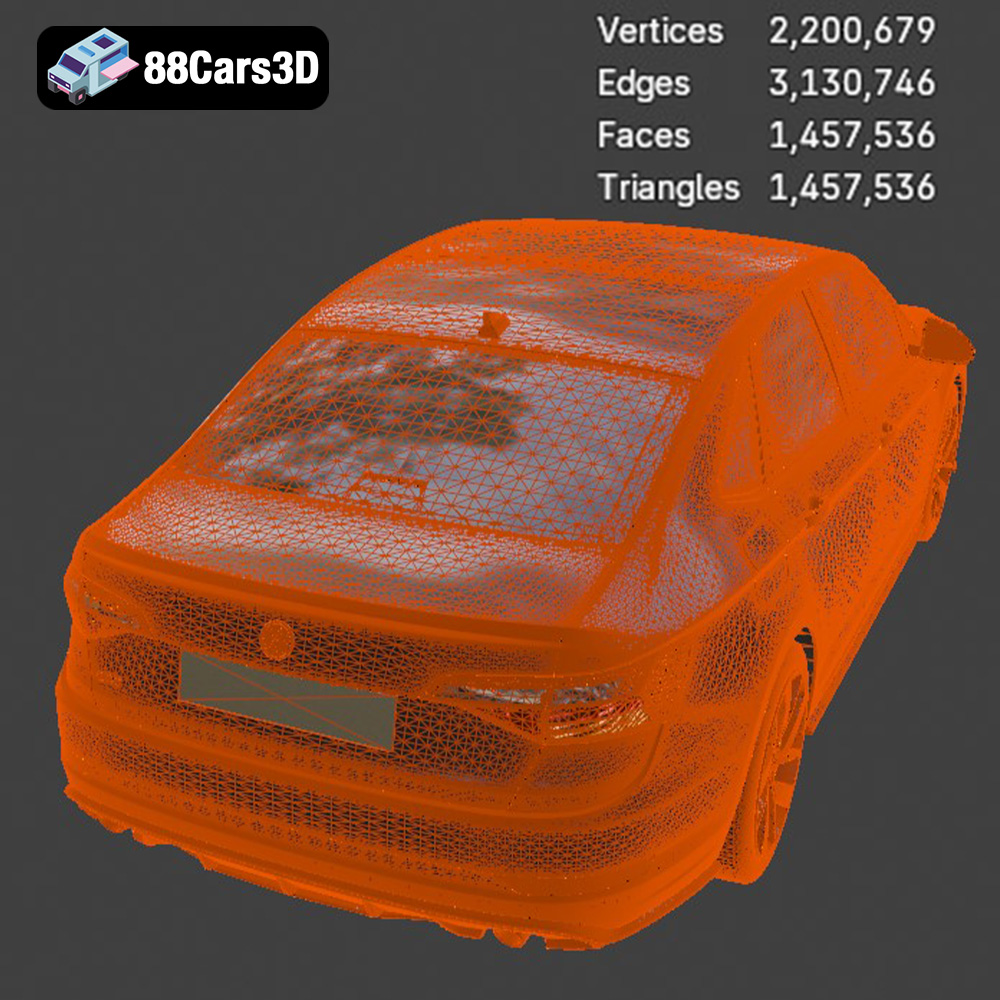
While visual fidelity is paramount, a professional 3D car model must also be optimized for its intended use. A model destined for an offline cinematic render might have millions of polygons, but the same model in a real-time game engine or an AR/VR experience would cripple performance. This is where the science of optimization comes into play. Techniques like polycount reduction, efficient UV mapping, and baking high-detail normal maps from high-poly sculpts onto optimized low-poly meshes are critical.
The challenge lies in finding the sweet spot: maintaining visual quality while adhering to strict performance budgets. For game development, this means carefully managed triangle counts, efficient material calls, and properly organized scene hierarchies. The Volkswagen Jetta GLI 2019 3D Model demonstrates this balance perfectly, boasting approximately 250,000 triangles. This count is meticulously chosen to ensure high-end visual fidelity without compromising real-time performance in modern engines like Unreal or Unity, making it truly “game-ready.” Furthermore, features like separate wheels, suspension, and steering components are essential for realistic animation, showcasing thoughtful preparation for dynamic interactivity.
The world of 3D modeling is rich with various file formats, each designed with specific purposes, advantages, and limitations. Understanding these formats is crucial for any professional working with 3D assets, as selecting the right format ensures compatibility, preserves data integrity, and optimizes workflow efficiency. The Volkswagen Jetta GLI 2019 3D model, available on 88cars3d.com, is offered in a comprehensive range of formats, making it incredibly versatile for diverse professional needs.
The .blend format is Blender’s native file type, acting as a complete scene archive. It stores everything from mesh data, materials, textures, animations, lights, cameras, and even the UI layout of the Blender project. Its primary advantage is its comprehensive nature, allowing for full editability within Blender. When you download the Jetta GLI model in .blend format, you’re getting a fully set up Blender scene, ready for immediate tweaking, re-texturing, animation, or integration into larger Blender projects. This is ideal for artists who primarily use Blender and require maximum flexibility for customization.
.fbx (Filmbox) is arguably the most widely adopted interchange format in the 3D industry, especially for animation and game development. Developed by Autodesk, it supports not only mesh data but also critical elements like skeletal animations, blend shapes, cameras, lights, and PBR materials. Its strength lies in its robust ability to transfer complex animated scenes between different software packages (e.g., 3ds Max to Unreal Engine or Unity). For the Jetta GLI, the .fbx version is ideal for bringing the optimized model directly into real-time pipelines, preserving its PBR materials, pivot points for animation, and hierarchical structure necessary for game physics and interactive elements.
The .obj (Wavefront Object) format is a universal standard, known for its widespread compatibility across virtually all 3D software. It primarily stores geometric data (vertices, normals, texture coordinates) and references external material files (typically .mtl files for basic material properties and texture paths). While it doesn’t support animation or complex PBR materials directly within the file, its simplicity and ubiquity make it an excellent choice for straightforward mesh exchange. If you need a clean mesh of the Jetta GLI to import into a new software environment for custom material setup or detailing, .obj is a reliable choice.
.glb (GLB format for GL Transmission Format) is an efficient, single-file container format for 3D scenes and models, specifically designed for web-based 3D, Augmented Reality (AR), and Virtual Reality (VR) applications. It embeds all necessary assets (geometry, materials, textures, animations) into one compact binary file, making it incredibly fast to load and share across platforms. For the Jetta GLI model, the .glb format is perfect for integrating it into interactive virtual showrooms, mobile AR experiences, or browser-based configurators, offering a streamlined and optimized delivery for real-time, lightweight environments.
.stl (Stereolithography) is the de facto standard format for 3D printing. It represents a 3D model as a collection of unconnected triangular facets, defining only the surface geometry without color, texture, or material information. While not visually rich, its simplicity is perfect for manufacturing processes. The Jetta GLI model, available in .stl, allows hobbyists and professionals to physically print scaled replicas, providing a tangible output of the digital asset. It’s crucial for 3D printing preparation, where manifold geometry and proper scaling are key.
The .ply (Polygon File Format) is a versatile format often used for storing 3D scanner data. It can store not only vertex coordinates but also properties like color, transparency, normals, texture coordinates, and even reliability information for each vertex and face. While less common for general 3D asset exchange compared to .fbx or .obj, its robust support for various properties makes it valuable in scientific, archaeological, and engineering contexts where precision and additional data per vertex are important. The inclusion of .ply for the Jetta GLI model offers an alternative for those working in specialized pipelines or requiring a highly precise mesh representation.
The .unreal designation indicates an asset specifically prepared or packaged for direct import and optimal performance within Unreal Engine. While not a standalone file format in the traditional sense (often referencing a collection of .fbx, textures, and engine-specific assets), it signifies an asset that has undergone a dedicated workflow for Unreal. This means materials are typically set up with Unreal’s shader system, pivots are correct for engine-driven animations, and the asset is ready to be dragged and dropped into a level, saving significant setup time. This format for the Jetta GLI model ensures a smooth transition into Unreal-based game development or architectural visualization projects.
Finally, the .max format is Autodesk 3ds Max’s native project file. Similar to .blend, it saves the entire scene, including geometry, modifiers, materials, lights, cameras, animation data, and rendering settings specific to 3ds Max. This format provides the most comprehensive level of editability for users of 3ds Max, allowing full control over the model’s construction, material definitions, and animation rigging within its native environment. For high-end automotive rendering or complex animation sequences, starting with the .max file for the Jetta GLI offers unparalleled flexibility.
The availability of the Volkswagen Jetta GLI 2019 3D model in such a wide array of formats on 88cars3d.com underscores its adaptability and commitment to serving diverse professional workflows. This comprehensive suite of file types ensures that whether you’re a game developer, an AR/VR specialist, a product visualizer, or a 3D printing enthusiast, you have the right version of the model for your specific needs.
The meticulous attention to detail in the creation of the Volkswagen Jetta GLI 2019 3D Model truly sets it apart. This isn’t just a generic car model; it’s a faithful digital twin of a specific, iconic vehicle, designed to meet the rigorous demands of professional production pipelines.
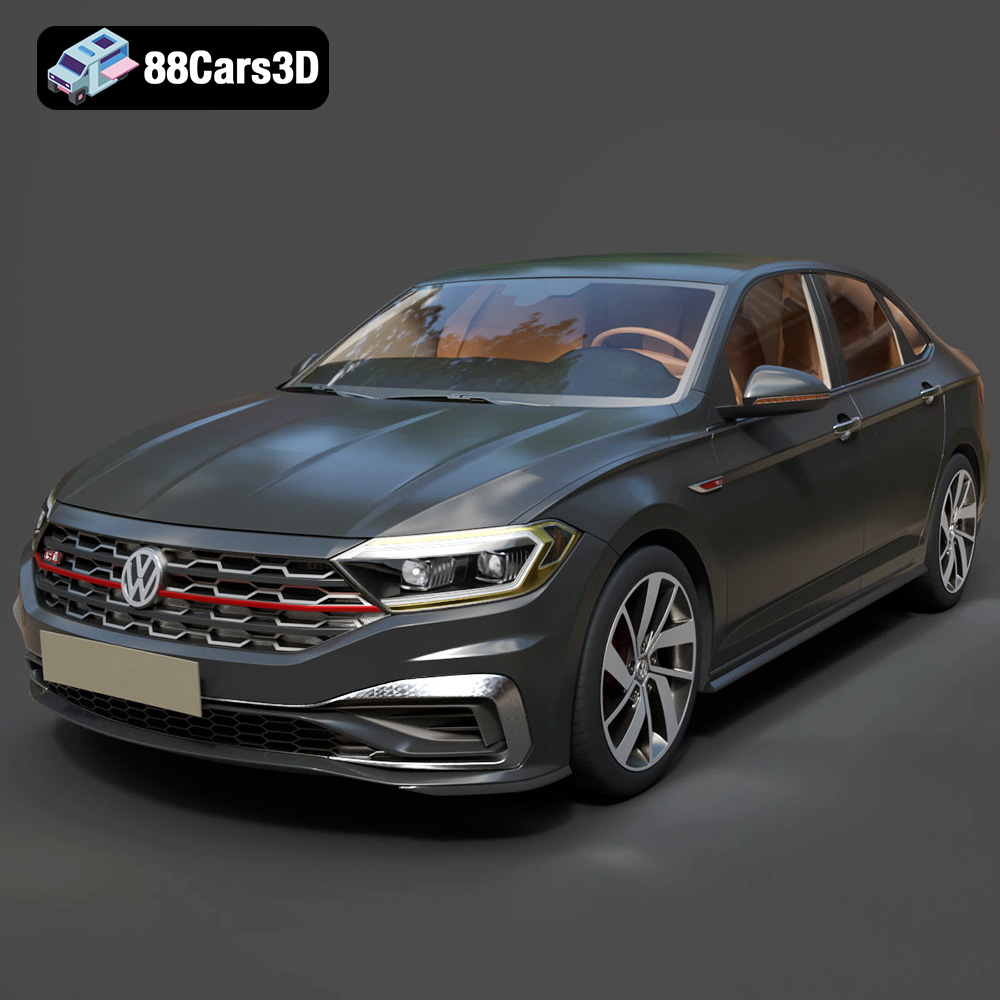
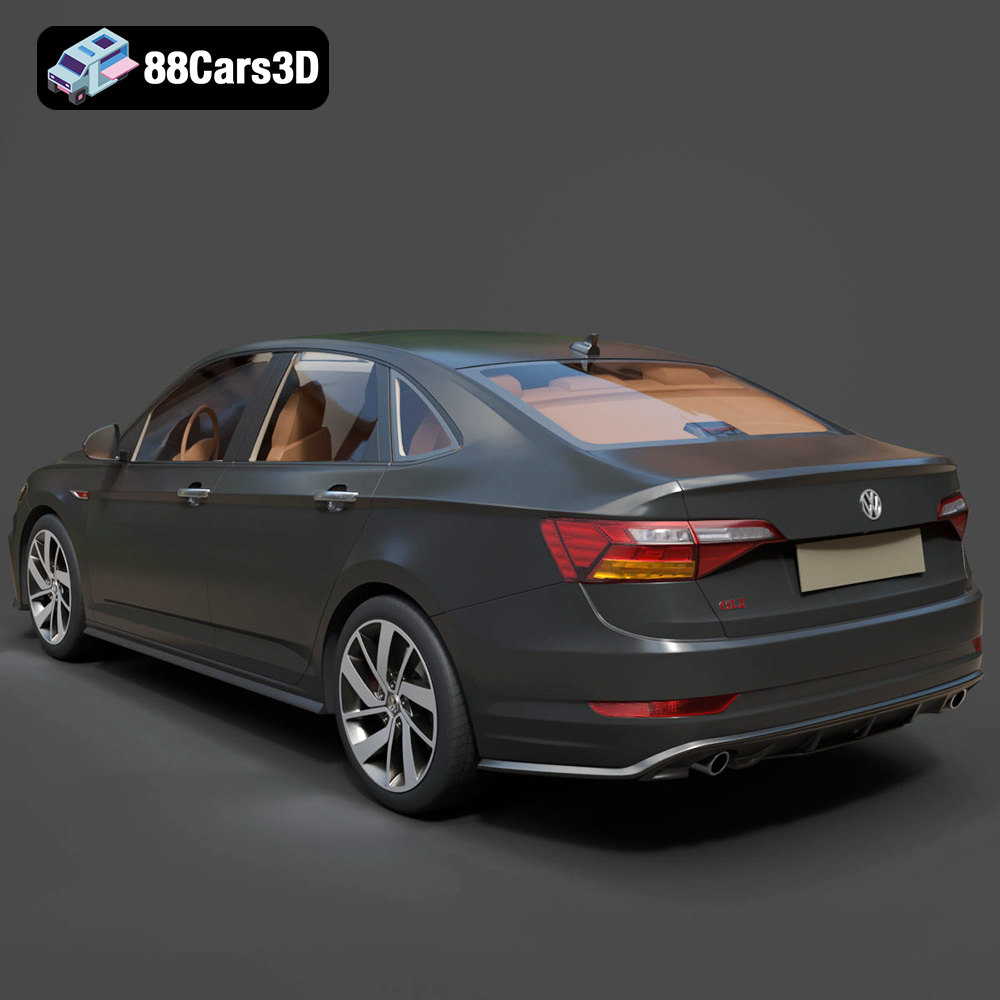
Every distinguishing feature of the 2019 Jetta GLI has been replicated with striking accuracy. From its aggressive stance, born from sport suspension lowering details, to the signature LED projector headlights and sleek taillight clusters, the model exudes authenticity. The exclusive GLI alloy wheels are not merely placeholders but feature performance tire treads and detailed red brake calipers, signaling the vehicle’s athletic capabilities. Even the sport-tuned dual exhaust system with chrome tips is accurately represented, contributing to the model’s overall fidelity. This level of detail is crucial for projects where visual realism is paramount, ensuring that the digital GLI is instantly recognizable and visually captivating.
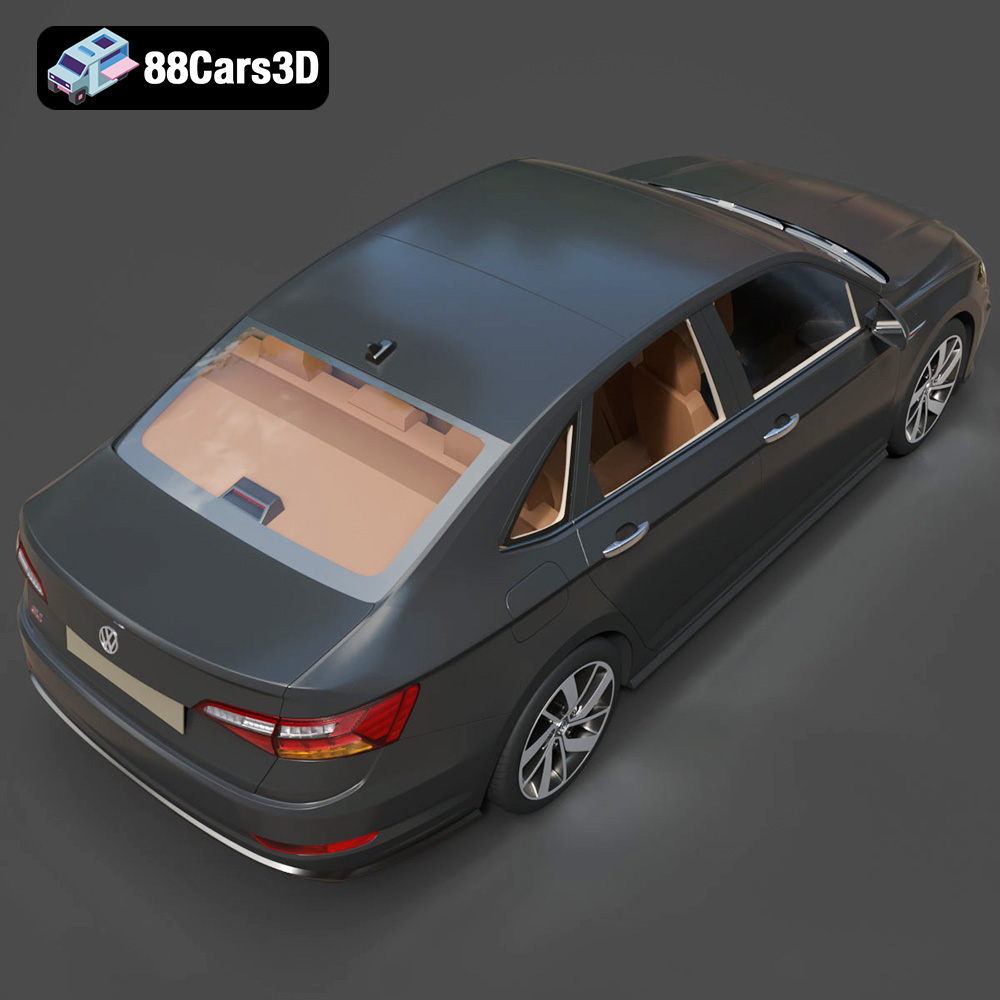
The exterior is only half the story. The interior of the Volkswagen Jetta GLI 2019 3D Model is equally impressive, offering an immersive experience for virtual occupants. Sport seats with signature red contrast stitching, a leather-wrapped flat-bottom sport steering wheel, and a fully realized digital cockpit and modern infotainment instrument cluster bring the cabin to life. Accurate pedal, shift lever, and center console controls are all present, making it ideal for first-person POV in gaming or detailed virtual tours. This level of interior modeling is invaluable for simulators, interactive configurators, and any application where the user might experience the car from within.
Beyond static beauty, the model is engineered for dynamic realism. Its proper pivot setup for steering, wheel rotation, and suspension travel is a testament to its production-readiness. Crucially, the model features separate wheels, suspension, and steering components. This modularity is a critical advantage for animators and game developers, allowing for complex, realistic vehicle physics and animations without the need for extensive rigging from scratch. Whether simulating driving dynamics in a racing game or showcasing the car’s suspension in a promotional animation, this structural integrity ensures smooth, believable motion. The inclusion of a detailed engine block representation, even if not fully functional, adds another layer of authenticity for close-up shots or transparent body renders.
The versatility of the Volkswagen Jetta GLI 2019 3D Model, particularly its game-ready optimization and diverse file formats, makes it an invaluable asset across a spectrum of professional 3D workflows. Let’s explore how it fits into some of the industry’s leading software environments.
For high-end automotive rendering, 3ds Max remains a powerhouse, often paired with V-Ray or Corona Renderer. The .max file provided with the Jetta GLI model is a direct entry point, offering the full scene with materials already applied. Users can easily load the model, adjust studio lighting setups, and apply sophisticated render settings to achieve photorealistic results. The model’s accurate geometry and PBR materials translate perfectly, allowing artists to fine-tune reflections, refractions, and global illumination to showcase the vehicle in its best light. Whether creating marketing imagery for a campaign or integrating the car into an architectural scene, the detailed model minimizes setup time, allowing focus on artistic direction and final polish.
Game developers will find the Jetta GLI model exceptionally useful due to its game-ready optimization and specific .fbx and .unreal formats. In Unreal Engine or Unity, the ~250k triangle count strikes a perfect balance, offering visual fidelity suitable for current-generation games without taxing real-time performance. Importing the .fbx or .unreal asset allows for quick material setup using each engine’s PBR shader systems. The separate components (wheels, suspension) are critical for integrating vehicle physics and animation blueprints, enabling realistic driving mechanics, suspension travel, and steering. This model is ideal for populating open-world environments, creating realistic racing simulations, or even designing interactive vehicle selection screens.
Blender users benefit directly from the included .blend file, which provides a fully editable scene. This allows for deep customization, from altering body colors using Blender’s advanced shader nodes to modifying tire textures or adapting lighting for different environments. For animators, the pre-separated components facilitate rigging and animating the car’s movement with ease, whether for a cinematic short or an interactive demonstration. Blender’s comprehensive toolset, combined with a high-quality base model like the Jetta GLI, empowers artists to explore creative avenues for visualization, product promotion, and even independent game projects.
The demand for high-fidelity 3D car models like the Volkswagen Jetta GLI 2019 3D Model extends far beyond traditional game development, influencing various industries. Here are a few real-world scenarios where such an asset proves indispensable.
Imagine a leading automotive brand wanting to launch an online configurator for its new sedan. They need a 3D model that can be rendered in real-time, allowing customers to dynamically change body colors, wheel options, and interior trims. The Jetta GLI 2019 model, with its optimized geometry and PBR materials, is perfectly suited for this. Its pre-separated components and organized mesh structure enable developers to script material changes and toggle options efficiently. Users can explore every angle of the car, open doors, and even customize the interior, creating a highly engaging and personalized buying experience, directly influencing purchase decisions.
A game studio developing a new open-world racing title requires a fleet of realistic vehicles to populate its virtual cities and racetracks. Integrating the Jetta GLI 2019 3D model would provide an immediate, high-quality asset. Its game-ready polycount and PBR textures ensure it looks stunning while maintaining crucial framerates. The model’s accurate scale and proper pivot setup are essential for realistic physics simulation, allowing for believable handling, crashes, and damage models. Players could drive the GLI through bustling cityscapes or race it on a track, experiencing its digital counterpart with authentic visual and physical dynamics.
Architectural visualization firms often use 3D cars to bring their building renders to life, adding a sense of scale, realism, and lifestyle to their projects. A high-quality model like the Jetta GLI 2019 can instantly elevate a rendering, making a sleek modern building feel inhabited and aspirational. Similarly, marketing agencies create lifestyle imagery for luxury brands. Placing a beautifully rendered Jetta GLI in a scenic digital environment, perhaps parked outside a modern home or cruising down a coastal road, creates compelling visual narratives that resonate with target audiences. The model’s realism makes it indistinguishable from a photograph, enhancing the perceived value and sophistication of the overall scene.
The true value of a professional 3D asset lies not just in its visual fidelity but also in its adaptability across diverse technological platforms. The Volkswagen Jetta GLI 2019 3D Model is engineered with this versatility in mind, offering tailored solutions for game development, AR/VR experiences, and even tangible 3D prints.
For game development and other real-time applications (like interactive presentations or virtual tours), performance is critical. The Jetta GLI 2019 model achieves this balance with an optimized triangle count of approximately 250,000. This is a sweet spot that allows for high visual detail—capturing the vehicle’s intricate design elements and PBR material effects—without overwhelming the GPU, ensuring smooth frame rates. Efficient UV mapping ensures that textures are applied without stretching or seams, and PBR materials are set up to respond correctly to dynamic lighting, crucial for day/night cycles or varying environmental conditions within a game. This optimization means less time spent on manual mesh cleanup and more time on creative implementation.
Augmented Reality (AR) and Virtual Reality (VR) platforms often have even stricter performance budgets, especially for mobile AR. The .glb format included with the Jetta GLI model is specifically optimized for these environments, consolidating all necessary data into a single, compact file for quick loading and display. For AR/VR, proper scaling, accurate pivot points for interaction, and lightweight yet convincing PBR materials are paramount. The model’s structure, with separate wheels and components, allows for basic interactivity such as opening doors or rotating parts in a virtual showroom, enhancing the immersive experience without significant performance penalties.
The inclusion of the .stl format for the Jetta GLI 2019 model opens up the exciting possibility of 3D printing. While the digital model is high-fidelity, preparing it for physical output requires specific considerations. The recommended scales (1:12, 1:18, 1:24) are standard for collectible car models, ensuring enough detail for visible features. Resin printing is often recommended for such detailed automotive models due to its ability to achieve finer layer heights (0.04–0.12 mm) and sharper details compared to filament-based printers. Wall thickness recommendations (1.2–2.0 mm) are crucial for structural integrity, preventing parts from becoming too fragile. Supports will be necessary for complex overhangs like the exhaust system, mirrors, and specific underbody details. Proper print orientation, such as printing the frame angled and wheels separately, further enhances structural integrity and print quality. Post-processing with sanding, primer, and authentic factory colors with metallic finishes allows enthusiasts to bring their digital Jetta GLI to life as a stunning physical replica.
The digital realm offers endless possibilities for creativity and innovation, particularly in the automotive sector. From blockbuster video games to immersive AR showrooms and high-fidelity product visualizations, the demand for truly exceptional 3D car models is constantly growing. The Volkswagen Jetta GLI 2019 3D Model exemplifies what a professional-grade asset should be: a perfect fusion of aesthetic accuracy, technical optimization, and versatile compatibility.
Its meticulously recreated exterior and interior details, game-ready polycount, PBR material support, and wide array of included file formats (.blend, .fbx, .obj, .glb, .stl, .ply, .unreal, .max) make it an indispensable tool for designers, developers, and visualizers across various industries. Whether you’re building the next great racing simulator, rendering a stunning advertisement, or creating an interactive configurator, this model provides a robust foundation for success.
Investing in high-quality 3D assets like the Volkswagen Jetta GLI 2019 3D Model from reputable marketplaces like 88cars3d.com can significantly accelerate workflows, reduce production costs, and ultimately elevate the quality of your final output. It’s more than just a 3D model; it’s a gateway to realizing your most ambitious digital automotive visions.
The Volkswagen Jetta GLI 2019 combines everyday practicality with thrilling performance, standing out as a premier sports sedan in its class. Known for its GTI-borrowed turbocharged engine, aggressive honeycomb grille with iconic red accents, and sleek aerodynamic profile, this vehicle strikes the perfect balance between track-ready styling and modern sophistication. From its distinctive front fascia to the dual exhaust setup, every element of this athletic sedan has been meticulously captured.
This meticulously crafted 3D model features game-ready optimization with approximately 250,000 triangles, ensuring high-end visual fidelity without compromising real-time performance in modern engines. With stunning topological accuracy and highly detailed PBR materials, it provides unmatched realism for close-up shots and gameplay alike.
Perfect for immersive racing simulators, urban environment open-world games, high-end architectural visualizations, and interactive automotive configurators.
.blend, .fbx, .obj, .glb, .stl, .ply, .unreal, .max
Tags:
volkswagen, jetta-gli, 2019, sedan, sports-sedan, game-ready, low-poly, optimized, car-3d-model, game-asset, rendering, vr-ar, blend, fbx, obj, glb, stl, ply, unreal, maxVespa VNB 125-B 3D Model 3D Printable STL
$39.99
.2019
.blend
.fbx
.glb
.max
.obj
.ply
.rendering
.sedan
.stl
.unreal
.volkswagen
car-3d-model
game asset
game-ready
jetta-gli
low-poly
optimized
sports-sedan
VR/AR