Get 20% OFF All Premium 3D & STL Models!

In the fast-paced world of digital creation, the demand for highly detailed and optimized 3D assets is ever-growing. From the intricate mechanics of a high-performance sports car to the robust utilitarianism of a heavy-duty truck, accurate 3D models form the bedrock of immersive experiences and compelling visualizations. For professionals in game development, architectural visualization, AR/VR experiences, and high-fidelity automotive rendering, having access to premium, well-prepared 3D car models is not just a convenience; it’s a necessity. These assets save invaluable development time, ensure consistency, and elevate the realism of any project.
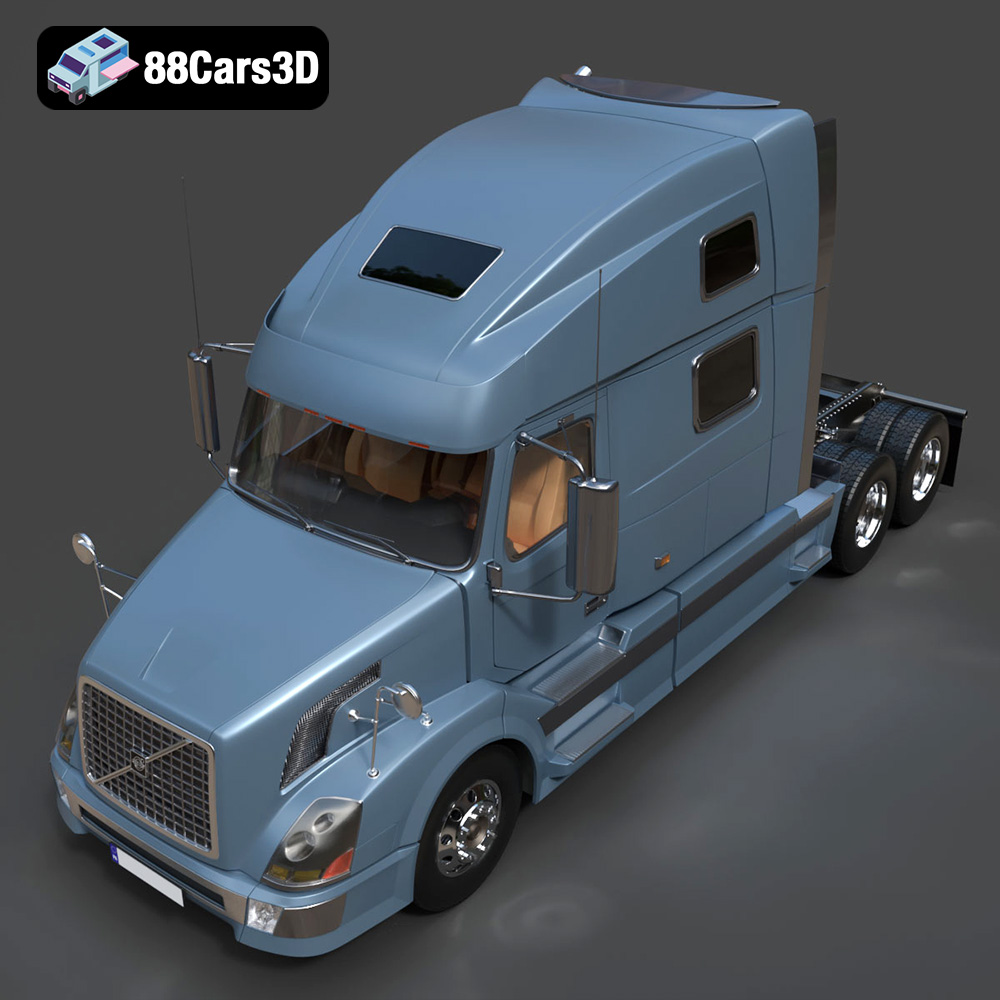
Consider the commercial vehicle segment – a cornerstone of global logistics and industry. Representing these powerful machines in a digital environment requires a nuanced understanding of both their physical attributes and the technical demands of various rendering engines and interactive platforms. A prime example of such a meticulously crafted asset is the Volvo VNL Tractor Truck 2002 3D Model, available on 88cars3d.com. This model encapsulates the essence of a pivotal era in trucking, offering a blend of historical accuracy and modern optimization, making it an indispensable tool for a wide array of professional applications.
This comprehensive guide will explore the technical intricacies involved in utilizing high-quality 3D models like the Volvo VNL, delve into the critical aspects of various file formats, and illustrate how such an asset integrates seamlessly into professional workflows for game development, stunning automotive rendering, and innovative visualization projects.
The world of 3D modeling is rich with various file formats, each designed with specific purposes, advantages, and limitations. Choosing the correct format is paramount for ensuring compatibility, preserving data integrity, and optimizing performance within your chosen software or engine. For a versatile asset like the Volvo VNL Tractor Truck 2002 3D Model, the availability of multiple formats is a significant advantage, catering to diverse professional pipelines.
The .blend format is Blender’s native file type, offering a complete snapshot of your entire Blender project. This isn’t just a mesh; it includes all scene data: objects, materials (with their node setups), textures, lights, cameras, animations, physics simulations, and even custom scripts. When you download a .blend file, you gain full editable control, allowing for deep customization, adjustments to the shader graph, or modification of the model’s geometry and rigging. This format is ideal for artists who primarily work within the Blender ecosystem and require maximum flexibility for their 3D car models.
FBX (Filmbox) is a proprietary file format owned by Autodesk, widely regarded as the industry standard for exchanging 3D data between different software applications. Its strength lies in its ability to store a comprehensive range of 3D data, including geometry, materials, textures, animations, skinning, and rigging. The .fbx format is particularly favored in game development for engines like Unreal and Unity, and for film/VFX pipelines due to its robust support for animation and motion capture data. When importing the Volvo VNL Tractor Truck as an .fbx, you can expect a well-structured asset, ready for real-time applications with its pivots correctly set up for animation.
OBJ (Object) is one of the oldest and most universally supported 3D file formats. It’s a simple, text-based format primarily used to store 3D geometry (vertices, normals, texture coordinates, and polygonal faces) and references to external material files (.mtl). While .obj files are excellent for mesh interchange across virtually any 3D software, they do not inherently support animations, rigging, or scene data beyond the mesh itself. For static rendering or when you need just the raw geometry of a 3D car model, .obj is a reliable, lightweight choice, offering maximum cross-software compatibility.
GLB (GL Transmission Format Binary) is the binary version of glTF, an open-standard format designed for efficient transmission and loading of 3D scenes and models by engines and applications. It’s often referred to as the “JPEG of 3D” due to its optimization for web-based, AR, and VR applications. A single .glb file can contain the entire 3D model, textures, PBR materials, animations, and scene information, making it extremely convenient for browser-based viewers, virtual showrooms, and mobile AR experiences where performance and small file sizes are critical. The Volvo VNL Tractor Truck 2002 3D Model in .glb is perfect for interactive virtual fleet displays.
STL (Stereolithography) is the de facto standard for 3D printing. This format represents a 3D model as a series of connected triangles, describing only the surface geometry of an object without color, texture, or other CAD attributes. For hobbyists and professionals looking to create physical scale models or prototypes of the Volvo VNL, the .stl format is essential. It defines the model as a solid, manifold mesh, which is crucial for successful 3D printing, enabling the transformation of a digital asset into a tangible object.
PLY (Polygon File Format, or Stanford Triangle Format) is a file format for storing 3D data, particularly data from 3D scanners. It can store a variety of properties including color, transparency, surface normals, and range data, making it more flexible than .obj in some respects. While less common for general 3D model exchange, .ply is valuable for scientific, engineering, and CAD applications where precise mesh information and additional vertex/face attributes are necessary. It offers a level of data precision that can be beneficial for detailed analysis of the Volvo VNL’s geometry.
The .unreal format implies a file or asset package specifically prepared for direct import and optimal performance within Unreal Engine. This often means the asset has been pre-processed, has appropriate material instances, collision meshes, LODs (Levels of Detail), and possibly Blueprints for interactive functionality. While not a standalone file format in the traditional sense, obtaining an “.unreal” file means significant time savings, as the asset is already tailored for the engine’s requirements, reducing setup time and potential issues, making the Volvo VNL instantly usable in a trucking simulator.
The .max format is the native file type for Autodesk 3ds Max, a leading software for 3D modeling, animation, and rendering in the architecture, visualization, and entertainment industries. Like .blend, a .max file stores the entire scene, including geometry, lights, cameras, materials (often V-Ray, Corona, or Arnold specific), animations, modifiers, and plugin data. For professionals working within 3ds Max, this format offers full editing capabilities and compatibility with advanced rendering setups, ideal for highly detailed automotive rendering and complex scene composition involving the Volvo VNL Tractor Truck 2002.
The 2002 Volvo VNL Tractor Truck holds a special place in the history of commercial transportation, celebrated for its blend of robust performance, driver-centric design, and distinctive aerodynamics. When translating such an iconic vehicle into a 3D model, the challenge lies in balancing fidelity with performance. The Volvo VNL Tractor Truck 2002 3D Model from 88cars3d.com achieves this balance with remarkable precision, making it an invaluable asset for various digital projects.
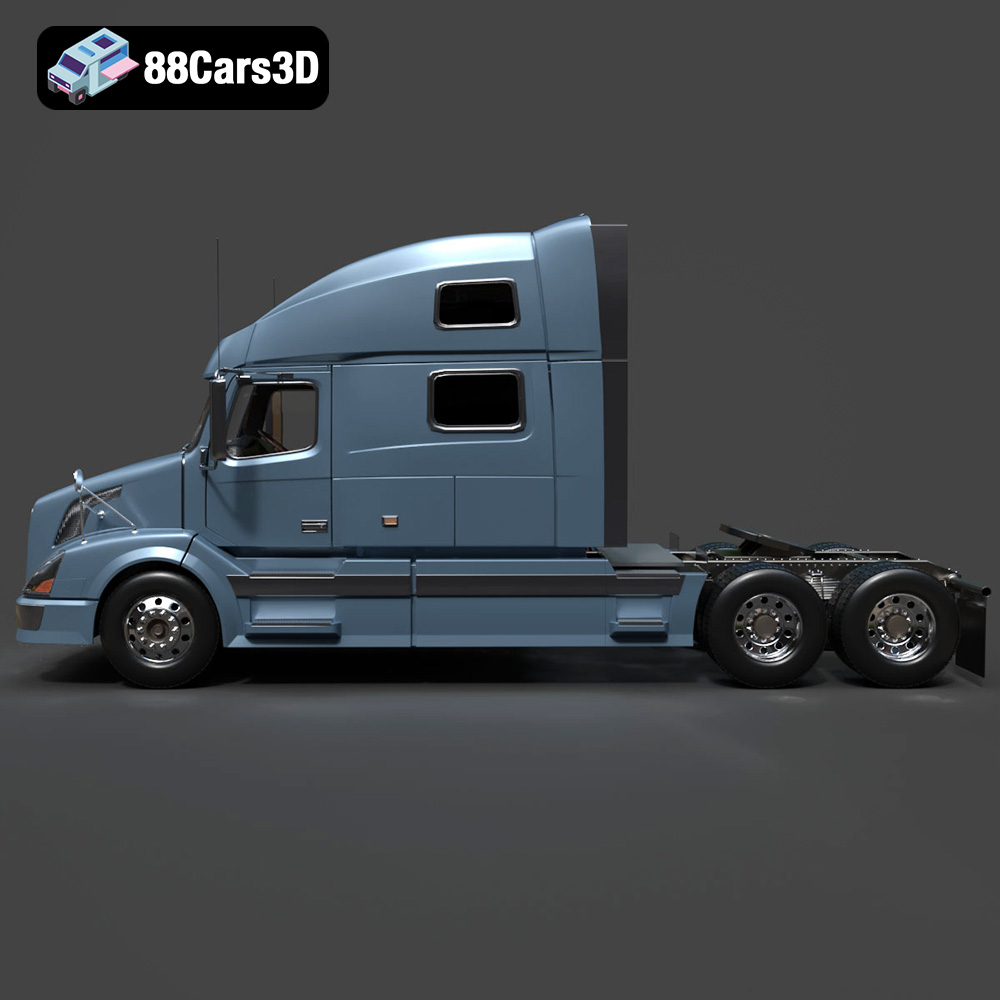
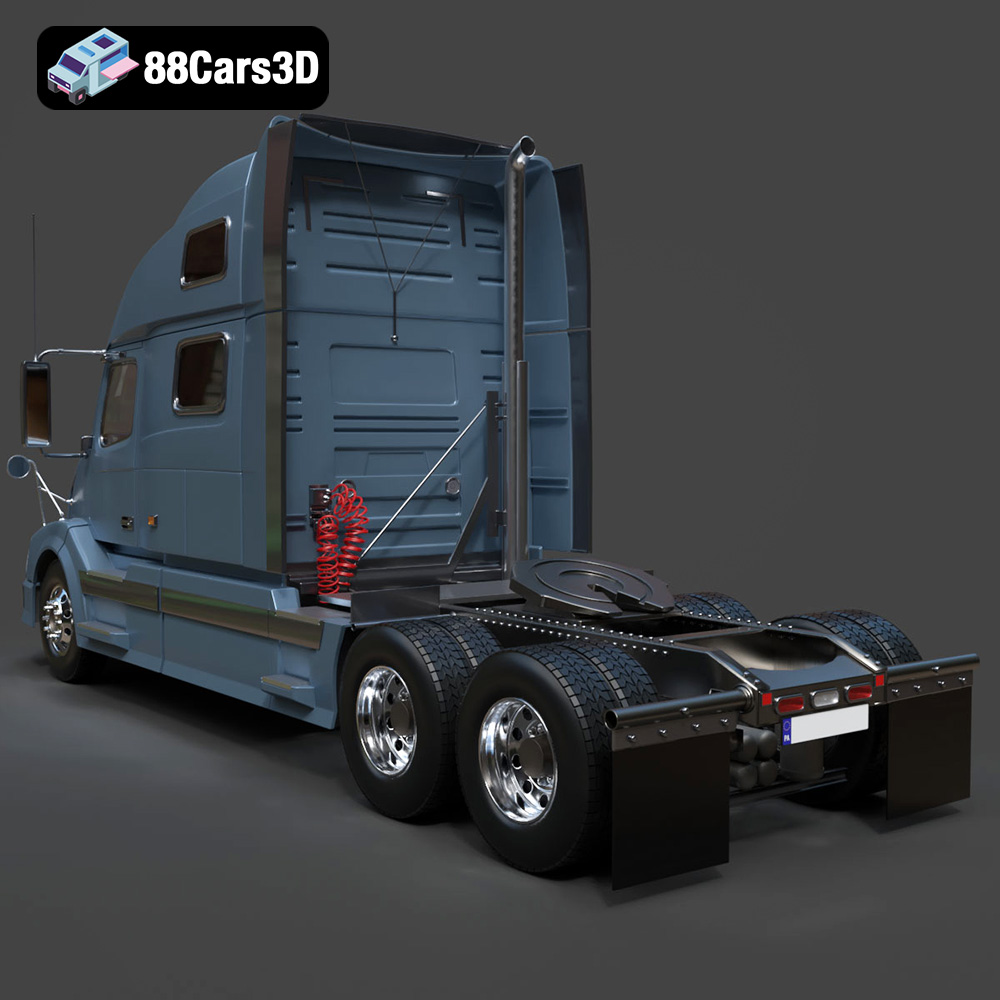
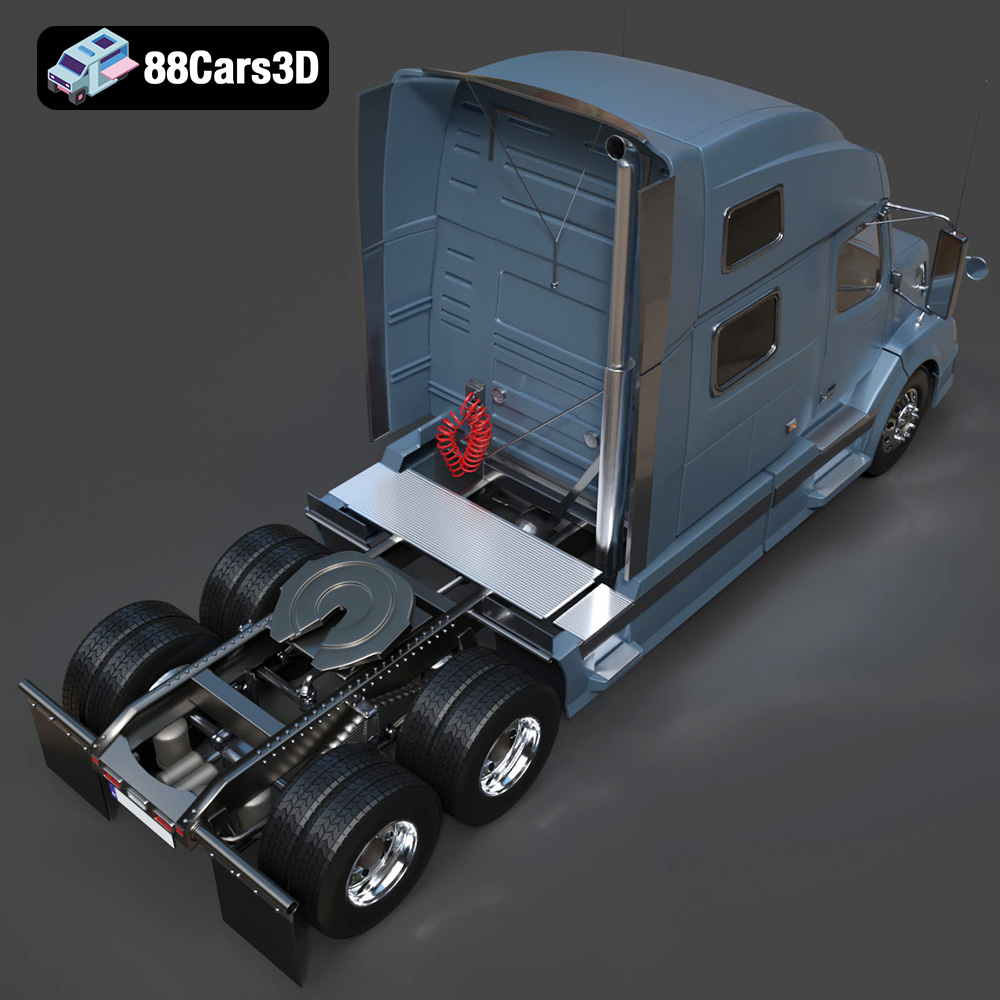
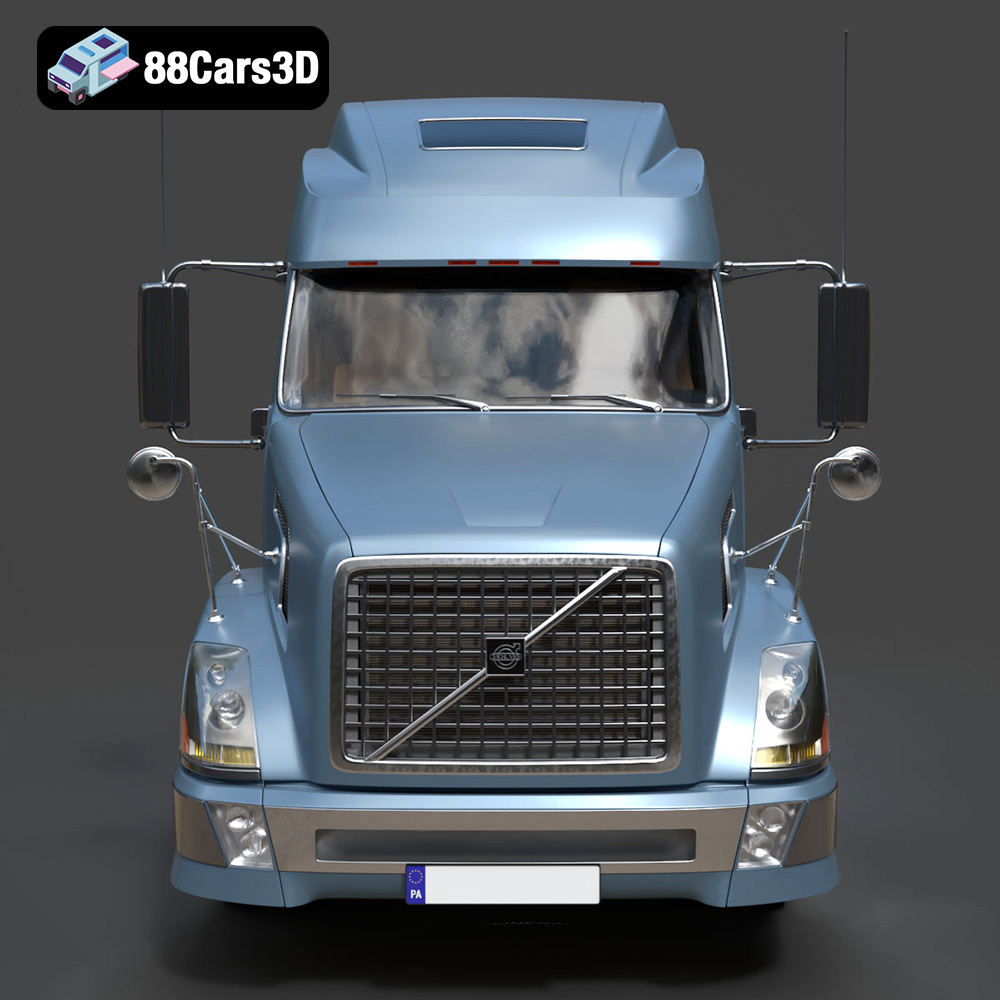
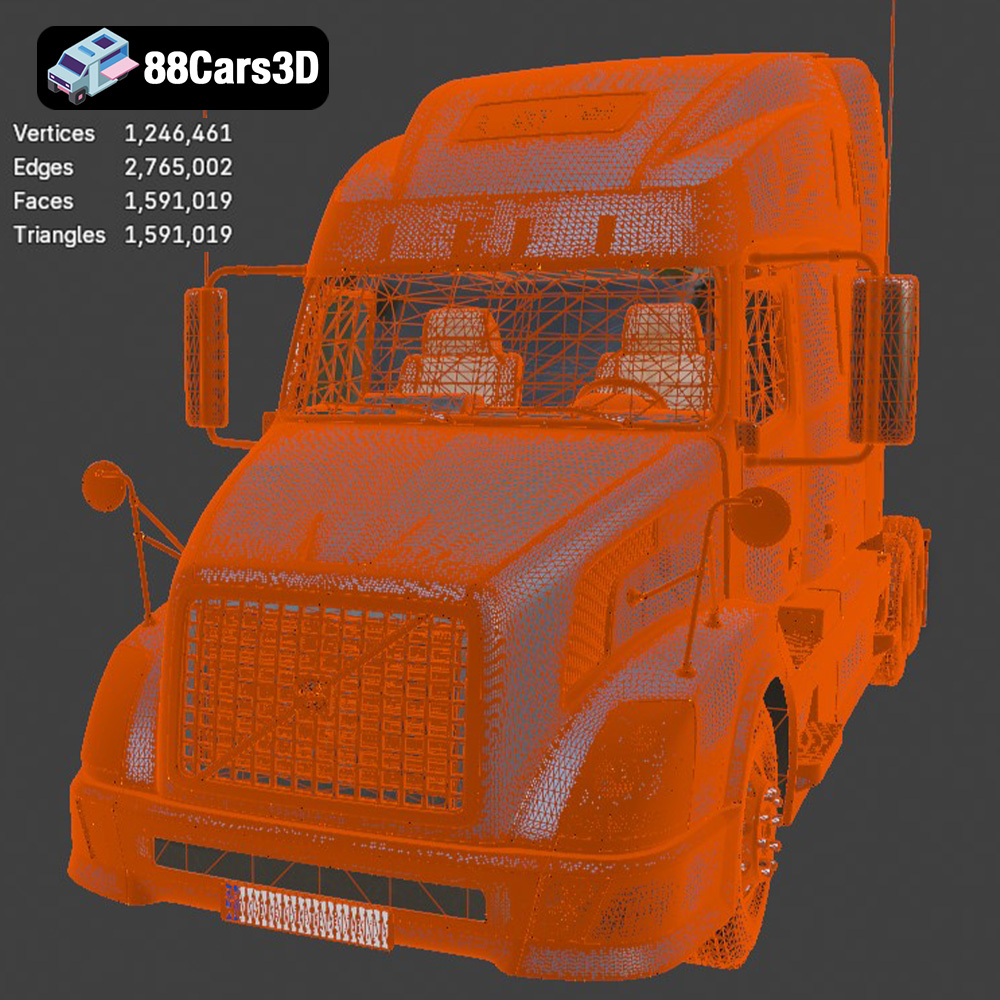
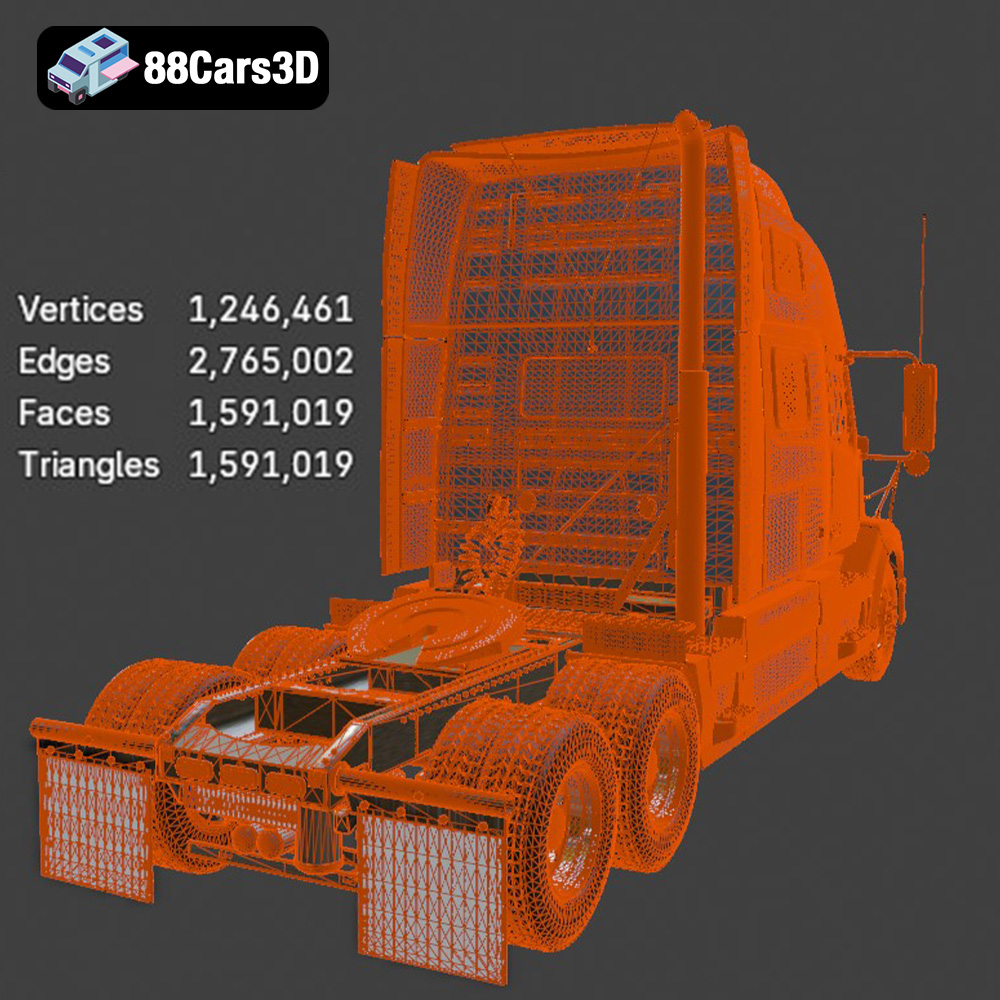
The external features of the Volvo VNL Tractor Truck 2002 are meticulously recreated. Its signature sloped hood, designed for fuel efficiency, is accurately represented, alongside the prominent front grille that defines its sturdy aesthetic. The model includes detailed heavy-duty chassis components, a functional fifth-wheel coupling system, and the distinctive dual vertical exhaust stacks that are synonymous with powerful semi-trucks. Attention to lighting details, from the large halogen headlights to the cab roof markers, ensures visual accuracy in any scene. The heavy-duty commercial dually wheels and detailed tire treads contribute significantly to the realism, while separate components for wheels, suspension, and steering ensure seamless animation possibilities. With an optimized triangle count of approximately 200,000, the model strikes an ideal balance, providing high-end visual realism suitable for close-up automotive rendering without overburdening real-time engines.
The interior of a commercial truck is a driver’s second home, and the Volvo VNL 3D model doesn’t overlook this crucial aspect. It features a detailed driver air-ride seat and a thoughtfully blockouted sleeper cab, giving a sense of the spaciousness and comfort characteristic of the real vehicle. The authentic heavy-duty commercial steering wheel, coupled with a wrap-around instrument cluster featuring dials and gauges, provides a realistic cockpit environment. Critical control details, such as air brake valves and a manual shifter, are included, ensuring that the model is not only visually accurate but also functionally plausible for interactive experiences. This level of detail, combined with optimized geometry, makes it perfect for first-person POV in trucking simulators, allowing players to fully immerse themselves in the driving experience. The careful pivot setup for steering, wheel rotation, trailer coupling, and suspension travel is crucial for realistic animation and interaction in game environments.
One of the most significant advantages of this 3D truck model is its “game-ready” optimization. The ~200,000 triangle count is a sweet spot; it’s detailed enough for high-quality renders and cinematics, yet efficient enough for smooth real-time rendering in demanding game engines. This balance means developers don’t have to compromise between visual fidelity and frame rate. Furthermore, the model adheres to real-world scale accuracy, based on actual Volvo commercial truck chassis dimensions. This is vital for consistency in virtual environments, ensuring that the truck fits correctly within generated landscapes, roads, and interacts realistically with other scaled assets, which is a hallmark of professional 3D car models.
The Volvo VNL Tractor Truck 2002 3D Model is more than just a static object; it’s a dynamic asset designed to integrate into complex professional workflows. Its versatility across different platforms and applications makes it a cornerstone for projects requiring high-quality commercial vehicle representation.
For game developers, especially those crafting trucking simulators or open-world highway games, the Volvo VNL 3D model is a significant accelerator. Its optimized polycount and game-ready topology mean less time spent on optimization and more on game logic and features. When imported into Unreal Engine or Unity via the .fbx or .unreal formats, developers can easily set up materials using PBR (Physically Based Rendering) workflows, generate accurate collision meshes, implement Levels of Detail (LODs) for performance scaling, and animate the vehicle with its pre-configured pivots. The separate wheels, suspension, and steering components facilitate realistic physics simulation and interactive driving mechanics, making it an ideal game asset for immersive experiences.
In the realm of automotive rendering and industrial visualization, stunning visuals are paramount. Artists working in 3ds Max or Blender can leverage the .max or .blend formats, respectively, to achieve photorealistic results. This involves setting up sophisticated lighting environments, applying advanced PBR materials with realistic textures for paint, chrome, and rubber, and utilizing powerful renderers like V-Ray, Corona, or Cycles. The detailed geometry of the Volvo VNL allows for close-up shots that highlight its design, perfect for marketing campaigns, product showcases, or highway scene compositions. The ability to modify tire textures (e.g., highway rib vs. traction variants) or adjust material finishes (matte plastics, chrome grilles, metallic paint) offers extensive creative control for bespoke rendering projects.
The rise of AR/VR technologies has opened new avenues for industrial applications, from virtual fleet showrooms to training configurators. The Volvo VNL Tractor Truck 2002 3D Model, particularly in its .glb format, is ideally suited for these immersive experiences. Its optimized nature ensures smooth performance on mobile devices and VR headsets, critical for maintaining immersion. In industrial freight visualization and large-scale logistics animations, the model can be used to simulate traffic flow, visualize cargo handling, or create interactive presentations of fleet capabilities. This not only enhances engagement but also provides a practical tool for planning and analysis.
The utility of a high-quality 3D model extends far beyond digital rendering. The Volvo VNL Tractor Truck 2002 3D Model also offers tangible possibilities, particularly through 3D printing, and extensive customization options.
For enthusiasts, collectors, or diorama builders, the ability to transform a digital asset into a physical object is incredibly appealing. The Volvo VNL model, provided in .stl format, is ready for 3D printing. However, achieving excellent results requires careful consideration of print settings. Recommended scales typically range from 1:24 to 1:43, balancing detail with manageable print times and material usage. For fine details, resin printing (SLA/DLP) is often recommended over FDM, with layer heights between 0.04-0.12 mm. Proper wall thickness (1.2-2.0 mm) and infill (20-30%) ensure structural integrity. Supports are crucial for intricate parts like exhaust stacks, side mirrors, and the fifth wheel. Post-processing, including sanding, priming, and painting with authentic fleet colors and metallic finishes, transforms a raw print into a stunning scale model, perfect for display.
One of the core strengths of a well-structured 3D model is its potential for customization. The Volvo VNL Tractor Truck 2002 3D Model offers numerous customization options, allowing artists to tailor it to specific project requirements. Users can easily change body colors, applying standard fleet white, custom company liveries, or even fantastical paint schemes. Modifying tire textures from highway rib to traction variants can alter the truck’s operational context, while adjusting material finishes allows for detailed variations in plastics, chrome, and paint. Lighting can also be adapted to suit different environments, from the stark clarity of daytime hauling to the dramatic glow of night driving. The separate components for wheels, suspension, and steering are not only beneficial for animation but also for modular customization, enabling the creation of unique truck configurations. This flexibility underscores the value of investing in high-quality 3D car models that provide a robust foundation for creative exploration.
In a crowded marketplace of digital assets, discerning the truly valuable 3D car models from the merely passable ones can be challenging. For critical projects, the choice of assets directly impacts quality, performance, and development timelines.
Investing in a professionally crafted 3D model like the Volvo VNL Tractor Truck 2002 from 88cars3d.com offers significant advantages. Firstly, it saves immense amounts of time. Creating such a detailed and optimized model from scratch would require hundreds of hours of a skilled artist’s work. Secondly, quality assets ensure consistency across your project. With standardized polycounts, clean topology, and proper material setups, integration is smooth and results are predictable. This consistency is vital for maintaining a professional look and feel, whether you’re creating a game, an architectural visualization, or high-end automotive rendering. Quality assets also mitigate technical headaches, coming pre-configured for various formats and engine requirements, minimizing troubleshooting time.
88cars3d.com prides itself on offering a curated selection of high-quality 3D car models and vehicle assets designed for professional use. The Volvo VNL Tractor Truck 2002 3D Model is a testament to this commitment, providing detailed geometry, optimized performance, and broad compatibility across different software and engines. From game assets to models for exquisite automotive rendering, the marketplace focuses on delivering assets that meet the rigorous demands of industry professionals. With a comprehensive array of included file formats – .blend, .fbx, .obj, .glb, .stl, .ply, .unreal, and .max – 88cars3d.com ensures that artists and developers have the right tools for any task, streamlining their workflow and empowering them to create truly exceptional digital experiences.
The digital realm demands precision, performance, and visual excellence. For anyone involved in game development, automotive rendering, AR/VR, or industrial visualization, the quality of your 3D assets can make or break a project. The Volvo VNL Tractor Truck 2002 3D Model stands as a prime example of a meticulously engineered asset that meets these stringent requirements. Its blend of historical accuracy, game-ready optimization, and comprehensive file format support ensures its versatility across a multitude of professional applications.
Whether you’re crafting an immersive trucking simulator, producing stunning marketing visuals for a logistics company, or creating detailed physical models, this Volvo VNL 3D model provides a robust and flexible foundation. Understanding the nuances of different 3D file formats and how a high-quality asset integrates into specific workflows is crucial for maximizing efficiency and achieving superior results. By choosing expertly prepared 3D car models like those offered on 88cars3d.com, creators can elevate their projects, save valuable time, and deliver experiences that truly resonate with their audience.
The 2002 Volvo VNL Tractor Truck represents a pivotal era in commercial freight transportation, renowned for its aerodynamic design, exceptional driver comfort, and robust heavy-hauling capabilities. This meticulously crafted 3D model captures the imposing presence of the iconic semi-truck, featuring its signature sloped hood, prominent front grille, distinct dual exhaust stacks, and the spacious sleeper cab architecture that made it an industry standard. Engineered with exceptional attention to detail, this 3D model features game-ready topology with an optimized triangle count that delivers stunning visual fidelity without compromising performance. Designed seamlessly for heavy-duty vehicle simulators, industrial animations, and logistics visualizations, the geometry ensures smooth real-time rendering in major engines while preserving the intricate mechanical details of a true commercial workhorse.
$39.99
.blend
.fbx
.glb
.max
.obj
.ply
.rendering
.stl
.unreal
.volvo
2002
car-3d-model
commercial-vehicle
game asset
game-ready
heavy-duty-truck
low-poly
optimized
semi-truck
truck-3d-model
vnl-tractor-truck
VR/AR