Get 20% OFF All Premium 3D & STL Models!

Few vehicles have left as indelible a mark on the commercial landscape as the Ford Transit Mk1 Panel Van. Introduced in 1965, this ubiquitous workhorse quickly redefined what a light commercial vehicle could be, setting new standards for versatility, reliability, and “car-like” handling. From bustling city streets to rural delivery routes, the Mk1 Transit became an instant classic, a silent partner in countless businesses, and a symbol of post-war European enterprise. Today, its distinctive flat-front silhouette and rugged charm make it a highly sought-after vintage icon, not just in the automotive world, but increasingly in the digital realm.
In the fast-evolving world of 3D modeling, capturing the essence of such a historical vehicle presents a unique challenge and opportunity. Artists, game developers, architectural visualizers, and VR/AR content creators constantly seek high-quality, authentic assets to breathe life into their digital environments. This demand for historically accurate and technically optimized 3D car models is precisely where platforms like 88cars3d.com excel, offering meticulously crafted assets that meet stringent professional standards. The Ford Transit Mk1 Panel Van 1965 3D Model stands as a prime example, providing a comprehensive, game-ready representation of this legendary vehicle, ready for immediate integration into a myriad of creative projects. This article will delve into the technical intricacies of this specific model, exploring its features, ideal applications, and the critical role of versatile file formats in modern 3D workflows.
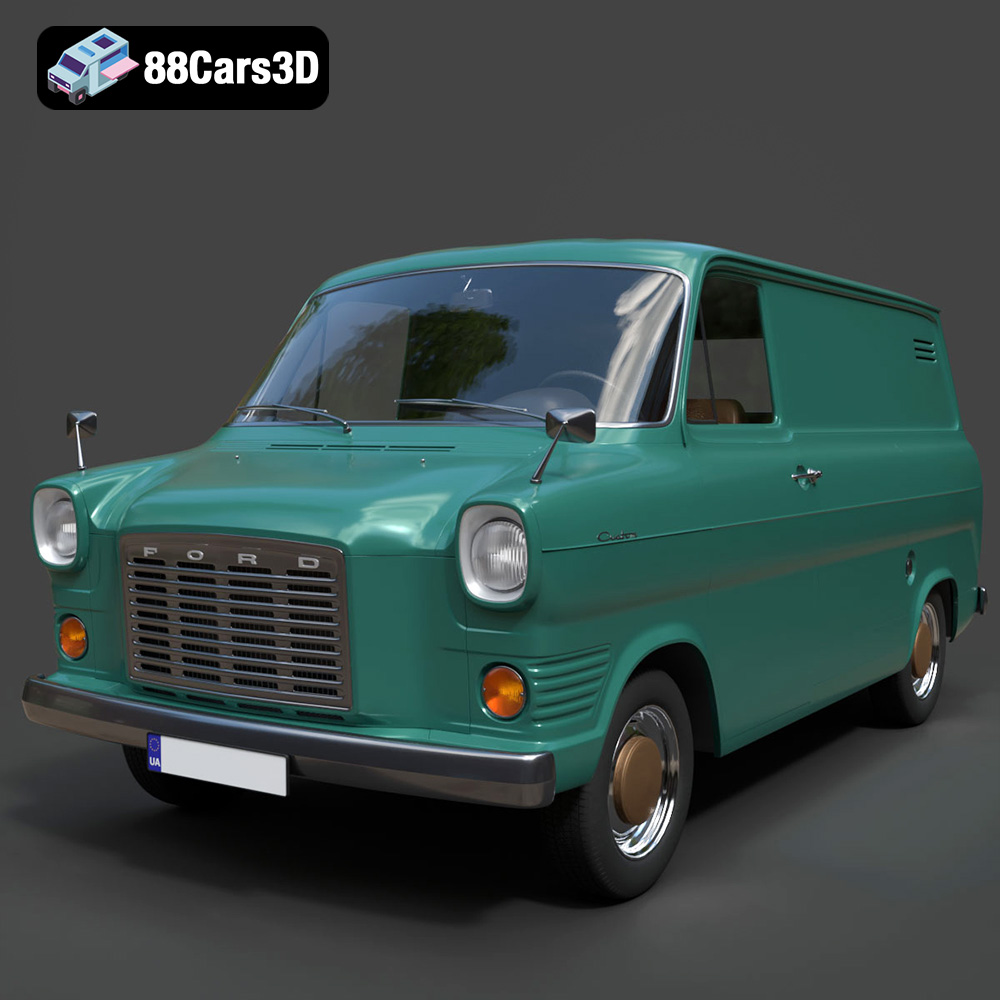
Recreating a vehicle like the 1965 Ford Transit Mk1 in 3D requires more than just accurate dimensions; it demands an understanding of its character. The design team behind this particular 3D model at 88cars3d.com has clearly put in the work, focusing on the details that define the Mk1: its wide track, the iconic flat front, the functional aesthetic that prioritizes utility over embellishment. Every curve, panel line, and subtle indentation contributes to its authentic appearance, ensuring that whether viewed up close in a cinematic render or as part of a bustling virtual street scene, its identity is unmistakable.
Why is a vintage panel van so important in a modern digital context? The answer lies in context and narrative. Classic vehicles ground virtual worlds in reality, providing a sense of history, character, and often, nostalgia. For game developers building period-accurate open-world environments, a 1965 Transit Mk1 offers an immediate visual cue for a specific era. For architects visualizing a restored historical district, such a vehicle adds an invaluable layer of realism and liveliness to their renderings. And for AR/VR experiences, a well-modeled classic car can serve as a compelling interactive element, transporting users back in time. The demand for such precise, era-appropriate 3D car models is consistently high across these diverse sectors.
When acquiring a 3D model, understanding the various file formats included is paramount. Each format serves a specific purpose, catering to different software, workflows, and output requirements. The Ford Transit Mk1 Panel Van 1965 3D Model is generously provided in a wide array of formats, ensuring maximum compatibility and flexibility for professionals across the industry. Let’s break down the significance of each, delving into their technical nuances and ideal applications.
The .blend file is the native format for Blender, a powerful and increasingly popular open-source 3D creation suite. When you receive a .blend file, you’re getting a complete, fully editable Blender scene. This typically includes the 3D mesh, materials (with their node setups), textures, lighting, camera setups, and even animations if present. For artists and studios primarily working in Blender, this format offers the most flexibility for customization. You can easily modify the topology, adjust shaders, re-rig, or even integrate the vehicle into a larger Blender project without any loss of data fidelity that might occur during format conversions.
The .fbx (Filmbox) format is an industry-standard proprietary file format developed by Autodesk, widely used for exchanging 3D data between various 3D applications and game engines. It’s renowned for its ability to store not just mesh data, but also complex information like animations, skeletal rigs, skinning, blend shapes, cameras, lights, and materials. This makes .fbx the ideal choice for developers integrating assets into real-time pipelines like Unreal Engine or Unity, as it preserves crucial animation data and hierarchical structures. The Ford Transit Mk1’s separate wheels, suspension, and steering components, primed for animation, would be perfectly encapsulated within an .fbx file.
The .obj (Wavefront OBJ) format is one of the oldest and most universal 3D file formats. While it’s simpler than .fbx, primarily storing geometric data (vertices, normals, texture coordinates) and references to external material files (.mtl) and textures, its widespread compatibility is its greatest strength. Almost every 3D software can import and export .obj files, making it excellent for cross-software compatibility when animation or complex rigging isn’t the primary concern. For static renders or base meshes for sculpting, .obj remains a reliable workhorse.
The .glb (GL Transmission Format Binary) format is increasingly vital for web-based 3D, augmented reality (AR), and virtual reality (VR) applications. It’s a binary version of the glTF format, designed for efficient transmission and loading of 3D scenes and models. .glb files consolidate all necessary data – geometry, materials, textures, and even animations – into a single file, making them highly optimized for browser-based display, mobile AR experiences, and low-latency VR environments. The Transit Mk1 in .glb is perfect for immersive virtual showrooms or AR experiences where users can view the van in their physical space via a smartphone.
The .stl (Stereolithography) format is the industry standard for 3D printing. It represents 3D surfaces as a series of connected triangles, describing only the surface geometry of a 3D object without color, texture, or other CAD attributes. While simple, its ubiquity in rapid prototyping and additive manufacturing makes it essential for physical output. For hobbyists wanting to 3D print a scale model of the Transit Mk1, the .stl file is the go-to format, requiring careful preparation and slicing software for successful results.
The .ply (Polygon File Format) is a mesh format designed to store 3D data from 3D scanners, supporting color and other properties per vertex or face. It’s often used for precision mesh data, especially in scientific or CAD-related applications where exact geometrical representation is critical. While less common for general asset exchange than .fbx or .obj, its inclusion signifies a commitment to offering options for highly specific, precision-oriented workflows.
The .max format is the native file format for Autodesk 3ds Max, another industry-leading 3D modeling, animation, and rendering software. Similar to .blend, a .max file contains the complete scene data, including geometry, materials, textures, lighting, cameras, and animation. For professionals entrenched in the 3ds Max ecosystem, this provides the most direct and editable access to the model, allowing for advanced rendering setups, complex animations, or integration into existing architectural visualization projects.
Finally, the .unreal format indicates an asset specifically prepared and optimized for direct integration into Unreal Engine. While .fbx is a common route, a dedicated .unreal file or package often implies pre-configured materials, collision meshes, LODs (Levels of Detail), and other engine-specific settings that streamline the import process and ensure optimal performance within the Unreal environment. This is a significant advantage for game developers looking for a truly “drop-in” solution, minimizing setup time and potential conversion issues for their game assets.
The true value of a premium 3D model lies not just in its accurate representation, but in the meticulous technical execution that allows it to perform flawlessly across various applications. The Ford Transit Mk1 Panel Van 1965 3D Model embodies this principle, boasting features specifically engineered for high fidelity and practical utility.
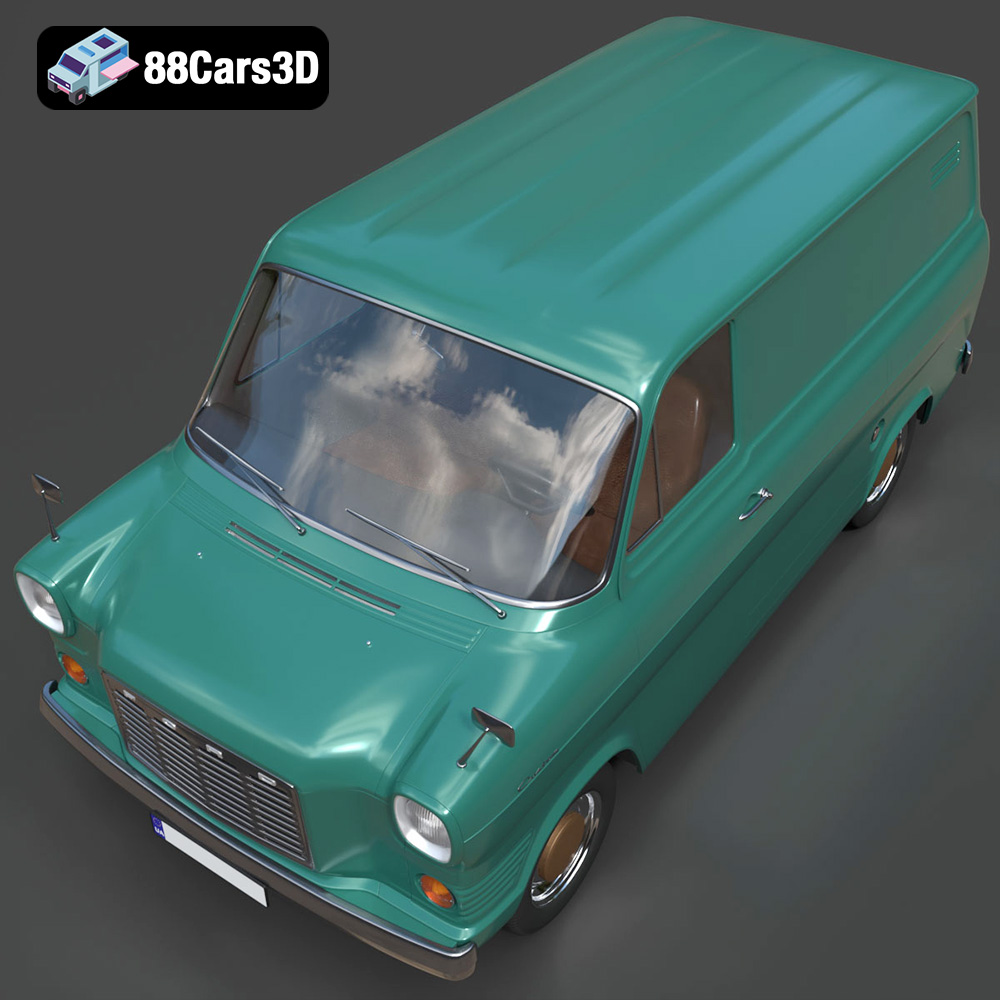
From the moment you examine the model, the attention to exterior detail is evident. The accurate Ford Transit Mk1 Panel Van frame geometry faithfully replicates the classic flat-front proportions. This isn’t just about aesthetics; correct proportions are vital for believable camera perspectives in renders and realistic physics in game engines. Critical elements like the detailed V4 engine block approximation and undercarriage components, while often hidden, add layers of authenticity for close-up shots or even virtual mechanic simulations. Period-correct side-exit exhaust system details, authentic vintage circular halogen headlights, and twin-lens taillights ensure that every angle resonates with the 1960s aesthetic. Even the classic steel wheels with commercial-grade tires and hubcaps are painstakingly recreated, contributing significantly to the overall realism and visual storytelling.
Beyond the impressive exterior, the cockpit and interior features are optimized for immersion, a critical factor for game development and interactive experiences. The authentic dual vinyl seating configuration, classic two-spoke steering wheel, and minimalist period-accurate dashboard with its dial-based instrument cluster all contribute to a believable internal environment. Traditional manual floor shifter, pedals, and handbrake levers are all present, ensuring that if a player or user enters the cabin, the experience feels complete. Crucially, the geometry is optimized for first-person POV in gaming, meaning that polygon counts and texture resolutions are balanced to provide a rich visual experience without taxing real-time engine performance excessively.
One of the standout technical advantages of this model is its readiness for animation. The inclusion of separate wheels, suspension, and steering components is not a trivial detail. It means animators can directly manipulate these parts to simulate realistic driving, turning, and suspension travel without complex rigging from scratch. This is invaluable for game developers needing dynamic vehicles, or for cinematic artists creating realistic driving sequences. The proper pivot setup for steering, wheel rotation, and suspension travel is a testament to the model’s professional construction, saving countless hours in production workflows.
The versatility of the Ford Transit Mk1 3D model extends across multiple professional domains, each benefiting from its optimized design and technical specifications.
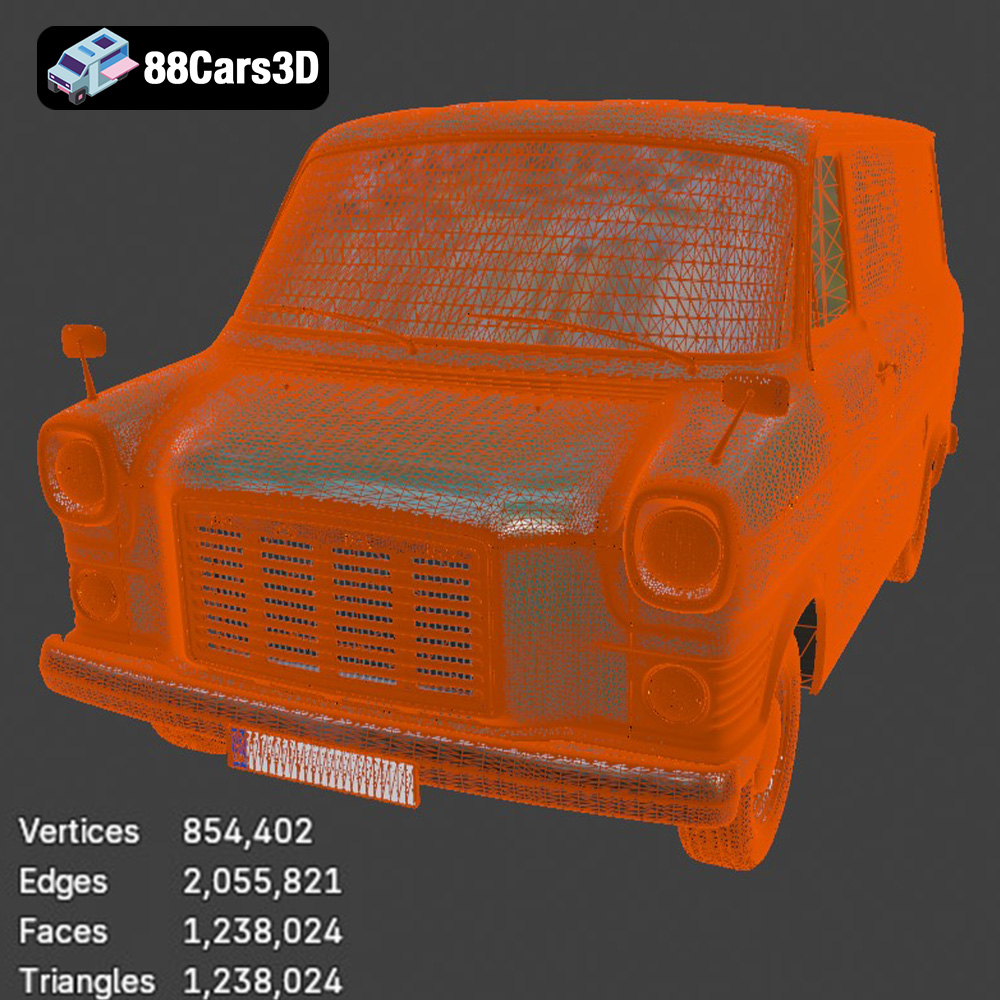
For game developers, the model’s “game-ready & optimized” status is a significant draw. With approximately 180,000 triangles, it strikes a near-perfect balance between visual fidelity and real-time performance. This polycount is well within the acceptable range for modern game engines like Unreal Engine and Unity, allowing for multiple instances of the van in a scene without significant performance drops. The provision of .fbx and .unreal formats streamlines the import process, ensuring materials and pivot points are correctly recognized. Imagine an open-world historical game set in 1960s London, where the streets are populated by a fleet of these iconic Transits, each contributing to the bustling atmosphere and offering interactive possibilities for players.
A game studio could easily use this model to populate a virtual city, assign AI paths to the vehicles, or even allow players to drive the van for specific missions. The separate, animatable parts mean developers can integrate sophisticated vehicle physics, engine sounds, and suspension dynamics, enhancing the player’s immersive experience. The optimized geometry also ensures that it performs well on various platforms, from high-end PCs to consoles.
In architectural visualization (ArchViz) and cinematic rendering, realism is paramount. The Ford Transit Mk1 model excels here, offering a high-quality asset to enrich any scene. Using software like 3ds Max (with the included .max file) or Blender (with the .blend file), ArchViz artists can drop this van into a rendering of a period-specific street, a vintage garage, or even a contemporary urban setting where a classic car adds character. The detailed exterior and interior allow for close-up shots and high-resolution renders, showcasing the vehicle’s authentic design and textures under various lighting conditions.
For example, an architectural firm designing a heritage redevelopment project could incorporate this Transit Mk1 into their proposed streetscapes, immediately communicating the era and intended ambiance to clients. For cinematic projects, the model’s detail and animation readiness make it ideal for background vehicles in films or advertisements set in the 1960s, contributing to a believable and visually rich environment.
The burgeoning fields of Augmented Reality (AR) and Virtual Reality (VR) demand highly optimized yet visually compelling 3D assets. The Ford Transit Mk1 model, particularly in its .glb format, is perfectly suited for these applications. For an interactive VR museum exhibit on automotive history, users could walk around and even “enter” the Transit, examining its interior details. In AR, the model could be overlaid onto a real-world environment, allowing potential buyers or enthusiasts to preview the van in their driveway or garage via their smartphone. Its optimized polycount ensures smooth performance on mobile devices and VR headsets, minimizing latency and maximizing immersion.
Consider an automotive enthusiast convention: an AR app could allow attendees to ‘summon’ a virtual Transit Mk1 to appear life-sized in front of them, rotate it, or even look inside, offering an engaging and interactive experience that transcends physical limitations.
Beyond digital displays, the Ford Transit Mk1 3D model offers tangible possibilities through 3D printing, enabling enthusiasts to bring a piece of automotive history into the physical world. Furthermore, its digital format allows for extensive customization, empowering artists to tailor the model to their specific project needs.
The inclusion of the .stl format makes this model ready for 3D printing. The product description provides excellent guidance for optimal print settings, recommending scales like 1:12, 1:18, or 1:24. Resin printing is specifically recommended for its ability to capture fine details, crucial for accurately representing elements like the exhaust system or intricate grille. The advice on layer height (0.04–0.12 mm) and infill (20–30%) is practical for achieving a robust yet detailed print. Crucially, the suggestion to print the frame angled and wheels separately indicates thoughtful preparation for structural integrity and ease of assembly, a testament to the model’s dual digital and physical utility.
3D printing is often just the first step. The recommendation for post-processing—sanding, priming, and applying authentic factory colors with metallic finishes—highlights the pathway to a museum-quality physical model. This detailed guidance ensures that even those new to 3D printing can achieve impressive results, transforming raw plastic into a faithful miniature replica of the iconic van. The ability to hold a tangible representation of a digitally sourced asset is a powerful bridge between the virtual and physical creative realms.
In the digital space, the customization options are even broader. Artists can easily change body and tank colors to match factory specifications, apply custom finishes, or experiment with unique liveries for specific projects. Modifying tire textures to represent off-road, street, or even worn variants adds another layer of realism. Adjusting material finishes—from matte and gloss to various metallic sheens—allows for photorealistic rendering under diverse lighting conditions. Whether it’s a pristine showroom model or a weathered veteran of the road, the Ford Transit Mk1 3D model provides the flexibility to tell any story through its appearance, thanks to its well-structured materials and textures.
The term “game-ready” is often used, but what does it truly signify for a 3D car model, and why is it so vital across various digital applications?
A game-ready asset, like the Ford Transit Mk1 Panel Van, is meticulously optimized to deliver high visual fidelity while maintaining efficient performance within a real-time engine. The specified ~180,000 triangles represent a carefully chosen polygon count. It’s high enough to capture the necessary details of the vehicle, from its distinctive body shape to its interior features, without appearing overly blocky or low-resolution. Yet, it’s low enough to be rendered efficiently, even in scenes with multiple vehicles or complex environments, preventing frame rate drops and ensuring a smooth, responsive user experience. This balance is critical not just for games but also for demanding AR/VR applications where every millisecond counts for immersion.
The optimization extends beyond just polycount. Real-world scale accuracy, proper pivot setups, and clean topology are all hallmarks of a professionally prepared asset. This means less time spent by artists on corrective work, rigging, or re-scaling, and more time dedicated to creative implementation. For studios working on large-scale projects, such as open-world games or extensive architectural visualizations, the efficiency gained from using pre-optimized 3D car models like the Transit Mk1 from 88cars3d.com is invaluable. It reduces development costs, accelerates production timelines, and ensures a consistent level of quality across all assets. This makes the Ford Transit Mk1 not just a model, but a catalyst for streamlined creative workflows.
The 1965 Ford Transit Mk1 Panel Van is more than just a vehicle; it’s a cultural icon, and its digital reincarnation as a 3D model offers unprecedented opportunities for digital artists and developers. From its meticulous exterior and interior detailing to its game-ready optimization and comprehensive file format support, this model is a prime example of a high-quality 3D asset designed for professional use.
Whether you’re building a historically accurate game environment, crafting a stunning architectural visualization, developing an immersive AR/VR experience, or even bringing a classic van to life through 3D printing, the Ford Transit Mk1 Panel Van 1965 3D Model delivers the technical precision and aesthetic authenticity required. Its availability in multiple formats—from .blend and .max for comprehensive editing to .fbx and .unreal for real-time engines, and .stl for physical production—ensures maximum versatility across any workflow. For those seeking premium 3D car models that stand up to the rigors of professional production, exploring the offerings at 88cars3d.com, including this iconic Transit, is a highly recommended step.
The iconic 1965 Ford Transit Mk1 Panel Van is a legendary commercial vehicle that revolutionized the European light commercial market. Known for its wide track, car-like handling, and unmistakable flat-front styling, this workhorse set the standard for modern vans. Its distinctive silhouette, robust chassis, and classic V4 engine configuration make it a highly sought-after vintage classic among enthusiasts and collectors. This highly detailed, game-ready 3D model boasts optimized topology, ensuring exceptional visual fidelity while maintaining excellent real-time performance. Designed meticulously for seamless integration into modern game engines, architectural visualizations, and immersive AR/VR environments, the model captures every nuance of the original 1960s commercial aesthetic. Perfect for vintage city environments, historical transport simulations, classic garage scenes, and period-accurate architectural renderings.
$19.99
.blend
.fbx
.ford
.glb
.max
.obj
.ply
.rendering
.stl
.unreal
1965
car-3d-model
classic-van
commercial-vehicle
game asset
game-ready
low-poly
optimized
panel-van
transit-mk1
VR/AR