Get 20% OFF All Premium 3D & STL Models!

In the rapidly evolving landscape of digital content creation, the demand for photorealistic and performant 3D assets has never been higher. From cinematic spectacles and immersive game worlds to advanced technical visualizations and interactive AR/VR experiences, the quality of a 3D model can significantly impact a project’s overall success and perceived professionalism. The foundation of any compelling virtual environment or detailed simulation lies in meticulously crafted 3D models – assets that not only look authentic but are also technically optimized for diverse applications.
Today, artists, designers, and developers are constantly seeking reliable sources for high-quality digital assets that can integrate seamlessly into their complex workflows. This is particularly true for specialized models like aircraft, which require an exceptional degree of accuracy and detail. It is in this demanding environment that a product like the Helicopter UH-40 3D Model distinguishes itself, offering a robust and visually stunning solution for a multitude of professional needs. This model exemplifies the blend of aesthetic precision and technical optimization crucial for pushing the boundaries of digital realism across various industries.
The versatility of a 3D model is often defined by the range of file formats it supports. Each format is engineered for specific purposes, offering unique advantages in terms of compatibility, data preservation, and workflow efficiency. Selecting the correct format is paramount for smooth integration and optimal performance within your chosen software or engine. The Helicopter UH-40 3D Model from 88cars3d.com, for instance, comes equipped with a comprehensive suite of industry-standard formats, ensuring maximum adaptability.
The .blend format is the native file type for Blender, a popular open-source 3D creation suite. When you receive a .blend file, you’re not just getting the mesh; you’re typically receiving a fully editable Blender scene. This includes all materials, textures, lighting setups, camera positions, and even animation data. For artists deeply integrated into the Blender ecosystem, this format offers unparalleled flexibility. It allows for direct manipulation of the model’s structure, fine-tuning of shaders, re-rigging, and complete control over rendering settings without any data loss or conversion artifacts often associated with interchange formats. It’s the ideal choice for those who need to extensively customize or animate the model within Blender.
Autodesk’s .fbx (Filmbox) format is arguably the most widely used interchange format in 3D production. Its strength lies in its ability to encapsulate a wide array of 3D data, including geometry (meshes), materials, textures, bones/rigging, animations, and even camera and light information, all within a single file. This makes .fbx incredibly versatile for transferring assets between different 3D applications and, critically, for game development. Both Unreal Engine and Unity, the leading real-time engines, have robust .fbx importers, making it the go-to choice for game-engine-ready assets like the UH-40. While highly compatible, it’s important to be mindful of versioning and export/import settings to ensure all data transfers correctly.
The .obj (Wavefront OBJ) format is one of the oldest and most universally supported 3D file formats. It’s excellent for transferring geometric data, including vertices, normals, UV coordinates, and polygon groups. Accompanying .obj files are often .mtl (Material Template Library) files that define basic material properties and texture paths. While .obj excels in cross-software compatibility due to its simplicity, it typically does not store animation, rigging, or complex shader information. It’s a reliable choice when you primarily need to transfer static mesh data between different 3D applications, offering a clean mesh base for further development.
.glb (GL Transmission Format Binary) is a modern, compact, and efficient format specifically designed for the transmission and loading of 3D scenes and models into web applications, augmented reality (AR), and virtual reality (VR) experiences. It packages all necessary assets – geometry, materials (often PBR, Physically Based Rendering), textures, and animation – into a single binary file. This self-contained nature and optimization for real-time rendering make .glb an excellent choice for deploying interactive 3D content in browser environments or on mobile AR/VR platforms, where quick loading times and small file sizes are critical for user experience.
The .stl (Stereolithography) format is the de facto standard for 3D printing. Unlike other formats that store complex mesh data, .stl represents a 3D model as a series of connected triangles (a tessellation of the surface). It defines only the surface geometry of a 3D object without any color, texture, or material information. For designers and engineers looking to physicalize their digital creations, the .stl format, especially for models like the UH-40, provides the clean, manifold geometry required for successful additive manufacturing. It’s crucial for the mesh to be “water-tight” (no holes or non-manifold edges) for optimal print results.
The .ply (Polygon File Format) is another format for storing 3D data, often used in scientific and engineering applications, particularly for scanned data and high-precision meshes. It can store a wider range of properties than .obj or .stl, including color per vertex, normal information, and even material properties. While less common for general 3D asset distribution than .fbx or .obj, .ply is valuable for applications requiring highly detailed geometric data for analysis, reverse engineering, or direct integration into CAD (Computer-Aided Design) workflows.
While not a universal file extension in the same way as .fbx or .obj, a file described as .unreal typically signifies an asset that has been specifically configured and often pre-imported or prepared for direct use within Unreal Engine. This could mean it’s an exported asset from an Unreal project, a package containing specific Unreal asset types (like Static Meshes, Skeletal Meshes, Materials, Blueprints), or simply an .fbx optimized with Unreal’s import settings in mind. This format saves significant time for game developers and real-time visualizers by bypassing much of the initial setup and configuration required for a raw import, ensuring the model’s materials, textures, and scales are correctly applied within the engine.
The .max format is the native file type for Autodesk 3ds Max, a powerful 3D modeling, animation, rendering, and compositing software. Similar to .blend files for Blender users, a .max file offers complete project data, including complex scene setups, modifiers, intricate material graphs, advanced lighting systems, and animation keyframes. For professionals working within 3ds Max, having the Helicopter UH-40 3D Model in .max format provides the ultimate control for high-end architectural visualization, product rendering, and cinematic animation. It allows for exhaustive customization and leveraging of 3ds Max’s extensive toolset.
Understanding these distinct characteristics empowers users to select the most appropriate format for their specific needs, ensuring efficiency and fidelity in their digital projects.
The creation of high-fidelity 3D models, especially for complex machinery like aircraft, demands an exacting level of precision and attention to detail. This isn’t just about aesthetics; it’s about delivering a visually accurate representation that can withstand intense scrutiny, whether in a close-up render or a real-time simulation. The Helicopter UH-40 3D Model exemplifies this philosophy, offering a robust foundation for a myriad of projects that demand realism.
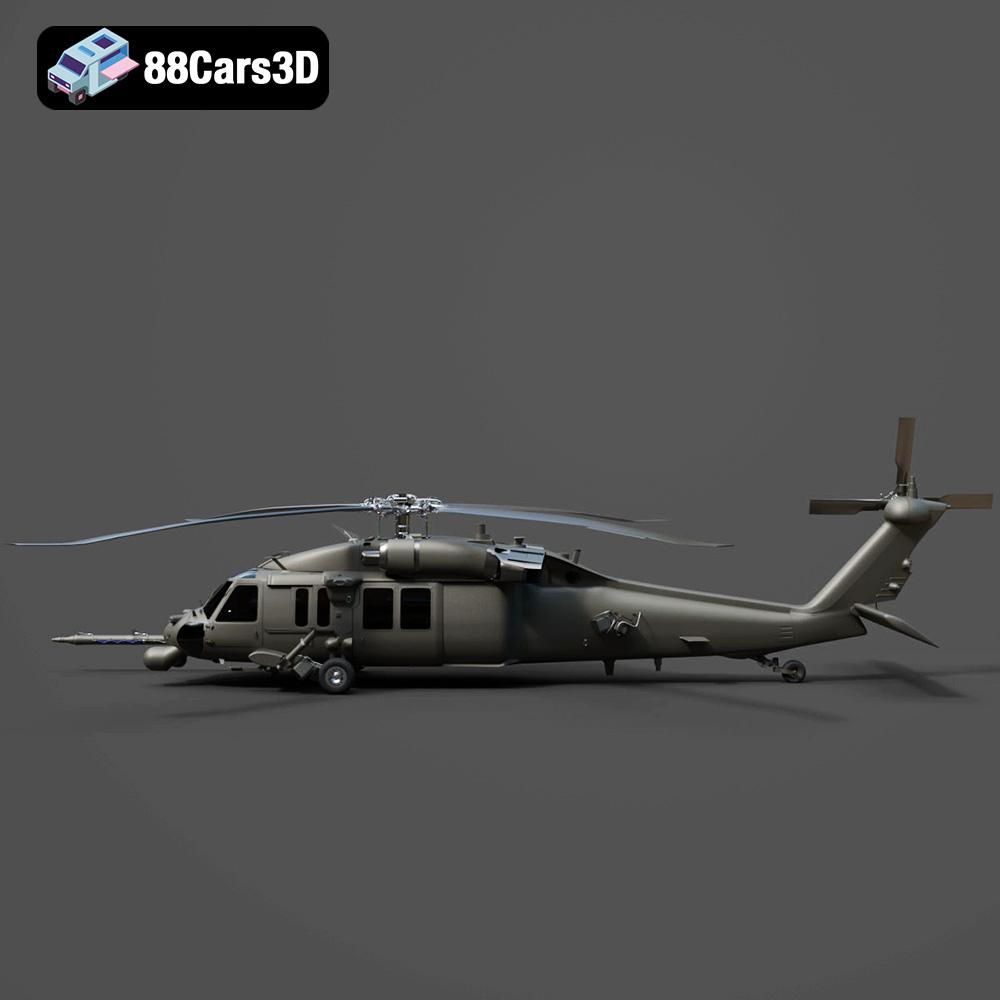
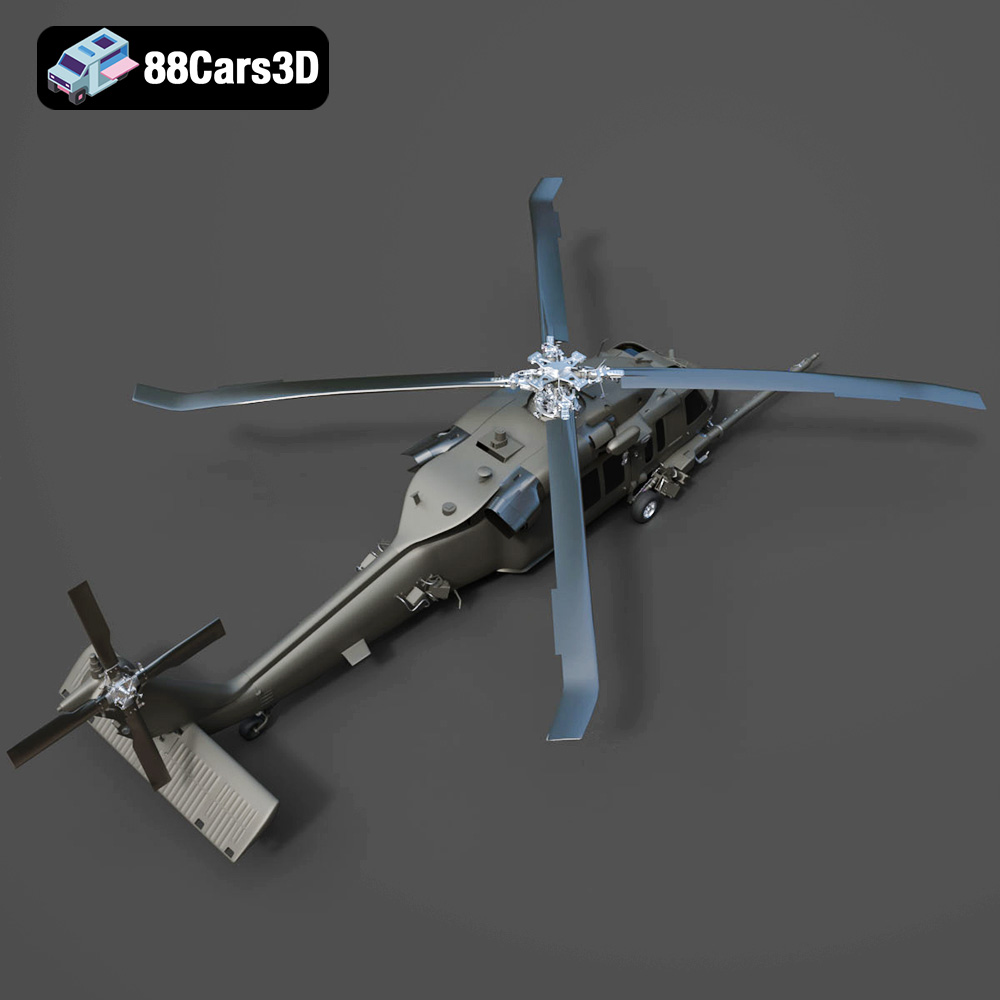
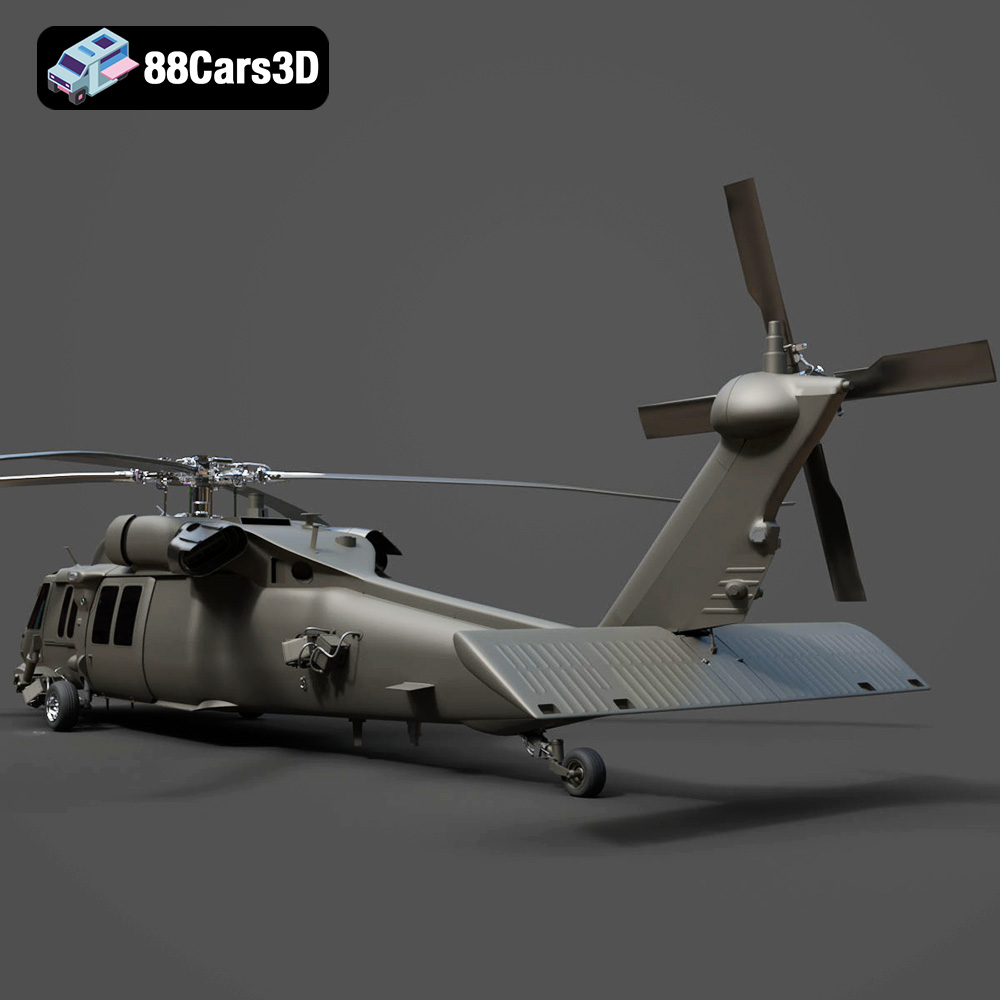
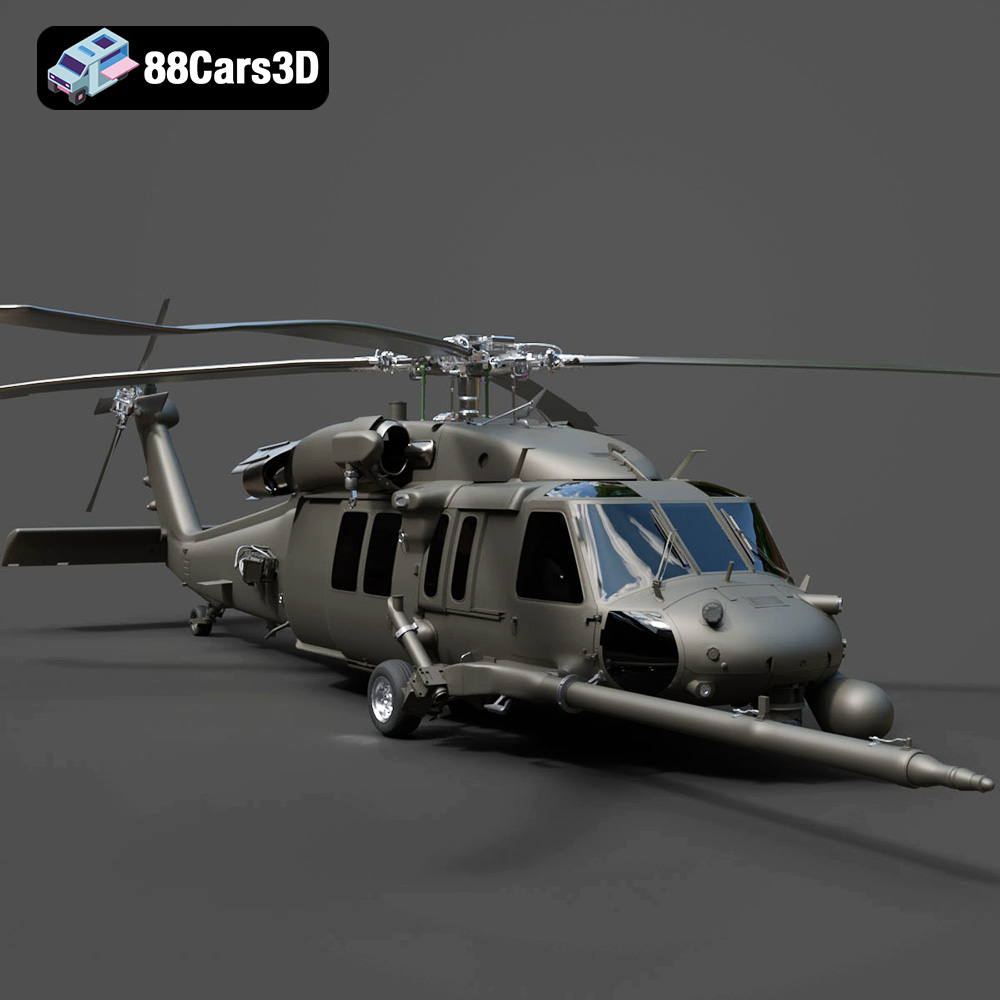
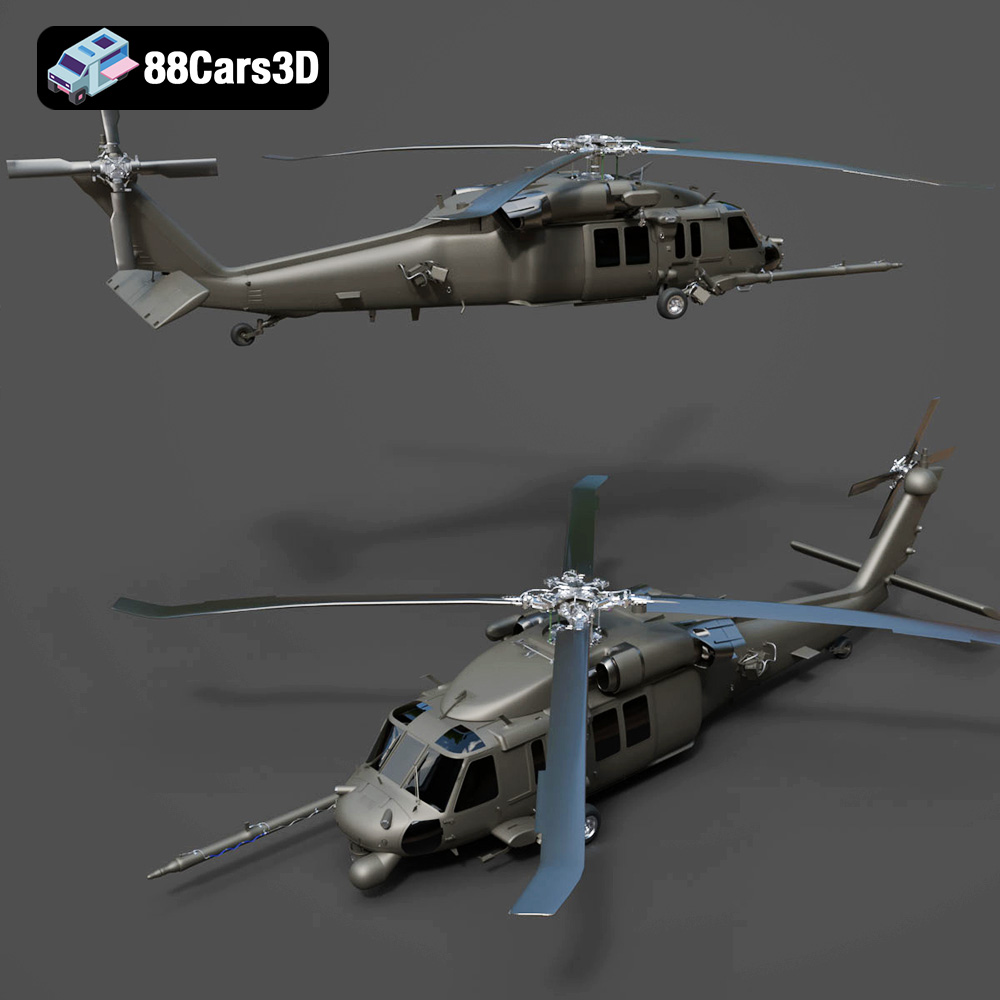
When considering an aircraft model for professional use, the level of detail in both its exterior and interior is paramount. The Helicopter UH-40 3D Model has been designed with precise structural accuracy, capturing the robust aerodynamics and distinctive features of the UH-40 aircraft. This includes accurate panel lines, realistic surface contours, and meticulously modeled components that make the exterior instantly recognizable and believable. This level of external detail is critical for wide shots, establishing a scene, or showcasing the aircraft in its environment.
However, true immersion often comes from the ability to go deeper. The UH-40 model goes beyond just an impressive shell, providing a fully modeled interior. This means cockpits with intricate instrumentation, detailed seating arrangements, and functional-looking controls. Such an interior is essential for first-person views, walkthroughs in AR/VR, or cinematic sequences where characters interact within the cabin. It ensures that the model stands up to even the closest renders and provides a rich, believable experience that can elevate military simulations, pilot training modules, and interactive applications to new heights.
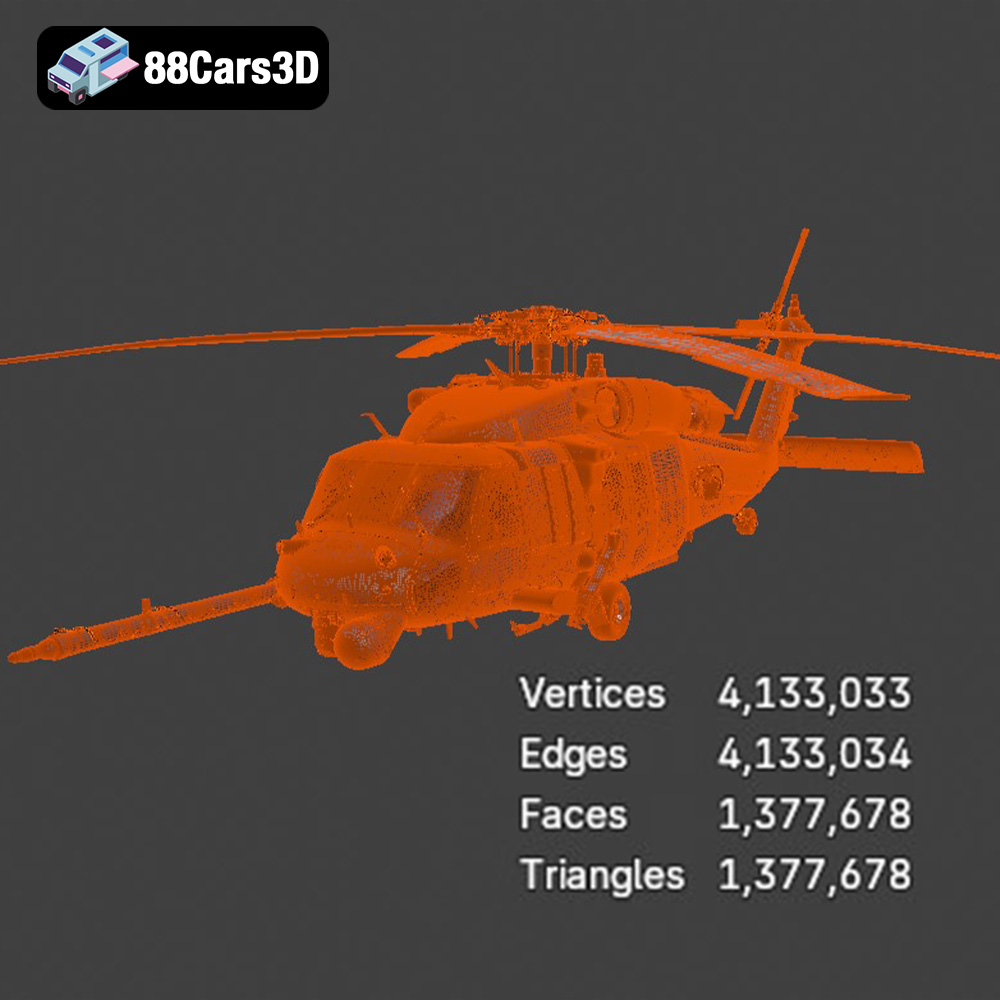
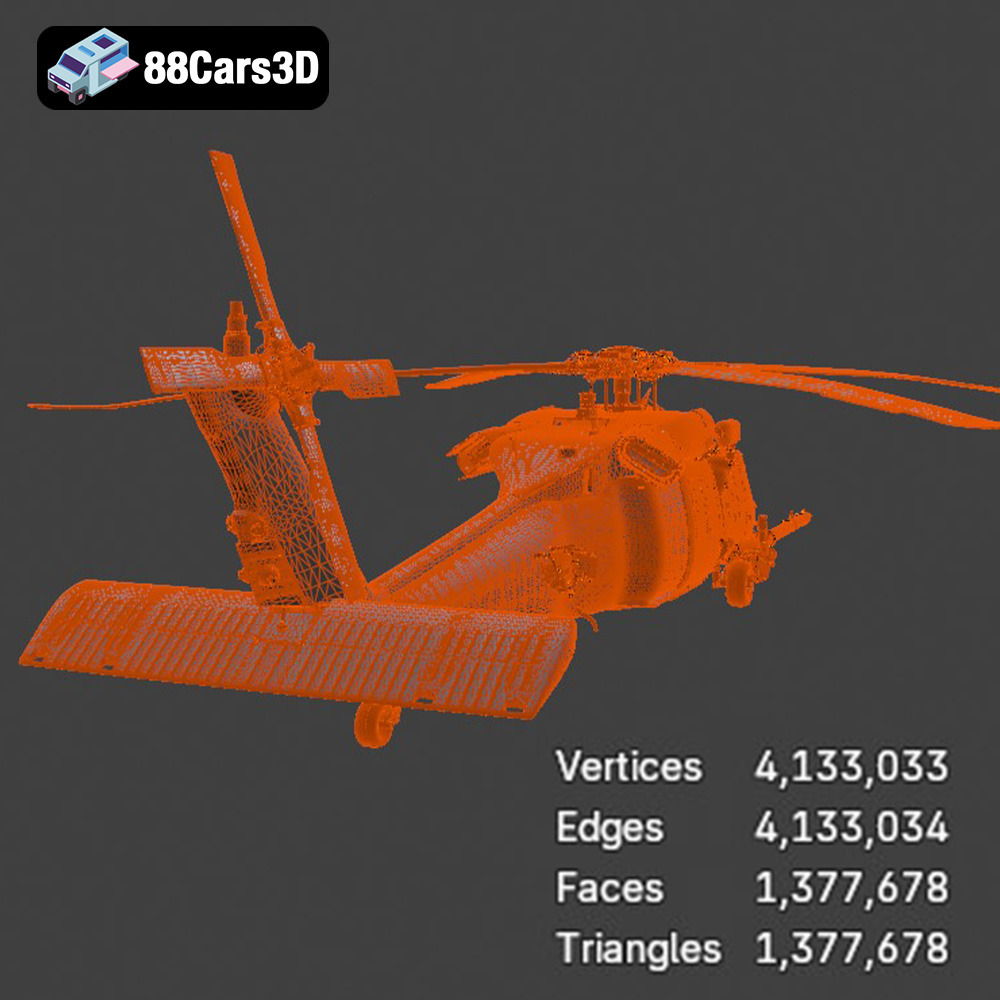
Beyond visual accuracy, the technical construction of a 3D model is crucial for its performance. The Helicopter UH-40 3D Model features optimized topology and clean geometry. This isn’t merely an aesthetic choice for the wireframe; it’s a technical necessity. Optimized topology means that the polygon count is efficient, balancing visual fidelity with performance requirements. It implies a well-structured mesh, free from unnecessary triangles, non-manifold edges, or flipped normals, which can cause rendering artifacts or slow down real-time engines.
Clean geometry also facilitates smooth subdivision modeling, essential for ultra-high-resolution renders, and makes the model easier to unwrap for UV mapping, crucial for realistic texturing. For game development and real-time applications, such as AR/VR experiences, this optimization is vital for maintaining high frame rates without sacrificing visual depth. It allows developers to implement the model with confidence, knowing it won’t be a performance bottleneck, while artists can apply realistic PBR materials that truly bring the aircraft to life.
The true value of a high-quality 3D asset lies in its seamless integration into various professional pipelines. The Helicopter UH-40 3D Model, with its diverse file format support, is designed to be a versatile asset for a wide range of industry applications, from interactive experiences to broadcast-quality renderings.
For game developers and those working with real-time visualization, the Helicopter UH-40 3D Model is an ideal game asset. Its availability in .fbx and specifically optimized .unreal formats streamlines the import process into engines like Unreal Engine and Unity. The optimized topology ensures that the model maintains a respectable poly count, which is critical for smooth performance in interactive environments where dozens or even hundreds of assets might be on screen simultaneously. Developers can easily implement Level of Detail (LOD) systems to further optimize performance, displaying simpler versions of the model when viewed from a distance. The clean geometry also facilitates proper collision detection setup and efficient lightmap generation, crucial for realistic global illumination within game worlds. Whether populating a vast open-world military simulation or serving as a key interactive element in a mission, the UH-40 is built to perform.
When the goal is to create stunning, high-resolution static renders or complex animated sequences, the .max and .blend versions of the Helicopter UH-40 3D Model become invaluable. Artists using 3ds Max can leverage its powerful rendering engines like V-Ray or Corona to produce photorealistic images and animations for advertisements, film VFX, or architectural visualizations. The fully editable .max project allows for intricate material adjustments, detailed rigging for dynamic animations (e.g., rotor spin, landing gear deployment), and integration into elaborate scene compositions. Similarly, Blender users can utilize the native .blend file to tap into Eevee for real-time rendering or Cycles for physically accurate ray tracing, customizing every aspect from the paint scheme to the precise reflections on the glass. These formats provide the flexibility needed for high-end cinematic production, where every detail matters.
The growing fields of Augmented Reality (AR) and Virtual Reality (VR) demand 3D assets that are lightweight, efficient, and quick to load. The .glb format of the Helicopter UH-40 3D Model is specifically optimized for these immersive technologies and web-based visualization. Its compact, self-contained nature makes it perfect for deployment in AR apps on mobile devices, VR training simulations, or for showcasing interactive 3D content directly within a web browser. Imagine a virtual tour of a digital hangar or an interactive product configurator for military aircraft components – the .glb version enables these experiences with high visual fidelity and minimal loading times, enhancing user engagement and accessibility.
While the visual appeal of the Helicopter UH-40 3D Model is undeniable, its utility extends far beyond mere rendering. Its precise structural accuracy and versatile file formats make it a valuable asset for a range of technical and practical applications, including advanced simulations and even physical prototyping.
The inherent accuracy and robust detailing of the Helicopter UH-40 3D Model make it an excellent candidate for highly specialized simulation and training environments. In military simulations, for instance, a precisely modeled aircraft is critical for realistic flight dynamics, tactical training scenarios, and mission planning. Pilot training programs can integrate this model into advanced flight simulators, allowing trainees to familiarize themselves with the UH-40’s cockpit layout, external characteristics, and operational procedures in a risk-free virtual environment. Beyond military applications, this type of accurate 3D model can be invaluable for emergency response training, search and rescue simulations, or even academic studies in aerodynamics and aerospace engineering, where visualizing complex interactions with a high-fidelity representation is essential.
The inclusion of .stl and .ply formats opens up entirely different avenues for the Helicopter UH-40 3D Model. The .stl format is the industry standard for 3D printing and rapid prototyping. This means that designers, engineers, or hobbyists could theoretically print a physical replica or scaled model of the UH-40, perhaps for physical mock-ups, educational tools, or collectible figurines. While the full model might be complex, specific components could be extracted and printed for closer inspection or functional testing. The .ply format, known for its precision mesh data, is suitable for more analytical tasks. Engineers could use this format to import the geometry into CAD software for detailed stress analysis, fluid dynamics simulations, or to inform the design process of related components. This blend of visual fidelity and technical accuracy positions the UH-40 model as a truly comprehensive digital asset.
The impact of meticulously crafted 3D models like the Helicopter UH-40 is evident across numerous high-stakes industries. These assets are not just decorative; they are foundational to critical projects.
Think of any major action film or sci-fi epic, and you’ll undoubtedly recall stunning sequences involving vehicles, machinery, or aircraft. These are rarely physical props. Instead, they are high-fidelity 3D models meticulously crafted to integrate seamlessly with live-action footage. A model like the UH-40, with its precise structural accuracy and realistic materials, could be used to create breathtaking aerial combat scenes, dramatic rescues, or to populate large-scale digital environments. VFX artists rely on models with clean topology and detailed geometry to ensure that surfaces catch light correctly, paint schemes look authentic, and deformations during crashes or explosions appear utterly believable. The efficiency provided by a pre-made, high-quality asset allows VFX teams to focus on complex animation, simulation, and compositing, rather than spending valuable time on foundational modeling.
Beyond entertainment, high-quality 3D models are revolutionizing training across various sectors. For instance, defense contractors developing sophisticated military simulations for pilot training or mission rehearsal require assets that are indistinguishable from their real-world counterparts. The fully modeled interior of the UH-40 is particularly valuable here, allowing trainees to interact with virtual cockpits, practice procedures, and build muscle memory in a consequence-free environment. Similarly, in fields like industrial design or emergency services, interactive modules using such realistic assets can simulate complex operations, equipment maintenance, or critical response scenarios, leading to more effective and safer training outcomes. The diverse file formats, including game-engine-ready options, make the UH-40 an ideal choice for these high-demand applications.
Finding a trustworthy source for high-quality 3D models is a crucial step in any digital production pipeline. At 88cars3d.com, the commitment to excellence in 3D car models and other transportation assets is evident in every product. Our marketplace is dedicated to providing assets that not only meet but exceed the demanding standards of modern visualization, game development, and interactive experiences.
The Helicopter UH-40 3D Model is a prime example of the caliber of products available on 88cars3d.com. It represents a meticulous balance of aesthetic detail and technical optimization, ensuring that professionals across various fields can find assets that integrate seamlessly and perform flawlessly. Whether you’re an independent game developer needing game assets that pop, a visualization studio requiring photorealistic renders, or an AR/VR innovator crafting immersive experiences, 88cars3d.com offers a curated selection of premium 3D models designed to elevate your projects.
Our focus on providing models with clean geometry, optimized topology, and realistic materials, coupled with support for industry-standard file formats, means you spend less time on preparation and more time on creation. When you choose an asset from 88cars3d.com, you’re investing in quality and efficiency, allowing you to bring your creative visions to life with unparalleled realism and performance.
The journey through the intricate world of 3D modeling reveals a fundamental truth: the quality and versatility of your assets directly dictate the limits of your creative and technical aspirations. From the nuanced interplay of light on a perfectly sculpted surface to the seamless performance in a complex real-time environment, every detail matters. The demand for meticulously crafted 3D models, whether for automotive rendering, game assets, or cutting-edge AR/VR, continues to grow, pushing creators to seek out the best possible resources.
The Helicopter UH-40 3D Model stands as a testament to what premium 3D assets can offer. With its precise structural accuracy, fully modeled interior, optimized topology, and comprehensive suite of file formats – including .blend, .fbx, .obj, .glb, .stl, .ply, .unreal, and .max – it provides an unparalleled foundation for a diverse array of projects. It empowers visualizers to craft cinematic sequences, developers to build immersive game worlds and military simulations, and engineers to conduct detailed technical analyses.
By offering such a robust and adaptable asset, 88cars3d.com continues to serve as a vital hub for professionals seeking to elevate their digital productions. Investing in high-quality 3D models like the UH-40 isn’t just about acquiring a digital object; it’s about investing in efficiency, realism, and the boundless potential of your creative endeavors. Explore the possibilities and transform your projects with assets built for excellence, available today at 88cars3d.com.
Enhance your digital hangar with the detailed Helicopter UH-40 3D Model. Designed to meet the demands of visualizers and developers, this model delivers precise structural accuracy. The exterior captures the robust aerodynamics of the UH-40 aircraft, while the internal layout provides a fully modeled interior, ensuring it stands up to close-up renders and immersive experiences. Built with optimized topology, this model features clean geometry and realistic materials that integrate seamlessly into your workflow. Whether you are crafting cinematic sequences, producing military simulations, or developing interactive applications, this versatile asset elevates the visual fidelity of your projects. Ideal for game development, rendering, AR/VR experiences, and detailed technical visualization, the Helicopter UH-40 3D Model is optimized for performance without sacrificing visual depth. It includes a comprehensive suite of industry-standard file formats.
$39.99
.aircraft
.arvr
.aviation
.blend
.car3dmodel
.fbx
.gameasset
.glb
.helicopter
.max
.military
.obj
.ply
.rendering
.simulation
.stl
.uh40
.unreal