Get 20% OFF All Premium 3D & STL Models!

In today’s visually driven world, the demand for realistic and impeccably detailed 3D assets is skyrocketing across industries. From immersive video games and cutting-edge virtual reality experiences to stunning product visualizations and intricate engineering simulations, high-quality 3D models form the backbone of modern digital creation. Automotive design, in particular, thrives on this precision, requiring models that capture every curve, every reflection, and every nuanced detail of a vehicle to bring it to life in a virtual space.
Artists, designers, and developers constantly seek assets that offer both aesthetic brilliance and technical robustness. This pursuit often leads to a careful consideration of not just the visual fidelity, but also the underlying engineering of the 3D model, its optimization for various platforms, and its compatibility across different software ecosystems. It’s a blend of art and science, where a model must look breathtaking while performing seamlessly.
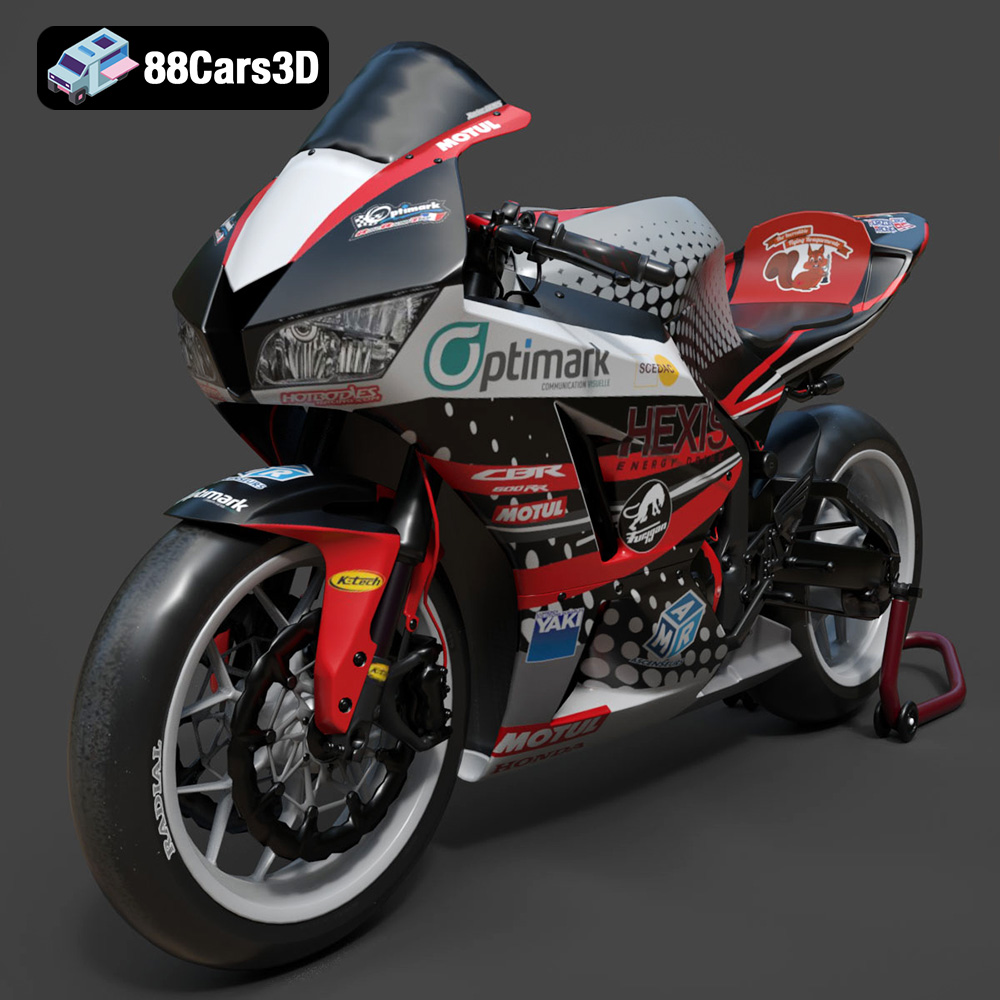
A prime example of such a meticulously crafted asset is the Honda CBR600RR 3D model, available on 88cars3d.com. This model encapsulates the spirit of the legendary supersport motorcycle with an extraordinary level of detail and technical optimization, making it a versatile tool for a myriad of professional applications. It stands as a testament to what’s possible when expert craftsmanship meets digital innovation in the realm of 3D vehicle models.
The world of 3D modeling is rich with various file formats, each serving specific purposes and offering unique advantages. Understanding these formats is crucial for professionals to ensure seamless integration, optimal performance, and maximum versatility for their 3D automotive models. The Honda CBR600RR 3D model, for instance, is offered in a comprehensive range of formats, making it exceptionally adaptable for diverse projects.
The .blend format is the native file type for Blender, the popular open-source 3D creation suite. When you acquire a model in .blend format, you gain access to a fully editable Blender scene, complete with materials, textures, lighting, and any animation or modifiers applied. This is ideal for artists who primarily work within Blender, offering maximum flexibility for customization, rigging, and rendering. It allows for deep integration into Blender-specific workflows, leveraging its powerful Cycles or Eevee render engines, and making it perfect for bespoke modifications to the Honda CBR600RR model.
Autodesk’s Filmbox (.fbx) is arguably the industry-standard exchange format for 3D data. Its strength lies in its ability to store not just geometry, but also materials, textures, animations, skinning information, and even camera and light data within a single file. This makes it invaluable for transferring complex assets between different 3D applications like Maya, 3ds Max, and most critically, into real-time game engines such as Unreal Engine and Unity. For a 3D vehicle model like the Honda CBR600RR, an .fbx file ensures that all elements – from the rotating wheels to the suspension – are correctly imported and ready for a game pipeline, maintaining critical data integrity across diverse software platforms.
Wavefront OBJ (.obj) is one of the oldest and most widely supported 3D formats. It’s a universal geometric data format that describes the vertices, faces, normals, and UV coordinates of a model. While it typically stores only mesh geometry, it can reference external material definition files (.mtl) for basic color and texture information. The .obj format is excellent for static meshes and cross-software compatibility, serving as a reliable fallback when other formats might present issues. It’s a go-to for ensuring the raw geometric data of the Honda CBR600RR is accessible in virtually any 3D software.
The GL Transmission Format Binary (.glb) is the binary version of the glTF (Graphics Language Transmission Format) standard. Optimized for the web and real-time display, .glb packs all necessary data – geometry, materials, textures, and even animations – into a single, compact file. This format is a game-changer for AR/VR applications, online product configurators, and displaying 3D models directly in web browsers. Its efficiency and single-file nature make it perfect for quickly showcasing the Honda CBR600RR in an immersive virtual showroom or a mobile augmented reality experience without complex loading procedures.
Stereolithography (.stl) is the foundational file format for 3D printing. It represents a 3D model’s surface as a collection of triangular facets, completely devoid of color, texture, or animation information. For designers looking to bring the Honda CBR600RR into the physical world, the .stl format is indispensable. It requires the model’s geometry to be “manifold” (watertight), ensuring it can be correctly interpreted by 3D printers. While simple, its ubiquity in additive manufacturing makes it crucial for hobbyists and professionals alike to physically manifest their digital creations.
The Polygon File Format (.ply) is another versatile format capable of storing a wide range of data, including vertices, faces, normals, color, transparency, and even confidence values from 3D scanners. While less common for general artistic exchange than .fbx or .obj, .ply is particularly useful in scientific applications, reverse engineering, and CAD/CAM workflows where precision mesh data capture is paramount. It allows for highly detailed and often raw 3D scan data to be retained, which can be valuable for analytical purposes related to the vehicle’s form.
While not a standalone file format in the same vein as .fbx or .obj, the inclusion of .unreal signifies an asset that is pre-packaged and specifically optimized for direct use within Unreal Engine. This often means the asset comes as an .uasset file, or an .fbx that has been meticulously prepared with Unreal-specific material setups, collision meshes, LODs (Levels of Detail), and pivot points correctly configured. For game developers using the Honda CBR600RR 3D model, this translates to significant time savings, allowing for a drag-and-drop integration into their projects, with materials and textures typically ready to render within the engine’s real-time environment, boosting efficiency in game development.
The .max format is the native file type for Autodesk 3ds Max, a leading software for 3D modeling, animation, and rendering, especially prevalent in architectural visualization and high-end automotive rendering. An asset provided in .max format offers the full flexibility of the original project file, including all scene data, complex modifiers, render settings, lights, cameras, and potentially V-Ray or Corona-specific materials. For studios heavily invested in 3ds Max, this format allows for advanced manipulation, animation sequences of the Honda CBR600RR, and the creation of stunning, photorealistic renders with complete creative control.
Creating a truly exceptional 3D vehicle model like the Honda CBR600RR requires a profound understanding of both artistic principles and technical execution. It’s a meticulous process where every decision, from initial reference gathering to final texture application, impacts the model’s overall quality and utility.
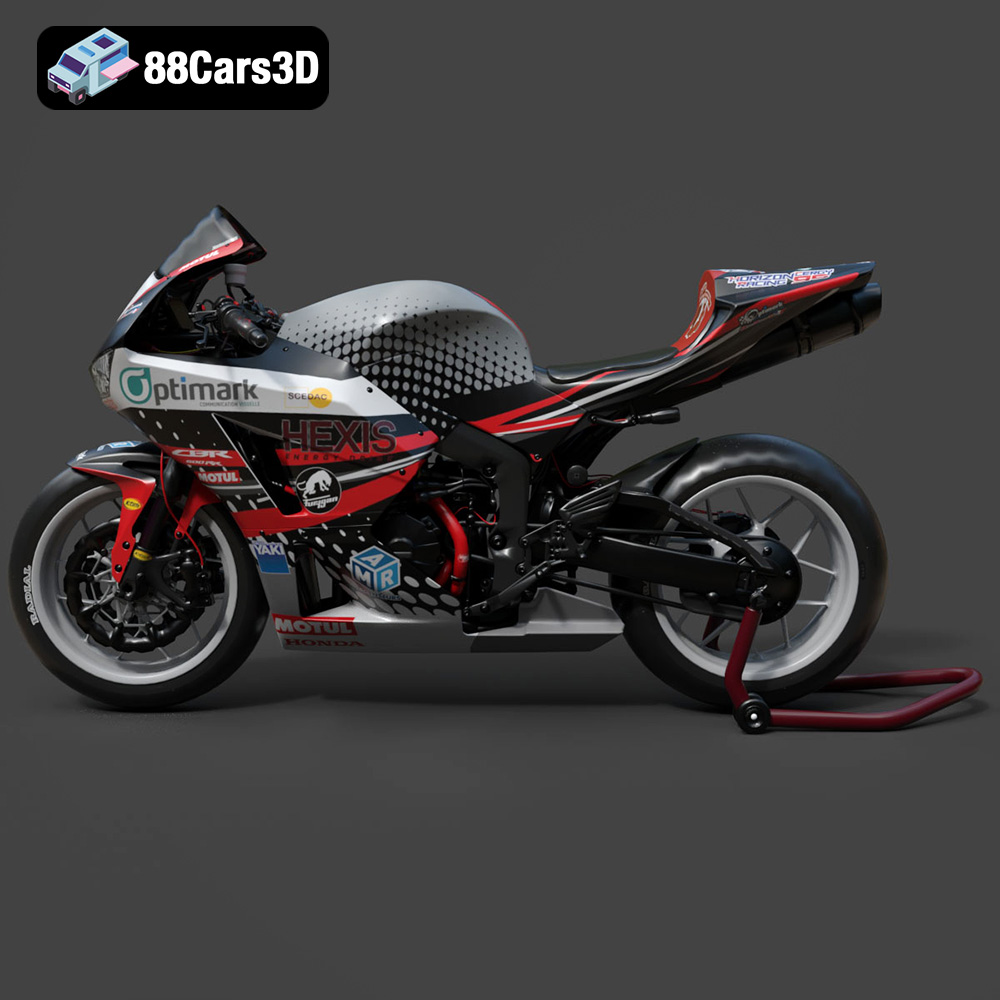
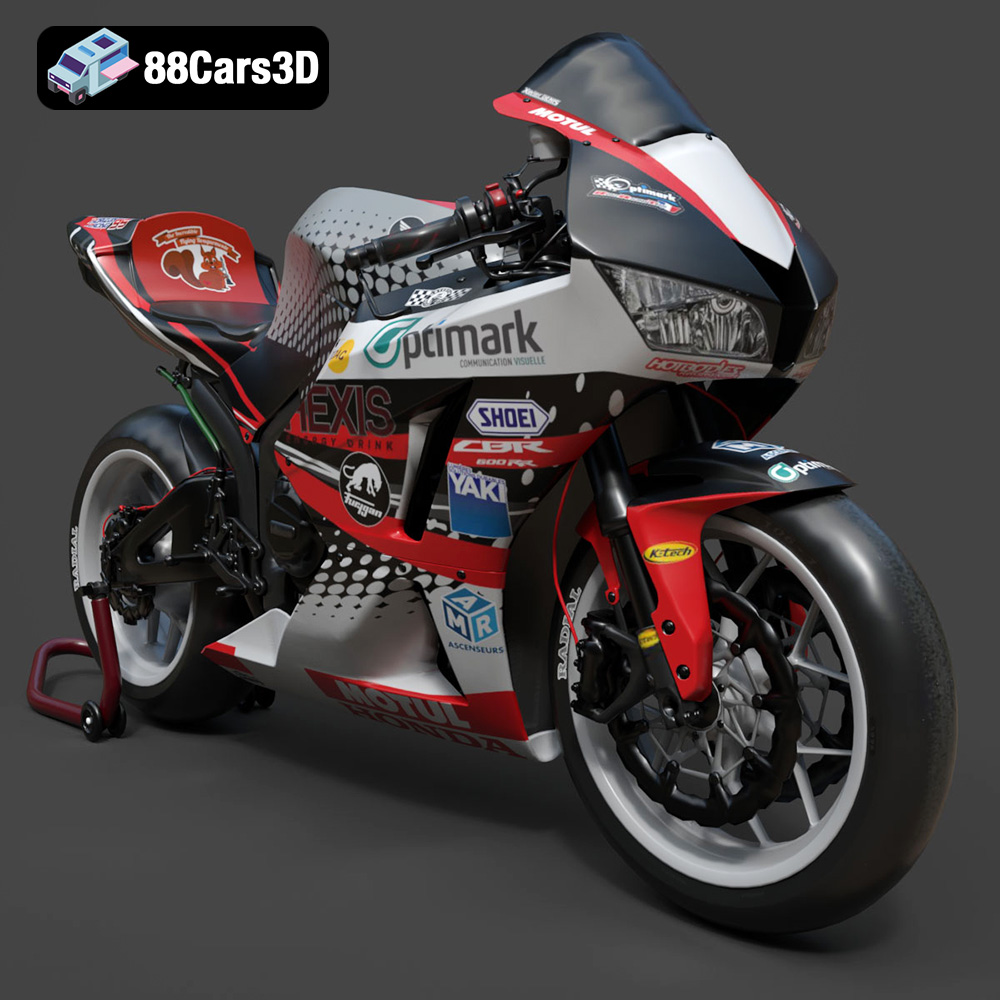
The foundation of any realistic 3D vehicle model lies in its authenticity. For the Honda CBR600RR, this means going beyond surface-level aesthetics. Artists delve into blueprints, technical diagrams, and countless reference photographs to accurately reproduce every curve, vent, and component. The aerodynamic fairings, the iconic center-up under-seat exhaust system, the distinctive dual headlights, and the aggressive stance that defines Honda’s performance lineage must be precisely translated into 3D space. This attention to detail extends to the meticulously modeled inline-four engine casing, the precision-cast alloy wheels, and the fully detailed inverted front fork suspension, ensuring that the digital model is a faithful replica of its real-world counterpart.
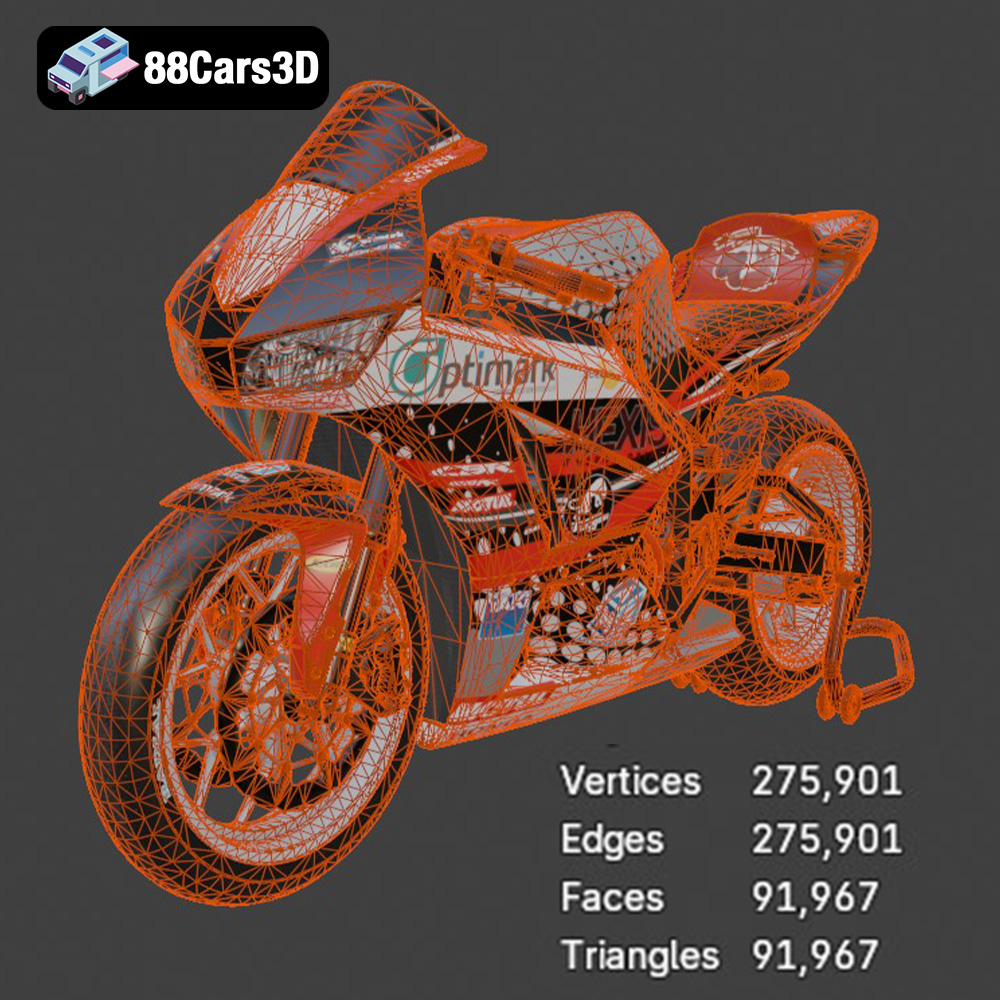
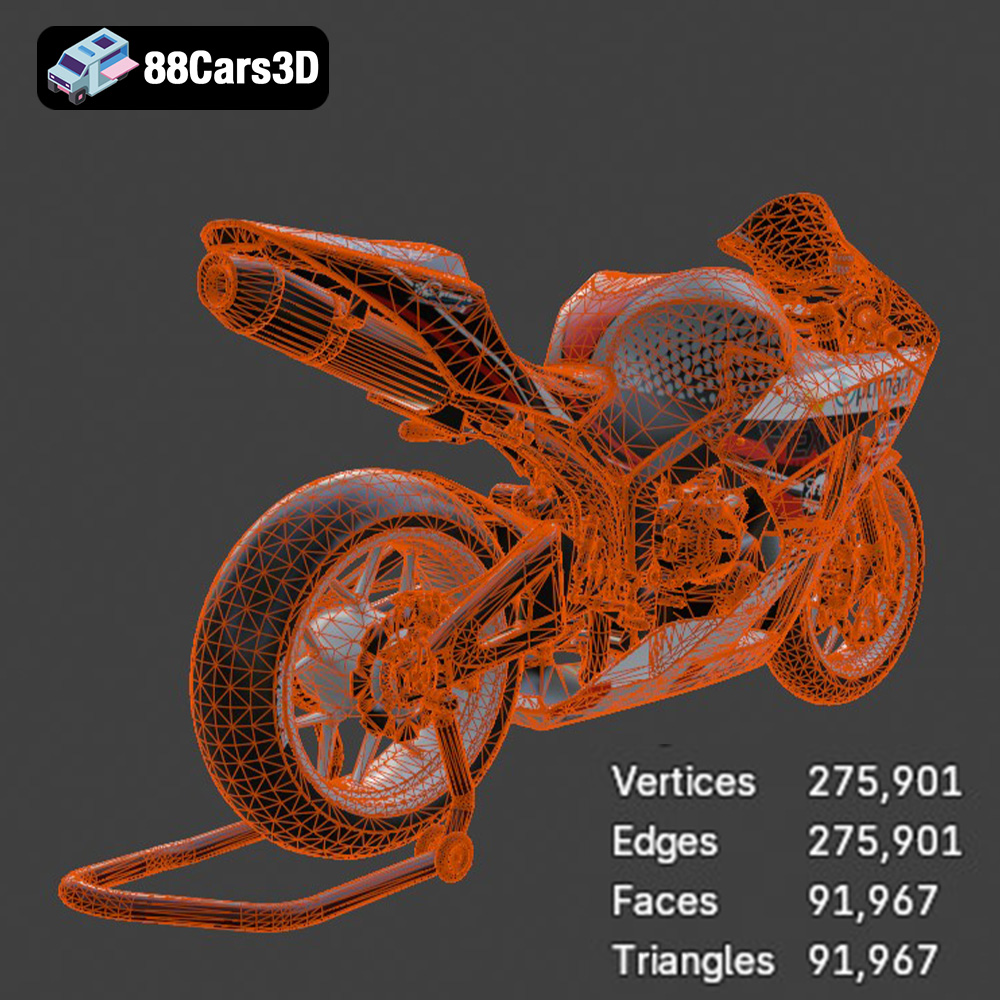
While visual accuracy is paramount, a professional 3D model must also be technically robust. This is where topology and optimization come into play. A well-constructed model utilizes clean quad-based topology, ensuring smooth deformations if animated and efficient rendering. The Honda CBR600RR 3D model, with its optimized 150,000 triangle count, strikes a perfect balance. This poly count is high enough to capture intricate details for high-end rendering yet optimized for game-ready performance in real-time engines like Unreal and Unity. Proper edge flow is crucial for seamless subdivision and accurate reflections, while efficient UV mapping ensures textures are applied without distortion. This careful optimization means the model delivers exceptional realism without compromising rendering speed or framerates, making it a truly valuable game asset.
No 3D model is complete without realistic materials and textures. High-fidelity models employ Physically Based Rendering (PBR) workflows, where materials react to light in a way that mimics real-world physics. This includes meticulously crafted metallic paint finishes that reflect environments authentically, rubber textures for the track-ready tires, brushed metal for engine components, and clear glass for the aerodynamic windscreen and instrument cluster. The iconic center-up under-seat exhaust system, for example, features realistic tailpipe texturing, adding to the overall believability. These details, combined with high-resolution texture maps (diffuse, normal, roughness, metallic, ambient occlusion), elevate the model from a simple mesh to a photorealistic digital asset, suitable for even the most demanding automotive rendering projects.
The versatility of a well-engineered 3D model is its greatest asset. The Honda CBR600RR 3D model is designed for seamless integration into a wide array of professional workflows, offering significant advantages to developers, artists, and visualization specialists.
For game developers, the Honda CBR600RR 3D model is a dream come true. Its optimized 150,000 triangle count and game-ready status make it ideal for open-world games, high-octane racing titles, and motorcycle driving simulators. Crucially, the model features a proper pivot setup for steering, wheel rotation, and suspension travel, which is essential for realistic vehicle physics and animation within game engines. The inclusion of an .unreal package signifies that the asset is configured for direct import into Unreal Engine, often with pre-set materials and collision, drastically reducing setup time. Similarly, its .fbx format ensures easy integration into Unity, allowing developers to focus on gameplay mechanics rather than extensive asset preparation, making it a premium game asset for real-time environments.
Beyond games, the detailed Honda CBR600RR model excels in rendering and visualization projects. Using software like 3ds Max (with the included .max file) or Blender (with the .blend file), artists can place the motorcycle into brand campaigns, luxurious architectural visualizations, or dynamic lifestyle scenes. Its high visual fidelity, accurate proportions, and realistic materials make it perfect for creating stunning marketing imagery, virtual photography, or cinematic animations. Whether showcased in a sleek studio lighting setup or integrated into an urban streetscape, the model provides an immediate focal point, enhancing the realism and appeal of any scene.
The rise of Augmented Reality (AR) and Virtual Reality (VR) presents another powerful application for high-quality 3D automotive models. The Honda CBR600RR, provided in the optimized .glb format, is perfectly suited for immersive virtual showrooms, interactive configurators, and mobile AR experiences. Imagine a user able to place a life-sized Honda CBR600RR into their living room via their smartphone, exploring every detail from the cockpit controls to the exhaust system in real time. The model’s balanced polycount ensures smooth performance on various devices, making it an excellent candidate for engaging, interactive product showcases that blur the line between digital and physical.
The journey of a 3D model doesn’t always end on a screen. For enthusiasts and professionals alike, the ability to bring a digital design into the physical world through 3D printing is a captivating prospect. The Honda CBR600RR 3D model, with its included .stl format, opens up this exciting avenue.
3D printing requires specific considerations to ensure a successful physical output. The .stl format, which represents the model’s surface as a collection of triangles, is the standard for additive manufacturing. For the Honda CBR600RR, it’s recommended to print at scales like 1:12, 1:18, or 1:24 to capture its intricate details. Factors such as layer height (0.04–0.12 mm for fine details), wall thickness (1.2–2.0 mm for structural integrity), and infill (20–30%) are critical for achieving a robust print. Resin printing is highly recommended for preserving the fine details of components like the handlebars, exhaust, and mirrors, which might be challenging for FDM printers. Additionally, print orientation, such as printing the frame angled, is vital for structural stability and minimizing support material.
Once printed, the physical model of the Honda CBR600RR undergoes a transformation through post-processing. This stage is where the raw print is refined to mimic the real motorcycle’s pristine finish. Techniques typically include sanding to smooth layer lines, priming to create an even surface for paint, and then applying authentic factory colors. Metallic finishes are often used to replicate the bike’s high-gloss paintwork, while detailed painting of smaller components like the engine, suspension, and brake calipers adds another layer of realism. The meticulous effort invested in post-processing can elevate a 3D-printed model from a simple replica to a museum-quality display piece, celebrating the engineering and design of the iconic supersport.
A truly professional 3D model offers more than just static beauty; it provides a canvas for creativity and adaptation. The Honda CBR600RR 3D model is built with customization in mind, ensuring it can be tailored to various project requirements and artistic visions.
One of the most powerful aspects of working with a high-quality 3D model is the ease with which its appearance can be altered. For the Honda CBR600RR, this means artists can effortlessly change body and tank colors to any desired shade – from replicating factory colors like Grand Prix Red to exploring custom finishes and unique liveries. The model’s material finishes can be adjusted between matte, gloss, metallic, or even carbon fiber textures, allowing for a wide range of aesthetic possibilities. Furthermore, tire textures can be swapped between track slicks for a racing scenario or street tread variants for a more everyday visualization. This flexibility ensures that the motorcycle can be presented in any context or branding requirement, enhancing its utility for diverse automotive rendering tasks.
Beyond static renders, the Honda CBR600RR 3D model is structured for dynamic animation. The model features separate components for wheels, suspension, and steering, all set up with proper pivots. This crucial technical detail allows animators to accurately simulate wheel rotation, suspension compression, and steering movements, bringing the motorcycle to life in motion. Whether for game cutscenes, cinematic presentations, or interactive simulations, the ability to rig and animate these individual parts with precision is invaluable. It enables the creation of realistic driving sequences, dynamic camera shots that follow the bike through turns, or detailed breakdowns of its mechanical components, truly leveraging its potential as a versatile game asset or visualization tool.
The digital landscape is continually evolving, and at its heart lies the demand for high-quality 3D assets that are both visually stunning and technically proficient. The Honda CBR600RR 3D model stands as a prime example of what a premium asset should embody: meticulous detail, optimized performance, and unparalleled versatility across a multitude of applications. From enhancing the realism of next-generation video games and crafting immersive AR/VR experiences to producing breathtaking automotive rendering visuals and even creating physical replicas through 3D printing, its value is undeniable.
Whether you’re a game developer seeking an authentic game asset, a visualization artist aiming for photorealism, or an enthusiast wanting to bring a legendary sportbike into a new dimension, a thoughtfully constructed 3D model like the Honda CBR600RR streamlines workflows and elevates creative output. It’s a testament to the art and engineering that goes into professional 3D car models, providing a foundation upon which countless digital narratives can be built. Explore the possibilities and discover the extensive range of high-quality 3D vehicle models available at 88cars3d.com to fuel your next groundbreaking project.
Experience the thrill of the track with our highly detailed 3D model of the Honda CBR600RR, a legendary middleweight supersport motorcycle celebrated for its racing heritage and razor-sharp handling. This model perfectly captures the aerodynamic fairings, the iconic center-up under-seat exhaust system, and the aggressive stance that defines Honda’s performance lineage. From the meticulously modeled inline-four engine casing to the signature dual headlights, every visual element is crafted to reflect the true spirit of this iconic sportbike. Constructed with professional-grade topology and sitting at an optimized 150,000 triangle count, this 3D model offers the perfect balance between high-end visual fidelity and game-ready performance. It is meticulously engineered for seamless integration into real-time engines, rendering software, and interactive media, providing exceptional realism without compromising rendering speed or framerates. Perfect for high-octane racing games, motorcycle driving simulators, immersive virtual showrooms, and dynamic lifestyle visualizations.
$39.99
.blend
.cbr600rr
.fbx
.glb
.honda
.max
.motorcycle
.obj
.ply
.rendering
.sportbike
.stl
.supersport
.unreal
game asset
game-ready
low-poly
motorcycle-3d-model
optimized
VR/AR