Get 20% OFF All Premium 3D & STL Models!

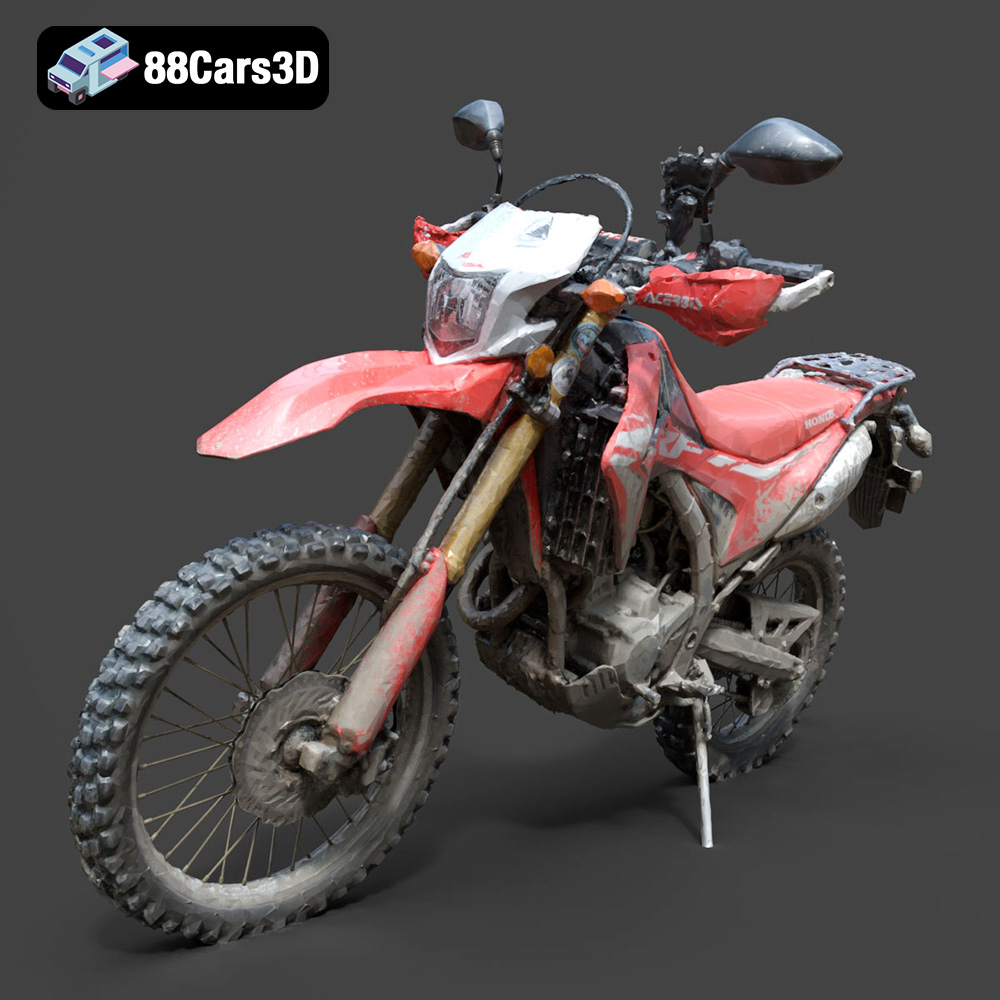
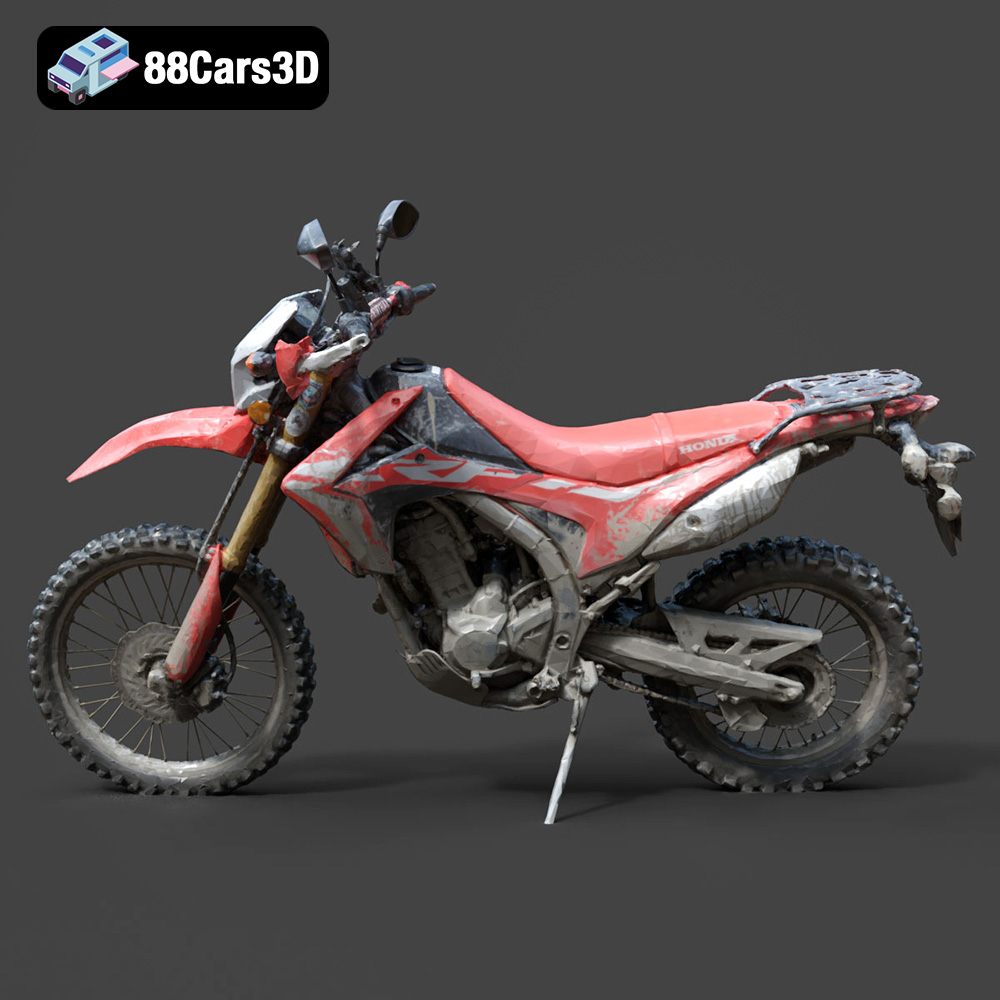
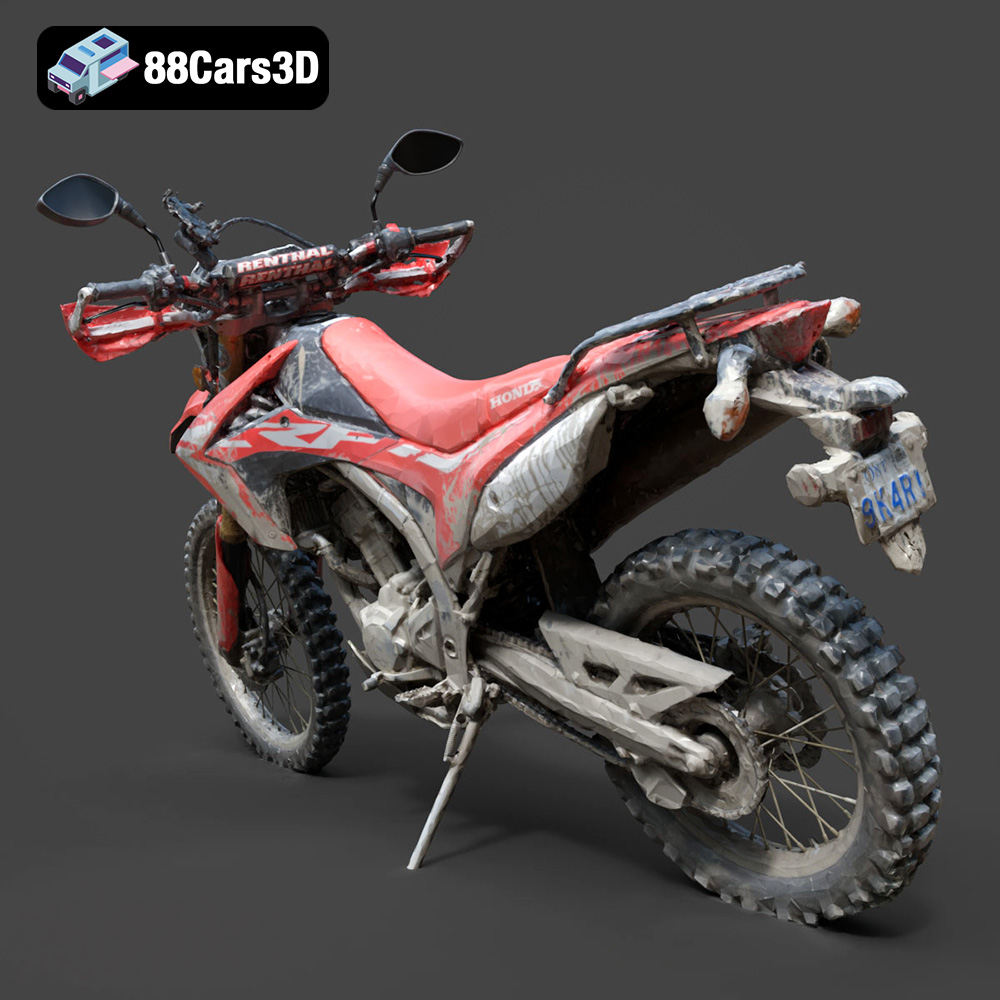
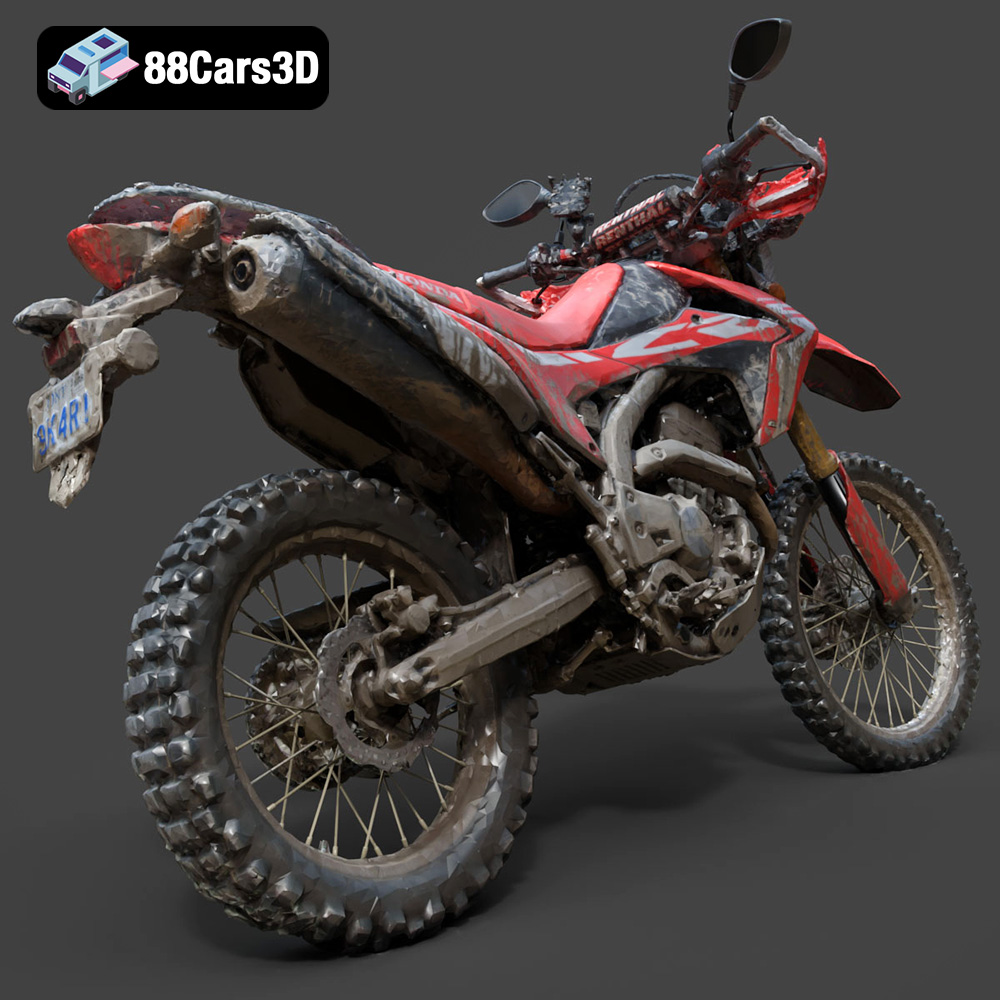
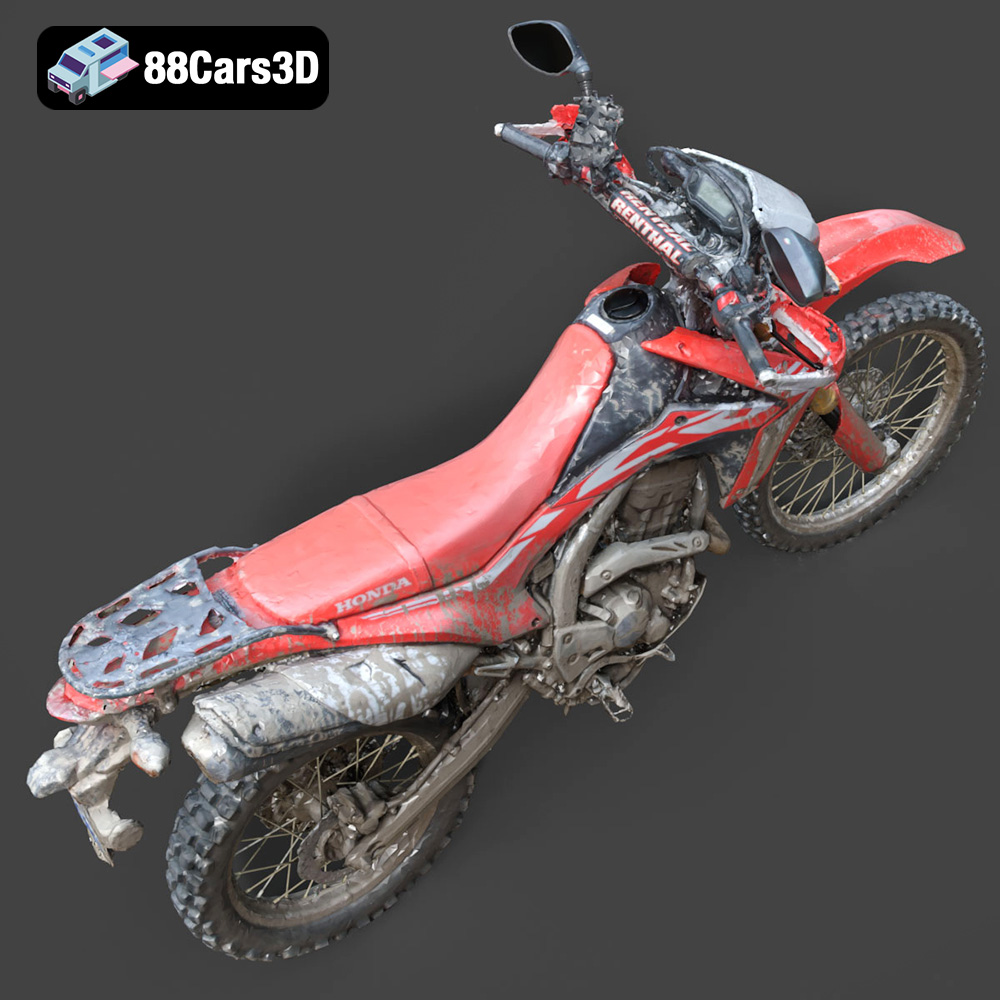
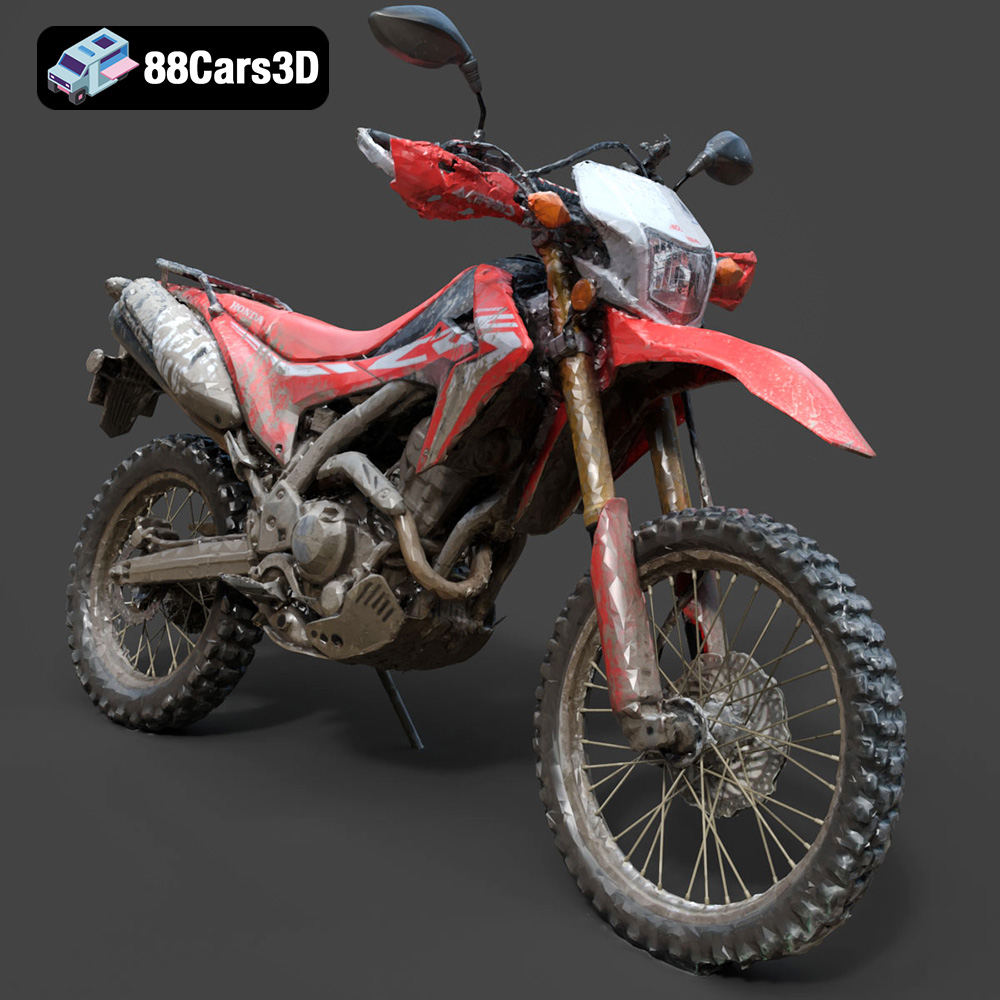
In the dynamic world of digital content creation, the demand for exceptionally detailed and technically robust 3D models has never been higher. From breathtaking cinematic sequences and immersive game environments to cutting-edge AR/VR experiences and precise engineering visualizations, the quality of a 3D asset dictates the success of a project. Automotive models, in particular, represent a pinnacle of this craft, requiring meticulous attention to form, function, and photorealism. Creators constantly seek assets that not only look stunning but also integrate seamlessly into diverse professional pipelines. This pursuit of excellence leads many to specialized marketplaces like 88cars3d.com, where artists and developers can discover models designed to meet the most demanding specifications. One such example of a truly professional-grade asset is the Honda Motorcycle-001 3D Model, an outstanding digital twin crafted for versatility and visual fidelity.
This particular model encapsulates the precise engineering, sleek aesthetics, and dynamic profile that digital artists strive for. Its clean geometry, accurate topological structuring, and realistic materials are hallmarks of an asset ready for any challenge, whether it’s a macro close-up showcasing intricate details or a wide dynamic shot within a sprawling digital landscape. Understanding the technical nuances behind such an asset, and how it fits into various industry workflows, is crucial for anyone serious about elevating their digital projects.
The versatility of a 3D model often hinges on its availability in various industry-standard file formats. Each format is designed with specific use cases and software ecosystems in mind, offering unique advantages for different stages of a production pipeline. The Honda Motorcycle-001 3D Model exemplifies this flexibility by being offered in a comprehensive suite of formats, ensuring maximum compatibility and utility.
The `.blend` file format is native to Blender, a powerful open-source 3D creation suite. When you acquire the Honda Motorcycle-001 3D Model in `.blend` format, you receive a fully editable Blender scene. This typically includes the model’s mesh data, materials configured for Blender’s Cycles or Eevee renderers, lighting setups, and often camera positions. This format is ideal for users deeply integrated into the Blender workflow, allowing for direct modification, animation, and rendering without any loss of data or conversion artifacts. It’s perfect for artists who want to dive deep into the model’s construction, experiment with shaders, or create custom animations directly within Blender.
The Filmbox (`.fbx`) format is an incredibly robust and widely adopted proprietary file format developed by Autodesk. It’s a favorite for its ability to store not just geometry, but also materials, textures, animations, skinning information, and even camera and lighting data. This makes `.fbx` an ideal choice for transferring complex 3D assets between different software applications and, crucially, into game engines like Unreal Engine and Unity. For the Honda Motorcycle-001 3D Model, the `.fbx` version is specifically designed to be “game-engine ready,” implying optimized mesh density, proper UV mapping, and possibly even pre-configured pivots or basic skeletal setups that simplify the import process into real-time environments.
The Wavefront Object (`.obj`) format is one of the oldest and most universally supported 3D file formats. It’s an excellent choice for transferring pure geometric data (vertices, normals, texture coordinates) between virtually all major 3D software packages. While `.obj` files can reference external `.mtl` (material) files, they generally do not store animation, rigging, or advanced shader information. This simplicity makes the `.obj` version of the Honda Motorcycle-001 3D Model a reliable “standard 3D model format” for cross-software compatibility, especially when the primary concern is the precise transfer of the mesh data itself for further texturing or setup in a new environment.
The GL Transmission Format Binary (`.glb`) is a compact, self-contained binary version of the `.gltf` format, specifically designed for efficient transmission and loading of 3D scenes and models by applications. It’s rapidly becoming the standard for displaying 3D models in augmented reality (AR), virtual reality (VR), and web-based applications due to its single-file structure (embedding textures and other assets) and optimizations for real-time rendering. The `.glb` version of the Honda Motorcycle-001 3D Model is “optimized for AR/VR and web-based visualization,” making it perfect for interactive product configurators, digital showrooms, or immersive experiences where performance and quick loading times are paramount.
Stereolithography (`.stl`) is the most common file format for 3D printing. It represents a 3D model as a series of connected triangles, essentially describing the surface geometry without color, texture, or material information. While not designed for rendering or animation, the `.stl` format for the Honda Motorcycle-001 3D Model is “suitable for 3D printing and prototyping.” This allows engineers, designers, or hobbyists to physically manifest the digital design, creating scale models or rapid prototypes for physical evaluation or display.
The Polygon File Format (`.ply`), sometimes known as the Stanford Triangle Format, is primarily used for storing 3D data from 3D scanners, CAD applications, or scientific data visualization. It can store various properties for each vertex (color, normals, transparency) and face (color, texture coordinates). The `.ply` version of the Honda Motorcycle-001 3D Model is described as a “detailed polygon mesh for analysis and visualization,” indicating its suitability for applications requiring high precision mesh data, possibly for engineering analysis, reverse engineering workflows, or detailed archival.
The `.unreal` file format, or more accurately, assets imported and packaged within an Unreal Engine project structure, signifies a pre-configured, engine-ready asset. This means the Honda Motorcycle-001 3D Model has likely been imported, had its materials set up (potentially using master materials), scaled correctly, and optimized within Unreal Engine itself. This “pre-configured for Unreal Engine use” option significantly accelerates development time for artists and developers working within Epic Games’ ecosystem, bypassing many of the initial setup steps.
Finally, the `.max` file format is the native format for Autodesk 3ds Max, a long-standing industry-standard software for 3D modeling, animation, and rendering. Similar to the `.blend` file, the `.max` version of the Honda Motorcycle-001 3D Model provides an “editable 3ds Max file for rendering and animation.” This means the full scene, including geometry, V-Ray or Corona materials, lighting, and camera setups, is available directly within 3ds Max, making it perfect for studios and professionals whose primary workflow revolves around this powerful software suite.
This diverse array of formats ensures that the Honda Motorcycle-001 3D Model from 88cars3d.com isn’t just a visually appealing asset, but a highly adaptable tool capable of integrating into virtually any professional pipeline, saving countless hours of conversion and optimization.
Automotive rendering is a specialized field that blends artistic vision with technical precision. Creating photorealistic images of vehicles requires an understanding of light, materials, and composition, elevated by powerful software and rendering engines. The Honda Motorcycle-001 3D Model provides an exceptional foundation for such endeavors.
The foundation of a convincing render lies in its materials. For a vehicle, this means accurately simulating everything from the metallic flakes in car paint to the subtle imperfections of rubber tires and the reflective qualities of chrome. Modern rendering relies heavily on Physically Based Rendering (PBR) workflows, where materials react to light in a way that mimics real-world physics. This involves using various texture maps: albedo (base color), roughness (how diffuse or glossy a surface is), metallic (how metallic a surface is), normal (for surface detail without extra geometry), and ambient occlusion (simulating contact shadows). The “realistic materials” promised by the Honda Motorcycle-001 3D Model ensure that these critical PBR textures are already in place, or the base shaders are accurately configured, allowing artists to achieve stunning realism with minimal effort.
Just as in real-world photography, lighting is paramount in 3D rendering. For automotive subjects, dynamic and compelling lighting can convey speed, elegance, or power. High Dynamic Range Images (HDRIs) are often used to simulate real-world environments and their illumination, providing natural reflections and nuanced lighting. Additionally, virtual area lights, spotlights, and fill lights are strategically placed to highlight key features, sculpt the form of the vehicle, and create dramatic shadows. Mastering these techniques, in conjunction with a well-modeled asset like the Honda Motorcycle-001, allows for the creation of breathtaking promotional renders and detailed product showcases that capture the imagination.
The rendering process doesn’t end when the image is calculated. Post-production in software like Adobe Photoshop or Affinity Photo is where the final polish is applied. This involves color grading to establish mood, adding subtle depth of field to draw attention, incorporating motion blur for a sense of speed, and integrating lens flares or glares for added realism. A clean, well-rendered base image from a high-quality 3D model like the Honda Motorcycle-001 is essential for effective post-production, providing the necessary data for compositors to elevate the image into a truly captivating visual.
Game development demands a unique blend of visual fidelity and performance efficiency. Real-time rendering environments have strict polygon budgets and optimization requirements to ensure smooth gameplay across various hardware. The Honda Motorcycle-001 3D Model is engineered to thrive in such demanding scenarios, positioning it as an ideal asset for cutting-edge game titles.
For a vehicle to perform optimally in a game engine, its geometry must be “clean” and efficiently structured. This means polygon counts are managed, unnecessary detail is avoided for distant views, and the topology (the flow of edges and faces) is conducive to real-time deformation and efficient rendering. High-quality game assets often utilize Level of Detail (LOD) systems, where multiple versions of the same model exist at varying polygon counts. When the vehicle is far from the camera, a low-polygon version is rendered; as it gets closer, a higher-polygon version takes its place, maintaining visual quality without sacrificing performance. The Honda Motorcycle-001 3D Model’s commitment to “uncompromised performance across platforms” suggests it adheres to these principles, offering a solid foundation for integration into game engines.
Unreal Engine and Unity are the two dominant platforms for game development, and their robust toolsets make them perfect for integrating high-fidelity vehicle assets. Importing the `.fbx` or the pre-configured `.unreal` version of the Honda Motorcycle-001 3D Model into these engines is a straightforward process. Once imported, artists can set up physically based materials using the engine’s node-based shader editors, configure collision meshes for accurate physics, and even implement advanced vehicle physics systems for realistic driving experiences. The “game-engine ready format” ensures that the model comes with appropriate UVs for texture mapping, potentially pre-rigged components, and optimized scale, significantly reducing development time.
Beyond static representation, game assets need to be interactive. For a motorcycle, this involves rigging the wheels to rotate, the suspension to compress, and the handlebars to turn. Clean topology, as found in the Honda Motorcycle-001 3D Model, is crucial for smooth mesh deformation during these animations. Developers can then script complex interactions, such as rider animation, damage systems, and custom visual effects, all building upon the solid foundation of a well-constructed 3D asset. Using such a reliable model from 88cars3d.com allows developers to focus on gameplay mechanics rather than basic asset creation.
The proliferation of augmented reality (AR) and virtual reality (VR) technologies has opened new frontiers for 3D models. These immersive platforms, along with advanced technical visualizations, demand assets that are not only accurate but also optimized for real-time interaction and specific display environments. The Honda Motorcycle-001 3D Model is perfectly suited for these emerging applications.
AR/VR development presents unique challenges, particularly regarding performance and user comfort. Models must be incredibly efficient to maintain high frame rates, which is essential for preventing motion sickness and ensuring a smooth, believable experience. File size, polygon count, and draw calls are all critical considerations. The `.glb` format, in which the Honda Motorcycle-001 is available, is specifically optimized for these environments. Its compact, single-file nature, combined with efficient texture compression and geometry, makes it ideal for web-based AR experiences (like product viewers on e-commerce sites) or standalone VR applications where assets need to load quickly and run smoothly on varied hardware. The model’s description as “optimized for AR/VR” directly addresses these specific technical requirements, ensuring developers have a reliable asset for immersive projects.
Beyond entertainment, 3D models serve as invaluable tools for technical visualization. Engineers use them for design review, marketing departments for product showcases, and training simulations for interactive learning. In these contexts, accuracy is paramount. The “meticulously constructed” nature of the Honda Motorcycle-001 3D Model makes it an “authoritative digital twin” that can be used for precise exploded views, assembly demonstrations, interactive repair manuals, or even computational analysis. The ability to render the model with engineering precision, highlighting specific components or internal mechanisms, adds immense value to technical documentation and educational content.
For immersive and technical applications, the ability to zoom in and examine “meticulously modeled individual components” is a key advantage. Whether a user in VR is inspecting the brake caliper or an AR application is overlaying maintenance instructions on a virtual engine, the level of detail must hold up under close scrutiny. This isn’t just about surface textures; it’s about the underlying geometry, ensuring that bolts, wires, and mechanical parts are accurately represented. The Honda Motorcycle-001 3D Model’s design with these “demanding professional projects” in mind guarantees that it delivers excellent visual fidelity even at the highest magnification levels.
In any professional production pipeline, efficiency is key. While custom modeling offers absolute control, the time and resource investment can be substantial. This is where pre-built, high-quality 3D models like the Honda Motorcycle-001 become indispensable, significantly streamlining workflows and allowing teams to focus on core creative tasks.
Developing a complex 3D asset like a detailed motorcycle from scratch is a time-consuming endeavor, requiring specialized skills in modeling, texturing, rigging, and optimization. For many projects, particularly those with tight deadlines or budget constraints, acquiring a “production-ready” asset is a game-changer. Models available on marketplaces like 88cars3d.com undergo rigorous quality checks, ensuring clean geometry, correct UVs, and optimized materials. The Honda Motorcycle-001 3D Model eliminates the need for artists to spend hundreds of hours on foundational asset creation, allowing them to jump directly into scene assembly, animation, or rendering, thereby accelerating the entire production cycle.
A truly professional asset isn’t just “ready to use”; it’s also “editable” and adaptable. The Honda Motorcycle-001 3D Model, with its “clean geometry and accurate topological structuring,” provides a perfect canvas for customization. Artists can easily modify components, apply custom liveries, switch out materials, or even re-rig parts for unique animation requirements. The organized structure of the model, often with clearly named parts and clean mesh flow, simplifies these modifications. This adaptability means that while it starts as a premium pre-built model, it can be seamlessly integrated and tailored to fit specific creative visions without compromising quality.
Consider the real-world applications: an automotive design studio needing to visualize a new color scheme or accessory; a game studio rapidly prototyping a new open-world environment; an advertising agency crafting a photorealistic commercial; or an educational institution developing interactive training modules. In each scenario, an asset like the Honda Motorcycle-001 3D Model can be the critical component that transforms a concept into a tangible, high-fidelity deliverable. It empowers smaller teams to achieve results comparable to larger studios by providing access to professional-grade digital assets without the prohibitive cost and time of creating them in-house. This strategic acquisition of assets frees up valuable creative time and resources for innovation elsewhere in the project.
The distinguishing characteristics of a truly professional 3D model lie not just in its overall appearance, but in the meticulous technical details that underpin its construction. The Honda Motorcycle-001 3D Model exemplifies this commitment to technical excellence, promising features that ensure its reliability and visual integrity across diverse applications.
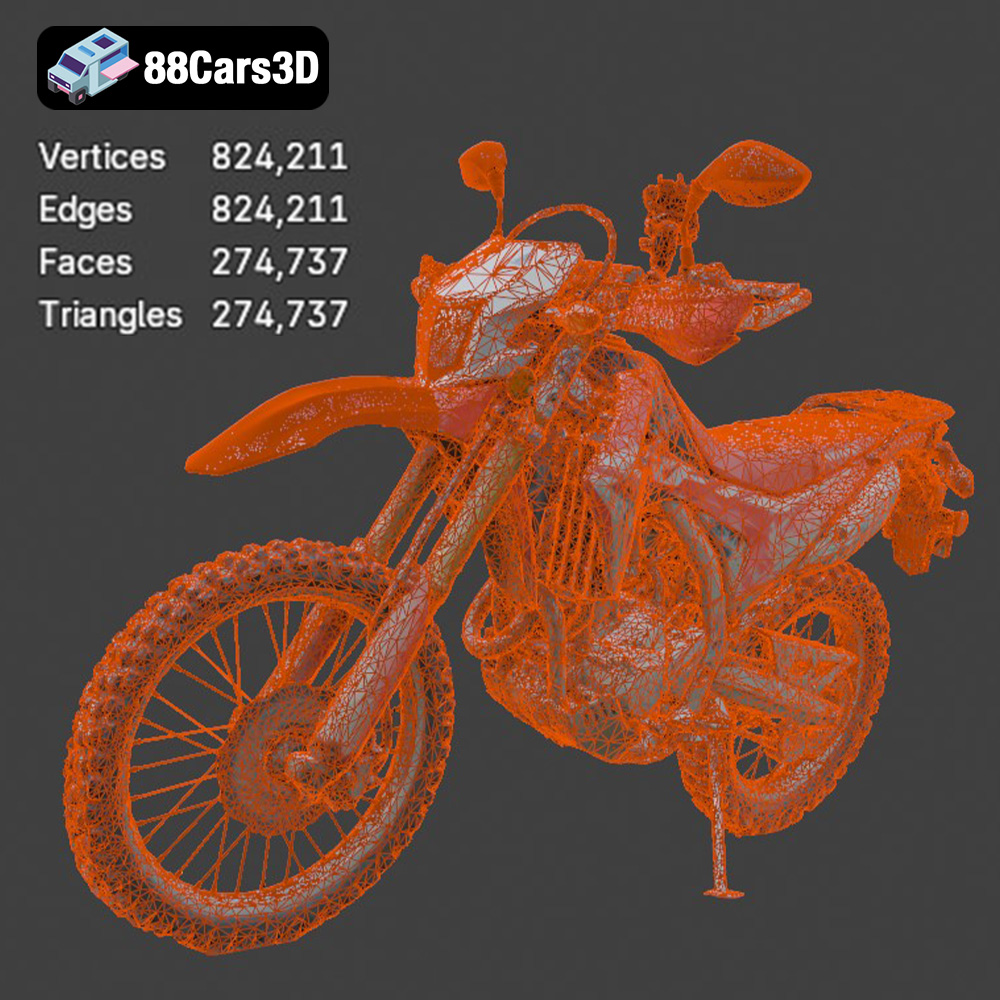
The description “clean geometry and accurate topological structuring” is more than just marketing jargon; it’s a testament to good 3D modeling practice. Clean geometry typically means an optimized polygon count that balances detail with performance, avoiding unnecessary triangles or complex n-gons. Accurate topology refers to the strategic placement of edge loops that follow the natural contours of the object, which is crucial for smooth subdivision (if required), proper deformation during animation, and artifact-free rendering. For the Honda Motorcycle-001, this attention to mesh quality ensures that the model can be seamlessly integrated into game engines without heavy optimization, and also holds up beautifully for high-resolution cinematic renders where even subtle mesh imperfections would be glaring. Quads-based modeling, a standard for production, would also be implied, allowing for easy mesh editing and subdivision.
The promise of “realistic materials” indicates that the model comes with a sophisticated shading network already in place. For a motorcycle, this would involve a complex interplay of various material types: a multi-layered clear-coat paint shader for the bodywork, realistic rubber for tires and grips, brushed or polished metals for engine components and chrome accents, transparent or translucent plastics for lights and windshields, and perhaps even some subsurface scattering for certain plastic elements. These materials are likely configured using PBR principles, making them transferable and adaptable to different renderers and engines. Whether in 3ds Max, Blender, or Unreal Engine, the base material setups provided with the Honda Motorcycle-001 3D Model will significantly reduce the time spent on look development, allowing artists to focus on fine-tuning rather than building shaders from scratch.
The ability of an asset to perform well in both “macro close-ups and wide dynamic shots” speaks volumes about its inherent quality and detail. This means that the model’s “meticulously modeled individual components” retain their integrity and visual fidelity even when viewed extremely closely. Bolts, wires, intricate engine parts, chain links, and dashboard details would all be accurately represented in 3D, not merely faked with normal maps. This level of detail is critical for product showcases, where every angle of the motorcycle might be scrutinized. Simultaneously, for wide shots, the model’s clean topology and optimized polycount ensure it integrates smoothly into a larger scene without bogging down the rendering engine. This scalability is a key indicator of a truly professional and versatile 3D model.
The landscape of digital content creation is constantly evolving, with increasing demands for realism, performance, and versatility. Whether for cinematic rendering, cutting-edge game development, or immersive AR/VR experiences, the foundation of any successful project is a high-quality 3D asset. The Honda Motorcycle-001 3D Model stands as a prime example of an asset meticulously crafted to meet these rigorous professional standards. Its clean geometry, accurate topology, realistic materials, and comprehensive suite of industry-standard file formats provide a robust and adaptable solution for a wide range of applications.
By understanding the technical nuances of file formats, the principles of photorealistic rendering, the optimizations required for real-time environments, and the specific needs of immersive technologies, artists and developers can make informed decisions that significantly enhance their workflows. Investing in premium assets like the Honda Motorcycle-001 3D Model from trusted marketplaces such as 88cars3d.com not only saves invaluable time and resources but also elevates the overall quality and impact of digital projects. This model is more than just a digital representation; it’s an authoritative tool designed to empower creators to push the boundaries of visual storytelling and interactive experiences.
Experience an exceptional level of realism with the Honda Motorcycle-001 3D model. Meticulously constructed to capture the exact engineering, sleek aesthetic, and dynamic profile of this renowned motorcycle, it serves as an authoritative digital twin for demanding professional projects.
This model features clean geometry and accurate topological structuring, guaranteeing seamless integration into a wide range of digital pipelines. Boasting realistic materials, a professional grade setup, and meticulously modeled individual components, it stands as a reliable asset for both macro close-ups and wide dynamic shots.
Engineered for versatility, this asset is an ideal choice for advanced game development, striking cinematic rendering, immersive AR/VR environments, and technical visualizations. It delivers excellent visual fidelity and uncompromised performance across platforms.
Available in a comprehensive suite of industry-standard file formats to suit any workflow:
Tags: .honda, .motorcycle001, .motorcycle, .bike, .twowheeler, .streetbike, .car3dmodel, .rendering, .simulation, .gameasset, .arvr, .blend, .fbx, .obj, .glb, .stl, .ply, .unreal, .max
$39.99
.arvr
.bike
.blend
.car3dmodel
.fbx
.gameasset
.glb
.honda
.max
.motorcycle
.motorcycle001
.obj
.ply
.rendering
.simulation
.stl
.streetbike
.twowheeler
.unreal