Get 20% OFF All Premium 3D & STL Models!

In the vibrant and ever-evolving world of digital content creation, the demand for high-quality 3D assets is insatiable. From photorealistic advertising campaigns to immersive virtual reality experiences and intricate game environments, the foundation of any compelling visual project lies in the fidelity and technical integrity of its 3D models. Automotive rendering and game development, in particular, require an exceptional level of detail and optimization to truly captivate audiences.
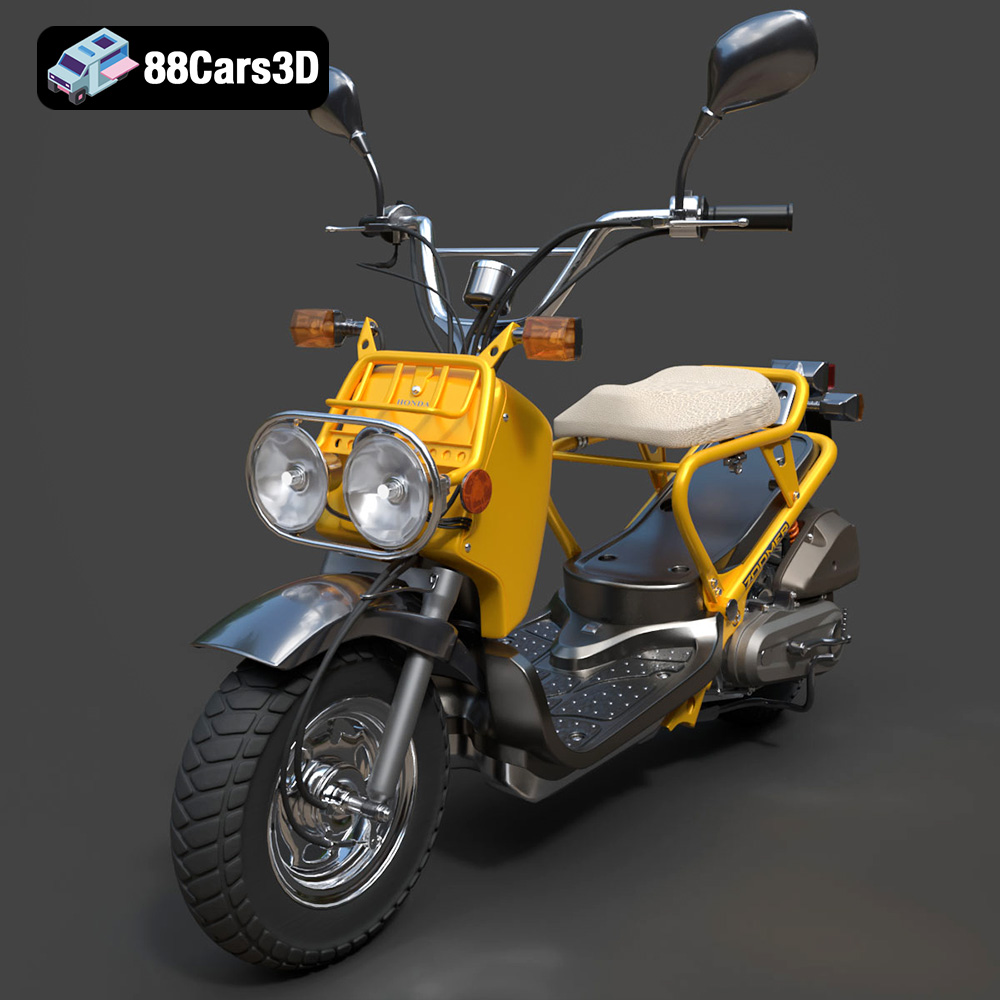
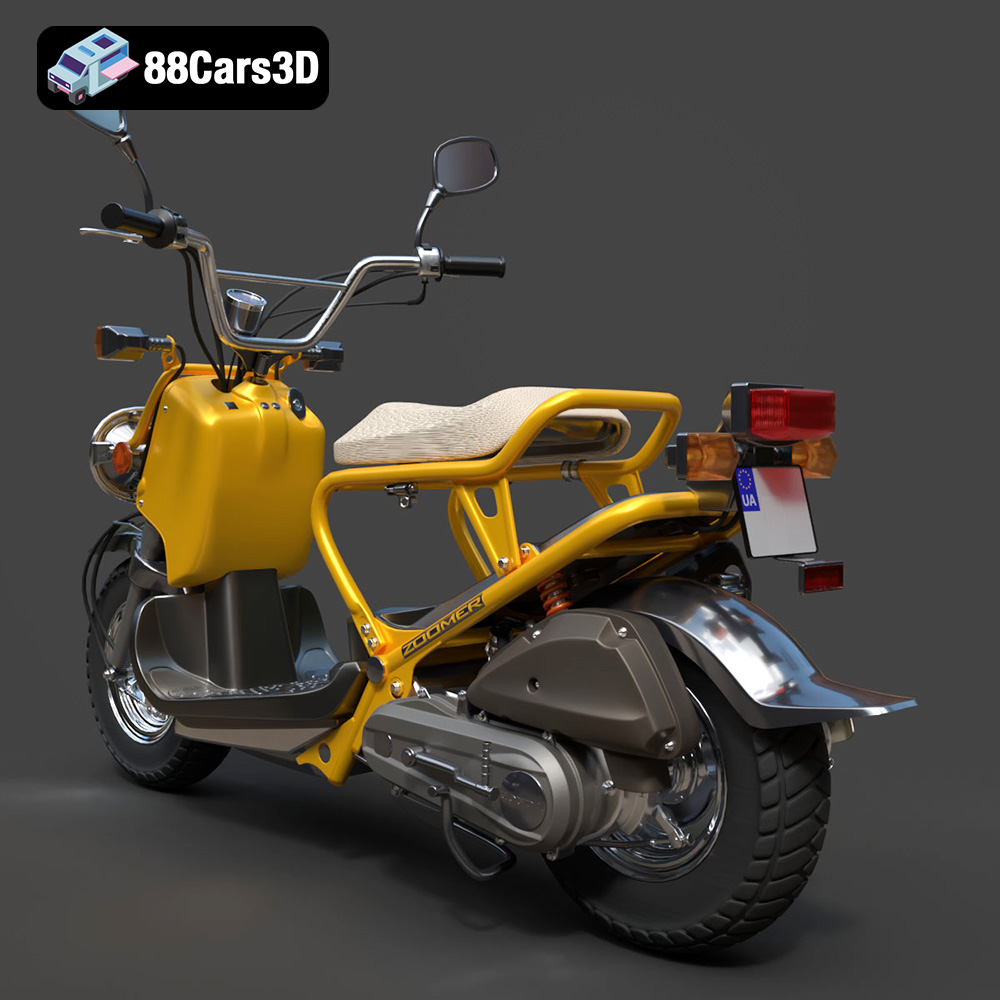
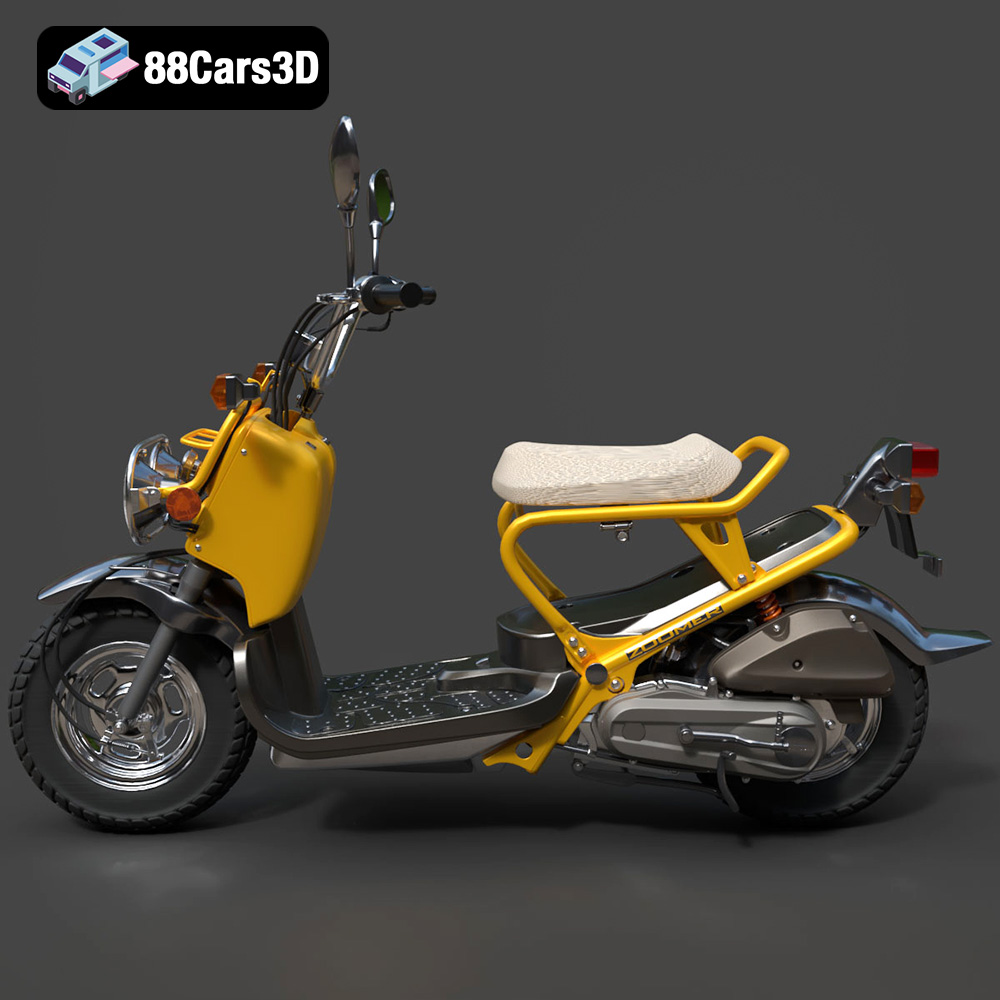
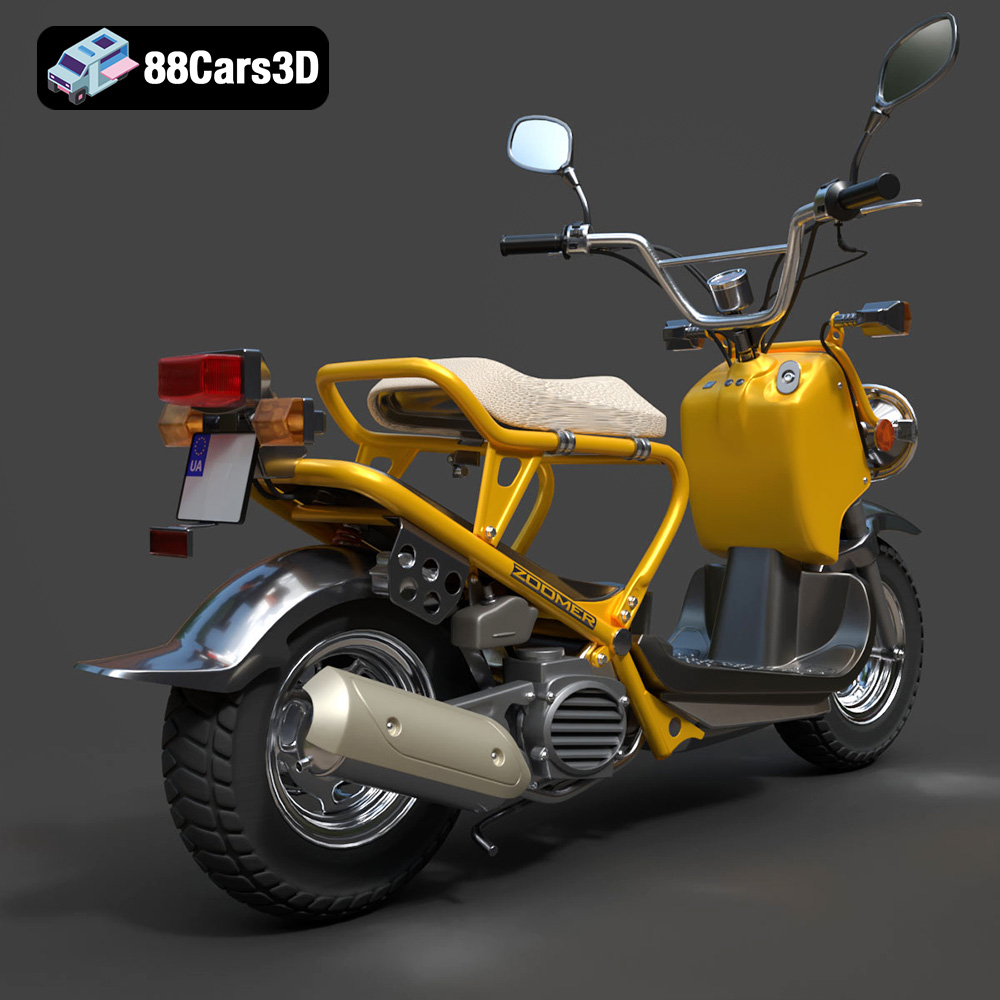
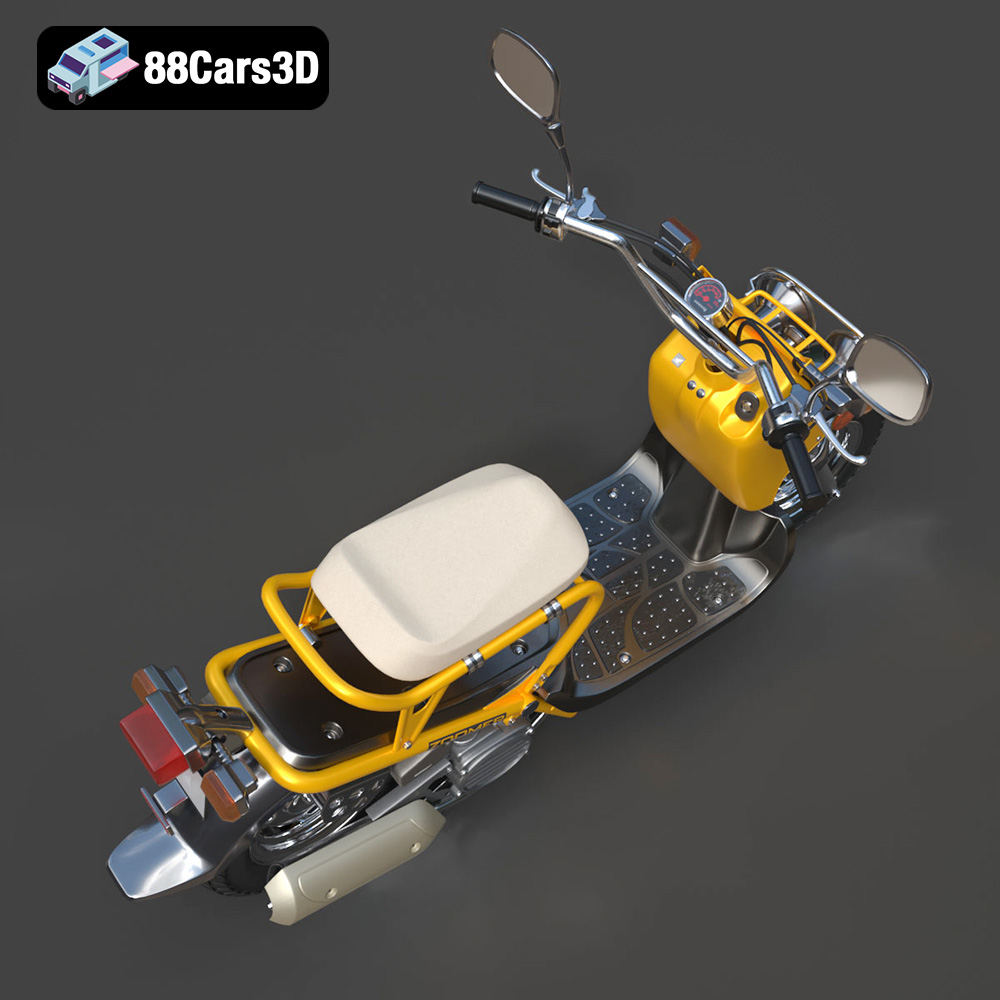
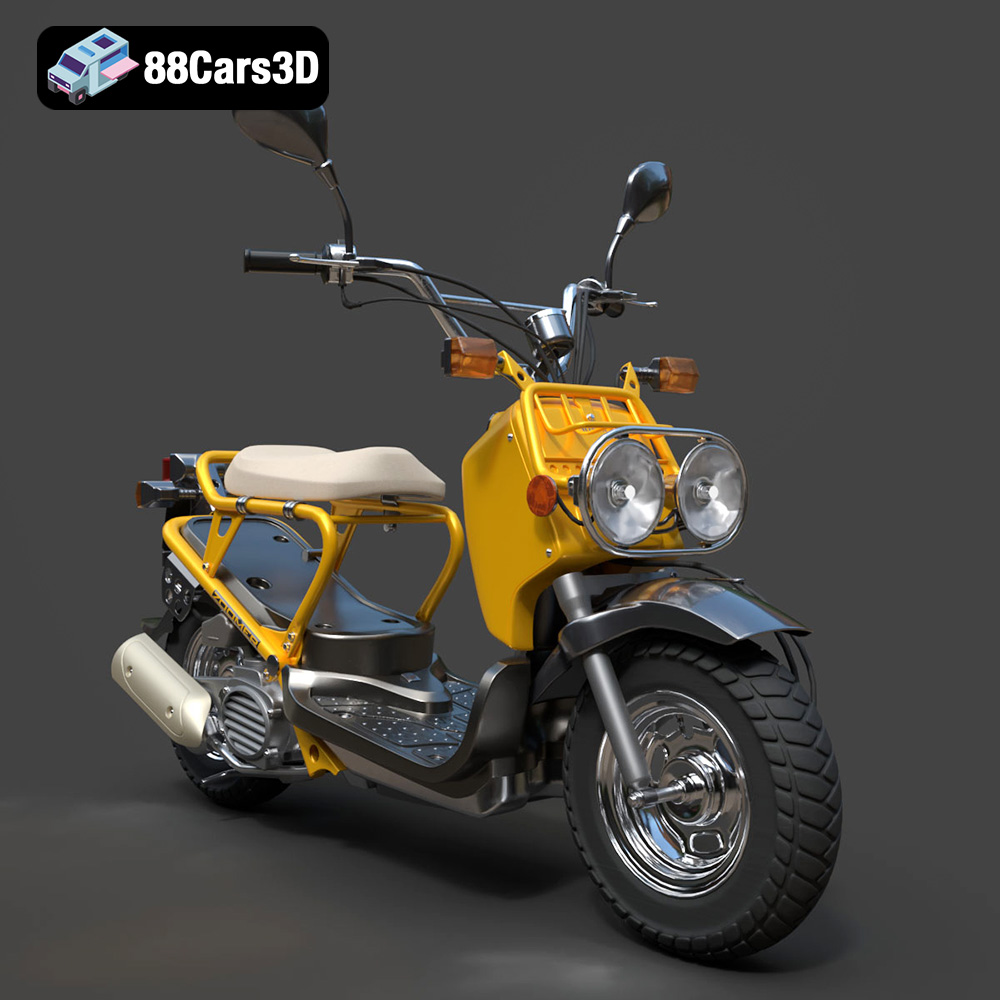
Today, we’re going to explore what makes a truly professional 3D car model invaluable, using a specific example that perfectly embodies these principles: the Honda Zoomer 50 2005 3D Model. This meticulously crafted asset from 88cars3d.com is more than just a digital representation; it’s a versatile tool designed to accelerate professional workflows across various industries. We’ll delve into the technical nuances of 3D asset creation, understand the critical role of different file formats, and illustrate how a high-fidelity model like the Honda Zoomer 50 can elevate your projects from concept to stunning reality.
The pursuit of realism in digital environments hinges on the quality of the 3D assets used. A poorly constructed model, regardless of how expertly textured or lit, will always fall short. For automotive rendering and game assets, where vehicles often take center stage, this principle is paramount. A high-quality 3D model isn’t just about aesthetics; it’s about technical precision, efficient geometry, and intelligent material application.
Automotive manufacturers, designers, and marketers rely heavily on 3D models for visualization, prototyping, and marketing. A model like the Honda Zoomer 50 2005 3D Model, with its “unparalleled precision” and “meticulously crafted” details, allows for accurate design reviews, realistic product showcases, and compelling advertising imagery. Every curve, component, and material choice needs to be faithfully represented. This fidelity translates into trust and authenticity, whether it’s for a virtual showroom or a product configurator. Clean geometry and structural components modeled with strict attention to detail ensure that the model behaves predictably under various lighting conditions and camera angles, making it a robust foundation for any visualization task.
Beyond visual accuracy, professional 3D models must also be optimized for performance. This is particularly crucial for game development and real-time AR/VR experiences, where frame rates and memory usage are critical constraints. A high-quality asset strikes a delicate balance between polygon count and visual detail, ensuring that the model looks great without bogging down the rendering engine. Effective UV mapping and material setup also contribute significantly, allowing for efficient texture streaming and realistic shader application. The Honda Zoomer 50 2005 3D Model, described as having “clean geometry” and “realistic materials,” exemplifies this balance, providing an asset that is both visually rich and performant across diverse applications.
One of the most critical aspects of working with 3D models is understanding the various file formats available and their specific use cases. The Honda Zoomer 50 2005 3D Model, available on 88cars3d.com, exemplifies a professional approach by offering a comprehensive suite of formats, each tailored for different stages of the production pipeline and distinct target applications. Choosing the right format is not merely a preference; it’s a technical decision that impacts workflow efficiency, compatibility, and ultimately, the success of your project.
The .blend format is the native file type for Blender, a powerful and widely used open-source 3D creation suite. When you acquire a .blend file for the Honda Zoomer 50, you’re not just getting the mesh; you’re getting a complete, editable Blender scene. This typically includes the model’s geometry, modifiers, materials, textures, lighting setup, and even animation data if present. For artists and studios primarily working within Blender, this offers maximum flexibility for further customization, rigging, animation, or integration into complex scenes. It’s the ideal format for iterative design and detailed refinement, allowing full control over every aspect of the model.
.fbx (Filmbox) is an industry-standard proprietary file format developed by Autodesk, renowned for its excellent support for 3D model data interchange between various software applications. It excels at preserving complex scene information, including meshes, materials, textures, bones, skinning, and animations. This makes it “game-engine ready” as stated for the Honda Zoomer 50, ideal for integration into Unreal Engine, Unity, and other real-time pipelines. Its robust nature and widespread support make it a go-to for collaborative projects and exporting animated assets. On the other hand, .obj (Wavefront OBJ) is a more universal, simpler format that primarily stores geometry (vertices, normals, UVs) and material references. While it doesn’t typically embed animation or scene data, its simplicity makes it incredibly compatible across virtually all 3D software. It’s perfect for static mesh transfer and is often used as a fallback or for projects where only the raw geometry and basic material assignments are needed, making it a “standard 3D model format compatible with all major software.”
.glb (GLB, GL Transmission Format Binary) is an increasingly vital format, particularly “optimized for AR/VR and web-based visualization.” It’s a binary version of glTF, designed for efficient transmission and loading of 3D scenes and models. A .glb file contains all necessary assets (geometry, materials, textures, animations) in a single, self-contained file, making it incredibly easy to share and display 3D models in web browsers, AR applications, and other real-time contexts. For physical prototyping or manufacturing, .stl (Stereolithography) is the undisputed champion. This format represents a 3D model as a series of connected triangles, defining its surface geometry without color or texture information. It is “suitable for 3D printing and prototyping” because its tessellated nature is directly compatible with the slice-based additive manufacturing processes. Finally, .ply (Polygon File Format or Stanford Triangle Format) is a precision mesh format primarily used for storing 3D data from 3D scanners, CAD software, or for scientific and engineering analysis. It can store a variety of properties including color, transparency, normals, and even confidence values for each vertex or face. For detailed analysis or high-precision visualization, a “detailed polygon mesh” like the one provided for the Honda Zoomer 50 in .ply format is extremely valuable.
For those deeply integrated into specific software ecosystems, dedicated formats offer unparalleled integration. The .unreal format, provided for the Honda Zoomer 50, signifies a model “pre-configured for Unreal Engine use.” This means the asset has likely been optimized, packaged, and potentially includes Unreal-specific materials, blueprints, or other assets, ready for drag-and-drop deployment within the engine. This significantly reduces setup time and ensures optimal performance and visual fidelity within Unreal’s rendering pipeline. Similarly, .max is the native file format for Autodesk 3ds Max, a leading software for modeling, animation, and rendering. An “editable 3ds Max file” provides the same level of granular control and scene information as a .blend file does for Blender, but within the 3ds Max environment. This is crucial for studios or individuals who use 3ds Max as their primary tool for complex automotive rendering, architectural visualization, or high-fidelity animation projects, allowing direct manipulation of the model’s properties, scene setup, and render settings.
The true power of a versatile 3D asset like the Honda Zoomer 50 2005 3D Model lies in its adaptability across various professional pipelines. Thanks to its clean geometry, realistic materials, and diverse file format availability from 88cars3d.com, it can seamlessly integrate into demanding production environments, saving invaluable time and resources.
For game developers, the Honda Zoomer 50 2005 3D Model is a ready-to-use game asset. Its availability in .fbx and .unreal formats is a significant advantage. In Unreal Engine, the .unreal file can be imported directly, often with pre-configured materials and collision meshes, reducing the setup required for a fully functional vehicle. Developers can quickly integrate it into urban environments, racing games, or adventure titles. For Unity, the .fbx format is ideal, easily imported with textures and materials, allowing for quick setup of vehicle physics, interactive components, and integration into existing scenes. The model’s “clean geometry” ensures efficient rendering and good performance, crucial for maintaining high frame rates in interactive experiences. Whether populating a bustling city scene or serving as a rideable vehicle, this scooter model offers a strong foundation.
Photorealistic rendering is where the “unparalleled precision” of this 3D model truly shines. Using the .max or .blend files, artists can leverage the full power of renderers like V-Ray, Corona, Arnold (in 3ds Max), or Cycles, and Eevee (in Blender). The editable files provide access to all the underlying mesh data, allowing for custom material adjustments, advanced lighting setups, and even minor design tweaks if needed. Imagine the Honda Zoomer 50 positioned in a sun-drenched street scene, reflections glinting off its chrome, and subtle imperfections telling a story. These software packages allow for complex global illumination, volumetric effects, and detailed camera work to create stunning marketing visuals, product configurator assets, or cinematic sequences. The “realistic materials” included ensure a great starting point, saving artists hours of texture and shader development.
The burgeoning fields of Augmented Reality (AR) and Virtual Reality (VR) demand highly optimized, yet visually compelling 3D models. The Honda Zoomer 50 2005 3D Model, with its “glb” format, is perfectly suited for this. GLB is designed for efficient delivery and rendering in real-time AR/VR applications and web browsers. Artists can easily integrate the model into AR apps for product showcases, allowing potential buyers to visualize the scooter in their driveway, or into VR training simulations for mechanics. The model’s high fidelity combined with its optimization for real-time engines ensures a smooth and immersive user experience, making it a valuable asset for creating engaging interactive content.
The “professional quality construction” of a 3D model like the Honda Zoomer 50 is not accidental; it’s the result of diligent attention to fundamental technical principles. These core elements—geometry, UV mapping, and materials—are the bedrock upon which stunning digital visuals are built.
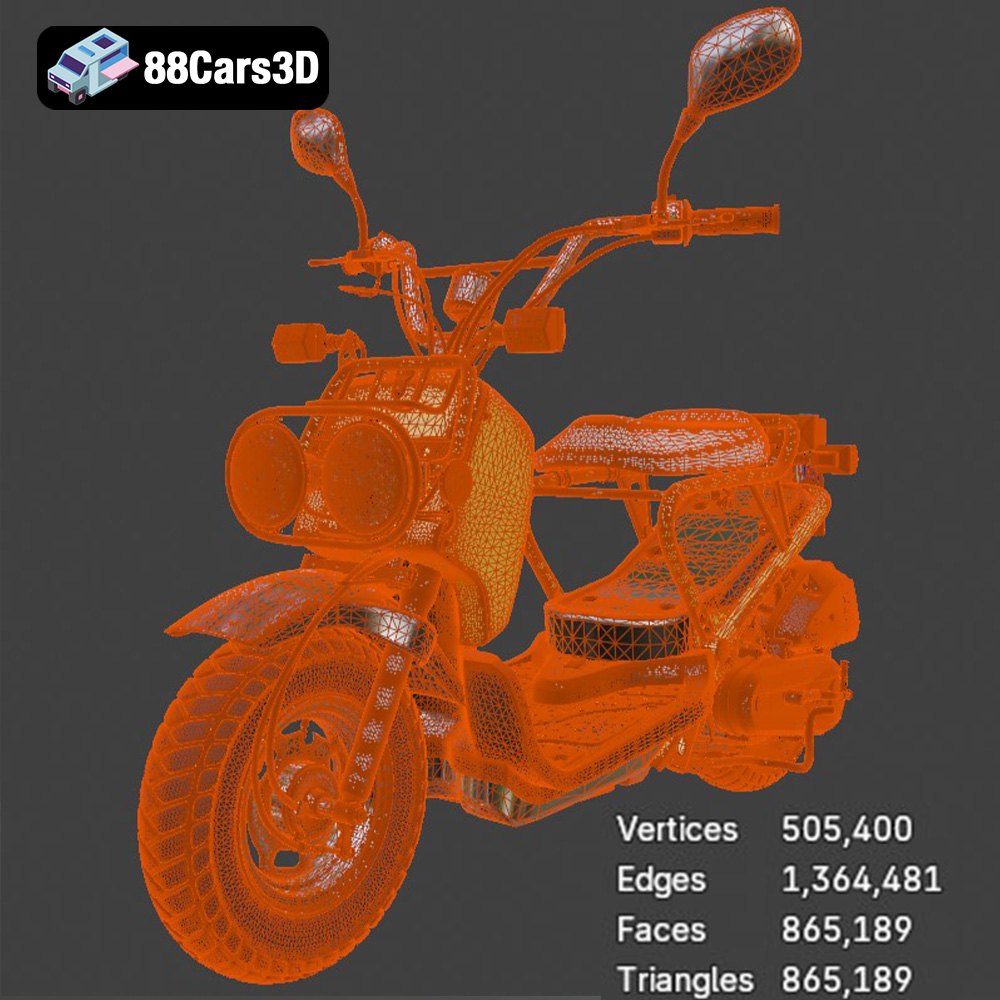
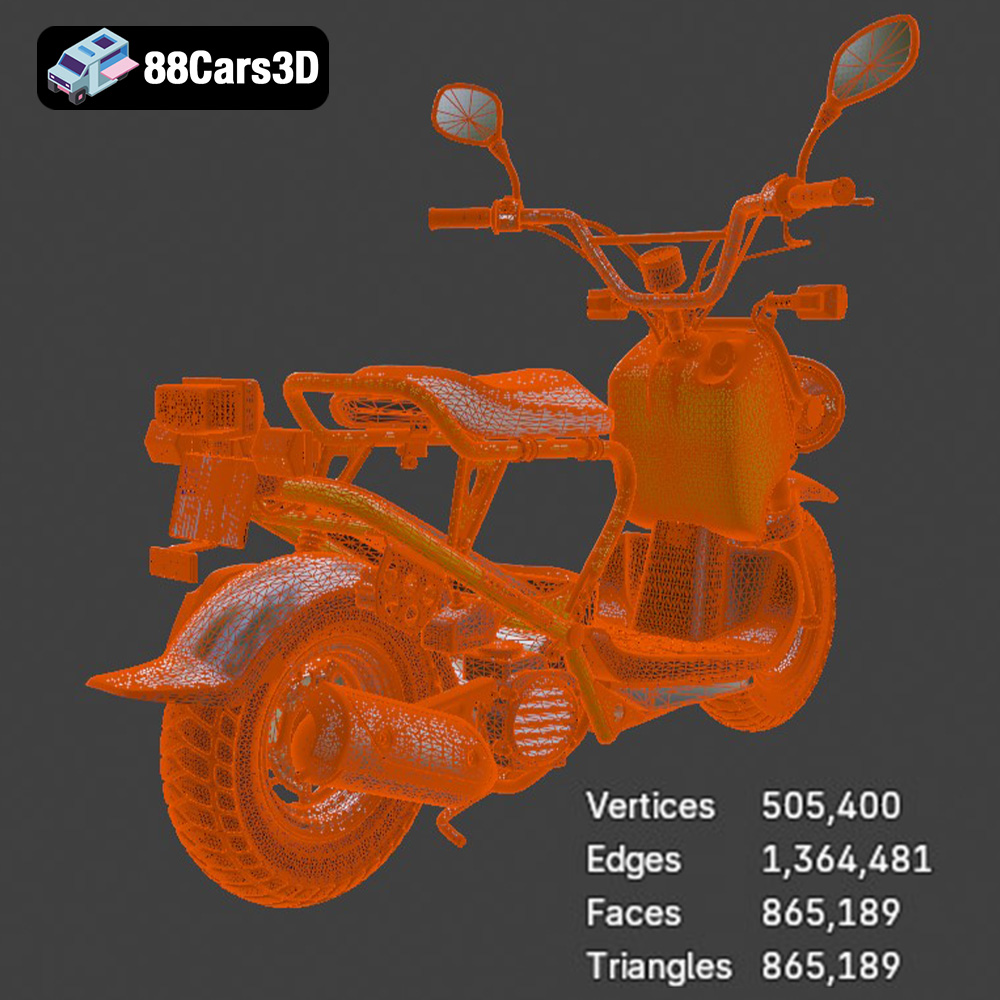
Clean geometry refers to a mesh that is well-structured, primarily using quads (four-sided polygons) and avoiding common issues like non-manifold geometry, ngons (polygons with more than four sides), or overlapping faces. The Honda Zoomer 50 2005 3D Model boasts “clean geometry,” which is critical for several reasons:
UV mapping is the process of flattening a 3D model’s surface into a 2D space, allowing a 2D image (texture) to be wrapped around it. Effective UVs are invisible to the end-user but are absolutely critical for a professional asset. A model like the Honda Zoomer 50 would feature:
“Realistic materials” are directly dependent on high-quality UVs to properly display their underlying texture maps.
Materials and shaders define how light interacts with the surface of the 3D model, determining its color, reflectivity, transparency, and overall appearance. The “realistic materials” of the Honda Zoomer 50 2005 3D Model imply a sophisticated setup, likely utilizing Physically Based Rendering (PBR) workflows. This includes:
A professionally built model like this ensures that these maps are correctly applied and calibrated across various rendering engines, providing consistent and stunning visual results straight out of the box.
The versatility and technical excellence of the Honda Zoomer 50 2005 3D Model translate directly into tangible benefits across numerous industries. Its “diverse applications, including game development, rendering, AR/VR experiences, and visualization” highlight its broad utility.
Consider a hypothetical scenario where Honda is launching a retro marketing campaign, or an aftermarket parts supplier wants to visualize custom accessories for the Zoomer 50. Instead of expensive physical photoshoots, a high-quality 3D model from 88cars3d.com becomes the cornerstone. The Honda Zoomer 50 2005 3D Model could be rendered in various virtual environments – bustling city streets, serene beach roads, or minimalist studio setups – to generate a full suite of marketing images and animations. Designers could quickly swap out colors, add custom decals, or visualize accessories in real-time, greatly accelerating the product development and marketing cycle. This efficiency and flexibility are precisely why professional automotive rendering relies on such assets.
Beyond marketing, realistic 3D models are invaluable for training and simulation. Imagine a mechanic training program where technicians can virtually disassemble and reassemble the Honda Zoomer 50, learning its internal components and repair procedures in a risk-free digital environment. Or a traffic simulation where the scooter model populates virtual roads, contributing to realistic traffic flow analysis and urban planning studies. The model’s “structural components modeled with strict attention to detail” means that its digital twin can accurately represent real-world mechanics, making it ideal for educational and analytical simulations. This is where a game asset quality model provides immense practical value.
For independent game developers or modding communities, sourcing high-quality, pre-made assets is a game-changer. Developing a vehicle from scratch, especially one with intricate details like the Zoomer 50, is a monumental task. The availability of a ready-to-use model in formats like .fbx or .unreal allows indie studios to focus their resources on unique gameplay mechanics and storytelling, rather than prolonged asset creation. A community mod for a popular open-world game, for instance, could integrate the Honda Zoomer 50 2005 3D Model to add a beloved, iconic scooter, enriching the game world without requiring extensive custom modeling work. This accessibility fosters creativity and significantly lowers the barrier to entry for aspiring creators.
Investing in a premium 3D model is a strategic decision for any professional. The quality and versatility offered by assets like the Honda Zoomer 50 2005 3D Model from 88cars3d.com provide significant advantages over creating assets in-house or relying on lower-quality alternatives.
Time is a valuable commodity in any production pipeline. A professionally crafted 3D model arrives pre-optimized, meaning it already possesses clean geometry, efficient UVs, and well-configured materials. This saves countless hours that would otherwise be spent on modeling, retopology, UV unwrapping, and material setup. For complex 3D car models, this can represent weeks or even months of development time. By acquiring a model like the Honda Zoomer 50, artists and developers can immediately proceed to integration, lighting, and final rendering, dramatically accelerating project timelines and reducing overheads. This efficiency directly impacts profitability and project turnaround.
High-quality 3D models bridge the gap between creative concepts and their tangible digital realization. They provide a precise and realistic starting point that inspires confidence in clients and collaborators. When presenting a visualization or game concept, having a detailed and accurate representation of a key element, such as an iconic vehicle, lends immediate credibility and professionalism. The “unparalleled precision” and “realistic materials” of the Honda Zoomer 50 2005 3D Model ensure that your digital projects will stand out, capturing the intended aesthetic and functionality with exceptional clarity. Exploring the diverse range of 3D car models at 88cars3d.com can provide the exact foundation your next project needs.
The landscape of digital content creation is increasingly reliant on the availability of meticulously crafted, technically sound 3D assets. The Honda Zoomer 50 2005 3D Model stands as a prime example of such an asset, offering unparalleled precision, clean geometry, and realistic materials tailored for diverse professional applications. Whether your project demands photorealistic automotive rendering, high-performance game assets, immersive AR/VR experiences, or detailed visualization, this model provides a robust and versatile foundation.
Understanding the nuances of various file formats – from the flexibility of .blend and .max to the universal compatibility of .fbx and .obj, and the specialized applications of .glb, .stl, .ply, and .unreal – is crucial for any serious 3D professional. The availability of the Honda Zoomer 50 in such a comprehensive array of formats from 88cars3d.com underscores its value as a truly adaptable and future-proof digital asset. By choosing high-quality, pre-optimized 3D car models, you not only elevate the visual fidelity of your projects but also streamline your workflows, save valuable time, and ultimately deliver superior results that captivate and engage your audience.
Discover the realistic Honda Zoomer 50 2005 3D Model, meticulously crafted to represent the iconic rugged scooter. This model delivers unparalleled precision, making it an excellent choice for detailed visualizations and dynamic projects. Key features include clean geometry, realistic materials, and professional quality construction. The structural components are modeled with strict attention to detail, ensuring seamless integration into varied environments. This 3D model is perfect for diverse applications, including game development, rendering, AR/VR experiences, and visualization. Whether used in a street scene simulation or a dedicated showcase, it provides exceptional results.
$39.99
.arvr
.blend
.car3dmodel
.fbx
.gameasset
.glb
.honda
.max
.moped
.motorcycle
.obj
.ply
.rendering
.scooter
.simulation
.stl
.unreal
.zoomer50