Get 20% OFF All Premium 3D & STL Models!

The automotive world has always been a crucible of innovation, where design meets engineering in a symphony of form and function. In the digital realm, this spirit of innovation is amplified, allowing designers and artists to push boundaries far beyond the constraints of physical manufacturing. High-quality 3D car models are the cornerstone of this digital revolution, serving as essential building blocks for everything from cinematic animations to immersive virtual realities.
Today, we delve into the intricate world of digital automotive assets, exploring how meticulously crafted models like the SMARANZA Mercedes Concept Electrical Motorcycle 3D Model are shaping the future of design, game development, and visualization. This stunning conceptual vehicle, a breathtaking blend of Mercedes-Benz luxury and next-generation electric mobility, exemplifies the precision and versatility demanded by modern digital pipelines. From its ultra-sleek fairing and futuristic LED lighting to its optimized triangle count and game-ready topology, this model offers a comprehensive case study in creating assets that excel across diverse professional applications. Join us as we explore the technical intricacies, practical workflows, and boundless possibilities unlocked by exceptional 3D car models.
When working with 3D car models, selecting the correct file format is crucial for ensuring compatibility, optimizing performance, and preserving data integrity across different software and platforms. Each format serves a specific purpose, offering unique advantages for various stages of the digital production pipeline. Understanding these differences is key to efficient and effective workflow management, especially when acquiring versatile assets like the SMARANZA Mercedes Concept Electrical Motorcycle 3D Model, which comes with a comprehensive suite of options.
The .blend format is Blender’s native file type, offering a complete and fully editable scene with all associated data. This includes not just the mesh geometry, but also materials, textures, lighting setups, cameras, animations, rigging, and even Grease Pencil drawings. For artists deeply integrated into the Blender ecosystem, a .blend file provides maximum flexibility for further customization and development. It’s ideal for projects where Blender is the primary DCC (Digital Content Creation) tool, allowing for full control over every aspect of the model and its environment. Technical details such as node-based materials, custom properties, and modifiers are all preserved, making it an excellent starting point for complex scene construction or animation tasks.
As Autodesk’s proprietary format, .fbx has become an industry standard for data exchange, particularly within game development and real-time visualization. It supports geometry, materials, textures, animations, and skeletal data, making it highly versatile. For engines like Unreal Engine and Unity, .fbx is often the preferred format due to its robust support for animation curves and hierarchical object structures. When importing game assets, an .fbx file ensures that pivots are correctly set, animation keyframes are preserved, and material slots are recognized. It’s the go-to choice for transferring animated characters, vehicles, and complex scenes between different software packages with minimal data loss, making it ideal for assets like our concept motorcycle destined for interactive experiences.
The .obj (Wavefront Object) format is one of the oldest and most widely supported 3D file formats. It is primarily used for transferring geometry data (vertices, normals, UV coordinates) and can reference external material (.mtl) files. While .obj does not natively support advanced features like animation, rigging, or complex material networks, its simplicity and widespread compatibility make it an excellent choice for basic mesh exchange between almost any 3D software. It’s particularly useful when you need a clean mesh that can be easily imported and re-textured or re-shaded in a new environment, serving as a reliable backbone for cross-software projects.
.glb (GL Transmission Format Binary) is the binary version of glTF, a royalty-free specification for the efficient transmission and loading of 3D scenes and models by applications. Optimized for web-based, AR, and VR applications, .glb bundles all assets (geometry, materials, textures, animations) into a single, compact file. This “all-in-one” characteristic makes it incredibly efficient for streaming and display in environments where quick loading times and minimal network requests are paramount. For showcasing 3D car models in browser-based configurators or integrating them into mobile AR experiences, .glb offers superior performance and ease of deployment.
.stl (Stereolithography) is almost exclusively used for 3D printing. It represents a 3D model as a series of connected triangles, describing only the surface geometry of an object without color, texture, or other advanced attributes. Its simplicity makes it universally compatible with 3D printers and slicing software. When preparing a 3D car model like the SMARANZA Mercedes Concept for physical fabrication, converting it to .stl is the essential first step, ensuring that the model is watertight and ready for additive manufacturing processes, allowing hobbyists and professionals to bring digital designs into the physical world.
The .ply (Polygon File Format) is often used in scientific and engineering applications, particularly for scanned data and point clouds. It can store a wider range of properties for each vertex, face, or edge, including color, transparency, and normal vectors, which are crucial for detailed analysis and reconstruction. While less common for general artistic asset exchange compared to .fbx or .obj, .ply provides a high level of precision and data integrity, making it valuable for CAD (Computer-Aided Design) workflows, reverse engineering, or when a highly accurate mesh representation is required.
While not a standalone file extension in the traditional sense, the term .unreal often refers to assets that are specifically prepared and optimized for direct import into Unreal Engine. This typically means an .fbx file that has been meticulously prepared with correct scaling, pivot points, material slots, and sometimes even pre-configured collision meshes, LODs (Levels of Detail), and blueprint functionalities. An “Unreal-ready” asset like the SMARANZA Mercedes Concept Electrical Motorcycle 3D Model minimizes setup time and ensures seamless integration, allowing developers to immediately drop the model into their scenes and begin working with its intended functionality and visual fidelity within the powerful real-time environment.
Similar to .blend for Blender, .max is the native project file format for Autodesk 3ds Max. It contains an entire 3ds Max scene, including all geometry, materials, textures, lights, cameras, animations, and modifier stacks. For users of 3ds Max, having the .max file provides the most comprehensive level of control and editability. It allows for non-destructive workflow adjustments, complex rigging, advanced lighting setups using renderers like V-Ray or Corona, and intricate animation sequences. Professionals utilizing 3ds Max for high-end automotive rendering and visualization will find the .max file indispensable for refining and customizing the SMARANZA Mercedes Concept to their exact project requirements.
The SMARANZA Mercedes Concept Electrical Motorcycle 3D Model isn’t just a collection of polygons; it’s a digital embodiment of visionary design, meticulously engineered for both aesthetic impact and technical performance. Every curve, every component, reflects a forward-thinking approach that blends iconic luxury with the demands of electric mobility and high-fidelity digital representation.
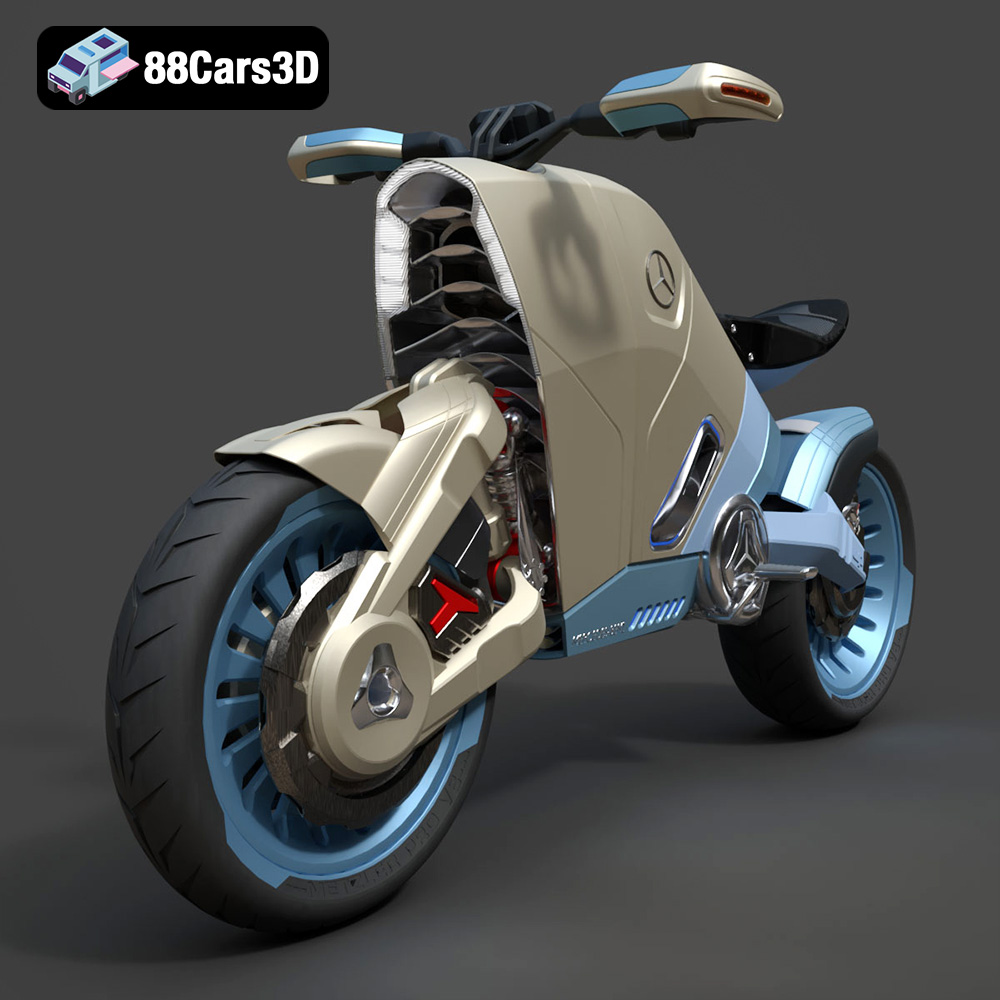
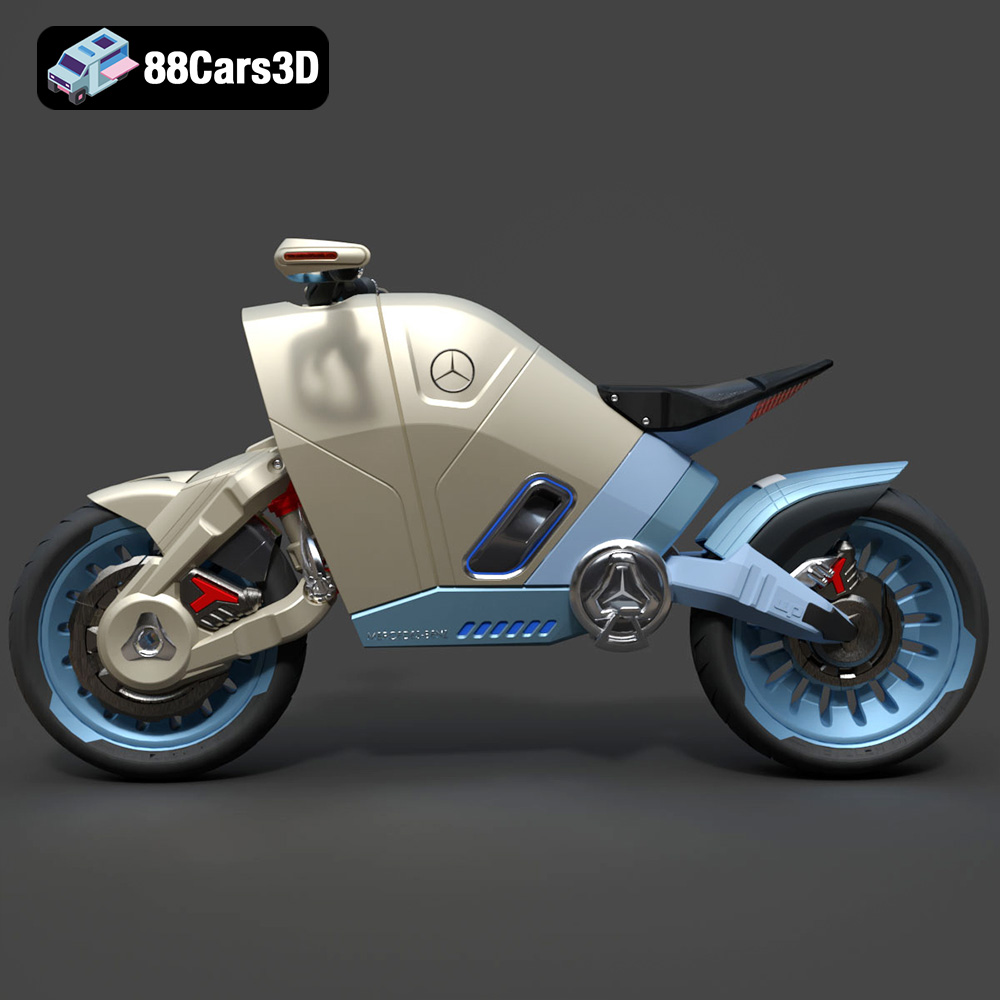
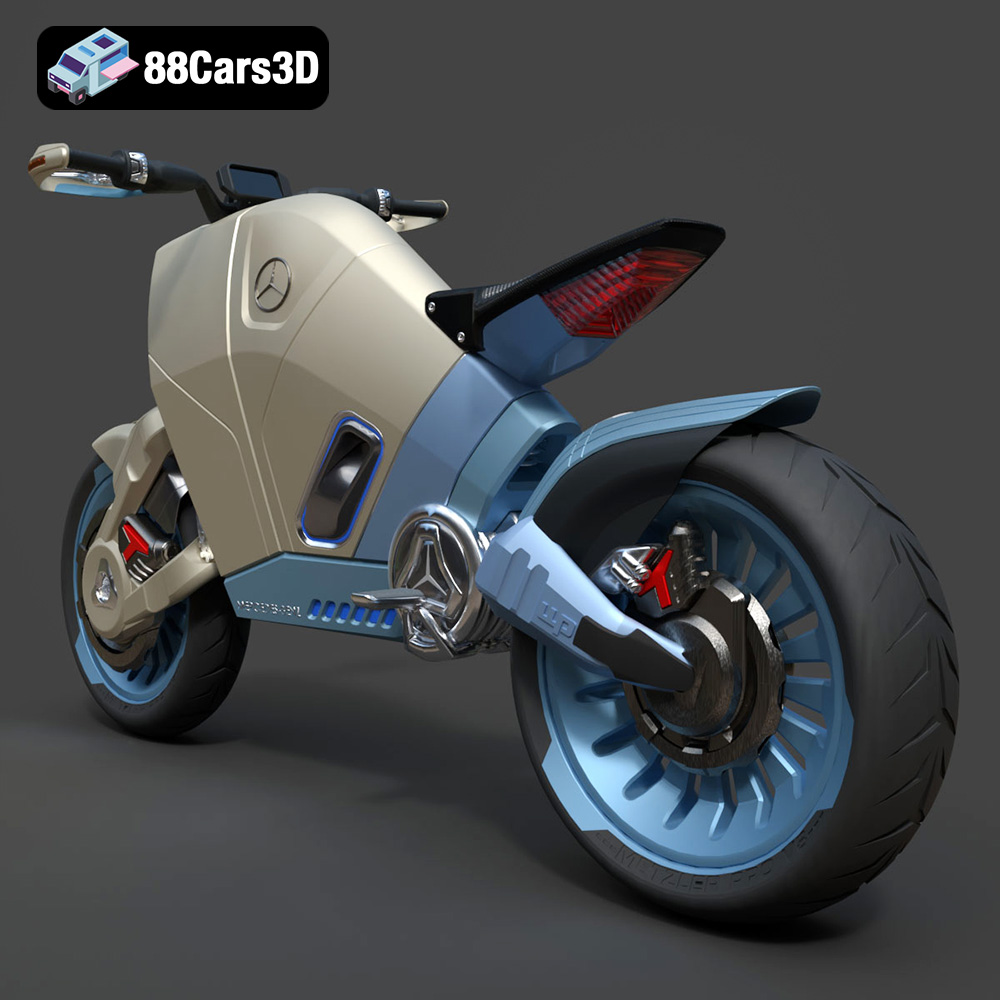
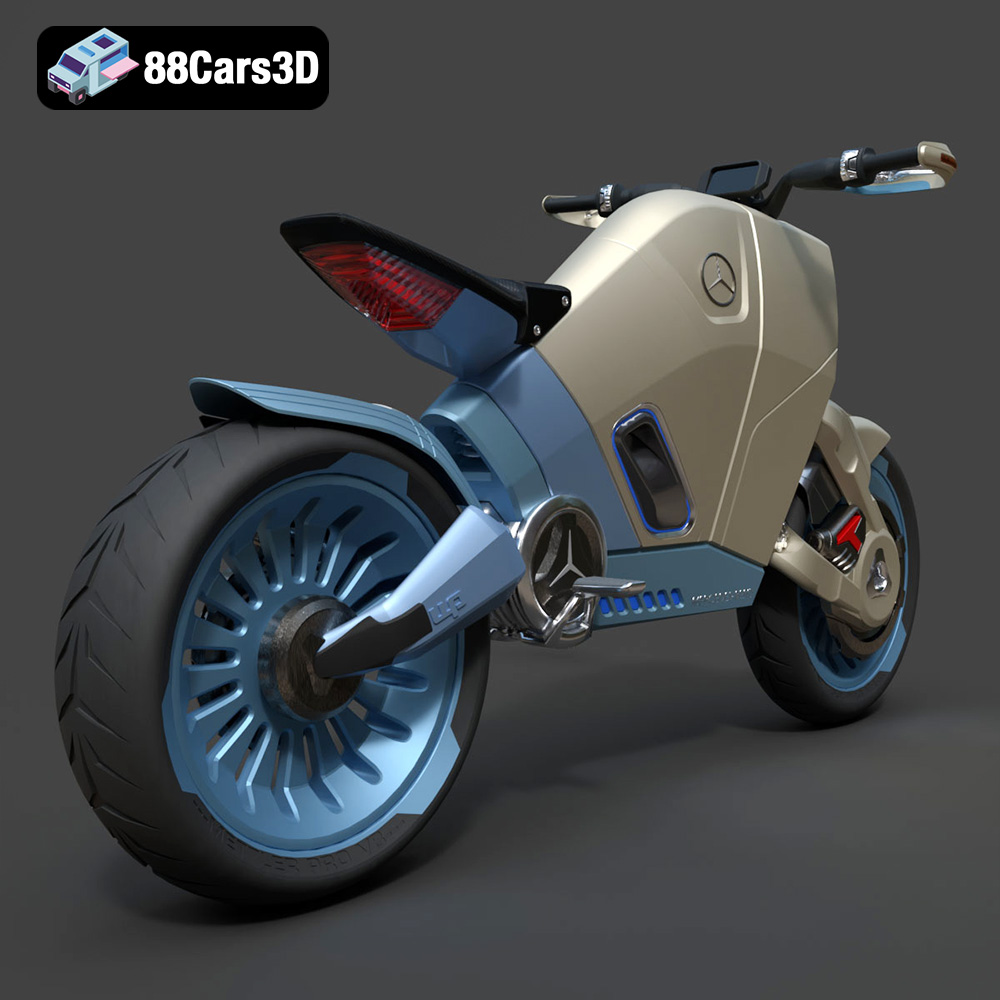
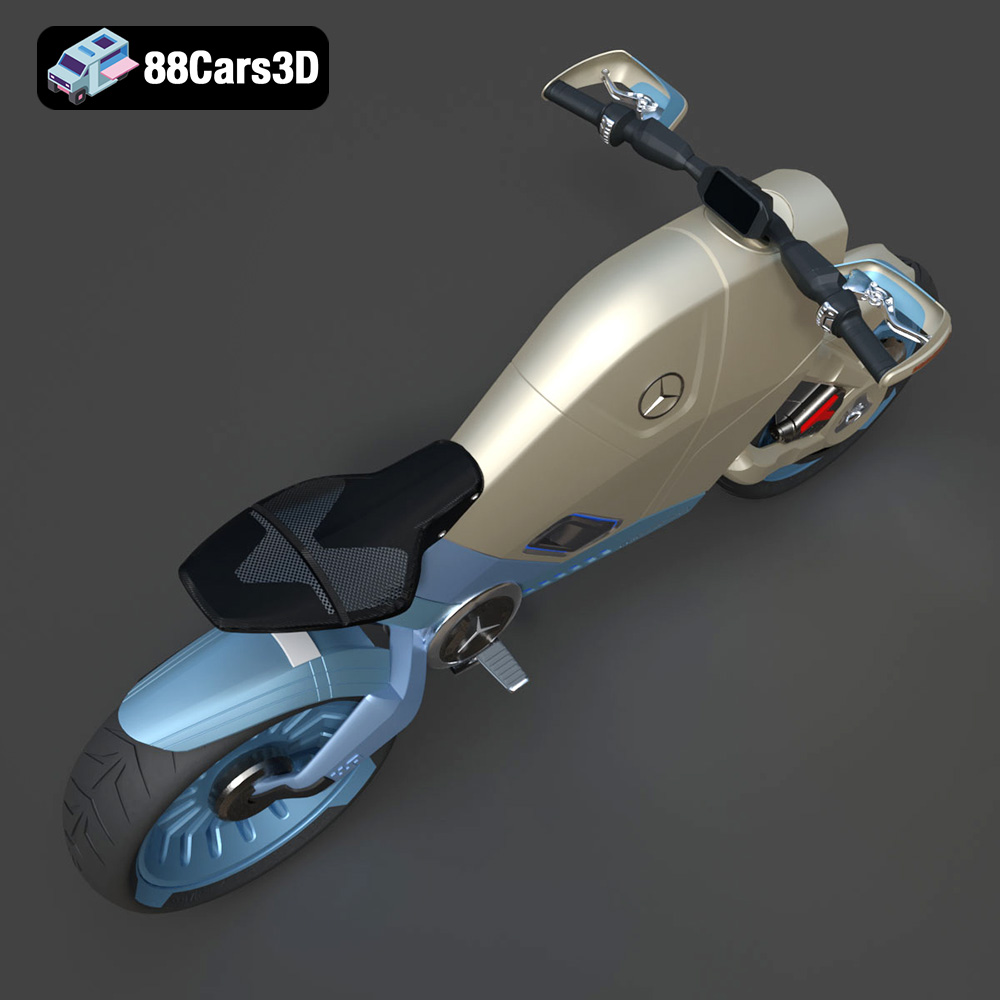
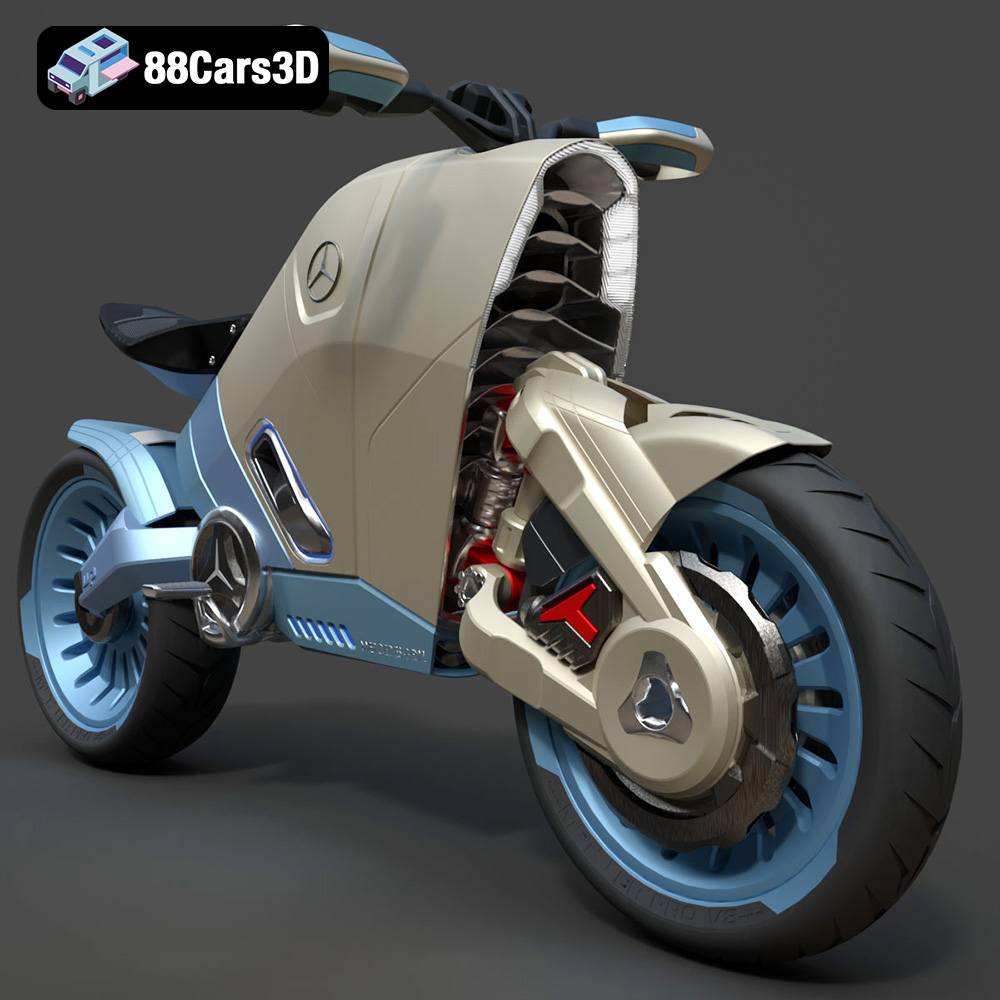
This concept motorcycle immediately captures attention with its ultra-sleek, streamlined fairing and futuristic LED signature lighting. The design ethos seamlessly integrates high-performance styling with eco-conscious engineering, reflecting a potential future for Mercedes-Benz. The model boasts accurate SMARANZA Mercedes Concept frame geometry and aerodynamic proportions, ensuring that its digital form truly expresses its intended function. From the detailed high-performance electric motor and battery pack housing to the next-generation wheel design with high-traction conceptual tires, every exterior feature is crafted with exceptional visual fidelity. Advanced LED light strips are integrated to redefine illumination, making it a standout piece in any sci-fi or modern automotive digital environment.
Beyond its striking exterior, the SMARANZA concept extends its futuristic vision into the rider’s experience. The ergonomic racing saddle is integrated directly into the bodywork, creating a seamless flow. The advanced sleek handlebar design features conceptual touch-sensitive controls, suggesting an intuitive and minimalist interface. A holographic-style digital instrument cluster and HUD elements elevate the cockpit experience, offering vital information in an engaging, future-forward manner. Minimalist conceptual levers and foot controls complete the package, all optimized with clean geometry for first-person POV in gaming and virtual reality, ensuring an immersive and believable user interaction.
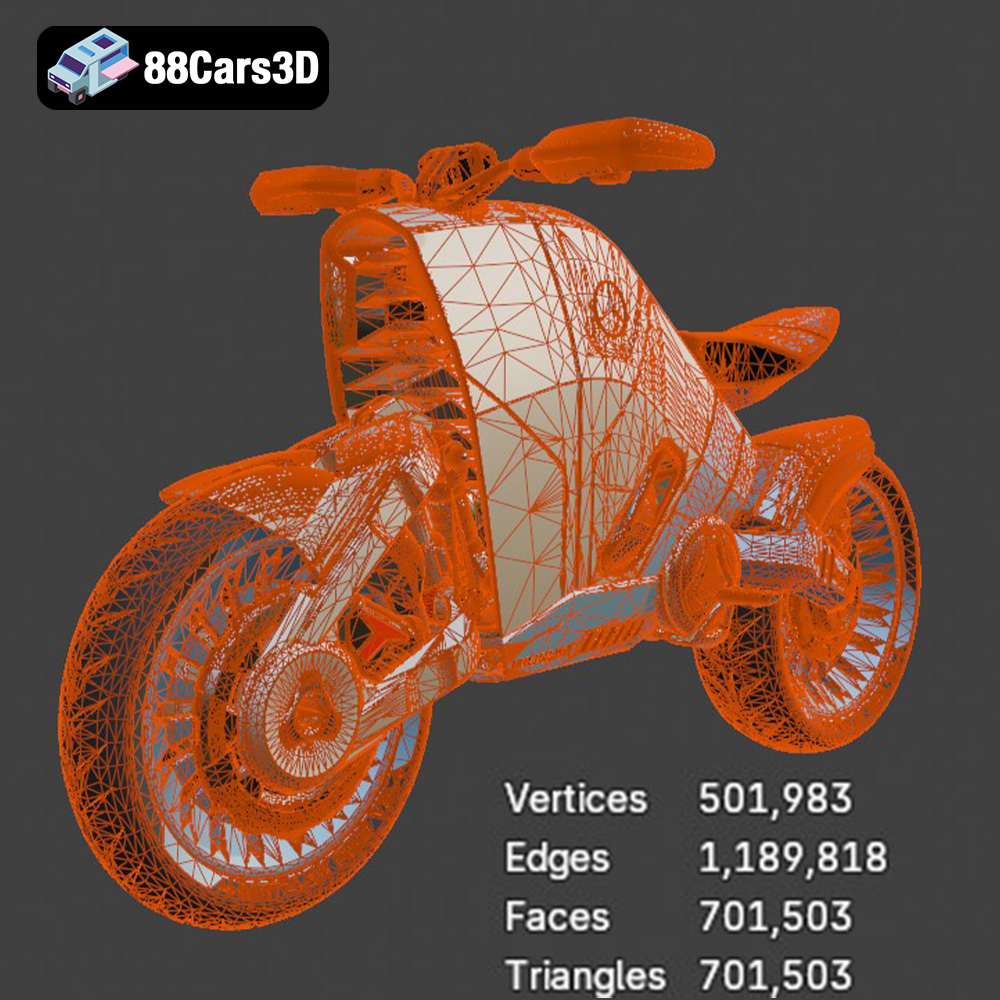
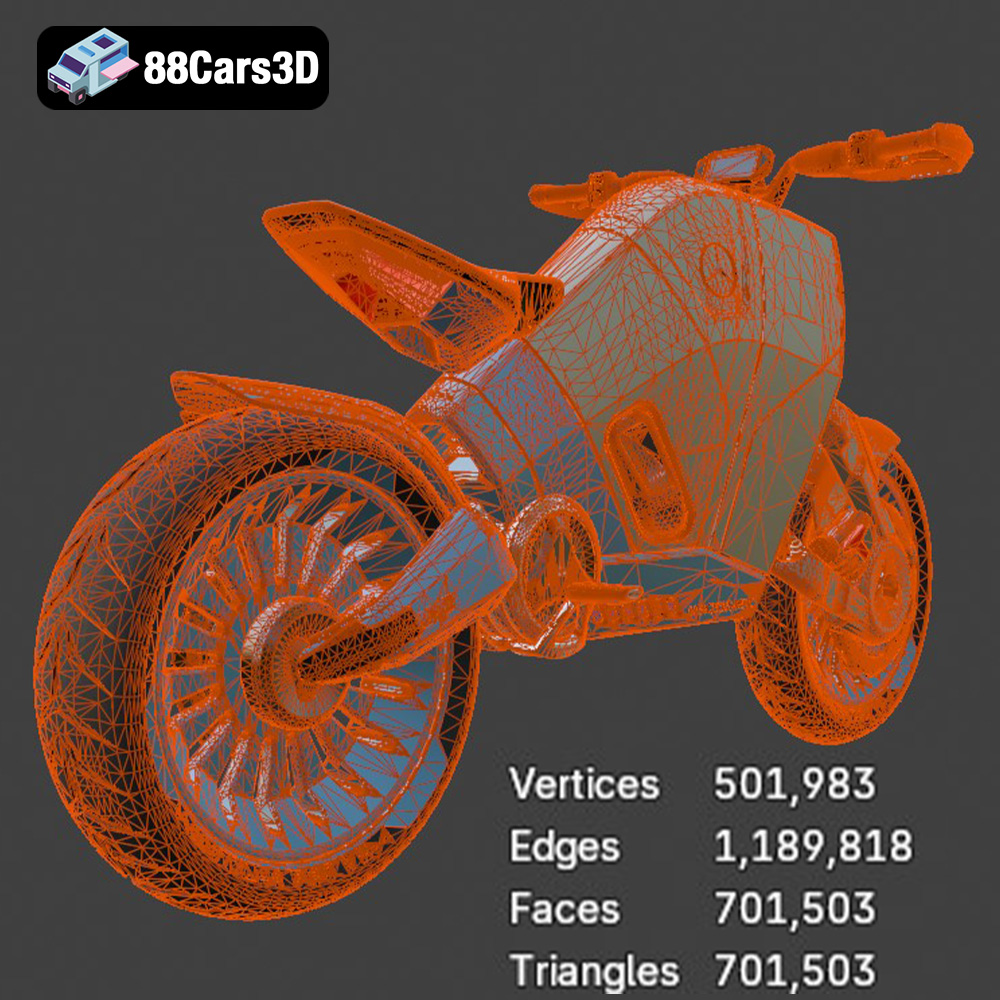
The true power of this 3D car model lies in its technical specifications. It’s explicitly designed to be game-ready and optimized, striking a perfect balance between a detailed, high-end visual realism and an efficient triangle count suitable for real-time engines like Unreal and Unity. This careful optimization ensures flawless performance without sacrificing visual quality. Furthermore, the model is built with real-world scale accuracy, based on actual vehicle chassis proportions, making it incredibly versatile for realistic simulations and visualizations. Crucially, it features a proper pivot setup for steering, wheel rotation, and suspension travel, allowing animators and developers to effortlessly rig and bring the motorcycle to life with accurate mechanical movements, which is paramount for realistic automotive rendering and interactive experiences.
The versatility of the SMARANZA Mercedes Concept Electrical Motorcycle 3D Model makes it an invaluable asset across a spectrum of professional digital workflows. Its meticulous construction ensures it can transition smoothly from conceptual design visualization to fully interactive game experiences and high-definition cinematic sequences.
For game developers, the SMARANZA Mercedes Concept Electrical Motorcycle is a dream asset. Its “game-ready & optimized” status, characterized by a balanced triangle count and clean topology, means less time spent on optimization and more on creation. It’s ideally suited for open-world games, futuristic racing titles, and vehicle simulators. The inclusion of .fbx and .unreal formats ensures seamless import into Unreal Engine and Unity, allowing developers to immediately leverage its pre-configured pivots for animation. Imagine this electric motorcycle zipping through cyberpunk cityscapes or dominating virtual racetracks – its optimized geometry ensures high frame rates and smooth gameplay, essential for compelling game assets.
When it comes to creating stunning visuals for marketing campaigns, lifestyle scenes, or sci-fi cinematic animations, this model truly shines. In professional rendering software like 3ds Max (with .max file) or Blender (with .blend file), artists can take full advantage of its detailed geometry and PBR (Physically Based Rendering) ready materials. Leveraging renderers such as V-Ray, Corona, Arnold, or Cycles, the model can be placed in intricate studio lighting setups to showcase its sleek aerodynamics and advanced LED illumination. The ability to separate wheels, suspension, and steering components provides animators with granular control, enabling realistic motion blur and dynamic camera shots that elevate any visualization project.
The future of digital interaction is increasingly moving towards augmented and virtual reality. The SMARANZA Mercedes Concept is perfectly positioned for these applications. Its optimized geometry and inclusion of the .glb format make it ideal for immersive virtual showrooms, where potential customers could explore the motorcycle in 360 degrees, or for mobile AR experiences that bring the concept into the real world via a smartphone. Developers can create interactive configurators, allowing users to customize colors and materials in real-time, offering a truly engaging and personalized brand experience. This capability solidifies its value as a cutting-edge 3D car model for innovative digital marketing and interactive product showcasing.
In the demanding world of digital production, flexibility and performance are paramount. The SMARANZA Mercedes Concept Electrical Motorcycle 3D Model offers extensive customization options and is built with optimization in mind, ensuring it can be adapted to various project needs while maintaining peak performance.
One of the key advantages of a high-quality 3D car model is the ability to customize its appearance to fit any scene or brand aesthetic. For the SMARANZA concept, artists can easily modify body and tank colors, applying anything from authentic factory colors to experimental custom finishes. This extends to tire textures, allowing for quick swaps between sleek street variants or rugged conceptual off-road options. Material finishes can be adjusted between matte, gloss, or metallic, dramatically altering how light interacts with the surfaces and influencing the perceived luxury and aggressiveness of the design. Furthermore, adapting the lighting setup for different environments – be it a futuristic neon-lit city or a pristine studio backdrop – allows for endless visual storytelling possibilities, ensuring every render or real-time scene is perfectly tailored.
The “game-ready & optimized” designation for this model is not just a marketing term; it reflects a deliberate design choice that impacts performance across all applications. A balanced triangle count ensures that the model renders efficiently in real-time engines without overwhelming GPU resources, a critical factor for maintaining high frame rates in games and AR/VR experiences. This optimization means that the model can be seamlessly integrated into complex environments with many other assets. For even greater scalability, artists can implement Levels of Detail (LODs) – progressively simpler versions of the model that are swapped in at greater distances from the camera. This intelligent approach, often facilitated by the clean topology of well-made game assets, guarantees that the SMARANZA Mercedes Concept performs flawlessly whether viewed up close in an immersive showroom or as part of a bustling cityscape in a racing game.
Beyond screens and immersive headsets, the SMARANZA Mercedes Concept Electrical Motorcycle offers another fascinating dimension: the ability to bring this digital vision into the physical world through 3D printing. This capability transforms a virtual asset into a tangible display piece or prototype, appealing to hobbyists, collectors, and design enthusiasts alike.
The inclusion of the .stl format is specifically for this purpose. To prepare the 3D car model for printing, the .stl file is imported into slicing software (such as PrusaSlicer, Cura, or Chitubox). Here, critical print settings are applied. Recommended scales like 1:12, 1:18, or 1:24 allow for various display sizes. Layer height, ideally 0.04–0.12 mm, is crucial for capturing fine details, with resin printing often recommended for its superior precision. Wall thickness (1.2–2.0 mm) and infill (20–30%) contribute to the model’s structural integrity and material usage. Given the complex geometry of a motorcycle, supports will be required for intricate parts like handlebars, mirrors, and specific aerodynamic elements. Careful print orientation is also advised, with the frame printed angled for strength and wheels printed separately to ensure optimal surface quality.
Once printed, the journey from digital concept to physical model continues with post-processing. This stage is where the raw print is refined to match the sleekness and luxury envisioned in the digital model. Sanding is often necessary to smooth out layer lines, especially on FDM (Fused Deposition Modeling) prints. A primer coat prepares the surface for painting, revealing any imperfections and providing an even base. The true artistry comes in applying authentic factory colors or custom metallic finishes, bringing the SMARANZA Mercedes Concept to life with a realistic sheen. For enthusiasts looking to create truly stunning display models, meticulous detailing with miniature paints, clear coats, and even custom decals can elevate the 3D-printed motorcycle to a museum-quality showpiece, a testament to the versatility of premium 3D car models.
The digital landscape of design, entertainment, and visualization is constantly evolving, demanding assets that are not only visually stunning but also technically robust and highly adaptable. The SMARANZA Mercedes Concept Electrical Motorcycle 3D Model stands as a prime example of this paradigm, embodying a future-forward design vision with the meticulous technical execution required for diverse professional applications. From its game-ready optimization and extensive file format compatibility to its suitability for high-end cinematic automotive rendering and even physical 3D printing, this model is a testament to the power of well-crafted digital assets.
Whether you’re a game developer seeking compelling game assets, an architectural visualizer crafting immersive scenes, or a product designer bringing concepts to life, investing in high-quality 3D car models like this one from 88cars3d.com provides an unparalleled foundation for your projects. They streamline workflows, enhance visual fidelity, and unlock creative possibilities that accelerate innovation across industries. As the digital frontier continues to expand, the demand for such versatile and expertly crafted models will only grow, making assets like the SMARANZA Mercedes Concept an indispensable tool in the arsenal of any serious digital creator.
The SMARANZA Mercedes Concept Electrical Motorcycle is a breathtaking vision of the future, blending iconic Mercedes-Benz luxury and aerodynamic precision with next-generation electric mobility. This striking concept vehicle features an ultra-sleek, streamlined fairing, a state-of-the-art electric drivetrain housing, and futuristic LED signature lighting that redefines two-wheeled transport. Its seamless integration of high-performance styling and eco-conscious engineering makes it a standout piece for any sci-fi or modern automotive digital environment.
Meticulously modeled with exceptional visual fidelity and an optimized triangle count, this 3D model delivers striking realism while remaining fully game-ready. Its clean topology ensures flawless performance in real-time engines, making it an invaluable asset for interactive applications such as game development, AR/VR experiences, animation, and high-end visualization.
$39.99
.blend
.fbx
.futuristic
.glb
.max
.obj
.ply
.rendering
.smaranza
.stl
.unreal
concept-motorcycle
electric-motorcycle
game asset
game-ready
low-poly
mercedes-benz
motorcycle-3d-model
optimized
sci-fi
VR/AR