Get 20% OFF All Premium 3D & STL Models!

In today’s visually driven digital landscape, the demand for realistic and versatile 3D car models has never been higher. From breathtaking automotive renders that grace advertising campaigns to immersive vehicle simulations in the latest video games, a high-quality 3D car model serves as the cornerstone for countless creative and technical endeavors. These assets are not merely static representations; they are dynamic tools that empower artists, developers, and engineers to explore designs, test concepts, and bring virtual worlds to life with unparalleled realism.
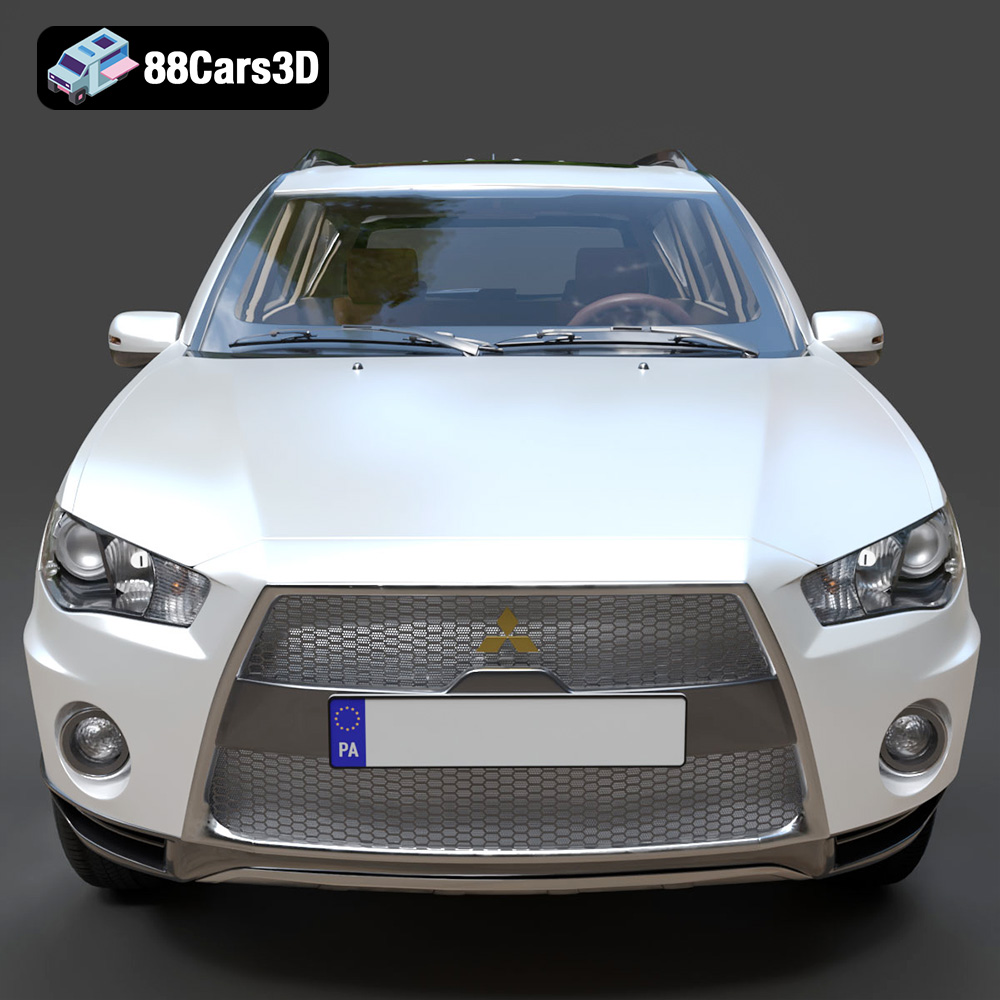
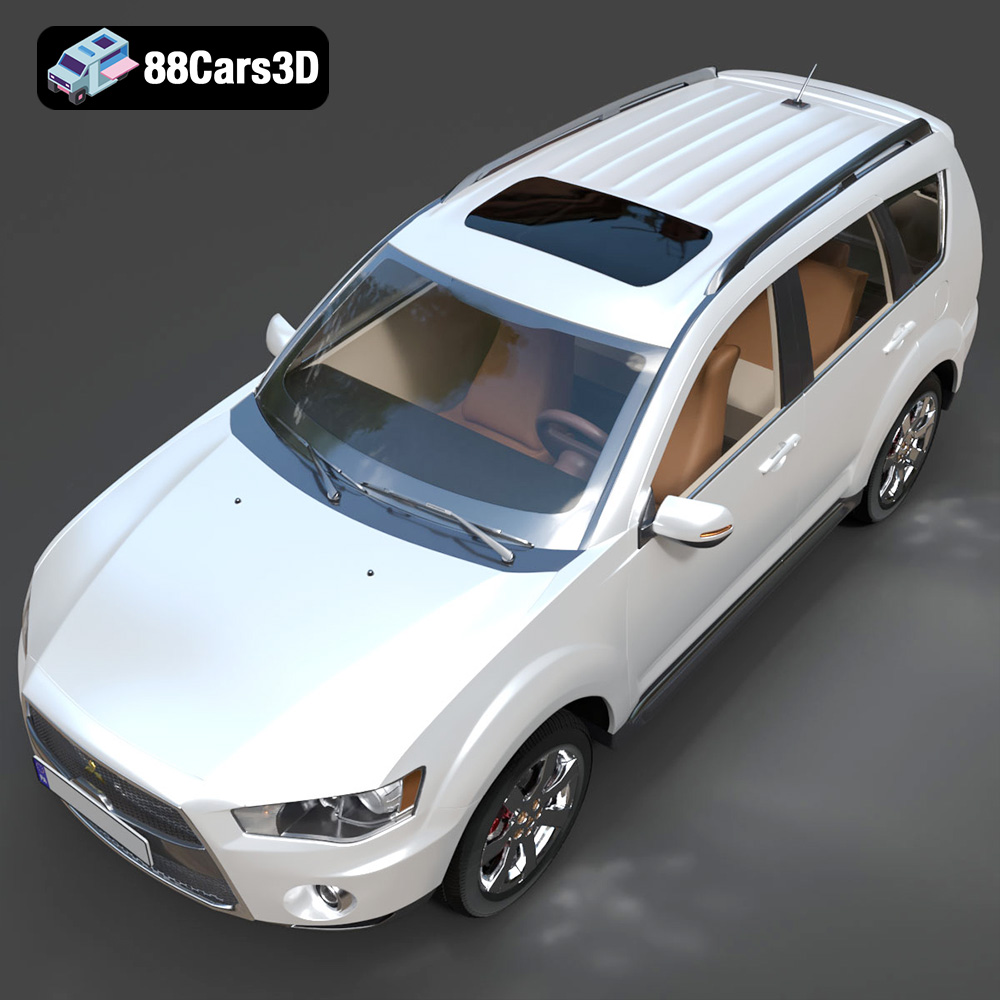
The journey of a vehicle, from concept sketch to digital masterpiece, relies heavily on meticulous attention to detail and a profound understanding of 3D pipeline requirements. Whether you’re a professional looking to populate an architectural visualization scene, a game developer crafting the next open-world driving experience, or an enthusiast eager to 3D print your favorite car, the foundation is always a robust and accurate 3D model. Our featured asset, the Mitsubishi Outlander GT 2010 3D Model, exemplifies this versatility and precision, offering a plug-and-play solution for a wide array of applications.
The world of 3D modeling is rich with various file formats, each designed to serve specific purposes and optimize workflows across different software and platforms. Understanding these formats is crucial for selecting the right asset for your project and ensuring seamless integration. The Mitsubishi Outlander GT 2010 3D Model, available on 88cars3d.com, is offered in a comprehensive suite of formats, catering to virtually any professional pipeline.
The .blend file is Blender’s native format, encapsulating an entire scene, including mesh data, materials, textures, lighting, cameras, animation, and even scripting. For Blender users, this is the most advantageous format as it preserves all aspects of the original project file, allowing for full editability. Artists can easily modify geometry, adjust shaders, re-rig components, or extend animations without losing any scene information. It’s ideal for those who plan to deeply customize the model or integrate it into a Blender-centric workflow for rendering or game asset preparation.
As a proprietary format developed by Autodesk, .fbx has become a ubiquitous standard for exchanging 3D data between various software applications, particularly in game development (Unreal, Unity) and animation. It efficiently stores models, animation data, cameras, and lights. Its strength lies in its ability to maintain crucial scene information like skeletal animation and UV maps across different programs, making it the go-to choice for real-time pipelines where performance and fidelity are paramount. When working with the Outlander GT model in Unreal Engine or Unity, .fbx ensures that the optimized mesh and texture references transfer flawlessly.
The .obj format, or Wavefront OBJ, is one of the oldest and most widely supported 3D file formats. It’s a simple, text-based format primarily used for transferring geometric data (vertices, normals, texture coordinates, faces) between different 3D applications. While it doesn’t support animation or scene information, its universal compatibility makes it an excellent choice for basic mesh interchange. If your primary need is the geometric structure of the Outlander GT for sculpting, retopology, or import into less common software, .obj is a reliable option.
.glb (GL Transmission Format Binary) is an increasingly vital format, especially for web-based 3D applications, augmented reality (AR), and virtual reality (VR) experiences. It’s a binary format that bundles 3D models, textures, animations, and PBR (Physically Based Rendering) materials into a single, compact file. This self-contained nature and optimization for efficient loading and rendering make it perfect for showcasing the Mitsubishi Outlander GT model in online configurators, mobile AR apps, or interactive web pages without complex setup. It’s a key format for modern, accessible 3D content delivery.
For anyone venturing into physical fabrication, the .stl (Stereolithography) format is indispensable. It represents a 3D model as a series of connected triangles, defining only the surface geometry without color or texture information. It is the de facto standard for 3D printing, enabling rapid prototyping and model creation. The Outlander GT 2010 3D Model, when converted to .stl, allows hobbyists and professionals alike to bring a tangible representation of the vehicle into the real world, suitable for scales like 1:12, 1:18, or 1:24 as recommended.
The .ply (Polygon File Format) is another format for storing 3D data, particularly useful for scanned data and models with complex mesh attributes. It can store not only geometry but also properties like color, transparency, and even normals for each vertex. While less common than .obj for general exchange, it’s often preferred in scientific, CAD, or reverse-engineering applications where precise mesh information and additional per-vertex data are critical. It offers a robust alternative for intricate analysis or highly detailed processing of the Outlander’s geometry.
The .unreal format signifies an asset specifically prepared and optimized for direct import and use within Unreal Engine. This often implies that the model has already undergone a conversion process, with proper material assignments, UV channels, collision meshes, and LODs (Level of Detail) if applicable, tailored to Unreal Engine’s specifications. While .fbx is a common intermediary, an .unreal file suggests an even more streamlined, plug-and-play experience for developers working within this powerful real-time engine.
Similar to .blend for Blender, the .max file is the native format for Autodesk 3ds Max, a leading software for 3D modeling, animation, and rendering in architectural visualization, game development, and film. This format preserves all aspects of a 3ds Max scene, including object hierarchies, modifiers, materials, lighting setups, and animation curves. For users of 3ds Max, the .max file provides full control and editability, making it ideal for integrating the Outlander GT into complex scenes or for further refinement and animation within a professional studio environment.
Automotive rendering is an intricate discipline, blending technical prowess with artistic vision to create images so realistic they are often indistinguishable from photographs. The Mitsubishi Outlander GT 2010 3D Model provides a robust foundation for achieving stunning visual results across various rendering pipelines.
For many professionals, 3ds Max coupled with a renderer like V-Ray or Corona is the go-to solution for top-tier automotive rendering. The included .max file allows artists to seamlessly integrate the Outlander GT into their existing workflows. The process typically involves setting up physically based rendering (PBR) materials, carefully crafting realistic car paint shaders that react accurately to light, and detailing components like glass, rubber, and chrome. Advanced lighting setups, utilizing HDRI environments and targeted area lights, are crucial for mimicking real-world studio or outdoor conditions. This workflow ensures that the Outlander’s ‘Jet Fighter’ grille, detailed bi-xenon headlights, and premium interior elements are showcased with photorealistic fidelity.
Blender has emerged as a powerhouse for rendering, with its Cycles and Eevee render engines offering incredible flexibility. The native .blend file for the Mitsubishi Outlander GT 2010 3D Model is a significant advantage here. Artists can dive straight into setting up complex nodal materials, fine-tuning PBR textures for the leather-appointed seating and alloy wheels, and experimenting with various lighting schemes. Cycles excels at unbiased, photorealistic renders, perfect for high-end marketing visuals, while Eevee provides real-time feedback, making iterative design and animation much faster. Integrating the Outlander into a sleek studio environment with precise rim lighting and reflections can yield breathtaking results that highlight its sporty aesthetic.
Beyond standalone car renders, 3D car models are essential for populating architectural visualization (arch-viz) scenes. Imagine a sleek, modern home or a bustling urban street scene; without vehicles, these environments often feel lifeless. The Outlander GT, with its accurate proportions and detailed features, is an ideal asset for such scenarios. An architect or visualization artist can place the model in a driveway, a parking lot, or driving down a street, instantly adding scale, context, and a sense of realism. The optimized geometry ensures that even with multiple vehicles in a large scene, performance remains manageable without sacrificing visual quality, making it a perfect addition to any rendering project.
The transition from a high-polygon modeling asset to a game-ready asset requires meticulous optimization and a deep understanding of real-time engine constraints. The Mitsubishi Outlander GT 2010 3D Model is specifically engineered for game development, balancing visual fidelity with performance efficiency.
The provided .fbx and .unreal formats are crucial for seamless integration into game engines like Unreal and Unity. With approximately 180,000 triangles, the Outlander GT model strikes an excellent balance, offering exceptional visual detail without overburdening the rendering pipeline. This polycount is optimal for real-time applications where multiple vehicles might be present, allowing for smooth frame rates. Developers can leverage the detailed exterior and interior to create immersive driving experiences. Proper UV mapping is essential for applying textures and materials efficiently, and the real-world scale accuracy ensures the vehicle fits proportionally within virtual environments, enhancing player immersion in open-world games or racing titles.
The demand for interactive 3D experiences is booming, with AR/VR applications and web-based configurators pushing the boundaries of accessibility. The .glb format is particularly beneficial here. Its optimized, self-contained nature ensures quick loading and efficient rendering on various devices, including mobile. Imagine the Mitsubishi Outlander GT 2010 appearing in your living room via an AR app, or allowing potential customers to explore its interior in a VR showroom. The game-ready optimization translates directly into smooth, interactive performance, making it perfect for virtual automotive showrooms, educational tools, or brand experiences where users can customize colors and view details up close.
A static model can only go so far. For game cinematics, driving simulators, or virtual test drives, animation capabilities are vital. The Mitsubishi Outlander GT 2010 3D Model is designed with separate wheels, suspension, and steering components. This thoughtful separation allows game developers and animators to easily set up complex rigs for realistic wheel rotation, independent suspension travel, and accurate steering dynamics. This level of detail is critical for creating convincing driving physics and cutscenes, elevating the overall quality and realism of any interactive or animated project involving the vehicle.
The quality of a 3D car model is not just about its visual appeal; it’s about the underlying engineering and attention to the smallest details. The Mitsubishi Outlander GT 2010 3D Model stands as a testament to this principle, meticulously crafted to represent its real-world counterpart accurately.
Every curve and contour of the 2010 Mitsubishi Outlander GT has been faithfully replicated. Its aggressive Lancer Evolution-inspired ‘Jet Fighter’ front grille, a defining characteristic of the vehicle, is captured with precise geometry. The detailed bi-xenon HID headlights and striking LED taillights aren’t just texture maps; they feature complex geometry that allows for realistic lighting and reflections. The replicated 18-inch alloy wheels, complete with highly detailed crossover tires, and accurate independent front and rear suspension details further enhance the model’s realism. Even the robust V6 engine profile and the signature dual exhaust setup are accounted for, ensuring a truly authentic representation from every angle. This adherence to real-world scale and specific design elements makes the model invaluable for both rendering and simulation purposes.
While often overlooked in some models, the interior of the Mitsubishi Outlander GT 2010 3D Model is crafted with equal care to provide a fully immersive experience. Premium leather-appointed seating, complete with detailed stitching, creates a luxurious feel. The multifunction steering wheel, equipped with paddle shifters, is accurately modeled, as are the instrument cluster and the central infotainment screen. Realistic control details, including pedals, the gear shifter, and the drive mode selector, are all present, optimized with geometry suitable for first-person POV in gaming. This level of interior detail is critical for virtual showrooms, AR/VR experiences, and even gameplay where players spend significant time inside the vehicle.
Underpinning this visual fidelity is highly optimized topology and efficient UV mapping. “Optimized topology” refers to the clean and efficient arrangement of polygons (primarily quads) that make up the 3D mesh. This ensures smooth deformations during animation, reduces rendering artifacts, and simplifies further editing. The Outlander GT’s geometry is engineered to strike a perfect balance, maintaining high visual realism while keeping the triangle count manageable for real-time engines. Similarly, efficient UV mapping ensures that textures are applied without stretching or distortion, maximizing the visual quality of materials like car paint, tire treads, and interior fabrics. This technical precision is what makes the model truly “game-ready” and suitable for high-end rendering.
The utility of 3D car models extends far beyond digital screens. With advancements in 3D printing technology, these virtual assets can be transformed into tangible objects, offering a unique opportunity for display, prototyping, and educational purposes. The Mitsubishi Outlander GT 2010 3D Model, available on 88cars3d.com, is specifically designed to facilitate this transition, with support for the .stl format.
The .stl and .ply file formats are the backbone of 3D printing. The .stl, in particular, is universally recognized by 3D printing software (slicers) as it describes the surface geometry of a 3D object using a mesh of triangles. When preparing the Outlander GT model for 3D printing, careful consideration is given to scale, layer height, wall thickness, and infill. Recommended scales such as 1:12, 1:18, or 1:24 allow for detailed hobbyist models that retain significant features. For fine details, a lower layer height (0.04–0.12 mm) and resin printing are recommended, ensuring crisp lines on elements like the grille, headlights, and interior components. Adequate wall thickness (1.2–2.0 mm) and infill (20–30%) provide structural integrity to the printed model, preventing fragility and warping.
Due to the complex geometry of a car model, support structures are almost always required for successful 3D printing. Parts like the exhaust system, side mirrors, and any intricate overhangs will benefit from carefully placed supports to prevent sagging during the printing process. Optimal print orientation is also crucial; for instance, printing the main frame angled can enhance structural integrity, while wheels are often printed separately for better detail and easier post-processing. After printing, the real magic begins with post-processing. This can involve removing supports, sanding to achieve smooth surfaces, applying primer, and then painting with authentic factory colors, potentially utilizing metallic finishes to mimic the original vehicle’s aesthetic. This hands-on process allows enthusiasts to create highly personalized and accurate physical replicas of the Mitsubishi Outlander GT 2010.
A truly valuable 3D asset provides not just a detailed model, but also the flexibility for customization. The Mitsubishi Outlander GT 2010 3D Model excels in this regard, offering artists and developers a wide range of options to tailor the vehicle to their specific creative vision or project requirements.
One of the most immediate and impactful customization options is changing the vehicle’s body color. Artists can easily modify the material properties to apply any factory color, custom finish, or even experimental paint schemes like matte or metallic variations, bringing unique character to the Outlander. Beyond paint, tire textures can be swapped or adjusted to reflect different driving conditions – from rugged off-road variants for a wilderness scene to sleek street tires for an urban environment. Material finishes on components like interior plastics, chrome accents, or seat upholstery can also be fine-tuned to match specific brand guidelines or artistic styles. This level of detail and flexibility ensures that the Outlander GT can seamlessly integrate into diverse visual narratives.
The ability to adapt the model to various environments is equally important. Whether it’s integrating the Outlander into a sun-drenched coastal scene, a rainy city street, or a dramatic studio photoshoot, artists can adjust the vehicle’s materials and lighting to match. This involves modifying reflections on the bodywork to accurately portray the surrounding environment and tweaking the emissive properties of headlights and taillights to react realistically to different lighting conditions. The high-quality topology and efficient UVs of the model make these material adjustments straightforward, allowing for rapid iteration and creative exploration. For professionals using 88cars3d.com, this means they receive a foundational asset that they can truly make their own, enhancing their projects with a perfectly integrated and visually compelling vehicle.
The world of 3D modeling for automotive design, rendering, and game development is constantly evolving, demanding assets that are not only visually stunning but also technically robust and highly adaptable. The Mitsubishi Outlander GT 2010 3D Model exemplifies these qualities, offering an unparalleled blend of accuracy, optimization, and versatility.
From its meticulously replicated exterior features, including the distinctive ‘Jet Fighter’ grille and detailed suspension, to its fully realized interior with premium finishes, every aspect of this model has been engineered for excellence. Its game-ready optimization ensures seamless integration into real-time engines like Unreal and Unity, while its diverse file format support, encompassing .blend, .fbx, .obj, .glb, .stl, .ply, .unreal, and .max, guarantees compatibility across virtually all professional workflows. Whether your goal is a photorealistic render, an immersive AR/VR experience, a dynamic game asset, or even a tangible 3D print, this model provides the essential foundation.
For professionals and enthusiasts alike, investing in high-quality 3D car models from trusted sources like 88cars3d.com is a commitment to superior project outcomes. The Mitsubishi Outlander GT 2010 3D Model isn’t just a digital car; it’s a powerful tool ready to drive your creative visions forward, enabling stunning visualizations and compelling interactive experiences that truly stand out in today’s competitive digital landscape.
Discover the dynamic and versatile 2010 Mitsubishi Outlander GT, a highly acclaimed crossover SUV known for its aggressive Lancer Evolution-inspired ‘Jet Fighter’ front grille and advanced S-AWC all-wheel-drive system. Our meticulously crafted 3D model perfectly captures the vehicle’s sporty aesthetic, featuring accurate exterior lines, a robust V6 engine profile, and its signature dual exhaust setup. Engineered with highly optimized topology and an efficient triangle count, this game-ready asset guarantees exceptional visual fidelity without compromising real-time performance. Designed to meet the stringent demands of modern 3D engines, it acts as a plug-and-play solution for game development, AR/VR experiences, animation, and architectural visualization.
$39.99
.2010
.blend
.crossover
.fbx
.glb
.max
.mitsubishi
.obj
.outlander
.ply
.rendering
.stl
.unreal
car-3d-model
game asset
game-ready
low-poly
optimized
outlander-gt
SUV
VR/AR