Get 20% OFF All Premium 3D & STL Models!

In the dynamic worlds of automotive design, game development, cinematic rendering, and immersive AR/VR experiences, the quality of your 3D assets can make or break a project. A meticulously crafted 3D car model is more than just a digital representation; it’s a foundational element that dictates realism, performance, and overall artistic fidelity. Whether you’re a seasoned game developer striving for photorealistic traffic in an open-world environment, an architect integrating vehicles into a stunning visualization, or an automotive designer showcasing a new concept, the demand for precision and optimization is paramount.
The journey from a real-world vehicle to a versatile digital asset is a complex one, requiring expertise in modeling, texturing, rigging, and optimization. This process ensures that the model not only looks authentic but also performs efficiently across a myriad of platforms and applications. Today, we’re diving deep into what makes a superior 3D car model and how such an asset can transform your creative and technical workflows. We’ll explore the technical intricacies, practical applications, and the sheer versatility that a well-engineered model brings to the table, using the impressive Toyota Camry 2018 3D model as a prime example of excellence available on 88cars3d.com.
The choice of file format for a 3D model is critical, influencing everything from software compatibility to optimization for specific applications like game development or 3D printing. Each format has its strengths and intended use cases, and understanding them is key to a smooth workflow. High-quality 3D car models, such as the Toyota Camry 2018 from 88cars3d.com, typically come with a comprehensive suite of formats to ensure maximum versatility. Let’s explore the most common and important ones:
The .blend file is Blender’s native format, offering a complete and fully editable scene. This includes not just the mesh geometry but also materials, textures, lighting, cameras, animations, physics simulations, and even custom scripts. For users primarily working within Blender, this format is ideal as it retains all project data without any loss of information. It allows for advanced customization, detailed material adjustments using Blender’s powerful node editor, and the ability to dissect the model’s construction, from subdivision levels to rigging setups. Its primary advantage is its integrity within the Blender ecosystem, making it perfect for artists who wish to extend or modify the original model extensively.
.fbx (Filmbox) is a proprietary file format developed by Autodesk, widely recognized as an industry-standard for 3D data interchange. It excels at transferring entire scenes or individual assets between various 3D software applications and, critically, into real-time engines like Unreal Engine and Unity. FBX can store comprehensive data including geometry, materials, textures, animations, skinning, and camera information. Its robustness and broad support make it ideal for pipelines where assets need to move seamlessly between different stages and software. For game developers, .fbx is often the go-to choice due to its efficient handling of animation data and its native integration with major game engines.
The .obj (Wavefront Object) format is one of the oldest and most universally supported 3D file formats. It’s a simple, text-based format primarily used for transferring geometry data (vertices, normals, texture coordinates, and faces). While it supports basic material information through an accompanying .mtl (material template library) file, it doesn’t typically store advanced features like animation, rigging, or complex shader networks. Its strength lies in its widespread compatibility, making it an excellent fallback or starting point for cross-software projects. If you need to import a mesh into almost any 3D software, .obj is a reliable choice, especially for static models where extensive animation is not a concern.
.glb (GLB format for glTF embedded) is the binary version of the glTF (GL Transmission Format), an open-standard 3D file format for real-time applications and web-based environments. GLB files package all assets—geometry, textures, materials, and animations—into a single file, making them highly efficient for transmission and loading. This optimization makes .glb the format of choice for AR/VR experiences, mobile applications, and embedding 3D models directly into web pages (e.g., using WebGL). It’s designed to be a “runtime asset” for rendering, providing fast loading and rendering times crucial for interactive experiences.
The .stl (Stereolithography) format is the de facto standard for 3D printing. It represents a 3D model as a series of connected triangles (a triangulated surface mesh), defining only the surface geometry without color, texture, or other attributes. For physical fabrication, .stl files are parsed by “slicer” software that converts the model into printable layers. When downloading a 3D car model for printing, like the Toyota Camry 2018, the .stl version ensures it’s correctly interpreted by 3D printers, allowing enthusiasts to bring digital assets into the physical world.
.ply (Polygon File Format or Stanford Triangle Format) is a format designed to store 3D data from 3D scanners. It can store various properties beyond just geometry, including color, transparency, texture coordinates, and even properties for individual faces and vertices. While less common for general 3D asset exchange than FBX or OBJ, it’s particularly useful in scientific, CAD, and engineering fields where highly precise mesh data, often with per-vertex properties, is required for analysis, simulation, or reverse engineering.
The inclusion of an .unreal file (or more accurately, a set of files packaged for Unreal Engine) signifies an asset specifically prepared and often pre-configured for direct import and use within the Unreal Engine ecosystem. This typically means the asset has been properly scaled, optimized for real-time rendering, collision meshes might be included, and materials are set up using Unreal’s physically based rendering (PBR) shader system. For developers working with Unreal, having an engine-ready file significantly streamlines the import process and reduces the setup time, ensuring the model performs optimally out of the box.
Similar to .blend for Blender, the .max file is the native format for Autodesk 3ds Max. It contains all the data of a 3ds Max scene, including geometry, modifiers, materials, textures, lighting, cameras, animation, and scene settings. For professionals using 3ds Max for architectural visualization, high-end rendering, or animation, the .max file provides full editability and access to the original project structure. It’s invaluable for those who need to integrate the model into existing 3ds Max projects, apply complex modifiers, or utilize specific renderers like V-Ray or Corona.
Creating a high-quality 3D car model is an intricate blend of artistic skill and technical precision. It demands an understanding of real-world mechanics, design aesthetics, and the constraints of digital performance. The Toyota Camry 2018 3D model stands as an exemplary product of this demanding process, showcasing meticulous attention to detail and intelligent optimization.
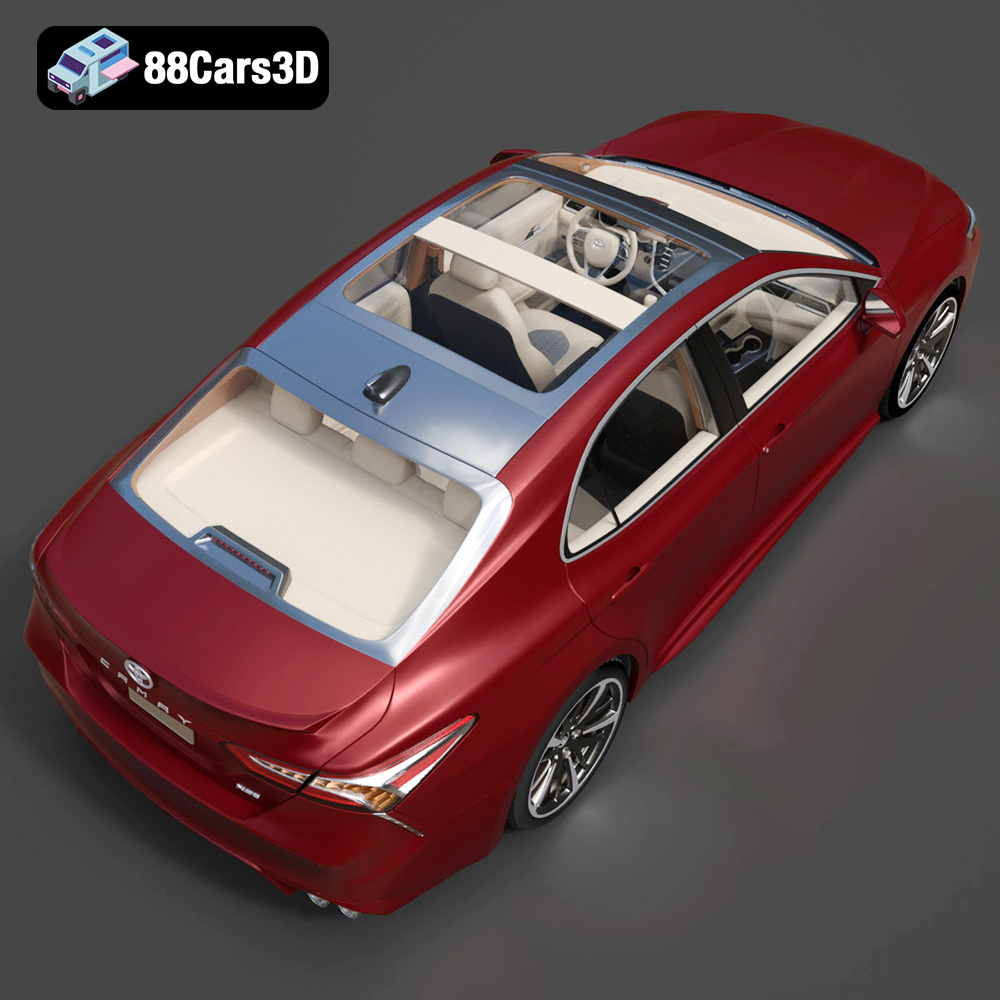
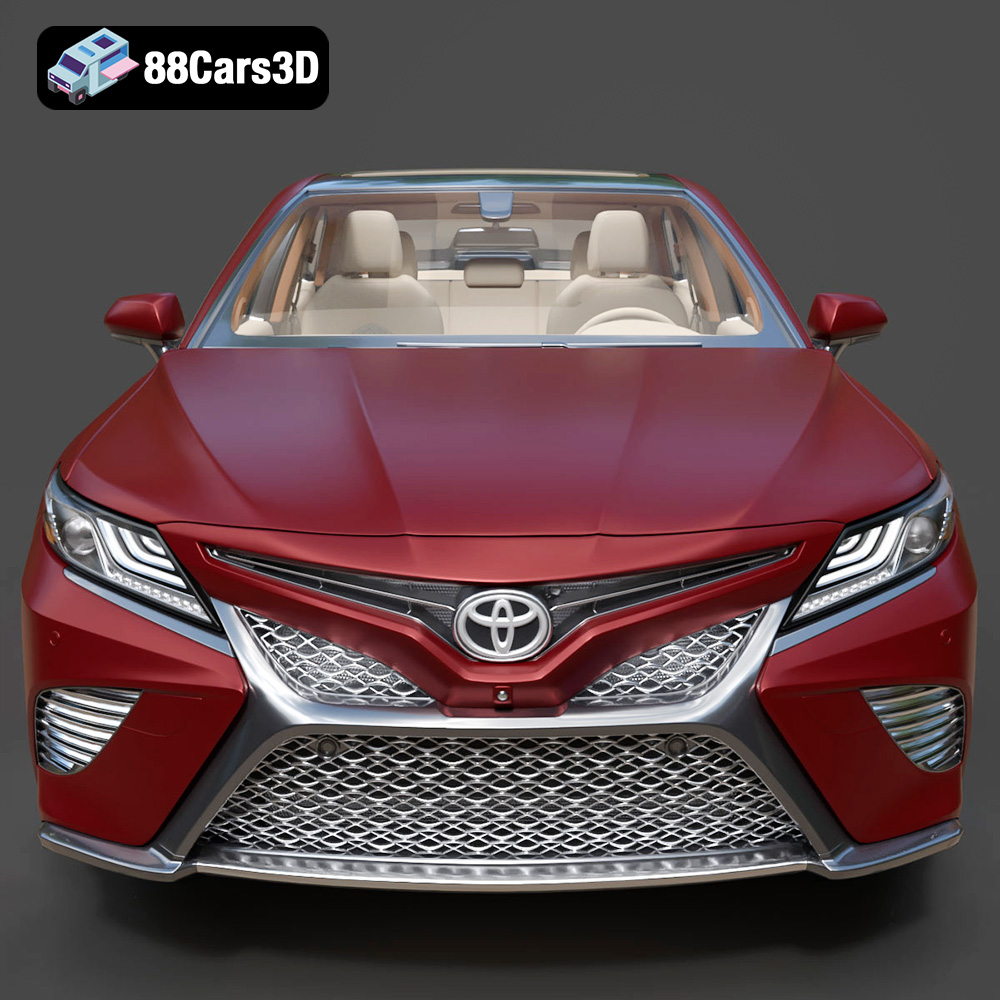
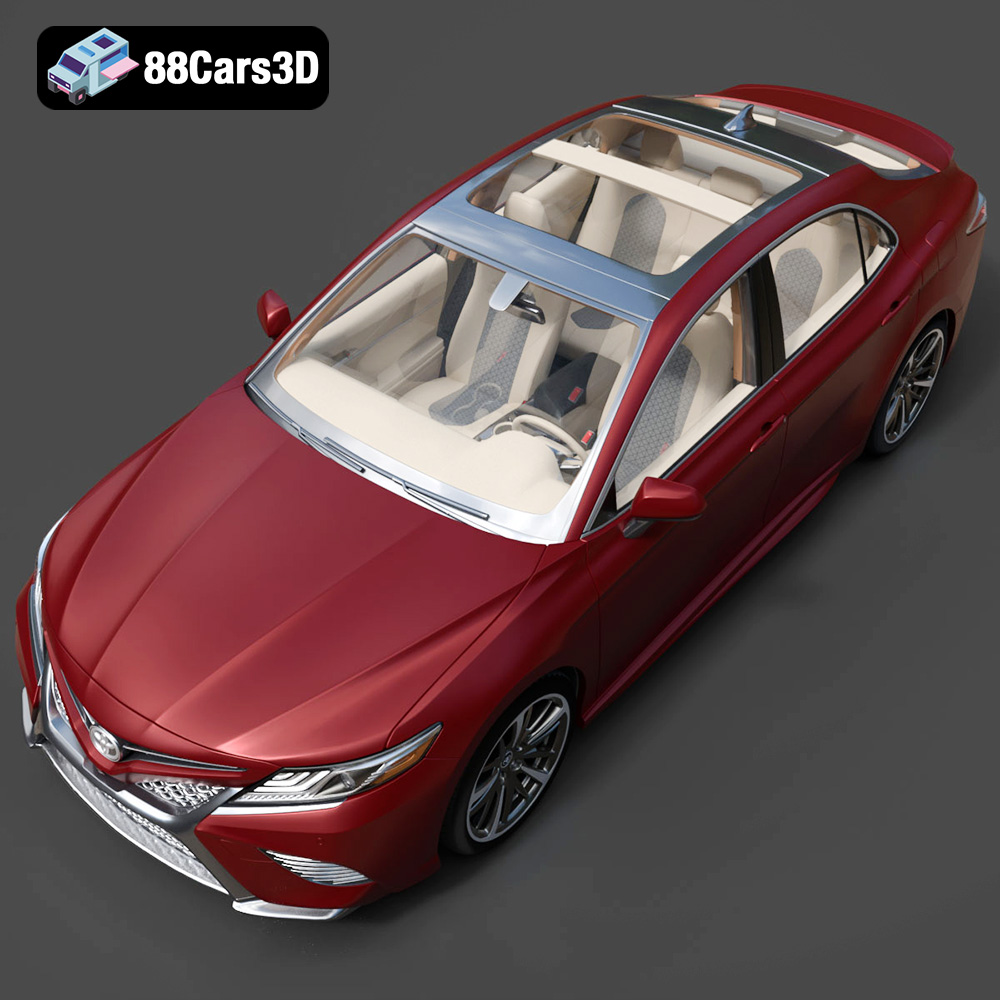
The first step in any superior 3D car model is accuracy. For the Toyota Camry 2018, this means faithfully recreating its distinctive eighth-generation styling. This includes the aggressive front grille, the sweeping roofline, and the sculpted doors that defined its aesthetic shift. A truly professional model will go beyond surface-level details:
The commitment to such comprehensive detail ensures the model is suitable for a wide range of applications, from close-up beauty renders to in-game driving simulations.
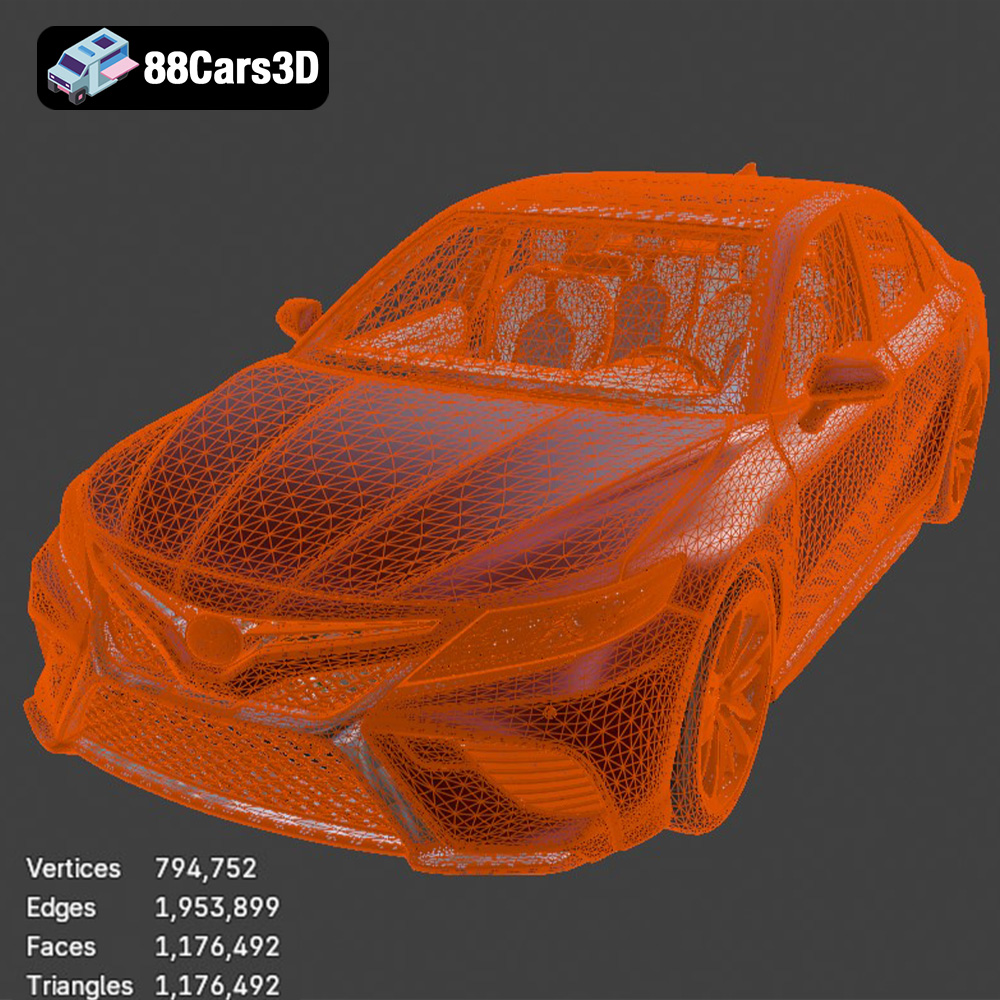
While detail is crucial, performance is paramount, especially for real-time applications. A high-quality 3D car model strikes a delicate balance between visual fidelity and polygon count. The Toyota Camry 2018 model exemplifies this with an approximate triangle count of 150,000.
The true value of a versatile 3D car model, like the Toyota Camry 2018, lies in its seamless integration into various professional pipelines. Thanks to its multiple file formats and optimized structure, artists and developers can leverage it across diverse software environments.
For high-fidelity automotive rendering and architectural visualization, software like Autodesk 3ds Max and Blender are industry staples. The availability of .max and .blend files for the Camry 2018 model means users can immediately drop the asset into their preferred environment and begin working with its native settings.
For game developers, real-time performance and ease of integration are critical. The Toyota Camry 2018 model is explicitly designed with game-ready optimization, making it an ideal asset for titles built in Unreal Engine or Unity.
The applications for high-quality 3D car models extend far beyond traditional rendering and game development, touching upon emerging technologies and specialized industries.
Augmented Reality (AR) and Virtual Reality (VR) are revolutionizing how we interact with digital content. 3D car models play a crucial role in creating compelling and realistic immersive experiences.
The ability to convert a digital model into a physical object via 3D printing opens up a world of possibilities for enthusiasts and professionals alike. The Toyota Camry 2018 model’s inclusion of an .stl format makes it readily available for this purpose.
For architects, urban planners, and environmental designers, 3D car models are essential for adding realism and context to their visualizations.
In a marketplace filled with digital assets, discerning the truly high-quality models from the mediocre ones is crucial. Investing in a professional-grade 3D car model, such as the Toyota Camry 2018 available on 88cars3d.com, offers significant advantages that ripple through your entire project pipeline.
88cars3d.com prides itself on offering such high-caliber assets, meticulously crafted to meet the rigorous demands of modern 3D production pipelines. The Toyota Camry 2018 3D model is a testament to this commitment, providing a robust, versatile, and visually stunning asset that can elevate any project it’s integrated into.
The world of 3D visualization and real-time interactive experiences is continually evolving, driven by the ceaseless demand for realism and performance. At the heart of this evolution lies the indispensable role of high-quality 3D assets. As we’ve explored, a meticulously crafted 3D car model is not just a digital object; it’s a foundational element that empowers creators across diverse fields – from game developers crafting expansive open worlds to architects designing futuristic urban landscapes, and from automotive brands building immersive virtual showrooms to hobbyists 3D printing their favorite vehicles.
The Toyota Camry 2018 3D model exemplifies the benchmark for such assets. Its game-ready optimization with a sensible 150,000 triangle count, coupled with an extraordinary level of detail spanning its aggressive exterior lines, intricate engine block, and ergonomic cockpit, makes it a truly versatile tool. Its support for a comprehensive array of file formats including .blend, .fbx, .obj, .glb, .stl, .ply, .unreal, and .max, ensures seamless integration into virtually any professional workflow, whether you’re working in 3ds Max, Blender, Unreal Engine, or preparing for 3D printing or AR/VR deployment.
Ultimately, investing in premium 3D car models saves invaluable time, streamlines production, and elevates the final visual quality of your projects. For anyone seeking to bring unparalleled realism and efficiency to their automotive rendering, game development, or visualization tasks, models like the Toyota Camry 2018 from 88cars3d.com are not just an option, but a strategic necessity. Discover the difference that true quality makes and drive your projects forward with assets built for excellence.
The 2018 Toyota Camry, representing the eighth generation of this iconic mid-size sedan, brought a dramatic shift in styling with its aggressive lines, sportier stance, and prominent front grille. Known for its legendary reliability and comfort, this specific generation introduced the TNGA platform, elevating its driving dynamics while boasting striking visual elements like its sweeping roofline, sculpted doors, and modern LED lighting signature.
This high-quality 3D model features game-ready optimization with an approximate triangle count of 150,000, ensuring excellent performance without sacrificing visual fidelity. Designed for modern pipelines, it boasts clean topology perfect for real-time applications like game development, AR/VR experiences, architectural visualization, and high-end animation.
Perfect for urban traffic simulations, architectural renders, open-world driving games, and virtual showroom applications.
.blend, .fbx, .obj, .glb, .stl, .ply, .unreal, .max
Tags:
toyota, camry-2018, sedan, mid-size-car, family-car, car-3d-model, game-ready, low-poly, optimized, game-asset, rendering, vr-ar, blend, fbx, obj, glb, stl, ply, unreal, max
$19.99
.blend
.fbx
.glb
.max
.obj
.ply
.rendering
.sedan
.stl
.toyota
.unreal
camry-2018
car-3d-model
family-car
game asset
game-ready
low-poly
mid-size-car
optimized
VR/AR