Get 20% OFF All Premium 3D & STL Models!

In the dynamic world of 3D visualization, from cinematic renders to immersive game environments and groundbreaking AR/VR experiences, the quality and authenticity of digital assets are paramount. Automotive models, in particular, demand a meticulous blend of artistic precision and technical optimization to truly shine. Whether you’re an independent game developer crafting a sprawling open world, an architect visualizing a cutting-edge urban landscape, or a product designer pushing the boundaries of virtual showrooms, having access to expertly crafted 3D car models can be a significant differentiator.
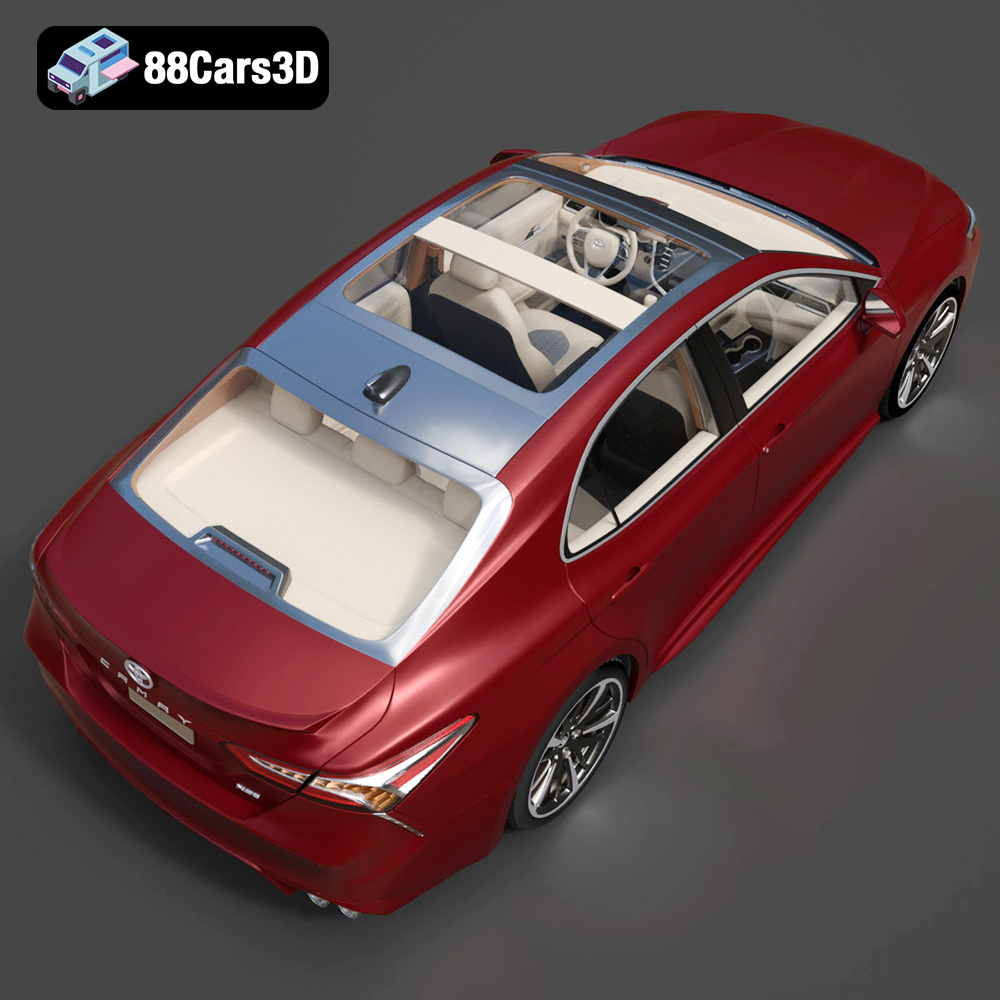
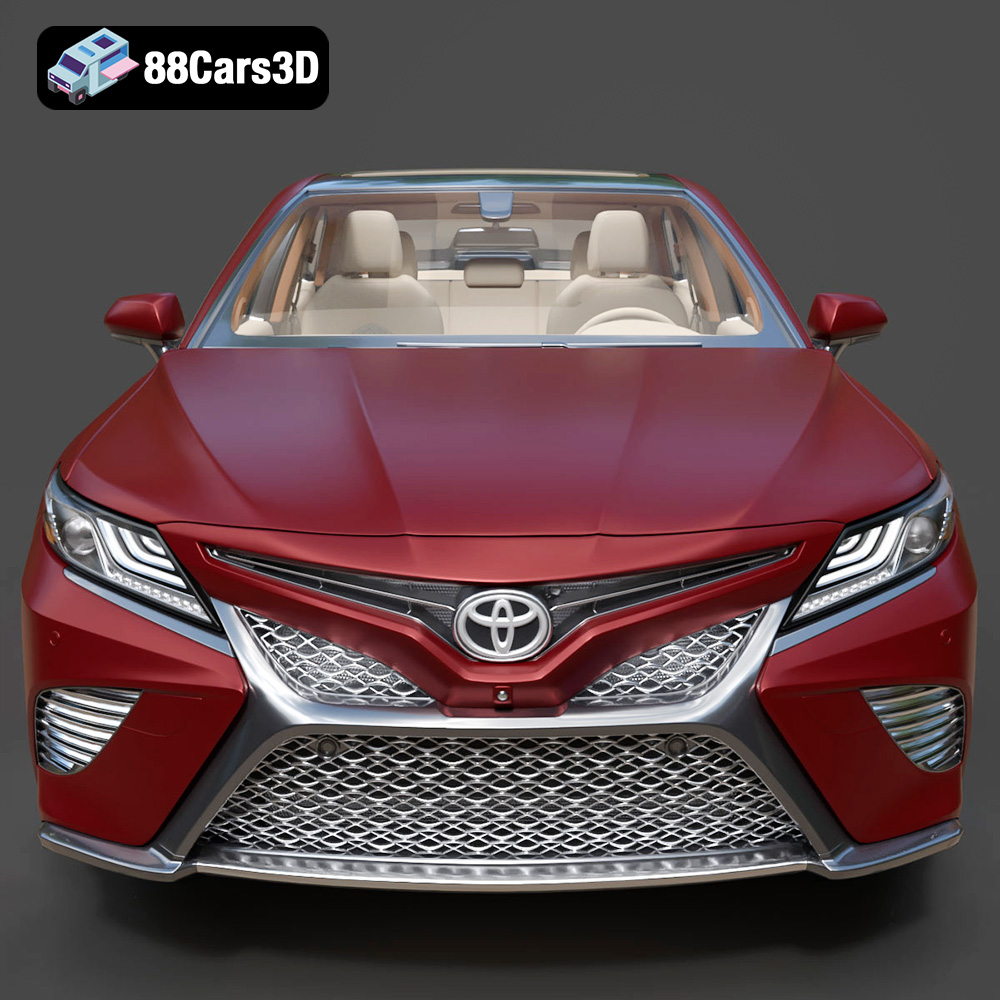
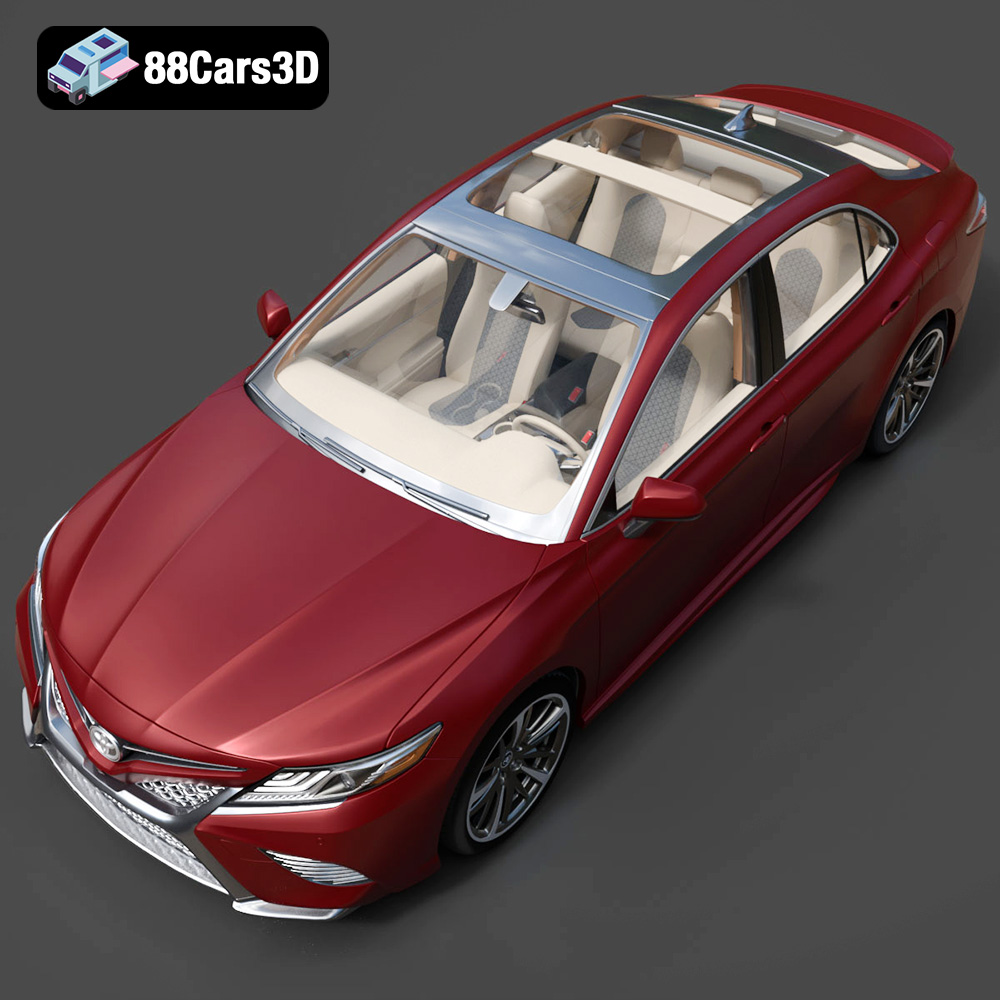
At 88cars3d.com, we understand this critical need for high-fidelity assets that seamlessly integrate into diverse professional pipelines. Our curated collection offers a range of vehicles designed to meet the rigorous demands of modern 3D projects. Today, we’re diving deep into an exemplary model from our collection: the 2018 Toyota Camry 3D Model. This eighth-generation Camry, renowned for its dramatic styling and engineering, provides a perfect case study for exploring the technical intricacies and versatile applications of a truly professional 3D vehicle asset.
This blog post will unravel the layers of complexity involved in creating and utilizing such a model, from understanding critical file formats to integrating it into real-time engines, rendering high-impact visuals, and even venturing into 3D printing. We’ll demonstrate how a single, high-quality asset like the 2018 Toyota Camry can be a foundational element for a myriad of creative and technical endeavors.
Creating a truly convincing 3D car model is an intricate process that goes far beyond simply replicating a vehicle’s silhouette. It demands a deep understanding of automotive design, topology optimization, and material science to ensure both visual fidelity and performance efficiency. The 2018 Toyota Camry 3D model exemplifies this balance, offering a robust foundation for any project.
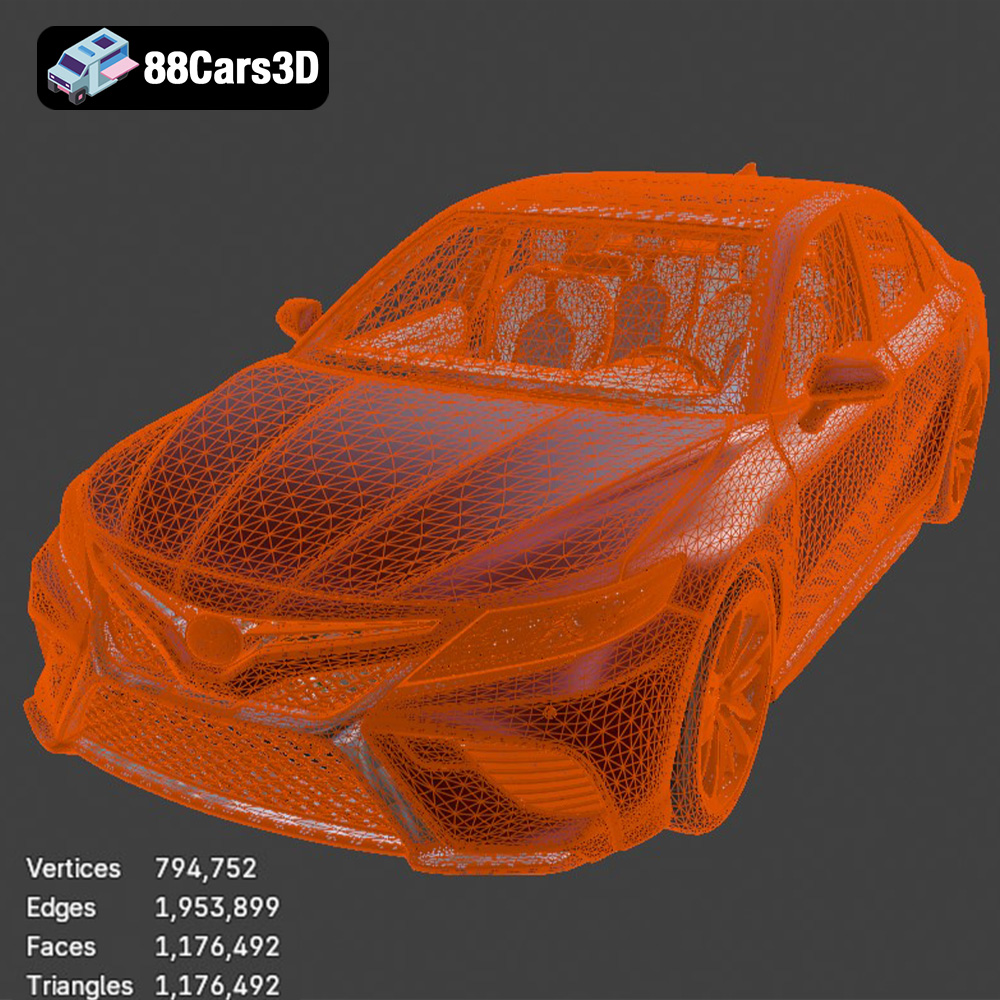
A premium 3D car model starts with clean, efficient topology. This refers to the arrangement of vertices, edges, and faces that make up the mesh. For real-time applications like games or AR/VR, maintaining an optimal polycount is crucial for performance. The 2018 Toyota Camry model, with its approximate triangle count of 150,000, strikes an excellent balance. This level of detail is high enough to capture the aggressive lines, sculpted doors, and sleek taillight assemblies of the actual vehicle without burdening the rendering engine.
Beyond the raw geometry, proper UV mapping is essential. UVs are the 2D coordinates that tell a 3D software how to project a texture onto the model’s surface. Flawless UVs ensure that textures — like the metallic finishes of the body paint or the intricate stitching on the interior seats — appear seamless and undistorted. Furthermore, the material setup, often utilizing Physically Based Rendering (PBR) workflows, accurately simulates how light interacts with different surfaces, from the reflective bi-LED headlights to the matte textures of interior plastics. This meticulous attention to detail allows the model to respond realistically to various lighting conditions, enhancing its visual impact in any scene.
Authenticity is key in automotive visualization. This means not only accurate exterior geometry but also meticulous internal detailing and real-world scale. The 2018 Toyota Camry 3D model boasts accurate frame geometry and proportions, directly based on the actual vehicle chassis. This ensures that when placed next to other real-world scaled assets, it fits perfectly within the environment, eliminating jarring scale discrepancies that can break immersion.
For advanced applications like animation or simulation, separate components are vital. This model features separate wheels, suspension, and steering components. This modularity allows animators to accurately simulate wheel rotation, suspension travel over bumps, and steering dynamics. Even the engine block is detailed, based on the 2.5L Dynamic Force inline-four design, and the authentic dual exhaust system details reflect the sportier trims. Inside, the cockpit is equally impressive, with detailed ergonomic bucket seats, an accurate leather-wrapped steering wheel, a high-fidelity Entune 3.0 infotainment screen, and precise center console controls. This comprehensive detailing makes the model not just visually appealing but functionally robust for demanding professional workflows.
Navigating the diverse landscape of 3D model file formats is crucial for any professional working with digital assets. Each format serves a specific purpose, offering unique advantages in terms of compatibility, data storage, and application. The 2018 Toyota Camry 3D model is thoughtfully provided in a comprehensive array of formats, ensuring maximum flexibility across various software and industry pipelines. Understanding when and why to use each format is fundamental to an efficient workflow.
The .blend format is the native file type for Blender, one of the most powerful and widely used open-source 3D creation suites. When you download the 2018 Toyota Camry in .blend format, you’re getting a fully editable Blender scene. This means not only the mesh geometry but also all materials (often set up with Blender’s Cycles or Eevee render engines), textures, lighting, camera setups, and any modifiers or animation data are preserved. It’s the ideal format for Blender users who need complete control over the asset, allowing for easy customization, re-texturing, rigging, and animation directly within their preferred software environment. Technical advantages include direct access to node-based materials, custom properties, and full scene hierarchy.
The .fbx (Filmbox) format, originally developed by Kaydara and now owned by Autodesk, is arguably the most prevalent exchange format in the 3D industry. It excels at transferring not just geometry, but also animation, skeletal data, skinning, materials, and textures between different 3D software applications and game engines. For the 2018 Toyota Camry, the .fbx is ideal for integration into real-time environments like Unreal Engine or Unity, or for importing into other DCC (Digital Content Creation) tools like Maya or 3ds Max. Its binary nature makes it relatively compact and efficient for complex scenes with animated elements, making it a cornerstone for game development and animation pipelines.
The .obj (Wavefront OBJ) format is a venerable and widely supported open standard for representing 3D geometry. It’s a simple, text-based format primarily used for transferring mesh data (vertices, normals, texture coordinates, and faces). While it can reference external material files (.mtl), it doesn’t support animation or advanced scene data. The .obj version of the Toyota Camry 2018 is perfect for situations where you need universal compatibility across virtually any 3D software, especially for static renders or as a base mesh for further sculpting or modeling. Its simplicity makes it robust and less prone to interpretation errors between different applications.
The .glb (GL Transmission Format Binary) is an increasingly popular format, particularly optimized for web-based 3D, augmented reality (AR), and virtual reality (VR) applications. It’s a self-contained, single-file format that includes geometry, materials (using PBR workflows), textures, and animation. The binary nature of .glb makes it compact and fast-loading, which is critical for web performance and mobile AR/VR experiences. For the 2018 Toyota Camry, the .glb format is perfect for embedding in websites, creating virtual showrooms, or developing mobile AR configurators where a high-quality, lightweight, and performant model is essential.
The .stl (STereoLithography) format is the undisputed standard for 3D printing. It represents only the surface geometry of a 3D object using a tessellated mesh of triangles, without any color, texture, or material information. For hobbyists or professionals looking to physically manifest the 2018 Toyota Camry, the .stl version provides the necessary data for additive manufacturing. It’s crucial for an .stl model to be “manifold,” meaning it has no holes or inverted normals, ensuring a watertight mesh suitable for slicing software to generate print paths. The provided .stl allows users to convert the digital model into a tangible collectible or prototype.
The .ply (Polygon File Format) is another widely used format for storing 3D data, particularly common in 3D scanning, scientific visualization, and CAD/CAM applications. Unlike .obj, .ply can store a wider range of properties, including color, transparency, normals, texture coordinates, and even confidence values for scanned data. While less common for general DCC work compared to .fbx, the .ply version of the 2018 Toyota Camry can be valuable for precise engineering analysis, detailed surface inspection, or workflows involving specialized CAD software where richer attribute data is required alongside the mesh.
The .unreal format signifies an asset specifically prepared or packaged for Unreal Engine. While often technically an .fbx internally, this label implies that the asset is optimized, correctly scaled, has appropriate material slots, and potentially includes collision meshes or basic blueprints ready for direct import and use within Unreal Engine. For the 2018 Toyota Camry, having an .unreal labeled asset means a smoother, faster workflow for game developers, eliminating much of the setup time typically required after a raw .fbx import.
The .max format is the native file type for Autodesk 3ds Max, a leading software for 3D modeling, animation, and rendering. Similar to .blend for Blender, the .max file for the 2018 Toyota Camry provides a complete 3ds Max scene, including geometry, materials (potentially V-Ray, Corona, or standard Max materials), lights, cameras, and animation data. This format offers 3ds Max users full editability and control, making it ideal for high-end automotive rendering, architectural visualization integration, and complex animation projects where the power of 3ds Max’s modifiers and rendering capabilities are leveraged.
The demands of modern game development are constantly pushing the boundaries of real-time rendering. Integrating realistic vehicles like the 2018 Toyota Camry into immersive digital worlds requires carefully optimized assets that balance visual quality with performance. The provided 3D model is a prime example of a game-ready asset designed for these very purposes.
A “game-ready” asset implies specific optimizations that ensure smooth performance within real-time engines. For the 2018 Toyota Camry 3D model, the approximate 150,000 triangle count is a sweet spot. It’s detailed enough for close-up shots and high-definition renders, yet efficient enough to be used in quantity within large open-world environments or racing games without causing significant framerate drops. Beyond polycount, proper UV mapping for texture atlases, efficient PBR material setups, and pre-calculated ambient occlusion maps contribute to the model’s game-ready status.
Case studies from game studios often highlight the challenge of balancing asset quality with engine performance. Using pre-optimized 3D car models like this Camry drastically reduces development time and resources. Imagine populating a bustling city scene in a Grand Theft Auto-style game or creating a diverse car park for a racing simulator. The consistent quality and optimization of assets from 88cars3d.com ensure that the developer can focus on gameplay mechanics and world-building, rather than spending countless hours optimizing individual vehicle meshes. The separate wheels, suspension, and steering components are also crucial, allowing for realistic physics simulation and animation within the game engine, from simple wheel rotation to complex vehicle deformation upon impact.
Unreal Engine is a powerhouse for creating stunning real-time experiences, and integrating vehicle assets efficiently is key. The 2018 Toyota Camry 3D model, specifically available in .fbx and .unreal formats, streamlines this process. Upon importing the .fbx, developers can leverage Unreal’s robust material editor to set up advanced PBR materials. A common workflow involves creating a master material for vehicles, allowing easy instantiation and color variations (like the customizable body colors mentioned for the Camry) for multiple car instances.
For animation, Unreal’s animation blueprints can be used to drive the rotation of wheels, the articulation of suspension, and the steering wheel based on vehicle input. The properly configured pivot points for these components in the Camry model simplify the rigging process significantly. Furthermore, setting up appropriate collision meshes ensures realistic interactions with the environment. With advanced rendering features like Lumen and Nanite in modern Unreal Engine versions, even highly detailed assets like the Camry can be rendered with incredible fidelity at real-time speeds, offering dynamic global illumination and virtualized geometry that pushes the boundaries of visual realism in games and interactive applications.
While game development showcases the real-time capabilities of 3D car models, high-end rendering and visualization push the boundaries of photorealism for marketing, architectural, and product design applications. The 2018 Toyota Camry 3D model is equally adept in these static, pre-rendered scenarios.
In architectural visualization (arch-viz), context is everything. Placing a realistic vehicle like the 2018 Toyota Camry in front of a new building design or within an urban streetscape instantly grounds the scene in reality, providing scale, depth, and a sense of lived-in authenticity. The Camry’s contemporary styling makes it a perfect fit for modern architectural designs, implying a sophisticated urban lifestyle. Renderings benefit immensely from the model’s detailed exterior, accurate proportions, and realistic materials.
Artists can utilize studio lighting setups to highlight the car’s design features or integrate it into HDRI (High Dynamic Range Image) environments for natural, believable lighting and reflections. The ability to change body colors and adjust material finishes (matte, gloss, metallic) allows for tailored presentation. For instance, a luxury metallic finish could highlight an upscale condo project, while a standard factory color might fit a suburban development render. The presence of a familiar, high-quality vehicle elevates the entire scene, drawing viewers in and making the architectural vision feel more tangible.
The retail automotive industry is rapidly adopting 3D visualization for virtual showrooms, online configurators, and immersive AR/VR experiences. The 2018 Toyota Camry 3D model is perfectly suited for these applications. Imagine a customer exploring the Camry’s interior in a VR headset, opening doors, changing paint colors, and inspecting every detail as if they were physically present in the dealership. The optimized geometry and clean topology ensure these experiences are smooth and interactive, even on less powerful devices.
For AR applications, customers can “place” the Camry model in their driveway using a smartphone, experimenting with colors and trims in a real-world context. The .glb format, specifically designed for web and AR/VR, is invaluable here, providing a compact, performant, and visually rich asset for these interactive marketing tools. Such applications not only enhance customer engagement but also provide a powerful sales tool, offering a level of personalization and immersion traditional showrooms cannot match.
The journey of a 3D model doesn’t always end on a screen. For enthusiasts, collectors, or even designers needing a physical prototype, 3D printing offers an exciting avenue to bring digital creations into the tangible world. The 2018 Toyota Camry 3D model is designed with 3D printing in mind, providing an .stl format specifically for this purpose.
Converting a high-detail digital model for 3D printing requires careful consideration. The .stl format, while standard, needs a “watertight” or manifold mesh—meaning no holes or intersecting geometry—to ensure a successful print. The 2018 Toyota Camry model is crafted to facilitate this. Recommended scales like 1:12, 1:18, or 1:24 allow for various display sizes, balancing detail retention with print time and material cost.
For optimal results, particularly with fine details like the vehicle’s grilles, lights, and interior components, resin printing (SLA/DLP) is highly recommended over FDM (Fused Deposition Modeling). Resin printers can achieve layer heights as fine as 0.04–0.12 mm, capturing the nuances of the Camry’s design more accurately. Important print settings include wall thickness (1.2–2.0 mm for structural integrity), infill (20–30% for a balance of strength and material use), and the strategic use of supports. For complex areas like the exhaust system, mirrors, and undercarriage, supports are indispensable. Printing the frame angled for structural integrity and printing wheels separately are common techniques to maximize print quality and minimize post-processing.
The journey from a raw 3D print to a display-worthy model involves significant post-processing. This typically includes sanding to smooth layer lines or support marks, followed by a primer coat to prepare the surface for painting. The real magic happens with paint, where hobbyists can meticulously apply authentic factory colors, often with metallic finishes, to replicate the look of a real 2018 Toyota Camry. Techniques like airbrushing, masking, and clear-coating can achieve stunning, showroom-quality finishes.
Customization doesn’t stop at paint. Modelers can add finer details such as window tint, interior flocking for carpet texture, or even miniature decals. The ability to modify tire textures and material finishes in the digital model translates to choosing appropriate paints and finishes for the physical model. This hands-on process allows enthusiasts to create truly unique and personalized representations of their favorite vehicles, demonstrating the incredible versatility derived from a well-prepared 3D asset.
In a competitive digital landscape, the distinction between good and exceptional often lies in the quality of your foundational assets. Investing in professionally crafted 3D models isn’t just a luxury; it’s a strategic decision that impacts efficiency, visual impact, and ultimately, the success of your project.
Developing a high-fidelity 3D car model from scratch is an incredibly time-consuming and skill-intensive endeavor. It requires expertise in modeling, texturing, UV mapping, and optimization, often taking hundreds of hours for a single vehicle. This is where the value of pre-optimized, production-ready assets truly shines. By sourcing 3D car models from a reputable marketplace like 88cars3d.com, you bypass these initial development hurdles, allowing your team to focus directly on integration, creativity, and project-specific tasks. The 2018 Toyota Camry 3D model, for instance, comes with clean topology, optimal polycount, and multiple file formats, ready to drop into your chosen pipeline.
This efficiency translates to significant cost savings and faster project turnaround times. Furthermore, purchasing from a dedicated platform ensures a level of professional quality assurance, knowing that the models have been rigorously prepared and tested for common applications. This allows artists and developers to confidently integrate these assets, knowing they meet industry standards for realism and performance.
The 2018 Toyota Camry 3D model stands as a testament to the power of a versatile, high-quality asset. Its detailed exterior, complete with accurate proportions and intricate lighting, and its fully realized interior with ergonomic seats and an infotainment system, make it suitable for a vast array of applications. Whether your project demands real-time performance in a game engine, photorealistic rendering for a marketing campaign, or a precise model for 3D printing, this model delivers.
Its availability in multiple formats—.blend, .fbx, .obj, .glb, .stl, .ply, .unreal, and .max—ensures compatibility across virtually every professional 3D workflow. This adaptability makes it an invaluable addition to any digital asset library, serving as a reliable workhorse that can be tailored to diverse creative visions. From urban traffic simulations to virtual showrooms and custom physical models, the 2018 Toyota Camry is ready to elevate your next project.
The world of 3D visualization thrives on detail, accuracy, and efficiency. As we’ve explored, a high-quality 3D car model is far more than just a digital replica; it’s a meticulously crafted asset designed to serve a multitude of purposes across various industries. From the critical importance of understanding different file formats to the specific technical considerations for game development, high-end rendering, and even 3D printing, every aspect contributes to the model’s overall utility and impact.
The 2018 Toyota Camry 3D model from 88cars3d.com embodies this blend of technical excellence and artistic fidelity. Its optimized geometry, realistic detailing, and comprehensive range of included file formats make it an exceptionally versatile tool for professionals seeking to enhance their projects. Whether you’re building an immersive open-world game, creating a photorealistic architectural visualization, or bringing a digital design to life through 3D printing, this model offers a robust and reliable foundation.
Investing in professional 3D car models like the 2018 Toyota Camry ensures that your projects achieve the highest levels of visual realism and performance, allowing you to focus on your creative vision without compromising on technical quality. Explore this model and discover a vast array of other premium 3D assets available at 88cars3d.com to accelerate your next creative endeavor.
The 2018 Toyota Camry, representing the eighth generation of this iconic mid-size sedan, brought a dramatic shift in styling with its aggressive lines, sportier stance, and prominent front grille. Known for its legendary reliability and comfort, this specific generation introduced the TNGA platform, elevating its driving dynamics while boasting striking visual elements like its sweeping roofline, sculpted doors, and modern LED lighting signature.
This high-quality 3D model features game-ready optimization with an approximate triangle count of 150,000, ensuring excellent performance without sacrificing visual fidelity. Designed for modern pipelines, it boasts clean topology perfect for real-time applications like game development, AR/VR experiences, architectural visualization, and high-end animation.
Perfect for urban traffic simulations, architectural renders, open-world driving games, and virtual showroom applications.
.blend, .fbx, .obj, .glb, .stl, .ply, .unreal, .max
Tags:
toyota, camry-2018, sedan, mid-size-car, family-car, car-3d-model, game-ready, low-poly, optimized, game-asset, rendering, vr-ar, blend, fbx, obj, glb, stl, ply, unreal, max
$19.99
.blend
.fbx
.glb
.max
.obj
.ply
.rendering
.sedan
.stl
.toyota
.unreal
camry-2018
car-3d-model
family-car
game asset
game-ready
low-poly
mid-size-car
optimized
VR/AR