Get 20% OFF All Premium 3D & STL Models!

In the fast-evolving realms of game development, cinematic rendering, virtual reality, and product visualization, the demand for exceptionally detailed and technically sound 3D car models has never been higher. A truly outstanding 3D vehicle asset isn’t just about aesthetic appeal; it’s about meticulous craftsmanship, optimized topology, and seamless integration into diverse professional pipelines. Such assets are the cornerstone for creating immersive digital experiences that captivate audiences and elevate projects to new levels of realism.
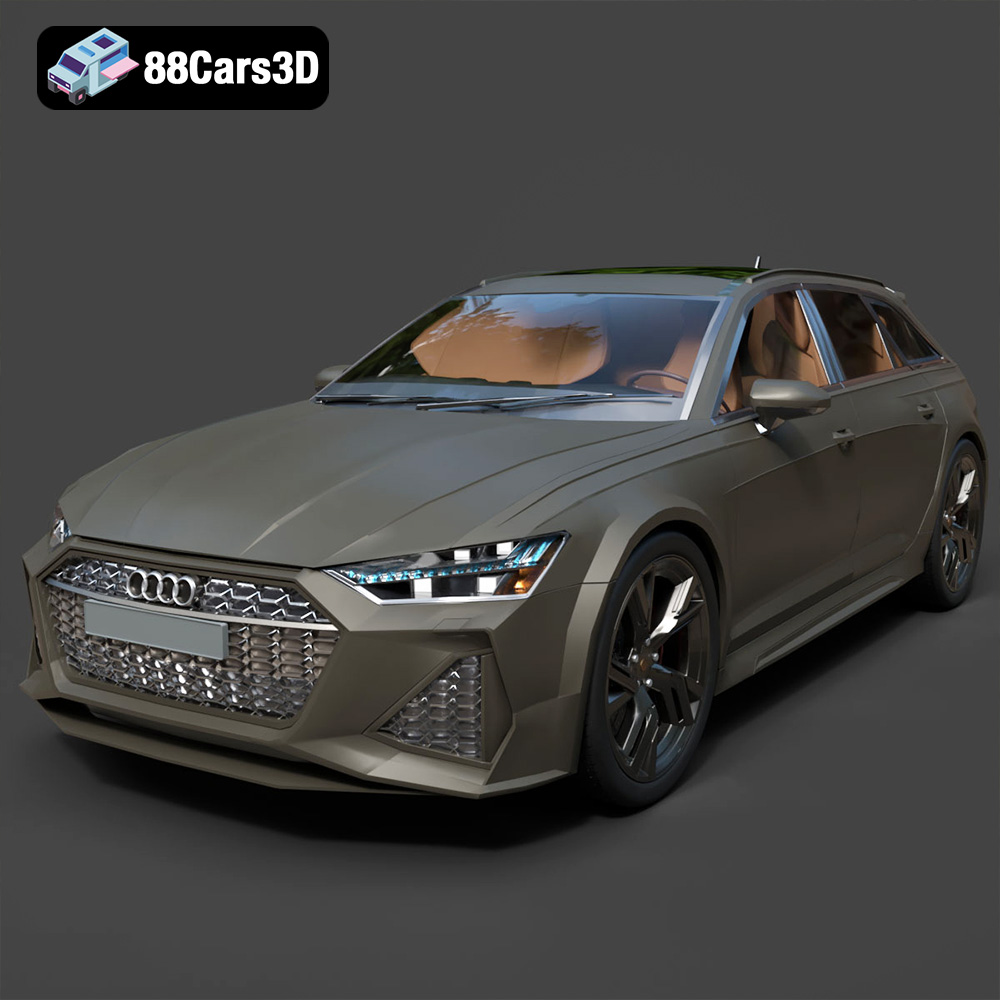
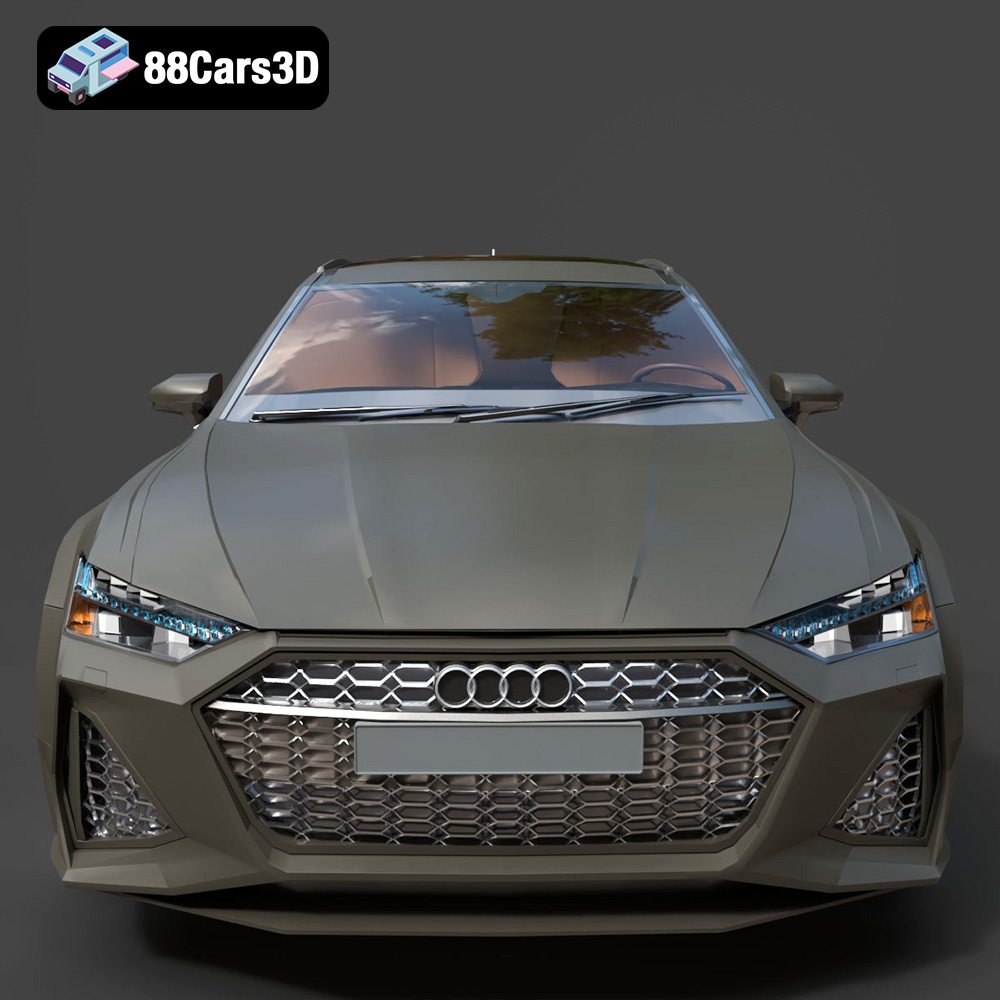
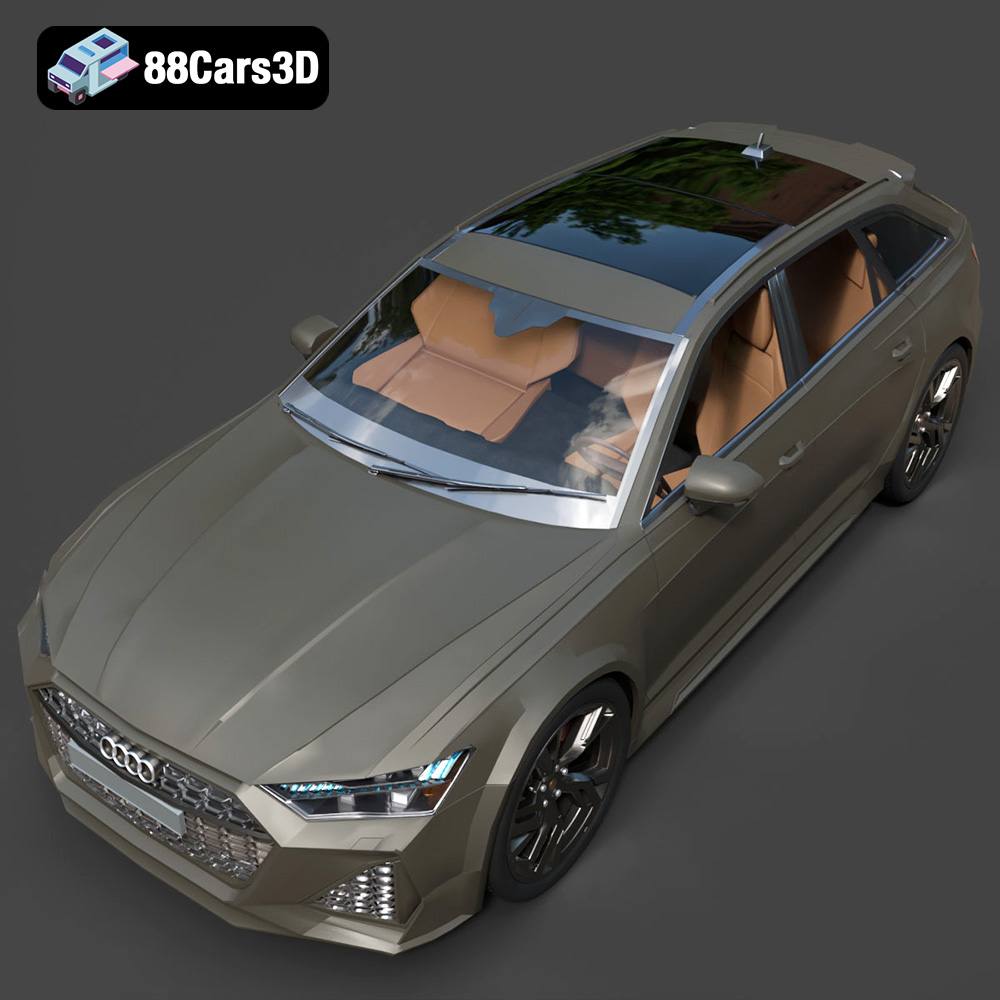
Consider the allure of a legendary vehicle like the Audi RS6 – a masterful blend of aggressive performance and sophisticated design. Its wide stance, iconic Singleframe grille, and powerful presence make it an instant classic in both the real and virtual worlds. For professionals seeking to integrate such an icon into their projects, a premium 3D representation is indispensable. This is precisely where assets like the Audi RS6 3D Model from 88cars3d.com stand out, offering unparalleled quality and versatility for a myriad of applications, from high-octane racing games to photorealistic architectural visualizations.
The choice of file format for a 3D model is far more than a technicality; it dictates compatibility, functionality, and the efficiency of your workflow. For a versatile asset like the Audi RS6 3D Model, understanding each format’s strengths and ideal use cases is crucial for maximizing its potential across different software and platforms. Here’s a detailed breakdown of the formats typically included with professional 3D car models:
The .blend format is Blender’s native file type, storing an entire Blender scene with all its components: meshes, materials, textures, lighting, cameras, animations, physics simulations, and modifiers. For users working within the Blender ecosystem, this format offers the most flexibility. You can open the file and immediately access every editable aspect of the Audi RS6 3D Model, from adjusting the honeycomb stitching on the RS sport seats to re-rigging the suspension. It’s ideal for deep customization, complex animation setups, and leveraging Blender’s powerful Cycles or Eevee rendering engines for high-quality automotive rendering.
.fbx (Filmbox) is arguably the most widely adopted proprietary file format for 3D data exchange between different software applications. Developed by Autodesk, it excels at carrying comprehensive scene data, including geometry, materials (with PBR support), textures, animations (skeletal and blend shapes), cameras, and lights. For integrating the Audi RS6 3D Model into real-time pipelines like Unreal Engine or Unity, .fbx is the go-to choice due to its robust support for animations and hierarchical structures, ensuring that separate wheels, suspension, and steering components retain their pivot setups for dynamic movement.
The .obj (Wavefront OBJ) format is a venerable and universally supported text-based file that primarily describes 3D geometry – vertices, faces, UV coordinates, and normals. While it can reference external material (.mtl) files, its material definition capabilities are basic compared to .fbx or .blend. Its strength lies in its simplicity and widespread compatibility, making it an excellent choice for transferring the raw mesh data of the Audi RS6 across virtually any 3D software without loss of core geometry. It’s perfect for scenarios where you need to import the base model and then apply custom materials and textures within your target application.
.glb (GL Transmission Format Binary) is the binary version of glTF, an open standard designed for the efficient transmission and loading of 3D scenes and models by engines and applications. It packages geometry, materials, textures, and animations into a single, compact file, making it exceptionally well-suited for web-based 3D viewers, AR/VR experiences, and mobile applications. When deploying the Audi RS6 3D Model in a virtual car configurator or an immersive VR showroom, .glb ensures fast loading times and optimal performance without sacrificing visual quality.
The .stl (Stereolithography) format represents a 3D model as a series of connected triangles, describing only the surface geometry without color or texture information. It is the de facto standard for 3D printing. For hobbyists or professionals looking to bring the Audi RS6 into the physical world, the .stl file is essential. The provided Audi RS6 3D Model is convertible to .stl, allowing for tangible display-scale replicas, though careful preparation regarding scale, supports, and print orientation (as specified in the product description) is necessary for optimal results.
The .ply (Polygon File Format) is another widely supported format for storing 3D data, often used for representing 3D scanned objects. It can store not only geometric information (vertices, faces) but also additional data like color, transparency, and even properties per vertex or face. While less common for general animation, .ply is valuable in scientific, engineering, or CAD contexts where precise mesh data and attribute storage are paramount, such as for detailed analysis or specific manufacturing processes beyond typical 3D printing.
While not a standalone file format in the traditional sense like .fbx or .obj, an “.unreal” file or asset typically refers to a pre-packaged or specifically prepared asset designed for direct import and optimal performance within Unreal Engine. This often implies that the Audi RS6 3D Model is provided with proper material setups, potentially PBR textures already configured for Unreal’s rendering pipeline, correct scale, and pivot points. This saves significant time and effort in asset integration, allowing developers to drop the car directly into their scenes and begin immediate iteration for game development or high-fidelity real-time rendering.
The .max format is the native file type for Autodesk 3ds Max, a powerful 3D modeling, animation, and rendering software. Similar to .blend, it contains the complete scene data, including all objects, modifiers, materials, lights, cameras, and animation tracks specific to 3ds Max. For professionals entrenched in the 3ds Max workflow, having the Audi RS6 3D Model in .max format ensures full editability and compatibility with advanced rendering solutions like V-Ray or Corona Renderer, making it perfect for creating high-end marketing visuals or detailed animations.
The availability of such a comprehensive suite of formats for the Audi RS6 3D Model from 88cars3d.com underlines its adaptability, making it a truly future-proof asset for any professional digital artist or developer.
Creating a truly “game-ready” 3D car model like the Audi RS6 is an intricate process that balances visual fidelity with performance optimization. It’s about more than just replicating a vehicle’s shape; it’s about engineering the digital asset for efficiency within real-time rendering engines.
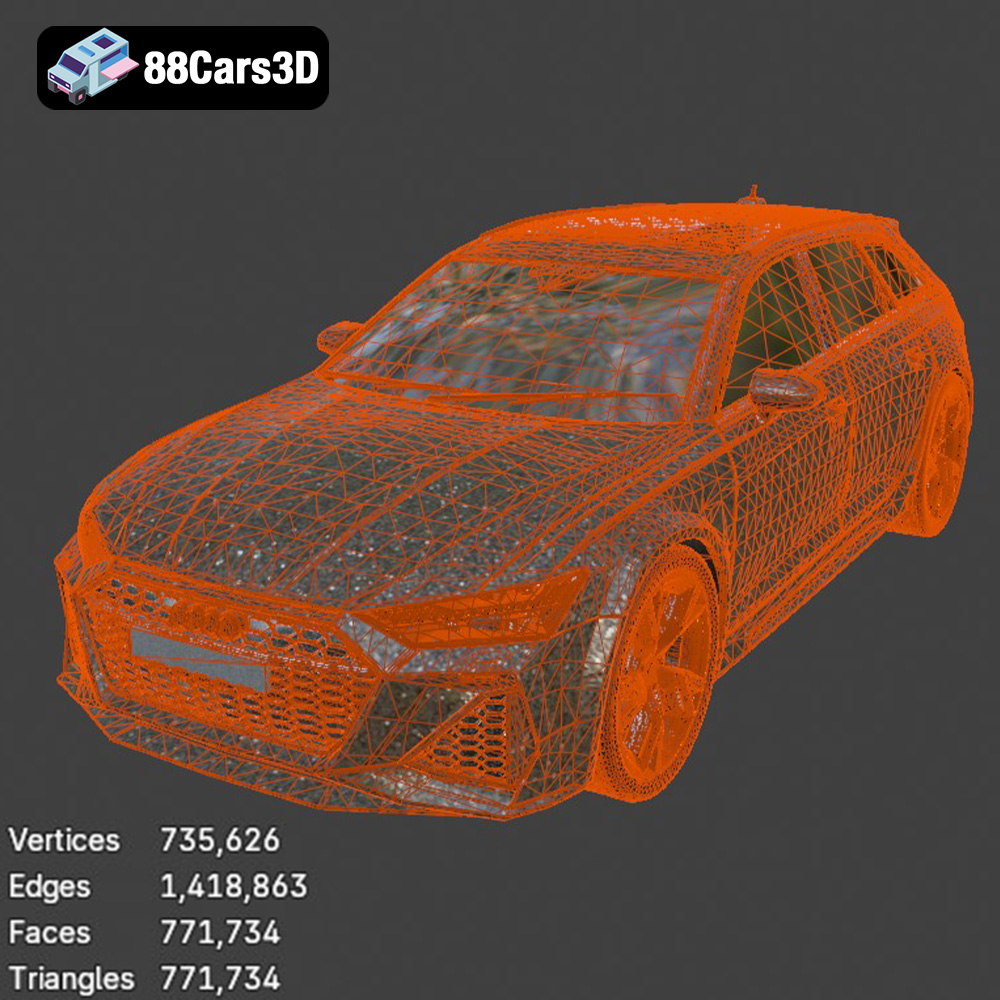
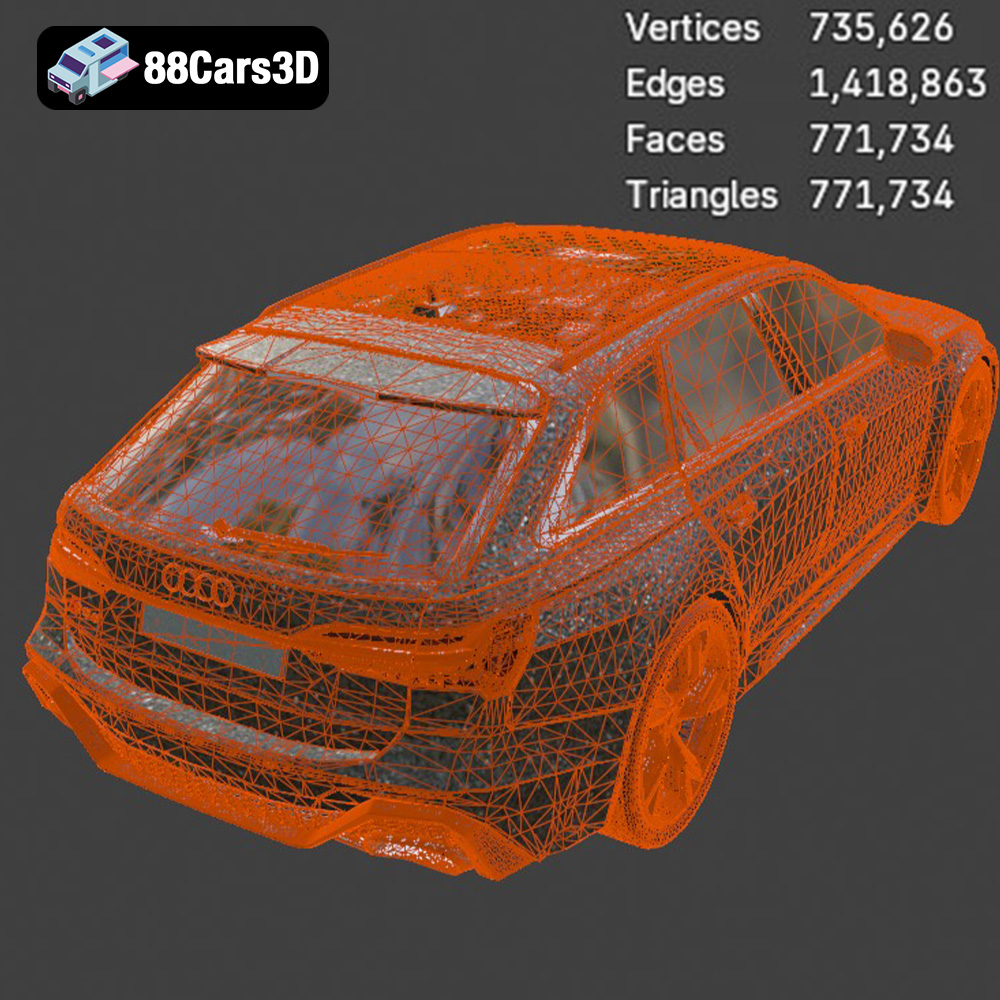
At the core of a game-ready asset is its topology – the arrangement of vertices, edges, and faces that form the mesh. The Audi RS6 3D Model boasts exceptional topology and an optimized triangle count of approximately 150,000. This strikes a perfect balance: enough detail to maintain high-end visual realism, but efficient enough to not bog down real-time engines like Unreal or Unity. Clean, well-optimized topology minimizes rendering overhead, reduces artifacting, and facilitates smooth deformations during animations. Furthermore, proper UV unwrapping is critical, ensuring textures map correctly and efficiently, without stretching or seams, which is an implicit requirement for any high-quality game asset.
Photorealistic rendering in modern engines relies heavily on Physically Based Rendering (PBR) materials. PBR pipelines simulate how light interacts with surfaces in the real world, producing incredibly convincing results. A high-quality 3D car model like the Audi RS6 comes with PBR-ready materials, typically comprising Albedo (base color), Normal (for surface detail), Roughness (for micro-surface variations), Metallic (for conductive surfaces), and Ambient Occlusion (for soft shadows in crevices) maps. These textures, carefully crafted, define everything from the subtle metallic flake in the paint to the sheen of the RS sport seats and the texture of the low-profile tires, allowing artists to achieve realistic reflections, refractions, and overall surface realism.
For any vehicle in a dynamic environment, proper rigging is paramount. The Audi RS6 3D Model features separate wheels, suspension, and steering components, each with correctly set up pivots. This allows for realistic wheel rotation, independent suspension travel, and accurate steering animations – crucial for racing games, simulators, or any scene where the car is in motion. A well-rigged model saves animators countless hours, enabling them to quickly create compelling sequences without wrestling with complex hierarchies or incorrect pivot points.
Beyond interactive applications, high-quality 3D car models are essential for static renders and animations that showcase automotive design and luxury. The Audi RS6 3D Model excels in these scenarios, providing a perfect canvas for stunning visualizations.
Achieving photorealistic automotive rendering begins with sophisticated lighting. Whether in 3ds Max, Blender, or Unreal Engine, artists utilize a combination of HDRI (High Dynamic Range Image) environment maps for realistic global illumination and strategically placed area lights to highlight specific features of the Audi RS6’s aggressive styling. Reflection probes accurately capture and display reflections on the car’s paintwork and chrome accents, enhancing the perception of depth and material quality. The goal is to mimic professional automotive photography, emphasizing the car’s contours, the sharpness of its lines, and the luxurious finishes of its exterior and interior.
A car model doesn’t exist in a vacuum. Integrating the Audi RS6 into a compelling scene requires careful composition. For architectural visualization, the car can be placed in a driveway or an urban street, adding a touch of luxury and realism to a rendered building project. For lifestyle scenes, it might be parked against a scenic backdrop or positioned dynamically to suggest speed and adventure. The model’s real-world scale accuracy ensures it fits seamlessly into any environment, maintaining correct proportions relative to surrounding objects and human figures.
Even the best raw renders benefit from post-production. Techniques like color grading, depth of field adjustments, subtle lens flares, and motion blur (for animated sequences) can push the realism of the Audi RS6 render further. Adding a touch of atmospheric haze or tweaking reflections can transform a good render into a breathtaking visual, making the car feel truly present and tangible. This final polish is often what differentiates a professional-grade visualization from a basic render.
The versatility of a well-crafted 3D model extends far beyond traditional rendering and game development, opening doors to innovative experiences in augmented reality, virtual reality, and even physical fabrication.
The optimized geometry and PBR-ready materials of the Audi RS6 3D Model make it ideal for immersive AR/VR applications. Imagine a virtual showroom where potential buyers can walk around the RS6, open its doors, and even sit inside the detailed cockpit, exploring the Virtual Cockpit and RS sport seats. With formats like .glb, the model can be deployed in lightweight, high-performance web-based AR experiences, allowing users to project a full-scale Audi RS6 into their driveway via their smartphone. These virtual configurators and interactive showrooms offer unparalleled engagement, bringing the luxury car experience directly to the consumer.
For enthusiasts who appreciate tangible models, the Audi RS6 3D Model can be prepared for 3D printing. The inclusion of the .stl format facilitates this process, allowing for the creation of display-scale hobbyist models. To achieve the best results, specific print settings are recommended: a scale of 1:12 to 1:24, a fine layer height (0.04–0.12 mm, with resin printing often preferred for intricate details), and adequate wall thickness (1.2–2.0 mm) for structural integrity. Supports are crucial for overhangs and delicate parts like the exhaust, mirrors, and steering wheel. Post-processing, including sanding, priming, and painting with authentic factory colors, can bring the printed model to life with stunning realism.
The true value of a premium 3D asset lies in its seamless integration into established professional pipelines, accelerating production and enhancing creative output.
For game developers, time is a critical resource. The game-ready nature of the Audi RS6 3D Model, with its optimized ~150,000 triangle count and proper pivot setups, makes it a perfect drop-in asset for Unreal Engine and Unity projects. The .fbx and .unreal formats ensure minimal setup. Developers can quickly integrate the car into open-world environments, racing titles, or cinematic cutscenes. Its optimized topology allows for efficient LOD (Level of Detail) generation, ensuring consistent performance across different hardware configurations. The detailed interior is also optimized for first-person POV, making it suitable for driving simulators or in-car experiences.
Architectural visualization studios and automotive marketing agencies can leverage the Audi RS6 3D Model to create compelling visual narratives. Using 3ds Max or Blender with powerful renderers like V-Ray, Corona, or Cycles, artists can produce photorealistic images and animations that showcase the vehicle in various settings. Whether it’s an elegant showroom, an urban streetscape, or a dynamic lifestyle shoot, the model’s accurate proportions and detailed features (like HD Matrix LED headlights and dynamic taillights) ensure a premium look. These high-fidelity renders are invaluable for advertising campaigns, brochures, and immersive brand experiences.
Flexibility is key in any creative project. The Audi RS6 3D Model offers extensive customization options. Artists can easily change body colors to match factory specifications or custom finishes, modify tire textures for track versus street variants, and adjust material finishes between matte, gloss, or metallic looks. Adapting the lighting to suit different environments – be it a bright sunny day, a dramatic twilight, or a sleek studio setup – allows for endless creative possibilities. This adaptability ensures the model can be iterated upon and tailored precisely to meet specific project requirements without needing to start from scratch.
In the demanding world of 3D content creation, a high-quality asset is not just a luxury; it’s a necessity. The Audi RS6 3D Model exemplifies this principle, offering a meticulously crafted, game-ready, and highly versatile digital representation of an iconic performance vehicle. From its optimized topology and PBR-ready materials to its comprehensive array of file formats – including .blend, .fbx, .obj, .glb, .stl, .ply, .unreal, and .max – this model is designed to seamlessly integrate into virtually any professional pipeline.
Whether your project demands cinematic automotive rendering, a high-performance game asset, an interactive AR/VR experience, or even a physical 3D print, this model provides the technical foundation for exceptional results. Investing in such a robust asset from a reputable source like 88cars3d.com ensures that artists and developers can focus on their creative vision, confident that their base model meets the highest industry standards. It’s a testament to how precision and detail in 3D car models can truly unlock the full potential of digital visualization and interaction.
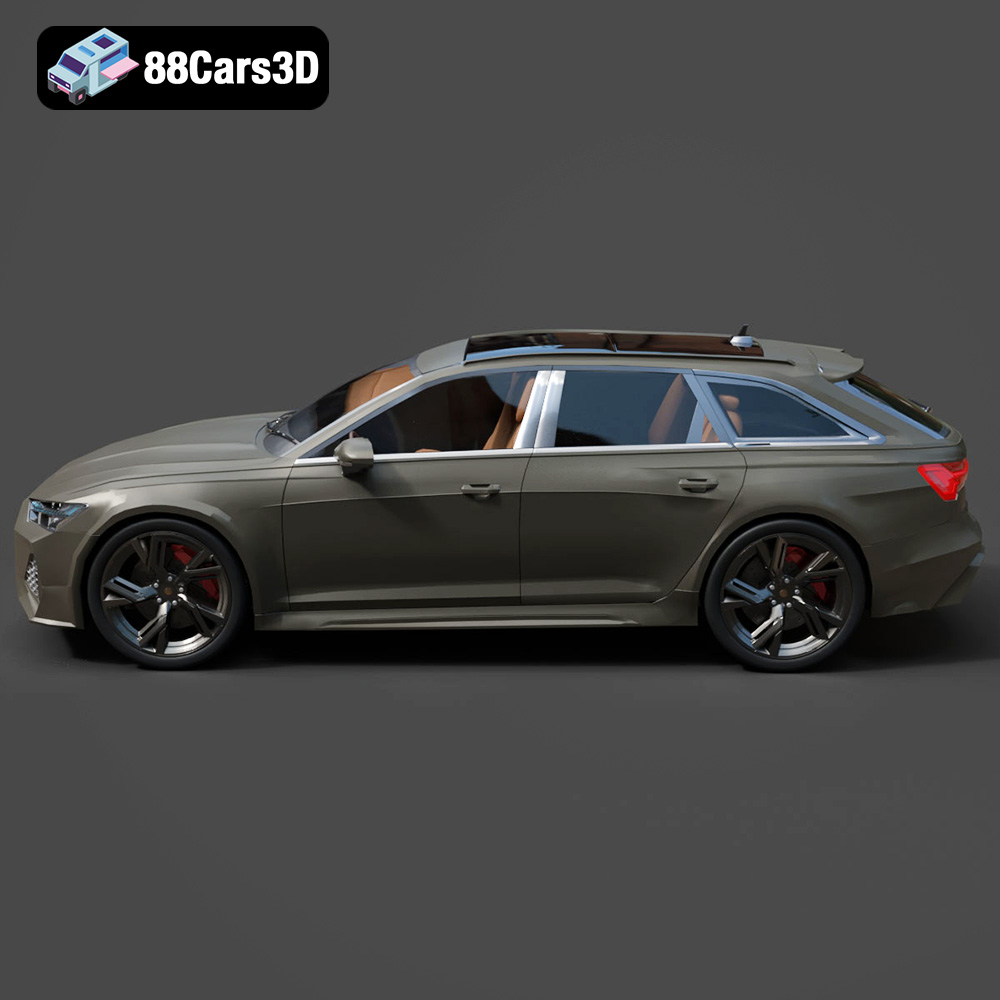
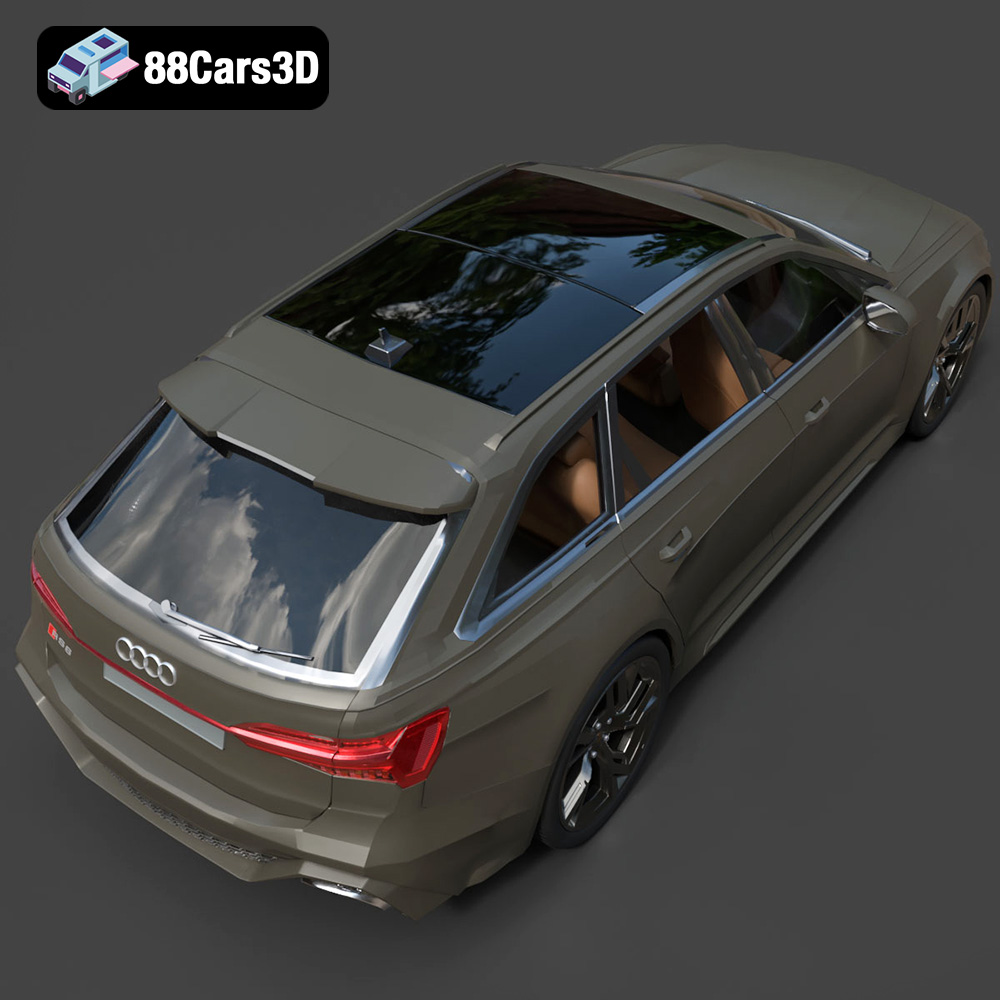
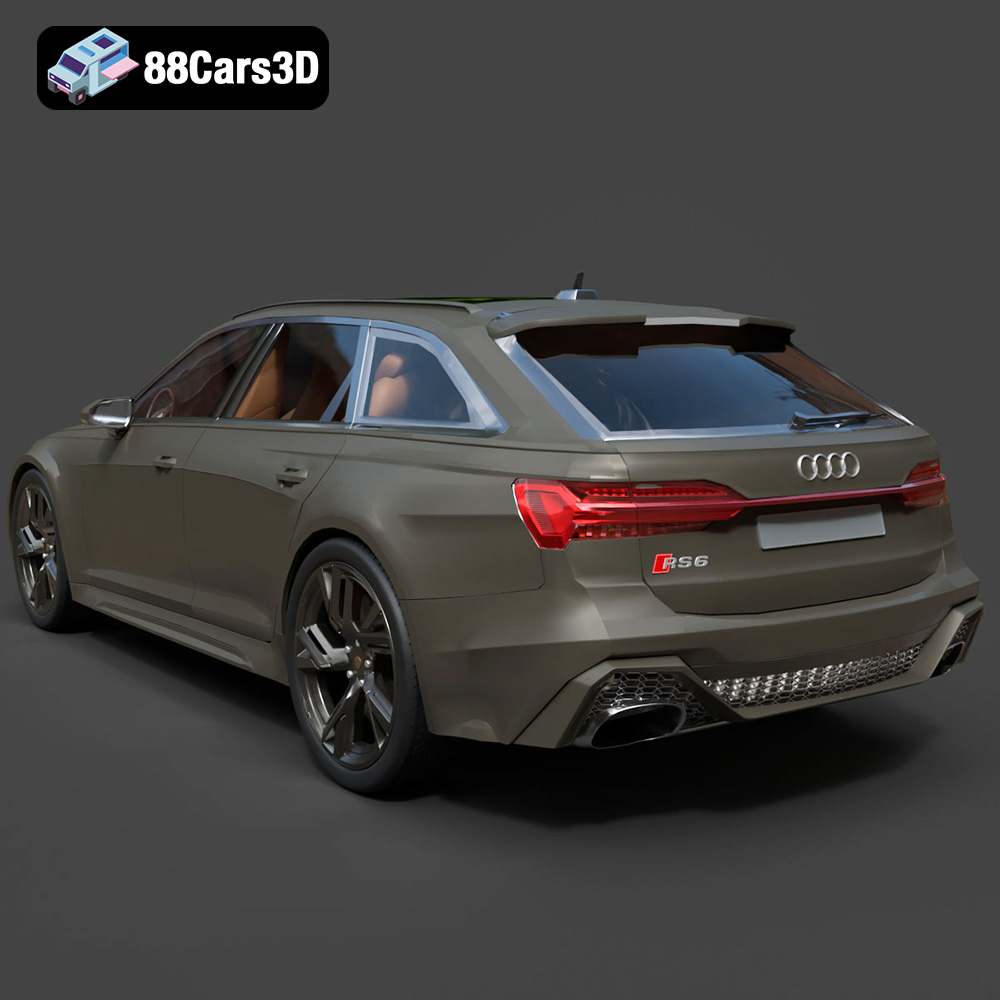
The Audi RS6 is a legendary high-performance estate car, combining aggressive styling with immense practicality and blistering speed. Known for its wide stance, iconic Singleframe grille, massive air intakes, and signature dual oval exhaust pipes, it represents the pinnacle of the modern sports wagon. This game-ready 3D model boasts exceptional topology and an optimized triangle count, ensuring top-tier visual fidelity without compromising real-time performance. Designed for game development, AR/VR experiences, architectural visualization, and high-end animations.
$19.99
.airbus .a380 .qatar .airliner .aircraft .airplane .jet .commercialaircraft .car3dmodel .rendering .simulation .gameasset .arvr .flight .blend .fbx .obj .glb .stl .ply .unreal .max
.audi
.blend
.fbx
.glb
.obj
.ply
.rendering
.stl
.unreal
audi-rs6
car-3d-model
estate-car
game asset
game-ready
low-poly
optimized
rs6
sports-wagon
VR/AR