Get 20% OFF All Premium 3D & STL Models!

The world of digital content creation is constantly evolving, demanding ever-increasing levels of detail, optimization, and versatility from 3D assets. In no field is this more evident than automotive design and visualization, where precision and performance are paramount. From blockbuster racing games to immersive virtual showrooms and cutting-edge AR/VR experiences, a high-quality 3D car model forms the cornerstone of any successful project. Today, we’re taking a closer look at a prime example of such an asset: the Ford Mustang GT 3D Model, available for download on 88cars3d.com. This iconic American muscle car, meticulously crafted for peak digital performance, showcases the intricate balance between artistic fidelity and technical optimization that professionals demand. Its versatile array of included file formats makes it an invaluable asset for anyone looking to integrate a legendary vehicle into their next digital masterpiece.
One of the most crucial aspects of working with 3D models, especially when collaborating or moving between different software environments, is understanding the various file formats available. Each format serves a specific purpose, offering unique advantages in terms of compatibility, data integrity, and application. The Ford Mustang GT 3D Model from 88cars3d.com comes equipped with an extensive suite of formats, ensuring seamless integration into virtually any professional pipeline. Let’s break down these essential formats:
The `.blend` file is Blender’s native format, acting as a complete scene package. It not only contains the 3D mesh data of the Ford Mustang GT but also retains all the associated materials, textures, lighting setups, camera positions, animations, and even rigging information if applicable. For artists primarily working within Blender, this is the most convenient and fully editable format. It allows for direct manipulation of the model’s geometry, modifications to the material nodes, and the exploration of the original artist’s scene organization. Its comprehensive nature makes it ideal for customization, learning how the model was constructed, or integrating it into an existing Blender project with minimal setup.
`.fbx` (Filmbox) is arguably the most widely adopted proprietary file format for 3D model interchange in the entertainment industry. Developed by Autodesk, it’s designed to store a vast range of 3D data, including geometry, materials, textures, animations, and rigging. The `.fbx` format is excellent for transferring complex models like the Ford Mustang GT between different 3D software packages (e.g., 3ds Max, Maya, Cinema 4D, Blender) and, crucially, into game engines like Unreal Engine and Unity. Its robust support for animations and hierarchical structures makes it the go-to choice for game developers and animators needing to import a character or vehicle with proper bone structures and pivot points intact. The optimized nature of the Mustang GT’s `.fbx` ensures its performance within real-time environments.
The `.obj` (Wavefront OBJ) format is a venerable and universally supported file type for 3D geometry. It primarily stores vertex positions, UV coordinates, normals, and polygon faces. While it can reference external material (`.mtl`) files for basic color and texture information, it doesn’t store complex material nodes, rigging, or animation data internally. Its strength lies in its simplicity and widespread compatibility across almost every 3D modeling software, making it an excellent fallback or starting point for projects that require a clean mesh. For static renders or when you need a pure geometric representation of the Ford Mustang GT without any extra scene data, `.obj` is a reliable choice.
`.glb` (GL Transmission Format Binary) is a modern, compact, and efficient 3D file format optimized for web-based applications, AR (Augmented Reality), and VR (Virtual Reality) experiences. It’s a binary version of the `.gltf` format, embedding all texture and material data directly within a single file. This self-contained nature minimizes HTTP requests and reduces loading times, making it perfect for displaying the Ford Mustang GT in interactive online viewers, virtual showrooms, or mobile AR applications. Its efficiency and widespread adoption across various platforms make it indispensable for showcasing 3D content on the internet.
`.stl` (Stereolithography) is the de facto standard format for 3D printing. It represents a 3D model as a series of connected triangles (a triangular mesh) without any color, texture, or material information. The `.stl` file describes only the surface geometry of an object, defining its shape and volume. When preparing the Ford Mustang GT for physical fabrication, converting it to `.stl` is the essential step for sending it to a 3D printer. The product description provides detailed print settings, highlighting the careful consideration given to making this digital asset tangible.
`.ply` (Polygon File Format or Stanford Triangle Format) is a file format designed to store 3D data from 3D scanners, CAD software, and other applications that require high precision. It can store not only geometry but also color, transparency, and often more advanced data like confidence values or texture coordinates. While less common for typical digital asset exchange than `.fbx` or `.obj`, `.ply` files are valuable for ensuring geometric integrity, particularly when accuracy is critical. For precise analysis or specialized engineering tasks involving the Ford Mustang GT model, `.ply` offers a robust solution.
The `.unreal` format likely refers to an asset that has been specifically prepared or exported for direct import into the Unreal Engine, potentially as a `.uasset` or a package ready for the engine’s content browser. This indicates that the Ford Mustang GT 3D Model has undergone optimization and setup processes tailored for Unreal Engine’s rendering pipeline and physics system. This could include pre-configured materials, collision meshes, LODs (Levels of Detail), and pivot setups, significantly streamlining the workflow for game developers and real-time visualization artists utilizing Unreal Engine.
The `.max` format is Autodesk 3ds Max’s native file type, similar in concept to Blender’s `.blend` file. It encompasses the entire 3ds Max scene, including the Ford Mustang GT model geometry, modifiers, materials, lights, cameras, animations, and render settings. For artists and studios whose primary workflow revolves around 3ds Max, this file provides the maximum level of editability and access to the original scene setup. It’s ideal for high-fidelity rendering, complex animation sequences, or detailed scene assembly where the power of 3ds Max’s toolset is fully utilized.
This comprehensive selection of formats ensures that the Ford Mustang GT 3D Model is not just a stunning visual asset but also a highly adaptable and future-proof investment for any digital project, reinforcing the value proposition of high-quality assets from marketplaces like 88cars3d.com.
Creating a 3D car model that excels across various applications—from cinematic rendering to real-time game engines—is a complex undertaking that marries artistic skill with technical precision. The Ford Mustang GT 3D Model exemplifies this synergy, engineered to deliver both visual splendor and optimal performance.
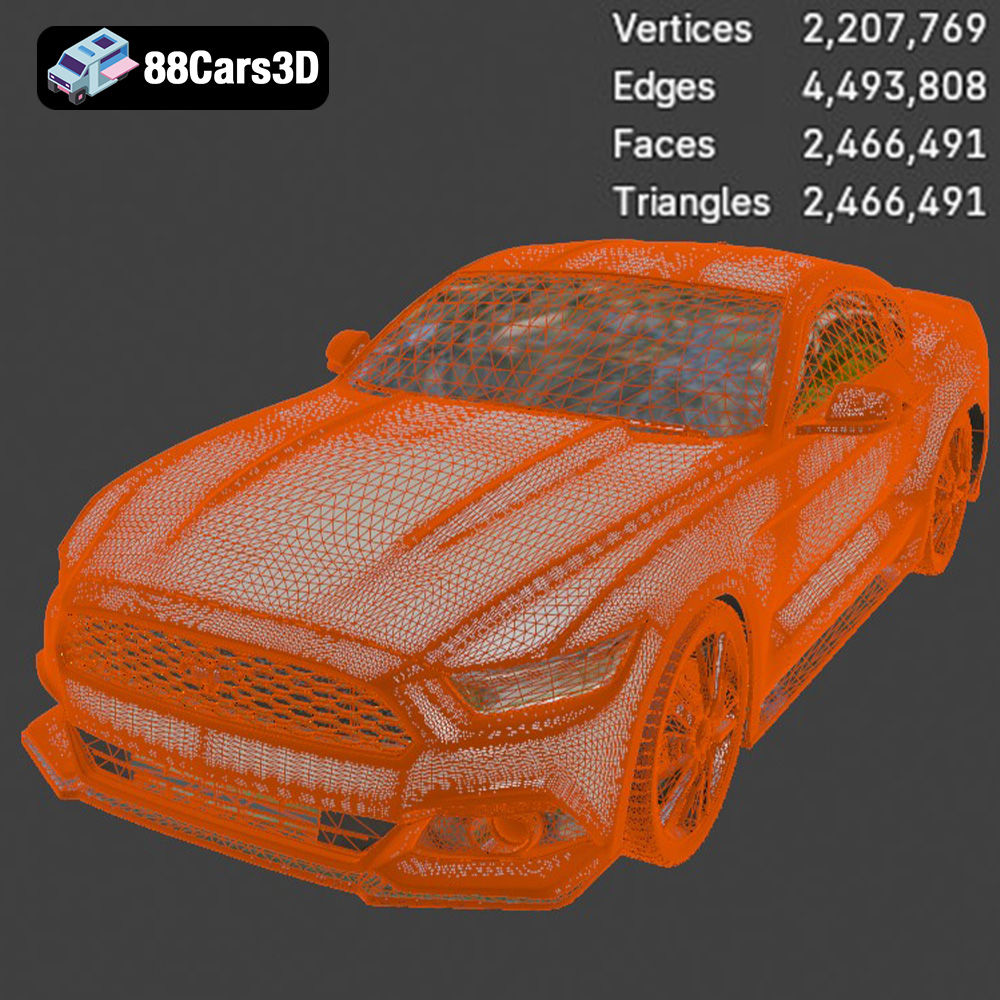
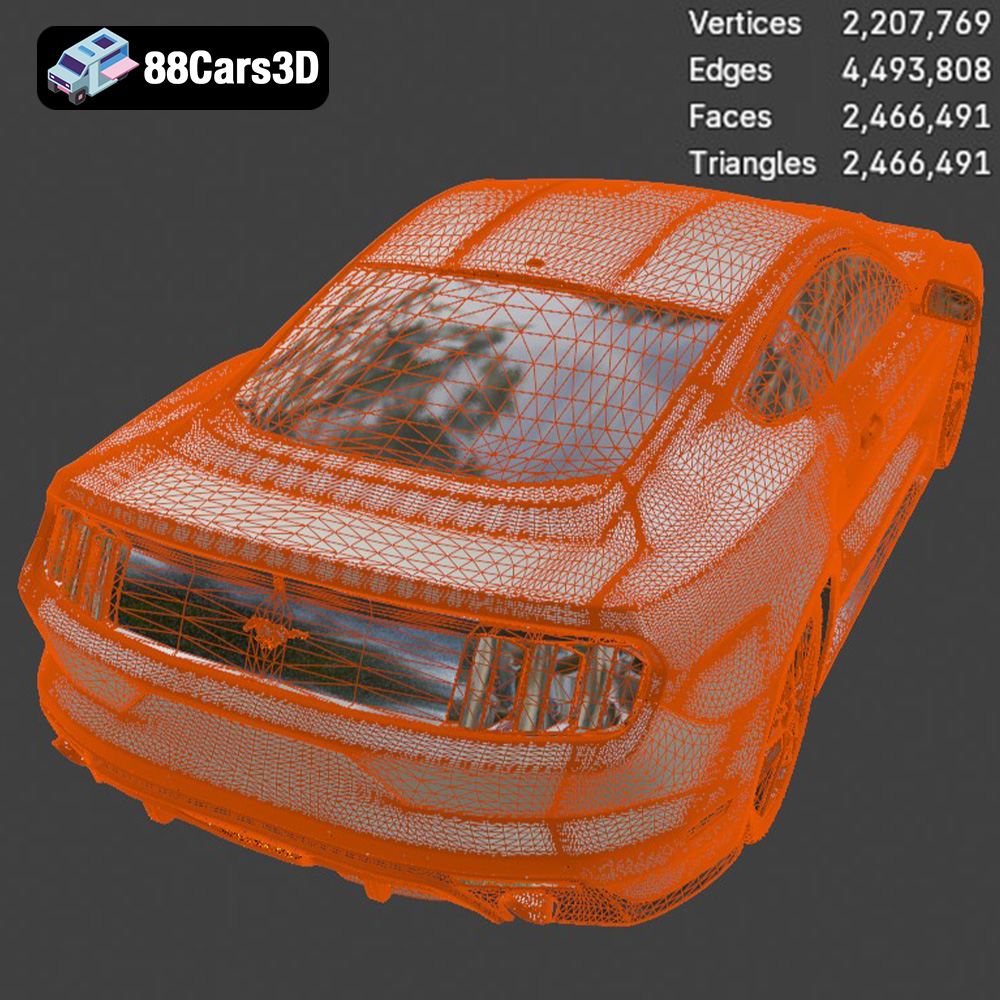
For game developers, the holy grail is a model that looks fantastic without crippling performance. The Ford Mustang GT model achieves this delicate balance with an optimized topology featuring approximately 200,000 triangles. This specific polycount is often considered a “sweet spot” for modern game engines like Unreal and Unity. It’s detailed enough to convey the Mustang GT’s intricate curves, sharp body lines, and interior elements at close range, yet efficient enough to allow multiple instances on screen simultaneously without causing significant frame rate drops. This optimization isn’t just about reducing polygons; it’s about intelligent polygon distribution—placing more detail where it’s visible (e.g., front grille, wheels, interior dashboard) and less in hidden or less critical areas. This careful approach ensures the model is truly “game-ready,” performing exceptionally in open-world racing titles, simulators, and interactive AR/VR experiences.
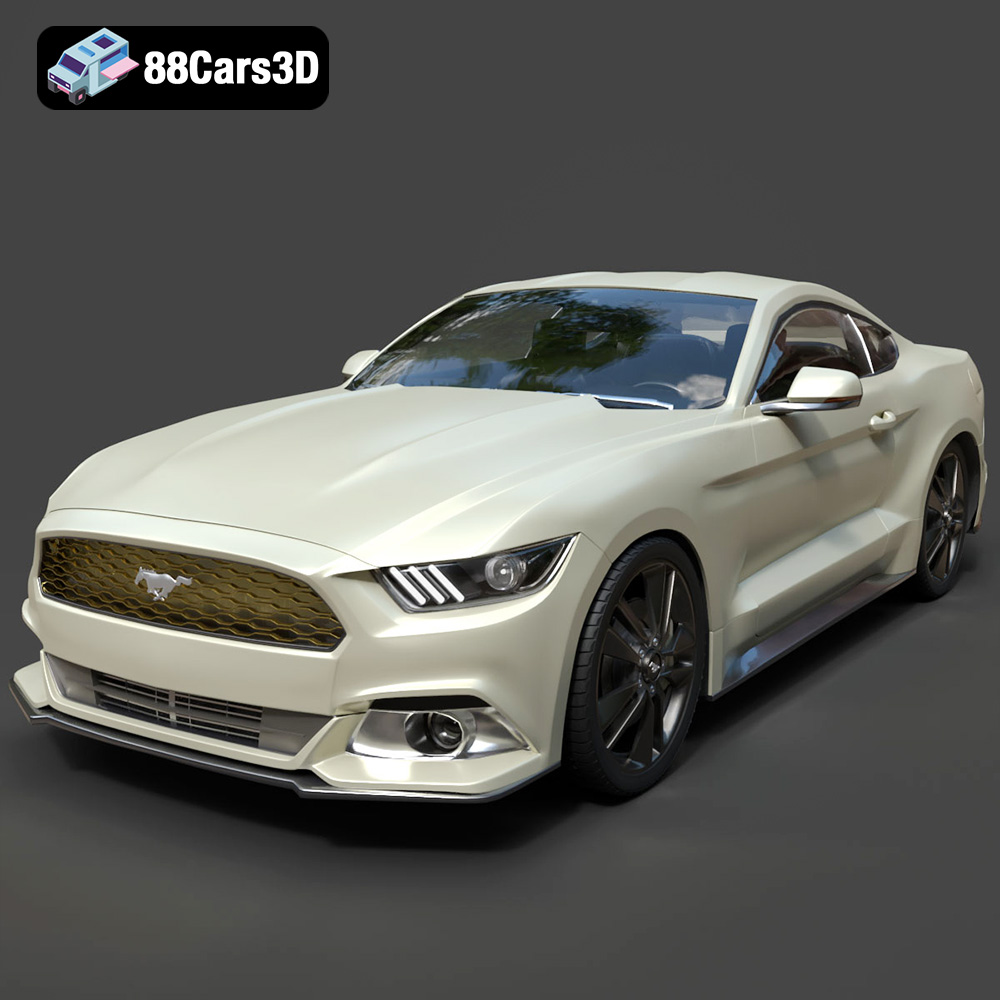
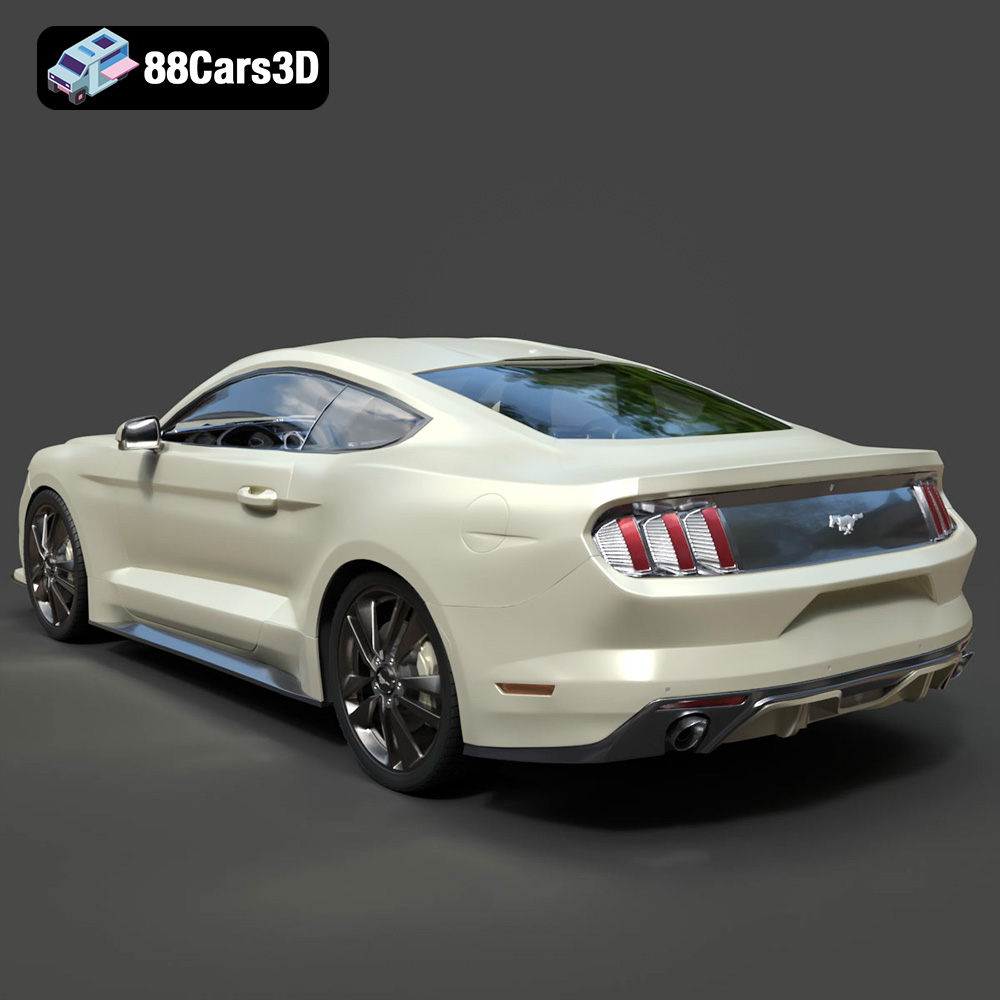
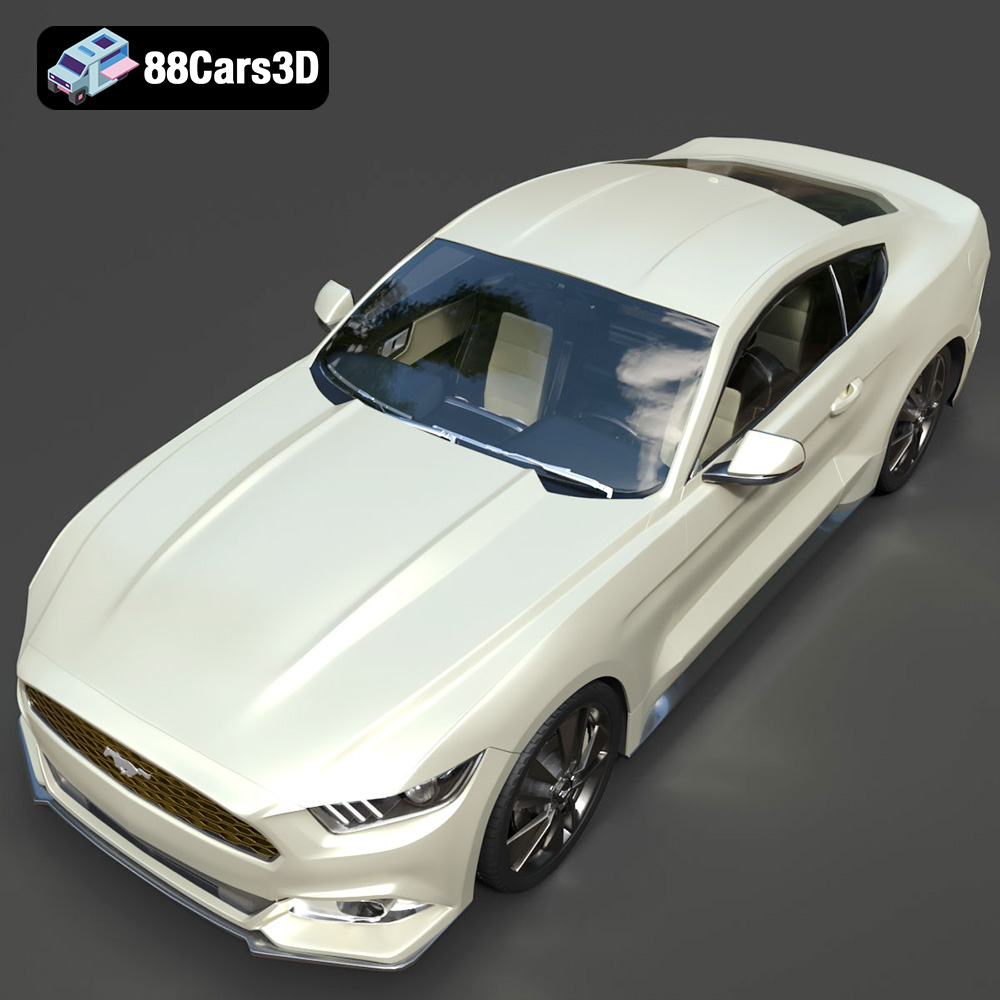
Beyond raw polygon numbers, the true magic lies in the fidelity of the details. The Ford Mustang GT 3D Model meticulously recreates the car’s unmistakable styling cues. Externally, this includes the aggressive rear diffuser, the iconic quad-tip performance exhaust, and the signature tri-bar LED headlights and sequential taillights. Even the high-performance alloy wheels and their tire tread patterns are accurately modeled, along with brake calipers, rotors, and suspension components. Critically, separate geometry for wheels, suspension, and steering allows for realistic animation, a must-have for dynamic driving simulations.
Inside the cockpit, the attention to detail continues. Highly detailed sport bucket seats with realistic stitching lines, a leather-wrapped multifunction steering wheel, and a modern digital instrument cluster are all faithfully reproduced. The center console, climate controls, pedals, and shifter are also accurate, ensuring that the model provides an immersive first-person perspective, essential for driver-centric gaming or VR experiences. This level of granular detail, from the roar of the simulated 5.0L V8 engine bay to the texture of the interior upholstery, elevates the model from a simple mesh to a digital twin.
An often-overlooked but crucial technical specification is real-world scale accuracy. The Ford Mustang GT 3D Model is built to actual vehicle chassis dimensions, ensuring it integrates perfectly into scenes without appearing disproportionate. This is vital for realistic physics simulations in games, accurate placement in architectural visualization projects, or seamless blending into real-world environments for AR applications. Furthermore, the model features proper pivot setups for steering, wheel rotation, and suspension travel. This articulation is fundamental for animators and game developers, allowing for quick and accurate implementation of vehicle dynamics without needing to re-rig or adjust pivot points manually, saving countless hours in production.
The versatility of the Ford Mustang GT 3D Model lies not just in its optimized design but also in its compatibility with leading industry software. Whether you’re a seasoned professional or an aspiring artist, this model provides a robust foundation for diverse creative workflows.
For high-end architectural visualization studios or advertising agencies, 3ds Max remains a dominant force for cinematic rendering and complex scene assembly. The inclusion of the `.max` file format for the Ford Mustang GT is a significant advantage here. Artists can directly open the model, often with pre-configured PBR (Physically Based Rendering) materials, and immediately begin integrating it into elaborate environments. Imagine rendering the Mustang GT parked elegantly outside a modern architectural marvel, bathed in dramatic volumetric lighting. With 3ds Max, artists can leverage powerful renderers like V-Ray or Corona to achieve photorealistic results, showcasing custom paint jobs, intricate material finishes (matte, gloss, metallic), and dynamic reflections. The separate components for animation, such as wheels and suspension, allow for creating stunning turntable animations or intricate driving sequences for commercials.
Blender’s open-source nature and powerful feature set have propelled it to the forefront of 3D content creation. The `.blend` file format for the Ford Mustang GT allows Blender artists full access to the model’s structure. This means complete freedom to customize: modify geometry, create unique material shaders, rig specific components for advanced animation, or even adapt the model for specific game engine requirements. A freelance artist might use Blender to retexture the Mustang GT with custom liveries for an eSports racing team or animate it for a personal passion project. The `.blend` file ensures that artists can dive deep into the model’s construction, learning from its optimized topology and material setup, and extend its capabilities far beyond its initial state.
Unreal Engine is synonymous with cutting-edge real-time graphics, powering everything from AAA games to virtual production sets. The Ford Mustang GT’s `.fbx` and specialized `.unreal` formats are tailored for this environment. Game developers can import the `.fbx` with confidence, knowing the polycount is optimized and pivot points are correctly established for physics and animation. The `.unreal` package likely includes additional setup, perhaps collision meshes, LODs, or pre-configured master materials, significantly accelerating the integration process. Imagine dropping the Mustang GT into a dynamic open-world racing environment, complete with advanced vehicle physics, stunning real-time reflections, and interactive elements. The optimized geometry ensures that players can experience the thrill of driving this muscle car without compromise, maintaining high frame rates even in demanding scenarios. For AR/VR experiences, Unreal Engine’s robust XR toolkit, combined with a performant model like the Mustang GT, allows creators to build highly interactive virtual showrooms or immersive drive experiences.
The utility of a premium 3D model extends far beyond traditional screen-based rendering. Modern technologies like Augmented Reality, Virtual Reality, and 3D printing open up entirely new avenues for interacting with and experiencing digital assets.
The `.glb` format is a game-changer for AR/VR applications, making the Ford Mustang GT 3D Model perfectly suited for immersive experiences. Automotive brands and dealerships can leverage this model to create virtual showrooms where potential customers can walk around, examine, and even “sit inside” the Mustang GT in a VR headset. Imagine using an AR app on your smartphone to project a life-sized Mustang GT onto your driveway, allowing you to change its body color, swap out wheel designs, and view it from every angle, all in real-time. The optimized polycount and compact nature of the `.glb` file ensure smooth performance on mobile devices and VR platforms, providing a truly interactive and engaging customer experience without the need for expensive physical prototypes. This capability makes the Ford Mustang GT model an ideal asset for next-generation product visualization and sales tools.
For enthusiasts, collectors, or even designers needing a physical reference, the ability to 3D print a digital model is invaluable. The inclusion of the `.stl` format, coupled with detailed 3D print settings, transforms the Ford Mustang GT 3D Model from a purely digital asset into a tangible collectible. Hobbyists can scale the model to their desired size (1:12, 1:18, 1:24 are recommended), choose their preferred printing method (resin is recommended for fine details), and adhere to specified parameters for layer height, wall thickness, infill, and supports. The product description’s guidance on print orientation and post-processing (sanding, primer, authentic factory colors) empowers users to create a high-quality physical replica. This functionality bridges the gap between the digital and physical worlds, offering a unique way to own and appreciate the Mustang GT’s iconic design.
A high-quality 3D model is not merely a static representation; it’s a foundation for endless creative possibilities. The Ford Mustang GT 3D Model from 88cars3d.com is designed with customization in mind, ensuring it remains a valuable asset for years to come.
The robust structure of this model allows for extensive customization. Users can effortlessly change body colors, experimenting with factory shades, custom finishes, or even unique livery designs for racing applications. Modifying tire textures to switch between track and street variants adds another layer of realism and project specificity. Adjusting material finishes—from matte to gloss to metallic—enables artists to achieve precise aesthetic goals, matching different lighting scenarios or brand requirements. Furthermore, the flexibility to adapt lighting for various environments means the Mustang GT can convincingly appear under studio lights, cruising through a sunset, or tearing down a rainy city street. This level of adaptability ensures the model can be seamlessly integrated into diverse project types without requiring complex re-modeling from scratch.
Investing in a professionally crafted 3D model like the Ford Mustang GT is an investment in efficiency, quality, and versatility. By providing an optimized, accurately scaled, and highly detailed base, it drastically reduces development time for games, animations, visualizations, and interactive experiences. The wide array of included file formats future-proofs the asset, ensuring compatibility with evolving software and emerging technologies. Instead of spending countless hours modeling a vehicle from scratch, designers and developers can focus their energy on creative direction, scene assembly, and delivering polished final products. The availability of such assets through reputable marketplaces like 88cars3d.com allows individuals and studios to access premium content that meets industry standards, empowering them to produce stunning results faster and more effectively.
The digital landscape for automotive content creation is more demanding and exciting than ever before. From exhilarating racing simulators to photorealistic brand campaigns and interactive AR showrooms, the need for high-fidelity, optimized 3D car models is constantly growing. The Ford Mustang GT 3D Model represents the pinnacle of such assets, meticulously engineered to perform across diverse platforms and applications. Its optimized polycount, intricate detailing of both exterior and interior, real-world scale, and crucial articulation points make it an indispensable tool for game developers, visualization artists, and AR/VR creators alike.
With an unparalleled suite of file formats—including .blend, .fbx, .obj, .glb, .stl, .ply, .unreal, and .max—this model ensures maximum compatibility and flexibility, catering to virtually any professional workflow. Whether you’re aiming for cinematic realism in 3ds Max, dynamic interactivity in Unreal Engine, creative freedom in Blender, web-optimized AR/VR experiences, or even a tangible 3D print, this model is built to deliver. By choosing expertly crafted assets like the Ford Mustang GT 3D Model from 88cars3d.com, professionals can streamline their pipelines, elevate their projects, and bring the raw power and iconic style of the American muscle car to life in breathtaking digital detail.
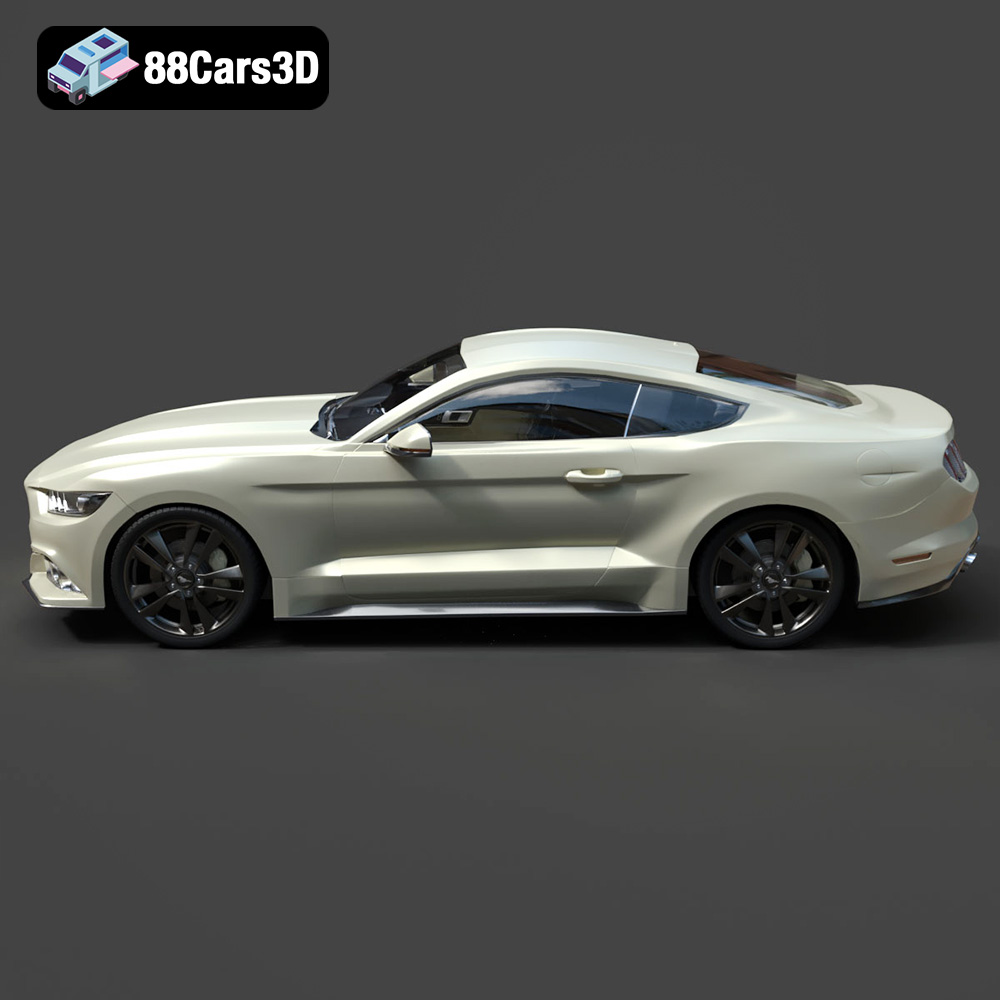
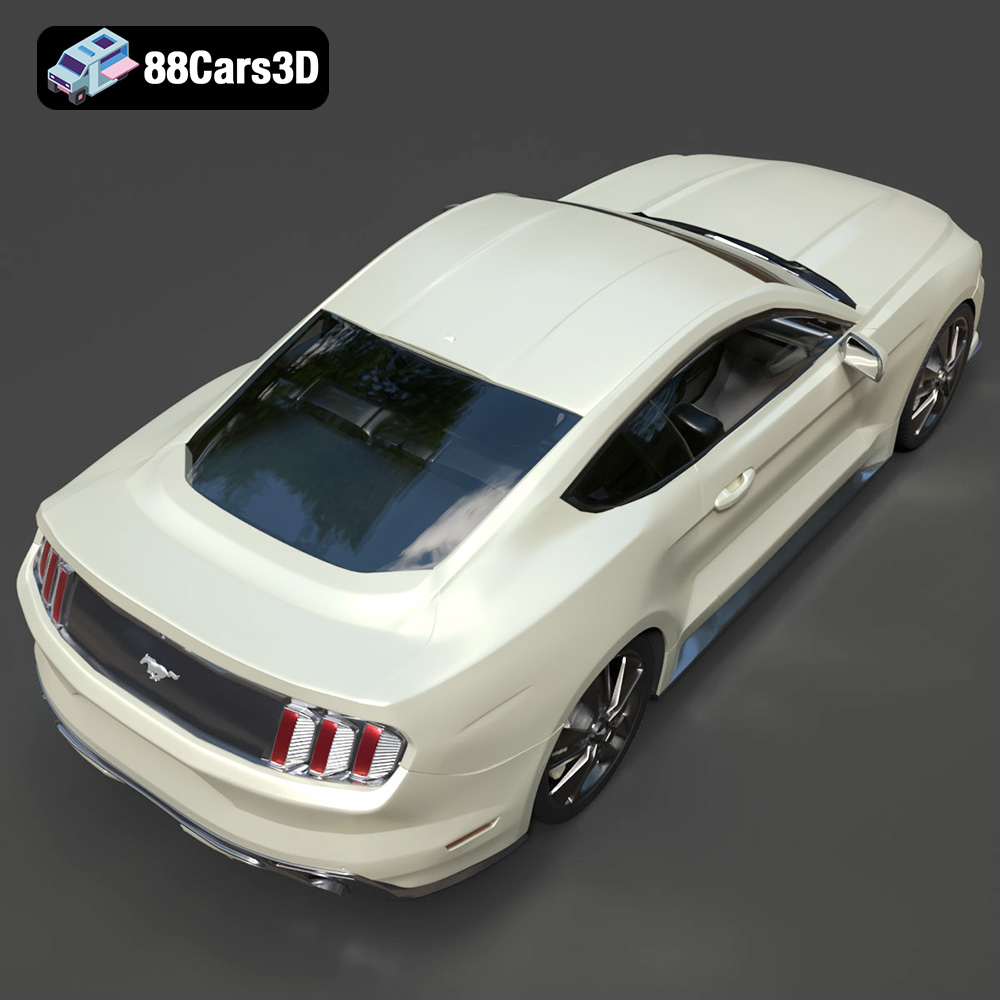
The Ford Mustang GT is an enduring icon of American muscle, celebrated for its aggressive aesthetic, legendary heritage, and raw power. This incredibly detailed 3D model captures the unmistakable styling cues of the modern Mustang GT, from its signature long hood and fastback roofline to the imposing front grille, quad-tip exhaust system, and raw 5.0L V8 engine bay details. Engineered for premium digital performance, this model features an optimized topology with approximately 200,000 triangles, delivering exceptional game-ready performance without sacrificing visual fidelity. The meticulously crafted geometry ensures seamless integration into game development workflows, high-end AR/VR experiences, cinematic animations, and professional automotive visualization.
$19.99
.blend
.fbx
.ford
.glb
.max
.obj
.ply
.rendering
.sports car
.stl
.unreal
car-3d-model
game asset
game-ready
low-poly
muscle-car
mustang-gt
optimized
VR/AR