Get 20% OFF All Premium 3D & STL Models!

In the dynamic world of digital content creation, the quest for realism and efficiency is constant. From blockbuster game titles to breathtaking architectural visualizations and cinematic spectacles, the quality of 3D assets directly dictates the final output’s impact. Automotive visualization stands as a pinnacle of this pursuit, demanding meticulous attention to detail to capture the essence of iconic vehicles. This is where truly exceptional 3D car models become indispensable, streamlining complex production pipelines and elevating visual standards. Today, we’ll delve into the intricacies of integrating premium automotive 3D models into various professional contexts, highlighting the unparalleled quality and versatility offered by assets like the Honda NSX 2017 3D Model available on 88cars3d.com.
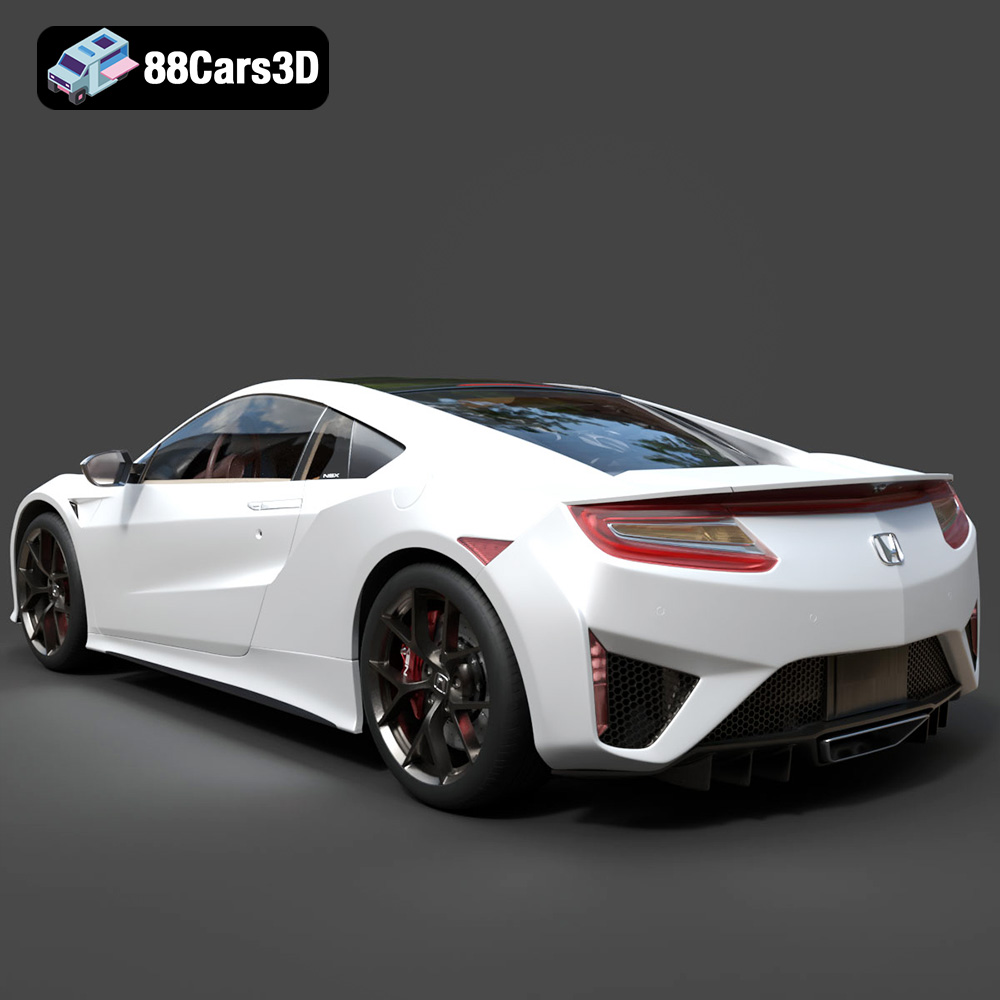
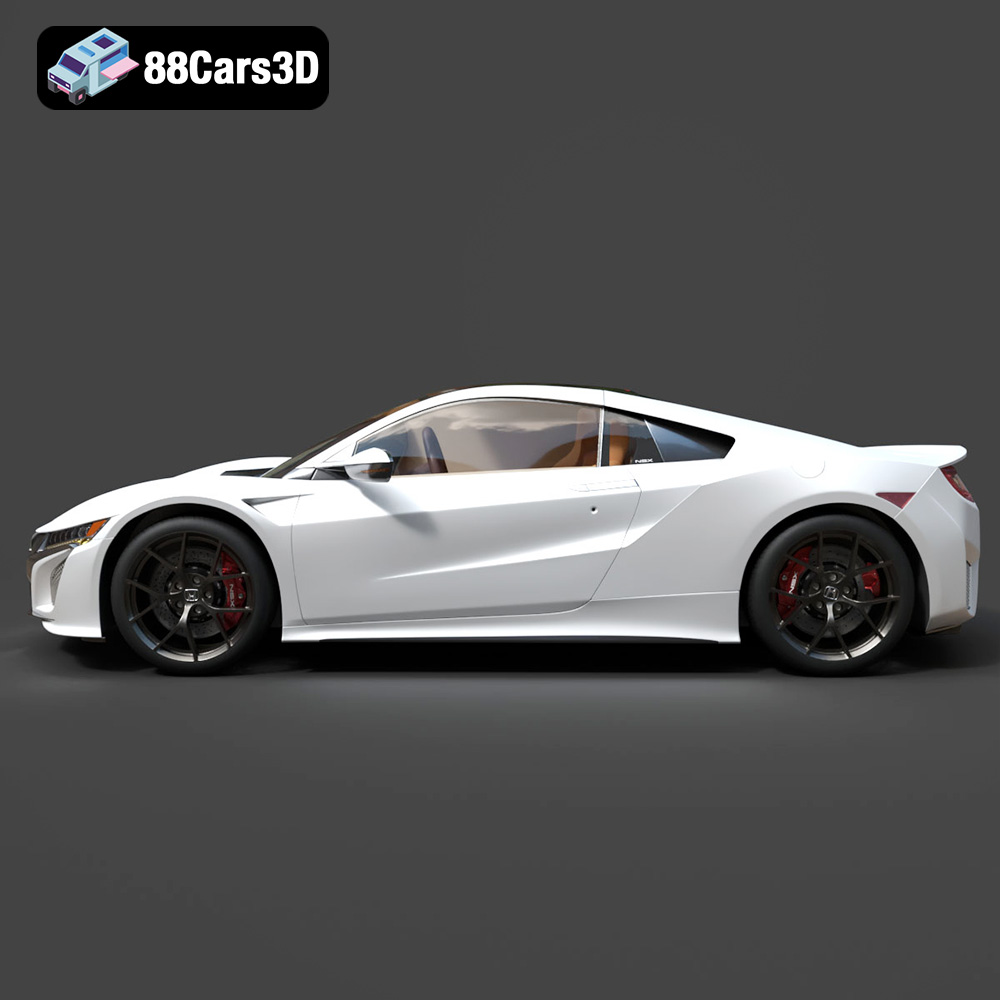
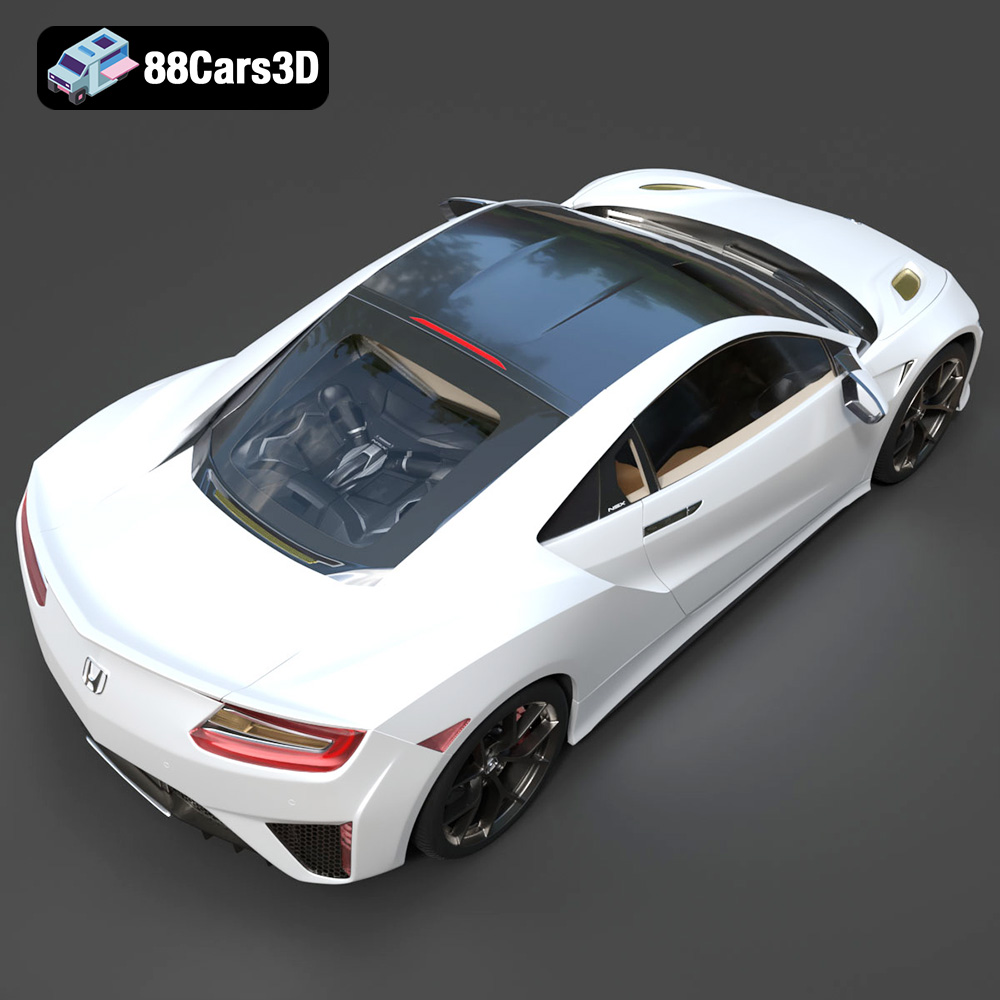
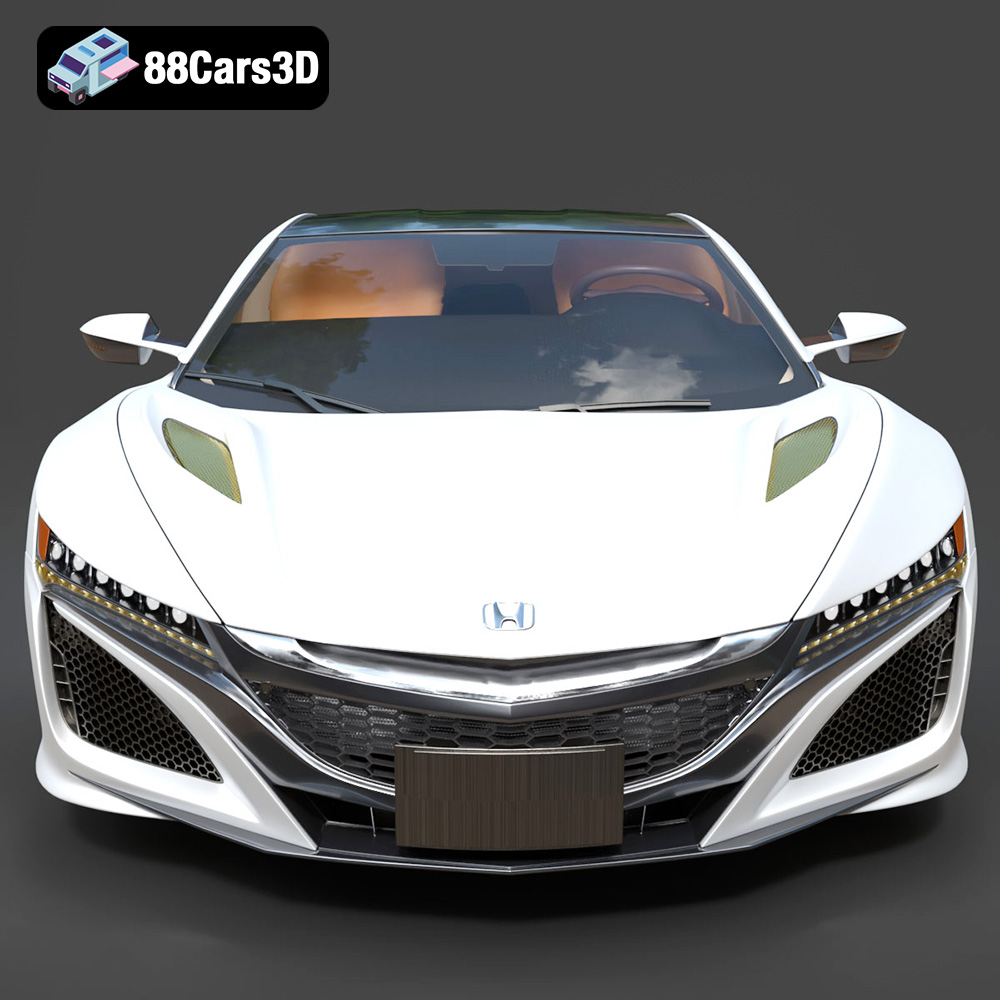
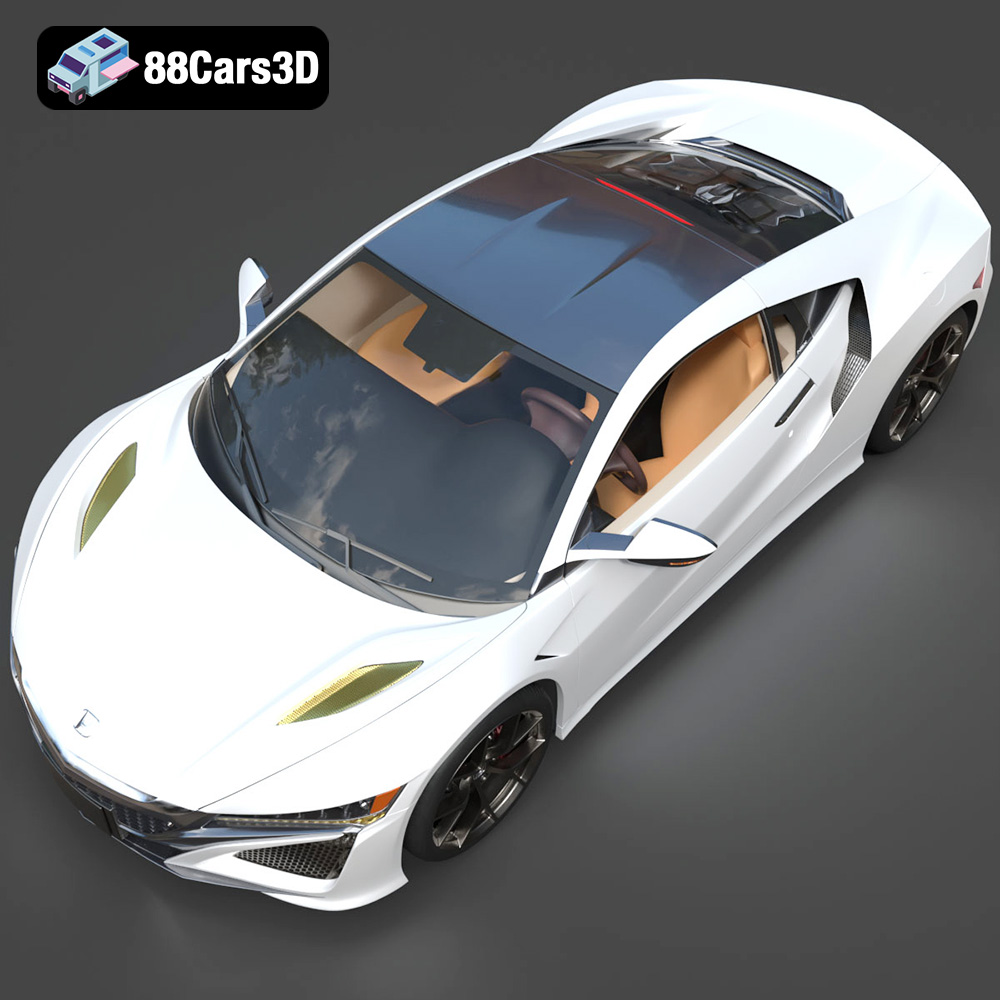
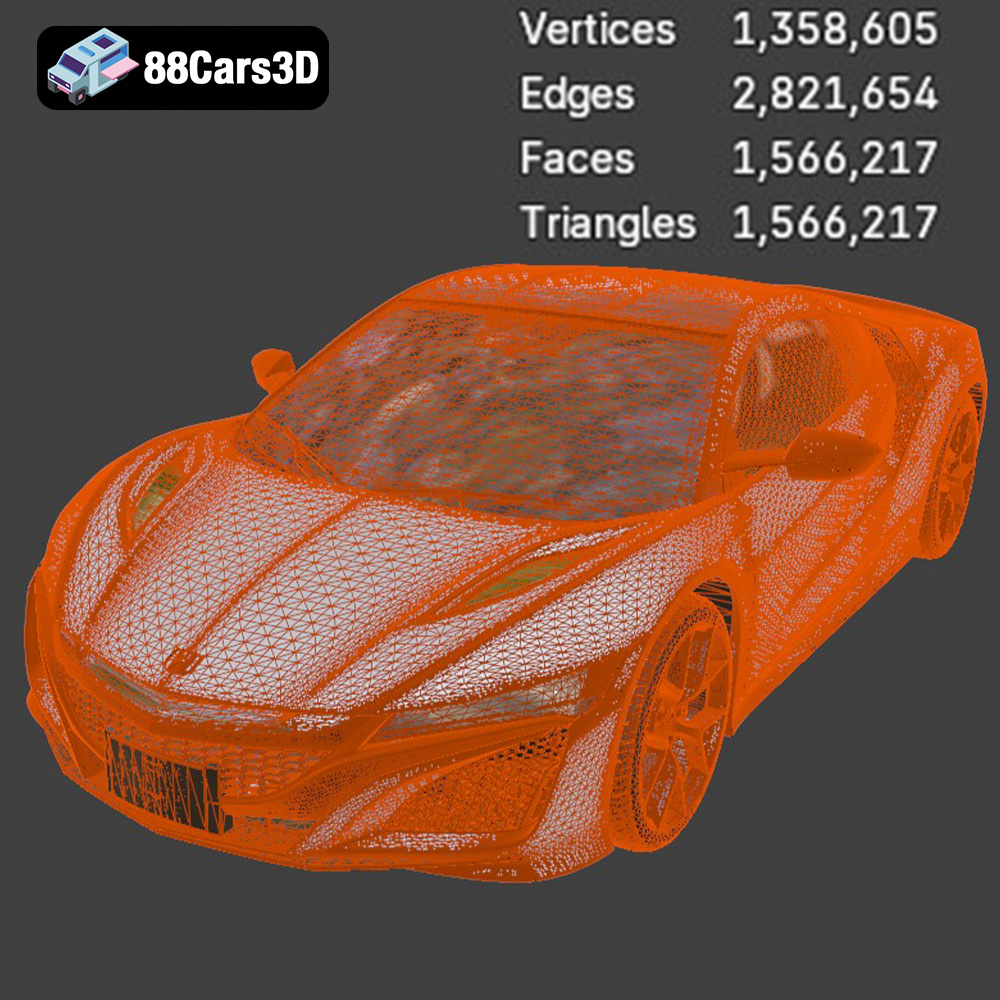
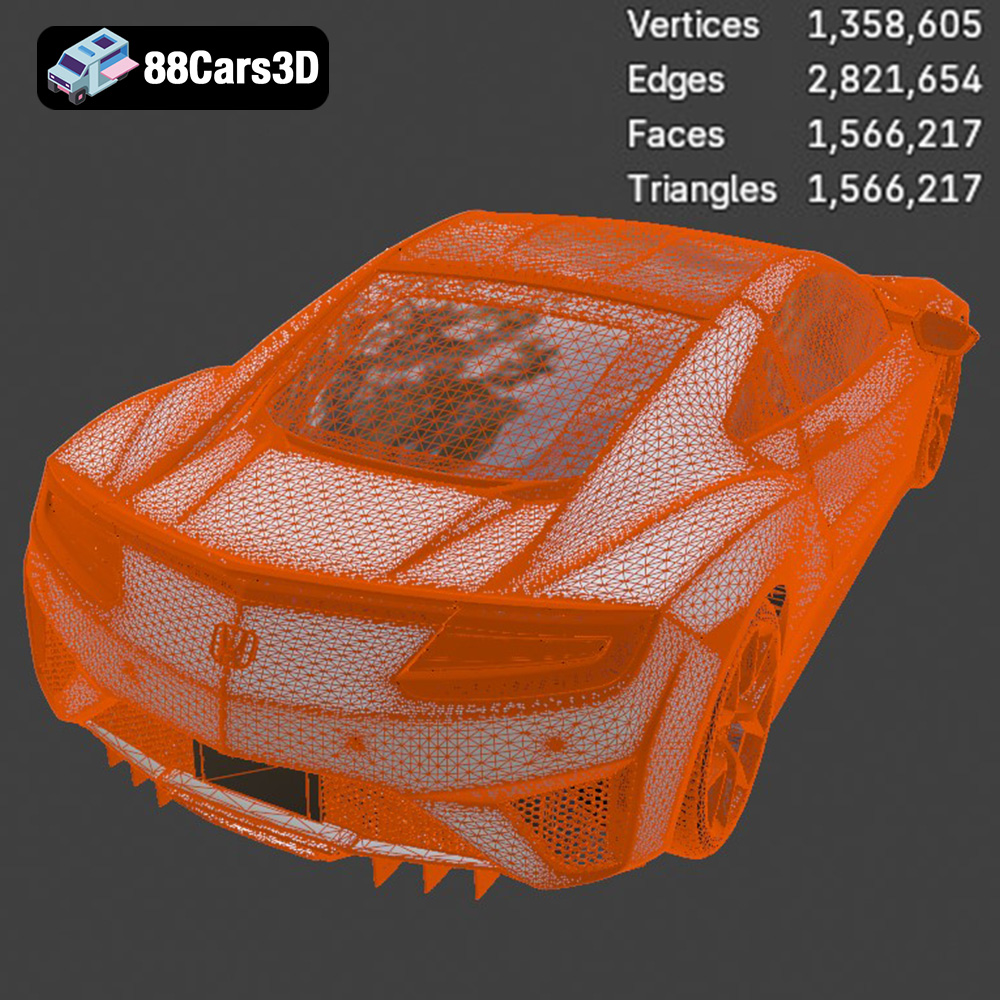
The Honda NSX 2017 3D Model represents a benchmark in digital craftsmanship. Meticulously engineered to replicate the sleek, aerodynamic contours and aggressive stance of this legendary hybrid sports car, it provides a foundational asset for creators striving for photorealism. Its clean geometry, realistic materials, and professional-grade polygon structure are not just features; they are essential components that enable seamless integration into any visual environment, ensuring true-to-life reflections and accurate proportions across a spectrum of applications from game development to cinematic rendering.
The utility of any 3D model is fundamentally tied to its file format. A professional-grade asset, like the Honda NSX 2017 3D Model, must offer a range of formats to ensure maximum compatibility and optimize workflows across diverse software and applications. Each format serves a specific purpose, tailored for particular stages of production or final deployment. Understanding these distinctions is critical for any serious 3D artist or developer.
The `.blend` format is native to Blender, the powerful open-source 3D creation suite. When you encounter a `.blend` file, you’re not just getting a mesh; you’re receiving a complete Blender scene. This includes the model’s geometry, its associated materials (often leveraging Blender’s Cycles or Eevee render engines), lighting setups, camera positions, and even animation data if present. For users dedicated to Blender, this format offers the most flexibility, allowing for direct editing, re-texturing, re-lighting, and animation without any loss of data that might occur through format conversions. The Honda NSX 2017 3D Model’s `.blend` file is a fully editable asset, perfect for artists who wish to dive deep into customization or use Blender as their primary rendering and animation platform.
Developed by Autodesk, the `.fbx` (Filmbox) format is arguably the most prevalent exchange format in the 3D industry, especially for real-time applications. It supports a comprehensive range of 3D data, including geometry, materials, textures, animations, skinning, and camera information. Its robust nature makes it ideal for transferring assets between different software packages like Maya, 3ds Max, Blender, and crucially, game engines such as Unreal Engine and Unity. When a model like the Honda NSX 2017 is provided in `.fbx`, it’s usually optimized for direct import into game development pipelines, ensuring that the model, its UVs, and PBR materials translate efficiently.
The `.obj` (Wavefront OBJ) format is a fundamental and widely supported format for exchanging static 3D geometry. It defines the geometry of objects, including vertices, faces, normals, and UV coordinates. While it doesn’t typically store animation or rigging data, it’s a reliable choice for pure mesh transfer between virtually any 3D software. Materials are often defined in a companion `.mtl` (Material Template Library) file, which references textures and basic material properties. For the Honda NSX 2017 3D Model, the `.obj` ensures broad compatibility, making it accessible even to niche or older 3D applications, and a solid choice for simple visualization or 3D printing preparation.
The `.glb` (GL Transmission Format, binary) is the binary version of glTF, an open-standard format specifically designed for efficient transmission and loading of 3D scenes and models by engines and applications. It’s often referred to as the “JPEG of 3D” due to its optimization for web-based, AR (Augmented Reality), and VR (Virtual Reality) experiences. A `.glb` file encapsulates all necessary data—geometry, materials, textures, animations—into a single, compact file, making it incredibly easy to share and display models like the Honda NSX 2017 in a browser or mobile AR app without external dependencies. This is particularly valuable for interactive product showcases or virtual showrooms.
The `.stl` (Stereolithography) format is the de facto standard for 3D printing and rapid prototyping. It describes only the surface geometry of a 3D object using a mesh of triangular facets, without any color, texture, or material information. For a model to be 3D printable, its `.stl` representation must be “manifold,” meaning it has a perfectly enclosed volume without any holes, gaps, or overlapping triangles. The Honda NSX 2017 3D Model’s `.stl` variant allows designers and engineers to physically prototype the car’s design, offering a tangible output for review and analysis, though typically at a lower polygon count to manage file size for printing.
The `.ply` (Polygon File Format) is a file format for storing 3D data, often used with scanner data and scientific applications. It can store various properties for each vertex (like color, normal, transparency) and face (color, material ID). While less common than FBX or OBJ for general 3D art, `.ply` is excellent for high-precision meshes and can be crucial for detailed analysis in CAD software or for complex visualizations where per-vertex data is important. It provides another layer of detail for the Honda NSX 2017, catering to niche applications requiring granular mesh information.
The `.unreal` designation often implies a specific file or packaged asset designed to be immediately usable within Unreal Engine. This isn’t a single file format in the same way .fbx or .obj is, but rather an optimized asset package or a `.uasset` file that has already undergone the Unreal Engine import process. This means materials are typically converted to Unreal’s PBR shader system, collisions are set up, and sometimes even basic blueprints for functionality (like car physics) are included. The Honda NSX 2017 3D Model’s `.unreal` package offers a significant time-saver for game developers, reducing the labor-intensive steps of setting up a complex automotive asset within the engine.
Similar to `.blend` for Blender, the `.max` format is the native file format for Autodesk 3ds Max. It stores a complete 3ds Max scene, including all geometry, modifiers, materials (V-Ray, Corona, Physical Renderer, etc.), lights, cameras, animations, and render settings. For professionals operating within the 3ds Max ecosystem, this format offers unparalleled control and fidelity. The `.max` file for the Honda NSX 2017 3D Model provides a robust starting point for high-end architectural visualization, intricate animations, or advanced rendering projects that leverage 3ds Max’s extensive toolset and powerful rendering capabilities.
The provision of the Honda NSX 2017 3D Model in these diverse formats underscores a commitment to professional utility and flexibility, ensuring that creators can integrate this exceptional asset into virtually any pipeline with minimal friction.
Automotive rendering is more than just applying textures; it’s a delicate balance of art and engineering to achieve visual perfection. The goal is to make a digital car indistinguishable from its real-world counterpart, a feat that requires meticulous attention to materials, lighting, and rendering techniques.
The foundation of photorealistic rendering lies in physically based rendering (PBR) materials. For a car like the Honda NSX 2017, this involves accurately defining the properties of its paintwork, glass, tires, chrome accents, and interior surfaces. Paint materials, for instance, often require complex shaders to simulate metallic flakes, clear coat reflections, and subtle color shifts under different lighting angles. Glass needs to refract light correctly and exhibit subtle reflections and imperfections. The Honda NSX 2017 3D Model comes equipped with realistic materials that respond authentically to light, making it a powerful asset for any rendering artist.
Lighting is equally crucial. Using high dynamic range images (HDRIs) captured from real-world environments provides realistic global illumination and reflections, making the car appear integrated into its surroundings. Complementary light sources, such as area lights or spotlights, can be used to emphasize key design elements or create dramatic highlights. Understanding how light interacts with the car’s curves and surfaces is paramount, ensuring that every panel and contour of the Honda NSX 2017 is showcased to its best effect.
Modern rendering engines offer an array of advanced techniques to push realism further. Ray tracing, whether hardware-accelerated (like NVIDIA RTX) or software-based, simulates light paths with incredible accuracy, producing realistic reflections, refractions, and global illumination. Techniques like ambient occlusion add subtle contact shadows, enhancing depth and realism. Motion blur can convey a sense of speed in animated sequences, while depth of field mimics the optical properties of real cameras, drawing focus to specific elements of the car. Software like 3ds Max with V-Ray or Corona, and Blender with Cycles, provide the robust frameworks to leverage these techniques, allowing artists to extract every ounce of detail from models like the Honda NSX 2017.
For game developers, 3D car models are central to creating engaging and believable virtual worlds. The challenge lies in balancing visual fidelity with real-time performance, a critical consideration for smooth gameplay and immersive experiences.
Game assets, especially vehicles, must be highly optimized. This involves careful polygon budgeting, ensuring that the model has enough detail to look good but not so much that it bogs down the game engine. Techniques like Level of Detail (LODs) are essential, where simplified versions of the model are swapped in when the car is further from the camera. Efficient UV mapping maximizes texture resolution while minimizing draw calls. Furthermore, game-ready models require collision meshes, which are simplified proxy geometries used by the physics engine to calculate impacts and interactions, and physics assets that define how different parts of the car respond to forces. The Honda NSX 2017 3D Model, provided in game-engine-ready formats like .fbx and .unreal, is designed with these optimizations in mind, ensuring it can perform seamlessly in demanding real-time environments.
The `.fbx` format is the bridge for importing complex assets into leading game engines like Unreal Engine and Unity. Once imported, the raw geometry and basic materials need to be configured. This involves creating PBR materials within the engine’s shader graph, assigning textures, and setting up parameters for metallic, roughness, and normal maps. For the Honda NSX 2017, the `.unreal` package significantly expedites this process by providing pre-configured assets. Developers can then leverage engine-specific tools like Unreal’s Blueprint visual scripting system or Unity’s C# scripting to implement car controls, animations (doors opening, wheels turning), lighting effects (headlights, brake lights), and dynamic physics, truly bringing the Honda NSX to life in a virtual world.
The utility of a high-quality 3D car model extends far beyond traditional rendering and game development, venturing into cutting-edge fields that demand precision and adaptability.
Augmented Reality (AR) and Virtual Reality (VR) offer immersive ways to interact with 3D models. Imagine placing a virtual Honda NSX 2017 in your driveway via an AR app or exploring its interior in a full VR environment. For these applications, models must be incredibly efficient to render in real-time on diverse hardware, including mobile devices. The `.glb` format is a game-changer here, providing a compact, single-file solution optimized for web and mobile performance. It enables developers to easily integrate the Honda NSX 2017 3D Model into WebGL experiences or ARKit/ARCore applications, allowing users to interact with a true-to-scale, high-fidelity representation of the car in their own space.
In engineering and design, 3D car models serve critical roles in simulation and physical prototyping. The Honda NSX 2017 3D Model, with its accurate proportions and clean geometry, can be used in aerodynamic simulations to test airflow and drag, or in crash simulations to analyze structural integrity. For physical prototyping, the `.stl` format becomes essential. It allows for the creation of tangible models using 3D printers, which is invaluable for design reviews, ergonomic testing, or creating scaled replicas. While `.stl` lacks color and texture, its precise geometric description enables manufacturers and designers to quickly iterate on physical forms, leveraging the detailed digital blueprint provided by the Honda NSX 2017 3D Model.
Let’s consider how a premium asset like the Honda NSX 2017 3D Model can be integrated into real-world professional pipelines, demonstrating its versatility and value.
A professional studio tasked with creating a photorealistic advertisement for the Honda NSX might choose 3ds Max as their primary tool. They would start with the `.max` file of the Honda NSX 2017 3D Model. This provides them with a fully articulated model, often with pre-configured materials compatible with renderers like V-Ray or Corona. Artists can then rig the vehicle for complex animations, simulating realistic suspension travel, steering, and wheel rotation. The clean geometry ensures smooth deformations. Camera tracking can be used to integrate the rendered car into live-action background plates, with advanced lighting techniques to match the environmental conditions. Post-production in tools like Adobe After Effects or Nuke would then blend the rendered car with the footage, adding effects like lens flares, motion blur, and color grading. The Honda NSX 2017 model acts as the hero asset, its detail holding up under close-up shots and dynamic camera movements.
An automotive design firm might use the `.blend` file of the Honda NSX 2017 3D Model for rapid prototyping and concept visualization. With Blender, designers can quickly modify parts of the car, experiment with different color schemes, or integrate new aerodynamic elements. The editable nature of the `.blend` file allows for non-destructive changes using modifiers. They could render quick turntable animations using Blender’s Eevee real-time renderer for internal reviews or create high-quality stills with Cycles. If a physical model is needed, the clean mesh of the Honda NSX 2017 can be quickly exported as an `.stl` file, prepared for 3D printing to create a scaled-down physical prototype. This rapid iteration capability, facilitated by the high-quality base model, significantly accelerates the design process.
In an industry where time is money and quality is king, relying on meticulously crafted 3D assets is not just a convenience—it’s a strategic advantage. Marketplaces like 88cars3d.com specialize in providing exactly this: professional-grade 3D car models that meet the rigorous demands of various industries.
When you acquire a model like the Honda NSX 2017 3D Model from 88cars3d.com, you’re not just buying a file; you’re investing in quality, consistency, and a significant reduction in production time. The promise of “unparalleled realism” and “meticulously crafted” details means that the hard work of modeling, texturing, and optimizing has already been done by experts. This allows artists and developers to focus on the creative aspects of their projects—rendering compelling scenes, building immersive game environments, or developing interactive AR/VR experiences—without getting bogged down in the foundational work of asset creation.
The comprehensive range of file formats, from `.blend` to `.unreal` and `.max`, ensures that the Honda NSX 2017 is ready for virtually any professional pipeline. This versatility minimizes conversion issues and ensures that the model maintains its fidelity across different software platforms. For any project requiring a stunning, high-performance automotive asset, the collection at 88cars3d.com, exemplified by this Honda NSX model, offers a reliable and high-value solution that empowers creators to achieve their artistic and technical goals with confidence.
The landscape of digital content creation is constantly evolving, driven by the demand for higher fidelity and more immersive experiences. At the heart of this evolution are meticulously crafted 3D assets, none more iconic and challenging to replicate than high-performance vehicles. The Honda NSX 2017 3D Model stands as a prime example of how a premium asset can revolutionize professional workflows, offering unparalleled realism, exceptional detail, and critical versatility across a spectrum of applications.
From the precise polygon structures vital for photorealistic rendering in 3ds Max and Blender, to the optimized geometries essential for seamless integration into real-time game engines like Unreal, and the specialized formats catering to AR/VR and 3D printing, this model demonstrates the profound impact of well-engineered digital assets. By leveraging such high-quality resources, creators can bypass the time-consuming process of building complex models from scratch, accelerating their projects and elevating the overall quality of their output.
Whether you’re developing the next generation of games, producing stunning automotive visualizations, or exploring new frontiers in augmented reality, the foundation of your success lies in the quality of your digital assets. The Honda NSX 2017 3D Model, available on 88cars3d.com, offers a robust and reliable solution, empowering professionals to bring their most ambitious digital visions to life with precision and artistic integrity.
Experience unparalleled realism with the Honda NSX 2017 3D Model. Meticulously crafted to capture the sleek, aerodynamic lines and iconic stance of this legendary hybrid sports car, this model delivers exceptional detail for all your digital projects.
Key features include clean geometry, realistic materials, and professional-grade polygon structures. Every curve, panel, and interior element is designed to ensure seamless integration into any visual environment, providing true-to-life reflections and accurate proportions.
Perfect for a wide range of applications, this model excels in game development, architectural visualization, cinematic rendering, and AR/VR experiences. Whether used as a hero asset in an animation or an interactive vehicle in a virtual environment, it offers the fidelity required for professional production.
The model is delivered in multiple industry-standard file formats to ensure maximum compatibility:
$39.99
.arvr
.blend
.car3dmodel
.fbx
.gameasset
.glb
.honda
.max
.nsx
.obj
.ply
.rendering
.simulation
.sportsCar
.stl
.supercar
.unreal