Get 20% OFF All Premium 3D & STL Models!

In the dynamic world of digital content creation, the demand for high-quality 3D assets is ever-increasing. From blockbuster video games to cutting-edge architectural visualizations and immersive AR/VR experiences, meticulously crafted 3D models form the bedrock of compelling digital environments. Automotive models, in particular, hold a special place, requiring an exceptional blend of artistic precision and technical fidelity to accurately represent their real-world counterparts.
The creation of a truly authentic 3D car model is an intricate process, demanding attention to detail that extends from the exterior curves down to the smallest interior component. These digital replicas must not only look convincing but also be optimized for various pipelines, ensuring seamless integration and stellar performance. This is precisely where professional-grade 3D car models shine, offering a powerful shortcut for designers, developers, and artists to elevate their projects.
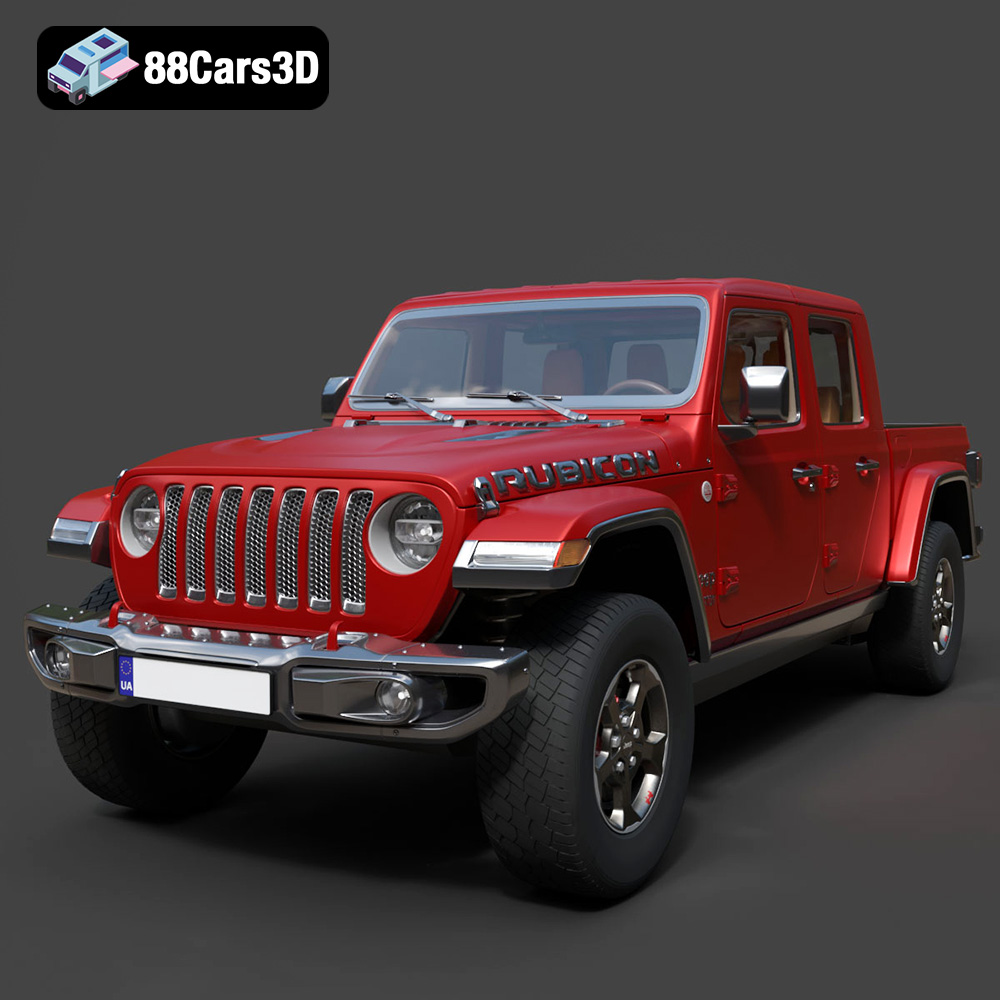
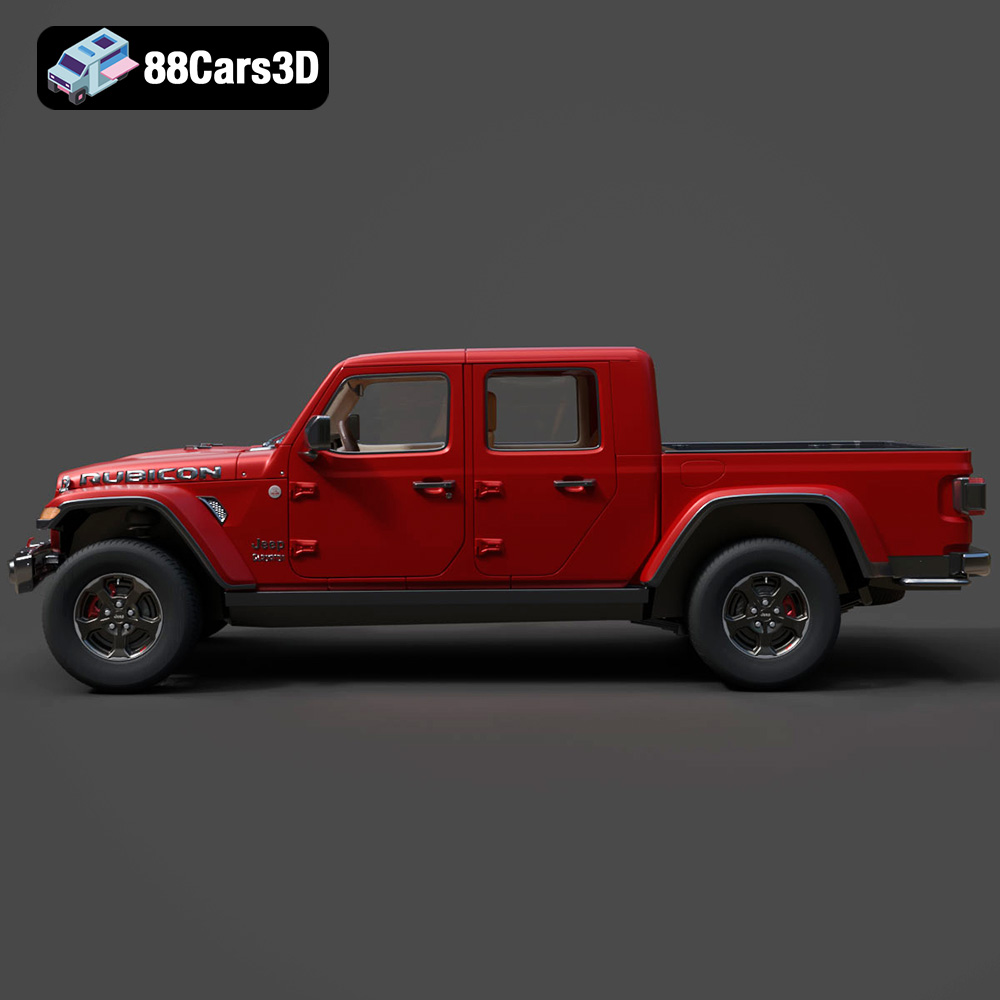
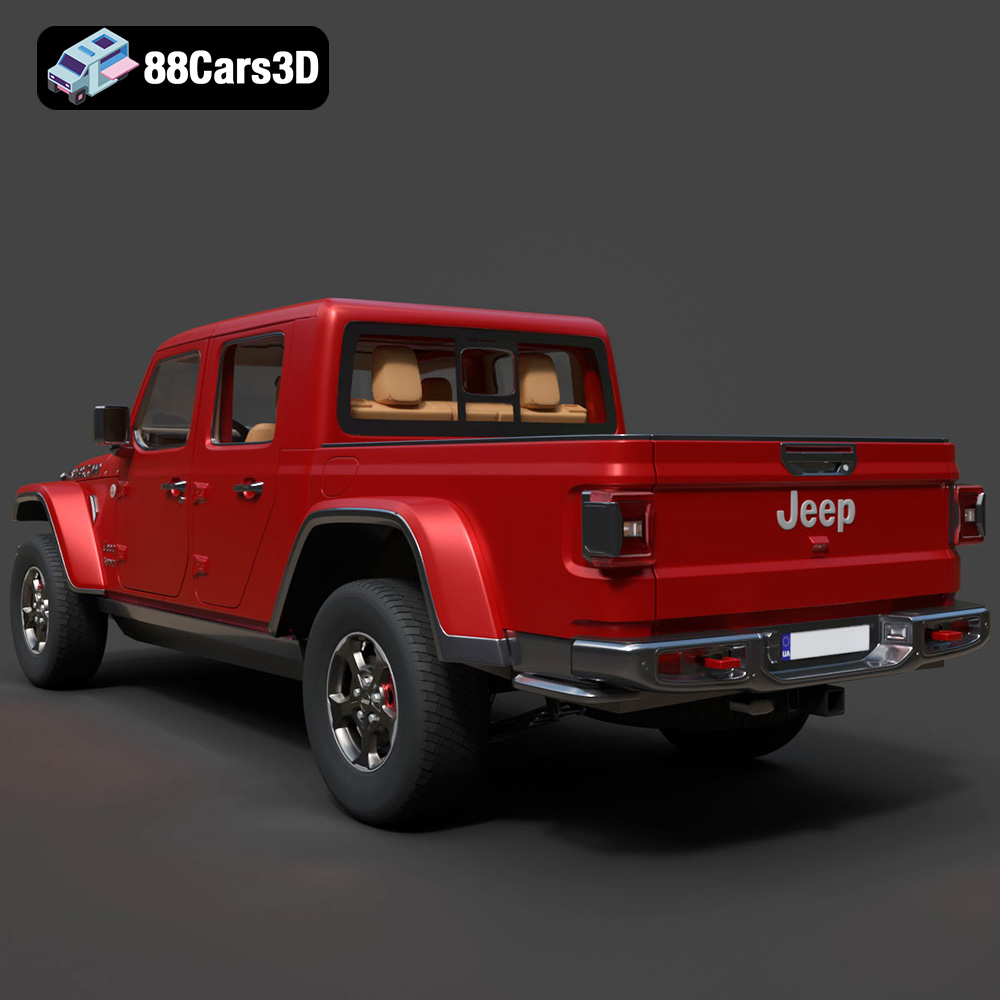
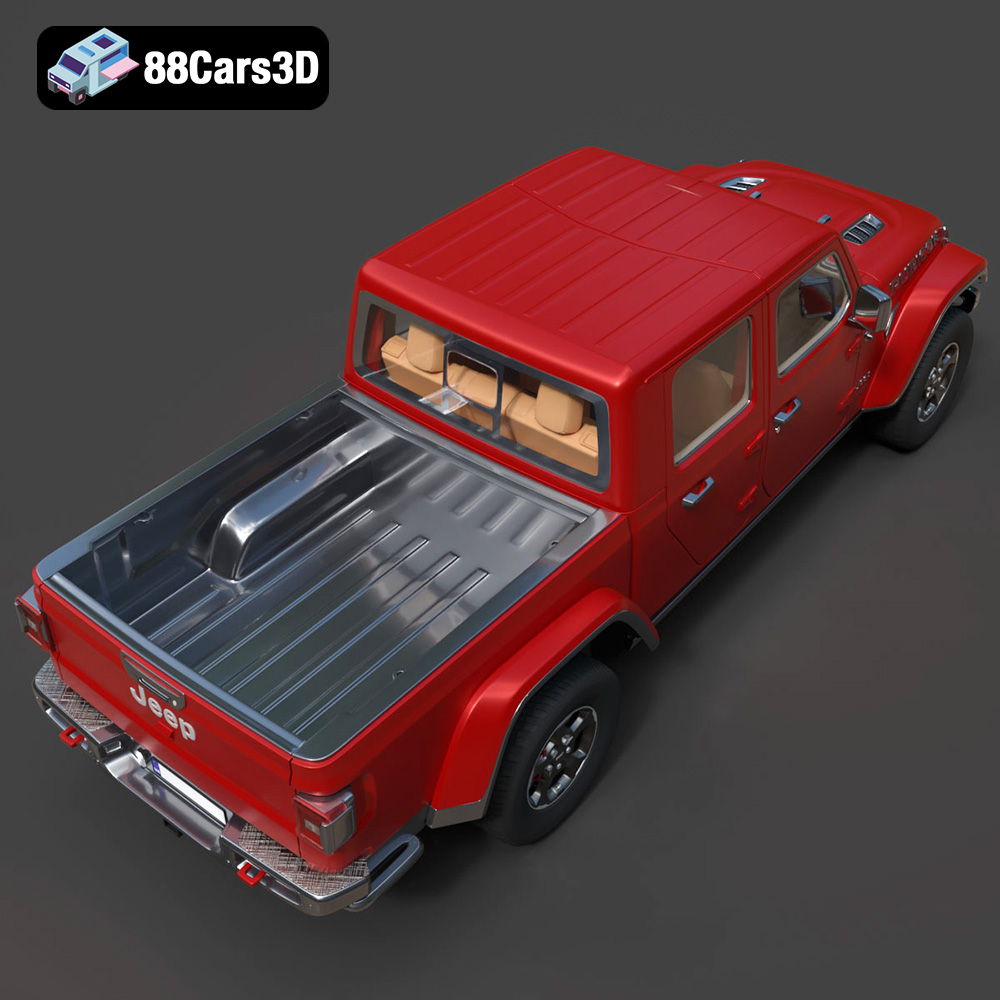
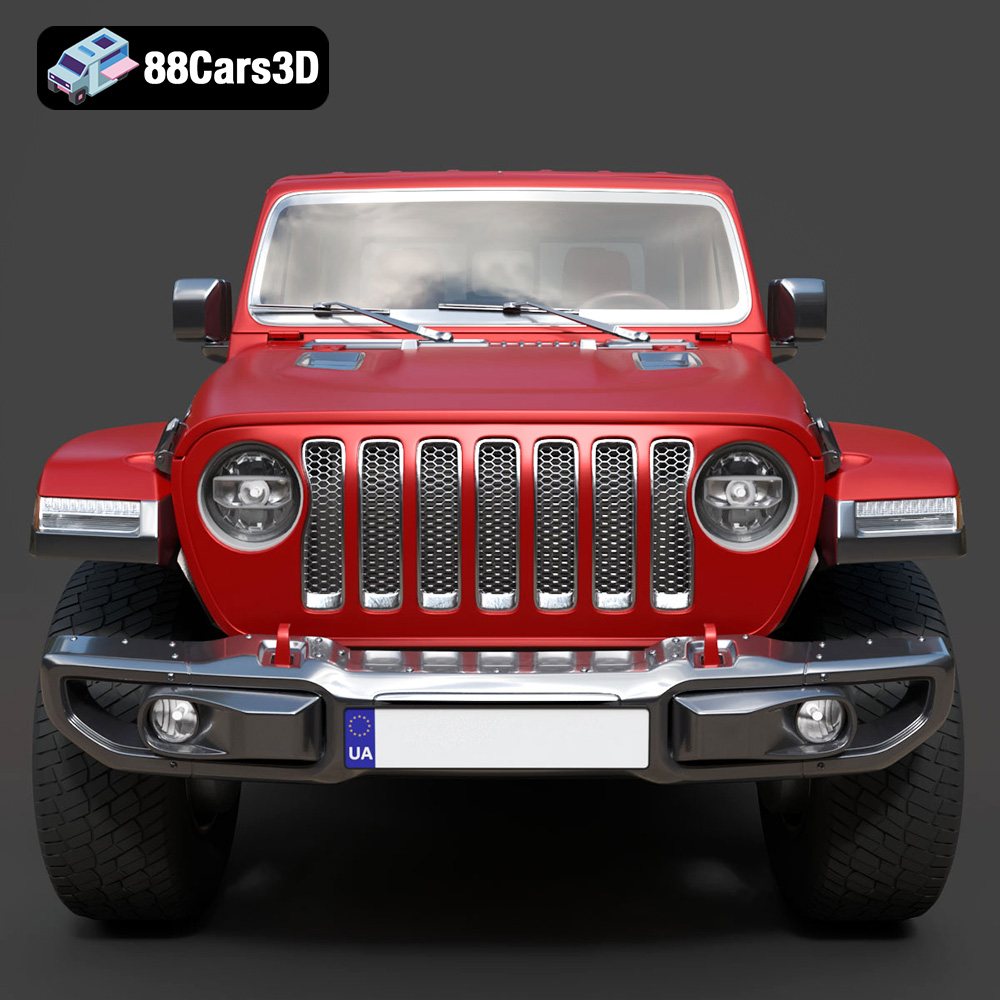
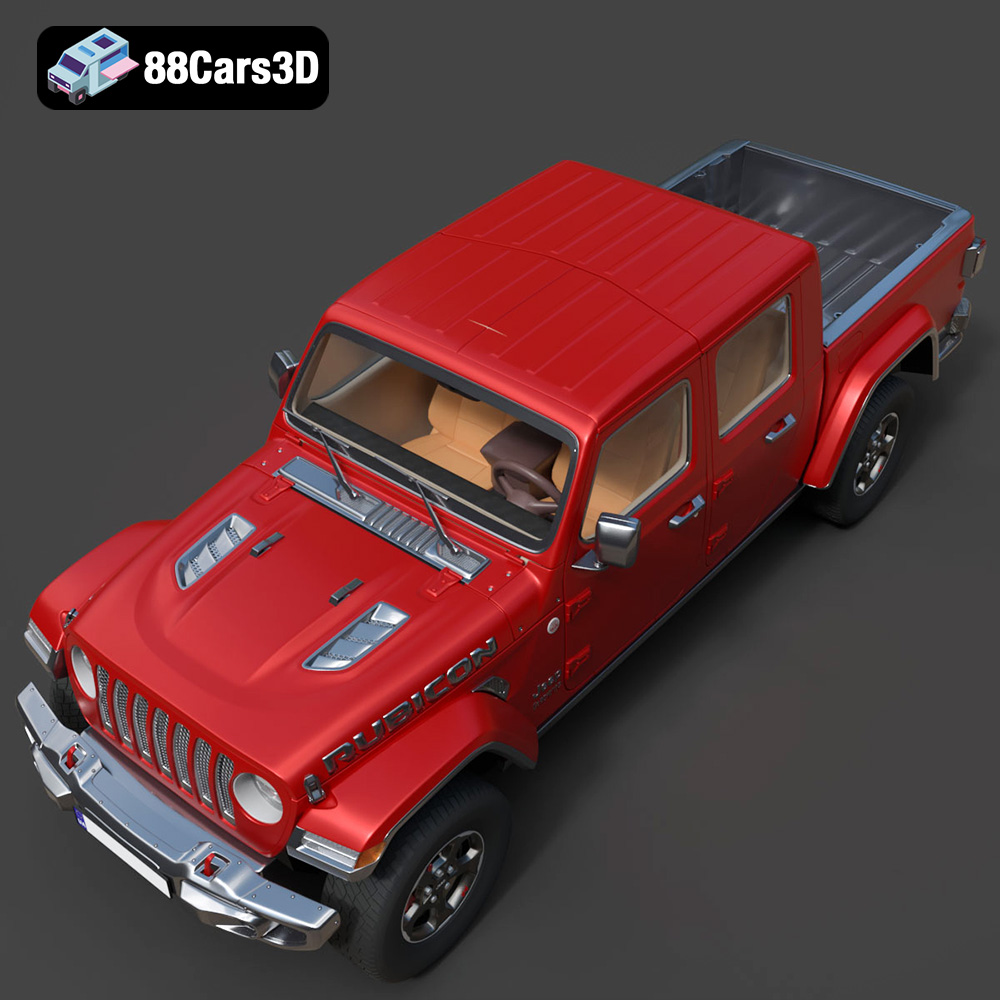
Today, we’re diving deep into the technical prowess and versatility of a standout asset: the Jeep Gladiator Rubicon 2020 3D Model. This particular model exemplifies the pinnacle of professional 3D asset development, providing a highly detailed and optimized digital twin of the iconic off-road vehicle. Whether your goal is a photorealistic render, an interactive game environment, or a groundbreaking AR experience, understanding the nuances of such a model and its integration into diverse workflows is paramount.
The versatility of a 3D model often hinges on the range of file formats it supports. Each format is designed with specific use cases and technical considerations in mind, making the choice of format critical for efficient workflow and compatibility. The Jeep Gladiator Rubicon 2020 3D Model, available on 88cars3d.com, is a prime example of an asset prepared for multifaceted deployment, offering a comprehensive suite of formats. Let’s explore these in detail:
The .blend format is native to Blender, the popular open-source 3D creation suite. When you acquire a .blend file, you’re not just getting a mesh; you’re often receiving a fully editable scene. This includes the model itself, complete with its materials, textures, UV maps, and even a pre-configured lighting setup or camera angles. For the Jeep Gladiator model, this means artists can directly open the file in Blender and immediately begin rendering, making adjustments to materials (e.g., paint sheen, tire tread roughness), or animating components with ease. Its strength lies in its comprehensive nature, preserving all scene data, modifiers, and node-based material setups, offering maximum flexibility for customization and further development within the Blender ecosystem.
.fbx (Filmbox) is arguably the most widely adopted interchange format in the 3D industry, particularly favored for game development. It efficiently stores not only geometric data but also crucial information like hierarchies, animations, blend shapes, skinning, and PBR (Physically Based Rendering) materials. For assets like the Jeep Gladiator Rubicon 2020, an .fbx file is ideal for importing into game engines such as Unreal Engine and Unity. Its robust support for animations and material assignments makes it a go-to for complex assets that need to move or interact within real-time environments. Developers can count on .fbx for reliable data transfer across various 3D applications and game pipelines.
The .obj (Wavefront OBJ) format is a venerable and universal 3D model format renowned for its simplicity and wide compatibility. It primarily stores geometric data (vertices, normals, texture coordinates, and faces) and can reference external .mtl (material library) files for basic material properties. While it lacks support for advanced features like animation or rigging, its ubiquitous nature ensures it can be opened and utilized by virtually any 3D software application. The Jeep Gladiator as an .obj provides a clean, raw mesh ideal for users who need cross-software compatibility or wish to build their own material setups from scratch in a different application.
.glb is the binary version of glTF (Graphics Language Transmission Format), designed specifically for efficient transmission and loading of 3D scenes and models on the web and in AR/VR applications. It packages all model data (geometry, materials, textures, animations) into a single, self-contained file, making it incredibly lightweight and fast to load. For the Jeep Gladiator Rubicon, a .glb file means it’s ready for interactive web viewers, augmented reality apps on mobile devices, or virtual reality experiences, where performance and quick loading times are paramount.
.stl (Stereolithography) is the standard file format for 3D printing. It represents a 3D model as a series of connected triangles, forming the surface geometry of the object. While it doesn’t store color, texture, or material information, its triangulated mesh is precisely what 3D printers understand. The Jeep Gladiator Rubicon 2020 3D Model in .stl format allows for physical prototyping, creating scale models, or even fabricating custom parts, offering a tangible output from a digital asset.
The .ply (Polygon File Format) is another format that stores geometric information, but it can also include properties like color per vertex, normal information, and even material properties. It’s often used for scanned data and scientific applications where precision and detailed mesh attributes are critical. For the Jeep Gladiator, a .ply file might be beneficial for highly detailed analysis, reverse engineering, or specific visualization tasks that leverage vertex-level data.
The .unreal format, or rather assets specifically packaged and configured for Unreal Engine, represents a significant advantage for game developers. These are not just raw models but often include pre-configured material instances, LODs (Levels of Detail), collision meshes, and even basic Blueprints to ensure optimal performance and ease of use within Unreal Engine. The Jeep Gladiator Rubicon 2020 3D Model explicitly offers an .unreal package, meaning it’s battle-tested and ready to drop into your Unreal projects, saving countless hours of setup and optimization.
Finally, the .max format is native to Autodesk 3ds Max, a leading software for 3D modeling, animation, and rendering in professional visualization. Similar to .blend, a .max file typically contains the entire scene, including the model, lighting, cameras, materials, and animation data. This format provides maximum editability for 3ds Max users, allowing them to leverage all the powerful tools and rendering engines (like V-Ray or Corona Renderer) within the software to produce stunning photorealistic renders or complex animations of the Jeep Gladiator Rubicon 2020.
The inclusion of such a diverse array of file formats for the Jeep Gladiator Rubicon 2020 3D Model underscores its professional utility, making it an incredibly adaptable asset for virtually any digital project.
Creating a 3D car model that truly stands out requires more than just recreating the basic shape. It’s a delicate balance of artistic interpretation and scientific precision. The Jeep Gladiator Rubicon 2020 3D Model exemplifies this synergy, showcasing meticulous craftsmanship that meets professional standards.
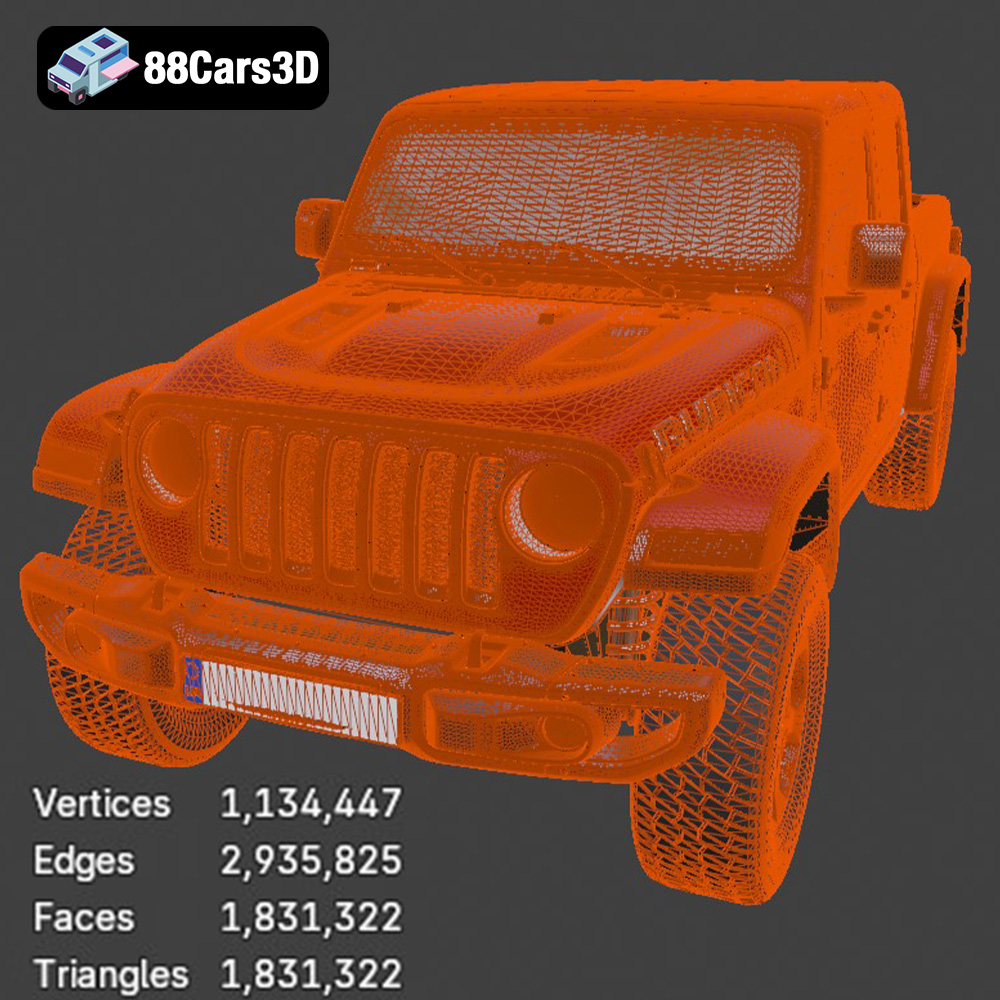
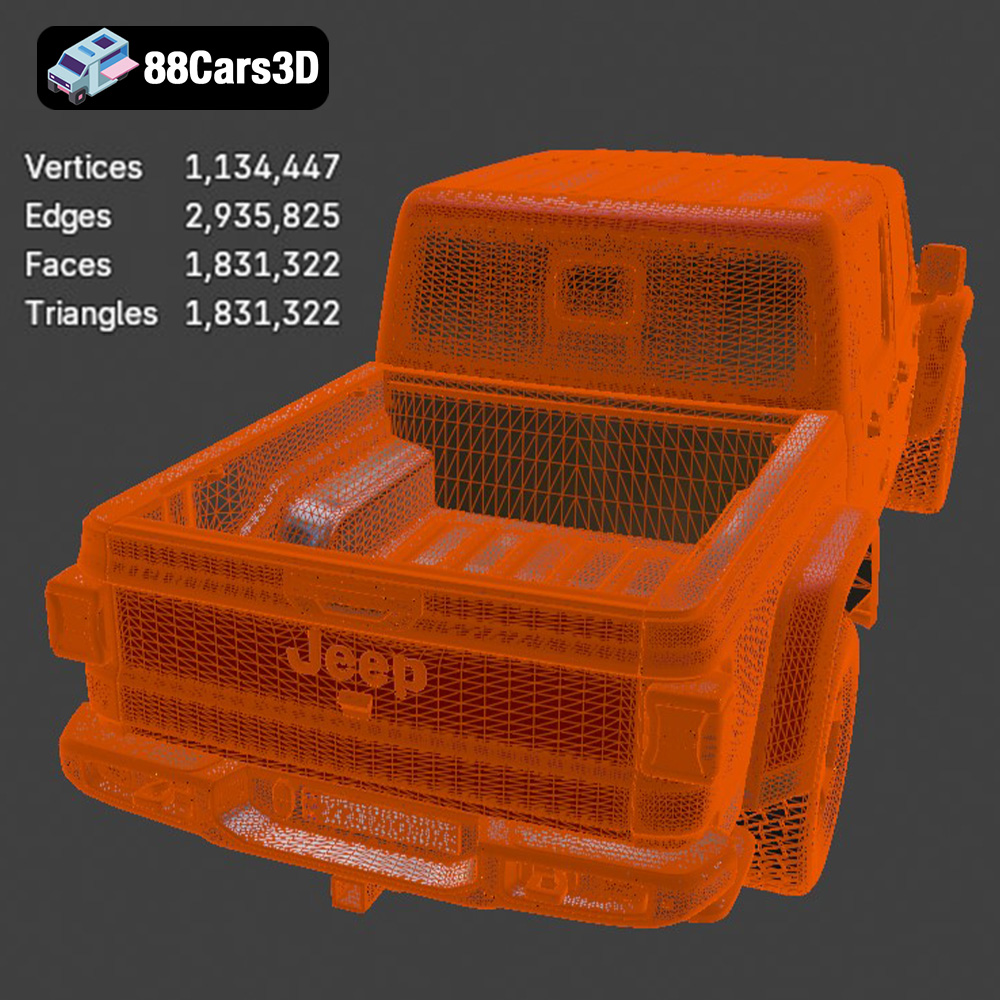
At the core of any high-quality 3D car model is its geometry. Precision modeling involves working from detailed blueprints, CAD data, or high-resolution photographic references to accurately capture every curve, panel gap, and intricate detail. For the Jeep Gladiator, this means replicating its distinctive grille, robust fenders, and unique truck bed with millimeter-perfect accuracy. Crucially, the geometry must be “clean,” meaning efficient polygon distribution (an optimized polygon count), proper edge flow, and minimal triangulation on curved surfaces where quads are preferred. This clean topology is vital for smooth subdivisions, realistic deformations during animation, and preventing rendering artifacts. It’s this foundational quality that allows the Jeep Gladiator model to maintain excellent performance while looking stunning.
Visual fidelity extends beyond geometry to the surface properties. Realistic materials, often based on the Physically Based Rendering (PBR) pipeline, are essential. This involves accurately simulating how light interacts with different surfaces – the metallic flake of the paint, the roughness of the tires, the reflectivity of the windows, and the subtle wear on the interior. Each material channel (Albedo/Base Color, Metallic, Roughness, Normal, Ambient Occlusion) must be meticulously painted or sourced. Before materials can be applied, the model needs to be carefully UV unwrapped. This process flattens the 3D surface into a 2D map, allowing textures to be applied without stretching or distortion. A well-optimized UV layout maximizes texture resolution and minimizes seams, ensuring that the Jeep Gladiator Rubicon 2020 3D Model looks flawless from every angle in any lighting condition.
The true value of a professional 3D car model lies in its seamless integration into diverse production pipelines. The Jeep Gladiator Rubicon 2020 3D Model is designed precisely for this, fitting perfectly into automotive rendering, game development, and more.
For automotive visualization studios, marketing agencies, and product designers, photorealistic rendering is paramount. Using software like 3ds Max (with V-Ray or Corona Renderer) or Blender (with Cycles or Eevee), the Jeep Gladiator Rubicon 2020 3D Model becomes the centerpiece for captivating visuals. Its high detail and PBR materials allow artists to create studio-quality renders, showcasing the vehicle in various environments, lighting conditions, and even custom paint jobs. Imagine a virtual showroom where potential buyers can interact with the Gladiator, viewing it from every angle, zooming into its interior, or seeing how it looks under a sunset sky. The included .max and .blend files, with their material and lighting setups, provide an excellent starting point, drastically reducing setup time for artists who need to deliver stunning results quickly.
In game development, the demands are unique: visual fidelity must be balanced with strict performance budgets. The Jeep Gladiator Rubicon 2020 3D Model, optimized with clean geometry and an efficient polygon count, is an ideal game asset. Using the provided .fbx or pre-configured .unreal files, developers can import the Gladiator directly into engines like Unreal Engine or Unity. The model can then be integrated into open-world environments, racing simulations, or off-road adventure games. Critical steps in this workflow include creating Levels of Detail (LODs) to swap out simpler meshes at a distance, adding collision meshes for realistic physics, and creating material instances to allow for easy color variations or damage states without duplicating texture data. The model’s robust construction makes it suitable for vehicle physics implementation and animation, enabling players to experience the Gladiator’s rugged capabilities in an interactive virtual world.
Beyond traditional rendering and game development, the versatility of the Jeep Gladiator Rubicon 2020 3D Model extends into emerging and specialized fields, showcasing the breadth of its potential.
The advent of AR/VR technology has opened new frontiers for interactive 3D content. The Jeep Gladiator Rubicon 2020 3D Model, especially in its optimized .glb format, is perfectly suited for these immersive platforms. For AR, envision an application where a prospective buyer can place a full-scale digital Gladiator in their driveway, rotating it, opening doors, and even changing its color, all viewed through their smartphone. In VR, the model can form part of a virtual showroom, a simulated driving experience, or an interactive training module. The key here is real-time performance and efficient asset delivery, which the .glb format inherently supports, making the Gladiator model a powerful tool for creating engaging and cutting-edge AR/VR content.
High-fidelity 3D vehicle models are indispensable for simulation and training applications. From driver training simulators that replicate real-world conditions to engineering simulations testing vehicle dynamics or crash scenarios, accuracy is paramount. The detailed geometry of the Jeep Gladiator Rubicon 2020 3D Model provides a solid foundation for such simulations. Engineers can integrate the model into physics engines to analyze suspension behavior, tire grip, and overall vehicle performance. For emergency response training, the model can be used to simulate extrication procedures or off-road recovery scenarios, offering a safe and cost-effective way to train personnel. The clean mesh and comprehensive data contained in formats like .fbx or .ply support these rigorous analytical applications.
The journey from digital to physical is made possible with 3D printing. The Jeep Gladiator Rubicon 2020 3D Model’s availability in .stl format means it’s ready for fabrication. Designers and enthusiasts can print scale models for display, create custom accessories, or even prototype functional parts. While 3D printing requires careful consideration of scale, tolerances, and support structures, starting with a professionally modeled asset like the Gladiator ensures a clean, manifold mesh that translates well into a physical object. This capability opens doors for product development, educational tools, and personalized collectibles, transforming the digital asset into a tangible reality.
Professional 3D car models are not just about raw detail; they are also about intelligent optimization. This ensures that the asset performs efficiently across a spectrum of applications while maintaining stunning visual quality. The Jeep Gladiator Rubicon 2020 3D Model has been developed with these principles firmly in mind.
An “optimized polygon count” is a hallmark of a professional 3D model. While high-poly models provide incredible detail for cinematic renders, they can cripple real-time performance in games or AR/VR. A well-optimized model strikes a balance, providing sufficient detail for close-ups without being overly dense. For real-time applications, implementing Levels of Detail (LODs) is crucial. LODs are progressively simpler versions of the model that are swapped in as the camera moves further away. This technique dramatically reduces the computational load, allowing for smoother frame rates. While the base Jeep Gladiator Rubicon 2020 model provides excellent detail, its clean geometry makes it straightforward for developers to generate their own LODs tailored to specific project requirements.
Beyond the polygon count, efficient UV mapping plays a significant role in performance. A well-organized UV layout ensures that textures are applied without distortion and that texture memory is used effectively. For the Jeep Gladiator, this means that even complex areas like the grille or tire treads have clean UVs, allowing for high-resolution textures to be displayed crisply. For further optimization in real-time engines, texture atlasing can be employed. This technique combines multiple smaller textures into a single, larger texture map, which reduces draw calls and improves rendering efficiency, especially for components that share similar material properties.
The use of realistic PBR materials contributes significantly to visual fidelity. Ensuring consistency across all material properties – albedo, metallic, roughness, normal, and ambient occlusion maps – means the Jeep Gladiator Rubicon 2020 will react to light in a physically accurate way, regardless of the rendering engine. In game engines, leveraging material instances is a powerful optimization technique. Instead of creating unique materials for every slight variation (e.g., different paint colors), a single master material can be created, and instances can be derived from it, allowing parameters like color or roughness to be adjusted without incurring the overhead of entirely new materials. This approach not only saves memory but also streamlines the artist’s workflow, making it easy to customize the Gladiator’s appearance.
The journey through the intricacies of high-fidelity 3D car models, with a particular focus on the Jeep Gladiator Rubicon 2020 3D Model, underscores the immense value that professionally crafted assets bring to the digital creation landscape. From the foundational importance of clean geometry and optimized topology to the nuanced application of PBR materials and comprehensive file format support, every aspect contributes to an asset’s versatility and performance.
Whether you are an automotive renderer striving for photorealism, a game developer building an immersive world, an AR/VR innovator crafting interactive experiences, or an engineer requiring precise models for simulation, the Jeep Gladiator Rubicon 2020 3D Model stands as a testament to what a high-quality 3D asset can achieve. Its meticulous design, coupled with its availability in a wide array of industry-standard and specialized formats—including .blend, .fbx, .obj, .glb, .stl, .ply, .unreal, and .max—ensures seamless integration into virtually any professional workflow.
Investing in such an asset means more than just acquiring a model; it means gaining a powerful tool that accelerates production, enhances visual quality, and provides a robust foundation for innovation. For those seeking premium 3D car models that meet the highest standards of realism and technical excellence, exploring the collection at 88cars3d.com offers a gateway to unlocking new creative possibilities. The Jeep Gladiator Rubicon 2020 3D Model is not just a digital representation; it’s an enabler for your next groundbreaking project.
Discover the realistic digital representation of the Jeep Gladiator Rubicon 2020 3D Model, meticulously crafted to deliver an authentic digital twin of this rugged off-road vehicle. This model captures the iconic exterior styling and intricate structural details, making it an ideal asset for professional digital projects. Built with precision, the model features clean geometry, an optimized polygon count, and realistic materials. Every element has been designed to meet professional standards, ensuring seamless integration into your scenes while maintaining excellent performance. Perfect for a wide range of applications, this versatile 3D model excels in game development, architectural rendering, automotive visualization, AR/VR experiences, and animations.
$39.99
.4×4
.arvr
.blend
.car3dmodel
.fbx
.gameasset
.gladiator
.glb
.jeep
.jt
.max
.obj
.offroad
.pickup
.ply
.rendering
.rubicon
.simulation
.stl
.truck
.unreal