Get 20% OFF All Premium 3D & STL Models!

In the dynamic world of digital content creation, the demand for hyper-realistic and meticulously crafted 3D assets has never been higher. From immersive video games and cutting-edge architectural visualizations to compelling marketing campaigns and virtual reality experiences, high-quality 3D car models are essential tools for professionals across various industries. These digital replicas are not merely visual placeholders; they are intricate works of art and engineering that convey brand prestige, enhance realism, and drive user engagement.
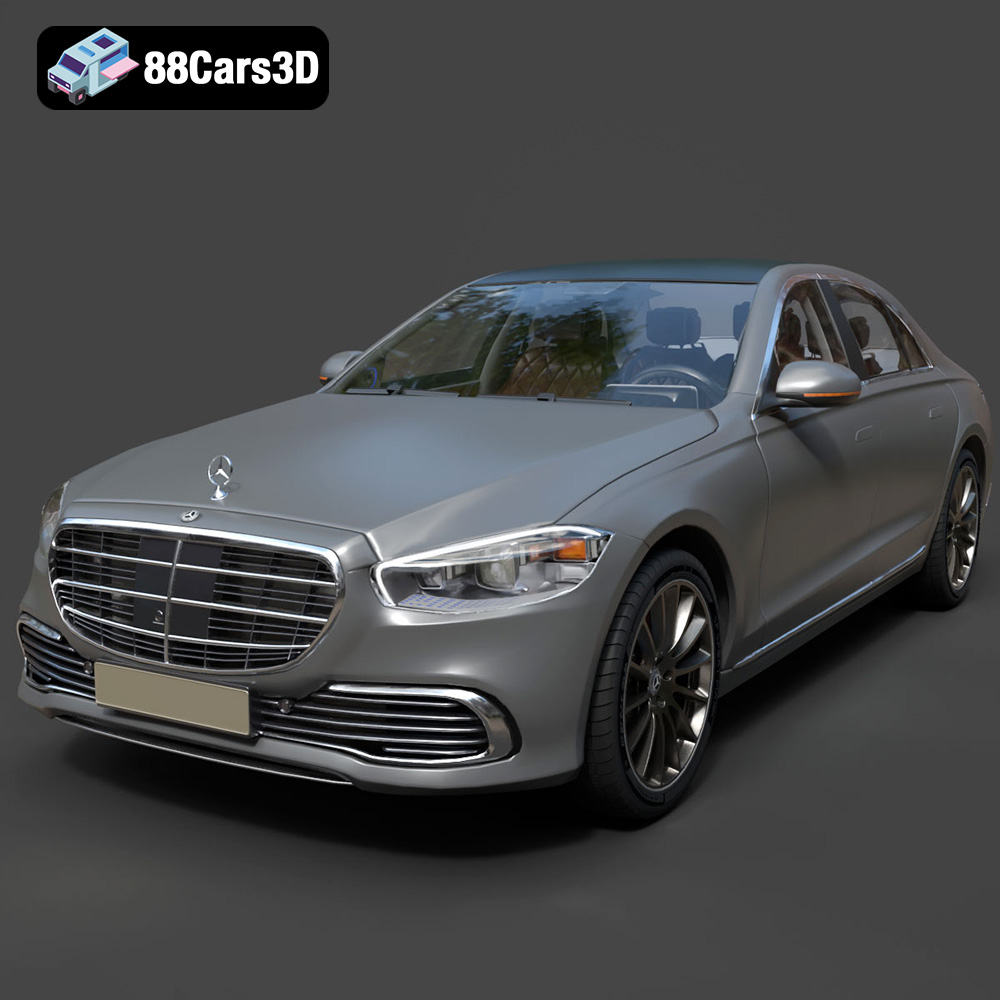
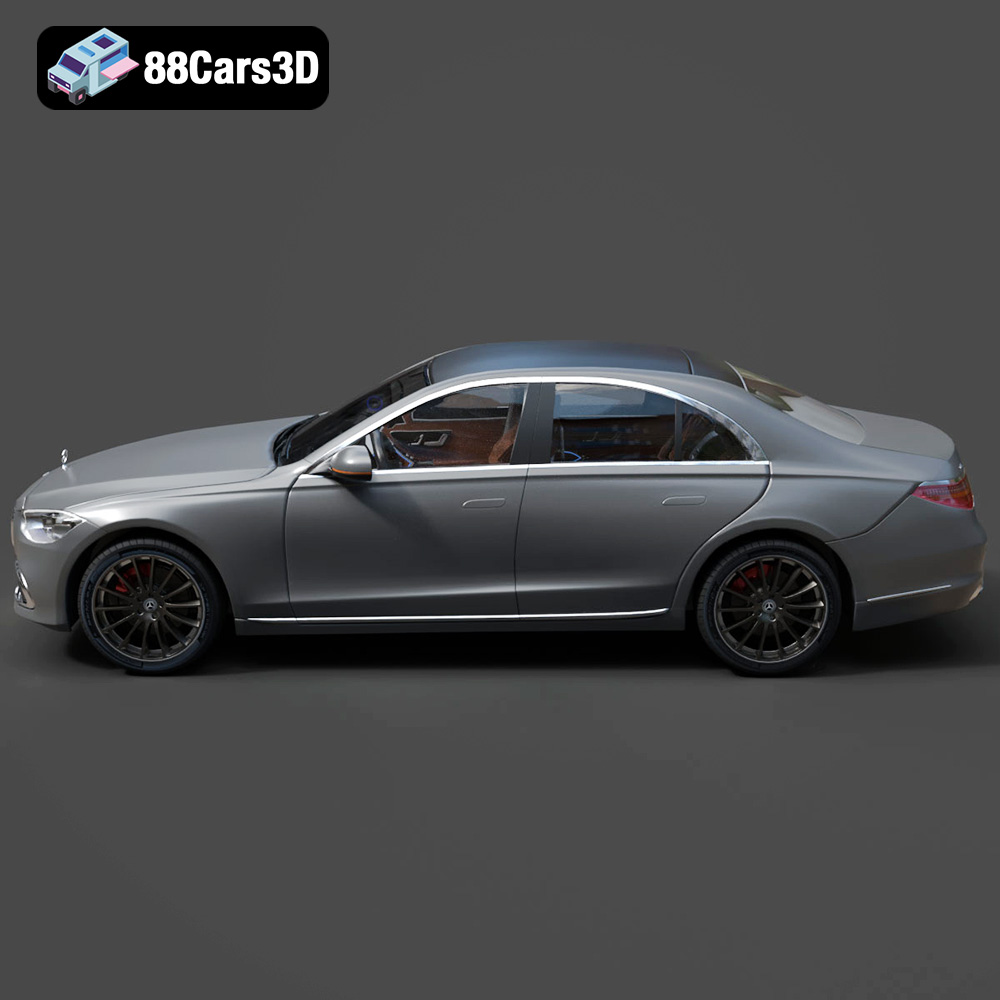
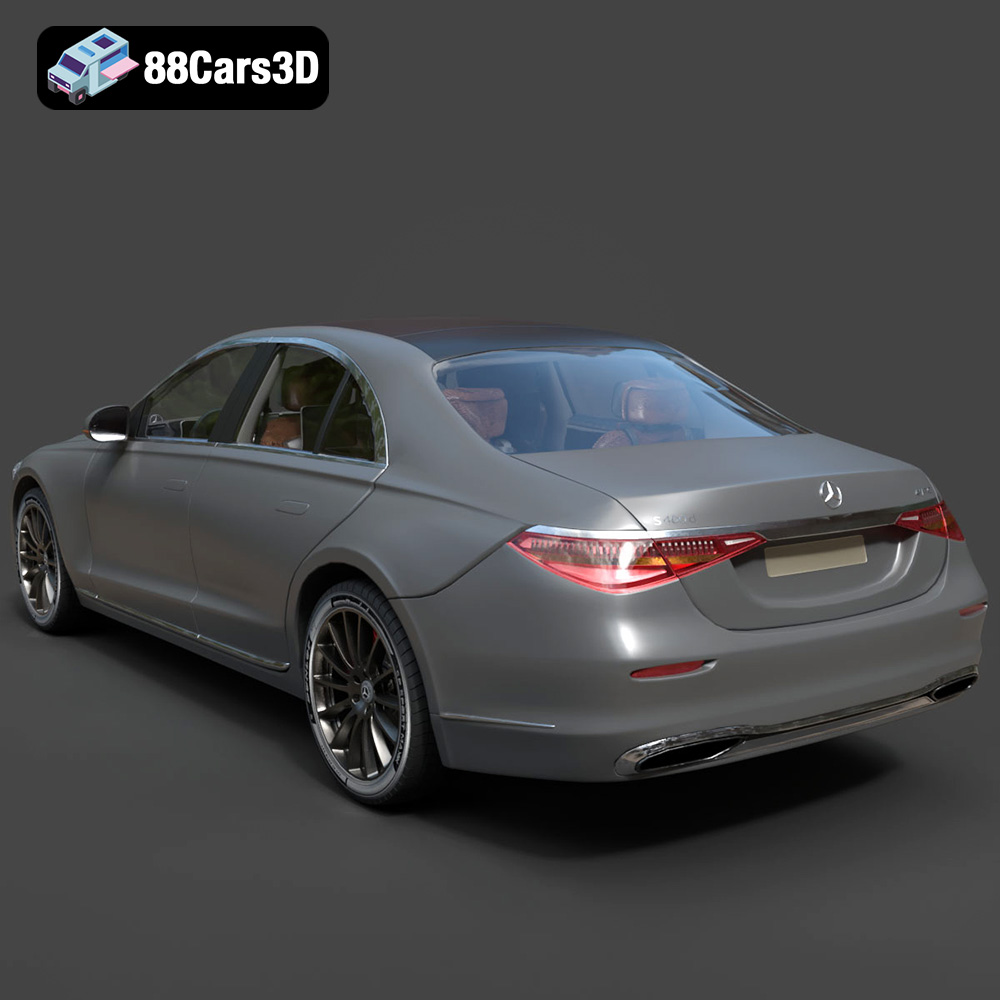
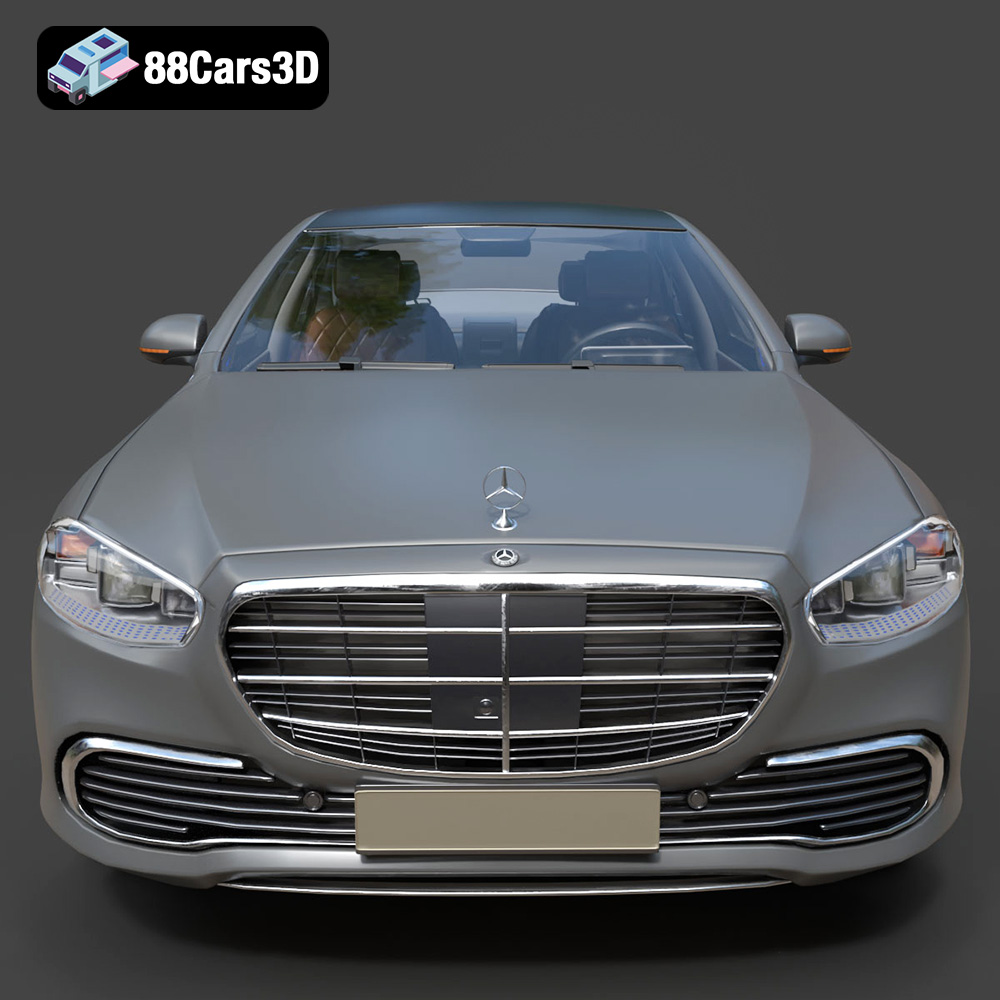
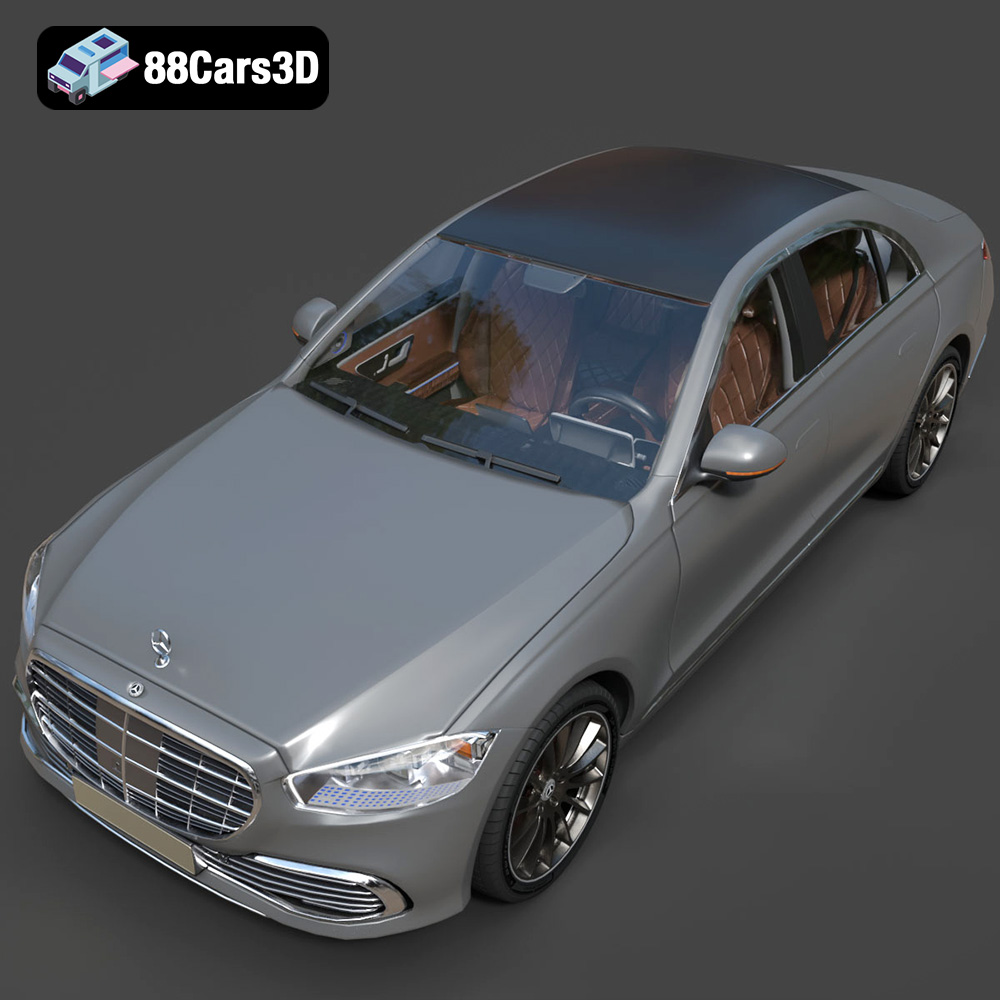
Today, we delve into the technical intricacies and creative possibilities offered by a standout example of such an asset: the Mercedes-Benz S400d 2021 3D model. This exceptional digital rendition of the iconic W223 generation S-Class serves as a perfect case study for understanding what makes a premium 3D vehicle model indispensable in modern pipelines. From its flowing aerodynamic profile to its highly detailed interior, this model, available on 88cars3d.com, encapsulates the sophistication required for high-end rendering and real-time applications, setting a benchmark for what professionals expect from automotive digital assets.
Creating believable digital environments hinges on the quality of individual assets, and nowhere is this more critical than with vehicles. An automotive 3D model isn’t just a prop; it often acts as a focal point, demanding unparalleled fidelity. Generic or poorly optimized models can quickly break immersion, diminish brand perception, and ultimately undermine the entire project’s impact. This is precisely why investing in top-tier 3D car models, such as the Mercedes-Benz S400d 2021, is a strategic decision for any serious creator.
For automotive designers and marketers, high-fidelity 3D models are transformative. They allow for rapid iteration, comprehensive visualization, and compelling presentations long before a physical prototype is built. Imagine showcasing the elegant proportions and distinctive Multibeam LED headlights of the Mercedes-Benz S400d 2021 in a virtual showroom, allowing potential customers to explore every angle, even interact with the interior, all rendered in breathtaking clarity. This capability accelerates decision-making, reduces costs, and opens new avenues for consumer engagement. In architectural visualization, placing a photorealistic S-Class outside a luxury property elevates the entire scene, adding a layer of aspirational lifestyle and realism that static imagery simply cannot replicate.
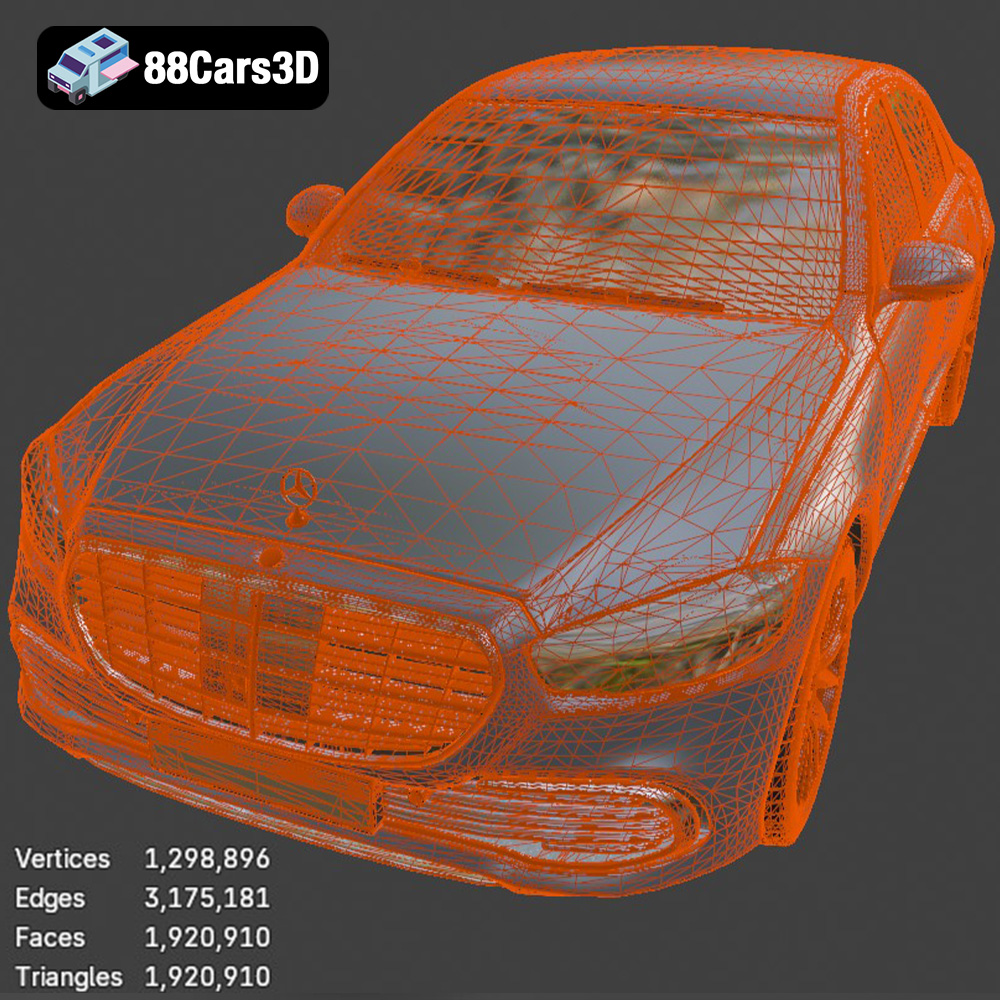
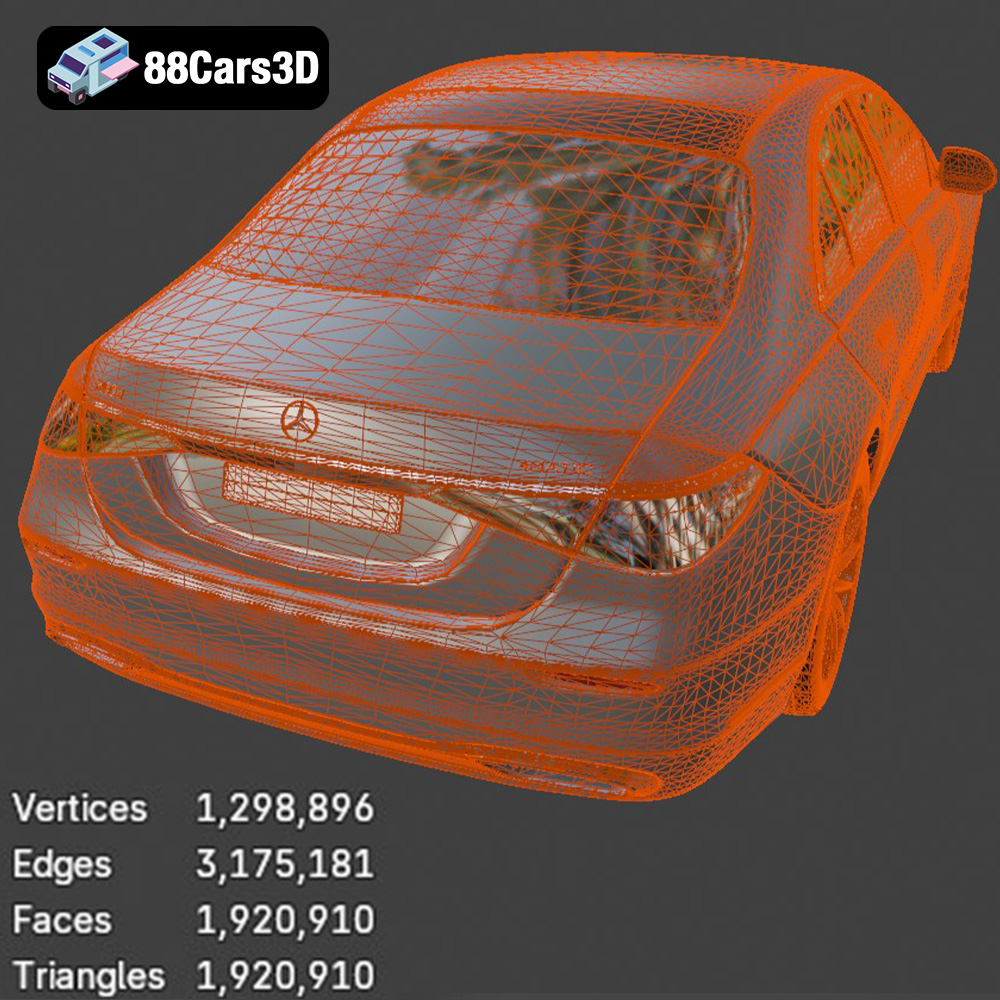
One of the perennial challenges in 3D asset creation, especially for real-time applications like game development or AR/VR, is balancing visual fidelity with performance optimization. A model that looks incredible but brings a game engine to its knees is impractical. Conversely, a highly optimized model that lacks detail feels out of place in a high-end production. The best 3D car models strike a precise balance. The Mercedes-Benz S400d 2021, for instance, boasts an optimized ~800,000 triangle count. This is a critical technical specification, as it allows for unparalleled visual realism, capturing intricate details like the chrome front grille and tire tread patterns, while remaining “game-ready.” This careful optimization ensures smooth frame rates in demanding real-time environments, making it a versatile asset for a broad range of professional applications.
When acquiring 3D car models, navigating the array of file formats can be daunting. Each format serves a specific purpose, catering to different software ecosystems, project requirements, and technical pipelines. Understanding these distinctions is paramount for seamless integration and optimal use of assets like the Mercedes-Benz S400d 2021. This model’s availability in a comprehensive suite of formats highlights its versatility and readiness for diverse applications.
The .blend format is the native file type for Blender, a powerful and increasingly popular open-source 3D creation suite. When you download a .blend file, you’re not just getting the mesh; you’re receiving a complete Blender project scene. This typically includes all geometric data, materials, textures, lighting setups, cameras, and even animation data, if present. For the Mercedes-Benz S400d 2021, a .blend file provides an artist with full access to the model’s construction, allowing for extensive customization, material tweaks using Blender’s Cycles or Eevee renderers, and animation rigging without any loss of data. It’s the ideal format for Blender users seeking maximum flexibility and full control over the asset.
.fbx (Filmbox) is a proprietary file format developed by Autodesk, widely regarded as the industry standard for interoperability between 3D software applications, especially for game development. Its strength lies in its ability to store a vast amount of data, including geometry (meshes), materials, textures, animations, skinning information, and camera and light data, in a highly efficient manner. For game engines like Unreal Engine and Unity, .fbx is the preferred format for importing 3D models and their associated animations. The Mercedes-Benz S400d 2021 .fbx file would be optimized for direct drag-and-drop import into these engines, ensuring that PBR materials are correctly interpreted and the ~800k triangle count is handled efficiently for real-time rendering. It’s crucial for any professional working on interactive experiences.
The .obj (Wavefront OBJ) format is one of the oldest and most universally supported 3D file formats. It is a simple, text-based format that primarily stores 3D geometry data (vertices, normals, texture coordinates, and faces). While it can reference external material (.mtl) files, it does not embed textures or animation data directly. Its universal nature makes it excellent for basic mesh exchange between almost any 3D software application, regardless of vendor. If you need a reliable mesh to bring into an unfamiliar software or for a simple conversion, .obj for the S400d model provides a clean, compatible base, though you might need to re-link textures and set up materials manually in some cases.
.glb (GL Transmission Format Binary) is the binary version of the glTF format, designed for efficient transmission and loading of 3D scenes and models by applications. It’s specifically optimized for the web, AR (Augmented Reality), and VR (Virtual Reality) environments, as it packs all assets – geometry, materials, textures, and animations – into a single, self-contained file. This “asset delivery format” allows for quick loading and rendering in browser-based viewers, mobile AR apps, and WebGL applications. The Mercedes-Benz S400d 2021 in .glb format would be perfect for virtual showrooms on a website or for displaying the car in a mobile AR experience, offering high visual quality with minimal overhead.
.stl (STereoLithography) is the de facto standard file format for 3D printing. Unlike other formats that store color, texture, or material information, .stl describes only the surface geometry of a 3D object using a collection of interconnected triangles. It essentially defines the outer shell of the object. For hobbyists or professionals looking to physically replicate the Mercedes-Benz S400d 2021 model, the .stl file is what would be fed into a slicing software for 3D printing. The provided print settings (scale, layer height, supports) are directly relevant to optimizing this .stl for successful physical output, enabling display-scale replicas with fine details.
.ply (Polygon File Format or Stanford Triangle Format) is another format for storing 3D data, particularly useful for scanned data, CAD, and scientific applications where precision and additional mesh properties are important. It can store a wide range of properties for each vertex (color, normal, confidence value) and face (color, texture coordinates). While less common for general asset exchange than .fbx or .obj, its ability to include complex data makes it valuable for specialized pipelines or when a highly precise mesh representation of the S400d is required for analysis or further engineering work.
The .unreal format, or more accurately, assets packaged for Unreal Engine, implies that the model has been specifically processed and optimized within Unreal Engine itself. This might mean the .fbx has been imported, materials have been set up using Unreal’s PBR system (e.g., textures assigned to Albedo, Normal, Roughness, Metallic maps), collision meshes created, and possibly even Blueprints for basic functionalities (like opening doors or turning wheels) established. An “.unreal” file represents a ready-to-use asset within the Unreal ecosystem, saving developers significant setup time. For the Mercedes-Benz S400d 2021, having an Unreal-ready package means it’s pre-configured to look and perform optimally straight out of the box in Unreal projects.
The .max format is the native file type for Autodesk 3ds Max, a long-standing industry leader for 3D modeling, animation, and rendering. Similar to .blend files, a .max file contains the complete scene data, including geometry, materials (with V-Ray, Corona, or Arnold shaders), lights, cameras, and animations specific to 3ds Max. For professionals whose primary workflow is in 3ds Max, having the Mercedes-Benz S400d 2021 available as a .max file means instant access to an editable, fully rigged (if applicable) and textured model within their preferred environment, ready for high-end cinematic rendering or integration into complex scenes.
Creating a 3D model of a luxury vehicle like the Mercedes-Benz S400d 2021 is a testament to meticulous digital craftsmanship. It involves a precise workflow that prioritizes accuracy, detail, and optimization. Every curve, every panel gap, and every interior element must be faithfully recreated to achieve the breathtaking visual fidelity demanded by high-end projects.
The foundation of any high-quality 3D car model lies in its geometry and topology. For the S400d 2021, this means starting with accurate blueprints and reference images to sculpt the W223 chassis geometry and elegant proportions. The modeling process involves creating clean, quad-based topology to ensure smooth subdivisions, proper deformation for animation, and efficient UV mapping. A balanced triangle count, like the ~800,000 specified for this model, is a direct result of this careful topology work, ensuring that visual detail is maximized without incurring excessive rendering costs. This level of precision extends to every exterior feature, from the distinctive multibeam LED headlamp assemblies to the subtle creases along the bodywork.
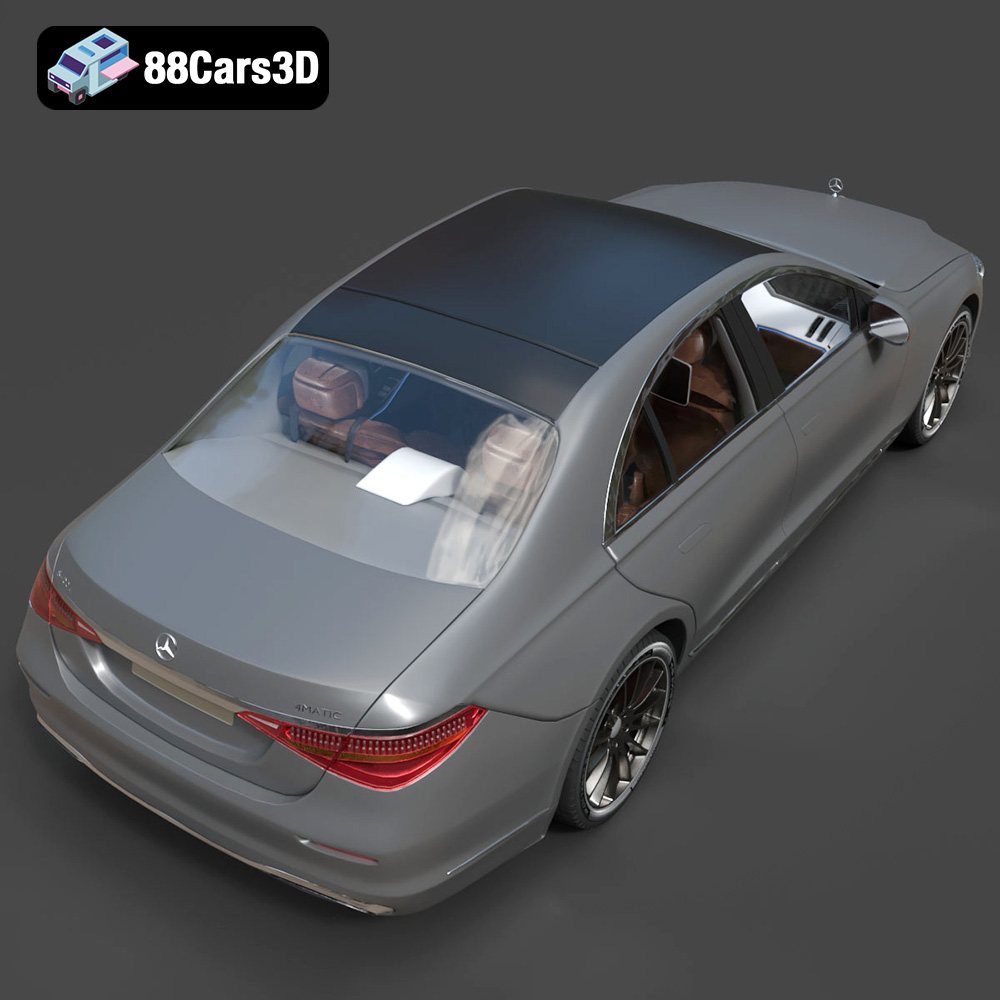
True luxury is often found in the details, and a premium 3D car model must reflect this. The Mercedes-Benz S400d 2021 model exemplifies this with its “detailed front fascia with signature chrome grille accents” and “dual-exhaust system integration at the rear bumper.” On the interior, the model boasts “luxurious leather seating and exquisite stitching details,” an “accurate steering wheel with capacitive control geometry,” and a “detailed dashboard featuring MBUX dual-screen layout and HUD housing.” These elements are not simply blocked out; they are modeled with the same attention to precision as the exterior, ensuring that even in first-person perspectives in games or close-up renders, the quality remains uncompromised. Separate components for wheels, suspension, and steering further enable realistic animation, a critical aspect for automotive rendering and game assets.
Beyond the mesh, the surface qualities define realism. The Mercedes-Benz S400d 2021 model utilizes advanced Physically Based Rendering (PBR) textures and materials. This means that instead of simply using color, maps for roughness, metallicness, normal, and sometimes ambient occlusion and height are meticulously crafted. These PBR textures accurately simulate how light interacts with different surfaces – the reflective chrome of the grille, the subtle sheen of the leather, the matte finish of plastic elements, and the intricate patterns of the tire tread. This workflow ensures that the model looks consistent and realistic under various lighting conditions, whether rendered in V-Ray, Corona, Unreal Engine, or Blender’s Cycles, making it adaptable for diverse rendering scenarios and customization options like changing body colors or material finishes.
The convergence of realism and interactivity demands highly optimized 3D assets, especially in game development. The Mercedes-Benz S400d 2021 is explicitly designed to be game-ready, a critical distinction that elevates it beyond static renders. This involves a comprehensive approach to asset creation that considers performance at every stage.
For developers working with engines like Unreal and Unity, the value of a pre-optimized, “game-ready” asset cannot be overstated. The S400d model’s inclusion of .fbx and .unreal formats signifies its direct compatibility and ease of integration. This means correct pivot setups for steering and wheel rotation, proper scaling, and often pre-configured materials that translate well into the engine’s PBR pipeline. Developers can quickly import the model, apply shaders, and immediately begin scripting vehicle physics or placing it within their game world, saving countless hours of manual setup and optimization that would otherwise be required for a generic model.
The specified ~800,000 triangle count for the Mercedes-Benz S400d 2021 is a masterclass in balancing visual impact with real-time performance. While modern hardware can handle millions of polygons, maintaining a reasonable polycount is crucial for maintaining stable frame rates, especially in open-world games with many concurrent vehicles or detailed environments. An 800k triangle count allows for extreme detail – intricate headlight arrays, complex interior elements, and realistic panel gaps – without bogging down the GPU. This optimization ensures that players experience breathtaking realism without sacrificing smooth gameplay, making it an ideal asset for titles ranging from racing simulators to expansive open-world luxury games.
A static car model is only half the story in interactive environments. The Mercedes-Benz S400d 2021 model is designed with “separate wheels, suspension, and steering components for animation” and “proper pivot setup for steering, wheel rotation, and suspension travel.” This technical detail is vital for game developers implementing realistic vehicle physics and animations. It allows for accurate suspension compression, steering wheel movement in sync with player input, and dynamic wheel rotation, all contributing to a more immersive driving experience. These foundational elements simplify the integration process, allowing developers to focus on fine-tuning physics and gameplay rather than spending time re-rigging the vehicle.
The utility of high-quality 3D car models extends far beyond traditional game development and cinematic rendering. Their versatility makes them invaluable assets across a spectrum of industries, enabling innovative solutions for visualization, interaction, and even physical replication. The Mercedes-Benz S400d 2021 3D model from 88cars3d.com exemplifies this broad applicability.
In architectural visualization (ArchViz), adding a realistic vehicle can dramatically enhance the mood and realism of an exterior scene. Placing the Mercedes-Benz S400d 2021 in front of a modern luxury home or office building instantly elevates the scene, grounding it in a tangible reality and communicating a sense of aspirational lifestyle. For virtual car dealerships, the impact is even more direct. These models form the core of immersive virtual showrooms where customers can explore vehicles in 3D, customize colors and finishes, and even “sit inside” the car, offering an experience that closely mirrors a physical visit. The detailed interior features of the S400d model, like the MBUX dual-screen layout, are crucial for convincing interior presentations.
Augmented Reality (AR) and Virtual Reality (VR) are revolutionizing how we interact with products. For the automotive industry, 3D car models are the bedrock of these innovations. Imagine an AR app that lets you “park” the Mercedes-Benz S400d 2021 in your driveway and walk around it, seeing its real-world scale and how it fits into your environment. Or a VR configurator that allows you to swap out colors, wheel designs, and interior trims in a fully immersive environment. The .glb format, optimized for AR/VR and browser-based display, is particularly valuable here, ensuring smooth performance on mobile devices and head-mounted displays. This interactive capability, enabled by optimized models like the S400d, provides unparalleled engagement for potential buyers and enthusiasts.
Not all 3D models are destined to remain digital. The inclusion of the .stl format for the Mercedes-Benz S400d 2021 model opens up exciting possibilities for 3D printing. Hobbyists, designers, and even engineers can convert this digital asset into a tangible, physical replica. The detailed print settings provided (recommended scale, layer height, wall thickness, supports, print orientation) are crucial for achieving a successful, high-quality physical model. Resin printing is often recommended for fine details, ensuring that intricate elements like the grille, mirrors, and interior can be accurately reproduced. Post-processing steps like sanding, priming, and painting with authentic factory colors can further enhance the realism of the printed model, turning a digital asset into a stunning physical display piece.
The true value of a professional 3D car model lies not just in its initial fidelity but also in its adaptability. Projects evolve, creative visions shift, and client requirements change. A well-constructed 3D asset, like the Mercedes-Benz S400d 2021, offers extensive customization options, ensuring it remains a versatile and future-proof investment for any digital artist or studio.
While a model might be game-ready out of the box, specific projects often demand unique adaptations. The S400d model provides a strong foundation for such modifications. For instance, in a racing game, you might need to add specific sponsor decals or modify performance-enhancing body kits. For a cinematic, you might need to introduce custom wear-and-tear effects. The clean topology and organized mesh of a premium model allow artists to easily select specific parts, add new geometry, or apply custom textures without disrupting the underlying structure. The availability in formats like .blend and .max further empowers artists to delve into the model’s construction and make these changes seamlessly within their preferred software.
The aesthetic impact of a 3D model is heavily influenced by its materials and the lighting environment. The Mercedes-Benz S400d 2021 model is designed with robust material setups that can be easily modified. Artists can “change body colors (e.g., Obsidian Black, High-Tech Silver),” “modify tire textures (off-road vs. street variants),” or “adjust material finishes (matte, gloss, metallic).” This flexibility is crucial for designers and marketers who need to present the vehicle in various brand-consistent configurations or adapt it to match specific scene lighting – whether it’s the harsh sunlight of a desert race, the soft glow of a luxury showroom, or the dramatic lighting of a film set. High-quality UV maps are essential here, ensuring that new textures can be applied without distortion, maximizing creative freedom.
In the rapidly evolving landscape of 3D content creation, the difference between a good project and an exceptional one often comes down to the quality of its assets. The Mercedes-Benz S400d 2021 3D model stands as a prime example of what a professional-grade automotive asset should be: meticulously detailed, technically optimized, and incredibly versatile. From its game-ready polycount to its comprehensive range of file formats, it addresses the demanding needs of game developers, architectural visualizers, AR/VR pioneers, and even 3D printing enthusiasts.
This model is more than just a digital car; it’s a gateway to creating immersive experiences, captivating visuals, and innovative applications across diverse industries. By providing a truly premium asset with options for every major workflow – be it 3ds Max, Blender, Unreal, or for 3D printing – 88cars3d.com empowers creators to achieve unparalleled realism and efficiency in their projects. For anyone serious about elevating their digital automotive content, investing in such a high-caliber 3D car model is not just a choice, but a strategic imperative that ensures stunning results and seamless integration into any professional pipeline.
Experience the pinnacle of automotive luxury with this highly detailed 3D model of the Mercedes-Benz S400d 2021. As the flagship of the iconic S-Class lineup, the W223 generation redefines elegance with its flowing aerodynamic profile, distinctive multibeam LED headlights, and imposing chrome front grille. This digital replica perfectly captures the sleek presence and sophisticated styling cues that make the S-Class a global symbol of prestige and advanced engineering. This 3D model boasts exceptional topology and a balanced triangle count, delivering breathtaking visual fidelity without compromising on performance. Carefully optimized for game-ready integration, it is ideal for real-time engines, offering unparalleled realism for next-generation interactive experiences. Whether you are building immersive virtual showrooms or crafting high-end cinematic animations, this asset meets the highest industry standards. Perfect for architectural visualizations, virtual car dealerships, high-end lifestyle rendering, and open-world luxury games.
$19.99
.2021
.blend
.fbx
.glb
.max
.obj
.ply
.rendering
.s-class
.s400d
.sedan
.stl
.unreal
car-3d-model
game asset
game-ready
low-poly
luxury-sedan
mercedes-benz
optimized
VR/AR