Get 20% OFF All Premium 3D & STL Models!

In the vibrant world of digital creation, the demand for high-fidelity 3D assets continues to escalate. From the adrenaline-pumping realism of racing games to the sleek precision of automotive configurators and breathtaking architectural visualizations, accurate and optimized 3D models are the bedrock of immersive experiences. Vehicles, in particular, hold a special place in this ecosystem, serving as dynamic focal points that convey speed, style, and engineering prowess. Achieving photorealism and interactive performance requires a meticulous approach to 3D modeling, texturing, and optimization.
Whether you’re an indie game developer striving for authentic vehicular action, a seasoned renderer producing stunning marketing visuals, or an AR/VR innovator building next-generation interactive environments, the quality of your base assets is paramount. This is where specialized marketplaces like 88cars3d.com shine, offering a curated selection of premium 3D car models and motorcycles designed to meet professional standards. Today, we’ll take a deep dive into the technical intricacies and creative potential offered by one such exceptional asset: the Yamaha XV950 Racer 3D Model. This model exemplifies the blend of heritage and modern design, translated into a versatile digital asset ready for a multitude of applications.
When working with 3D models, understanding the various file formats is crucial for ensuring compatibility, optimizing workflows, and achieving desired outcomes across different software and platforms. Each format serves a specific purpose, carrying distinct technical advantages and limitations. The Yamaha XV950 Racer 3D Model, a prime example of a versatile asset, is offered in a comprehensive range of formats, making it accessible for almost any project.
The .blend format is the native file type for Blender, the popular open-source 3D creation suite. When you download the Yamaha XV950 Racer 3D Model in .blend, you receive a complete Blender scene, including all mesh data, materials, textures, lighting, and even animation rigs if present. This format offers maximum editability, allowing artists to delve deep into the model’s construction, modify its topology, adjust materials using Blender’s powerful shader editor, and fine-tune rendering settings with Cycles or Eevee. It’s ideal for users who want to customize the model extensively, integrate it into a Blender-centric pipeline, or leverage Blender’s comprehensive toolset for sculpting, animation, or simulation.
.fbx (Filmbox) is a proprietary file format owned by Autodesk, widely regarded as the industry standard for interoperability between 3D applications and real-time engines. It excels at preserving complex scene data, including geometry, materials, textures, skeletal animations, and cameras, during transfer. For the Yamaha XV950 Racer, the .fbx version is perfectly structured for import into game engines like Unreal Engine and Unity. Its robust nature ensures that pivot points for components like wheels and steering are correctly imported, making it “game-ready” for immediate use in interactive applications. This format is crucial for developers needing to move assets seamlessly between DCC (Digital Content Creation) tools and their game development environments.
The .obj (Wavefront Object) format is one of the oldest and most widely supported 3D file types. It’s a universal format known for its simplicity and excellent compatibility across virtually all 3D software. An .obj file primarily stores geometric data (vertices, faces, UVs) and can reference external .mtl (Material Template Library) files for basic material properties and texture paths. While it doesn’t support advanced features like animation or rigging, its widespread acceptance makes the Yamaha XV950 Racer .obj file an excellent choice for users needing maximum software compatibility or for those who prefer to handle materials and textures independently within their chosen application.
.glb (GLB format for glTF) is a relatively newer format optimized for efficient transmission and loading of 3D scenes and models, particularly in web-based, AR, and VR applications. It’s a binary container format that embeds all necessary data (geometry, materials, textures, animations) into a single file, making it incredibly convenient for distribution. The Yamaha XV950 Racer in .glb format would be ideal for interactive virtual showrooms, mobile AR experiences, or showcasing the model directly on a website without needing extensive plugins. Its focus on compactness and real-time rendering makes it a cornerstone for the future of 3D on the web and immersive technologies.
.stl (Stereolithography) is the standard file format used for 3D printing. It represents a 3D model as a collection of unconnected triangular facets, defining only the surface geometry of an object without color, texture, or other CAD attributes. When the Yamaha XV950 Racer 3D Model is converted to .stl, it becomes a blueprint for physical fabrication. This format is critical for hobbyists and professionals looking to bring the digital model into the physical world, whether for display, prototyping, or scale modeling. The product’s description even includes recommended 3D print settings, highlighting its readiness for this application.
The .ply (Polygon File Format) is another popular format for storing 3D data, particularly useful for scanned data, CAD, and scientific applications where precision and additional per-vertex attributes are important. While .obj is often sufficient, .ply can store more comprehensive information such as color per vertex, surface normals, and transparency. For the Yamaha XV950 Racer, a .ply export could be valuable for advanced geometric analysis or integration into specific engineering or scientific visualization pipelines.
While not a standalone file extension in the traditional sense like .fbx or .obj, “.unreal” often refers to assets specifically packaged and optimized for direct import and use within Unreal Engine. This typically means the .fbx has been meticulously prepared, possibly with specific naming conventions, material setups (using Unreal’s PBR workflow), and LODs (Levels of Detail) that ensure optimal performance and visual quality within the engine. The Yamaha XV950 Racer 3D Model, being game-ready, would leverage this optimization to deliver exceptional fidelity and performance within an Unreal project, minimizing setup time for developers.
Finally, the .max format is the native file type for Autodesk 3ds Max, a powerful 3D modeling, animation, and rendering software. Similar to .blend for Blender, the .max file provides the complete project scene, including all modifiers, lights, cameras, and material definitions. For users primarily working in 3ds Max, this format allows for full control over the Yamaha XV950 Racer model, enabling detailed animation, advanced rendering with renderers like V-Ray or Corona, and the ability to leverage 3ds Max’s extensive modeling and simulation toolsets. It’s the ultimate format for professional studios deeply integrated into the Autodesk ecosystem for high-end cinematic or commercial projects.
The availability of the Yamaha XV950 Racer across these diverse formats underscores its versatility and the foresight of its creators. This multi-format approach ensures that creators, regardless of their preferred software or target application, can integrate this high-quality 3D motorcycle model into their projects efficiently and effectively.
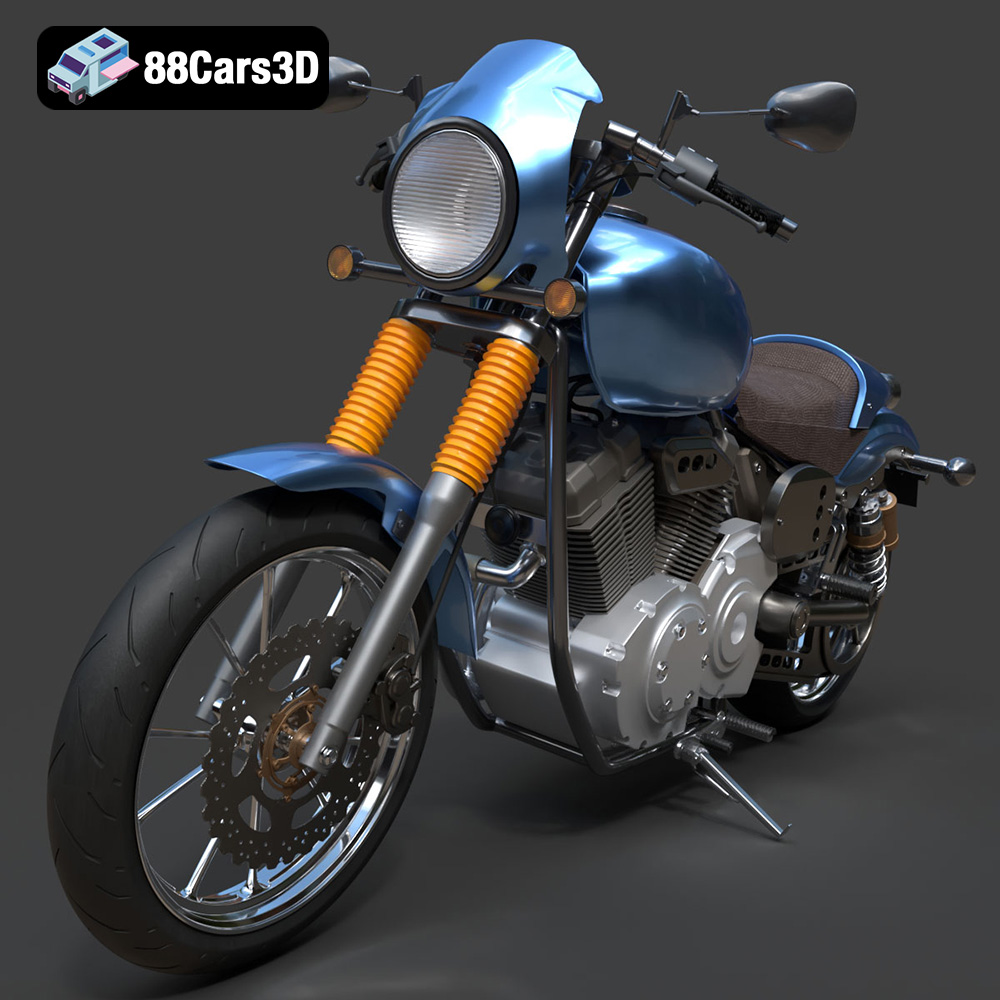
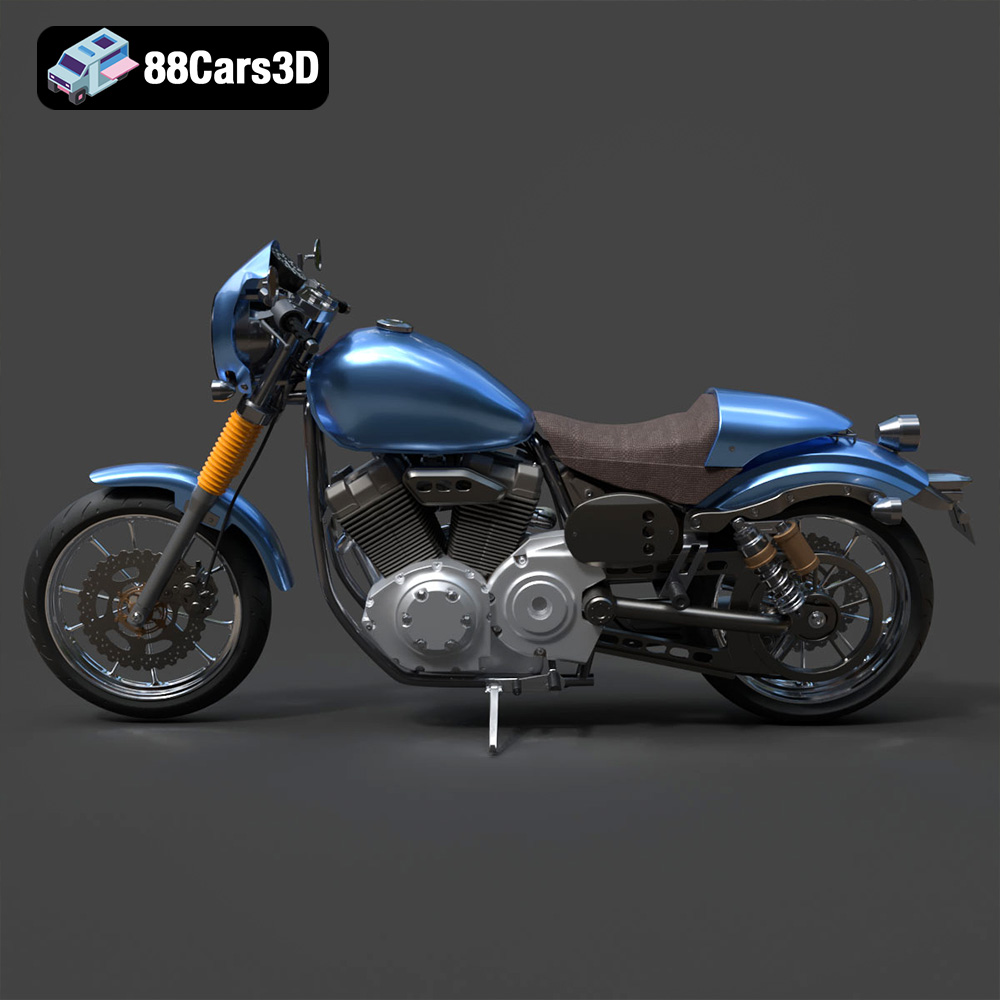
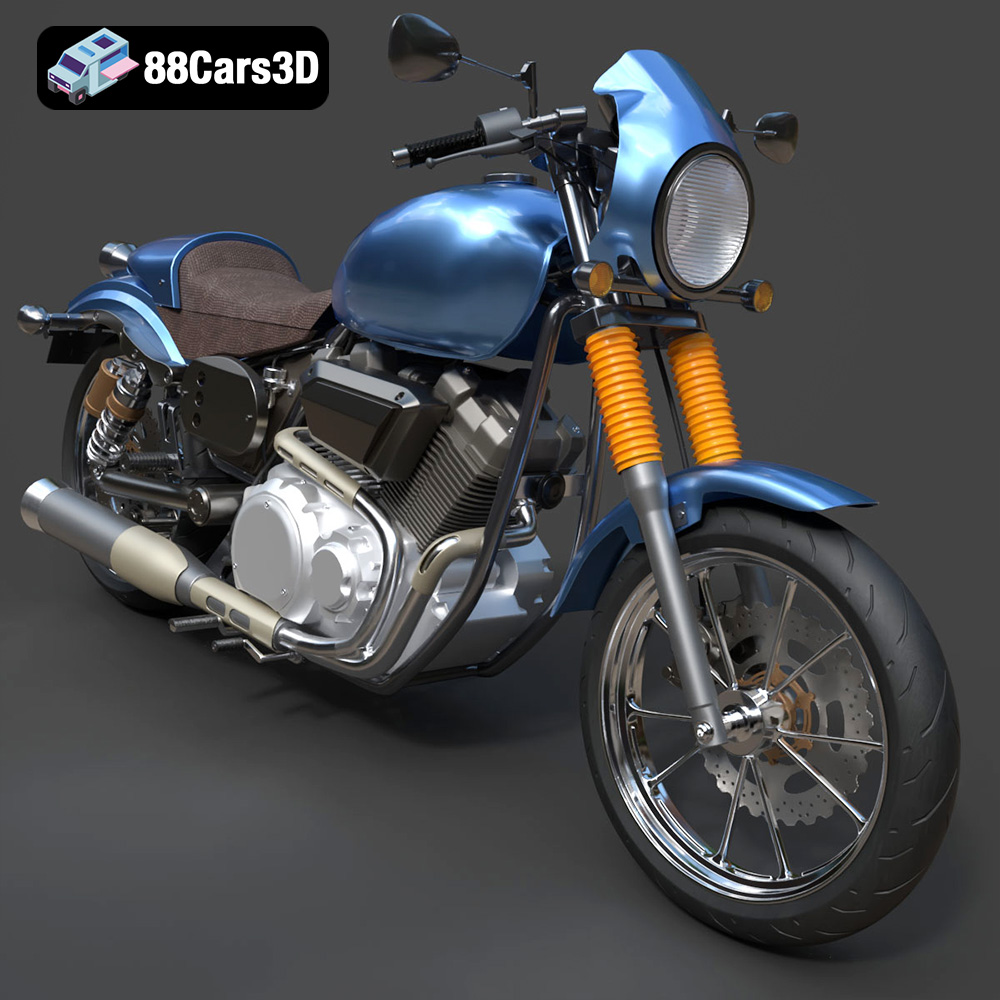
The Yamaha XV950 Racer is a motorcycle that commands attention, blending the raw appeal of a café-racer with the muscularity of a modern V-twin cruiser. Translating this distinct aesthetic into a high-quality 3D model requires precision, artistic vision, and technical mastery. The Yamaha XV950 Racer 3D Model from 88cars3d.com achieves this with remarkable success, presenting an asset that is both visually stunning and functionally optimized.
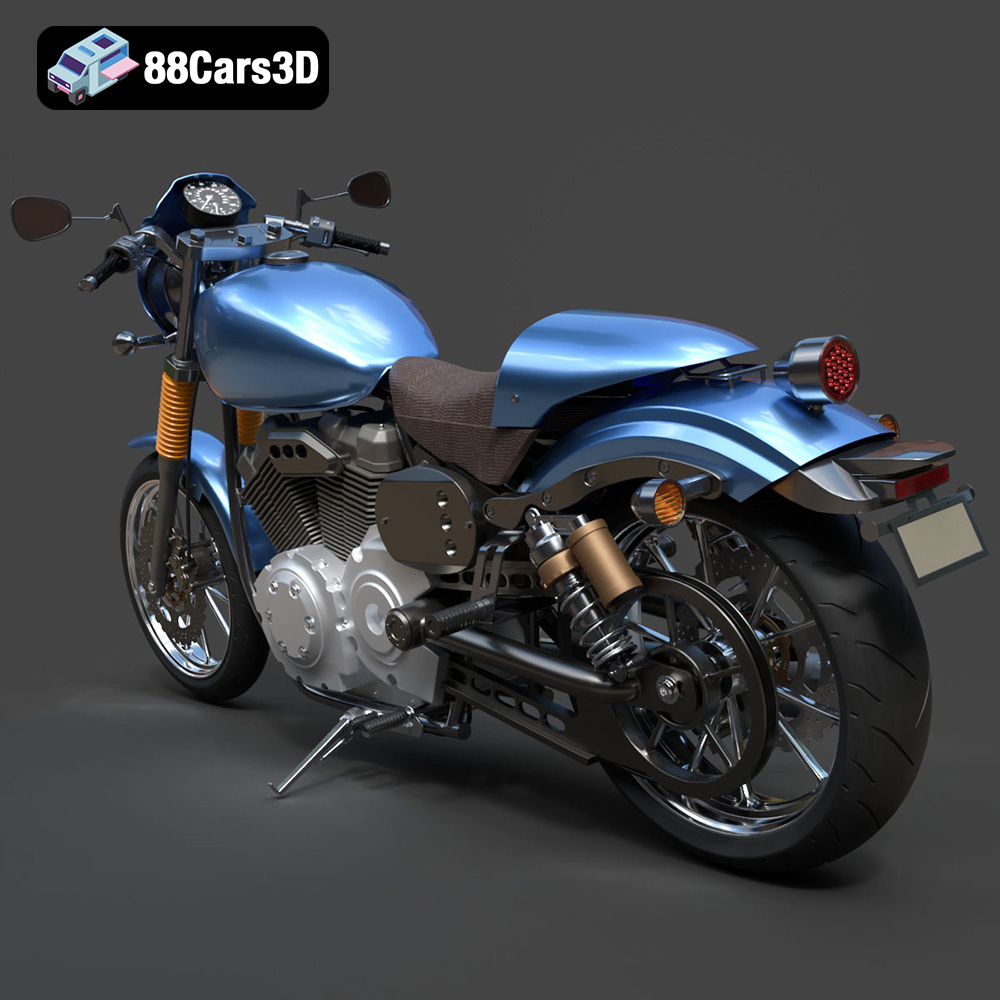
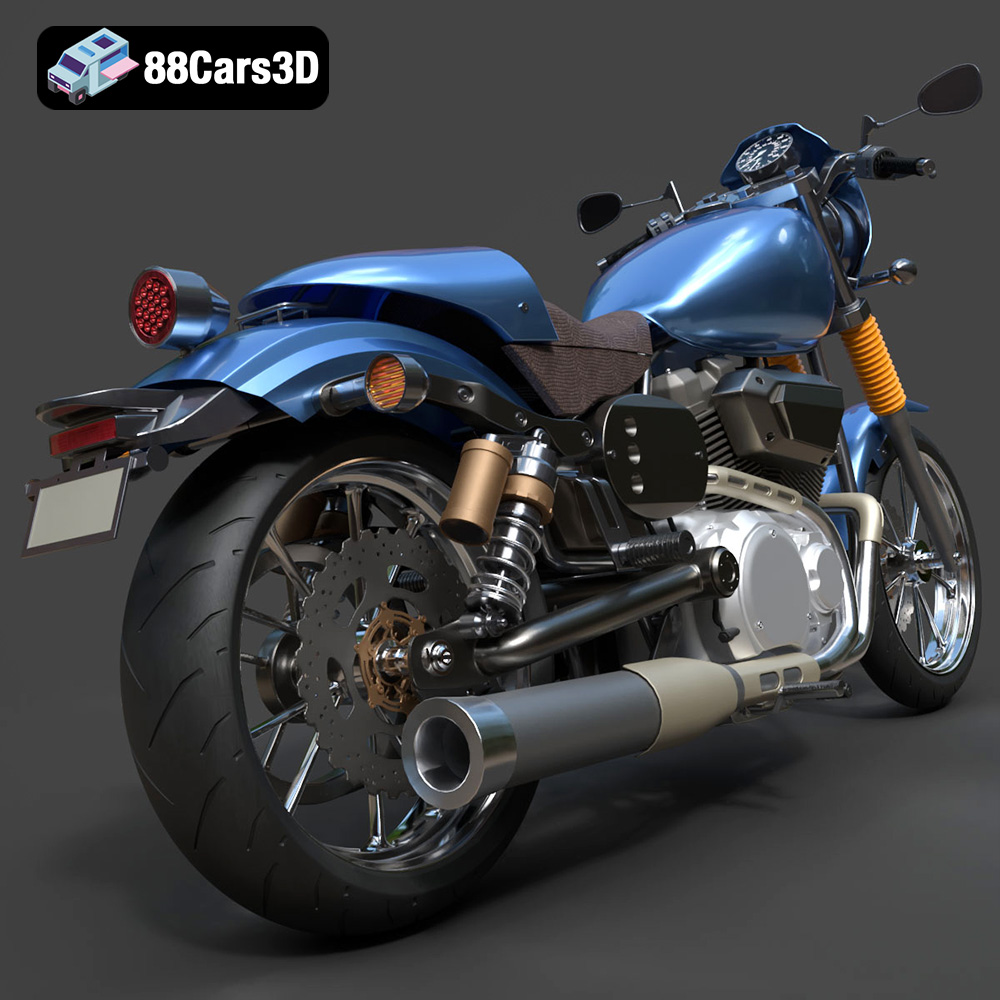
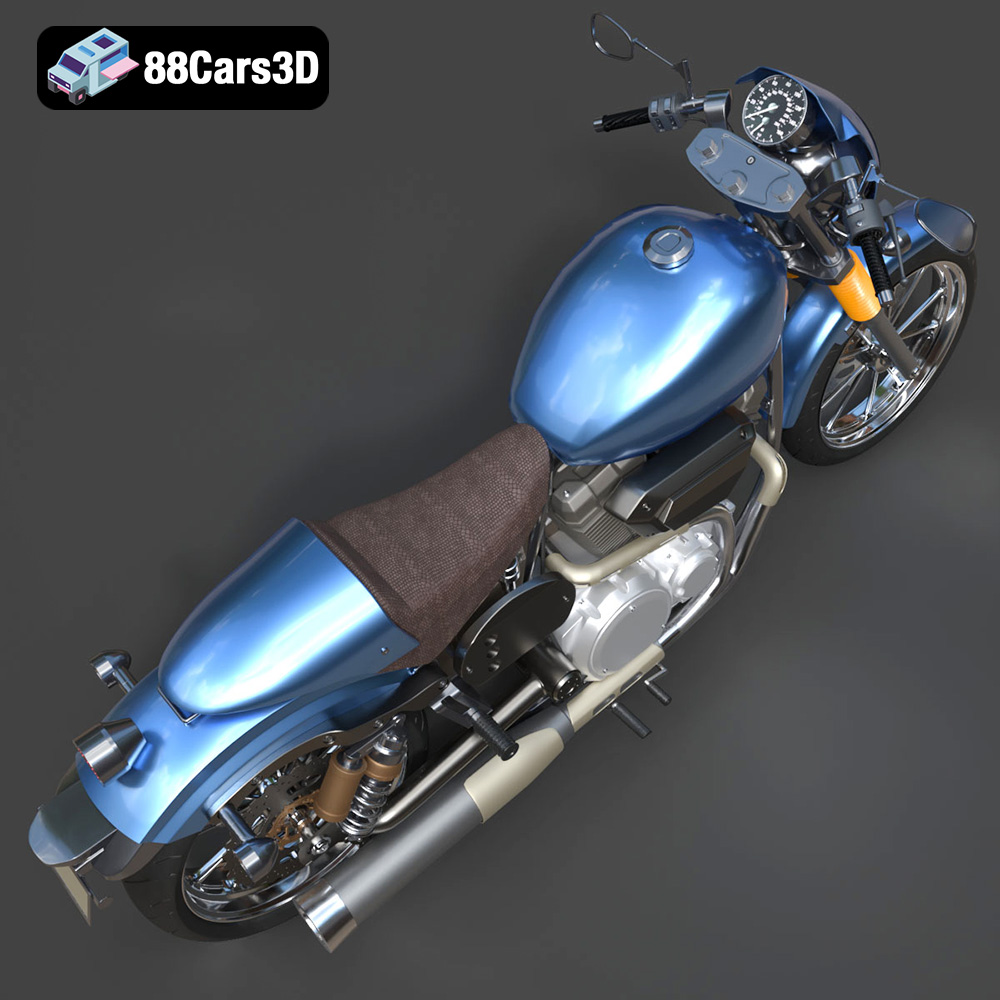
Every curve, every angle of the real Yamaha XV950 Racer has been faithfully reproduced in this 3D model. From the accurate frame geometry that defines its aggressive cafe-racer stance to the intricate details of the 942cc air-cooled V-twin engine block, complete with sculpted cooling fins, the exterior is a testament to meticulous craftsmanship. The authentic dual-shotgun style exhaust system, fitted with realistic heat shields, adds to its rugged charm. Key elements like the classic round headlight nestled within its signature mini front cowl and the sleek LED-style taillight are all rendered with attention to detail. High-detail cast alloy wheels with finely treaded street tires, along with the distinctive piggyback twin rear shock suspension, ensure that the model looks incredible from any angle. Crucially, components like the wheels, suspension, and steering are separated, allowing for seamless and realistic animation.
The experience of a motorcycle is often about the connection between rider and machine. The digital model extends this immersion into the virtual realm with a detailed cockpit designed for optimal first-person perspective in games and simulations. The sporty solo saddle, paired with an aerodynamic rear seat cover, mirrors the bike’s lean profile. Authentic clip-on handlebars are positioned to convey an aggressive, forward-leaning posture, while a minimalist circular digital instrument cluster provides a clean, modern touch. All control details, including rear-set footpegs, clutch/brake levers, and the shifter, are accurately represented, enhancing realism for interactive applications and rendering scenes where close-up shots of the controls are desired.
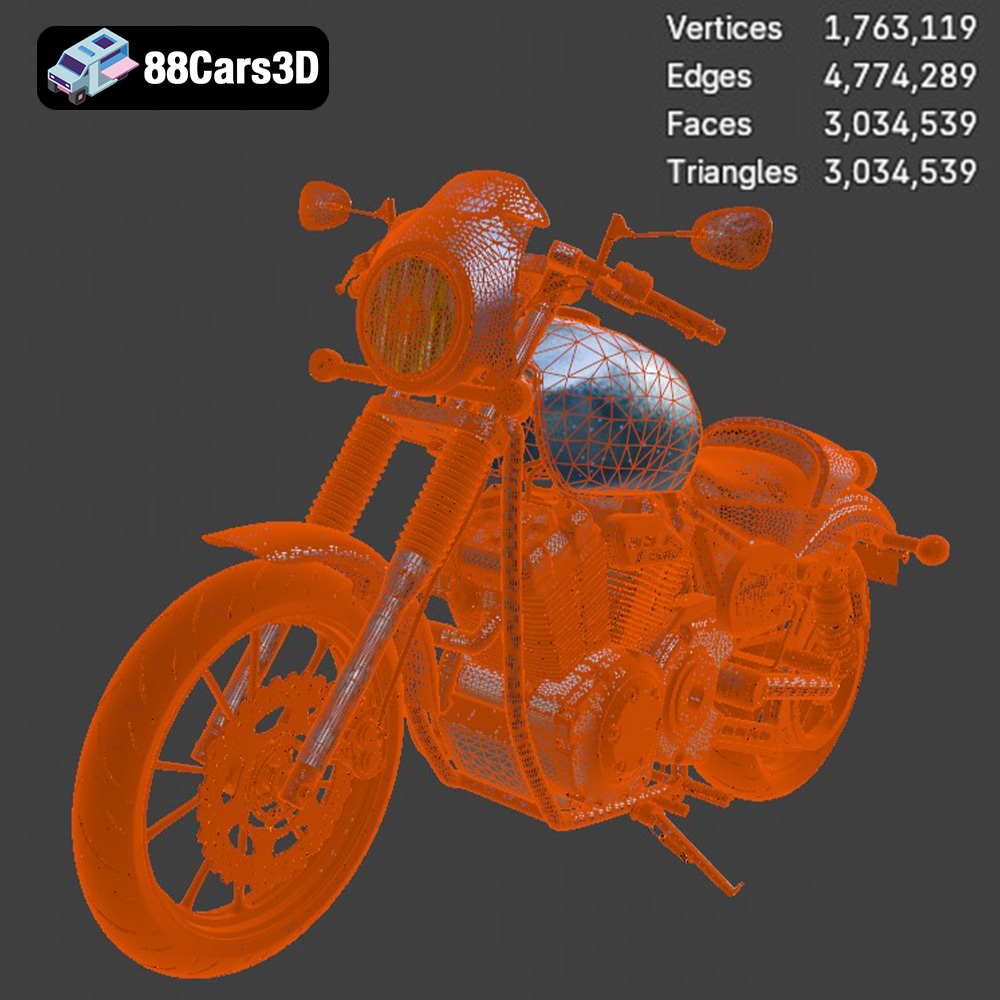
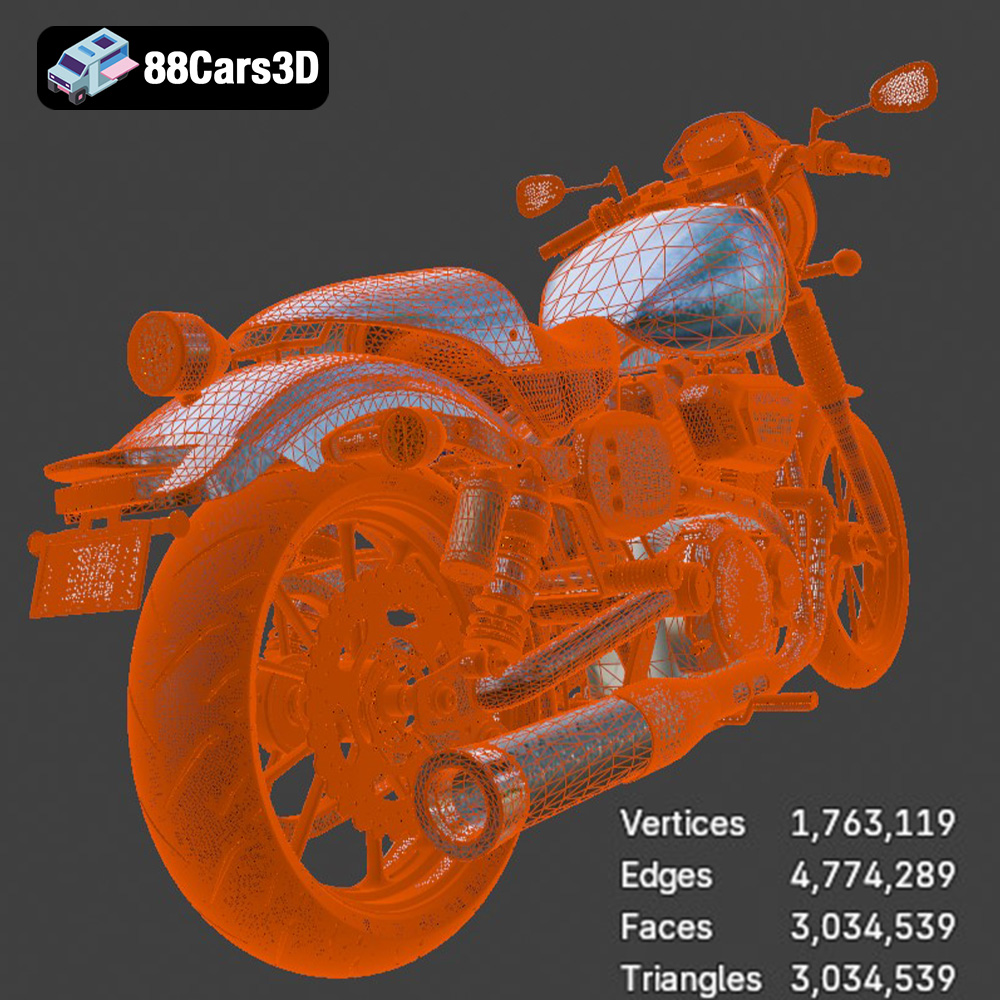
Beyond its visual accuracy, the Yamaha XV950 Racer 3D Model stands out for its technical optimization. It boasts a “game-ready” ~130,000 triangle count, striking a perfect balance for real-time engines like Unreal and Unity. This polycount is high enough to maintain excellent visual realism without overburdening engine performance, making it an ideal `game asset`. Furthermore, the model is built to real-world scale accuracy, based on the actual vehicle chassis, ensuring correct proportions and physics when integrated into simulations. Proper pivot setups for steering, wheel rotation, and suspension travel are included, which are critical for smooth and believable animation. This attention to technical detail ensures that the model is not just a pretty face but a robust, functional asset ready for the demands of professional digital production.
A high-quality 3D model like the Yamaha XV950 Racer is not merely a static digital sculpture; it’s a versatile tool that can be integrated into diverse professional workflows, from interactive media to static visualizations. Its multi-format availability and optimized structure make it a cornerstone for various digital projects.
For game developers, the Yamaha XV950 Racer 3D Model is a dream asset. Its “game-ready” optimization, with a ~130,000 triangle count, ensures high visual fidelity without compromising performance in real-time engines. In **Unreal Engine**, the included .fbx or .unreal formats streamline the import process. Developers can drag and drop the asset, apply PBR (Physically Based Rendering) materials, and immediately begin integrating it into their game world. The correctly established pivot points for wheels, steering, and suspension mean less time spent on rigging and more on gameplay mechanics. For racing titles, open-world environments, or even educational simulators, this model provides a solid foundation for realistic motorcycle behavior and stunning visuals. Similarly, **Unity** users will find the .fbx format easy to import, allowing for quick setup of colliders, wheel physics, and custom scripts to bring the motorcycle to life. Its clean geometry is also conducive to creating LODs (Levels of Detail) for further optimization across different hardware specifications.
When it comes to creating breathtaking promotional images or cinematic sequences, the Yamaha XV950 Racer 3D Model truly shines in `automotive rendering` workflows. In **3ds Max**, leveraging the native .max file, artists have full control over every aspect of the scene. They can use advanced renderers like V-Ray or Corona to craft photorealistic lighting, sophisticated material shaders (e.g., metallic flakes for the paint, realistic tire rubber, chrome reflections), and dynamic camera angles. The model’s detailed exterior and cockpit features provide ample opportunity for close-up beauty shots that highlight its design. In **Blender**, with its powerful Cycles or Eevee render engines, the .blend file allows for similar levels of detail. Artists can utilize Blender’s node-based material system to create incredibly intricate textures and surfaces, set up studio-quality lighting, and compose striking visuals for marketing campaigns, virtual photography, or art projects. The model’s high detail in areas like the engine and exhaust means it holds up under extreme scrutiny, making it perfect for any high-end visualization.
The immersive capabilities of AR (Augmented Reality) and VR (Virtual Reality) are revolutionizing how we interact with products. The Yamaha XV950 Racer 3D Model, particularly in its optimized .glb format, is perfectly suited for these emerging platforms. Imagine a virtual showroom where prospective buyers can walk around the motorcycle, inspect its features in 360 degrees, and even customize its colors and finishes in real-time. In AR applications, the model can be projected into a user’s real-world environment via a smartphone or tablet, allowing them to visualize the bike in their driveway or living room. The model’s optimized polycount ensures smooth performance on mobile devices and VR headsets, critical for a seamless and engaging user experience. This makes it an invaluable asset for automotive brands, virtual configurators, and interactive educational content.
The versatility of a well-crafted 3D model extends beyond digital screens. The Yamaha XV950 Racer 3D Model offers the exciting possibility of tangible creation through 3D printing, transforming a virtual asset into a physical object.
The inclusion of the .stl format, specifically designed for 3D printing, makes this conversion straightforward. An .stl file provides a triangulated representation of the model’s surface, which is then sliced into layers by 3D printer software. This allows hobbyists, collectors, or designers to produce physical replicas of the Yamaha XV950 Racer at various scales. Whether for a desk display, a detailed diorama, or a prototype, the underlying geometry of the 3D model is robust enough to translate effectively into a printable format. The model’s clean topology, which is beneficial for rendering and real-time applications, also aids in creating a manifold (watertight) mesh necessary for successful 3D printing.
Achieving a high-quality 3D print requires careful attention to print settings, as detailed in the product description for the Yamaha XV950 Racer 3D Model. Recommended scales like 1:12, 1:18, or 1:24 offer a good balance between detail and printability. For fine details inherent in a motorcycle model, resin printing (SLA/DLP) is highly recommended over FDM, allowing for layer heights as fine as 0.04–0.12 mm. Adequate wall thickness (1.2–2.0 mm) and infill (20–30%) ensure structural integrity, especially for delicate parts. Supports are absolutely crucial for overhangs and complex geometries like the exhaust system, mirrors, and handlebars. Furthermore, the print orientation of components, such as printing the frame angled and wheels separately, minimizes support material and maximizes part strength and detail. Post-processing, including sanding, priming, and painting with authentic factory colors, transforms a raw print into a stunning miniature replica, bringing the model to life in the physical realm.
A truly professional 3D model isn’t just accurate; it’s also flexible, offering artists and developers a strong foundation for customization and iteration. The Yamaha XV950 Racer 3D Model provides extensive opportunities for personalization, allowing creators to adapt it to their specific project needs.
One of the most powerful aspects of working with a high-quality `3D car model` is the ability to fully customize its appearance through materials and textures. With the Yamaha XV950 Racer, users can easily change body and tank colors to match factory specifications, experiment with custom finishes like matte, gloss, or various metallic paints, or even apply custom liveries for racing scenarios. Modifying tire textures to switch between street variants and off-road patterns can drastically alter the bike’s character, enabling its use in diverse environments. Adjusting the reflectivity of chrome, the roughness of plastic, or the sheen of the leather seat allows for endless stylistic interpretations, making the model suitable for a wide range of visual aesthetics.
Beyond the model itself, its seamless integration into various 3D software means artists can adapt lighting and environments to create specific moods and narratives. Placing the Yamaha XV950 Racer under harsh studio lights can highlight its engineering precision, perfect for a virtual product showcase. Positioned in a sun-drenched urban environment, it evokes a sense of freedom and adventure, ideal for lifestyle rendering scenes or game cutscenes. A moody, rain-slicked alley at night could transform it into a gritty, street-racing machine. The flexibility to adjust lighting, HDRIs (High Dynamic Range Images), and environmental effects allows the model to tell different stories and serve various purposes, enhancing its value as a dynamic `automotive rendering` asset.
In a competitive digital landscape, the difference between a good project and an outstanding one often boils down to the quality of its fundamental components. High-quality 3D assets, such as the Yamaha XV950 Racer 3D Model, are an investment that pays dividends across all stages of production.
Starting with meticulously crafted 3D models saves invaluable time and resources. Artists and developers can bypass the laborious process of modeling complex vehicles from scratch, focusing instead on creative direction, animation, and unique project features. The optimized topology, real-world scale, and game-ready status of assets from platforms like 88cars3d.com mean less time spent on optimization and troubleshooting, and more time dedicated to innovation. For `automotive rendering`, a high-fidelity model ensures stunning visual results that resonate with audiences, enhancing brand image and marketing impact. In game development, an optimized `game asset` guarantees smooth performance and an immersive player experience. Ultimately, choosing premium 3D vehicle models is a strategic decision that elevates the overall quality, efficiency, and success of any digital endeavor.
The journey from concept to a fully realized digital experience is paved with countless technical and creative decisions. At the heart of many compelling interactive and visual projects lies the need for exceptional 3D assets. The Yamaha XV950 Racer 3D Model exemplifies this, offering a meticulously crafted, highly optimized, and versatile asset that caters to a broad spectrum of professional applications.
From its accurate geometric representation and game-ready polycount to its broad file format support – including .blend, .fbx, .obj, .glb, .stl, .ply, .unreal, and .max – this model is designed for seamless integration into diverse workflows. Whether you’re animating thrilling sequences in 3ds Max, building an immersive virtual world in Unreal Engine, or even bringing a physical replica to life through 3D printing, the Yamaha XV950 Racer provides a robust and reliable foundation. It stands as a testament to how premium `3D car models` and `game assets` can significantly streamline production, enhance visual fidelity, and unlock new creative possibilities.
Investing in such high-quality assets, available at marketplaces like 88cars3d.com, empowers creators to push the boundaries of digital realism and interaction, ensuring their projects stand out in an ever-evolving digital world. The Yamaha XV950 Racer isn’t just a 3D model; it’s a gateway to limitless creative potential.
The Yamaha XV950 Racer is a stunning motorcycle that beautifully merges classic cafe-racer heritage with modern V-twin cruiser performance. This premium 3D model is meticulously crafted with highly optimized topology, striking the perfect balance between high-end visual fidelity and real-time performance. Fully game-ready with clean geometry and an optimized polycount, it’s an exceptional asset for interactive applications, AR/VR, and professional CGI rendering.
$19.99
.blend
.cruiser
.fbx
.glb
.max
.motorcycle
.obj
.ply
.rendering
.stl
.unreal
.yamaha
cafe-racer
game asset
game-ready
low-poly
motorcycle-3d-model
optimized
VR/AR
xv950-racer