Get 20% OFF All Premium 3D & STL Models!

In the dynamic world of digital content creation, the demand for highly detailed and accurate 3D car models has never been greater. From cinematic automotive advertisements and immersive video games to cutting-edge architectural visualizations and advanced AR/VR experiences, a vehicle’s digital representation must be as compelling and precise as its real-world counterpart. Professionals across these diverse fields understand that the foundation of any successful project lies in the quality of its assets.
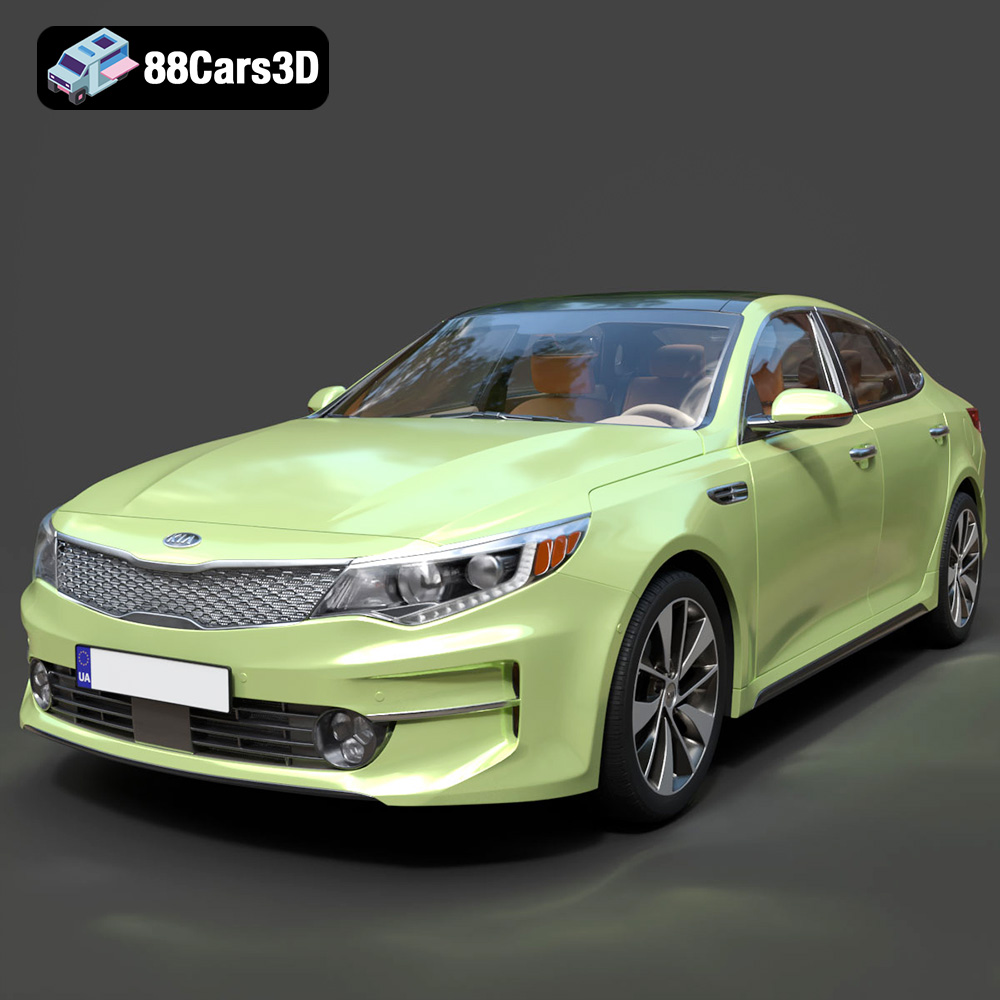
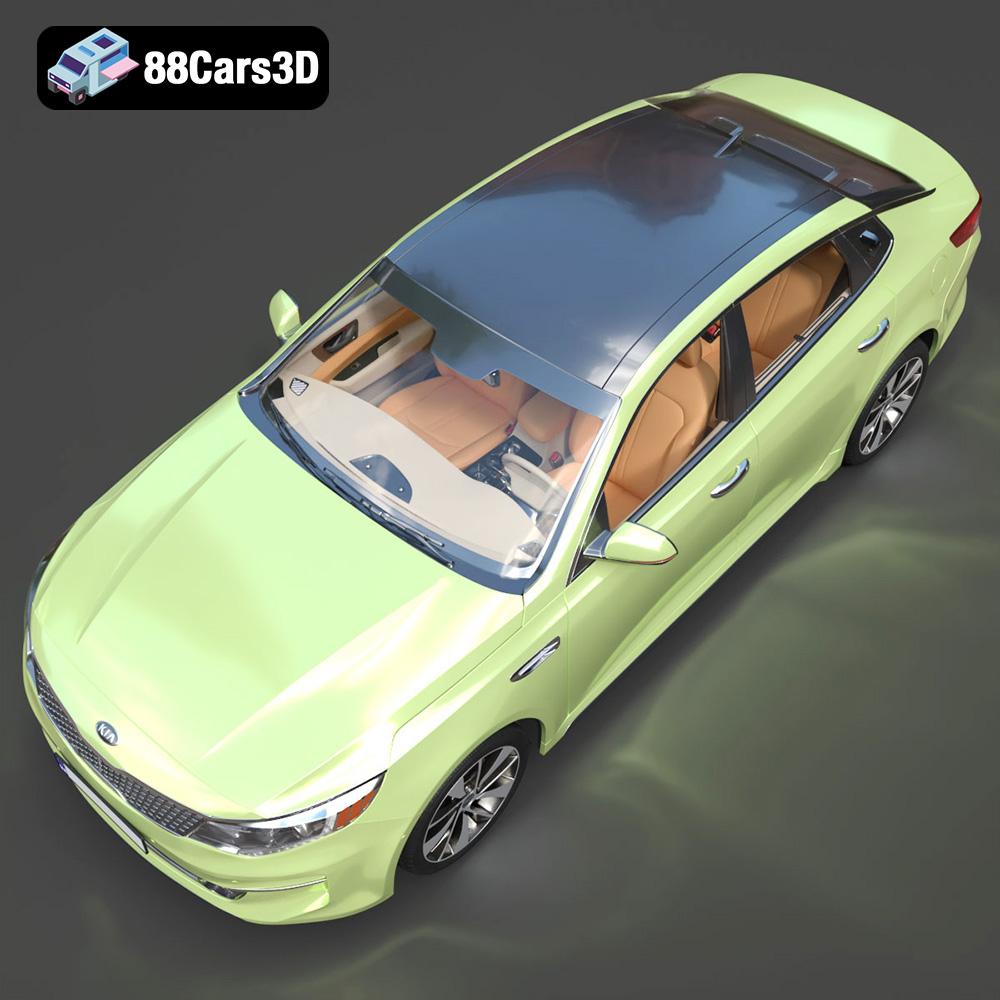
This pursuit of digital perfection is exemplified by models like the Kia K5 MX 2016 3D Model. This particular asset stands out as a testament to the meticulous craftsmanship required to bridge the gap between physical design and digital fidelity. Engineered for exceptional realism and precision, it captures the sleek exterior lines and a fully modeled interior, making it an outstanding digital asset for even the most demanding projects. Its clean geometry and professional-grade polygon structuring ensure that it performs beautifully under close-up scrutiny and complex lighting scenarios, a critical consideration for any high-stakes production. As we delve deeper into the intricacies of 3D automotive modeling, we’ll explore how such assets empower creators and streamline complex workflows, offering a glimpse into the indispensable role they play in modern digital pipelines.
When working with 3D models, especially complex assets like vehicles, understanding the various file formats is paramount. Each format serves specific purposes, offering unique advantages for different stages of the production pipeline, from initial modeling to final rendering, real-time implementation, or even 3D printing. The Kia K5 MX 2016 3D Model, available on 88cars3d.com, is a prime example of an asset offered with a comprehensive range of formats, ensuring maximum compatibility and utility for diverse professional workflows.
The .blend format is the native file type for Blender, a powerful and widely used open-source 3D creation suite. A .blend file typically includes the entire scene: geometry, materials, textures, lighting setups, cameras, animation data, and even physics simulations. For artists primarily working in Blender, this format is ideal as it provides a fully editable environment where every aspect of the model can be modified. The Kia K5 MX 2016 .blend file offers a complete package, allowing Blender users immediate access to a pre-configured scene, ready for customization or rendering.
.fbx (Filmbox) is an Autodesk-developed proprietary format that has become a de facto industry standard for 3D data exchange, particularly between different software applications and game engines. It supports geometry, UV data, animations, materials, and skeletal deformation. Its robustness makes it ideal for transferring assets like the Kia K5 MX 2016 into real-time pipelines such as Unreal Engine and Unity, ensuring that all crucial data is preserved during export and import, making it a truly game-engine-ready format.
The .obj (Wavefront OBJ) format is one of the oldest and most universally supported 3D file formats. It’s a simple text-based format primarily used to store 3D geometry (vertices, faces, normals, UV coordinates) and references to external material files (.mtl). While it doesn’t support animation or rigging, its widespread compatibility makes it an excellent choice for cross-software transfers when basic mesh data is the priority. The Kia K5 MX 2016 .obj provides a clean, standard mesh compatible with virtually all major 3D software.
.glb (GLB format, often associated with glTF – GL Transmission Format) is an efficient, compact format designed for the efficient transmission and loading of 3D scenes and models by applications. It’s particularly optimized for AR, VR, and browser-based display due to its single-file structure (embedding textures and other assets directly). This makes the Kia K5 MX 2016 .glb file perfect for interactive web viewers, augmented reality apps, or lightweight virtual reality experiences where performance and rapid loading are critical.
.stl (STereoLithography) is the most common file format for 3D printing. It represents a 3D model as a series of connected triangles (a tessellation) without any color, texture, or material information. Its simplicity makes it universally understood by 3D printers and slicing software. While it sacrifices visual fidelity, the Kia K5 MX 2016 .stl file is specifically provided for users looking to bring the digital model into the physical world through 3D printing and prototyping.
.ply (Polygon File Format) is a versatile format capable of storing a wide range of properties, including color, transparency, surface normals, and range data, in addition to standard geometry. It’s often used in academic and research fields, particularly for storing data from 3D scanners, CAD applications, or for finite element analysis. The Kia K5 MX 2016 .ply format is ideal for scenarios requiring a precision mesh for detailed analysis or specific visualization needs beyond standard rendering.
The .unreal format, or more accurately, assets pre-configured for Unreal Engine, implies a streamlined workflow specifically tailored for Epic Games’ powerful real-time engine. This usually means the model has been exported with Unreal’s specific import settings in mind, potentially including collision meshes, LODs (Levels of Detail), and material setups designed to leverage Unreal’s physically based rendering (PBR) system. The pre-configured Kia K5 MX 2016 for Unreal Engine significantly reduces setup time for game developers and real-time visualization artists.
Lastly, the .max format is the native file type for Autodesk 3ds Max, another industry-leading 3D modeling, animation, and rendering software. Similar to .blend, a .max file contains the complete scene data, including geometry, materials, textures, lighting, cameras, and animations. For professionals rooted in the 3ds Max ecosystem, the Kia K5 MX 2016 .max file provides full editability and access to all parameters within their preferred software, making it perfect for complex animation sequences or high-fidelity renders.
The provision of such a comprehensive array of formats for the Kia K5 MX 2016 3D Model highlights the importance of versatility in today’s multi-software pipelines. It ensures that regardless of the target application or specific project requirement, users have access to an optimized version of the asset.
Automotive rendering is an art form that combines technical prowess with an eye for photorealism. The goal is to create digital images that are indistinguishable from photographs, showcasing vehicles in their best light, often before a physical prototype even exists. Achieving this requires not only powerful rendering engines and skilled artists but, crucially, high-quality 3D car models as a starting point. The Kia K5 MX 2016 3D Model, with its exceptional detail, clean geometry, and realistic materials, is precisely the kind of asset that fuels top-tier automotive rendering.
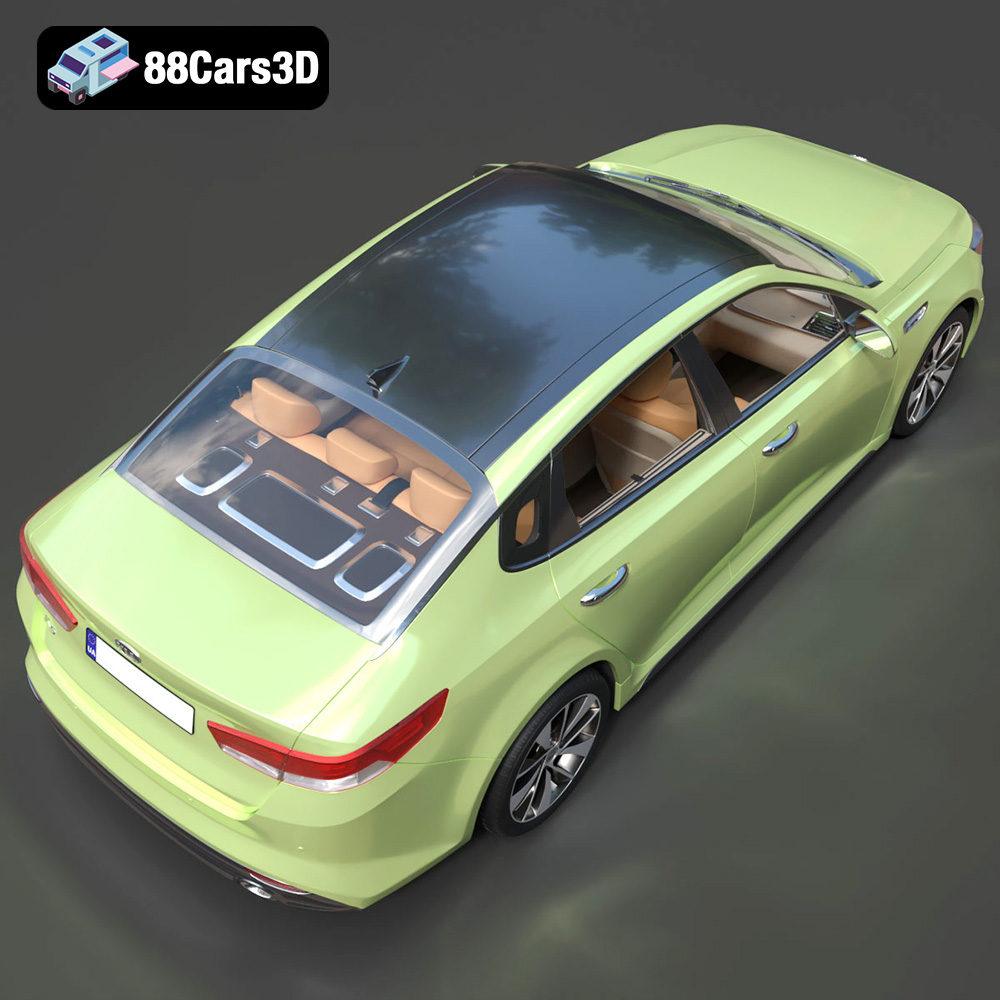
For a rendered image to truly convince the viewer, every detail must be meticulously crafted. The Kia K5 MX 2016 3D Model exemplifies this with its sleak exterior lines and, importantly, its fully modeled interior. In automotive advertising, close-up shots of interiors are common, highlighting luxury, design, and ergonomics. A generic or low-detail interior simply won’t suffice. The professional-grade polygon structuring of this model ensures that even under extreme close-ups, surfaces remain smooth, contours accurate, and reflections pristine. This attention to detail extends to components like dashboard buttons, stitching on seats, and subtle textures on various materials, all of which contribute to the overall realism and allow for complex lighting scenarios to truly shine.
For many automotive visualization studios, 3ds Max, paired with powerful rendering engines like V-Ray or Corona Renderer, forms the backbone of their workflow. The .max file provided with the Kia K5 MX 2016 3D Model offers a significant advantage here. Artists can directly open the file, accessing pre-configured materials and potentially even lighting setups. From there, they can fine-tune textures, adjust material properties (like metallic flakes in paint or the reflectivity of chrome), set up sophisticated studio lighting, and experiment with various camera angles to achieve the desired aesthetic. The clean geometry of the model simplifies UV mapping and texture application, preventing artifacts and ensuring a smooth surface for ray tracing. This robust foundation drastically reduces production time, allowing artists to focus on creative composition and lighting rather than extensive model cleanup.
Blender, with its integrated Cycles and Eevee render engines, has become an increasingly popular choice for automotive rendering due to its capabilities and open-source nature. The .blend file for the Kia K5 MX 2016 is fully editable and comes with materials and a lighting setup, providing a plug-and-play experience for Blender artists. Cycles, a physically based ray-tracing engine, excels at producing photorealistic results, leveraging the high-quality topology and PBR materials of the Kia K5 model to accurately simulate light interaction. Eevee, Blender’s real-time render engine, allows for rapid iteration and stunning viewport previews, ideal for quick design reviews or animating car sequences with immediate feedback. The seamless integration of the model into Blender’s ecosystem empowers artists to unleash their creativity without the overhead of extensive model preparation.
In the realm of game development, 3D car models serve a dual purpose: they must look incredible while also being highly optimized for real-time performance. Striking this balance is crucial, as every polygon, texture, and material contributes to the game’s overall frame rate. The Kia K5 MX 2016 3D Model is designed with this critical balance in mind, making it an excellent candidate for integration into modern game engines like Unreal Engine and Unity.
Game assets require a thoughtful approach to polygon count, UV mapping, and material efficiency. While the Kia K5 MX 2016 is detailed, its “clean geometry and professional-grade polygon structuring” are key indicators of its suitability for games. This means the mesh is likely optimized, avoiding unnecessary polygons while retaining visual fidelity. For truly high-performance scenarios, game developers might further implement Levels of Detail (LODs), where simpler versions of the model are swapped in as the car moves further from the camera. The clean base mesh of the Kia K5 facilitates this LOD creation process, ensuring smooth transitions and consistent visual quality across different distances.
Unreal Engine, known for its stunning photorealistic graphics and robust toolset, is a natural home for a high-quality 3D car model like the Kia K5 MX 2016. The provision of an .fbx file, specifically described as “Game-engine ready format for Unreal Engine and Unity,” and a “Pre-configured for Unreal Engine use” .unreal file, streamlines the integration process significantly. Artists can import the .fbx, which carries mesh data, UVs, and material assignments, then apply physically based rendering (PBR) textures directly within Unreal’s material editor. The .unreal package likely includes pre-built materials leveraging Unreal’s sophisticated shader system, collision meshes, and perhaps even basic animation setups (like wheel rotations), allowing developers to drop the car into their game levels, simulations, or interactive experiences with minimal fuss. This saves invaluable development time, allowing teams to focus on gameplay mechanics or cinematic sequences.
Modern game engines rely heavily on Physically Based Rendering (PBR) to achieve realistic lighting and material responses. The Kia K5 MX 2016 3D Model comes with “realistic materials and textures,” meaning it’s likely supplied with a full suite of PBR texture maps (Albedo/Base Color, Normal, Metallic, Roughness, Ambient Occlusion). These textures, when correctly applied in engines like Unreal, allow the car’s paint, glass, plastic, and metal surfaces to react to light in a physically accurate manner. This not only enhances visual realism but also ensures consistency across different lighting conditions within the game world. The meticulous attention to detail on the Kia K5’s materials ensures it holds up perfectly under close-up shots, vital for in-game cinematics, vehicle customization menus, or even virtual showrooms.
The utility of a high-fidelity 3D car model extends far beyond traditional rendering and game development. As technology evolves, so do the applications for detailed digital assets. The Kia K5 MX 2016 3D Model, with its versatile file formats and robust construction, is perfectly positioned to excel in emerging and specialized fields such as Augmented Reality (AR), Virtual Reality (VR), 3D printing, and various forms of professional visualization.
Augmented Reality and Virtual Reality are transforming how we interact with digital content, offering immersive experiences that blend the real and virtual worlds. For automotive brands, AR/VR presents incredible opportunities for virtual showrooms, interactive configurators, and training simulations. A detailed 3D car model is the core component of such experiences. The Kia K5 MX 2016 3D Model’s “optimized for AR/VR and web-based visualization” .glb format is particularly crucial here. GLB files are highly efficient and can be easily integrated into web-based AR/VR viewers or mobile applications, allowing users to place a virtual K5 in their driveway or explore its interior in a fully immersive VR environment. The clean geometry ensures smooth performance and quick loading times, essential for maintaining user immersion without lag or visual glitches.
The ability to transform a digital model into a tangible object through 3D printing has revolutionized product design and prototyping. While rendering provides a visual representation, a 3D print offers a physical model that can be held, examined for scale, and used for ergonomic studies or aesthetic evaluations. The Kia K5 MX 2016 3D Model includes an .stl file, which is the standard format for 3D printing. This means designers, engineers, or hobbyists can directly send the model to a 3D printer, creating physical prototypes or detailed display models of the K5. While an STL removes material and color information, the underlying geometric fidelity of the 88cars3d.com model ensures that the printed output accurately represents the car’s intricate form and proportions.
Beyond entertainment, high-quality 3D car models are indispensable tools for professional visualization across various industries. In architecture, a car model can populate a scene, providing context for scale and demonstrating how a building or urban plan interacts with vehicles. For urban planners, simulation models are used to analyze traffic flow or public transport routes. Engineers might use detailed models in crash simulations or aerodynamic studies (though often requiring more specialized CAD data). The Kia K5 MX 2016 3D Model’s “versatile model provides the exact technical specifications needed for a smooth workflow across various platforms” makes it ideal for these applications. Its detailed polygon mesh, available in formats like .ply, could be used for precise analysis, while its general fidelity serves perfectly for high-impact visual presentations for clients or stakeholders.
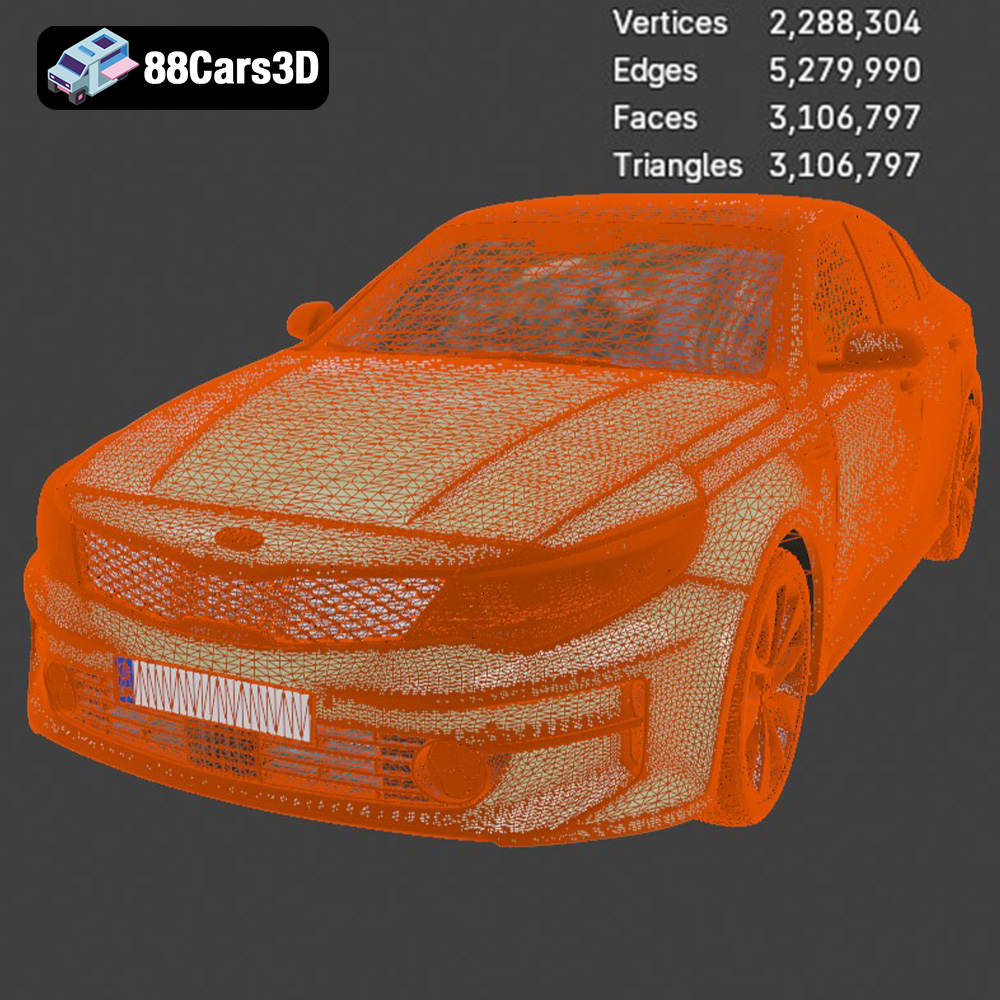
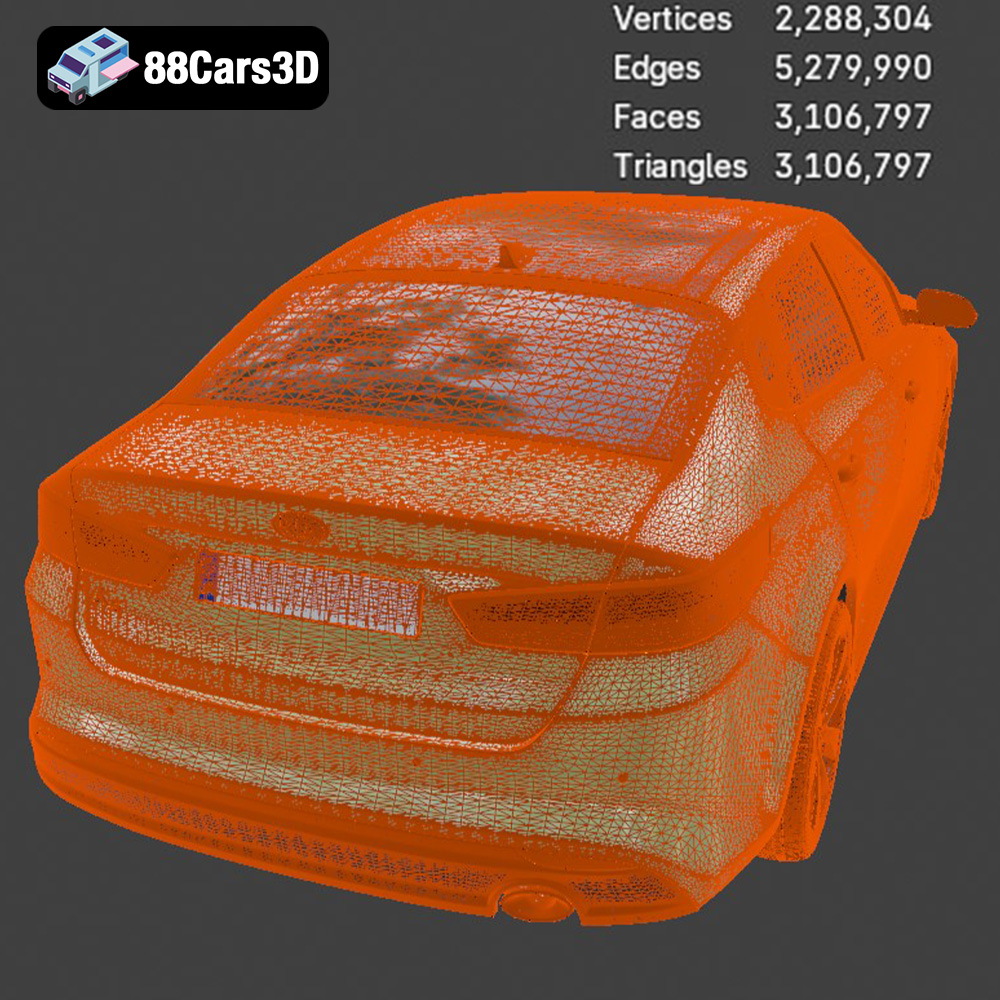
Beneath the polished surfaces and realistic textures of any professional 3D car model lies a foundation of meticulously crafted geometry and efficient UV mapping. These technical underpinnings are not merely aesthetic preferences; they are critical factors that determine a model’s performance, flexibility, and overall quality across different applications. The Kia K5 MX 2016 3D Model exemplifies the importance of these elements, being “built with clean geometry and professional-grade polygon structuring.”
Clean geometry, often referred to as good topology, means a mesh is structured with logically flowing edge loops, evenly distributed polygons (quads, primarily), and minimal errors like non-manifold geometry or overlapping faces. For a 3D car model, this is crucial:
UV mapping is the process of flattening a 3D mesh into a 2D space, allowing a 2D image texture to be wrapped around it. Effective UVs are as important as the geometry itself for achieving realism:
Ultimately, the technical quality of a 3D car model dictates its versatility and longevity as an asset. A model like the Kia K5 MX 2016, built with this level of technical integrity, is an investment that pays dividends across numerous projects and platforms, offering creators flexibility and peace of mind.
In a saturated digital marketplace, discerning artists and studios need reliable sources for high-quality 3D assets. The decision to purchase a pre-made model often comes down to a balance of quality, cost-effectiveness, and compatibility. A platform like 88cars3d.com addresses these needs by curating a collection of professionally engineered 3D car models, ensuring that users receive assets that meet industry standards.
Creating a detailed 3D car model from scratch is an incredibly time-consuming and resource-intensive endeavor, often requiring hundreds of hours of work by skilled artists. For studios on tight deadlines or individual creators without extensive modeling expertise, sourcing a ready-made, high-quality asset like the Kia K5 MX 2016 3D Model is a strategic decision. This model arrives “engineered to deliver exceptional realism and precision,” meaning the complex work of modeling, texturing, and basic rigging has already been done. This allows artists to bypass the initial modeling phase entirely, jumping straight into scene setup, lighting, rendering, or integration into a game engine, dramatically accelerating project timelines and reducing overhead costs.
The marketplace at 88cars3d.com focuses on providing models that stand up to professional scrutiny. The Kia K5 MX 2016 3D Model’s description highlights its “clean geometry and professional-grade polygon structuring,” along with “realistic materials and textures designed for seamless integration.” These are not just buzzwords; they are critical indicators of an asset’s quality. A professional-grade model ensures that:
This commitment to quality means that creators can confidently integrate these assets into their most important projects, knowing they are built on a solid technical foundation.
As discussed, the modern digital landscape demands versatility. A single project might require renders for marketing, real-time assets for an interactive experience, and even a physical prototype. The Kia K5 MX 2016 3D Model’s availability in a comprehensive range of industry-standard file formats – including .blend, .fbx, .obj, .glb, .stl, .ply, .unreal, and .max – makes it an exceptionally versatile asset. This multi-format approach eliminates the need for complex conversions or re-topology efforts, ensuring that the model is ready for use whether the target is automotive rendering, game development, AR/VR experiences, 3D printing, or professional visualization. This breadth of compatibility is a significant advantage, empowering users to leverage a single asset across diverse project requirements seamlessly.
The journey through the intricacies of 3D car models reveals a complex interplay of artistry and engineering. From the foundational importance of clean geometry and meticulous UV mapping to the strategic selection of file formats for diverse applications, every technical detail contributes to the ultimate success of a digital project. High-quality assets like the Kia K5 MX 2016 3D Model are more than just digital representations; they are catalysts for creativity, efficiency, and unparalleled realism in modern digital content creation.
Whether the goal is to produce breathtaking automotive rendering, develop immersive game assets, create cutting-edge AR/VR experiences, or even transition from pixels to physical prototypes via 3D printing, the right 3D model is an indispensable tool. The Kia K5 MX 2016 3D Model stands as a prime example of an asset built to meet these rigorous demands, offering sleek exterior lines, a fully modeled interior, and professional-grade polygon structuring that holds up under the closest scrutiny and most complex lighting conditions.
By investing in professionally crafted 3D car models, creators can significantly streamline their workflows, save valuable time and resources, and elevate the visual fidelity of their projects. Platforms like 88cars3d.com serve as crucial hubs, providing access to such high-caliber assets, empowering artists and developers to push the boundaries of what’s possible in the digital realm. The future of visualization and interactive experiences is increasingly reliant on the precision of digital assets, and with models like the Kia K5 MX 2016, that future is within reach.
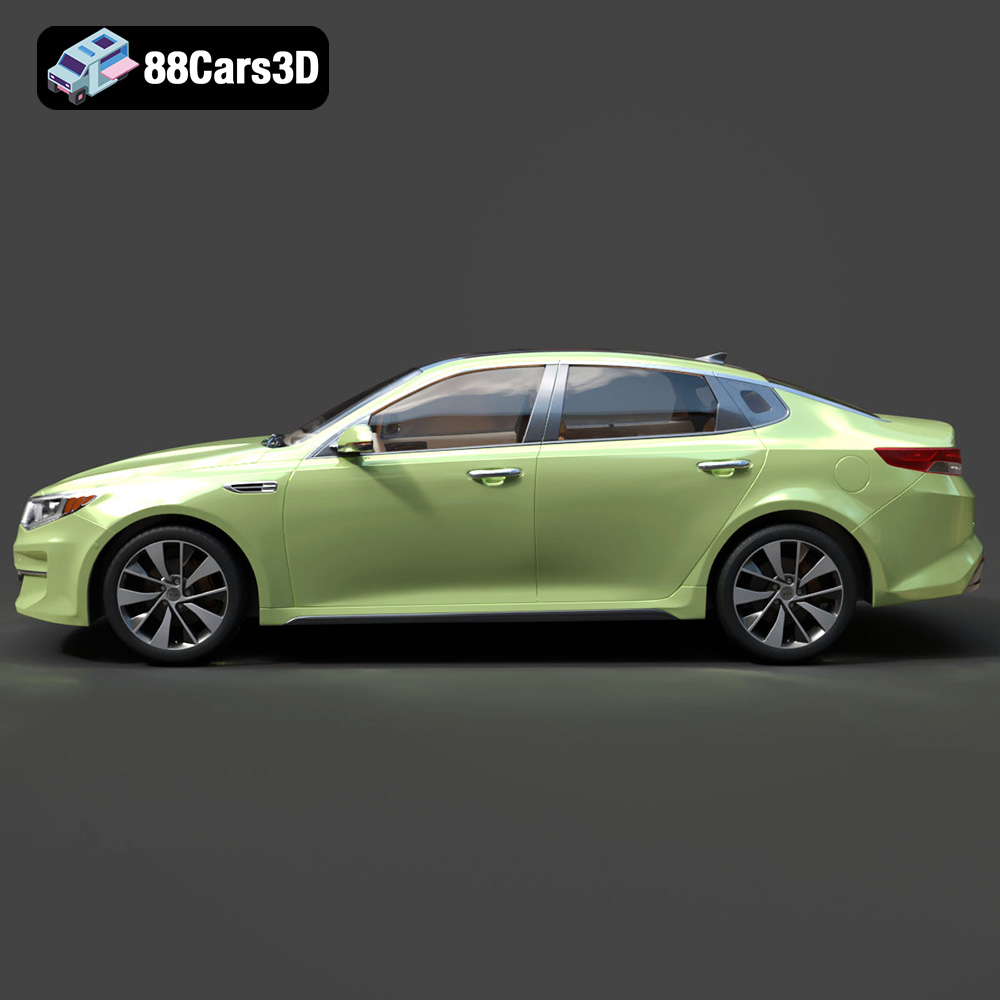
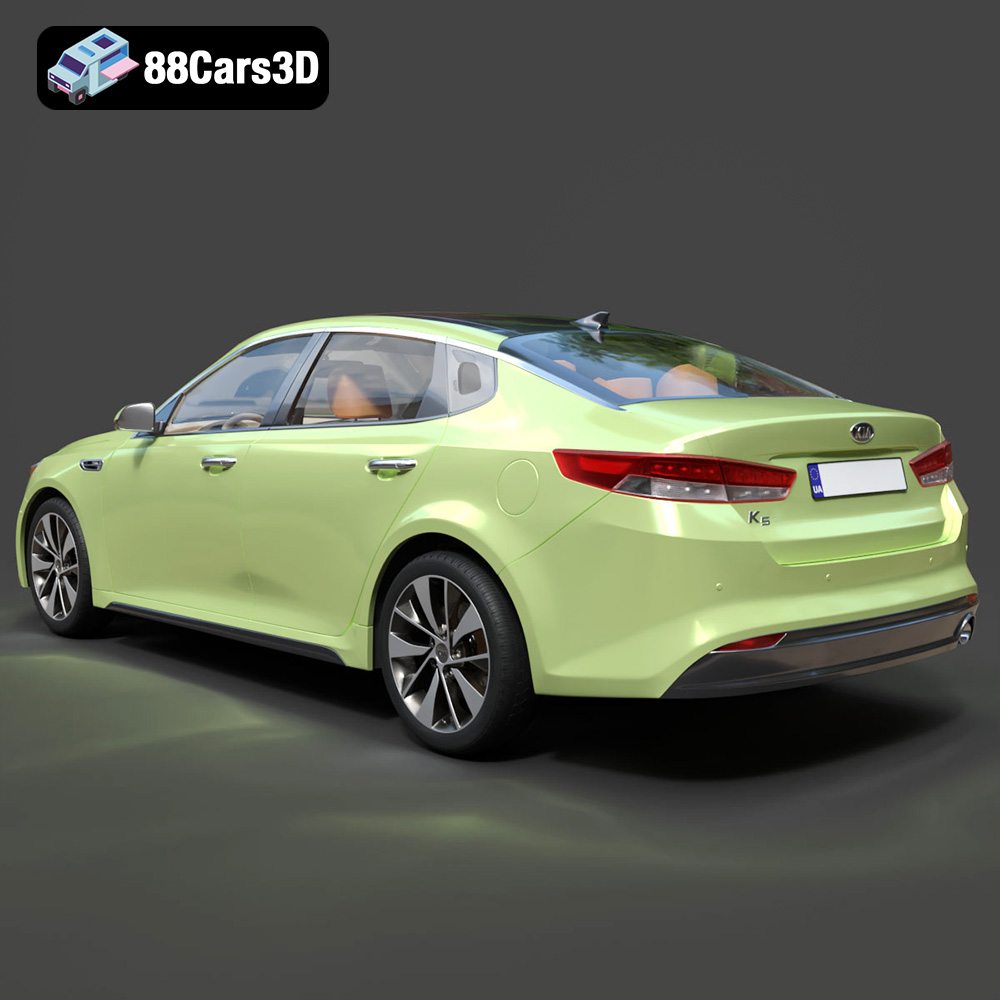
Discover unparalleled detail with the Kia K5 MX 2016 3D Model, engineered to deliver exceptional realism and precision. This model captures the sleek exterior lines and the fully modeled interior of the dynamic sedan, making it an outstanding digital asset for demanding projects.
Built with clean geometry and professional-grade polygon structuring, this 3D vehicle includes realistic materials and textures designed for seamless integration. The meticulous attention to detail ensures it holds up perfectly under close-up shots and complex lighting scenarios.
Whether you are working on game development, automotive rendering, AR/VR experiences, or professional visualization, this versatile model provides the exact technical specifications needed for a smooth workflow across various platforms.
The package includes the following industry-standard file formats:
$39.99
.arvr
.blend
.car3dmodel
.fbx
.gameasset
.glb
.k5
.kia
.max
.mx
.obj
.ply
.rendering
.sedan
.simulation
.stl
.unreal