Get 20% OFF All Premium 3D & STL Models!

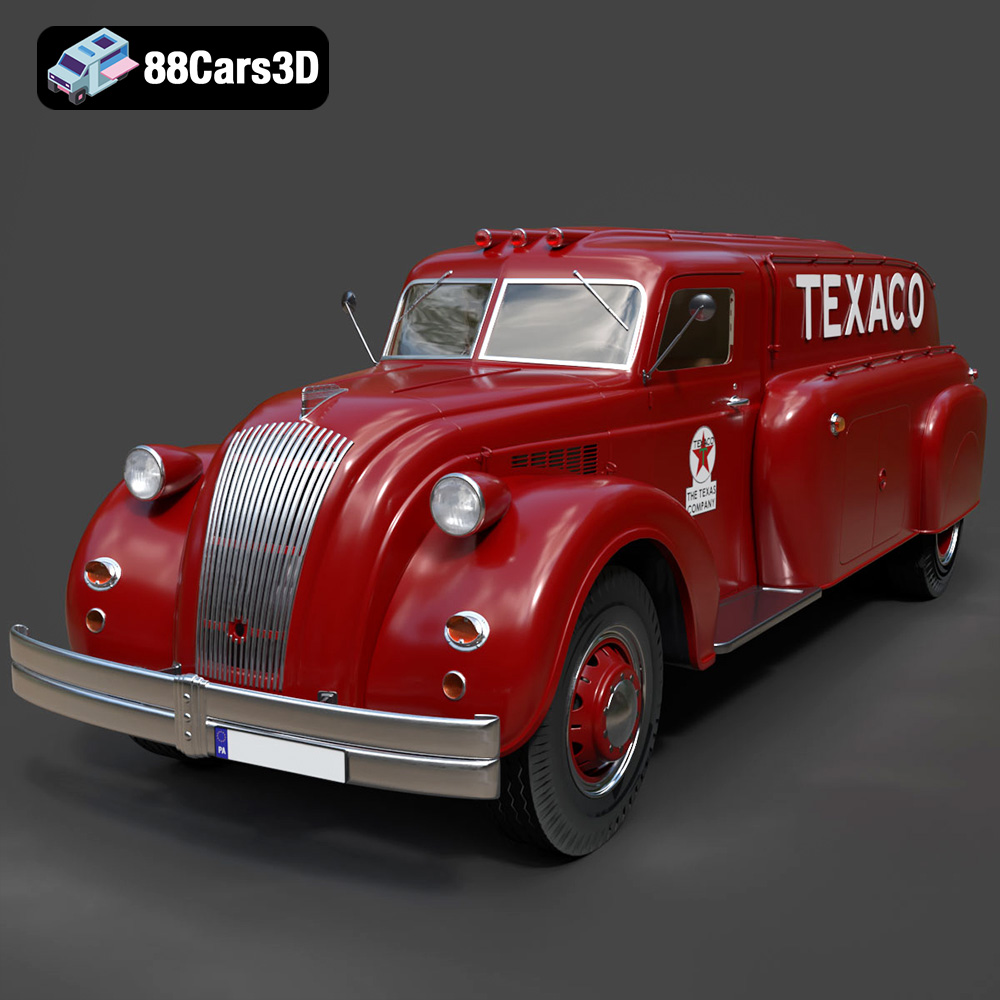
In the vast landscape of automotive history, certain vehicles transcend mere transportation to become icons of design and engineering. The 1938 Dodge Airflow Tank Truck is undoubtedly one such marvel. A striking embodiment of Art Deco principles applied to a commercial workhorse, its streamlined silhouette and futuristic appeal made it a radical statement in an era defined by rapid technological advancement. This truck wasn’t just built to move fuel; it was designed to capture the imagination, symbolizing progress and efficiency with its sweeping curves and integrated bodywork.
Today, this historical significance finds new life in the digital realm. For designers, game developers, animators, and visualization specialists, access to high-fidelity 3D car models of such distinctive vehicles is invaluable. The Dodge Airflow Tank Truck 1938 3D Model, available at 88cars3d.com, offers an exceptional opportunity to integrate this piece of industrial art into diverse digital projects. From historical simulations and vintage game environments to stunning cinematic renders and interactive AR/VR experiences, this model stands out not only for its authentic recreation but also for its meticulous technical optimization. It provides a perfect blend of historical accuracy and modern digital utility, making it an indispensable asset for anyone serious about quality 3D content.
When working with 3D models, especially detailed automotive assets like the 1938 Dodge Airflow Tank Truck, understanding the various file formats available is paramount. Each format is designed with specific use cases, compatibility requirements, and technical advantages in mind. Selecting the correct format can significantly streamline your workflow, ensure compatibility across different software, and optimize performance for your target application, whether it’s a game engine, a rendering suite, or a 3D printer.
The .blend file format is native to Blender, the popular open-source 3D creation suite. When you download the Dodge Airflow Tank Truck 3D model in .blend format, you receive a fully editable Blender scene. This means not just the raw mesh data, but also all associated materials, textures, lighting setups, cameras, and even potential animation rigs or modifiers applied within Blender. It’s ideal for users who primarily work in Blender and require maximum flexibility for modifications, scene composition, or detailed material adjustments without data loss during conversion. Artists can easily tweak topology, modify UV maps, or even create custom livery designs directly within the native environment.
Autodesk’s .fbx (Filmbox) format is arguably the most widely adopted proprietary file format for 3D data exchange across different software platforms. It excels at storing not just mesh data, but also complex information like animations, skeletal rigs, textures, lights, and cameras. For this reason, .fbx is an ideal choice for importing the Dodge Airflow Tank Truck into game engines like Unreal Engine and Unity, as well as other DCC (Digital Content Creation) applications such as 3ds Max, Maya, or Cinema 4D. Its robust support for animations and hierarchical structures makes it perfect for game development and real-time pipelines where the vehicle might need to be rigged for driving or other interactive sequences.
The .obj (Wavefront OBJ) format is a venerable, universally supported file format for 3D geometry. It’s a simple, text-based format primarily used to store mesh data (vertices, normals, UVs, and faces). While it doesn’t typically store advanced features like animations or rigging information, its simplicity and widespread compatibility make it an excellent choice for basic mesh exchange between virtually any 3D software. If you need a clean, stable mesh of the Dodge Airflow Tank Truck for sculpting, retopology, or as a base for custom material work in a less common rendering engine, .obj is a reliable option.
.glb (GL Transmission Format Binary) is the binary version of the glTF format, specifically designed for efficient transmission and loading of 3D scenes and models on the web and in AR/VR applications. It’s a self-contained format that bundles geometry, materials, textures, and animations into a single file, making it highly optimized for browser-based viewers, mobile AR experiences, and performance-critical applications. For integrating the Dodge Airflow Tank Truck into virtual showrooms, web configurators, or augmented reality apps, the .glb format offers superior performance and ease of deployment.
The .stl (Stereolithography) format is the de facto standard for 3D printing. It represents a 3D model as a series of connected triangles, essentially describing the surface geometry without any color, texture, or material information. When you download the Dodge Airflow Tank Truck in .stl format, it’s prepared for physical production. Hobbyists and professionals alike use .stl files with their slicer software to generate G-code for 3D printers. The Dodge Airflow model, with its optimized geometry, provides an excellent foundation for creating a tangible scale model, allowing enthusiasts to bring this Art Deco classic into the real world.
The .ply (Polygon File Format) is another format for storing 3D data, often used in scientific and engineering applications, especially for data from 3D scanners. It can store a wider range of properties than .obj, including color, transparency, and often normal vectors per vertex or face. While less common for general artistic asset exchange, it’s valuable for applications requiring precise mesh data, potentially for CAD conversions, reverse engineering, or detailed structural analysis of the vehicle model.
While not a standalone file extension in the same way as .fbx or .blend, an “.unreal” file or asset often refers to a highly optimized and pre-configured asset package specifically tailored for Unreal Engine. This typically means the asset has been imported, had its materials set up with Unreal’s PBR workflow, potentially LODs (Levels of Detail) generated, collision meshes created, and pivots adjusted, making it truly plug-and-play within an Unreal project. For developers looking to instantly drop the Dodge Airflow Tank Truck into their game or visualization, this pre-optimized version saves significant setup time and ensures maximum compatibility and performance within the engine.
The .max file format is native to Autodesk 3ds Max, one of the leading software packages for 3D modeling, animation, and rendering. Similar to .blend, a .max file provides a complete 3ds Max scene, including the Dodge Airflow model’s geometry, materials, textures, lighting, cameras, and any modifiers or animations applied within 3ds Max. This format is crucial for professionals working within the 3ds Max ecosystem, offering full editability and access to all project components, which is essential for advanced rendering setups, complex animations, or integrating the truck into an architectural visualization scene with specific lighting requirements.
Recreating a historical vehicle like the 1938 Dodge Airflow Tank Truck demands an acute understanding of both automotive design and 3D modeling principles. The challenge lies in translating intricate physical details and aesthetic nuances into a digital form that is both accurate and performance-friendly. This specific 3D model masterfully balances these demands, delivering a rendition that is rich in detail yet optimized for modern applications.
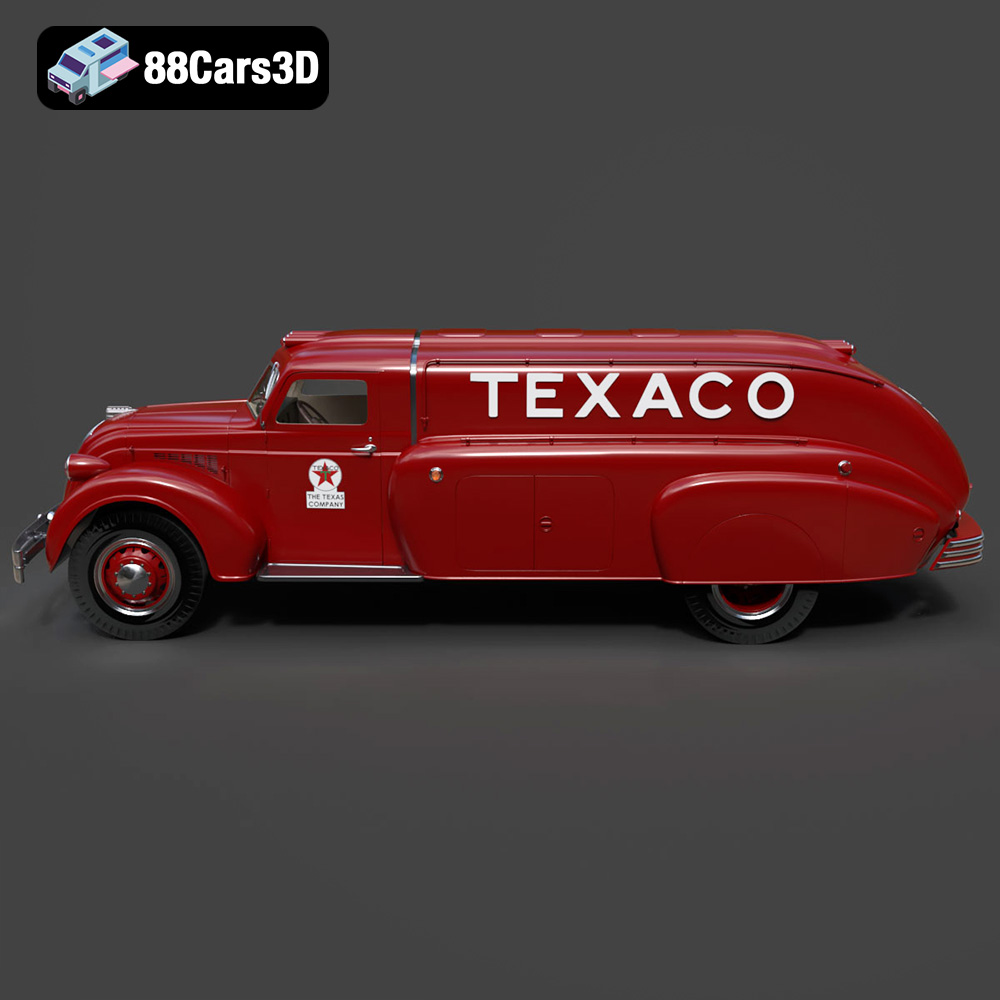
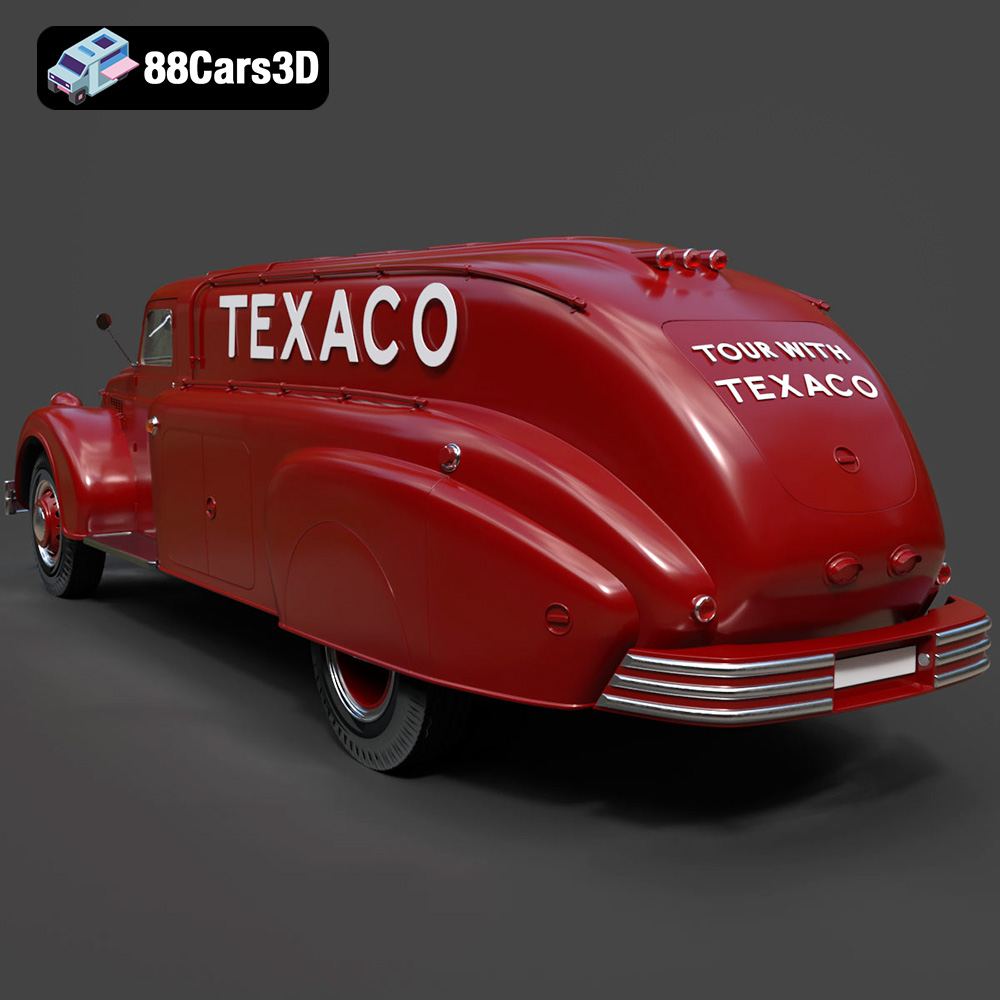
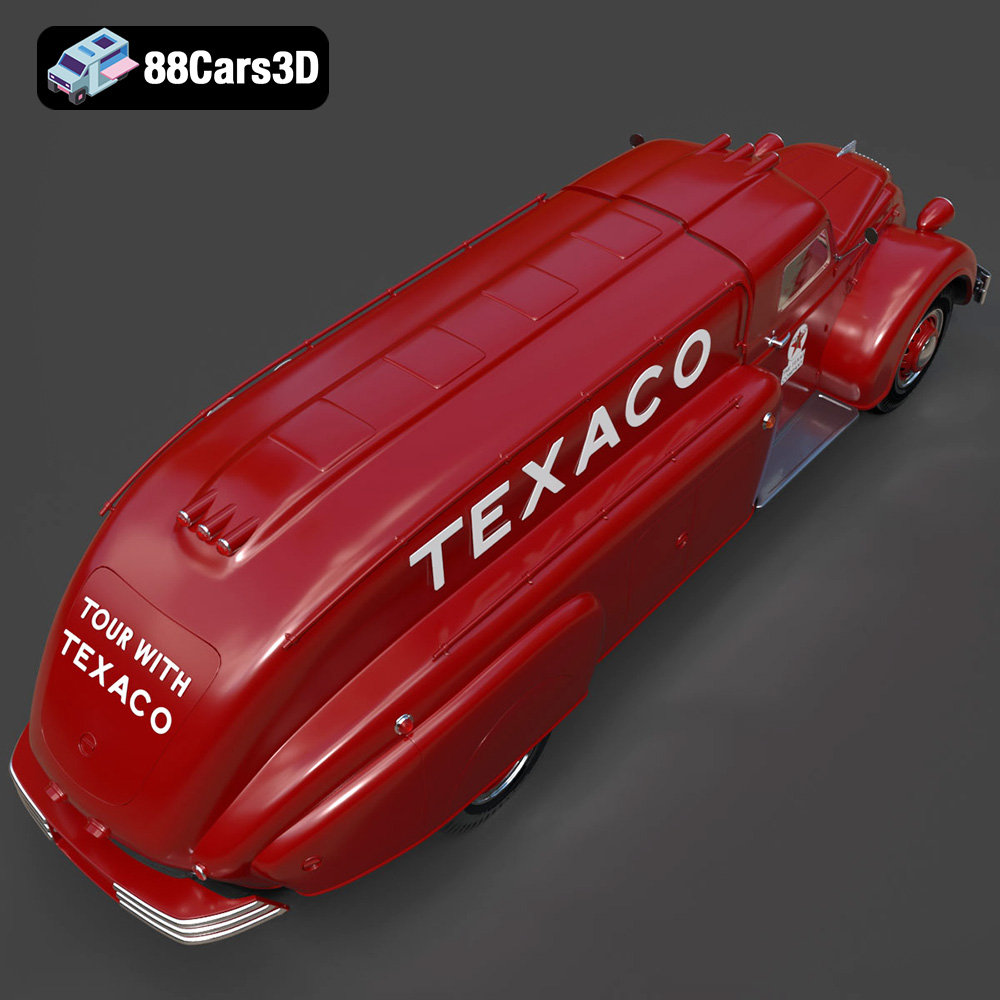
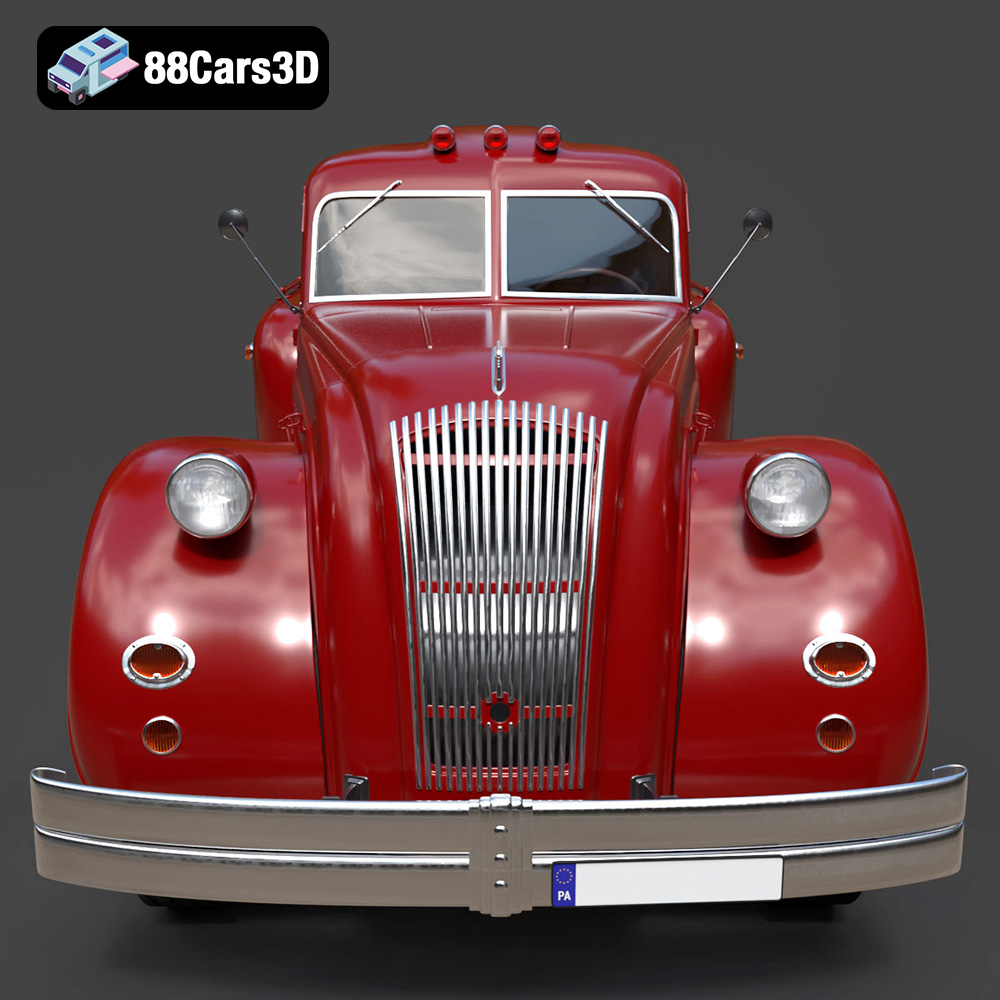
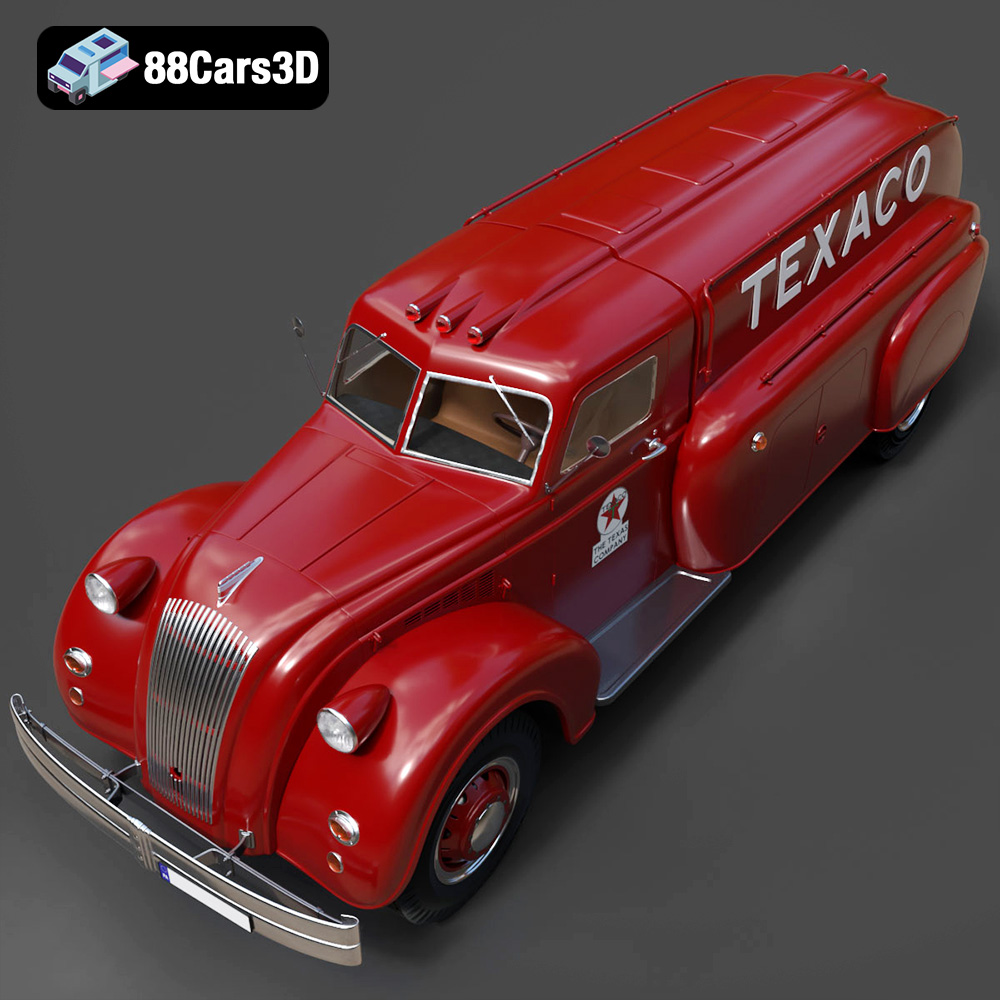
The exterior of the Dodge Airflow Tank Truck 3D model is a testament to meticulous research and modeling. It faithfully reproduces the iconic Art Deco proportions and sweeping lines that defined the original vehicle. Every curve of the integrated fenders, the distinctive sloping front grille, and the seamless flow of the tanker body from the cab has been carefully sculpted. The model includes period-correct elements such as classic flush-mounted teardrop headlights and vintage commercial taillights, ensuring that the truck would fit perfectly into a 1930s street scene or historical simulation. The heavy-duty commercial chassis underneath, complete with a detailed inline-six engine block and side-exit exhaust system, adds another layer of realism, providing a robust foundation for the Art Deco bodywork.
A truly comprehensive 3D car model doesn’t stop at the exterior; the interior is equally important for immersive experiences, especially in game development or virtual reality. The Dodge Airflow Tank Truck 3D model provides a meticulously crafted cockpit, featuring an authentic vintage bench seat with realistic worn leather textures, capturing the utilitarian yet functional aesthetic of commercial vehicles from that era. Details like the classic oversized steering wheel, fixed steering column, period-accurate analog instrument cluster with Art Deco gauge dials, and floor-mounted manual gear shifter, heavy-duty pedals, and utilitarian cab controls, all contribute to a believable environment. This attention to interior detail is crucial for first-person viewpoints in gaming, allowing players to feel truly connected to the virtual world.
Beyond visual fidelity, the technical aspects of the model’s structure are paramount. The inclusion of an authentic heavy-duty steel wheels with vintage tread pattern tires and a detailed rear dual-axle configuration with heavy-duty leaf spring suspension highlights the model’s engineering accuracy. Crucially, components like the wheels, suspension, and steering are separated. This modularity is a critical advantage for animators and game developers, allowing for independent movement and rigging. Proper pivot setup for steering, wheel rotation, and suspension travel means that bringing this vehicle to life with realistic motion is significantly easier, making it a truly game-ready asset.
In today’s demanding digital landscape, especially within game development and real-time visualization, the balance between visual fidelity and performance is key. A stunning model that brings a system to its knees is ultimately unusable. The Dodge Airflow Tank Truck 3D model from 88cars3d.com is engineered with this critical balance in mind, making it an excellent example of an optimized game asset.
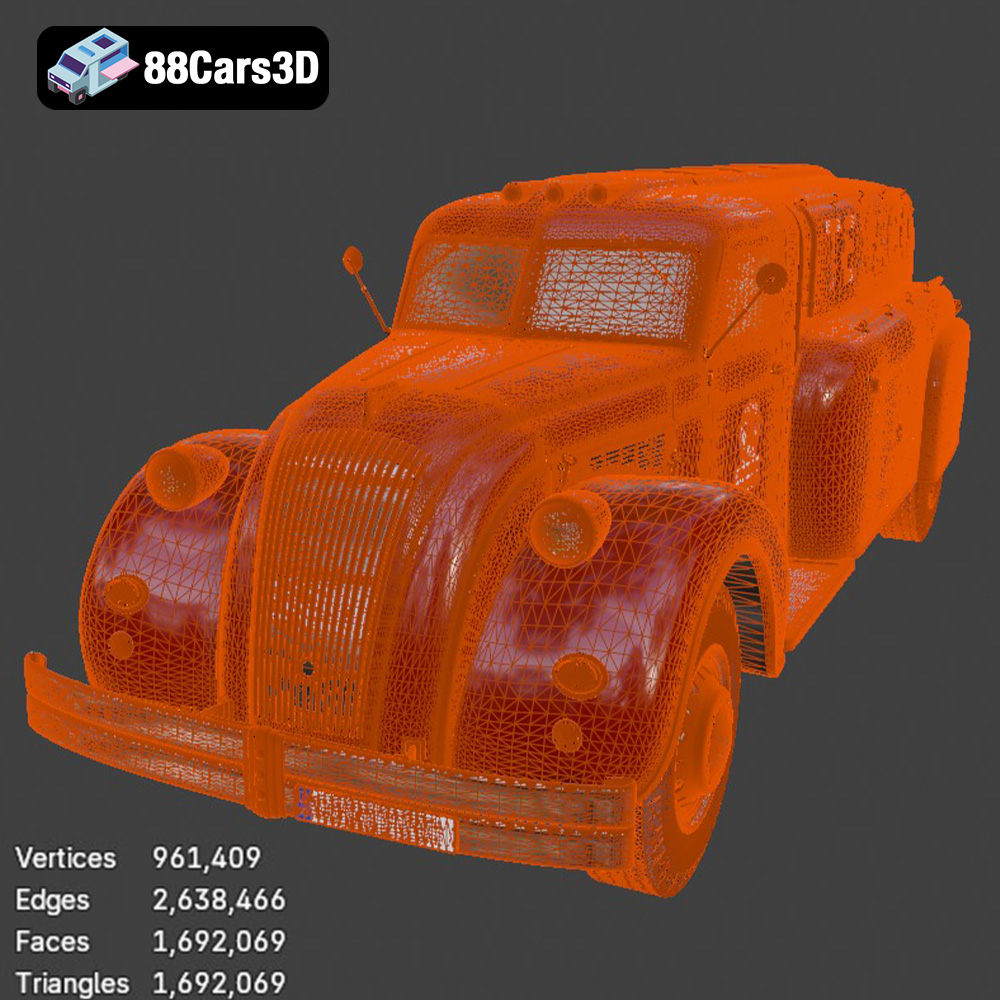
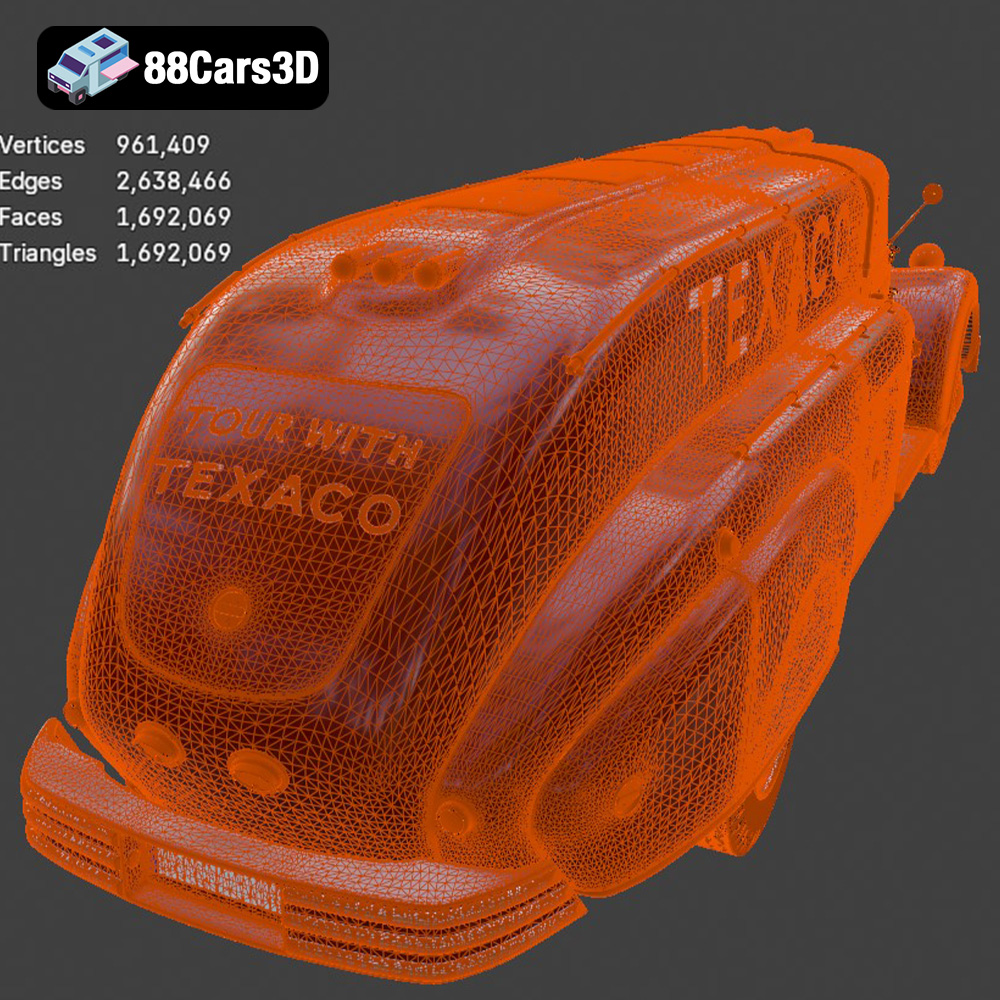
The model features a meticulously balanced topology of approximately 180,000 triangles. This polycount strikes a perfect sweet spot: it’s high enough to capture the smooth, flowing lines and intricate details of the Art Deco design without sacrificing performance in real-time engines like Unreal Engine and Unity. For a vehicle of this complexity, 180,000 triangles allows for impressive visual realism, supporting high-quality rendering without imposing an excessive load on the GPU. This optimization ensures that the truck can be integrated into large open-world environments, racing titles, or simulators without causing significant frame rate drops, which is a common challenge with high-poly 3D car models.
Adherence to real-world scale accuracy is a fundamental principle for any professional 3D asset. The Dodge Airflow Tank Truck model is built to actual vehicle chassis dimensions, ensuring it integrates seamlessly into virtual environments alongside other assets. This prevents scale discrepancies that can break immersion and create technical headaches during scene assembly. Furthermore, good asset management goes beyond just geometry. Implied in a “game-ready” asset are clean UV maps for efficient texture application and proper material separation, allowing for easy customization and physically based rendering (PBR) workflows within game engines.
For a truly game-ready asset, fundamental technical elements must be correctly configured. The model’s proper pivot setup for steering, wheel rotation, and suspension travel is explicitly mentioned, indicating that the foundational work for animation and physics interaction has already been laid. While not explicitly stated, a professional game asset typically includes optimized collision meshes for realistic physical interactions within the game world, and often, multiple Levels of Detail (LODs) to further enhance performance. LODs automatically switch to lower-polygon versions of the model when the camera is further away, significantly reducing rendering overhead without a noticeable loss of detail. This foresight in asset preparation is what distinguishes a mere 3D model from a truly professional, usable game asset.
The versatility of the Dodge Airflow Tank Truck 3D model is evident in its compatibility with major 3D software platforms and real-time rendering engines. Professionals can integrate this asset into various workflows, leveraging its optimized structure for specific project requirements, from high-fidelity cinematic rendering to interactive game environments.
For artists and studios utilizing Autodesk 3ds Max, the .max file format provides a complete project scene. In a typical workflow, a 3ds Max user might import the Dodge Airflow, ready to be dropped into a V-Ray or Corona Renderer scene. They could then:
Blender users benefit from the native .blend file, offering full flexibility within the open-source environment.
For game developers and real-time artists, the .fbx and especially the “engine-ready .unreal” format for Unreal Engine are invaluable.
The utility of a high-quality 3D model extends far beyond traditional screen-based rendering and game development. The Dodge Airflow Tank Truck 3D Model’s versatile file formats and optimized geometry make it suitable for a new generation of applications, including physical fabrication through 3D printing and highly immersive AR/VR experiences.
For hobbyists, collectors, and automotive enthusiasts, the ability to physically hold a scale model of the 1938 Dodge Airflow Tank Truck is a compelling prospect. The inclusion of the .stl format, specifically designed for 3D printing, makes this possible.
The burgeoning fields of Augmented Reality (AR) and Virtual Reality (VR) offer unparalleled opportunities for immersive interaction with digital assets. The Dodge Airflow Tank Truck model is perfectly suited for these environments, especially with the inclusion of the .glb format, optimized for web and mobile AR/VR.
The true value of a versatile 3D asset lies in its ability to adapt and inspire diverse creative endeavors. The Dodge Airflow Tank Truck 3D model is not just a static representation; it’s a dynamic canvas for artistic expression and practical application across numerous industries. Its inherent detail and technical preparation open doors to extensive customization and a broad spectrum of uses.
A high-quality 3D model provides a robust foundation upon which artists can build their unique visions. The Dodge Airflow model offers significant customization potential:
The carefully crafted Dodge Airflow Tank Truck 3D model caters to a wide array of professional and enthusiast applications:
The Dodge Airflow Tank Truck 3D Model represents not just a digital asset, but a gateway to boundless creative possibilities for professionals seeking high-quality, versatile 3D car models. Whether your project demands historical accuracy, real-time performance, or stunning visual fidelity, this model delivers.
The 1938 Dodge Airflow Tank Truck stands as a remarkable testament to Art Deco automotive design, and its digital counterpart as a meticulously crafted 3D model brings this legacy into the modern era. From its sweeping aerodynamic curves and intricate exterior details to its period-accurate interior and optimized technical specifications, this model is a masterclass in balancing historical authenticity with contemporary digital demands. Its availability in a wide array of formats—including .blend, .fbx, .obj, .glb, .stl, .ply, .unreal, and .max—ensures seamless integration into virtually any professional workflow, whether for game development, high-end automotive rendering, immersive AR/VR experiences, or even detailed 3D printing projects.
This asset isn’t merely a static representation; it’s a dynamic tool, ready for customization, animation, and interaction. Its game-ready optimization, evident in its balanced polycount and proper pivot setups, makes it an invaluable addition to any developer’s library, while its visual fidelity appeals to cinematic artists and visualization specialists. For anyone seeking to infuse their projects with a unique blend of vintage charm and technical excellence, the Dodge Airflow Tank Truck 1938 3D Model from 88cars3d.com offers an unparalleled opportunity. It’s more than just a 3D model; it’s a meticulously preserved piece of history, ready to drive innovation in your next creative endeavor.
The 1938 Dodge Airflow Tank Truck is a masterclass in Art Deco automotive design, representing a radical departure from traditional commercial vehicles of its era. Commissioned primarily by oil companies like Texaco and Standard Oil, this streamlined marvel features sweeping curves, integrated fenders, and an iconic sloping front grille that makes it instantly recognizable. The aerodynamic styling showcased the forward-thinking engineering of the late 1930s, complete with a beautifully integrated tanker body that flows seamlessly from the driver’s cab.
$19.99
.blend
.dodge
.fbx
.glb
.max
.obj
.ply
.rendering
.stl
.unreal
1938
airflow
art-deco
car-3d-model
classic-truck
commercial-vehicle
game asset
game-ready
low-poly
optimized
tank-truck
truck-3d-model
vintage-truck
VR/AR