Get 20% OFF All Premium 3D & STL Models!

In the vibrant worlds of automotive design, realistic rendering, and immersive game development, the foundation of any compelling visual experience lies in the quality of its 3D assets. From the subtle glint on a polished fender to the intricate mechanics of a powerful engine, every detail contributes to the overall immersion and perceived authenticity. It’s a realm where precision isn’t just a luxury; it’s a necessity. This drive for realism and performance extends deeply into historical and iconic vehicles, where capturing the essence of a classic is paramount.
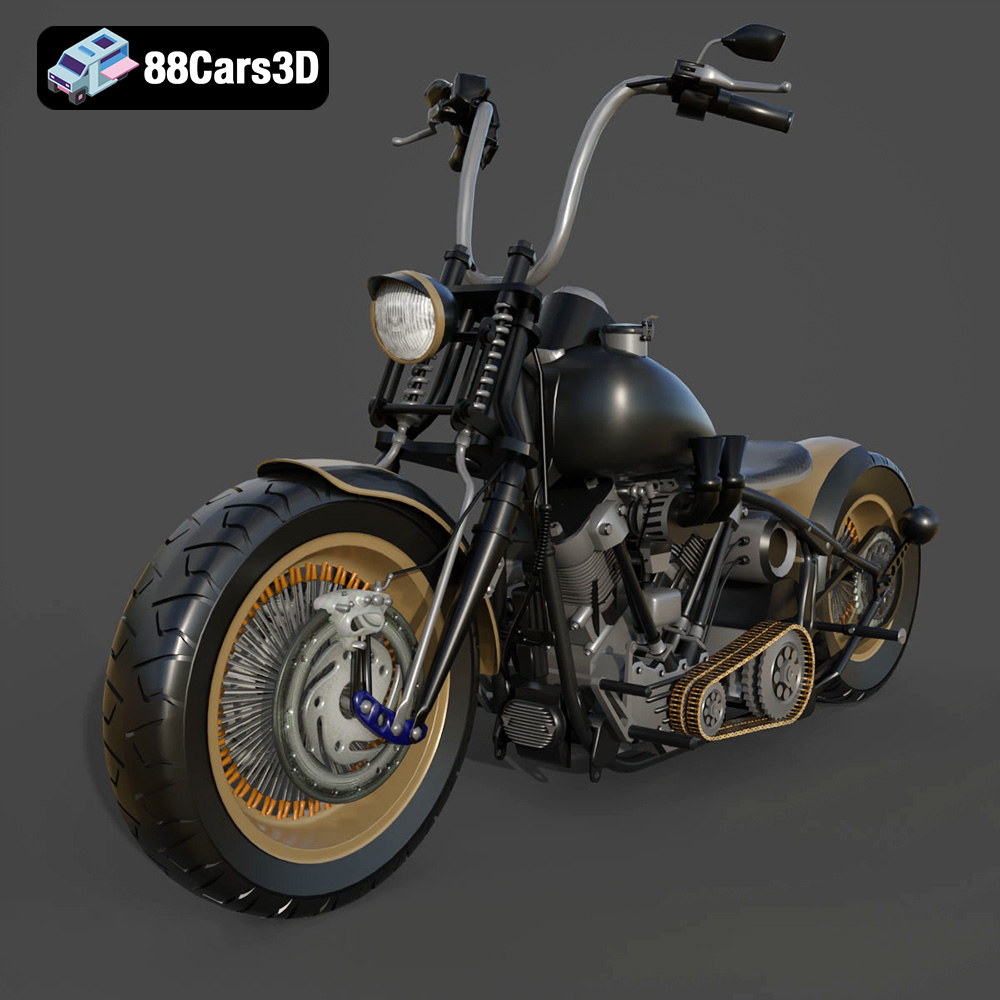
Today, we’re delving into the technical intricacies and creative possibilities offered by expertly crafted 3D models, exemplified by a true icon of American engineering: the Harley Davidson Knucklehead. This particular 3D model, available on 88cars3d.com, is far more than just a digital representation; it’s a meticulously engineered asset designed to serve as a cornerstone for a vast array of professional applications. Whether you’re an automotive renderer aiming for photorealistic cinematic shots, a game developer integrating a legendary vehicle into your world, or an AR/VR creator building interactive experiences, understanding the underlying technical specifications and versatile file formats is key to unlocking its full potential.
The versatility of a high-quality 3D model like the Harley Davidson Knucklehead from 88cars3d.com often hinges on the range of file formats it supports. Each format is engineered for specific use cases, offering unique advantages in terms of compatibility, data integrity, and pipeline efficiency. Understanding these distinctions is crucial for seamless integration into your professional workflow.
The .blend format is native to Blender, an incredibly powerful open-source 3D creation suite. When you download a .blend file, you’re not just getting a mesh; you’re often receiving a complete scene, including the model’s geometry, materials, textures, lighting setups, camera positions, and even animation data. This makes it ideal for Blender users who need full editability and want to leverage the software’s comprehensive toolset immediately. The Harley Davidson Knucklehead .blend file typically includes pre-configured Cycles or Eevee materials, making it ready for high-quality rendering with minimal setup.
.fbx (Filmbox) is arguably the most common proprietary 3D file format for exchanging 3D data between various software applications, especially in game development. Developed by Autodesk, FBX supports geometry, materials (with texture references), animations, skinning, and even camera and light data. Its robustness makes it the go-to format for exporting assets to game engines like Unreal Engine and Unity, ensuring that hierarchical structures, UV maps, and basic material assignments are preserved. The .fbx version of our Knucklehead model is optimized for these real-time environments, balancing visual fidelity with performance.
The .obj (Wavefront Object) format is a simpler, more universal ASCII-based or binary format that defines geometry (vertices, normals, texture coordinates, faces) and can reference external .mtl (Material Template Library) files for basic material properties. While it doesn’t support animation or complex scene data, its widespread compatibility across virtually all 3D software makes it an excellent choice for fundamental model exchange. If you need to import the Harley Davidson Knucklehead into an obscure renderer or a proprietary CAD package, .obj is often the most reliable route, though textures might need re-linking manually.
.glb (GL Transmission Format Binary) is an increasingly vital format, especially for web-based 3D, Augmented Reality (AR), and Virtual Reality (VR) applications. It’s the binary form of glTF, a royalty-free specification for the efficient transmission and loading of 3D scenes and models by applications. A .glb file packages everything – geometry, materials, textures, and even animation – into a single, self-contained file, making it highly efficient for deployment on the web or mobile devices. The Harley Davidson Knucklehead .glb model is therefore perfect for interactive 3D viewers in browsers or integration into AR/VR apps, offering quick loading times and broad platform support.
.stl (STereoLithography) is the de facto standard for 3D printing. It represents a 3D model as a collection of unconnected triangular facets, defining only the surface geometry without color, texture, or other advanced attributes. For 3D printing the Harley Davidson Knucklehead, the .stl file provides a watertight mesh that FDM, SLA, or SLS printers can interpret directly. While simple, its ubiquity in manufacturing and prototyping makes it indispensable for physical output.
.ply (Polygon File Format or Stanford Triangle Format) is a versatile format often used for storing 3D data from 3D scanners, CAD software, or scientific visualization. It can store a wide range of properties, including color, transparency, normals, texture coordinates, and even reliability information for each vertex and face. This makes it useful for detailed mesh analysis, reverse engineering, or applications requiring higher precision than .stl. The .ply version of the Knucklehead model might be used for advanced structural analysis or for capturing extremely fine geometric details.
The .unreal designation implies a model that has been specifically prepared and potentially integrated within an Unreal Engine project structure or pipeline. While not a standalone file extension in the traditional sense like .fbx, it signifies an asset that adheres to Unreal Engine’s specific requirements, often including proper scale, origin, material setup (PBR), and sometimes even pre-configured LODs (Levels of Detail) or collision meshes. This makes the Harley Davidson Knucklehead model virtually plug-and-play for developers working within the Unreal ecosystem, significantly reducing setup time.
Similar to .blend, the .max format is the native file type for Autodesk 3ds Max, a leading software for 3D modeling, animation, and rendering. A .max file contains the complete scene information, including geometry, materials (V-Ray, Corona, Standard), lighting, cameras, and animation. For professionals who rely on 3ds Max for architectural visualization, product rendering, or cinematic animation, the .max file for the Harley Davidson Knucklehead offers full flexibility to modify, animate, or render the model using advanced rendering engines like V-Ray or Corona Renderer.
Creating a truly photorealistic 3D car model, especially one as iconic as the Harley Davidson Knucklehead, is a blend of artistic vision and rigorous technical execution. It’s about more than just replicating shapes; it’s about infusing the digital asset with the soul and presence of its real-world counterpart. At 88cars3d.com, this commitment to excellence is a core philosophy, ensuring that every detail, no matter how small, contributes to maximum visual fidelity.
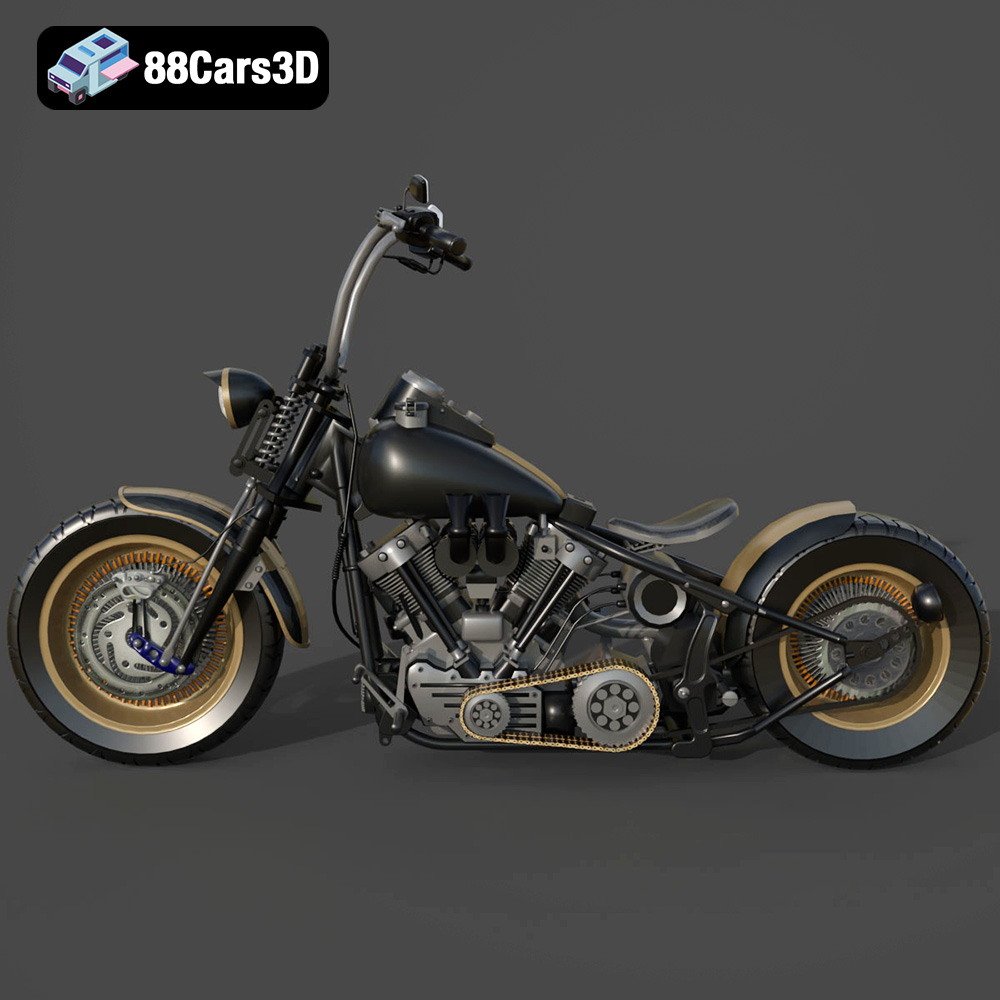
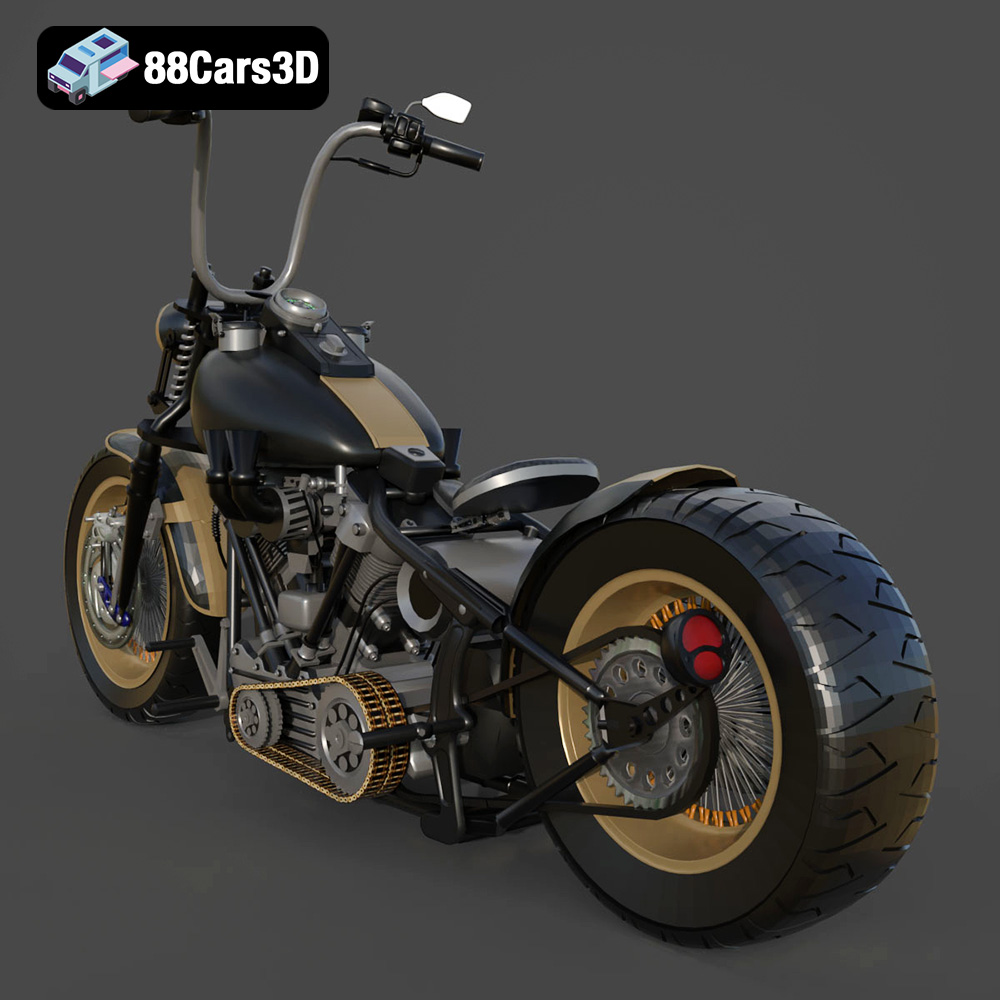
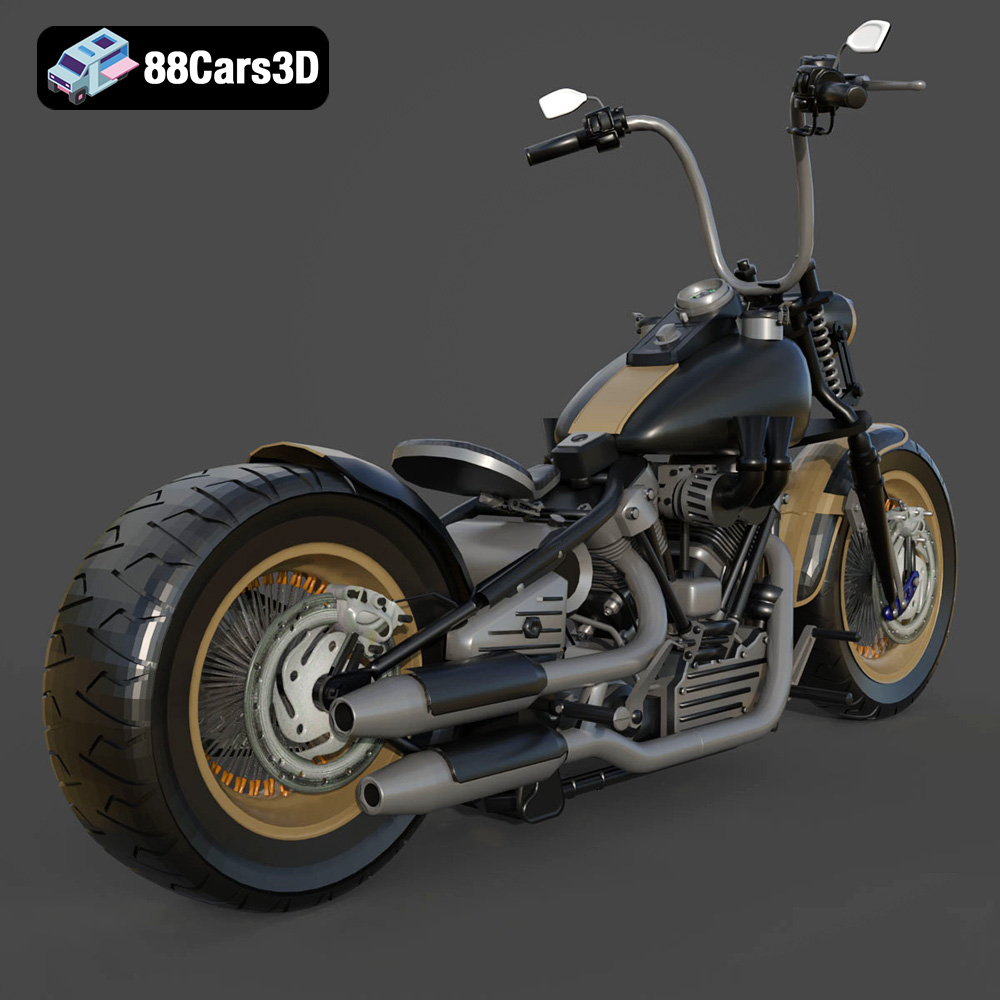
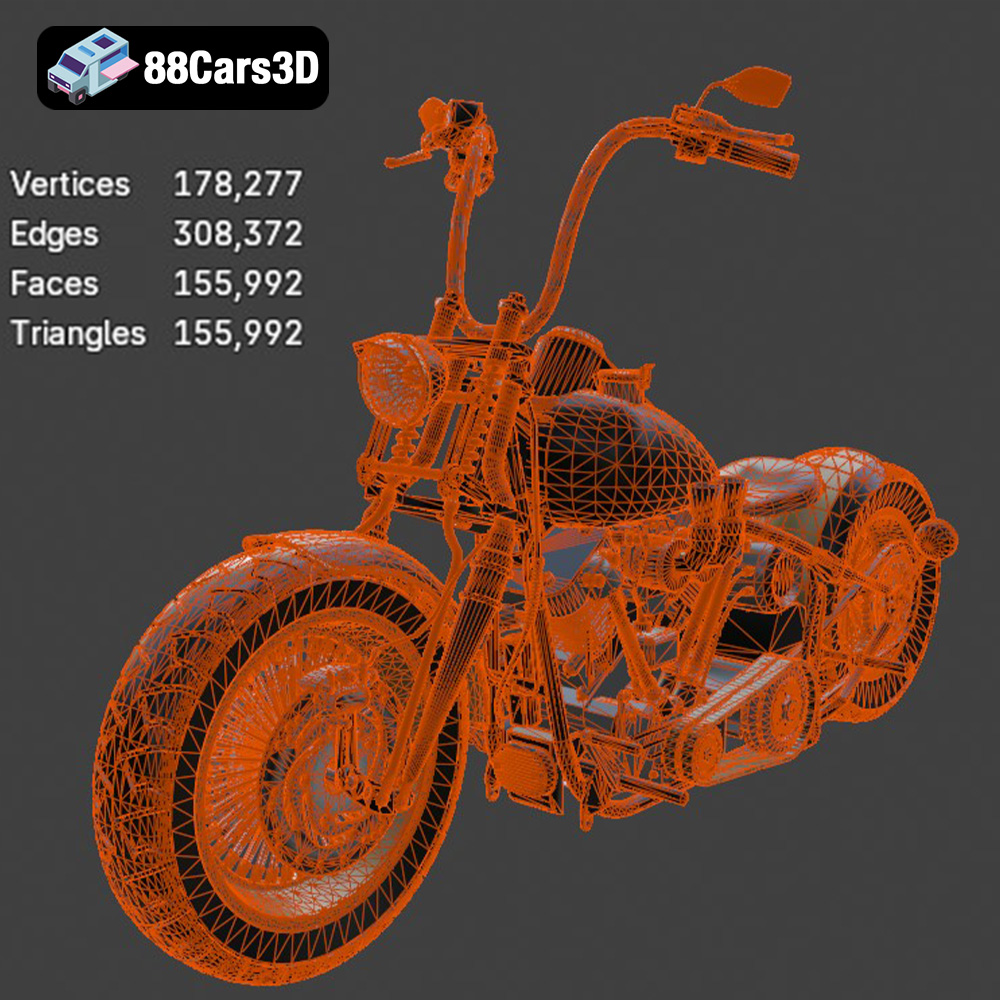
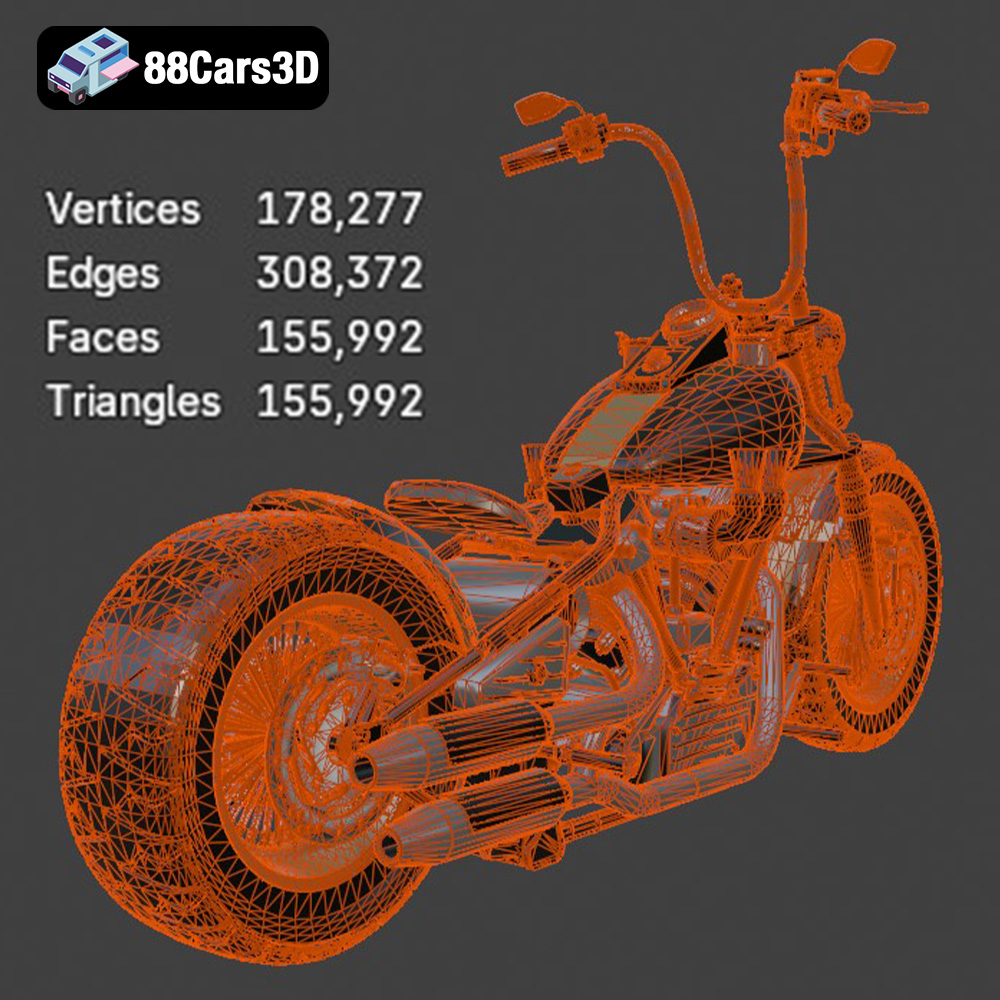
The underlying mesh of any 3D model is its skeleton, and its quality dictates everything from rendering smoothness to animation flexibility and performance. A professional-grade model, like the Harley Davidson Knucklehead, boasts clean geometry and an optimized polygon count. This means the model is primarily constructed using quads (four-sided polygons), which are superior to triangles for smooth subdivision, deformation, and clean UV unwrapping. The “optimized polygon count” implies a balance – enough detail to capture the intricate curves and mechanical elements, but not so excessive as to bog down real-time engines or increase render times unnecessarily. This precise topology ensures that details like the distinct knuckle valve covers, the sweeping lines of the frame, and the subtle curvatures of the tank are rendered flawlessly, reflecting light and shadow accurately without visual artifacts.
Once the geometry is perfect, materials and textures breathe life into the model. Modern rendering relies heavily on Physically Based Rendering (PBR) workflows, which simulate how light interacts with surfaces in the real world. This means creating accurate albedo (base color), roughness, metallic, normal, and sometimes ambient occlusion maps. For the Harley Davidson Knucklehead, this translates to meticulously configured materials that replicate the gleam of chrome, the subtle texture of leather seats, the matte finish of rubber tires, and the worn metal of engine components. Carefully structured meshes and UV maps are crucial here. UV maps dictate how a 2D texture is wrapped around a 3D object. Clean, non-overlapping UVs are essential for avoiding distortion and ensuring textures appear crisp and realistic, allowing for the fine scratches on a chrome exhaust or the subtle grain on a painted surface to be accurately displayed.
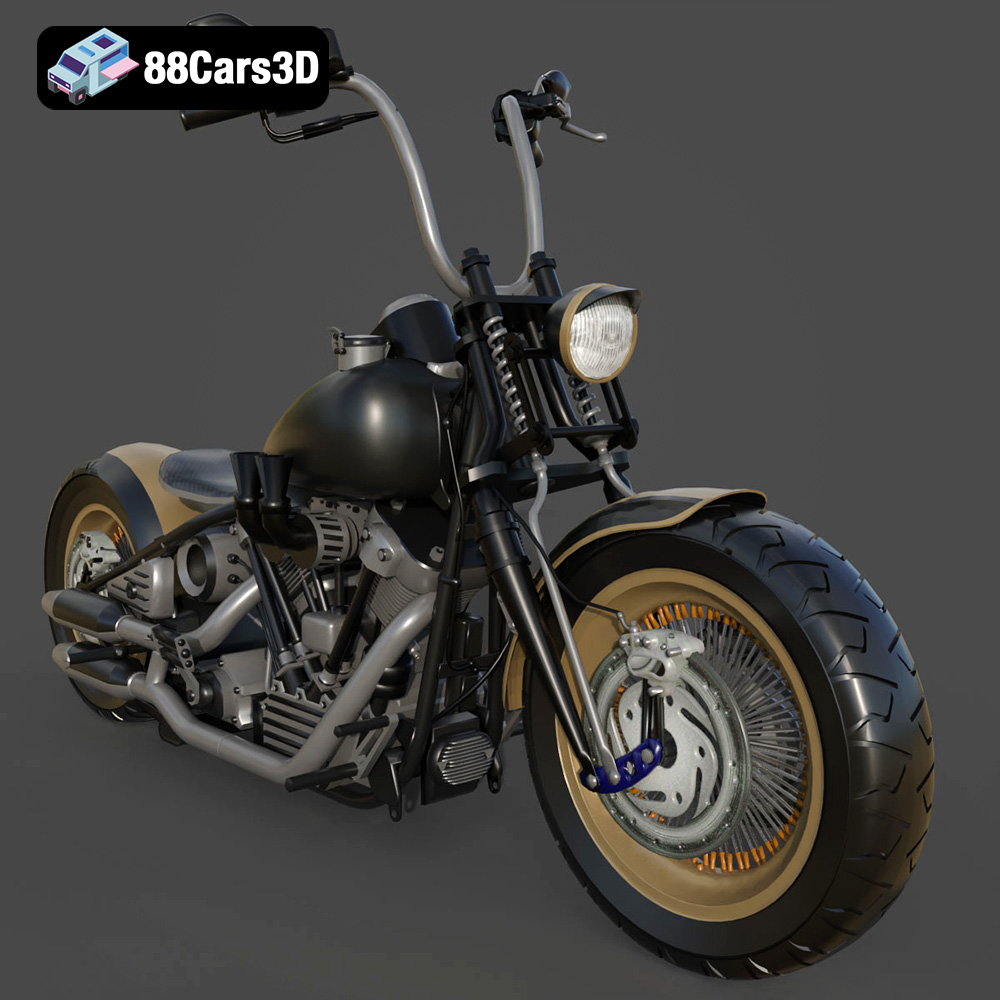
The true mark of a premium 3D car model lies in its unwavering attention to the minutiae. For a classic like the Knucklehead, this means replicating not just the overall form, but also the specific mechanical intricacies that make it unique. The “detailed chassis and instrumentation” goes beyond basic shapes, including fully modeled gauges, cables, levers, and pedals. The “legendary engine” is not just an approximation but a faithful digital twin, showcasing the distinctive “knuckle” covers, cooling fins, and associated plumbing. This level of granular detail is what elevates a good model to an exceptional one, making it suitable for close-up renders, detailed product showcases, or interactive experiences where every angle can be scrutinized.
The value of a high-quality 3D model extends far beyond its aesthetic appeal. Its true power lies in its seamless integration into diverse professional pipelines. The Harley Davidson Knucklehead 3D model, with its range of formats and optimized structure, is engineered to be a versatile asset across multiple industries.
For high-end automotive rendering, software like 3ds Max and Blender are industry staples, powered by advanced renderers such as V-Ray, Corona Renderer, Cycles, and Eevee. The provided .max and .blend files for the Knucklehead model are invaluable here. They often come with pre-configured materials, ready for sophisticated lighting setups. Artists can place the motorcycle in a virtual studio environment with dynamic lighting rigs to highlight its contours and reflective surfaces. Imagine a dramatic spotlight catching the chrome pipes, or soft ambient light revealing the texture of the leather. These platforms allow for creating photorealistic cinematic shots, high-resolution marketing imagery, or even interactive product configurators, where the motorcycle can be viewed from any angle with breathtaking realism. The clean geometry ensures smooth subdivisions, enabling extreme close-ups without pixelation, which is crucial for capturing the Knucklehead’s intricate mechanical details.
In the realm of AAA game development, performance is as critical as visual fidelity. The .fbx and specifically configured .unreal formats of the Harley Davidson Knucklehead are designed with game engines in mind. These assets are optimized for real-time rendering, often featuring efficient mesh topology, PBR-ready materials, and sometimes pre-calculated Levels of Detail (LODs). LODs automatically swap out higher-detail meshes for simpler ones as the player moves further away, maintaining visual quality while significantly improving frame rates. Collision meshes, essential for physical interaction within the game world, can also be easily generated or integrated. Picture the Knucklehead as a central vehicle in an open-world adventure, a classic ride in a racing simulator, or a centerpiece in a virtual museum, providing players with an authentic and high-performing game asset that seamlessly fits into the interactive environment.
The emergence of Augmented Reality (AR), Virtual Reality (VR), and advanced web-based visualization platforms has opened new avenues for 3D models. The .glb format, specifically optimized for these applications, makes the Harley Davidson Knucklehead an ideal candidate for creating immersive experiences. Imagine placing the virtual motorcycle in your living room via an AR app, allowing potential buyers to walk around it and inspect its details as if it were physically present. Or envision a VR experience where users can virtually sit on the bike, start the engine, and experience the classic ride firsthand. For web-based configurators or interactive product pages, the .glb format ensures fast loading times and smooth interaction directly within a browser, providing an engaging and accessible way to showcase the legendary machine to a global audience without requiring specialized software.
While stunning renders and immersive game environments are common uses, the utility of a high-fidelity 3D model like the Harley Davidson Knucklehead extends into various other practical and innovative applications, bridging the gap between digital and physical realms.
The inclusion of .stl and .ply formats for the Harley Davidson Knucklehead opens up the exciting world of 3D printing and physical prototyping. The .stl file, in particular, provides a watertight mesh suitable for direct fabrication. Imagine printing a highly detailed scale model of the Knucklehead, perhaps for a collector’s display, or even individual components of its iconic engine for educational or prototyping purposes. Engineers could use the .ply data for precise dimensional analysis or to create custom mounts and accessories that perfectly fit the motorcycle’s geometry. This capability allows designers and enthusiasts to transform the digital model into tangible objects, offering a unique blend of virtual creation and physical realization.
High-fidelity 3D car models are invaluable assets in simulation and training environments. The detailed mechanics of the Harley Davidson Knucklehead can be integrated into virtual training programs for mechanics, allowing them to disassemble, repair, and reassemble the engine or other components in a safe, cost-effective digital space. This reduces the need for expensive physical prototypes and provides repeatable training scenarios. Similarly, for driving simulators or virtual product testing, an accurately modeled vehicle provides realistic physics and visual feedback, aiding in driver training, ergonomic studies, or even testing virtual customizations before physical implementation.
In architectural visualization (ArchViz), 3D vehicles are often used as static or animated props to add realism and scale to exterior or interior scenes. Placing the Harley Davidson Knucklehead in front of a modern minimalist house or inside a vintage garage rendering instantly enhances the scene’s narrative and aesthetic appeal. In cinematic production, whether for film, television, or commercials, a high-quality 3D model saves immense time and cost compared to sourcing and shooting a real vehicle. The Knucklehead could be featured in a period piece, a dramatic chase sequence, or a stylish music video, animated with authentic movements and rendered with blockbuster quality, thanks to its detailed geometry and PBR materials.
To illustrate the sheer versatility and transformative power of a premium 3D asset like the Harley Davidson Knucklehead, let’s explore a few hypothetical case studies that highlight its utility across different creative and professional endeavors.
Consider an automotive visualization studio tasked with creating a photorealistic scene for a client – a classic vintage garage, complete with tools, spare parts, and a hero vehicle. The Harley Davidson Knucklehead 3D model, with its detailed textures and accurate geometry, becomes the undeniable centerpiece. Using the .max or .blend file, the artist imports the motorcycle into their scene. They leverage the pre-configured materials, perhaps tweaking them slightly to add a subtle layer of dust or a touch of wear and tear, enhancing the narrative of a well-loved machine. Realistic lighting – a soft glow from an overhead neon sign, a harsh beam from a workshop lamp – highlights the bike’s chrome, metallic paint, and intricate engine details. The resulting render is not just an image of a motorcycle, but a story captured in pixels, evoking nostalgia and craftsmanship. This scenario dramatically cuts down production time, as the primary asset is already perfectly modeled and textured, allowing the artist to focus on environment building and lighting.
Imagine a historical museum or a motorcycle enthusiast’s convention wanting to offer an engaging, interactive experience for visitors. Rather than just static displays, they envision an AR application that allows users to explore a legendary bike up close. The .glb version of the Harley Davidson Knucklehead is the perfect solution. Developers can integrate this optimized model into a mobile AR app, letting visitors point their phone cameras at a designated marker (or simply their surroundings) and virtually place the Knucklehead right in front of them. Users can then walk around the digital motorcycle, zoom in on the engine’s “knuckle” covers, activate informational pop-ups about its history, or even hear the authentic roar of its engine, all in real-time. For a more immersive VR experience, the same model can be used to transport users into a virtual showroom, where they can sit on the bike, examine every component, and even take it for a virtual test ride. This showcases how a well-structured 3D model can transform passive viewing into an active, educational, and memorable experience.
A leading game development studio is building a new open-world game set in a post-apocalyptic landscape, featuring various collectible vehicles. A legendary motorcycle like the Harley Davidson Knucklehead would be a prized find. Using the .fbx and .unreal versions of the model, the development team seamlessly integrates it into their game engine. The optimized polygon count ensures it runs smoothly, even with dozens of other assets on screen. Artists leverage the PBR materials to ensure the bike looks gritty and authentic under the game’s dynamic lighting system, perhaps even adding procedural dust and grime. Developers can quickly set up collision meshes, driveable physics, and custom animations for starting the engine or unique rider poses. The model could be a rare reward for players, discovered rusting in an old barn, or meticulously restored to become a trusty companion for traversing the game world. This demonstrates how a ready-to-use game asset saves countless hours of modeling, unwrapping, and texturing, allowing the team to focus on gameplay and world-building.
From the intricate valve covers of its legendary engine to the sweeping lines of its chassis, the Harley Davidson Knucklehead stands as a testament to timeless design and mechanical prowess. Its digital counterpart, a meticulously crafted 3D model, exemplifies the peak of high-fidelity asset creation. As we’ve explored, such a model is not merely a static image, but a dynamic, versatile tool capable of driving innovation across diverse professional landscapes.
Whether you are pursuing photorealistic automotive rendering, integrating iconic vehicles into immersive game environments, developing cutting-edge AR/VR experiences, or even prototyping physical replicas through 3D printing, the technical precision and multi-format availability of models like the Harley Davidson Knucklehead are indispensable. These assets empower creators to achieve unparalleled realism, optimize workflows, and bring their visions to life with efficiency and fidelity.
The commitment to clean geometry, optimized topology, and expertly configured PBR materials ensures that models from 88cars3d.com meet the rigorous demands of any professional pipeline. They represent a significant investment in quality, freeing artists and developers to focus on creativity rather than foundational asset creation. For your next project, requiring top-tier 3D car models or other vehicle assets, explore the comprehensive collection at 88cars3d.com and discover how premium digital assets can elevate your work to new heights.
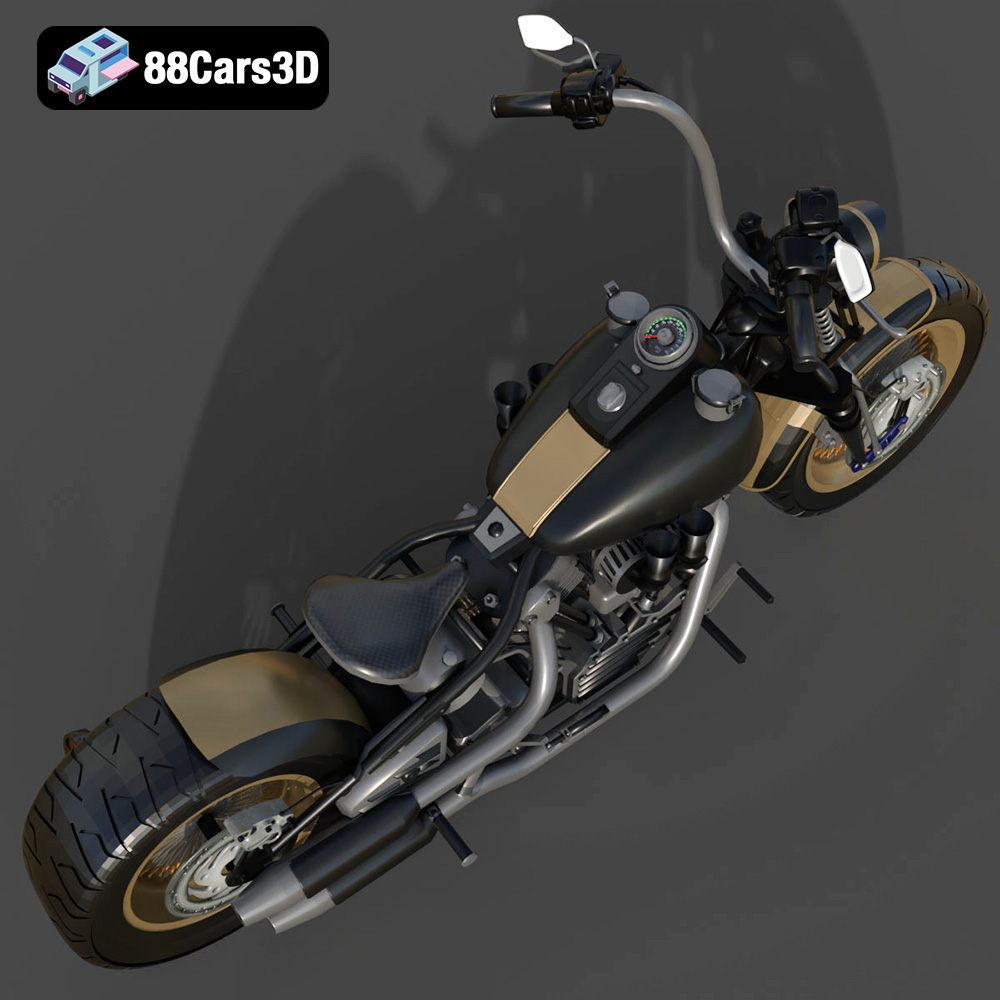
Experience the iconic design of the classic American motorcycle with the Harley Davidson Knucklehead 3D model. Designed for exceptional realism, this asset perfectly replicates the legendary engine, sweeping lines, and mechanical intricacies that make this vintage bike a timeless masterpiece. Built with professional-grade precision, the model features clean geometry, an optimized polygon count, and meticulously configured materials. Every component, from the distinct knuckle valve covers to the detailed chassis and instrumentation, has been crafted to deliver maximum visual fidelity without compromising performance. This versatile 3D model is ideal for a wide range of applications, including AAA game development, cinematic rendering, architectural visualization, and immersive AR/VR experiences. The carefully structured meshes and UV maps ensure seamless integration into any professional production pipeline.
$39.99
.arvr
.blend
.car3dmodel
.classicmotorcycle
.cruiser
.fbx
.gameasset
.glb
.harleydavidson
.knucklehead
.max
.motorcycle
.obj
.ply
.rendering
.simulation
.stl
.unreal