Get 20% OFF All Premium 3D & STL Models!

In the dynamic landscape of 3D visualization, the demand for exceptionally crafted digital assets is more pronounced than ever. From cinematic sequences and high-fidelity product showcases to immersive gaming environments and interactive AR/VR experiences, the quality of a 3D model dictates the realism and overall impact of a project. Automotive design, in particular, requires an unparalleled level of precision and detail, as vehicles are often central to our perception of luxury, performance, and modern living.
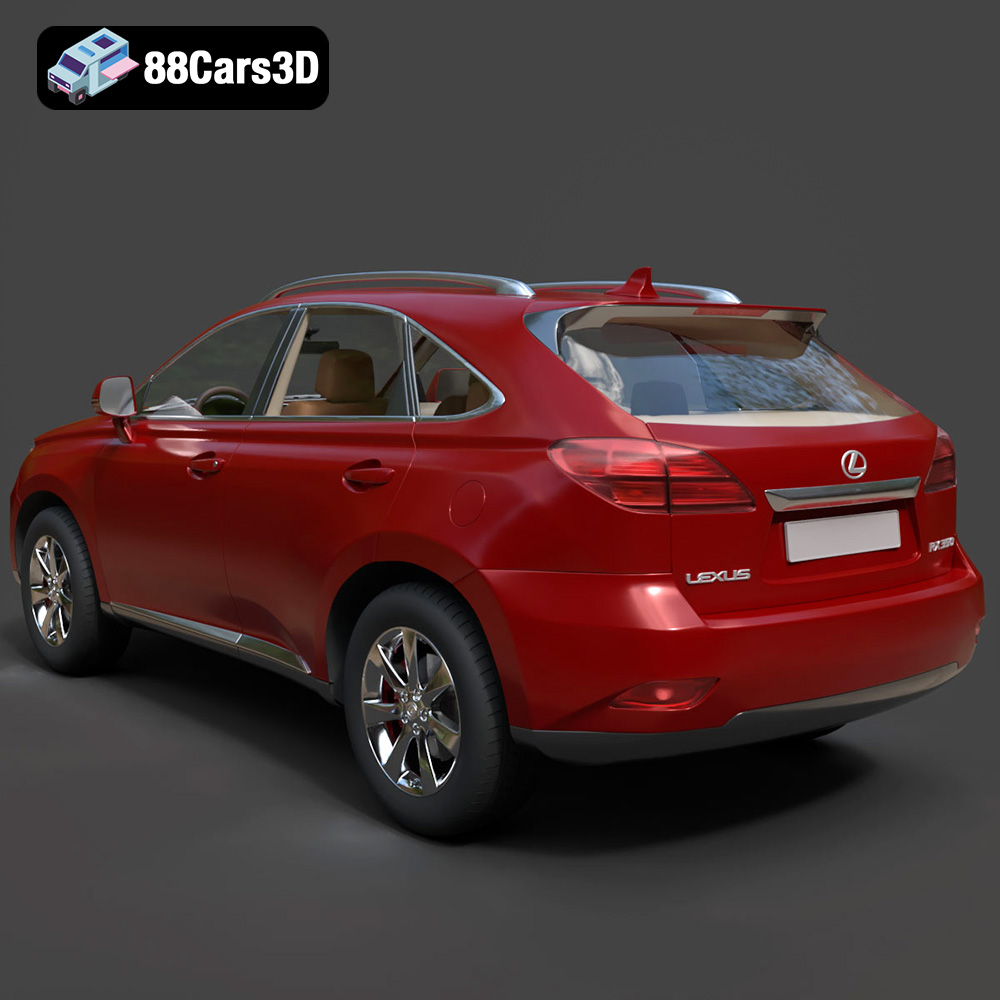
At 88cars3d.com, we understand this critical need for accuracy and optimization. Our commitment lies in providing industry professionals and enthusiasts alike with 3D car models that stand up to the most rigorous scrutiny. Today, we’re taking a closer look at one such exemplary asset: the Lexus RX350 2010 3D Model. This model embodies the perfect synergy of meticulous detail and intelligent optimization, making it an invaluable tool for a vast array of digital applications. It’s a definitive representation of a luxury crossover SUV, bringing together refined elegance, advanced comfort, and robust versatility, all captured within a game-ready, high-fidelity digital asset.
When working with 3D models, especially complex assets like vehicles, selecting the correct file format is crucial for seamless integration into various software environments and pipelines. Each format offers distinct advantages and caters to specific use cases, from real-time game development to precision 3D printing. The Lexus RX350 2010 3D Model is provided in an extensive range of formats, ensuring maximum compatibility and utility across diverse professional workflows.
The .blend format is Blender’s native file type, offering a complete and fully editable scene. When you download a .blend file, you’re getting more than just the mesh; you’re receiving the entire project as it was saved in Blender. This includes not only the geometric data (vertices, edges, faces) of the Lexus RX350 2010 but also its materials, textures, lighting setups, camera positions, animation data, and even modifiers or rigging information if present. For users deeply integrated into the Blender ecosystem, this format provides the most flexibility for customization, rendering with Eevee or Cycles, and further development. It’s ideal for artists who want to dissect the model, understand its construction, or adapt it extensively within Blender.
.fbx (Filmbox) is arguably the most widely adopted proprietary file format for 3D data exchange, especially prevalent in game development and animation pipelines. Its strength lies in its ability to store not only mesh data but also critical scene information such as materials, textures, animations, inverse kinematics, and skeletal systems. This makes the .fbx version of the Lexus RX350 2010 3D Model ideal for importing into game engines like Unreal Engine and Unity, or other 3D applications such as 3ds Max, Maya, and Cinema 4D. The .fbx format ensures that the entire hierarchical structure of the vehicle, including separate wheels, suspension, and steering components, is preserved for easy animation and manipulation within your target software.
The .obj (Wavefront OBJ) format is a simple, text-based standard for representing 3D geometry. It’s a universal format that can be opened by virtually any 3D software. While .obj files are excellent for conveying static mesh data – vertices, normals, UV coordinates, and faces – they typically do not store scene information like animation, rigging, or advanced material properties within the file itself (though material libraries, .mtl files, can be linked). For the Lexus RX350 2010, the .obj format is perfect when you need a clean mesh for basic rendering, re-texturing, or as a base for retopology or sculpting in different software, ensuring broad compatibility across various platforms.
.glb (GL Transmission Format Binary) is a relatively newer format that has gained significant traction, especially in augmented reality (AR), virtual reality (VR), and web-based 3D applications. It’s essentially a binary version of the glTF format, packing all necessary assets (geometry, materials, textures, animations) into a single, self-contained file. This makes .glb files incredibly efficient for rapid loading and display in real-time environments, browsers, and mobile devices, without external dependencies. The .glb version of the Lexus RX350 2010 is therefore perfectly suited for creating immersive virtual showrooms, configurators, or integrating the model into interactive web experiences or social media filters.
The .stl (Stereolithography) format is the de facto standard for 3D printing. Unlike other formats that describe surface geometry using polygons, .stl represents a 3D model as a collection of unconnected triangular facets. This triangulation defines the surface geometry in a way that 3D printers can interpret to build up a physical object layer by layer. While it loses color and texture information, the .stl version of the Lexus RX350 2010 3D Model is crucial for hobbyists or professionals looking to bring the digital design into the physical world. Its precision in defining the mesh ensures that the intricate details of the vehicle, like the frame geometry and alloy wheels, are accurately translated for physical fabrication.
The .ply (Polygon File Format) is another format primarily used for storing 3D data, particularly from 3D scanners or for CAD applications. It can store a variety of data, including vertices, faces, normals, color, and even transparency, making it more versatile than .obj in some aspects. It’s known for its precision in representing point cloud data and complex meshes. For the Lexus RX350 2010, the .ply format could be valuable for engineers, designers performing finite element analysis (FEA), or those needing a highly accurate mesh for industrial design or measurement purposes.
While not a standalone file format in the traditional sense, the inclusion of “.unreal” typically denotes an asset specifically prepared or packaged for direct integration into Unreal Engine. This often means the .fbx file has been pre-processed, materials have been set up with Unreal-specific shaders, textures are optimized, and possibly even basic blueprints or collision meshes are included. This significantly streamlines the workflow for game developers and real-time visualization artists, minimizing setup time and ensuring the Lexus RX350 2010 is truly “engine-ready” for immediate use within the Unreal Engine environment, complete with proper pivots for animation and real-world scale.
The .max format is the native file type for Autodesk 3ds Max, a leading software in architectural visualization, design, and animation. Similar to .blend for Blender, the .max file contains the complete 3ds Max scene, including all geometry, materials, lighting, cameras, animation, and scene settings. For professionals using 3ds Max, this format offers the highest level of editability and direct access to the model’s construction, allowing for advanced rendering with V-Ray or Corona, complex animation sequences, or detailed environmental integration for the Lexus RX350 2010.
The Lexus RX350 2010 is a vehicle renowned for its sophisticated design and luxurious appeal. Capturing these attributes digitally requires not just technical skill, but an artistic eye. The 3D model of the Lexus RX350 2010 meticulously translates the physical vehicle’s essence into a robust digital asset, engineered for a multitude of professional applications.
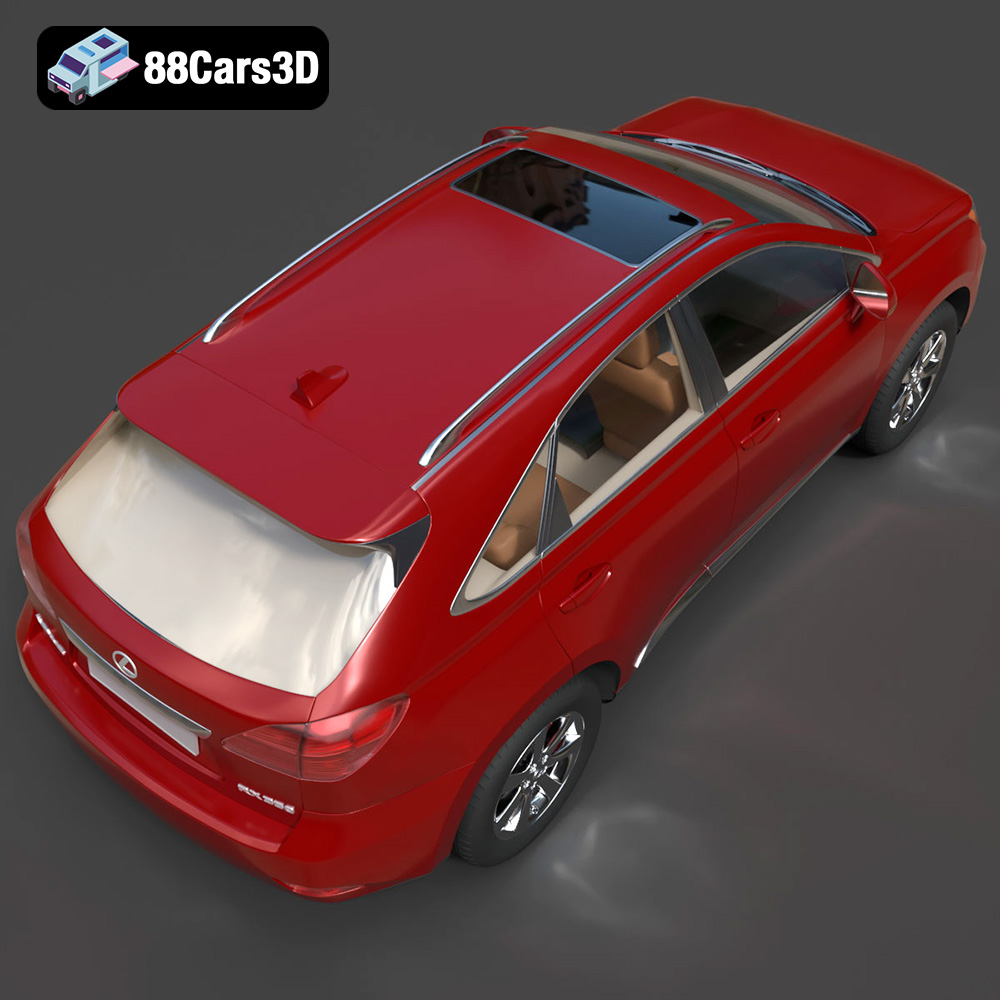
Lexus’s signature L-finesse design philosophy is evident in the RX350 2010’s sweeping lines, distinctive front grille, and aerodynamic profile. The 3D model accurately recreates these nuances, ensuring that the digital representation is instantly recognizable and visually authentic. From the precise frame geometry and elegant crossover proportions to the integrated dual exhaust outlets with realistic chrome finishing, every exterior element is carefully considered. The projector-beam headlamps and clear-lens LED taillights are modeled with attention to detail, ready to be illuminated convincingly in any digital scene. The detailed alloy wheels, complete with high-resolution tire tread patterns, further enhance the realism, ensuring that even close-up renders hold up to scrutiny.
Stepping into the virtual cockpit of the Lexus RX350 2010 reveals an equally impressive level of detail. The plush leather-appointed seating and luxury upholstery are rendered with textures that suggest comfort and premium quality. The multifunction steering wheel, precise steering column setup, and detailed driver instrument cluster with realistic gauge placement provide an authentic driver’s perspective. The center console, complete with its infotainment screen, shifter, and control knobs, is accurately represented, offering a truly immersive experience. This attention to interior detail is particularly crucial for first-person POV applications in gaming, virtual reality, and interactive configurators, where users expect to explore and interact with the vehicle’s cabin.
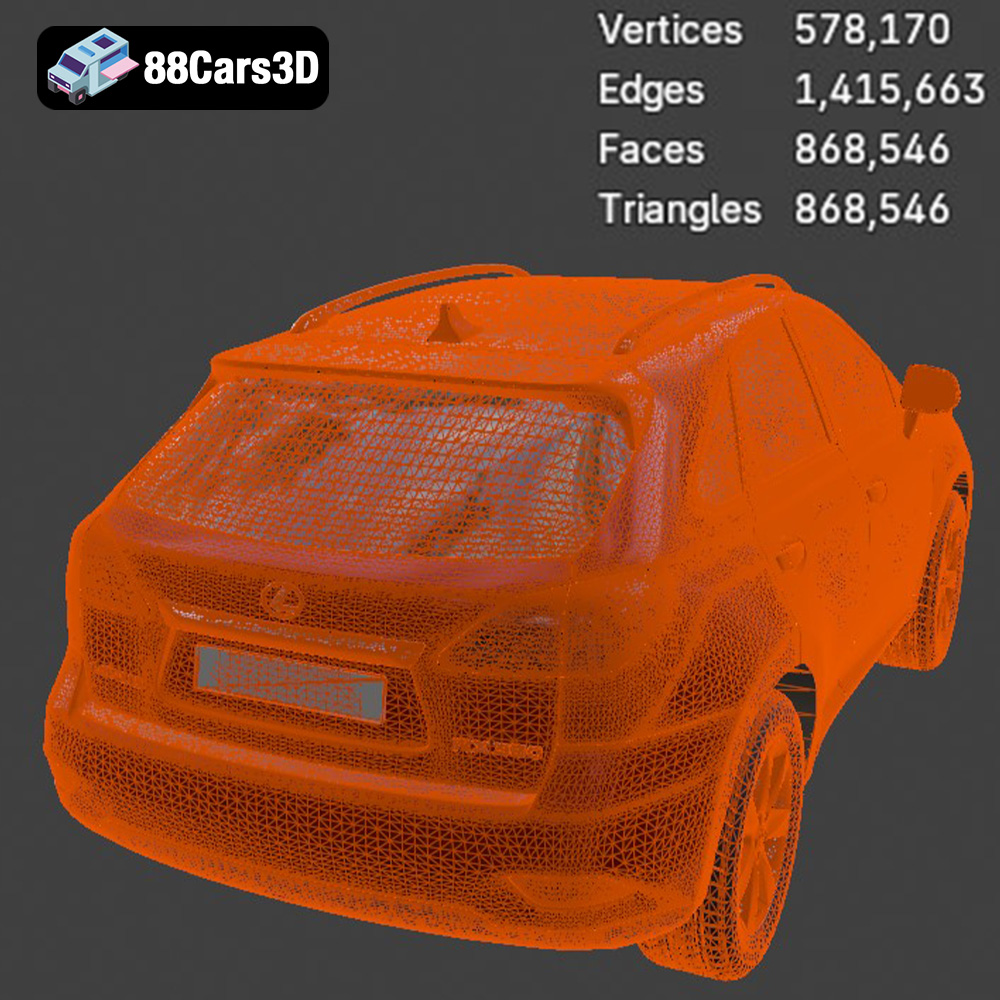
One of the most significant advantages of the Lexus RX350 2010 3D Model is its “game-ready” optimization. Balancing visual fidelity with real-time performance is a delicate act, and this model achieves it with remarkable success, featuring an optimized topology of approximately 200k triangles.
A polygon count of around 200,000 triangles for a detailed vehicle model strikes a near-perfect balance for modern real-time engines like Unreal Engine and Unity. This ensures that the model maintains high-end visual realism without compromising on frame rates or rendering speeds, which is paramount in interactive experiences. High-quality PBR (Physically Based Rendering) textures and carefully unwrapped UVs, essential for realistic materials, are inherent to such a game-ready asset, allowing for believable reflections, metallic sheens, and surface imperfections. The real-world scale accuracy, based on actual vehicle chassis dimensions, ensures seamless integration into any digital environment, maintaining proportionality and realism.
The optimized polycount makes the Lexus RX350 2010 3D Model ideal for a variety of game development scenarios. Whether it’s integrated into open-world games as traffic, featured in racing titles, or used in driving simulators, its performance characteristics ensure smooth operation. For AR/VR experiences, the model excels in creating immersive virtual showrooms, where potential buyers can explore the vehicle in a 360-degree environment, or in mobile AR applications, where the car can be placed in a real-world setting. The proper pivot setup for steering, wheel rotation, and suspension travel further enhances its utility, enabling realistic animation and dynamic interaction within these real-time platforms.
While optimized for real-time applications, the robust construction of the Lexus RX350 2010 3D Model ensures it is equally capable of producing stunning, high-fidelity renders for marketing, advertising, and architectural visualization projects.
When coupled with advanced rendering engines like V-Ray, Corona Renderer, or Cycles, the detailed geometry and material properties of the model can produce photorealistic images and animations. This makes it an excellent choice for brand campaigns that require cinematic quality visuals to showcase the vehicle’s luxury and features. Lifestyle scenes, featuring the RX350 parked in an elegant setting or driving through a picturesque landscape, can be brought to life with incredible realism, appealing directly to target demographics. Customizable options such as changing body colors (e.g., Starfire Pearl, Obsidian, or custom wraps), modifying tire textures, and adjusting material finishes (matte, gloss, metallic) provide endless creative possibilities to match specific campaign requirements.
The Lexus RX350 2010 serves as a perfect prop for luxury lifestyle architectural visualizations. Placing this meticulously crafted vehicle within a scene instantly elevates the perceived value and realism of a digital architectural render. It helps to tell a story about the inhabitants and their lifestyle, adding a layer of authenticity that generic vehicle models often lack. The ability to adapt lighting for different environments further ensures seamless integration, whether the car is being viewed under harsh midday sun or the soft glow of evening streetlights. The inclusion of an editable .max file means architects and visualization artists can easily integrate and modify the model within their 3ds Max projects, leveraging their existing workflows.
The versatility of the Lexus RX350 2010 3D Model extends beyond digital screens. With the inclusion of the .stl format, this asset can transition from the virtual realm into a physical, tangible object through 3D printing, opening up new possibilities for hobbyists, collectors, and design prototypes.
The .stl format, specifically designed for additive manufacturing, ensures that the complex geometry of the RX350 is accurately translated for 3D printers. This allows enthusiasts to produce detailed display-scale models, perfect for collectors or as desk ornaments. The recommended scales (1:12, 1:18, 1:24) cater to popular model car sizes, allowing for consistency with existing collections. For optimal detail and surface finish, resin printing is recommended, particularly for achieving the fine details of the frame, lights, and interior components. Layer heights between 0.04–0.12 mm will ensure smooth surfaces and sharp edges.
Successful 3D printing of a complex model like a car requires careful attention to specific settings. A wall thickness of 1.2–2.0 mm ensures structural integrity for the printed parts, preventing brittleness. While an infill of 20–30% is generally sufficient, strategic support structures are crucial. Detailed parts like mirrors, exhaust outlets, and the intricate undercarriage will require carefully placed supports to prevent warping or failure during printing. Print orientation is also key; printing the main frame angled can improve structural integrity and reduce visible layer lines on critical surfaces, while wheels should be printed separately for better detail and potential articulation. Post-processing, including sanding, priming, and painting with authentic factory colors and metallic finishes, can transform a raw print into a stunning miniature replica of the Lexus RX350 2010.
The true value of a comprehensive 3D car model lies in its seamless integration into various professional software workflows. The Lexus RX350 2010 3D Model, with its diverse file formats and optimized structure, is engineered for efficiency across popular platforms.
For Blender artists, the native .blend file provides a complete starting point. Users can import the model and immediately leverage Blender’s powerful modeling, sculpting, and texturing tools for further customization. For rendering, Eevee offers real-time feedback for rapid iteration, while Cycles provides physically accurate, production-quality renders. The independent wheels, suspension, and steering components, accessible within the .blend file, facilitate easy rigging for animation, allowing artists to create dynamic driving sequences or interactive presentations of the Lexus RX350 2010.
Architectural visualization and animation studios often rely on 3ds Max. The included .max file allows for direct access to the model within this environment. Artists can integrate the Lexus RX350 2010 into complex scene compositions, apply advanced V-Ray or Corona Renderer materials, and set up intricate lighting scenarios. The model’s clean topology and proper pivot points are crucial for setting up advanced vehicle rigging, enabling realistic suspension compression, wheel rotation, and steering actions for high-quality animations in commercials or cinematic sequences. This also applies to adding the model into vast architectural scenes with ease and precision.
Game developers and real-time artists using Unreal Engine will find the .fbx and .unreal formats particularly useful. Importing the .fbx allows for straightforward asset management, where materials can be quickly re-applied using Unreal’s PBR workflow. For an even faster setup, the “.unreal” designation suggests a pre-configured asset, minimizing the time spent on material setup and collision geometry. The optimized polycount and real-world scale ensure the Lexus RX350 2010 fits perfectly into game levels, with performance to spare. Developers can implement interactive elements using Unreal’s Blueprint system, allowing players to open doors, turn on lights, or even customize the car’s appearance in real-time within a virtual showroom or game environment.
Similar to Unreal Engine, Unity developers will appreciate the .fbx format for its comprehensive data transfer. The Lexus RX350 2010 can be easily imported, and its materials can be adapted to Unity’s standard or URP/HDRP pipelines. Its game-ready optimization makes it suitable for mobile games, desktop applications, and VR/AR experiences developed in Unity. The separated vehicle components allow for easy integration with Unity’s physics engine, enabling realistic driving mechanics or interactive configuration tools.
The journey of a 3D car model from concept to a versatile, multi-platform asset is a testament to the blend of technical expertise and artistic vision. The Lexus RX350 2010 3D Model exemplifies this journey, offering unparalleled detail, robust optimization, and broad compatibility across a spectrum of industry applications. Whether you’re a game developer seeking a high-performance vehicle, an architectural visualizer needing a touch of luxury, a filmmaker crafting cinematic scenes, or a hobbyist aspiring to 3D print a detailed replica, this model provides the foundation for success.
By providing an extensive range of file formats – from native Blender and 3ds Max files to universal .fbx and game-ready .unreal packages, and even 3D print-ready .stl – 88cars3d.com ensures that creative professionals have the right tools for any project. This commitment to quality and versatility makes the Lexus RX350 2010 3D Model an indispensable asset, ready to integrate seamlessly into your workflow and elevate your digital creations to new heights. Explore this exceptional model and more at 88cars3d.com, where quality and performance drive innovation.
The Lexus RX350 2010 is a definitive representation of the luxury crossover SUV segment, bringing together refined elegance, advanced comfort, and robust versatility. Showcasing Lexus’s signature L-finesse design philosophy, this model features sweeping lines, a distinctive front grille, and an aerodynamic profile that masterfully blends the ruggedness of an SUV with the smooth styling of a premium sedan. This 3D model is meticulously crafted to deliver exceptional visual fidelity while maintaining an optimized topology of approximately 200k triangles. Engineered for game-ready performance, it is perfectly suited for real-time applications such as game development, AR/VR experiences, and high-end automotive visualization without compromising on frame rates or rendering speeds. Perfect for urban driving simulations, luxury lifestyle architectural visualizations, virtual dealership showrooms, and cinematic renders.
$39.99
.2010
.blend
.crossover
.fbx
.glb
.lexus
.luxury suv
.max
.obj
.ply
.rendering
.stl
.unreal
car-3d-model
game asset
game-ready
low-poly
optimized
rx350
SUV
vehicle-3d-model
VR/AR