Get 20% OFF All Premium 3D & STL Models!

In the dynamic world of 3D visualization, the quality of your base assets can make or break a project. Whether you’re a game developer striving for immersive realism, an architect bringing street scenes to life, or a marketing specialist crafting compelling automotive campaigns, access to highly detailed, optimized, and versatile 3D car models is paramount. The modern compact hatchback, with its distinctive lines and widespread appeal, often serves as a cornerstone asset for urban environments and consumer-focused content.
Among the standout examples of such essential assets is the Peugeot 208 2020 3D model, available on 88cars3d.com. This meticulously crafted asset encapsulates the vehicle’s bold design and sophisticated engineering, providing a robust foundation for a myriad of professional applications. This post will explore the technical intricacies of this particular model, its compatibility across various software platforms and engines, and how it can be leveraged to achieve professional-grade results in automotive rendering, game development, AR/VR experiences, and even 3D printing.
The 2020 Peugeot 208 marked a significant evolution in its segment, characterized by its aggressive styling and sporty proportions. Recreating such an iconic design in 3D requires a deep understanding of automotive aesthetics and meticulous attention to detail. This 3D model, specifically, showcases a dedication to capturing every nuance, making it an invaluable asset for any professional project.
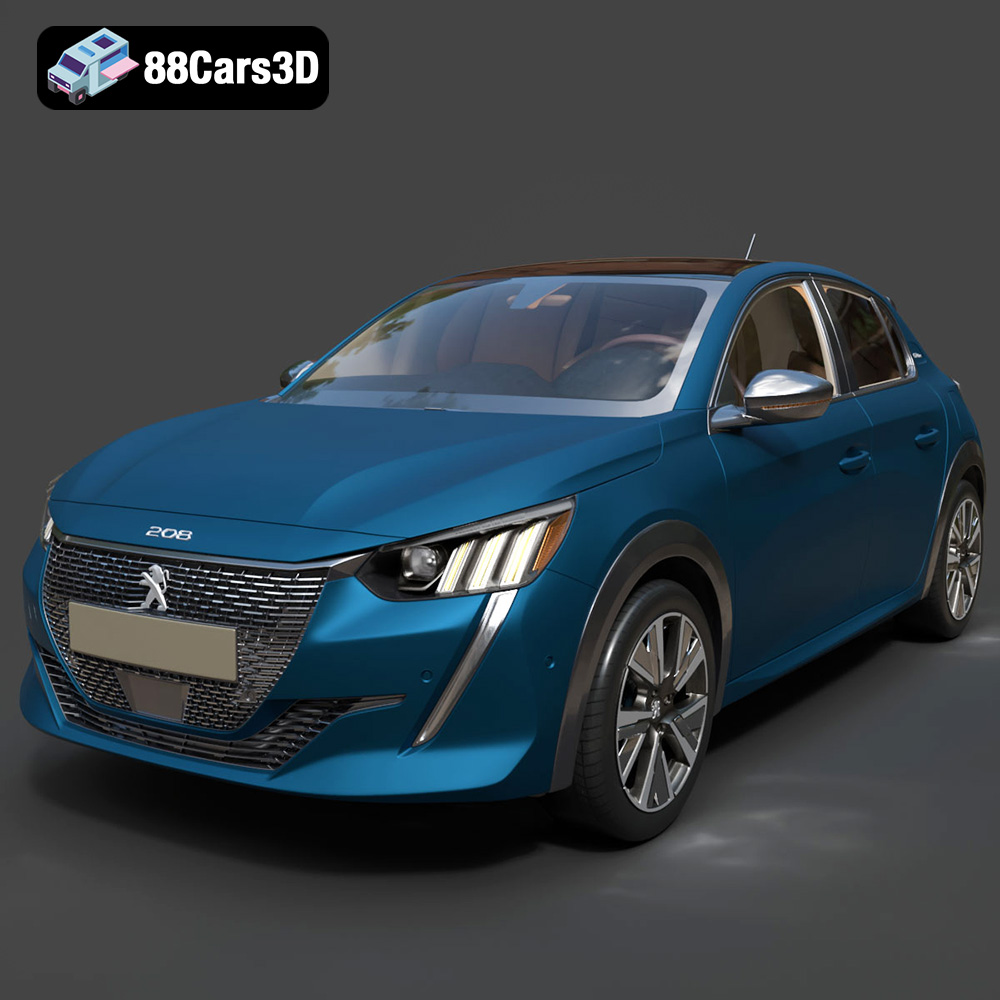
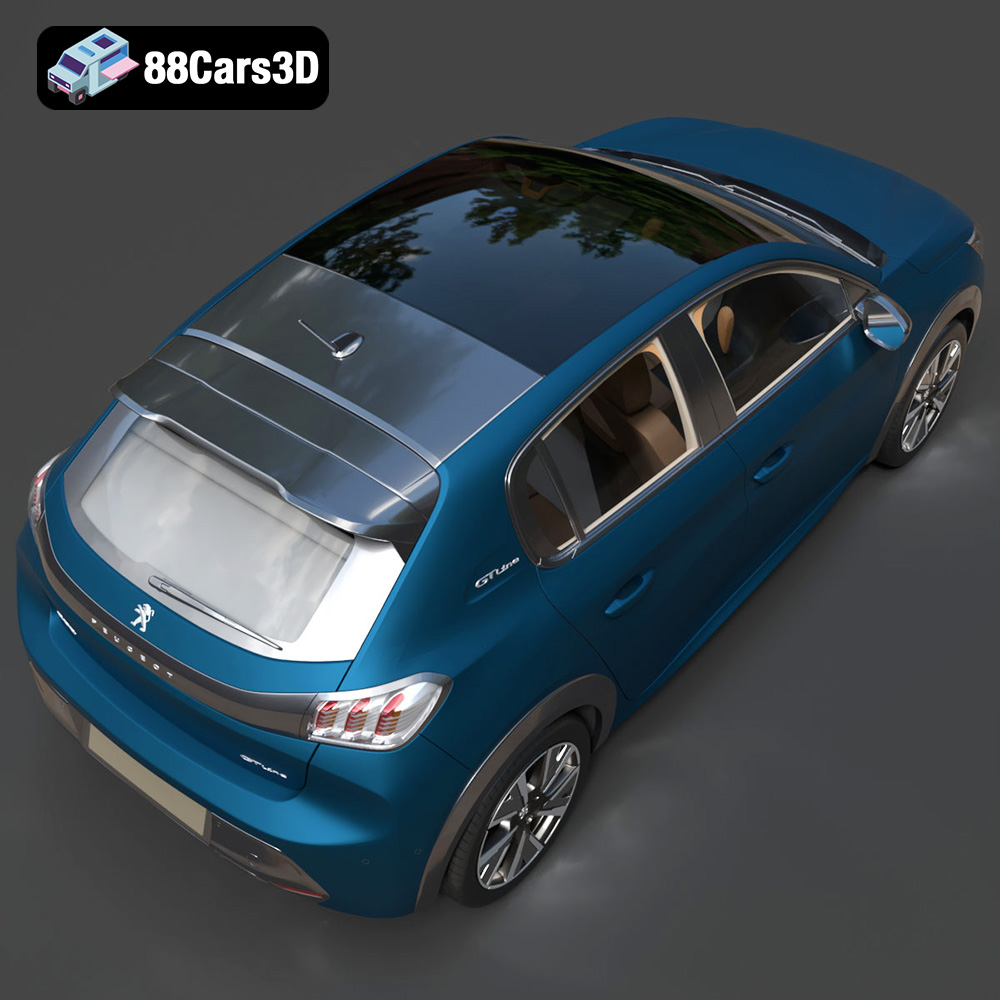
The exterior of the 2020 Peugeot 208 is its most striking feature, defined by elements like the ‘saber-tooth’ LED daytime running lights, a muscular sculpted hood, and an elegant gloss-black rear light cluster fascia. The 3D model accurately replicates these signature components. The detailed front grille with the prominent Peugeot lion emblem is rendered with precision, as are the high-resolution headlight and taillight housings, complete with realistic reflectors. The aerodynamic alloy wheels are not merely textures but intricate geometries, paired with detailed brake calipers and disc rotors, and realistic tire treads designed for authenticity in various driving scenarios. The overall topology, optimized at approximately 120k triangles, strikes an excellent balance between visual fidelity and performance efficiency, crucial for demanding real-time applications.
Beyond the impressive exterior, the Peugeot 208 2020 3D model also delivers a highly detailed interior. The i-Cockpit layout, a signature of modern Peugeots, is faithfully recreated, featuring the compact steering wheel, digital 3D instrument cluster, and a modern infotainment display. Seating elements come with realistic fabric or leather texture mapping, and the central console, gear shifter, and tactile control buttons are all accurately modeled. This level of interior detail is crucial for projects requiring first-person views, such as virtual showrooms, driving simulators, or immersive game assets, ensuring that every angle maintains a high standard of realism and consistency.
One of the primary advantages of this specific 3D model is its dual optimization for both high-end rendering and real-time engines. With its ~120k triangle count, it is classified as game-ready, making it suitable for demanding applications like Unreal Engine and Unity without causing significant performance bottlenecks. Simultaneously, the immaculate flow of polygons and proper UV mapping ensure crisp reflections and accurate ambient occlusion, vital for achieving photorealistic results in cinematic shots and professional automotive rendering. The real-world scale accuracy, based on actual vehicle chassis data, and the proper pivot setup for steering, wheel rotation, and suspension travel further enhance its usability and animation potential.
Navigating the diverse landscape of 3D software and engines requires a fundamental understanding of various file formats. Each format serves a specific purpose, offering different levels of compatibility, data retention, and optimization for particular workflows. The Peugeot 208 2020 3D model from 88cars3d.com is provided in a comprehensive suite of formats, ensuring maximum flexibility for professionals.
By offering such a comprehensive range of formats, the Peugeot 208 2020 3D model ensures that professionals can integrate it into virtually any workflow, from high-end cinematic rendering to interactive real-time experiences and physical manufacturing.
Game development demands a unique blend of visual fidelity and performance optimization. A high-quality 3D car model, such as the Peugeot 208 2020, must be engineered to meet these stringent requirements, providing both aesthetic appeal and efficient resource utilization.
The Peugeot 208 2020 3D model is explicitly designed to be game-ready, with its optimized ~120k triangle count striking an ideal balance. For developers using Unreal Engine, the inclusion of a dedicated .unreal file format streamlines the import process, often meaning pre-configured materials, LODs, and collision meshes are ready to go. When integrating into Unity, the .fbx format is the preferred choice, allowing for straightforward import of geometry, UVs, and animation rigs. Developers can then easily apply PBR (Physically Based Rendering) materials, set up dynamic lighting, and integrate the vehicle into game logic. The proper pivot setup for wheels and steering components significantly reduces animation setup time, allowing for realistic driving mechanics straight out of the box.
While the model is optimized, further performance considerations are always part of a professional game development workflow. Implementing additional Levels of Detail (LODs) for distant views, baking ambient occlusion into texture maps, and creating efficient collision meshes are standard practices. The clean topology of the Peugeot 208 2020 3D model facilitates these optimizations. Furthermore, the detailed interior is crucial for creating an immersive first-person POV, particularly in racing titles or open-world games where players spend significant time inside the vehicle. The accuracy of the digital 3D instrument cluster and infotainment details adds to the realism, enhancing player engagement.
Beyond being a standalone asset, the Peugeot 208 2020 serves as a crucial element in populating realistic urban or suburban game environments. Its contemporary European design fits perfectly into modern cityscapes. Game developers can utilize this model for AI traffic, static scene dressing, or even player-drivable vehicles. The flexibility to change body colors and material finishes allows for diverse car populations, preventing repetition and adding visual variety to the game world. This type of high-quality automotive game asset is a foundational component for building credible and visually rich interactive experiences.
For high-fidelity automotive rendering, every detail matters – from the subtle reflections on the paintwork to the intricate play of light and shadow across the vehicle’s form. The Peugeot 208 2020 3D model is built with these demands in mind, offering a robust foundation for stunning visualizations.
Professionals utilizing 3ds Max or Blender for automotive rendering will find the included .max and .blend files invaluable. These native formats typically retain complex material setups, ensuring that the model’s textures and shaders are immediately usable or easily adaptable for V-Ray, Corona, Cycles, or Eevee. The clean UV mapping allows for easy application of high-resolution PBR textures, which are essential for achieving realistic metallic flakes in paint, accurate tire rubber, and convincing glass reflections. Lighting is critical, and artists can experiment with HDRIs (High Dynamic Range Images) to simulate various outdoor conditions or set up studio lighting rigs to highlight the car’s sculpted forms. The model’s optimized topology ensures crisp reflections and accurate ambient occlusion, crucial for photorealistic output.
The Peugeot 208 2020 3D model is an excellent candidate for brand campaigns and cinematic lifestyle rendering. Its dynamic stance and modern appeal lend themselves well to storytelling in advertising. Animators can leverage the separate wheels, suspension, and steering components to create realistic drive cycles, sharp turns, or dynamic camera movements. Imagine a sleek render of the Peugeot 208 navigating a vibrant city street or performing a sophisticated reveal in a virtual studio setting. The ability to customize body colors (like Faro Yellow or Elixir Red) and adjust material finishes further enhances its utility for creating diverse visual narratives tailored to specific marketing briefs.
Beyond direct automotive campaigns, the Peugeot 208 2020 3D model is an ideal asset for architectural visualization. Populating street scenes, parking lots, or driveways with realistic vehicles adds scale, context, and a sense of life to an architectural render. A modern, compact car like the Peugeot 208 perfectly grounds a building design in a believable urban environment. Its optimized polygon count means multiple instances can be used without overburdening render times, while its high visual quality ensures that even closer shots maintain realism. It seamlessly integrates into archviz workflows, enhancing the overall presentation of projects by adding a layer of authentic detail.
The versatility of a well-constructed 3D model extends far beyond traditional rendering and game development, venturing into immersive technologies and even physical fabrication. The Peugeot 208 2020 3D model is perfectly suited for these emerging applications.
The rise of Augmented Reality (AR) and Virtual Reality (VR) has opened new avenues for showcasing products. The Peugeot 208 2020 3D model, especially in its .glb format, is optimized for these immersive environments. Imagine a virtual showroom where customers can explore the car’s exterior and interior in full 3D, customize colors and finishes in real-time, or even place the car in their driveway using AR on a smartphone. The game-ready optimization ensures smooth performance in VR applications, providing a truly immersive and interactive experience that can revolutionize automotive sales and marketing. This level of interaction allows potential buyers to connect with the product in a completely new way, making it a powerful tool for engagement.
For hobbyists, designers, or educators, the ability to transition a digital 3D model into a physical object through 3D printing is a compelling feature. The Peugeot 208 2020 3D model includes an .stl format, making it directly compatible with 3D printing software. The product description provides excellent guidance on recommended print settings, such as scale (1:12, 1:18, 1:24), layer height, infill, and the necessity of supports for intricate parts like side mirrors and exhaust tips. Resin printing is recommended for capturing the fine details, ensuring a high-quality physical replica. This capability opens doors for creating display-scale models, rapid prototyping, or even custom parts for model car enthusiasts.
The inherent flexibility of the Peugeot 208 2020 3D model across these varied applications is a testament to its design. Whether it’s changing body colors for a diverse AR experience, modifying tire textures for a racing game, or adapting material finishes for a particular rendering style, the model provides robust customization options. This adaptability allows professionals to iterate quickly and tailor the asset to a wide range of project requirements, maximizing its value across different media and platforms. Finding such a versatile and high-quality asset is critical for efficient production pipelines.
In the demanding landscape of 3D content creation, the difference between a good project and an outstanding one often lies in the quality and versatility of its core assets. The Peugeot 208 2020 3D model exemplifies what a premium 3D vehicle asset should be: meticulously detailed, thoughtfully optimized, and comprehensively compatible across a spectrum of professional applications. From high-fidelity automotive rendering and immersive game development to cutting-edge AR/VR experiences and even precise 3D printing, this model provides a robust and adaptable solution.
Its accurate representation of the iconic Peugeot 208’s design, coupled with game-ready optimization and comprehensive file format support, makes it an invaluable addition to any professional’s toolkit. For those seeking top-tier 3D car models that streamline workflows and elevate visual quality, exploring assets like the Peugeot 208 2020 on 88cars3d.com is a definitive step towards achieving exceptional results in their projects. Its blend of aesthetic accuracy and technical performance ensures that it meets the rigorous demands of modern 3D production.
The 2020 Peugeot 208 redefined the modern compact hatchback segment with its bold, aggressive styling and sporty proportions. Featuring the striking ‘saber-tooth’ LED daytime running lights, a muscular sculpted hood, and an elegant gloss-black rear light cluster fascia, this vehicle stands out in any urban setting. Its dynamic stance and streamlined profile perfectly capture the essence of contemporary European car design. This meticulously crafted 3D model boasts an optimized topology of approximately 120k triangles, ensuring flawless game-ready performance without compromising visual fidelity. Designed for high-end rendering and real-time engines, it delivers crisp reflections, accurate ambient occlusion, and an immaculate flow of polygons tailored for both performance and close-up cinematic shots. Perfect for modern city driving games, architectural visualization street scenes, VR automotive showrooms, and commercial lifestyle rendering.
$39.99
.2020
.208
.blend
.fbx
.glb
.hatchback
.max
.obj
.peugeot
.ply
.rendering
.stl
.unreal
car-3d-model
city-car
compact-car
game asset
game-ready
low-poly
optimized
VR/AR